
The Alice L. Walton School of Medicine MD program
What you actually study, and where you will be
Alice L. Walton School of Medicine's MD is a 4-year program taught through case-based learning in an integrated curriculum, with patient contact from Year 1 and clinical rotations in Rogers, Fayetteville and Springdale in Northwest Arkansas (2027 entry). A new school in Bentonville, Arkansas, sharing the Crystal Bridges Campus with the Crystal Bridges Museum of American Art. Its first two classes each had 48 students. Years 1 and 2, graded pass/fail, cover foundational science and then each organ system in a flipped classroom, alongside primary care rotations from the first semester and arts and humanities sessions. Year 3 is a 48-week block of clerkships, the core clinical rotations, in Northwest Arkansas, and Year 4 adds an acting internship, critical care and electives.
- Degree
- MD
- Length
- 4 years
- Teaching
- Integrated + Case-based learning
- Clinical contact
- Year 1

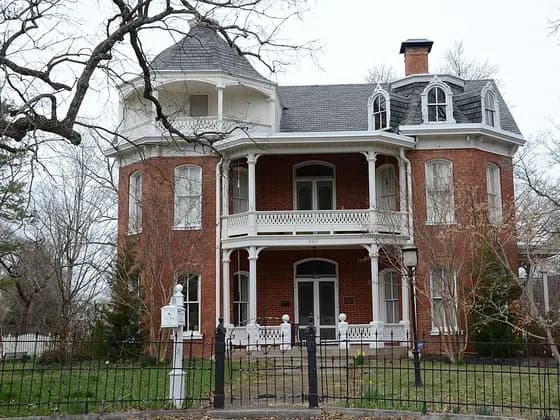
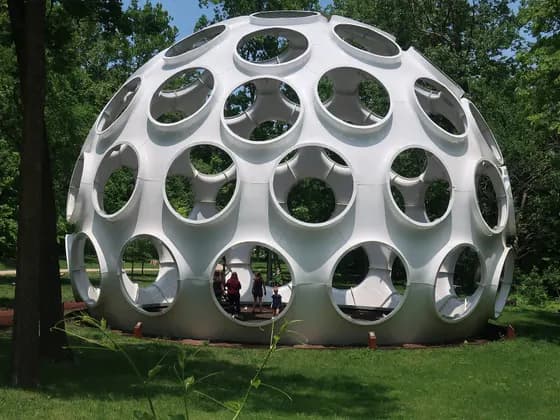
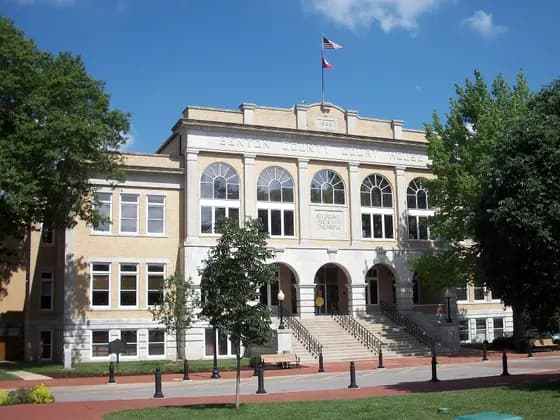
Photo: Brandonrush · CC BY-SA 4.0 · cropped
Photo: Valis55 · CC BY-SA 3.0 · Photo: Wmpearl · CC0 · Photo: Brandonrush · CC BY-SA 3.0
The Alice L. Walton School of Medicine MD program at a glance (2027 entry)
The Alice L. Walton School of Medicine (AWSOM) is a nonprofit school in Bentonville, in Northwest Arkansas, offering a four-year Doctor of Medicine (MD) program. The philanthropist Alice Walton founded it in 2021. It shares the Crystal Bridges Campus with the Crystal Bridges Museum of American Art and the Heartland Whole Health Institute. Its stated mission is to train physicians for medically underserved and rural communities in Arkansas, neighboring states and beyond.
The school is new. Its first class started in July 2025 and its second in July 2026, each with 48 students, so if you start in July 2027 you join the third class. The first class moves into Year 3 in July 2027, which means the clerkship years described here are the school's published plan. The Liaison Committee on Medical Education (LCME), which accredits MD programs in the United States, lists the program as Preliminary.
Teaching follows the ARCHES curriculum, named for its six threads: Art of Healing, Research, Clinical, Health Systems Science, Embracing Whole Health and Science of Medicine. Years 1 and 2 are the pre-clerkship (pre-clinical) years. Phase 1, your first semester, covers foundational science, and Phase 2 then works through the body one organ system at a time. Courses use a flipped classroom: you prepare on your own before class, then apply what you learned to cases in small groups.
Patients come early, with rotations at primary care clinical sites from your first semester. Anatomy is taught without cadavers, using plastinated specimens and technology. In Year 3 you rotate through clerkships, the core clinical rotations, at partner hospitals and clinics in Rogers, Fayetteville and Springdale. Mercy Hospital Northwest Arkansas is the primary education partner. Year 4 centers on an acting internship, where you take on much of a first-year resident's work under supervision, and electives you choose.
| Degree and length | MD; 4 years, with 178 weeks of instruction and 186 credit hours |
|---|---|
| Class size | 48 students in each of the first two classes |
| Main campus | Crystal Bridges Campus, Bentonville, Arkansas |
| Teaching style | Integrated organ-system courses; flipped classroom with case-based small groups |
| Anatomy | Plastinated specimens, virtual reality, models and imaging; no cadaver dissection |
| First patient contact | Year 1: primary care clinical site rotations in the first semester |
| Clinical sites | Mercy Hospital Northwest Arkansas (primary partner) and other Northwest Arkansas affiliates |
| Step 1 timing | End of Year 2, after a Step 1 review course |
| Grading | Pass/fail before clerkships; tiered grades with Honors in clerkships |
| Accreditation | LCME Preliminary (directory updated October 14, 2026); next survey 2026-27 |
What makes the Alice L. Walton School of Medicine MD program different
Arts and humanities in all four years
Art of Healing uses visual art, theater, creative writing, music and film to build observation, communication, empathy and comfort with uncertainty. The school calls it a four-year course, taught through Integrated Principles of Medicine, and some sessions take place in the galleries of Crystal Bridges Museum of American Art, on the shared campus.
Primary care rotations from your first semester
Early Clinical Skills and Experiences pairs clinical skills center sessions with rotations at primary care clinical sites from Phase 1. Supervised patient contact moves into inpatient settings in Year 2, so patients are part of both pre-clerkship years.
Anatomy from plastinated specimens instead of cadavers
Small-group labs in the Anatomy Resource Center use plastinated specimens, real donated human tissue preserved dry and odorless, alongside virtual reality, 3D models, ultrasound and imaging.
A required, mentored research project in a team
Every student designs, carries out and presents a scholarly project, working in a small team over Years 1 and 2. Mentors include AWSOM faculty and partners such as Mercy, the University of Arkansas for Medical Sciences (UAMS) and Stanford.
Houses of 12 led by local physicians
Every student is assigned to one of four Houses, the school's learning communities, each made up of 12 students and led by a pair of Career Mentors who are practicing local physicians.
Whole health is a competency you must show
Whole Health Practice is one of eight competencies required to graduate. It covers caring for the physical, behavioral, spiritual and socioeconomic sides of a patient's life, and weighing conventional and complementary treatments within an evidence-informed framework. Narrative assessments of your whole health activities go into your Medical Student Performance Evaluation (MSPE), the school's letter to residency programs.
How Alice L. Walton School of Medicine teaches medicine
The six ARCHES threads run through courses, clerkships and electives in all four years. Science of Medicine covers genetics, biochemistry, immunology, microbiology, anatomy, cell biology, physiology, pharmacology and pathology, taught together by organ system, and topics return at greater depth as you progress. Pre-clerkship teaching is active and small-group, with simulation from the start.
A separate course, Integrated Principles of Medicine (IPM), runs in every phase, from IPM I in your first semester to IPM VII in Year 4. Through it, Art of Healing uses the arts and humanities to explore professionalism, ethics, empathy and tolerance of uncertainty. Embracing Whole Health looks at the physical, behavioral, spiritual and socioeconomic sides of patients' lives.
Health Systems Science, the third IPM thread, covers how care is organized and financed, social determinants of health, policy, medical error and teamwork. In Years 3 and 4, IPM continues alongside your clerkships with case discussions drawn from your rotations and grand-rounds-style presentations.
The ways you will learn
| Pre-class online modules | Faculty-curated online modules introduce new material before each session. The Student Work Hours Policy counts this preparation at one and a half times the length of the material. |
|---|---|
| Small-group application sessions | Case-based learning, facilitated discussions, application exercises, pair-share activities and concept mapping, with faculty linking the science to clinical reasoning. |
| Standardized patients | In the Clinical Skills Center you practice interviews and examinations with standardized patients, people trained to portray a patient's history, condition and emotions consistently. They give feedback, and sessions are recorded for review. |
| Simulation | Full-body patient simulators, task trainers, simulated monitors and health records, and virtual or mixed reality headsets let you rehearse procedures, emergencies and teamwork without risk to patients. |
| Gallery and theater sessions | Some Art of Healing sessions use the Crystal Bridges galleries. On their first day, the charter students explored the museum, using contour drawing and collective poetry to reflect on personal and professional identity. The school has also described acting and improvisation exercises led by TheatreSquared, a local theater. |
A typical week on the Alice L. Walton School of Medicine program
In Years 1 and 2, the Student Work Hours Policy, approved in September 2026, caps scheduled contact time (classes, labs, clinical sessions and exams) at 24 hours a week, averaged over the semester. Estimated total work, including preparation and study, should stay within 40 hours. The 2026-27 handbook sets a different ceiling for the same phases: 60 hours a week.
The school says students sit weekly proctored exams in the style of the United States Medical Licensing Examination (USMLE), both formative (for feedback) and summative (counting toward grades), with a feedback report after each. Summative exams fall on Fridays when possible, with no new examinable material taught the day before.
The rest of the week is pre-class modules, small-group sessions, labs, IPM and clinical experiences, plus independent learning time when Learning Specialists hold drop-in hours. You must attend at least 85% of required activities in each course longer than two weeks.
From Year 3, rules modeled on those the Accreditation Council for Graduate Medical Education (ACGME) sets for residents cap clinical and educational work at 80 hours a week, averaged over four weeks. You get at least one day off a week on average, with call no more than every fourth night and no scheduled stretch over 24 hours. You must attend 90% of required days on each rotation, so a four-week clerkship allows up to two days of absence.
How anatomy is taught at Alice L. Walton School of Medicine
There is no cadaver dissection: the school says students train without the use of cadavers. Anatomy is taught instead in the 3,010-square-foot Anatomy Resource Center on the first floor, where integrated labs run in small groups around clinically focused, active learning.
The core material is plastinated specimens: real donated bodies, organs and tissues, treated so they stay dry, odorless and usable for decades, with none of the hazardous preservatives used on cadavers. The center's page counts more than 100 specimens, the handbook gives 100, and the library's anatomy guide lists more than 140 plastinated specimens and models.
Only trained faculty and staff handle or move the specimens, and photography is not allowed. The collection is organized by body system and includes whole-body specimens. You can place a specimen on hold through the library catalog so it is set out for you in the center.
Virtual reality lets you explore surface, regional and cross-sectional anatomy, embryology and histology. You also use 3D models and prints from the Maker Space, anatomical sketching, ultrasound and medical imaging.
Anatomy begins in Phase 1 with Keystones in Function and Structure and continues in each organ-system course, which teaches the anatomy, histology and embryology of its system. Outside scheduled labs, the center is open for study.
When you first meet patients at Alice L. Walton School of Medicine
Your first patient contact comes in Phase 1 through Early Clinical Skills and Experiences I (ECSE I). Alongside Clinical Skills Center sessions on communication, history-taking and professionalism, you start rotating at primary care clinical sites, helping care for patients as far as your skills allow, under supervision.
ECSE runs in four parts through the pre-clerkship years. ECSE II, in the spring of Year 1, covers heart and lung history-taking and examination, differential diagnosis, interpreting tests, documentation and management plans. ECSE III and IV in Year 2 add the digestive, reproductive, skin and musculoskeletal systems, and your patient contact moves into inpatient (hospital) settings.
Clinical education staff assign Year 1 and 2 students to sites by a randomized process based on educational needs and site capacity. The school names Mercy and UAMS among its partners for clinical experience from Year 1.
Procedural skills are introduced through simulation before Year 3. Phase 3 opens with Transition to Clerkships, where small groups rehearse inpatient, emergency, subspecialty and consultation work with simulation and standardized patients. You are always supervised with patients, and sensitive examinations, such as breast and pelvic exams, happen only under direct observation.
Voluntary shadowing outside the curriculum is allowed after your first semester. It is observation only, cannot clash with required sessions and is not covered by the school's student liability coverage.
The Alice L. Walton School of Medicine curriculum, year by year
- Year 1
Foundations, then the first organ systems
The fall semester is Phase 1: foundational science courses, with clinical skills, IPM and your first primary care rotations alongside. After winter break, Phase 2 begins the organ-system courses. For 2027 entrants, orientation week runs July 12 to 16, 2027, ending with the White Coat Ceremony.
- Biomolecular Origins of Medicine (eight weeks, 6 credit hours): the molecules at the interface of health and disease, within cells and across tissues.
- Foundations of Immunology (three weeks), Pathology, Pharmacology and Microbiology: immune responses, cell injury and the basis of cancer, how drugs act and move through the body, and clinically important microbes.
- Keystones in Function and Structure: anatomical terms and imaging, histology, embryology and physiology.
- Spring organ-system courses: Blood and Lymphoreticular System and Cardiovascular System, then, after spring break (March 13 to 17, 2028), Respiratory System, Renal and Urinary Systems and Multisystem Process Disorders I.
- ECSE I and II: clinical skills sessions and primary care rotations, moving on to heart and lung history-taking and examination.
- IPM I and II, including the research strand in summer and fall, then Research I in spring, when your team writes a research protocol.
- Year 2
The remaining organ systems and Step 1
Phase 2 continues with more organ-system courses while your clinical experiences move into hospitals. Classes end in spring with the nervous system and behavioral sciences, then a review course for USMLE Step 1, the first licensing exam, which tests the foundational sciences and is reported pass or fail. After a summer break come Research IV and Transition to Clerkships, the course that opens Phase 3.
- Fall: Gastrointestinal System (6 credit hours), Endocrine System and Metabolism (4), Reproductive Systems and Breast Health (6), Skin, Musculoskeletal and Connective Tissue Systems (7) and Multisystem Process Disorders II (1).
- Spring: Nervous System and Special Senses (7 credit hours) and Behavioral Sciences (3).
- ECSE III and IV: examination of the digestive, reproductive, skin and musculoskeletal systems.
- Research II and III: your team gathers and organizes data and drafts posters or white papers. Research IV finalizes the work with your mentor and renews the research training credentials required before clerkships.
- IPM III and IV continue the arts, whole health and health systems science threads.
- USMLE Step 1 Review: the school's blog describes 8 weeks of set-aside study time. The National Board of Medical Examiners (NBME) Comprehensive Basic Science Exam and other practice exams are given in the curriculum and during that time.
- Year 3
Core clerkships
Phase 3 is a 48-week clinical training program built around six core clerkships, each a block of weeks in one specialty. IPM continues alongside, and late in the year comes a required multi-station Objective Structured Clinical Examination (OSCE). The school publishes a sample order and says the sequence may vary.
- Internal Medicine (8 weeks): hospital care of adults in the emergency department, on the wards and on consult services, with a growing patient load and time in geriatrics and palliative care.
- Surgery (8 weeks): four weeks of inpatient surgery and four in surgical subspecialties. The focus is common procedures: when each is needed, how it is done, what can go wrong and how to read the results.
- Pediatrics (6 weeks): inpatient care, including newborns, and outpatient care, from birth through adolescence.
- Obstetrics and Gynecology (6 weeks): inpatient and outpatient care in pregnancy, labor and delivery and the postpartum period, plus gynecological exams, contraception and common conditions.
- Psychiatry and Behavioral Health (4 weeks): psychiatric interviews, diagnosis, treatment planning and behavioral emergencies, plus a survey of mind-body approaches and psychotherapies.
- Family Medicine (4 weeks): observing and assisting in family medicine clinics with outpatient care, documentation, clinical reasoning and management plans.
- Two 2-week elective or selective rotations in areas of interest.
- IPM V and VI: case discussions drawn from your clerkships and grand-rounds-style presentations on whole health, social determinants of health and ethics, with attention to self-care and resilience.
- The M3 OSCE, which you must pass to graduate.
- Year 4
Acting internship, electives and Medical Bridges
Phase 4 gives you more say over your schedule, with time set aside for residency interviews. Required elements are an acting internship, a critical care selective and, unless done at the end of Year 3, emergency medicine. The year closes with Medical Bridges and a celebration that recognizes research awards.
- Acting Internship, often called a sub-internship.
- Critical Care Selective: a required rotation in critical care.
- Emergency Medicine (4 weeks): urgent and emergent conditions in emergency departments, under attending physicians.
- Selective and/or Elective Rotations I to VIII, chosen for your career plans.
- IPM VII continues alongside your rotations.
- USMLE Step 2 Review: the website and catalog list it in Year 4, the website as a focused four-week program. Both curriculum maps draw it at the end of Year 3, and the handbook puts Step 2 study time in Phase 3.
- Medical Bridges: you show you can carry out and write up a core set of common procedures, plus skills for your intended residency specialty. It ends in an OSCE with standardized patients or simulation, such as a mock-up of a busy night on call.
How you are assessed at Alice L. Walton School of Medicine
Grading is competency-based: to graduate you must show proficiency in eight competencies, from patient care and medical knowledge to technology and whole health practice. The website, the 2026-27 catalog and the 2026-27 handbook all grade pre-clerkship courses pass/fail.
Clerkship grading is described in different ways. The live Phases and Courses page lists Honors/High Pass/Pass/Fail for internal medicine, surgery, psychiatry, pediatrics, the Year 4 selective and elective rotations, and IPM V and VI. The 2026-27 catalog lists Honors/Pass/Fail for all seven clerkships and pass/fail for IPM V and VI, and the handbook adds a single Honors grade for clerkships.
Many summative exams use official practice questions from the NBME, which runs the USMLE with the Federation of State Medical Boards. School documents also refer to NBME subject exams, often called shelf exams: standardized tests of clinical knowledge in one specialty, taken during clerkships.
Clinical skills are tested in OSCEs, where you move through a series of stations, each testing a task such as taking a history or examining a standardized patient. The M3 OSCE comes at the end of Year 3, and Medical Bridges ends with a final OSCE.
The USMLE has three Steps, and you take the first two in medical school. Step 1 is reported only as pass or fail. Step 2 Clinical Knowledge (CK) tests how you apply clinical knowledge and gets a numerical score, which residency programs review.
In August 2026 the USMLE program announced a move to designated testing dates from January 2029, with Step exams offered less often each year. Its June 2026 announcement had named 2028. On the current schedule, a July 2027 entrant would sit Step 1 in about spring or early summer 2029, after the Step 1 review course and before clerkships begin. Step 2 CK would follow in about mid-to-late 2030.
- The handbook and the Graduation Policy word the Step rules differently. The 2026-27 handbook says you must pass Step 1 before clerkships, and Step 2 CK by the school's deadlines, within three attempts. The policy, approved in June 2026, says you must pass each phase's licensure exams to move on to the next phase, and both Steps before graduation.
- Faculty give written narrative comments wherever you work alone or in a group of fewer than eight with a faculty supervisor.
- Your MSPE includes narrative assessments of your whole health activities, research course and clinical rotations, plus graphs comparing your clerkship performance with your cohort, but no class rank.
- You must complete the MD within six years of starting, including approved leave other than military leave.
Alice L. Walton School of Medicine clinical rotations: where you will actually train
Clinical training takes place at partner hospitals and clinics around Northwest Arkansas. The 2026-27 handbook lists eight local affiliates in Rogers, Fayetteville and Springdale. The website's clinical partnerships page names ten, adding UAMS and Vantage Point Behavioral Health Hospital.
Mercy Hospital Northwest Arkansas in Rogers is the school's primary education partner. That role is part of a 30-year affiliation agreement announced in September 2024 by Mercy, the Alice L. Walton Foundation and Heartland Whole Health Institute.
For clerkships you submit preferences by a set deadline, and places are allocated by a lottery that also weighs educational requirements and site capacity. You cannot arrange your own clerkship sites or contact sites yourself. A swap needs a willing classmate, a request from both of you within 10 business days of the schedule's release, and the school's approval.
You need your own transport: some sites are not served by public transport, and you travel at your own expense, at various times of day and in bad weather. Clerkships do not always follow school holidays; if your clinic or hospital is open, you attend unless your clerkship director approves time off.
- Mercy Hospital Northwest Arkansas
- Highlands Oncology
- Washington Regional Medical Center
- Veterans Affairs Medical Center
- Springwoods Behavioral Health
- Arkansas Children's Northwest Hospital
- Arisa Health
- Community Clinic
- University of Arkansas for Medical Sciences
- Vantage Point Behavioral Health Hospital
Electives, selectives and away rotations at Alice L. Walton School of Medicine
Choice begins in Year 3 with two 2-week rotations to explore areas of interest, called electives in the catalog and selectives on the website. An elective is usually your free choice, while a selective is picked from options within a required area. On the school's sample schedule both fall in the second half of Year 3, and an elective opportunity follows the summer break.
Year 4 is built mainly from Selective and/or Elective Rotations I to VIII, which you choose according to your career plans. The school gives intensive care and medical and surgical specialties as examples, and says the rotations also build leadership, entrepreneurship and teaching skills.
School policies refer to away (extramural) electives at other teaching hospitals. A host site may require its own criminal background check or drug screen, and the Office of Student Affairs advises on recommended laboratories. Advising also covers planning for clerkships, electives and externships.
Dual degrees and research years at Alice L. Walton School of Medicine
Research is a required, credit-bearing thread, and the school says time for it is protected in the curriculum. It starts with a research strand in IPM in the summer and fall of Year 1, covering evidence-based medicine, framing a research question, database searching, study design, statistics, epidemiology and research ethics.
In Research I, in the spring of Year 1, you work in a small team with faculty mentors to write a full research protocol, covering the question, design and analysis plan, and present it. Research II to IV in Year 2 take the project through data collection, draft posters or papers and a final version reviewed with your mentor.
Mentors can be AWSOM faculty with approved projects, collaborators at Mercy, UAMS, the University of Arkansas, Highlands Oncology or Stanford, or mentors you find yourself, subject to approval. All must be faculty and sign a mentor agreement, and you can pair a research mentor with a clinical one. Individual rather than team projects are approved case by case.
Projects span clinical and translational science, social determinants of health, public health policy, health systems and medical education. The Office of Research Education encourages you to present and publish. It offers limited competitive funding for new projects, help with publication costs in select cases and travel grants when a conference accepts your work.
Facilities and support at Alice L. Walton School of Medicine
Where you will learn
The 154,000-square-foot school building, designed by Polk Stanley Wilcox Architects, has four levels. It holds learning halls, small-group rooms, a library, clinical teaching and simulation spaces, a public art gallery, a café and a student lounge. The second floor has two large learning spaces for up to 96 students, two classrooms for 24 that combine into one for 48, and nine small-group rooms.
The 16,900-square-foot Clinical Skills Center has 12 examination rooms around a central observation area, plus debriefing and triage rooms and a point-of-care testing room. The exam rooms are equipped like a clinic, with ultrasound and other diagnostic devices, and recorded for review.
Figures for the simulation space differ. The handbook describes a 7,500-square-foot Simulation Center with four high-fidelity simulation rooms, able to recreate settings such as emergency departments, operating rooms and labor and delivery. The Simulation page describes a Simulation Lab of over 8,800 square feet with four suites and one-way mirrored control rooms.
In the Maker Space you can learn 3D modeling and print on fused deposition modeling (FDM) and PolyJet printers, then design and test models. The 4,000-square-foot library seats up to 58 students, with six quiet study rooms beside it, and its online collection, including 360,000 eBooks and 28 databases, is available around the clock.
The school provides all required learning resources, so you do not need to buy textbooks, and each student receives a computing device. The building also has a gym, a wellness center and a lounge with exercise space, a quiet room and a theater. Trails link the school with the museum, Heartland Whole Health Institute and downtown Bentonville.
Support while you study
On enrolling, you are assigned to one of four Houses. Each House of 12 is led by a pair of Career Mentors, practicing local physicians who stay with you from orientation to graduation. Houses meet monthly over lunch, and each picks a representative who organizes activities and sits on the Student Government Association.
The Houses are named after the American physicians Susan La Flesche Picotte, Jonas Salk, Helen B. Taussig and Daniel Hale Williams. You also meet the Director of Academic Advising each semester and work through Residency Rx, an online program for building an individual career plan.
Specialty advisers and workshops such as Specialty Speed Rounds with practicing physicians help you explore careers, and later come mock interviews and help with ERAS and NRMP, the residency application and Match systems.
Learning Specialists offer one-on-one academic counseling based on your exam reports, study-skills workshops and USMLE planning from Year 1 to graduation. Before each summative exam they host Power Hour, a student-led question session with faculty. Peer tutoring by trained upper-year students runs from fall 2026, and the school provides USMLE preparation platforms such as UWorld, Boards and Beyond and First Aid Forward.
For wellbeing there is 24-hour online support, confidential counseling with licensed therapists and wellness coaching, plus priority care for students at two Mercy primary care clinics, in Bella Vista and Centerton. An Organizational Ombuds offers a confidential, neutral and informal place to raise concerns, and faculty who give you health care may not assess you.
Service learning is part of IPM, and community work starts with a Day of Service in your first week. Local organizations such as the Northwest Arkansas Food Bank and Samaritan Community Center have signed community partner agreements with the school. Your service hours are recorded on GivePulse, a volunteering tracker. Student interest groups cover specialties such as internal medicine, surgery and pediatrics, and topics such as artificial intelligence in medicine and food as medicine.
Is the Alice L. Walton School of Medicine program right for you?
This program may suit you if
- You want the arts and humanities woven into your training, including sessions in the galleries of Crystal Bridges Museum of American Art.
- You want patients early: primary care rotations from your first semester and inpatient experience in Year 2.
- You like a small school: the first two classes had 48 students each, and Houses of 12 have their own pair of physician mentors.
- You are drawn to whole health, including weighing conventional and complementary treatments within an evidence-informed framework.
- You hope to practice in Arkansas or nearby states, or in underserved and rural communities, the focus of the school's mission.
Things to think about
- The school is new: the first class reaches Year 3 in July 2027, so the clerkship years are a published plan, and documents disagree on details such as clerkship grading.
- LCME accreditation is Preliminary, with the next survey in 2026-27, and the school is still seeking provisional and then full accreditation.
- There is no cadaver dissection. If dissecting a body yourself matters to you, anatomy here works differently.
- Clinical sites are spread across Rogers, Fayetteville and Springdale, and you arrange and pay for your own transport.
- The flipped classroom asks for steady preparation before class, and you sit exams weekly.
Alice L. Walton School of Medicine MD program — frequently asked questions
Applying to Alice L. Walton School of Medicine?
How to get into Alice L. Walton School of Medicine
Prerequisites, MCAT, AMCAS personal statement, secondaries and interview, step by step.
Open the guide →Alice L. Walton School of Medicine admissions profile
MCAT and GPA profile, acceptance rate, interview format and key dates.
See the profile →Compare Alice L. Walton School of Medicine with other schools
Put the teaching style, anatomy teaching and clinical sites next to another school.
Open the comparison →Prepare for the Alice L. Walton School of Medicine interview
Format breakdown, school-specific sample questions and prep tips from tutors who interviewed here.
Read the guide →Where this Alice L. Walton School of Medicine program guide came from
This guide was written from 55 official sources — Alice L. Walton School of Medicine's own program pages and curriculum documents, plus the accreditor and the hospitals and health systems the school trains students in where they publish detail — read on 2026-10-14, then checked claim by claim against those sources.
- AWSOM: Curriculum (the six ARCHES threads)
- AWSOM: Curriculum Phases and Courses
- AWSOM Course Catalog 2026-2027
- AWSOM Student Handbook 2026-2027
- ARCHES curriculum map 2026-27
- ARCHES curriculum schematic, revised December 4, 2025 (linked from the 2026-27 handbook)
- AWSOM: Medical Education Program Objectives
- AWSOM: MD Program
- AWSOM: Integrated Education
- AWSOM: Simulation and Clinical Skills
- AWSOM: Anatomy Resource Center
- AWSOM blog: Inside the Anatomy Resource Center (February 2026)
- AWSOM: Standardized Patients
- AWSOM: Clinical Partnerships
- Mercy newsroom: affiliation agreement naming Mercy primary educational partner (September 2024)
- AWSOM blog: Preparing for the USMLE Exams (April 2026)
- AWSOM blog: the flipped classroom (January 2025)
- AWSOM blog: Art and Medical Education (September 2025)
- AWSOM: Research Education
- AWSOM: Learning Communities (Houses)
- AWSOM: Academic Support
- AWSOM: Career Services and Advising
- AWSOM: Student Wellness
- AWSOM: Student Organizations
- AWSOM news: Get to Know the School's Community Partners (January 2026)
- AWSOM: Library
- AWSOM: The Medical School building
- AWSOM: Crystal Bridges Campus
- AWSOM: Academic Calendar
- AWSOM: Class Profiles (Class of 2029)
- AWSOM news: White Coat Ceremony for the Class of 2030 (July 2026)
- AWSOM: 4 Milestone Events in a Medical Student's Journey (June 2025)
- AWSOM: Accreditation
- AWSOM blog: What Med School Accreditation Means (July 2025)
- AWSOM: About AWSOM (mission and founding)
- AWSOM Graduation Policy (approved June 2026)
- AWSOM Student Work Hours Policy (approved September 2026)
- AWSOM Clinical Assignment Scheduling Policy (approved October 2026)
- AWSOM Student Attendance Policy (approved July 2026)
- AWSOM Narrative Assessment Policy (approved August 2026)
- AWSOM Medical Student Performance Evaluation (MSPE) Letter Policy (approved September 2026)
- AWSOM Clinical Supervision Policy (approved August 2026)
- AWSOM Student Criminal Background Check Policy (approved May 2026)
- AWSOM Student Drug Screening Policy (approved May 2026)
- LCME: Accredited Programs directory (updated October 14, 2026)
- LCME: About the School Directory
- LCME: Accreditation Process Overview
- USMLE: Designated Testing Dates Information Hub
- USMLE: Updated Timeline for Designated Testing Dates, transition in January 2029 (August 6, 2026)
- USMLE: Transition to Limited Testing Dates Starting in 2028 (June 23, 2026, since updated)
- AWSOM library guide: Research Education Curriculum Overview
- AWSOM library guide: Office of Research Education FAQ
- AWSOM library guide: Learning Specialists
- AWSOM library guide: Anatomy Resources
- AWSOM library guide: ARC Plastination Collection
Curricula are restructured between cycles. Anything here that decides your application — how anatomy is taught, a clinical campus assignment, a required research year — should be confirmed against the official page for your entry year.
Applying to Alice L. Walton School of Medicine?
We help US applicants with MCAT strategy, the AMCAS personal statement, secondary essays and interview prep — everything you need for a competitive Alice L. Walton School of Medicine application.