
The UC Davis School of Medicine MD program
What you actually study, and where you will be
UC Davis School of Medicine's M.D. is a 4-year program taught through problem-based learning in an integrated curriculum, with patient contact from Year 1 and clinical rotations in Sacramento, Central and Northern California, and Oregon (2027 entry). The I-EXPLORE curriculum, launched in 2021, weaves biomedical, clinical and health systems science together. Years 1 and 2 follow a set weekly schedule of problem-based and team-based small groups, peer teaching and quizzes, with clinical skills from the first weeks and a year of clinic visits. Clerkships, the core clinical rotations, start in late April or May of year 2, after Step 1 of the national licensing exam.
- Degree
- M.D.
- Length
- 4 years
- Teaching
- Integrated + Problem-based learning
- Clinical contact
- Year 1

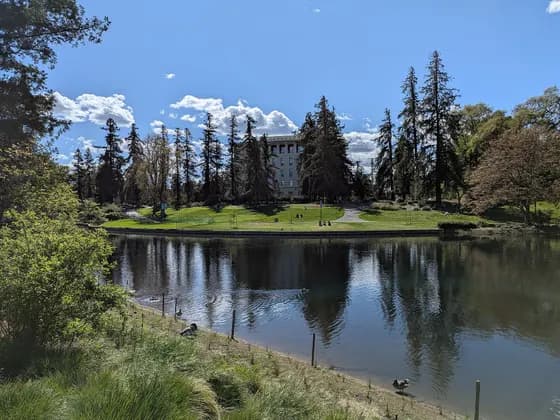
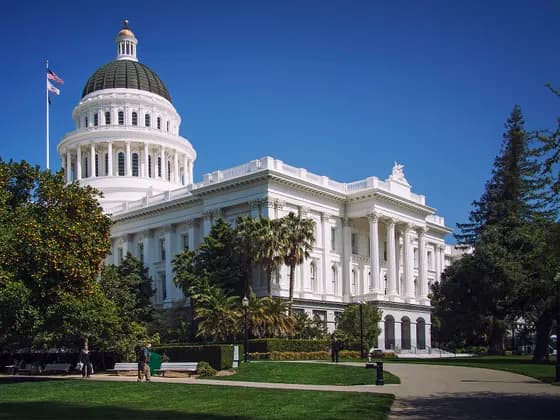

Photo: Coolcaesar (Wikimedia Commons) · CC BY-SA 3.0 · cropped
Photo: KMashian · CC BY 4.0 · Photo: Steven Pavlov · CC BY-SA 4.0 · Photo: Mackinacbridge · CC0
The UC Davis School of Medicine MD program at a glance (2027 entry)
The University of California, Davis School of Medicine (UC Davis School of Medicine) runs a four-year M.D. program on its Sacramento campus, with classrooms across the street from UC Davis Medical Center. Its curriculum, I-EXPLORE (Integrated Explorative Patient and Learner Oriented Education), launched in 2021, and the class graduating in May 2025 was the first to complete all three phases. The Class of 2029 entered with 139 students.
I-EXPLORE weaves three pillars through every course: biomedical science, clinical science and health systems science, the study of how care is delivered and improved. Each course has a co-director for each pillar. The program has three phases: pre-clerkship (years 1 and 2), clerkship (the core clinical rotations) and post-clerkship (year 4). In years 1 and 2 you work in a fixed weekly rhythm of small-group sessions, including problem-based learning, team-based learning and peer teaching, with lectures mostly pre-recorded.
Patients come early. Clinical skills start in the first weeks, in small groups linked to your academic coach, a clinical faculty member assigned at matriculation who stays with you through medical school. Halfway through year 1 you begin a year of clinic visits with a community doctor, and you can volunteer in the student-run free clinics in Sacramento.
You must pass Step 1 of the United States Medical Licensing Examination (USMLE), the national exam on the sciences behind medicine, before clerkships start in late April or May of year 2. Year 4 starts the following May, with acting internships, where you take on much of an intern's work, and more than 180 electives.
Alongside the standard track, the school runs five Community Health Scholars pathways for underserved California communities, four three-year accelerated pathways and research routes, including an M.D./Ph.D. The Liaison Committee on Medical Education (LCME), which accredits M.D. programs in the United States, lists the program as fully accredited. Its directory gives 1967 as the first year of accreditation and 2029-30 for the next full survey; the applicant handbook dates the first class to 1968.
| Degree and length | M.D., 4 years; 3-year accelerated pathways and a 5-year research pathway |
|---|---|
| Curriculum | I-EXPLORE, launched 2021: pre-clerkship, clerkship and post-clerkship phases |
| Class size | 139 students entered in the Class of 2029 |
| Teaching style | Problem-based and team-based small groups, peer teaching, pre-recorded lectures |
| Anatomy | Gross anatomy and histology in year 1; 24-table cadaver lab |
| First patient contact | Year 1: clinical skills from the first weeks, clinic visits from midyear |
| Clinical sites | UC Davis Medical Center plus sites across Central and Northern California and Oregon |
| Step 1 timing | End of year 2, before clerkships, timed by readiness exams |
| Grading | Pass/fail through clerkships; Honors/Pass/Fail in year 4, per the bylaws |
| Accreditation | LCME Full; next full survey 2029-30 (directory, October 14, 2026) |
What makes the UC Davis School of Medicine MD program different
Five pathways that tie your training to a region
Community Health Scholars pathways tie your clerkships to a region: Rural PRIME, REACH (Central Valley), TEACH-MS (urban underserved areas), Tribal Health PRIME and PRIME Central Coast. Each adds more than 200 hours of training and a four-year community project. Rural PRIME, REACH, Tribal Health PRIME and PRIME Central Coast each say they are part of the University of California's Programs in Medical Education (PRIME); the pathways overview counts three.
A three-year M.D. for future primary care doctors
ACE-PC (Accelerated Competency-based Education in Primary Care), a Kaiser Permanente Northern California partnership founded in 2014, takes three years. You start in June and work in primary care clinics from your first week. Year 3 is a longitudinal integrated clerkship (LIC), covering several specialties at once while you follow patients over months.
Student-run free clinics with a 50-year history
Students and physicians run free weekend clinics for under-resourced Sacramento communities, from the Paul Hom Asian Clinic, founded in 1972, and Clinica Tepati, founded in 1974, to RIVER, a mobile pediatric clinic. The school's clinics page lists eight clinics and five partner clinics. Students in good standing can earn elective credit.
A built-in research year for future physician-scientists
ARC-MD (Academic Research Careers for Medical Doctors), founded in 2019, adds a research-intensive year in a UC Davis faculty lab between years 3 and 4, with a stipend, making a five-year M.D. A small cohort starts with a two-week orientation, does summer research after year 1 and presents at the Medical Student Research Forum in year 2. Its first class graduated in 2024.
How UC Davis School of Medicine teaches medicine
I-EXPLORE is competency-based, with milestones for each phase in six graduation competency areas, from patient care to professionalism. Six threads run across courses: diagnostic medicine, including point-of-care ultrasound; stages of life, told through fictional families whose health changes over time; care for vulnerable populations; preventive medicine; pain medicine; and behavioral sciences.
Clinical reasoning is organized around the UCD 43, a set of 43 common chief concerns that bring patients to a doctor. You meet each at least once in team-based learning, building illness scripts and diagnostic schemas, mental frameworks for sorting causes, and refining a differential diagnosis, the list of possible causes, as findings come in.
From Molecular and Cellular Medicine onward, problem-based learning, team-based learning and peer teaching set the pattern for years 1 and 2. In the clerkship year you learn on wards and in clinics, and short intersessions between rotations keep science going.
The ways you will learn
| Team INQUIRE (problem-based learning) | Your small group meets a facilitator three times a week for an hour. From a case you have not seen before, the group sets learning objectives, researches them and teaches each other. The facilitator guides the process, not the content, and no lectures cover the case objectives. |
|---|---|
| Team-based learning | You prepare with lectures or reading and an open-book individual readiness test. In class, faculty content experts take your team through open-ended questions on an integrated case, some devoted to the UCD 43. |
| Peer teaching and in-person quizzes | Peer teaching uses multiple-choice questions in the style of the National Board of Medical Examiners (NBME), which co-sponsors the USMLE, answered by clicker and discussed with classmates. In-person quizzes have you answer alone, discuss at your table and retake the quiz. |
| SPARK sessions | SPARK, short for Step 1 Preparation and Application through Reasoning and Knowledge, links science across courses and to clinical cases. From the cardiovascular course on, its open-answer questions count on final exams. |
| Clinical skills | In small groups you learn interviewing, examination and clinical reasoning with simulation and standardized patients, people trained to portray patients. You can practice examinations and point-of-care ultrasound on volunteer classmates; breast, genital and rectal examinations use only models and standardized patients. |
| Patient panels and journal clubs | In patient panels, patients, caregivers and community groups describe living with a condition or the health system; in journal clubs, small groups critique a research article. |
A typical week on the UC Davis School of Medicine program
The Pre-Clerkship Workload Policy, reviewed in May 2026, sets a standard week. Active learning sessions fill Monday, Wednesday and Friday mornings, 8 a.m. to noon, and a two-hour in-person quiz falls on a Tuesday or Thursday morning. Add up to 8 hours of lectures and 4 of clinical skills or clinic.
Contact time is capped at 26 hours a week, averaged over non-exam weeks. Counting an hour of study per contact hour plus up to 12 hours of assigned work, the week tops out at 64 hours; exam weeks drop to 44. Pathway activities should add no more than 5 hours.
- Attendance at everything is required from orientation until winter break of year 1.
- After that, problem-based learning, clinical skills, simulation, clinic, anatomy labs, patient panels and intersession passport activities stay required, with 2 personal days per 6 weeks of coursework.
How anatomy is taught at UC Davis School of Medicine
Anatomy comes first: Human Architecture and Function (MDS 471), eight weeks long, opens the science courses. The UC Davis General Catalog lists its disciplines as gross anatomy, microscopic anatomy (normal histology), history-taking and examination skills, and health systems science. Required texts include Moore's Clinically Oriented Anatomy.
Anatomy labs are required sessions. The school's Gross Anatomy Teaching Laboratory, about 500 feet from the Education Building, has 24 cadaver tables. In the optional two-week Pre-Matriculation Program before year 1, faculty lead a lab visit using prosections, specimens already dissected to display their structures.
Donors come through the UC Davis Body Donation Program, set up in 1968, which has averaged about 150 donations a year since 2005. Its Service of Gratitude page says donors are often called students' first patient and teacher. Each year second-year students organize that service to honor donors, with reflections, letters and music; donors' families are invited.
When you first meet patients at UC Davis School of Medicine
Clinical skills begin in Human Architecture and Function. Your first objective structured clinical examination (OSCE), a circuit of timed stations where you are observed taking a history or examining a standardized patient, comes in late October of year 1.
The Longitudinal Clinical Experience (LCE) starts halfway through year 1 and runs a year. About one afternoon every other week you work in an outpatient clinic in the Sacramento region with the same preceptor; the program was built with more than 125 community physicians. You shadow at first, then interview and examine patients, and in year 2 practice diagnostic reasoning and presentations.
The travel policy says these clinic sessions can be up to 60 miles away each way, for up to 20 half days in each of years 1 and 2. Patient panels bring patients into class from year 1, and in Brain and Behavior, the last course of year 2, clinical skills adds inpatient work. The curriculum page counts 12 student-run clinics and the admissions page eight.
The UC Davis School of Medicine curriculum, year by year
- Year 1
Foundations, then the heart, lungs and kidneys
Year 1 runs from late July to late May: four short foundation courses, then the 19-week Cardiovascular, Pulmonary and Renal Systems course from January.
- Transition to Medical School (MDS 470), one week, then Human Architecture and Function (MDS 471), eight weeks of anatomy and histology with your first clinical skills and health systems science.
- Molecular and Cellular Medicine (MDS 472), six weeks of biochemistry, genetics, physiology and pharmacology, with OSCE 1 in its last week. Then Pathogens and Host Defense (MDS 473), five weeks of microbiology, immunology and pathology.
- Cardiovascular, Pulmonary and Renal Systems (MDS 474), January to May, which adds quality improvement and patient safety and starts the clinic year. The pre-clerkship page calls it CHRP and includes hematology.
- I-FOSTER (MDS 478), a professional identity course, meets in one-week sessions in November and February, then runs the eight-week summer block.
- Year 2
More organ systems, the brain and Step 1
Year 2 runs from mid-July to late February, followed by a Step 1 study period in spring.
- Endocrinology, Reproduction and Gastrointestinal Systems (EnRGI, MDS 475), 16 weeks from July, with health systems science on advocacy, policy and health care financing. Two more one-week I-FOSTER sessions fall within it, in late August and mid-October on the 2026-27 calendar.
- Skin and Musculoskeletal Systems (MDS 476), three weeks around Thanksgiving, as the clinic year ends; then Brain and Behavior (MDS 477), eight weeks of neuroscience, ear, nose and throat, eye, psychiatry and behavioral science.
- Five Comprehensive Basic Science Exams (CBSE), nationally benchmarked tests in Step 1 style, from October to June; on the 2025-26 calendar the Step 1 study period began on March 2.
- Year 3
Six core clerkships and a selective
The clerkship year starts in late April or May, at the end of your second year, with a short Transition to Clerkships course. Seven six-week rotations follow: six core clerkships, mixing inpatient and outpatient work under supervision, and the selective block.
- Core clerkships: Family and Community Medicine (FAP 430), Internal Medicine (IMD 430), Obstetrics and Gynecology (OBG 430), Pediatrics (PED 430), Psychiatry (PSY 430) and Surgery (SUR 430).
- Internal medicine has you take histories, write orders and do routine procedures under supervision; psychiatry includes a full outpatient evaluation; family medicine is a teaching week, then five weeks in a primary care office.
- The Clerkship Intersession course (MDS 479) brings the class back between rotations for team-based learning, practice OSCEs, USMLE Step 2 preparation and coaching. The clerkship page calls it both six and seven one-week intersessions; the 2026-27 calendar shows six blocks of three or four days.
- Duty hours are capped at 80 a week, with no stretch over 16 hours, and absences at two days per rotation.
- Some UC Davis General Catalog entries still describe older formats, such as eight-week pediatrics and surgery clerkships; the curriculum pages and calendars use six weeks.
- Year 4
Acting internships, electives and residency applications
Year 4 runs from May to graduation the following June. It mixes required rotations at UC Davis Health with electives while you apply for residency, the specialty training after medical school. Match Day, when residency places are announced, falls in March.
- Four-week acting internships in emergency medicine and an intensive care unit, four weeks of neurology, and one more acting internship, inpatient or outpatient, at UC Davis Health or away.
- Electives to make up 44 weeks in all, and the two-week Transition to Residency (MDS 449).
- The Clinical Performance Examination and Step 2 Clinical Knowledge (CK), the USMLE exam on applying clinical knowledge, both required to graduate.
- ACE pathways
The three-year M.D.
ACE-PC, founded in 2014, and Rural ACE-PC, founded in 2025, train primary care doctors; ACE-Psych and Rural ACE-Psych train psychiatrists. The handbook groups the rural pair as Rural ACE-PCP. All start in June, six weeks early, and keep studying through the summer after year 1. You apply for a pathway when you apply to the school.
- Seats: the ACE-PC and Rural ACE-PC pages each say six to eight a year, the handbook six to eight across both; each psychiatry pathway starts with two. Both psychiatry pathways take their first students from the 2026-2027 application cycle; ACE-Psych's first class enters in 2027.
- ACE-PC keeps a primary care continuity clinic for three years. After Step 1 preparation in March of year 2 comes the LIC, inpatient in April and May, then outpatient to December.
- Step 2 CK preparation in January, then two acting internships and an elective from February to May, lead into family medicine or internal medicine residency. Rural students spend six months of the LIC in Shasta, Nevada or Humboldt County.
How you are assessed at UC Davis School of Medicine
Under the school's bylaws, revised in May 2024, required pre-clerkship and clerkship courses are graded Pass or Fail, and post-clerkship courses Honors, Pass or Fail. A curriculum update says clerkships became pass/fail in 2023-24 after a grading-equity review, and the family medicine department calls its clerkship pass/fail. The UC Davis General Catalog still lists Honors, Pass or Fail for five core clerkships, all but pediatrics.
Pre-clerkship courses use low-stakes in-person quizzes, midterms and final exams in NBME format, with SPARK open-answer questions on systems-course finals, plus four OSCEs over years 1 and 2. Numerical scores are kept for advising, not shown on transcripts. A failing result first earns a provisional Y mark, with one remediation attempt; a failed remediation becomes an F, meaning you retake the course.
Clerkships grade you against competency milestones through supervisors' evaluations with narrative comments and an NBME subject exam, or shelf exam. The shelf exam falls on each rotation's last day, and clinical duties end at noon the day before. Each clerkship also gives documented midpoint feedback and checks your log of required patient encounters.
LCME accreditation makes you eligible to take the USMLE. Step 1 has been pass/fail since January 26, 2022; Step 2 CK has a three-digit score, with 218 to pass since July 1, 2025. You must finish the pre-clerkship courses before sitting Step 1, pass it before clerkships and pass Step 2 CK to graduate.
Five CBSE exams in year 2 set your Step 1 timing. Meet the threshold on one of the first three (50%, 55%, then 63%) and you sit Step 1 before Transition to Clerkships. Reach 63% on CBSE 4 or 5 instead and you start in Rotation 2 or 3. ACE-PC follows its own pilot policy. Step 2 CK is due by December 31 before a June graduation, ideally by August 31.
In August 2026 the USMLE program announced a move to designated testing dates from January 2029, with Step exams offered less often each year. Its June 2026 announcement had named 2028. No 2027-28 calendar is posted yet. On the current schedule, a July 2027 entrant would sit Step 1 around March or April 2029 and Step 2 CK in 2030, before a June 2031 graduation. Both would fall under designated testing dates.
- The Clinical Performance Examination (CPX) is an eight-station OSCE run with the California Consortium for the Assessment of Clinical Competence, mostly in May and June, after five of the six core clerkships. Results are Pass, Conditional Pass or No Pass; a No Pass means a six-station retake at least three months before graduation.
- A first Step failure brings academic warning and a second academic notice (formerly probation). A second F, a third Y or not passing Step 1 within two years of finishing year 2 can lead to a dismissal recommendation.
UC Davis School of Medicine clinical rotations: where you will actually train
Your base is UC Davis Medical Center, with a Level I trauma center for adults and children. The travel policy says clinical training in all four years uses sites throughout Central and Northern California and Oregon. Required year 4 rotations can all be done at UC Davis, though some students will need outside sites.
Expect inpatient and outpatient clerkship sites up to 60 miles each way from the Sacramento campus, and farther for some rotations, depending on program aims and site availability. Distant sites go first to students who ask or volunteer, then by lottery. Students with dependents can request a travel exemption, but you cannot swap sites, and transport problems do not change an assignment.
You arrange your own transport. Financial aid includes a transportation budget, and the pathway pages say all students get a mileage stipend for sites more than 25 miles away. Pathway students get housing for distant clerkships, such as rural sites for Rural PRIME, the Central Valley for REACH and French Camp for the TEACH-MS OB-GYN clerkship.
Community Health Scholars start with a one-week orientation about three weeks before the standard one, then add class sessions once or twice a month, community immersion days and a summer elective. REACH (Reimagining Education to Advance Central California Health) and TEACH-MS (Transforming Education and Community Health for Medical Students) each set at least 24 weeks of clerkships in their communities. Rural PRIME sets at least 20.
You choose a pathway when you apply to the school, and each pathway selects its own students. The application page lists yearly places as 4 to 6 for PRIME Central Coast, 8 to 12 each for REACH and Rural PRIME, 8 for TEACH-MS and 4 to 6 for Tribal Health PRIME. The September 2026 handbook gives 6 for PRIME Central Coast, 6 to 8 for TEACH-MS and up to 6 for Tribal Health PRIME.
Home base. TEACH-MS students get priority at clerkship sites serving low-income communities in and around Sacramento.
- UC Davis Medical Center
- Community clinics across the Sacramento region (LCE)
- Student-run free clinics
ACE-PC students train in Kaiser Permanente and UC Davis-affiliated clinics from their first week.
- Kaiser Northern California (OB-GYN clerkship)
- Kaiser Permanente clinics (ACE-PC)
REACH students do a four-week summer rotation at sites including Modesto and Visalia. Rural PRIME uses Modesto for internal medicine and Visalia for family medicine, pediatrics, psychiatry and surgery.
- San Joaquin General (OB-GYN)
- Kaiser Central Valley (OB-GYN)
- Kaiser Permanente Central Valley, Modesto
- Kaweah Health, Visalia
- French Camp (TEACH-MS OB-GYN clerkship)
Natividad is an OB-GYN site, also used by Rural PRIME; Hollister and King City are Rural PRIME family medicine sites. PRIME Central Coast, developed with UC Santa Cruz, takes its first six students in July 2027, who relocate here for the whole clerkship year.
- Natividad Medical Center, Salinas
- San Benito Health Foundation, Hollister
- Mee Memorial Healthcare System, King City
Rural PRIME clerkship sites, mostly family medicine; Bishop offers obstetrics and gynecology, and Truckee pediatrics.
- Modoc Medical Center, Alturas
- Northern Inyo Hospital, Bishop
- Chapa-De Indian Health, Grass Valley
- Sutter Amador Hospital, Jackson
- Plumas District Hospital, Quincy
- Shasta Community Health Center, Redding
- Shasta Cascade Health Center, Shasta
- Tahoe Forest Hospital District, Truckee
- Mendocino Community Health Center, Ukiah
- Fairchild Medical Center, Yreka
Example training sites listed by the rural ACE pathways.
- Shasta Community Health, Redding
- Hill Country Community Clinic, Redding
- Mercy Medical Center, Redding
- Chapa-De Indian Health, Grass Valley
- Sierra Nevada Memorial Hospital, Grass Valley
- Western Sierra Medical Clinic, Grass Valley
Rural PRIME clerkship sites: internal medicine in Corvallis and Portland, family medicine in Klamath Falls.
- Samaritan Health Services, Corvallis
- Cascades East Family Medicine Residency, Klamath Falls
- Providence St. Vincent Medical Center, Portland
Electives, selectives and away rotations at UC Davis School of Medicine
Choice starts in the summer after year 1, when I-FOSTER's block includes four weeks of selective coursework. Options include a research selective or seven-week research fellowship, a pathway elective, or Global Health choices such as Spanish immersion in Colombia.
Students in REACH, Rural PRIME, TEACH-MS and Tribal Health PRIME can add electives and community training in all four years through the COMET (California Oregon Medical Education and Training) Collaborative. Its partners serve rural and underserved communities across Northern California and Southern Oregon.
The year 3 selective block lets you combine 2- and 4-week courses or take one 6-week course: clinical selectives, research or scholarly concentration work, advanced clinical clerkships or clinical didactics. Specialties in Support of Adult Primary Care, for example, strings together three two-week rotations in specialties primary care doctors often refer to.
Year 4 offers more than 180 electives across UC Davis Health's clinical departments; psychiatry's include child psychiatry and an inpatient acting internship. You plan the year with your coach between December and March of year 3, enter it in eFlight, the scheduling system, and finalize it by September. No more than 8 weeks of one course count.
Many away rotations at other schools are booked through the Visiting Student Learning Opportunities (VSLO) service of the Association of American Medical Colleges (AAMC), at your own expense. They need department approval and must finish by the end of winter quarter of year 4. International rotations can count with committee approval.
The Center for Global Health lists elective sites in South Africa, Peru, India, Nepal and Vietnam, and One Health field courses run traditionally in East Africa and Sri Lanka.
Dual degrees and research years at UC Davis School of Medicine
The M.D./Ph.D. program is approved to admit five students a year (the handbook says four to five). You complete years 1 and 2, with a summer research rotation, and pass Step 1. You then spend about four years on a Ph.D. in any UC Davis graduate program, including the social sciences and humanities. You return for clerkships, with an optional two-week Clinical Refresher; most finish in eight years.
The dual degree page describes a joint five-year M.D. and Master of Public Health (M.D./M.P.H.) and names an M.D. with a Master of Business Administration (M.D./M.B.A.). For both, you apply separately once accepted to medical school. The M.P.H. is a 56-unit in-person program starting in August, with General Public Health or Epidemiology concentrations and a practicum. Its pages give its length as 10-12 months and as 12-14 months.
Planned extensions fit best between the clerkship and post-clerkship phases, after Step 2 CK and the CPX; the school strongly discourages breaks before clerkships. The school's research page describes the Clinical and Translational Science Center (CTSC) TL1 program as a year of research training, with the option of a Master of Advanced Study (M.A.S.) in Clinical Research. The CTSC's own page says TL1 scholars are funded for two years.
ARC-MD is a five-year honors pathway for future physician-scientists, whose research can be basic, clinical, community-engaged or implementation science. It accepts six to eight students a year (the handbook says five to eight). Year 3 brings a four-week research selective and a TL1 funding proposal, and year 4 a 12- to 16-week scholarly project.
Shorter research fits inside the M.D.: 4 or 7 weeks in the summer after year 1, part of the year 3 selective, or a year-long research elective in year 4. That elective ends with a paper and a poster at Poster Day, and research earns up to 8 weeks of credit.
Areas of Scholarly Concentration (ASCs) are optional: if you join one, in the fall of year 1, you add online modules, intersession activities and a capstone project. Themes are clinical or translational research, global health, health care policy and advocacy, medical education, and quality improvement and patient safety.
Facilities and support at UC Davis School of Medicine
Where you will learn
Teaching centers on the Education Building, completed in December 2006 with the F. William Blaisdell, M.D., Medical Library. It has two 150-seat auditoriums, a 60-seat case method room, 17 small-group rooms for 12 to 16 people and two student commons.
Its Clinical Skills Center has eight examination rooms with pan-and-zoom cameras and a central monitoring room, and records encounters for review. UC Davis Health's Center for Simulation and Education Enhancement supplies standardized patients. It runs a simulated hospital, with a resuscitation bay, operating room, ward and clinic, and a surgical simulation program accredited by the American College of Surgeons.
The Blaisdell library, open to UC Davis Health badge holders, has study rooms and Civil War medicine and bioethics collections.
Support while you study
Your academic coach is one of 15 clinical faculty coaches, and you meet one-on-one each year. Your clinical skills group and intersession coaching cohort are linked to your coach, and you plan year 4 together.
The Office of Academic Support and Individual Success (OASIS) has educational skills specialists for one-on-one learning plans and study workshops. The Pre-Matriculation Program previews the main teaching formats, with a guided anatomy lab, wellness sessions and a practice exam.
Career advising starts at orientation, with required sessions every year, many in I-FOSTER and intersession weeks, and an advisor meeting during the year 3 selective. Departments choose specialty advisors for residency applications.
The Office of Student Wellness, created in 2009 and led by a clinical psychologist, is a first stop for wellness. Medical students have embedded counselors, in person in Sacramento or by telehealth, and psychiatric care through the Trainee Mental Health Clinic, whose director does not evaluate students. For primary care, the school chose a Rancho Cordova clinic with no clinical rotations.
Is the UC Davis School of Medicine program right for you?
This program may suit you if
- You learn well in small groups working through cases, with problem-based learning three times a week.
- You want a year of regular clinic time with the same community doctor before clerkships.
- You are committed to serving rural, Central Valley, Central Coast, urban underserved or tribal communities in California and want a pathway built around them.
- You are certain about primary care or psychiatry and want to finish in three years.
- You want research in your degree, through a scholarly concentration, ARC-MD's extra year or the M.D./Ph.D.
Things to think about
- You need your own transport: clerkship sites can be up to 60 miles away, some farther, and transport problems do not change an assignment.
- You must pass Step 1 before clerkships, and reaching a readiness threshold late pushes your first rotation back.
- Attendance is required at everything until winter break of year 1, and at most small-group sessions after.
- PRIME Central Coast students relocate to the Central Coast for the whole clerkship year.
- The three-year pathways leave less time to prepare for the Step exams, a point the Rural ACE flyer itself makes.
UC Davis School of Medicine MD program — frequently asked questions
Applying to UC Davis School of Medicine?
How to get into UC Davis School of Medicine
Prerequisites, MCAT, AMCAS personal statement, secondaries and interview, step by step.
Open the guide →UC Davis School of Medicine admissions profile
MCAT and GPA profile, acceptance rate, interview format and key dates.
See the profile →Compare UC Davis School of Medicine with other schools
Put the teaching style, anatomy teaching and clinical sites next to another school.
Open the comparison →Prepare for the UC Davis School of Medicine interview
Format breakdown, school-specific sample questions and prep tips from tutors who interviewed here.
Read the guide →Where this UC Davis School of Medicine program guide came from
This guide was written from 112 official sources — University of California, Davis School of Medicine's own program pages and curriculum documents, plus the accreditor and the hospitals and health systems the school trains students in where they publish detail — read on 2026-10-15, then checked claim by claim against those sources.
- UC Davis School of Medicine: Curriculum Overview and I-EXPLORE
- UC Davis School of Medicine: Pre-Clerkship Phase
- UC Davis School of Medicine: Clerkship Phase
- UC Davis School of Medicine: Post-Clerkship Phase
- UC Davis School of Medicine: Required Curriculum by year
- UC Davis School of Medicine: Longitudinal Clinical Experience
- UC Davis School of Medicine: Curriculum Review and Renewal (I-EXPLORE launch)
- UC Davis School of Medicine: I-EXPLORE Graduation Competencies
- UC Davis School of Medicine: Clinical Education and Assessment Center
- Bylaws and Regulations of the Faculty of the School of Medicine, revised May 17, 2024
- UC Davis School of Medicine Academic Calendar 2026-2027
- UC Davis School of Medicine Academic Calendar 2025-2026
- USMLE Step 1 Readiness Policy, reviewed September 2026
- USMLE Step 1 ACE-PC Readiness Policy (pilot, July 2025 to June 2029)
- USMLE Step 2 CK Policy
- Narrative Assessment Policy
- Clinical Performance Exam Policy, reviewed February 2026
- Pre-Clerkship Attendance, Participation and Absence Policy
- Pre-Clerkship Classroom Policy, reviewed July 2026
- Pre-Clerkship Workload Policy, reviewed May 2026
- Clerkship Phase Attendance, Participation and Absence Policy
- Clerkship Experiences and Mid-Clerkship Feedback Policy
- Clerkship NBME (Shelf) Exam Study Time Policy
- Post-Clerkship Student Schedule Advising Policy
- Clinical Experience Placements and Travel Policy, reviewed April 2026
- Duty Hours Policy
- Extending the M.D. Program for Non-Required Academic Enrichment Policy
- Students as Learner Models and Testing Subjects Policy
- Clinical Refresher Policy
- Coursework and Professionalism Remediation Policy
- Satisfactory Academic Progress, Academic Warning and Academic Notice Policy
- USMLE Designated Testing Dates Information Hub
- USMLE: Updated Timeline for Designated Testing Dates, transition in January 2029 (August 6, 2026)
- USMLE: Transition to Limited Testing Dates Each Year Starting in 2028 (June 23, 2026, since updated)
- USMLE: Examination Results and Scoring
- USMLE: Step 1
- USMLE: Step 2 CK
- LCME Directory of Accredited Programs, updated October 14, 2026
- About the LCME
- UC Davis School of Medicine: M.D. Programs and Pathways
- UC Davis M.D./Ph.D. Program overview
- UC Davis M.D./Ph.D. Curriculum
- UC Davis M.D./Ph.D. Application Process and FAQs
- Academic Research Careers for Medical Doctors (ARC-MD) home page
- About ARC-MD (Academic Research Careers for Medical Doctors)
- ARC-MD Research Pathway Curriculum
- ARC-MD Application Process
- ARC-MD Frequently Asked Questions
- Community Health Scholars pathways overview
- Community Health Scholars curriculum
- Community Health Scholars: How to Apply and yearly places
- PRIME Central Coast pathway
- REACH pathway (Reimagining Education to Advance Central California Health)
- Rural PRIME pathway
- Rural PRIME Clerkship Sites
- TEACH-MS pathway (Transforming Education and Community Health for Medical Students)
- Tribal Health PRIME pathway
- 3-Year Accelerated M.D. Pathways overview
- 3-Year Accelerated M.D. Pathways: How to Apply
- 3-Year Accelerated M.D. Pathways: Curriculum
- ACE-PC (Accelerated Competency-based Education in Primary Care)
- Rural ACE-PC pathway
- ACE-Psych (Accelerated Competency-based Education in Psychiatry)
- Rural ACE-Psych pathway
- ACE-PC program flyer, March 2026
- Rural ACE-PCP program flyer, March 2026
- Rural ACE clinical training sites in Nevada and Shasta counties
- UC Davis School of Medicine: Student-run Clinics
- UC Davis General Catalog: Medical Sciences (MDS) courses
- UC Davis General Catalog: Family Practice (FAP) courses
- UC Davis General Catalog: Internal Medicine (IMD) courses
- UC Davis General Catalog: Obstetrics and Gynecology (OBG) courses
- UC Davis General Catalog: Pediatrics (PED) courses
- UC Davis General Catalog: Psychiatry (PSY) courses
- UC Davis General Catalog: Surgery (SUR) courses
- UC Davis School of Medicine: Student Support Services
- UC Davis School of Medicine: Academic Coaching Program
- Office of Academic Support and Individual Success (OASIS)
- Pre-Matriculation Program
- UC Davis School of Medicine: Career Advising
- Career Advising Curriculum: Required and Optional Sessions, August 2024
- UC Davis School of Medicine: Office of Student Wellness
- School of Medicine embedded counseling services
- Psychiatric Services and Trainee Mental Health Clinic
- Student Health Services for medical students
- Medical Student Research at the UC Davis School of Medicine
- Medical Student Research Fellowship and Research Selective
- UC Davis School of Medicine: Global Health program
- UC Davis Center for Global Health: Students
- UC Davis School of Medicine: Education Building Facilities
- UC Davis School of Medicine: Off-Campus Elective Process
- UC Davis School of Medicine: Away Rotation Information
- UC Davis Department of Psychiatry and Behavioral Sciences: medical student electives
- Blaisdell Medical Library
- UC Davis Library guide: MDS 471 Human Architecture and Function textbooks
- UC Davis Health: Facts and Figures
- UC Davis Health Obstetrics and Gynecology: third-year clerkship and sites
- UC Davis Health Family and Community Medicine: FAP 430 clerkship and electives
- UC Davis Health Center for Simulation and Education Enhancement
- Center for Simulation and Education Enhancement: Simulation Environments
- Center for Simulation and Education Enhancement: Standardized Patients
- UC Davis Body Donation Program: About Us
- UC Davis Body Donation Program: Service of Gratitude
- UC Davis School of Medicine Applicant Handbook, September 2026
- UC Davis School of Medicine Matriculant Demographics, Class of 2029
- UC Davis School of Medicine: Admission Overview
- UC Davis School of Medicine: Curricular Highlights (grading change from 2023-24)
- UC Davis School of Medicine: Dual Degree Programs
- UC Davis Master of Public Health program overview
- UC Davis Master of Public Health admissions and program length
- UC Davis CTSC TL1 Clinical Research Training Program
- UC Davis CTSC: Master of Advanced Study (M.A.S.) in Clinical Research
Curricula are restructured between cycles. Anything here that decides your application — how anatomy is taught, a clinical campus assignment, a required research year — should be confirmed against the official page for your entry year.
Applying to UC Davis School of Medicine?
We help US applicants with MCAT strategy, the AMCAS personal statement, secondary essays and interview prep — everything you need for a competitive UC Davis School of Medicine application.