
The UC Irvine School of Medicine MD program
What you actually study, and where you will be
UC Irvine School of Medicine's MD is a 4-year program with an integrated curriculum, with patient contact from Year 1 and clinical rotations in Orange County and Long Beach, California (2027 entry). UC Irvine's MD follows the iTEACH curriculum. The pre-clerkship phase on the Irvine campus runs about 19 months, summer break included, pairing systems-based science blocks with twice-weekly clinical skills, simulation and ultrasound sessions. From midway through Year 1 you also join a weekly clinic with your own preceptor. After USMLE Step 1, the first licensing exam, clerkships start in late May at UCI Medical Center in Orange, Veterans Affairs (VA) Long Beach and affiliated sites.
- Degree
- MD
- Length
- 4 years
- Teaching
- Integrated
- Clinical contact
- Year 1

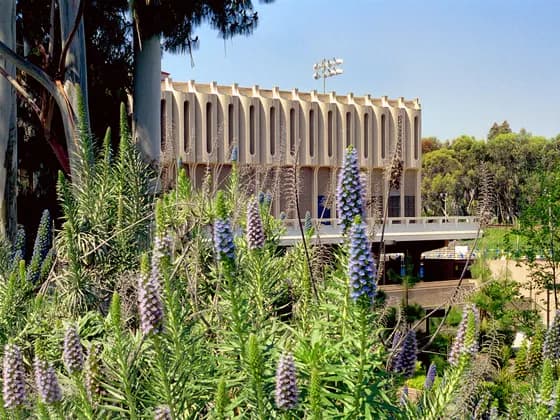
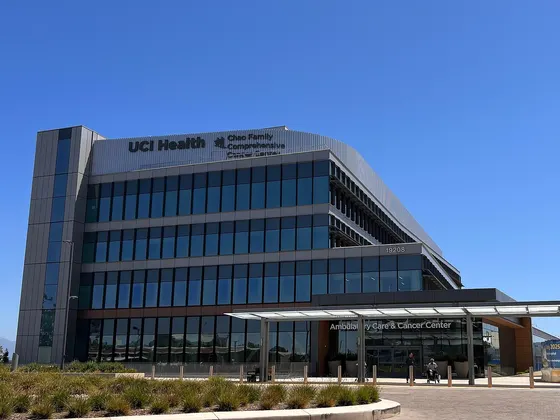

Photo: David Eppstein · CC BY-SA 3.0 · cropped
Photo: CeruleanFilms · Public domain · Photo: Alexliwiththe3 · CC BY-SA 4.0 · Photo: NorbertNagel · CC BY-SA 4.0
The UC Irvine School of Medicine MD program at a glance (2027 entry)
The University of California, Irvine School of Medicine (UC Irvine School of Medicine, or UCI) offers a four-year MD program in Orange County, California. Your first two years are on the UC Irvine campus in Irvine. Most of the last two are at UCI Medical Center in the nearby city of Orange and at affiliated sites, several of them in Long Beach. The curriculum is called iTEACH, short for Technology-Enhanced, Activity-Coordinated, Humanistic.
Years 1 and 2 form the pre-clerkship (pre-clinical) phase, about 19 months of mainly classroom-based study from August of your first year to mid-March of your second, summer break included. Science comes in systems-organized blocks with a clinical thread beside it. From the second half of Year 1 you also spend a weekly session in a clinic with your own preceptor, a practicing physician who supervises you.
After Step 1 of the United States Medical Licensing Examination (USMLE), the national licensing exam series, Year 3 starts in May and brings seven core clerkships. A clerkship is a required clinical rotation in which you work on a hospital or clinic team. Year 4 adds emergency medicine, electives and two selectives, required rotations picked from a set list. One is in intensive care; the other is an acting internship, in which you take on the duties of an intern, a doctor in the first year of residency training.
To graduate you must pass Step 1, Step 2 CK (Clinical Knowledge) and the Clinical Performance Examination (CPX), a California-wide exam with standardized patients, people trained to act as patients. The Liaison Committee on Medical Education (LCME), which accredits MD programs in the United States, first accredited the school in 1961.
| Degree | MD |
|---|---|
| Program length | 4 years; requirements must be completed within six academic years |
| Class size | 114 first-year positions per admissions page; 125 matriculated in 2026 |
| Curriculum | iTEACH: systems-organized blocks plus a clinical thread in Years 1 and 2 |
| Anatomy | Regional approach with laboratory dissections and demonstrations; four Year 1 practicals |
| First patient contact | Standardized patients from week one; weekly preceptor clinic from mid-Year 1 |
| Clinical sites | UCI Medical Center, Veterans Affairs (VA) Long Beach, Children's Hospital of Orange County, clinics |
| Step 1 timing | After passing Year 2 courses, by about mid-May, before clerkships |
| Grading | Honors where applicable, Pass, Fail; honors not applicable in Year 1 |
| Accreditation | LCME, Full; next survey 2032-33 (directory updated October 14, 2026) |
What makes the UC Irvine School of Medicine MD program different
One patient case followed across three settings
In each Year 1 systems module you learn the examination, then see a standardized patient in the Clinical Skills Center. You meet the same patient again in the Simulation Center, with the illness further along, learn the matching ultrasound scans and often take the case into a team-based small group. Year 2 repeats this for complaints such as chest pain and fever.
Ultrasound in all four years
Ultrasound starts in Year 1 with hands-on sessions, led by senior students, residents, fellows and faculty, that link live scanning to anatomy and physiology. In Year 3 you pick three modalities, such as cardiac, gallbladder or trauma, master three diagnostic-quality scans in each and complete an assessment for each.
Mission-based programs in five focus areas
Five mission-based programs add training in one area to the MD. They are PRIME-LC for Latino communities, PRIME LEAD-ABC for African, Black and Caribbean communities, HEAL-IM for integrative medicine, the PRIDE Program for LGBTQ+ health and Space MED for space medicine.
Your own preceptor's clinic, every week
In Patient and Community Engagement (PACE), from mid-Year 1 through Year 2, you spend a weekly clinic session with a specific preceptor, with reflection sessions afterward. You are also asked to analyze how care works in that practice and to carry out a quality improvement project there. Several mission-based programs place students with preceptors who serve their communities.
A house system across all four classes
ZotUnity sorts every student into one of six houses of 60 to 80 students from all four years. Each house has a faculty career advisor, who advises you from your first day, upper-class student leaders and its own peer tutors, plus monthly house bonding activities.
Reflection and the humanities inside clerkships
Medical Ethics, Sociology and Humanities (MESH) runs through Years 1 and 2. In Year 3, surgery and internal medicine each require a two-hour small-group session on patient encounters that troubled or inspired you. Family medicine adds Medical Reader's Theatre, short skits performed with residents of a retirement community, followed by discussion.
How UC Irvine School of Medicine teaches medicine
The school says its curriculum has moved over the last ten years from a traditional, subject-by-subject structure to the systems-organized iTEACH approach. In Years 1 and 2, course directors coordinate their schedules within these blocks, so related subjects such as anatomy, histology and physiology are scheduled together. A session can be a lecture, live or pre-recorded, a lab, a small-group discussion, self-directed study or a clinical correlate, where a clinician links the science to real cases.
Years 1 and 2 each have a clinical thread: the Clinical Foundations course and the PACE clinic. On Tuesday and Thursday afternoons you work in groups of three to five in the Clinical Skills and Simulation Centers with Dean's Scholars, faculty physicians experienced in teaching clinical skills.
You need an iPad by the first week, and Year 1 and 2 exams are generally taken on your own device. Each course director marks in the syllabus which sessions are mandatory. In Years 1 and 2 you get two personal and two academic one-day absence vouchers a year, requested at least 30 days ahead.
From Year 3 you learn mainly on clinical teams. Clinical Foundations III prepares you for clerkships and returns as an intersession linking topics across specialties. Clinical Foundations IV prepares you for residency, the specialty training that follows medical school. The four Clinical Foundations courses form one thread.
The ways you will learn
| Lectures and small groups | Many courses pair lectures with clinical correlates. Pharmacology adds small-group problem-solving, microbiology adds small groups with clinicians and laboratory sessions, and Clinical Foundations II is mostly small groups. |
|---|---|
| Standardized patients | Each portrays a patient's condition the same way for every student, so your history taking, examination and communication are judged against one standard. The Clinical Skills Center runs more than 100 such events a year across all four years. |
| Simulation | High-fidelity mannequins let you manage a patient whose condition changes as you act, followed by a debrief. Clerkship students return for simulation sessions and procedural skills. |
| Clerkship teaching | On internal medicine you see your two or three patients before rounds each morning, present them at teaching rounds and write admission and progress notes. Psychiatry adds two hours of lectures and an hour of problem-based cases each week. |
How anatomy is taught at UC Irvine School of Medicine
Gross Anatomy and Embryology is a Year 1 course. It runs through the Normal Human Structure and Function block from August to December and returns in Mind and Brain, which adds neuroanatomy and the head and neck. It stresses normal structure and function, abnormal findings you may meet in clinic, and how the body develops.
The school says anatomy is taught through a regional approach, one region of the body at a time, with an emphasis on laboratory dissections and demonstrations. Lectures, X-ray images, discussions and clinical correlates support the laboratory work, and the course objectives ask you to teach clinical anatomy to classmates and link it to examination, imaging and procedures.
The 2026-27 Year 1 schedule has four anatomy practical exams, in September, October and December 2026 and March 2027, alongside written exams combining anatomy with other subjects. Donors come through the UC Irvine Willed Body Program, and the school honors them at a Ceremony of Thanks attended by families, faculty and students.
When you first meet patients at UC Irvine School of Medicine
Your first clinical session comes in your first week. The Clinical Skill Boot Camp is a multi-station course with standardized patients, simulation and procedure training, ending in a debrief with clinicians and basic science course directors.
Year 1 clinical skills start with history taking, then systems modules: cardiovascular, gastrointestinal, pulmonary, HEENT (head, eyes, ears, nose and throat), neurology and musculoskeletal. Midway through the year you begin the Top Ten Family Medicine Chief Concerns with flank pain, dizziness and headaches. Year 2 adds back pain, fever, fatigue and edema, chest pain, shortness of breath and abdominal pain.
Clinical Foundations I and II teach interviewing, examination, clinical reasoning and health promotion, with feedback on your interviews, examinations and written patient reports. You present an evidence-based review of a topic you choose in Year 1 and, in Year 2, a case from your PACE clinic.
Real patients come through PACE, the weekly clinic with your preceptor, from the second half of Year 1 on the current curriculum map through Year 2. You may also volunteer at free clinics outside the curriculum if it does not clash with your schedule.
The UC Irvine School of Medicine curriculum, year by year
- Year 1 (MS1)
The normal body and first clinic sessions
The school numbers the years MS1 to MS4. MS1 runs from August to late May in three blocks with a clinical thread. In 2026-27, classes run from August 10, 2026 to May 28, 2027, after an orientation week that ends with the White Coat Ceremony.
- Normal Human Structure and Function, August to December: gross anatomy, embryology, histology and physiology, in modules from basic biological principles through the cardiovascular, gastrointestinal, endocrine, reproductive, pulmonary and renal systems.
- Mind and Brain, from January: neuroscience, neuroanatomy, head and neck anatomy, special senses, behavioral science and medical ethics.
- Molecular Basis of Medicine, from April: biochemistry and molecular biology, medical genetics and immunology.
- Clinical Foundations I, including epidemiology and biostatistics, and PACE 1.
- MESH I and Behavioral Science I, which covers issues such as domestic violence and caring for underserved patients.
- A summer break of about two months, which you can use for research.
- Year 2 (MS2)
Disease, treatment and Step 1
MS2 turns to how disease develops and is treated, organized by organ system. Teaching runs from August to mid-March, ending March 18 in 2026-27.
- General Principles of Pathology and Pharmacology: inflammation, neoplasia (tumor growth), pharmacokinetics and pharmacodynamics (how the body handles drugs and how drugs act) and autonomic pharmacology.
- Infection and Host Response, with Blood and Inflammation: medical microbiology, antibiotics, immunopathology and immunopharmacology.
- Disease and Therapeutics: pathology, pharmacology, behavioral science and ethics in modules on cardiovascular, pulmonary, renal and urogenital, gastrointestinal, endocrine and gynecologic, neurologic and psychiatric, hematologic and musculoskeletal disease.
- Clinical Foundations II and PACE 2.
- The Comprehensive Basic Science Examination (CBSE), a practice test from the National Board of Medical Examiners (NBME), in March, then dedicated Step 1 study.
- Year 3 (MS3)
Core clerkships
MS3 begins in mid-May with Clinical Foundations III (CF III) and Radiology, which you must pass before clerkships start later that month. Your rotation order comes from what the school calls the MS3 stream selection process. Lengths below are from the handbook's clerkship overview, approved in August 2024.
- CF III: electronic medical record training, privileges at the main clinical sites, teamwork, professionalism, infection prevention and basic life support.
- Radiology (1 week): using imaging to solve clinical problems.
- Internal medicine (8 weeks): three-week ward rotations at UCI Medical Center and VA Long Beach, plus two one-week mini-electives.
- Surgery (8 weeks), with a chance to rotate with the vascular and endovascular surgery team.
- Obstetrics and gynecology (6 weeks): wards, outpatient clinic, labor and delivery and the operating room.
- Pediatrics (6 weeks): the inpatient service, outpatient clinics and the newborn nursery.
- Psychiatry (6 weeks): two three-week blocks on services such as adult or adolescent inpatient units, consultation-liaison and emergency psychiatry (patients elsewhere in the hospital), or substance use treatment, plus a weekly outpatient half-day.
- Family medicine (4 weeks) with a family physician in a UCI-affiliated clinic, and neurology (4 weeks) with the inpatient stroke and non-stroke teams and in clinics.
- Electives: 2 to 6 weeks by the end of MS3, for students entering MS3 after May 23, 2026.
- Year 4 (MS4)
Selectives, electives and residency applications
MS4 starts in late May once every MS3 requirement is done, which the school says leaves more time to explore specialties before residency application deadlines. The curriculum map opens the year with the CPX and Step 2 CK study.
- Emergency medicine (2 weeks): acutely ill and injured patients in the emergency department, with simulation, weekly conferences and attention to social determinants of health.
- Intensive care unit (ICU) selective (4 weeks) in surgery, medicine, pediatrics or neurology under the May 2026 requirements, as part of the ICU team; the catalogue also lists anesthesiology.
- Acting internship (4 weeks) in medicine, pediatrics, family medicine, or qualifying surgery or obstetrics and gynecology. Also called a sub-internship, it gives you an intern's full ward duties for half an intern's patient load.
- Electives, totaling at least 28 weeks across MS3 and MS4.
- Interview months: rotations are blocked in November and December, plus October or January depending on your specialty.
- Clinical Foundations IV (2 weeks) in the spring before graduation: a resuscitation boot camp, Advanced Cardiovascular Life Support (ACLS) certification, reading X-rays for tube placement and writing prescriptions.
How you are assessed at UC Irvine School of Medicine
Courses and clerkships are graded Honors where a course offers it, Pass, Fail or Incomplete under the May 2026 grading policy, and the exam policy marks honors as not applicable in MS1 courses. Class rank comes only from MS2 courses, worth 30%, and MS3 clerkships, worth 70%, with Honors earning more points than Pass.
Rank sorts you into groups for the Medical Student Performance Evaluation (MSPE), the dean's letter residency programs read. Outstanding covers roughly the top 10% and Excellent the next 20%, followed by Very Good, and Good for anyone who failed and remediated a course.
Years 1 and 2 bring exams every few weeks. The 2026-27 MS1 schedule lists 22, including NBME subject exams, national standardized tests, in histology, physiology, neuroscience, immunology and biochemistry. Where a course sets a minimum NBME score, you get one retake.
Each core clerkship ends with an NBME subject exam, or shelf exam, in that specialty. It counts for 10% to 50% of the grade, as each clerkship director decides, and you must reach the 6th percentile to pass. Grades can also use faculty and resident evaluations, simulation and Objective Structured Clinical Examinations (OSCEs), timed stations with standardized patients.
MS3 has OSCEs in internal medicine, obstetrics and gynecology, family medicine, neurology, surgery and pediatrics. After the core clerkships comes the CPX, designed by clinicians and educators from 10 California medical schools to test history taking, examination and communication with standardized patients. You have three attempts to pass it.
The USMLE is the licensing exam series for MD students. Step 1 covers the sciences behind medicine and has been pass/fail since January 26, 2022; Step 2 Clinical Knowledge (CK) covers clinical medicine. For MD students, attending an LCME-accredited program is what makes you eligible, and DO students and international graduates qualify through other routes.
- Step 1: you sit it after passing all MS2 courses and never during CF III and Radiology. To start clerkships on time you must take it by a set Tuesday in mid-May (May 12 in 2026), and spring results often arrive only in mid-June.
- If you score below 60 on the March CBSE, you must reach 65 on an NBME self-assessment at least five business days before Step 1.
- If you fail Step 1, you may finish your current rotation, then go on personal leave to study and build a new clinical schedule once you pass. Not passing within a year of finishing MS2 makes you eligible for probation, and not passing within 24 months and three attempts makes you eligible for dismissal.
- Step 2 CK, in MS4: schedule it by July 1, make a first attempt by October 1 and pass by February 1. The Match is the national system that places graduates in residency programs. The school will not certify you for it without a Step 1 pass and a Step 2 CK attempt by about February 15.
- On the current schedule, a student entering in 2027 (the Class of 2031) would finish MS2 teaching in mid-March 2029 and sit Step 1 between late March and about mid-May 2029. Step 2 CK would be due by October 1, 2030, with a pass by February 1, 2031.
- In August 2026 the USMLE program announced a move to designated testing dates from January 2029, with Step exams offered less often each year. A June 2026 notice had named 2028. Both of your Step exams would fall after the change.
- USMLE says it will publish testing dates more than a year ahead, and it has urged schools to revisit rules on when students must test, so UC Irvine's deadlines may change.
- The LCME directory, updated October 14, 2026, lists the program as fully accredited, with its next survey in 2032-33. The school says it was reaccredited for a full eight years in 2025.
UC Irvine School of Medicine clinical rotations: where you will actually train
Years 1 and 2 are based mostly in the Medical Education Building on the Irvine campus. Clinical training then centers on UCI Medical Center in the city of Orange, which UCI Health now calls UCI Health — Orange. The school keeps an office there for third- and fourth-year students, and the handbook's wellness page calls this a split medical campus.
UCI Medical Center is the primary teaching hospital, with a regional burn center and the Chao Family Comprehensive Cancer Center, designated by the National Cancer Institute. As a Level I adult trauma center, it is equipped to treat life-threatening injuries around the clock. Internal medicine and psychiatry also use the Veterans Affairs (VA) Long Beach Healthcare System and its Tibor Rubin VA Medical Center.
For pediatrics, Children's Hospital of Orange County (CHOC), now part of Rady Children's Health according to both its own site and the 2026-27 catalogue, says UC Irvine students do their clerkship rotation there. CHOC adds that UCI Medical Center keeps newborn nursery, neonatal intensive care and pediatric emergency services. Family medicine places you with a family physician at a UCI-affiliated clinic. Every required clerkship and selective must be taken through UC Irvine, not as an away rotation at another school.
Electives spread wider. Many run at UCI Medical Center, VA Long Beach or on campus, and others at affiliated hospitals and clinics mainly in Orange, Los Angeles and San Bernardino counties, including several rural locations. The UCI Health Family Health Centers in Santa Ana and Anaheim, which mostly serve Spanish-speaking patients on Medi-Cal, California's Medicaid program, train residents and medical students.
Base for Years 1 and 2. The school lists UCI Health — Irvine, a 144-bed hospital opened on December 10, 2025, among its clinical training grounds.
- UC Irvine campus: Medical Education Building
- UCI Health — Irvine
The primary teaching hospital for clerkships, with CHOC for pediatrics.
- UCI Medical Center (UCI Health — Orange)
- Children's Hospital of Orange County (CHOC), now Rady Children's Health
Internal medicine and psychiatry use the VA. Long Beach Memorial and Miller Children's host electives, which need 30 business days' notice to change or drop. PRIME LEAD-ABC students do most third-year rotations in Long Beach hospitals and clinics.
- VA Long Beach Healthcare System (Tibor Rubin VA Medical Center)
- Long Beach Memorial Medical Center
- Miller Children's & Women's Hospital Long Beach
Both are federally qualified health centers, community clinics that see all patients regardless of ability to pay, and both train medical students. PRIME-LC students do third-year rotations in Santa Ana and other underserved areas.
- UCI Health Family Health Center, Santa Ana
- UCI Health Family Health Center, Anaheim
The school names Children's Hospital Los Angeles among its partner institutions.
- Children's Hospital Los Angeles
- Affiliated hospitals and clinics in Orange, Los Angeles and San Bernardino counties
Electives, selectives and away rotations at UC Irvine School of Medicine
In MS1 and MS2 you can take electives noted on your transcript. Options include Medical Spanish, Medical Vietnamese, Culinary Medicine, Caring for the Underserved, Surgical Skills, Ultrasound and Playing Doctor, which uses improvisational theater to sharpen communication. Research electives of up to three weeks fit in the summer after MS1.
For students entering MS3 after May 23, 2026, the clinical years need at least 28 weeks of electives, 22 of them clinical, at 30 or more contact hours a week. Up to 6 of those weeks can come before MS4, including at least 2 in MS3, and research electives can supply up to six.
No more than 16 elective weeks after MS3, research included, can be in one specialty. Longitudinal electives, which run across a whole year, are only for MS4 students or mission-based programs, and some mission-based coursework earns elective credit.
In MS4 you can take away rotations, electives at other LCME-accredited schools. You must apply for UC Irvine's approval at least 30 days before the rotation starts and wait for it before you begin. Changing or dropping an elective needs notice ranging from 11 business days at UCI Health sites to 90 at VA Long Beach.
- Emergency Medicine Ultrasound: enough emergency department shifts to perform at least 75 scans a week.
- Geriatrics: clinics, house calls, skilled nursing facilities and a visit to the Forensic Center, which evaluates elder abuse.
- Integrative Medicine at the Susan Samueli Integrative Health Institute in Costa Mesa and the Family Health Center in Santa Ana.
- UCI Outreach Clinics: direct care for uninsured patients.
Dual degrees and research years at UC Irvine School of Medicine
The school's dual-degree page names the MD/MBA, MD/MPH and MD/PhD, and the student handbook adds the MD/MS-BATS. Academic leave for a dual degree does not count toward the six-year limit for finishing the MD. If you study for the degree on leave after MS3, as MBA and MPH students do, you must be in good academic standing. You must also take the CPX and make your first Step 2 CK attempt before the master's coursework starts.
The Medical Student Research Program (MSRP), run by UC Irvine's Institute for Clinical and Translational Science, pairs you with a faculty mentor for a project that leads to an abstract, poster or publication. The Dean's Office Summer Research Fellowship pays stipends for research at UC Irvine. Two programs funded by the National Institutes of Health (NIH), on diabetes, digestive and kidney diseases and on aging, support 8 to 12 weeks of full-time research in the summer after MS1. A research leave of absence is also possible.
- MD/PhD: the Medical Scientist Training Program (MSTP) pairs the MD with a PhD from any UC Irvine graduate program you qualify for, in a normative eight years and at most 10. You apply through extra questions on the secondary application, and a fellowship covers a stipend, tuition and fees.
- MD/MBA: five years, with the Paul Merage School of Business. You apply in MS2, and MBA coursework starts after MS3.
- MD/MPH: five years. The program page says you apply in your second or third year and the catalogue says the third; both say MPH coursework starts after MS3.
- MD/MS-BATS: the Master of Science in Biomedical and Translational Science, a one-year clinical research degree that ends in a thesis or capstone project.
- PRIME-LC (Program in Medical Education for the Latino Community), founded in 2004: a five-year MD plus a master's such as an MPH or MBA. It admits about 12 Spanish-speaking students a year, who apply on the secondary application and have an extra interview in Spanish.
- PRIME-LC students take Chicano-Latino Studies seminars in MS1 to MS3, do a four-week clinical rotation in Latin America after MS3 and complete the master's year before MS4.
- PRIME LEAD-ABC (Program in Medical Education Leadership Education to Advance Doctoring – African, Black and Caribbean): four years, with an optional fifth year at UC Irvine for a master's. It selects 8 to 12 students a year through the secondary application, and its first students started in fall 2019.
- HEAL-IM (Health Education to Advance Leaders in Integrative Medicine): a four-year track. Admitted students apply from March, with interviews from April to mid-June. It adds monthly seminars and culinary medicine in MS1 and MS2, quarterly small-group mentorship in MS3, integrative practitioner shadowing and an MS4 elective at the Susan Samueli Integrative Health Institute with a scholarly project.
- PRIDE Program, founded in 2026: four years of training in LGBTQ+ health, including PACE with faculty who serve LGBTQ+ patients, a service-learning project and a scholarly or capstone project. You apply separately after acceptance.
- Space MED (Medicine, Engineering & Design): a four-year space medicine program, open for now only to matriculating students, who apply with a CV and personal statement. It includes rotations with space medicine fellows at the commercial spaceflight companies SpaceX or VAST, possibly a week at NASA, and a capstone research project.
Facilities and support at UC Irvine School of Medicine
Where you will learn
The Medical Education Building on the Irvine campus, 65,000 square feet according to the catalogue, is the hub for nearly all non-hospital teaching and houses the PRIME-LC, PRIME LEAD-ABC and HEAL-IM programs. Its Telemedicine Center has a 60-seat interactive televideo auditorium.
The Clinical Skills Center on its second floor has 17 exam rooms, each with ceiling-mounted 360-degree cameras and a bedside ultrasound machine, watched from 14 monitor stations through one-way glass. The Simulation Center has a full-scale operating room, an emergency trauma bay, an obstetrics suite and a critical care unit, with two debriefing rooms.
Ultrasound teaching grew from a four-week emergency ultrasound elective that UC Irvine students have taken since 2003. Its final stage is still an emergency department elective for MS3 and MS4 students, who teach peers, practice ultrasound-guided vascular access and can join research.
Support while you study
ZotUnity's six houses are Vulcan, Panacea, Sekhmet, Artemis, Lonopuha and Apollo. Each is themed on a figure the school links to medicine, such as Panacea, the Greek goddess of healing, or Lonopuha, the Hawaiian god of music, peace and healing. Your house's faculty career advisor meets you at milestones and approves your MS4 schedule, and specialty advisors guide MS3 students through residency applications.
ZotUnity Academics provides peer tutoring by paid MS2 to MS4 student teachers. MS1 students get two-hour reviews ahead of exams and one-hour case sessions every two weeks in groups of five to eight. MS2 adds monthly board-style question sessions, and MS3 brings shelf reviews for the seven core rotations plus OSCE reviews. Students who struggle get letters of support and a learning plan, and anyone can book coaching with a learning specialist, with no limit on sessions.
You can have eight confidential counseling sessions a year with School of Medicine counselors, with referrals beyond that. Counselors run quarterly process groups for each class on topics such as Step 1 stress, and trained peer mentors from MS2 to MS4 offer one-on-one support. Staff also review every exam grade every two weeks to spot problems early.
Is the UC Irvine School of Medicine program right for you?
This program may suit you if
- You want standardized patients from your first week and your own preceptor's clinic every week from the second half of Year 1.
- You would like ultrasound built into all four years, with diagnostic-quality scans to master in Year 3.
- You feel drawn to Latino or Black communities, LGBTQ+ health, integrative medicine or space medicine and want a structured program for it.
- You would value a house of 60 to 80 students from every class, with a faculty advisor and peer tutors.
- You like reflecting on patient encounters and would welcome humanities sessions inside your clerkships.
Things to think about
- Step 1 has a firm window: taking it after mid-May usually costs you your assigned clerkship schedule and can stop you finishing the clinical years in two.
- Year 2 grades matter: MS2 courses can earn Honors and make up 30% of the class rank behind your dean's letter.
- Shelf exams carry weight: up to half of a clerkship grade, a 6th-percentile pass mark, and personal leave if you fail or miss shelf exams in two clerkships.
- Your clinical years move between Orange, Long Beach and other sites, away from the Irvine campus where you start.
UC Irvine School of Medicine MD program — frequently asked questions
Applying to UC Irvine School of Medicine?
How to get into UC Irvine School of Medicine
Prerequisites, MCAT, AMCAS personal statement, secondaries and interview, step by step.
Open the guide →UC Irvine School of Medicine admissions profile
MCAT and GPA profile, acceptance rate, interview format and key dates.
See the profile →Compare UC Irvine School of Medicine with other schools
Put the teaching style, anatomy teaching and clinical sites next to another school.
Open the comparison →Prepare for the UC Irvine School of Medicine interview
Format breakdown, school-specific sample questions and prep tips from tutors who interviewed here.
Read the guide →Where this UC Irvine School of Medicine program guide came from
This guide was written from 90 official sources — University of California, Irvine School of Medicine's own program pages and curriculum documents, plus the accreditor and the hospitals and health systems the school trains students in where they publish detail — read on 2026-10-15, then checked claim by claim against those sources.
- UC Irvine School of Medicine: Medical Education
- UC Irvine School of Medicine: MD Program Curriculum (iTEACH)
- iTEACH Curriculum Map, revised August 2025
- UCI General Catalogue 2026-27: School of Medicine and the MD program
- Student Handbook: Requirements for the MD Degree (approved May 2026)
- Student Handbook: Student Orientation and the MS1 and MS2 curriculum
- Student Handbook: Overview of the Clinical Clerkships (approved August 2024)
- Student Handbook: MS4 Overview
- Student Handbook: AY 2026-27 School of Medicine academic calendar
- Student Handbook: AY 2025-26 School of Medicine academic calendar
- Student Handbook: USMLE Step 1 Preparation and Clinical Rotations Scheduling Policy for 2026-2027
- Student Handbook: Exam Administration and Procedures
- Student Handbook: Grading Policy
- Student Handbook: Requirement to Pass the NBME Shelf Exam
- Student Handbook: Calculating Class Rank Policy
- Student Handbook: Clinical Performance Exam (CPX)
- Student Handbook: UCI Electives (effective for students entering MS3 after May 23, 2026)
- Student Handbook: Research Electives
- Student Handbook: Elective Offerings for MS1 and MS2
- Student Handbook: Preclinical Attendance Policy (approved January 2026)
- Student Handbook: Attendance (Clinical), vouchers and interview months
- Student Handbook: Leaves of Absence Policy
- Student Handbook: index of degrees, programs and policies
- Student Handbook: Student Wellness
- Course objectives: Anatomy and Embryology
- Course objectives: PACE 1
- Course objectives: PACE 2
- Course objectives: Clinical Foundations I
- Course objectives: Clinical Foundations II
- Clerkship objectives: Clinical Foundations IV
- UC Irvine School of Medicine: MD Program Electives course catalog
- Department of Medicine: Internal Medicine clerkship and electives
- Department of Surgery: clerkships and electives
- Department of Psychiatry and Human Behavior: clerkship and electives
- Department of Emergency Medicine: medical student clerkship and electives
- Department of Neurology: medical student education
- Medical Humanities and Arts Program: required curriculum
- Division of Educational Technology: Clinical Skills Center
- Division of Educational Technology: Simulation Center
- Ultrasound in Medical Education
- Ultrasound in Medical Education: curriculum stages
- Information for Incoming Students, 2026 entry (orientation, iPad, MS1 exam schedule)
- MD Program Admissions and 2026 first-year class profile
- UC Irvine Willed Body Program
- Willed Body Program: frequently asked questions
- ZotUnity house system
- ZotUnity Academics peer tutoring
- Academic Support Framework
- Learning Specialist Support
- MD Program Career Advising
- MD Program Health and Wellness
- MD Program Research Opportunities
- UC Irvine School of Medicine: Dual-Degree Programs
- Dual Degree: MD/MBA
- Dual Degree: MD/MPH
- Dual Degree: MD/PhD (Medical Scientist Training Program)
- MS-BATS: curriculum
- UC Irvine School of Medicine: Mission-based Programs
- PRIME-LC program overview
- PRIME-LC curriculum
- PRIME-LC admissions
- PRIME-LC frequently asked questions
- PRIME LEAD-ABC program overview
- PRIME LEAD-ABC curriculum
- PRIME LEAD-ABC: about the program
- PRIME LEAD-ABC admissions
- HEAL-IM admissions
- HEAL-IM core curriculum
- About HEAL-IM
- PRIDE Program: curriculum and training
- PRIDE Program: application information
- PRIDE Program: about us
- Space MED Program overview
- Space MED Program: program overview
- Space MED Program: curriculum and training
- Space MED Program: how to apply
- Office of Medical Education: LCME accreditation and timeline
- Why Choose UC Irvine School of Medicine: clinical training grounds and partners
- UC Irvine School of Medicine: clinical training sites
- UCI Health: UCI Health — Orange (UCI Medical Center)
- UCI Health: UCI Health — Irvine medical campus
- VA Long Beach Healthcare System: about us
- Rady Children's Health (formerly Children's Hospital of Orange County): UC Irvine affiliation
- LCME directory of accredited MD programs (updated October 14, 2026)
- USMLE Designated Testing Dates information hub
- USMLE: updated timeline, transition to designated testing dates in January 2029 (August 6, 2026)
- USMLE: transition to limited testing dates, original 2028 notice (June 23, 2026)
- USMLE Designated Testing Dates FAQs (updated August 6, 2026)
- USMLE: examination results and scoring
- USMLE Bulletin of Information: eligibility
Curricula are restructured between cycles. Anything here that decides your application — how anatomy is taught, a clinical campus assignment, a required research year — should be confirmed against the official page for your entry year.
Applying to UC Irvine School of Medicine?
We help US applicants with MCAT strategy, the AMCAS personal statement, secondary essays and interview prep — everything you need for a competitive UC Irvine School of Medicine application.