
The CUSM School of Medicine MD program
What you actually study, and where you will be
CUSM School of Medicine's MD is a 4-year program taught through team-based learning in an integrated curriculum, with patient contact from Year 2 and clinical rotations in Colton, the wider Inland Empire and Pomona (2027 entry). The main teaching hospital, Arrowhead Regional Medical Center, is across the street from the Colton campus. The first 18 months are organ-system courses built around weekly team cases, alongside required medical Spanish and community work. An 18-month clerkship phase pairs a dual-pass year of core clerkships with a 24-week semester that includes board preparation, and Year 4 brings a sub-internship and electives.
- Degree
- MD
- Length
- 4 years
- Teaching
- Integrated + Team-based learning
- Clinical contact
- Year 2

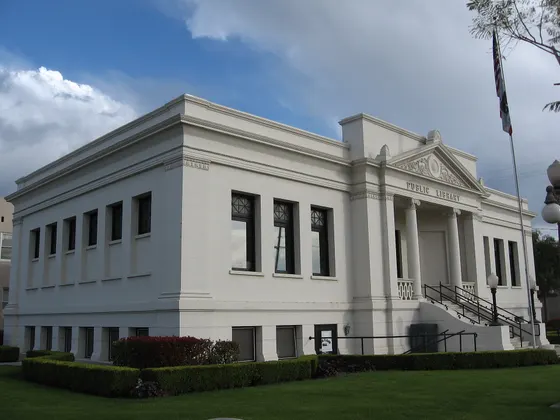


Photo: Rytyho usa · CC BY-SA 3.0 · cropped
Photo: Oleknutlee · Public domain · Photo: inkknife_2000 (7.5 million views +) · CC BY-SA 2.0 · Photo: Marco Antonio Alvarado · CC BY-SA 4.0
The CUSM School of Medicine MD program at a glance (2027 entry)
The California University of Science and Medicine (CUSM) School of Medicine offers a four-year MD program in Colton, California, about 50 miles east of Los Angeles. Colton is in the Inland Empire, the name for San Bernardino and Riverside counties. Each entering class has 130 students and starts in July. The school's primary teaching hospital is Arrowhead Regional Medical Center (ARMC), San Bernardino County's hospital.
The program runs in three phases over 170 instructional weeks. The pre-clerkship phase, the first 18 months, is classroom and lab study organized by organ system. The clerkship phase, the next 18 months, pairs a 24-week Professional Development Semester with a year of clerkships: full-time clinical rotations in eight core specialties. Year 4, Transition to Residency, prepares you for residency, the specialty training that follows medical school.
Science and clinical reasoning are taught together around a weekly patient case that you work through in a team. You belong to a college, a small learning community, throughout medical school.
Two required strands tie the program to its region: medical Spanish and CHANGE (Community Health Advocacy, Navigation and Engagement Experience), which pairs you with an Inland Empire nonprofit. CUSM expects graduates to understand the region's health needs and the social determinants of health, the conditions in people's lives that shape their health.
The Liaison Committee on Medical Education (LCME) accredits MD programs in the United States, and its accreditation makes MD students eligible to sit the United States Medical Licensing Examination (USMLE). CUSM's first class started in 2018, the program's initial year of accreditation. The LCME directory, updated October 14, 2026, lists it as Full, with its next survey in 2030-31.
| Degree and length | MD, 4 years from July; 170 instructional weeks |
|---|---|
| Class size | 130 students a year; the Class of 2030 entered in July 2026 |
| Main campus | Colton, next to Arrowhead Regional Medical Center |
| Teaching style | Integrated organ-system courses; flipped classroom and weekly cases in college teams |
| Anatomy | Cadaver lab for dissection-based learning, plus prosections and virtual anatomy |
| First patient contact | Standardized patients in Year 1; clerkships begin in Year 2 or Year 3 |
| Clinical sites | ARMC plus 15 handbook-listed sites, from Pomona to Rancho Mirage |
| Step exams | Both required; scores due two weeks before September residency applications |
| Grading | Pass/fail before clerkships; Honors, High Pass, Pass or Fail in clerkships |
| Accreditation | LCME, Full (directory updated October 14, 2026); next survey 2030-31 |
What makes the CUSM School of Medicine MD program different
Six core clerkships taken twice, practice pass first
You rotate twice through surgery, internal medicine, pediatrics, obstetrics and gynecology, family medicine and psychiatry. The first pass is formative: its evaluations give you feedback on your strengths and gaps. After a midyear review of your scores with a clerkship director, you return for a graded second pass.
A 24-week semester built around board study
The Professional Development Semester holds an 11-credit course preparing you for USMLE Step 1 and Step 2 CK, the first two parts of the three-step licensing exam. You plan the rest with a faculty advisor. It comes before or after the clerkship year, or between its halves for a limited number of approved students.
Medical Spanish is a required course
Spanish for Healthcare Professionals became required in Year 1 in 2024-25 and in Year 2 in 2025-26. Weekly large-group sessions include live interviews with standardized patients, people trained to play a patient, tied to the current organ system. Small-group labs with faculty and native speakers run every two weeks.
A community partner for your first 18 months
Through CHANGE you work with a nonprofit health or social service organization throughout the pre-clerkship phase. Alongside weekly lectures, guided reflection and required community hours, your partnership group delivers a capstone project, such as work on resource coordination, education or process improvement.
A county teaching hospital with trauma, burn and stroke centers
ARMC has a Level 1 trauma center, a burn center and a comprehensive stroke center, and trains residents in specialties from emergency medicine to psychiatry. CUSM says every student rotates with ARMC physicians, who also serve as CUSM faculty.
How CUSM School of Medicine teaches medicine
From the first day of class, basic science and clinical medicine are taught together. The pre-clerkship phase is built from a foundations course and seven organ-system courses, from musculoskeletal and skin to nervous system and behavior. Interdisciplinary faculty teams weave anatomy, histology, embryology, biochemistry, genetics, physiology, nutrition, microbiology, immunology, pathology and pharmacology into these courses, so you learn a system's structure, function, diseases and treatments together.
The school describes its approach as team-based learning in a flipped classroom: you prepare before each session, and class time goes on applying what you learned. The 2024 assessment handbook lists readiness assurance tests, which check your pre-class preparation, among the formative assessments in organ-system courses, the ones used for feedback. Longitudinal courses in clinical skills, health systems, community engagement, Spanish and research run alongside the organ-system courses.
In the clerkship phase, most learning happens on hospital and clinic teams supervised by faculty preceptors and residents. Weekly Core Learning Activities and specialty-specific Engaged Learning Activities revisit foundational science and tie it to clinical practice.
The ways you will learn
| Flipped classroom sessions | Large-group sessions run in the lecture halls, called Learning Studios. Faculty who record their sessions post them on Canvas, the learning system. |
|---|---|
| Weekly clinical case presentations | Your college team works through the week's patient case with faculty moderating, building a diagnostic algorithm, a step-by-step route from symptom to diagnosis. Case presentations count toward each organ-system course's grade. |
| Clinical skills and simulation | Weekly sessions on history-taking, physical examination and procedures, aligned with the week's case and often using standardized patients, with faculty and peer feedback. |
| Laboratory sessions | Each organ-system course includes lab sessions. The 2024 assessment handbook lists identifying specimens, interpreting lab results, virtual microscopy and radiologic imaging, with a practical exam at the end of the course that counts toward your grade. |
| College small groups | Health Systems and Professional Practice meets as faculty-led discussions in your college, on health care policy and economics, public health, ethics, professional identity and health equity. In Year 2 it adds journal clubs and community service. |
A typical week on the CUSM School of Medicine program
Pre-clerkship classes run Monday to Friday, 8:00 to 5:00, with independent study time built in. A workload policy caps scheduled, faculty-led sessions in each course at an average of 25 hours a week over the year. It expects at least 15 more hours a week of required work outside them, such as preparing for flipped sessions.
A typical week combines flipped sessions in the current organ-system course, a case with your college team, a clinical skills session on the same topic and medical Spanish. A weekly online quiz in USMLE Step 1 style shows your progress, but its score does not count toward your grade.
In most of the 2025 clerkship syllabi for the Class of 2027, a day starts with morning report, where the team discusses cases, then patient rounds, and ends with handover rounds. Specialty teaching falls on Tuesday and Thursday mornings, or a Thursday half-day in surgery. On Wednesdays all clerkship students meet at CUSM for two hours of Core Learning Activities. Teams assign evening, on-call and weekend shifts.
Duty hours follow limits adapted from those for first-year residents. You work no more than 80 hours a week or 24 hours in a row, with at least 8 hours off between shifts and one day in seven free, not always at a weekend. Missing more than three days of a six- or eight-week clerkship, or two days of a four-week one, means making up time.
How anatomy is taught at CUSM School of Medicine
Anatomy is taught within the organ-system courses. The 2026-27 catalog describes a cadaver laboratory for dissection-based learning: 10 dissecting tables arranged around an island, room for up to 65 students and refrigerated storage for 20 donors. A touchscreen at each table runs guided and self-directed lab sessions.
You also learn from prosections, donor specimens dissected in advance and then plastinated or preserved, with a full donor library. Virtual anatomy software and videos accompany each lab, and the labs also teach radiographic and ultrasound imaging. The technical standards you sign include being able to take part in cadaver dissection and lab work, with or without accommodations.
Before your first lab session you sign an agreement that includes treating donors with respect at all times. Photography is banned, and phones, laptops and other devices with cameras stay outside the lab.
Surgical and Procedural Anatomy (SURG-8411), an optional four-week, three-credit course in the Professional Development Semester, uses unembalmed donors. The June 2025 faculty newsletter reports that in that May's offering, students acted as primary surgeons, with surgeons and anatomists present. They performed procedures such as cricothyrotomy, chest tube placement, vascular dissection and coronary artery bypass grafting.
When you first meet patients at CUSM School of Medicine
Your first clinical encounters are simulated. In the first semester's Simulated Patient Care Clinic you interview and examine standardized patients in exam rooms whose cameras record each encounter for feedback. Simulation moves to hospital scenarios in the second semester and an Advanced Hospital Rounds Program of complex cases in the third.
Community contact starts in Year 1 too. At your CHANGE partner nonprofit, someone from that organization supervises you on site. The Vida medical Spanish program also links volunteers with local organizations, mobile clinics and health fairs serving Spanish-speaking patients across the Inland Empire.
Clerkships, where you help care for patients on hospital and clinic teams, begin in January of Year 2, or July of Year 3 if your Professional Development Semester comes first. The 2026-27 catalog also lists a one-credit Clerkship Boot Camp, open once you have passed every pre-clerkship course. It rehearses full histories and examinations, note-writing and presenting on rounds, and ends with an Objective Structured Clinical Examination (OSCE), a circuit of timed stations scoring your clinical skills.
The CUSM School of Medicine curriculum, year by year
- Year 1
Foundations and the first organ systems
Year 1 runs from July to late May; the courses below are those of the class that entered in 2026. The curriculum page describes a two-week orientation, while the 2026-27 calendar lists orientation as July 13 to 17, with classes from July 20. Three courses fill each semester, and four longitudinal courses run all year.
- Fall: Scientific Foundations of Medicine (6 credits), core biomedical science taught through normal metabolism, then Musculoskeletal and Skin (6) and Blood and Lymphoreticular Systems (5).
- Spring: Renal and Urinary Systems (4), Respiratory and Cardiovascular Systems (8), and Gastrointestinal System and Metabolism (5), including how gut hormones relate to diabetes and obesity.
- All year: Clinical Skills I (6 credits), Health Systems and Professional Practice I (4), CHANGE I (2) and Spanish for Healthcare Professionals I (4). The Spanish course aims for Novice-High proficiency, enough to ask patients simple, set questions.
- Spring: Academic Research Study I (1 credit), the start of your college team's research project.
- The Class of 2030's White Coat Ceremony, where students receive the short white coat and recite the Hippocratic Oath, was held on July 26, 2026.
- Year 2 (fall)
Endocrine, reproduction and the nervous system
The fall of Year 2, July to December, completes the pre-clerkship phase, which totals 77 credits for the class that entered in 2026. You must pass every pre-clerkship course to start clerkships. The handbook's program description sets 172 credits to graduate for the Classes of 2028 to 2030; its credit table lists 172 for the Classes of 2028 and 2029.
- Endocrine, Reproduction and Stages of Life (9 credits): hormones, reproductive anatomy and physiology, fertility and pregnancy, and endocrine disease across the lifespan, taught through cases and integrated labs.
- Nervous System and Behavior (8): the spinal cord, brainstem, cortex and senses, neuroimaging, and the assessment and treatment of neuropsychiatric disorders.
- Clinical Skills II (3 credits), plus Health Systems and Professional Practice II and CHANGE II (3 credits together).
- Spanish for Healthcare Professionals II (2) works toward Intermediate-Mid proficiency, enough for uncomplicated patient conversations. Its standardized patient encounters include delivering difficult news and discussing end-of-life decisions.
- Academic Research Study II (1 credit) completes your team's project from Year 1.
- Clerkship phase
The Professional Development Semester
The 18-month clerkship phase runs from January of Year 2 to June of Year 3. It contains the 24-week Professional Development Semester, placed before or after your clerkship year with your faculty advisor's guidance.
- Option 1: the semester from January to June of Year 2, then clerkships from July. Option 2: clerkships from January of Year 2, then the semester from January to June of Year 3.
- Option 3, for a limited number of approved students: the first clerkship semester, then the Professional Development Semester, then the second. You apply with a written plan and must finish the first semester in good standing.
- Everyone takes STEP 1/2CK Hybrid Board Preparation (ACAD-7501; 24 weeks, 11 credits, pass/fail). It covers exam structure, scoring, time management and test strategy for Step 1, plus core clinical principles for Step 2 CK.
- Its assessments include exams from the National Board of Medical Examiners (NBME), which co-sponsors the USMLE: the Comprehensive Basic Science Exam and its self-assessments.
- The rest you plan around goals set with your advisor: clinical experiences, research, teaching or community service.
- Electives, meaning courses you choose, include a 2- to 4-week Clinical Elective, the 8-week Clinical Procedures and Skills Proficiency course, Surgical and Procedural Anatomy (4 weeks) and a 4-week online Spanish communication course.
- Clerkship phase
The dual-pass clerkship year
The 12 months of core clerkships form two six-month semesters. In the first pass you learn each specialty's teams and routines, and evaluations in the six repeated specialties are formative. At the midpoint you review your scores one to one with a clerkship director, then return for the graded second pass, bringing what you learned across the other specialties. That return follows winter break if your clerkships start in July, or the Professional Development Semester under Option 3.
- Surgery and internal medicine: two 4-week segments each (8 weeks). Pediatrics, obstetrics and gynecology, family medicine and psychiatry: two 3-week segments each (6 weeks).
- Emergency medicine and neurology: one 4-week rotation each, taken once, and the 2024 assessment handbook counts their evaluations toward your grade. The curriculum page puts neurology in the first semester and emergency medicine in the second, while that handbook shows the reverse.
- Settings by specialty include the emergency department, the medicine, pediatric and neurology wards, labor and delivery, the operating room, a psychiatric unit and consult team, and outpatient clinics.
- Each semester includes seven NBME subject exams, known as shelf exams, national multiple-choice tests in each specialty, plus a multi-station OSCE.
- You log every patient you see. In the 2025 syllabi each rotation lists required clinical encounters, such as a pregnancy, a seizure disorder or a critical care patient.
- Year 4
Transition to Residency
Year 4 runs from July to May and is worth 36 credits. You apply for residency through the Electronic Residency Application Service (ERAS) and the National Resident Matching Program (NRMP) Match, which pairs applicants with residency programs. Match Day fell on March 19 in the 2026-27 calendar.
- A 4-week sub-internship, or acting internship, in which you take the role of an intern, a first-year resident. The 2025-26 syllabus lists admitting and discharging patients, reconciling medications, calling consults and signing out.
- Sub-internships are offered in all eight core specialties, at CUSM sites or other institutions.
- Radiology/Imaging (2 weeks), taught through reading, online modules and online case scenarios.
- Internship Prep Course (2 weeks), a capstone just after Match week that refreshes skills for your chosen residency. It ends with a situational judgment test on how you would handle workplace scenarios.
- 26 weeks of electives, plus 2 weeks of professional development for USMLE preparation, residency applications or an academic conference.
- Year 4 rotations add specialties such as infectious diseases, dermatology, oncology, palliative care, rheumatology, geriatric medicine, cardiology and nephrology.
How you are assessed at CUSM School of Medicine
Pre-clerkship courses are pass/fail, with 70 percent as the pass mark. Summative assessments, the ones that count, include an end-of-course multiple-choice exam, lab exams, case presentations and professionalism ratings, plus midterms in some courses. Clinical skills holds OSCEs at regular intervals, and the Spanish courses use them too. If you fail a pre-clerkship course, you retake the assessment after the semester ends, and you can sit Step 1 only once that remediation is passed.
Clerkships and most Year 4 rotations are graded Honors (90 to 100), High Pass (80 to under 90), Pass (70 to under 80) or Fail. The 2025 syllabi for the Class of 2027 built a core clerkship grade from five parts. Preceptor evaluations counted 30 percent, the shelf exam and OSCE 25 each, and patient logs and Core Learning Activities 10 each.
Step 1 of the USMLE, on the science behind medicine, has been reported only as pass or fail since January 26, 2022. Step 2 CK (Clinical Knowledge) still gives a three-digit score. CUSM requires you to pass both to graduate, with scores posted two weeks before the September residency application deadline. Step 1 before clerkships is encouraged, not required, and you may sit it during a clerkship, missing at most two days.
In August 2026 the USMLE program announced a move to designated testing dates from January 2029, with Step exams offered less often each year. Its June 2026 notice had named 2028. Dates are to be published more than a year before each calendar year, and the USMLE has urged schools to review rules that restrict when students test.
On the current schedule, a July 2027 entrant finishes pre-clerkship courses in December 2028. The board-preparation semester, your dedicated time for Step study, then runs January to June 2029 (Option 1), July to December 2029 (Option 3) or January to June 2030 (Option 2). Passing scores for both Steps would be due two weeks before the September 2030 application deadline. Every option puts that semester in or after January 2029, when designated testing dates begin.
- In the 2025 syllabi, dual-pass clerkships counted the higher of your two shelf scores and of your two OSCE results. Passing also required a passing shelf score and at least 70 percent on the final OSCE.
- A clerkship grade earned after remediation cannot exceed High Pass. Failing one course or clerkship after remediation brings a recommendation to repeat it; failing two or more can mean repeating the year or dismissal.
- Not passing Step 1 or Step 2 CK in a timely manner is one ground for academic probation.
- In the 2025-26 syllabi, preceptor evaluations made up 80 percent of a sub-internship grade and all of a clinical elective grade. Some Year 4 electives are pass/fail.
CUSM School of Medicine clinical rotations: where you will actually train
Core clinical training happens primarily at ARMC, at 402 North Pepper Avenue in Colton, which the catalog describes as a 456-bed hospital. ARMC's own pages report more than 4,000 employees, 400 physicians and more than 60 specialty services. Each year it sees about 90,000 emergency patients, 250,000 outpatient visits and more than 25,000 admissions.
ARMC's graduate medical education page lists 11 residency programs and five fellowships, with more than 230 residency positions; CUSM's MD page says ten residency programs. ARMC also takes students from Loma Linda University, St. George's University, the University of California, Riverside and Western University of Health Sciences.
The 2026-27 handbook names 15 more clerkship sites, from hospitals such as Riverside Community Hospital and Eisenhower Health to group practices. It adds that smaller Southern California sites are used less often and that new sites are added. The curriculum page's list also names Interim Psychiatric Care, Mission Community Hospital and Kidstrong Medical Group. Some clerkship time is spent in outpatient practices.
You must travel to whichever affiliated site you are assigned. Before clerkships you rank your preferred rotation order in the OASIS scheduling system, and the Office of Medical Education runs the lottery three to four months ahead. You then have a week to swap with classmates. For rotations more than 35 miles from campus, CUSM provides housing: a house, an apartment or a hotel room.
CUSM does not provide student housing near campus; the catalog points to more than 20 apartment complexes nearby. Public transport around Colton is limited, mostly local Omnitrans buses, and campus parking is first come, first served.
Primary teaching hospital, across the street from campus.
- Arrowhead Regional Medical Center
- Saint Bernardine Medical Center
- San Bernardino County Department of Behavioral Health
- Riverside Community Hospital
- Riverside University Health System (Moreno Valley)
- Inland Pediatrics
- Inland Psychiatric Medical Group
- Southwest Healthcare Rancho Springs Hospital (Murrieta)
- Valley Internal Physician (Murrieta)
- Talia Medical Group (Temecula)
- Universal Health Services (Wildomar)
- Choice Medical Group (Victorville)
- The Gastro Group (Victorville)
- New Life Medical Associates (Apple Valley)
- Eisenhower Health
- Pomona Valley Hospital Medical Center
Electives, selectives and away rotations at CUSM School of Medicine
Pre-clerkship electives run in the summer break after Year 1. A one-credit Healthcare Administration elective, covering hospital operations, quality and patient safety, health law and finance, is open from Year 2. In the clerkship phase, electives sit in the Professional Development Semester rather than the clerkship year.
Year 4 holds 26 weeks of electives in blocks of 2 to 4 weeks. Clinical electives put you on a team in a field that interests you. Non-clinical electives, approved in advance, cover research, scholarly activity or professional training; the curriculum page's examples include a teaching elective and advanced medical Spanish.
To keep Year 4 broad, no more than 16 weeks of clinical electives may be in one specialty. The school strongly encourages one elective in your intended specialty, one outside it, and one service elective in global or public health, in resource-challenged settings at home or abroad.
Most electives are at CUSM's affiliated sites, but you can also take away rotations at other institutions. One route is Visiting Student Learning Opportunities (VSLO), a service of the Association of American Medical Colleges (AAMC). The number of away weeks allowed is announced before Year 4 scheduling, and international electives are offered when possible.
Dual degrees and research years at CUSM School of Medicine
Research is part of the core curriculum. In Academic Research Study I, in the spring of Year 1, your college team of five or six designs a study using a public clinical dataset, mentored by college faculty. You complete human-subjects research training and a mock application to an Institutional Review Board (IRB), the committee that approves research on people. In Academic Research Study II, in the fall of Year 2, the team analyzes its data and presents a poster.
You can also apply in Year 1 to one of 15 optional Scholars Programs, usually running from the second semester of Year 1 to the end of Year 3. Each combines an education stage, a practicum of at least 30 hours and a capstone, such as a presentation or publication. Topics include basic science, biostatistics, global health equity, addiction medicine, point-of-care ultrasound and lifestyle medicine. Rural Medicine Scholars complete a clinical rotation at a rural partner site.
You may join only one program, and some are built to use the Professional Development Semester. Finishing by the deadline, typically the June before Year 4, earns the distinction of MD Scholar in your Medical Student Performance Evaluation, the dean's letter sent to residency programs.
The Biomedical Research Fellowship offers laboratory research in CUSM's research lab for four consecutive semesters, from Year 1 through the Professional Development Semester, at 8 to 12 hours a week. Fellows receive a $4,000 scholarship each semester and support for a national conference and a journal publication. First-year students with research experience apply by September 15.
There is also a seven-week summer research program with a stipend for first-year students, and grants of up to $1,000 a project. An external research elective gives 1 to 6 credits for research programs elsewhere, outside the credits needed to graduate. A leave of absence, which can be for scholarly enrichment, may total two years, within a six-year limit for the degree.
Facilities and support at CUSM School of Medicine
Where you will learn
The school building in Colton, more than 85,000 square feet, opened in July 2020. MD classes meet in lecture halls called Learning Studios that seat more than 130. Each college has its own classroom, 12 in all, which doubles as study space after hours. You receive a laptop at orientation, and required textbooks are provided online.
The Clinical Skills and Simulation Center has 15 examination rooms with multi-camera recording, four high-fidelity simulation labs with advanced manikins, a central monitoring room and three debriefing rooms. Training uses an electronic health record system, AI-generated feedback on your performance, and virtual and augmented reality for procedures. Interprofessional sessions bring medical, nursing and pharmacy students together.
The histology lab holds up to 72 students, and the research facility has more than 3,250 square feet of lab space for up to four principal investigators' teams. The Information Commons, the library, is on the first floor, with round-the-clock reference chat. There is also a 24-hour fitness center and a prayer and meditation room.
In September 2025 CUSM announced a grant from Yuhaaviatam of San Manuel Nation for M-PATH, its Mobile Program for Advancing Training in Healthcare. The program embeds students in rural clinics and community hospitals in high-need areas, with high-fidelity simulation on site.
Support while you study
Your college is your home base. Each has four student teams, two from Year 1 and two from Year 2, guided by four Core College Faculty, physicians and PhD scientists. Alternate and visiting faculty add specialist views. You stay in your college through the clerkships and Year 4.
In the pre-clerkship phase you also have a faculty advisor, who sees your academic record. You meet two or three times a semester, before the midpoint of each organ-system course, to review your results, study habits and well-being. From the Professional Development Semester, the Office of Personal, Academic and Career Excellence (PACE) provides academic coaching, tutoring, USMLE preparation and residency application help. Its counselors play no part in grading or promotion decisions.
Peer tutoring is free. Career advising follows the AAMC's Careers in Medicine model: every student completes its specialty assessments, followed by resident and specialty panels and application workshops. The Director of Counseling and Wellness offers one-to-one appointments, and a 24-hour Student Assistance Plan connects you with licensed counselors by phone or video, with up to three free visits.
Students run more than 80 registered organizations, each with a faculty advisor, from family medicine and pediatrics groups to street medicine and rural health.
Is the CUSM School of Medicine program right for you?
This program may suit you if
- You want most of your clinical training at a busy county teaching hospital with a Level 1 trauma center.
- You like meeting six of the eight core specialties first in a formative pass, with a feedback review at midyear, before returning to them for the graded second pass.
- You want medical Spanish as a required course with standardized patient practice, whatever your starting level.
- You learn well by preparing before class and working through weekly cases with a small, stable college team.
- You would value a semester you plan with an advisor, combining board study with options such as surgical anatomy on unembalmed donors.
Things to think about
- Clerkships begin in January of Year 2 at the earliest; until then, clinical practice centers on standardized patients and simulation, alongside community work.
- Clerkship sites stretch from Pomona to Rancho Mirage, Temecula and Victorville, local transport is mostly buses, and housing is provided only for rotations over 35 miles away.
- Six specialties come in three- or four-week blocks, so you change teams and settings often during the clerkship year.
- Medical Spanish is required in Years 1 and 2, so it takes a regular place in your week.
CUSM School of Medicine MD program — frequently asked questions
Applying to CUSM School of Medicine?
How to get into CUSM School of Medicine
Prerequisites, MCAT, AMCAS personal statement, secondaries and interview, step by step.
Open the guide →CUSM School of Medicine admissions profile
MCAT and GPA profile, acceptance rate, interview format and key dates.
See the profile →Compare CUSM School of Medicine with other schools
Put the teaching style, anatomy teaching and clinical sites next to another school.
Open the comparison →Prepare for the CUSM School of Medicine interview
Format breakdown, school-specific sample questions and prep tips from tutors who interviewed here.
Read the guide →Where this CUSM School of Medicine program guide came from
This guide was written from 41 official sources — California University of Science and Medicine – School of Medicine's own program pages and curriculum documents, plus the accreditor and the hospitals and health systems the school trains students in where they publish detail — read on 2026-10-15, then checked claim by claim against those sources.
- CUSM: MD Curriculum
- CUSM: Doctor of Medicine (MD)
- CUSM: MD Academic Calendar 2026-2027
- CUSM: Program Outcomes (entering class sizes)
- CUSM: Vida, Medical Spanish Program
- CUSM: Academic Advising and PACE
- CUSM: Scholars Program Overview
- CUSM: Scholars Programs
- CUSM: Scholars Program Structure and Timeline
- CUSM: Scholars Program FAQ
- CUSM: Student Research Opportunities
- CUSM Student Catalog/Handbook 2026-27, Revision 1.0.0 (July 7, 2026)
- CUSM MD Student Assessment Handbook (approved May 2024)
- CUSM Emergency Medicine Clerkship Syllabus, Class of 2027 (2025)
- CUSM Internal Medicine Clerkship Syllabus, Class of 2027 (2025)
- CUSM Surgery Clerkship Syllabus, Class of 2027 (2025)
- CUSM Neurology Clerkship Syllabus, Class of 2027 (2025)
- CUSM Family Medicine Clerkship Syllabus, Class of 2027 (2025)
- CUSM Obstetrics and Gynecology Clerkship Syllabus, Class of 2027 (2025)
- CUSM Pediatrics Clerkship Syllabus, Class of 2027 (2025)
- CUSM Psychiatry Clerkship Syllabus, Class of 2027 (2025)
- CUSM Sub-Internship Syllabus 2025-2026
- CUSM Clinical Elective Syllabus 2025-2026
- CUSM Non-Clinical Elective Syllabus 2025-2026
- CUSM: Partnerships (CUSM and ARMC)
- CUSM: Mission, Vision, and History
- CUSM: Registered Student Organizations
- CUSM news: full LCME accreditation for the MD program (February 13, 2026)
- CUSM news: Class of 2030 White Coat Ceremony (July 26, 2026)
- CUSM news: grant for the M-PATH mobile training program (September 23, 2025)
- CUSM Faculty Affairs Newsletter, Volume 7 (June 2025): Surgical Anatomy Elective
- LCME: Accredited Programs directory (updated October 14, 2026)
- LCME: About the LCME
- USMLE: Designated Testing Dates Information Hub
- USMLE: Updated timeline, designated testing dates from January 2029 (August 6, 2026)
- USMLE: Transition to limited testing dates starting in 2028 (June 23, 2026, since updated)
- USMLE: Designated Testing Dates FAQs
- USMLE: Examination Results and Scoring
- Arrowhead Regional Medical Center: home page
- Arrowhead Regional Medical Center: Medical Student Rotations
- Arrowhead Regional Medical Center: GME Residency and Fellowship Programs
Curricula are restructured between cycles. Anything here that decides your application — how anatomy is taught, a clinical campus assignment, a required research year — should be confirmed against the official page for your entry year.
Applying to CUSM School of Medicine?
We help US applicants with MCAT strategy, the AMCAS personal statement, secondary essays and interview prep — everything you need for a competitive CUSM School of Medicine application.