
UAMS College of Medicine Interview
Format, Questions & Prep Tips
UAMS College of Medicine medicine interviews for 2027 entry are a traditional interview. Published figures: Annual MD class size ~175; Applications received ~2,000–3,500 per cycle; Interview format Traditional one-on-one with faculty, ~30–45 min.
- Institution
- University of Arkansas for Medical Sciences College of Medicine
- Interview (2027 entry)
- September through February; rolling invitations after secondary review
- Decisions (2027 entry)
- Rolling decisions; most offers by January–February; waitlist movement through May

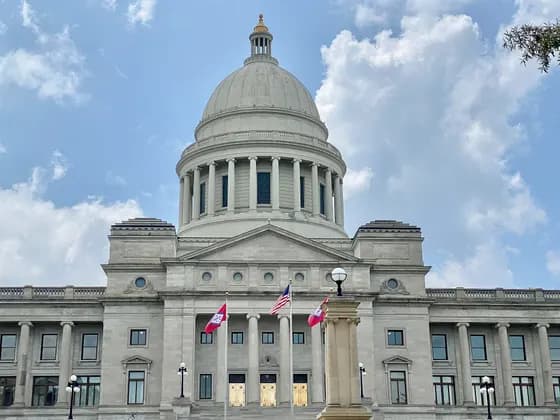

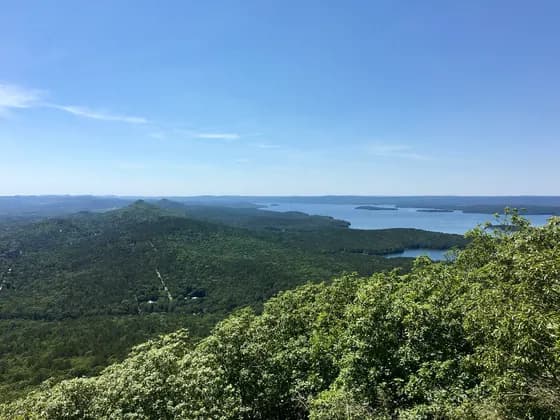
Photo: Mmcnell (Wikimedia Commons) · CC BY-SA 3.0 · cropped
Photo: w_lemay · CC BY-SA 2.0 · Photo: Cliff from I now live in Arlington, VA (Outside Washington DC), USA · CC BY 2.0 · Photo: Ronny2756 · CC BY-SA 4.0
How to get into UAMS College of Medicine (MD) medicine
Step-by-step: entry requirements, admission tests, personal statement, interview format and the key deadlines.
Open the guide →UAMS College of Medicine (MD) entry requirements
Admission profile, interview format, decision dates and what makes UAMS College of Medicine (MD) different.
See the profile →The UAMS College of Medicine MD program
Integrated + Team-based learning, 4 years, clinical rotations across Little Rock, Northwest Arkansas and regional campuses statewide.
See the program →The UAMS College of Medicine (MD) medicine interview
UAMS College of Medicine uses a traditional one-on-one interview format. Applicants meet individually with faculty physicians in sessions of approximately 30–45 minutes. Interviewers read the full application in advance and direct questions at the applicant’s background, motivation for medicine, and — critically — their plans to practice in Arkansas.
As the only allopathic medical school in Arkansas, UAMS has a specific state workforce mission. Interviewers probe candidates’ genuine commitment to the state, understanding of Arkansas's healthcare challenges, and ties to local communities. Out-of-state applicants without strong Arkansas connections face a very high bar.
The tone is collegial and conversational but focused — UAMS faculty want to understand whether each applicant is the kind of physician Arkansas needs, not just a high-performing test taker.
UAMS College of Medicine (MD) interview at a glance (2027 entry)
| Annual MD class size | ~175 |
|---|---|
| Applications received | ~2,000–3,500 per cycle |
| Interview format | Traditional one-on-one with faculty, ~30–45 min |
| In-state preference | Very strong (~85–90% AR residents) |
| Curriculum | Integrated 4-year MD |
| Application system | AMCAS + secondary |
| Interview window | September–February (rolling) |
Interview format
- Traditional one-on-one interview with a faculty member or physician.
- Sessions last approximately 30–45 minutes; some applicants have two interviews.
- Interviewers read the application in advance — expect specific questions about your background and experience.
- Student panel Q&A and campus tour of UAMS Medical Center are included in the interview day.
- Presentation on the MD curriculum, rural tracks, and residency match outcomes.
- No MMI stations — conversational, application-focused format.
Working towards the MCAT score UAMS College of Medicine (MD) expects? Build a week-by-week plan from your test date — free for the first two weeks.
Sample interview questions
Why UAMS and why do you plan to stay in Arkansas after your training?
This is the core question at UAMS. Be specific about your ties to Arkansas, understanding of the state's physician shortage, and your concrete plans for residency and practice. Vague answers about "wanting to give back" are insufficient.
Arkansas consistently ranks near the bottom of national health rankings. What do you see as the most important contributor to this, and what role can physicians play in addressing it?
Show specific knowledge:
- high rates of obesity
- diabetes
- cardiovascular disease
- low insurance rates
- Medicaid non-expansion
- rural primary care deserts
Connect to your career plans.
A patient in a rural Arkansas town refuses to travel to Little Rock for a specialist referral because of the distance and cost. How do you manage this?
Address telemedicine as a resource, cost assistance programs, the limits of rural care, the physician's advocacy role, and the tension between patient autonomy and clinical best practice.
Tell me about a clinical experience you had in Arkansas or a rural/underserved setting. What did you observe about the healthcare system, and how did it shape your goals?
Be specific and reflective. UAMS interviews are experience-specific — generic answers about "working in a hospital" are less impactful than concrete, Arkansas-grounded stories.
You are the only physician in a small rural Arkansas town. A patient presents with a condition that requires specialist care available only in Little Rock, three hours away. The patient cannot take time off work and has no transportation. What do you do?
This tests real rural medicine challenges. Address telemedicine options, the Arkansas Medicaid transportation benefit, coordinating with social work, the ethics of resource stewardship, and knowing when a condition is urgent enough to warrant arranging transport regardless.
What specifically drew you to primary care or family medicine (or another field), and how does that connect to UAMS's mission?
Even if you are unsure of specialty, UAMS values applicants open to primary care and rural medicine. Show that you understand why generalism is critical in a state with few specialists outside Little Rock.
Walk me through a challenging academic or research experience. How did you respond to difficulty?
Show resilience and a growth mindset. UAMS faculty understand that their applicant pool is not all top-tier research trainees — intellectual honesty and work ethic matter more than prestige credentials.
A newly diagnosed diabetic patient tells you he cannot follow the diet you recommended because healthy food is not available or affordable in his community. What is your response?
Address social determinants of health, food insecurity in rural Arkansas, practical alternatives (diabetes-friendly affordable food choices, SNAP, food banks), and your role as an advocate as well as a clinician.
How would you build trust with a patient who has had negative experiences with the medical system in the past?
Address historical medical mistrust (relevant in Arkansas's Black and rural communities), active listening, consistency, transparency, and following through on commitments.
If you could change one thing about how healthcare is delivered in rural Arkansas, what would it be and why?
Show you have thought specifically about Arkansas's system — hospital closure crisis, lack of OB care in rural counties, mental health deserts, and telemedicine gaps. Articulate a clear, realistic intervention.
You are the only physician in a small rural Arkansas town. A patient needs specialist care three hours away in Little Rock, but has no transportation and cannot take time off work. Talk with him about what to do.
Engage the real rural-medicine constraint: telehealth options, the Arkansas Medicaid transportation benefit, coordinating with social work, and judging when the condition is urgent enough to arrange transport regardless. UAMS's state workforce mission rewards practical problem-solving over deferral.
You are shown data placing Arkansas near the bottom of national health rankings, with the worst outcomes concentrated in rural counties. What do you think drives this, and what would you want to know?
Read it through the physician shortage, rural hospital closures, high diabetes and obesity rates, low insurance coverage, and Medicaid non-expansion. Distinguish association from causation and name the data that would sharpen a workforce-focused response.
A patient who has had repeated negative experiences with the medical system is guarded and reluctant to share information with you at a first visit. Talk with her.
Address historical medical mistrust — relevant in Arkansas's Black and rural communities — through active listening, transparency, consistency, and following through on commitments. Trust-building over time, not a single persuasive speech, is the point.
Walk me through a challenging academic or research experience and how you responded to difficulty.
Show resilience and a growth mindset. UAMS understands its applicant pool is not all top-tier research trainees — intellectual honesty and work ethic matter more than prestige credentials, so be candid about the struggle and what you learned.
A newly diagnosed diabetic patient tells you he cannot follow the diet you recommended because healthy food is neither available nor affordable where he lives. Respond to him.
Acknowledge the structural barrier, offer affordable and realistic alternatives (diabetes-friendly low-cost options, SNAP, food banks), and use teach-back. Show you would act as advocate as well as clinician, reflecting food insecurity in rural Arkansas.
Practise the UAMS College of Medicine (MD) interview
Rehearse the real format before the day — on demand with our AI interviewers, or live with a tutor.
Sit a mock with photoreal AI interviewers — any time
A timed MMI or panel interview on video — American & international voices — with interviewers who listen, react and press with follow-ups. Rubric-scored feedback and a replay the moment you finish.






Live mocks with a tutor who’s been in the room
A full UAMS College of Medicine (MD)-style mock with a medic or dentist tutor — honest scoring against real marking criteria, a station-by-station debrief and a written action plan.
Book a mock interviewHow to prepare for the UAMS College of Medicine (MD) interview
Common pitfalls to avoid
UAMS College of Medicine (MD) interview — frequently asked questions
Sources & official admissions information
Ready to nail your UAMS College of Medicine (MD) interview?
Book a mock interview with a tutor who knows the US interview formats, orpractice unlimited stations from our interview question bank.