
UAB Heersink School of Medicine Interview
Format, Questions & Prep Tips
UAB Heersink School of Medicine medicine interviews for 2027 entry are multiple mini interviews (MMI). Published figures: Annual MD class size ~175–180; Applications received ~4,500–6,000 per cycle; Interview format Traditional one-on-one — 1–2 interviewers, ~30–45 min each.
- Institution
- University of Alabama at Birmingham Marnix E. Heersink School of Medicine
- Interview (2027 entry)
- September through March; rolling invitations issued after secondary review
- Decisions (2027 entry)
- Rolling decisions; most offers by January–February; waitlist movement through May

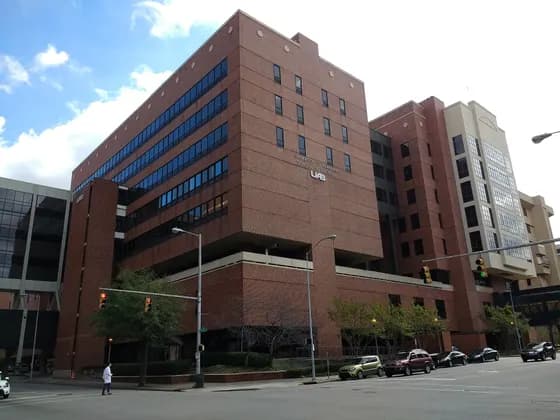

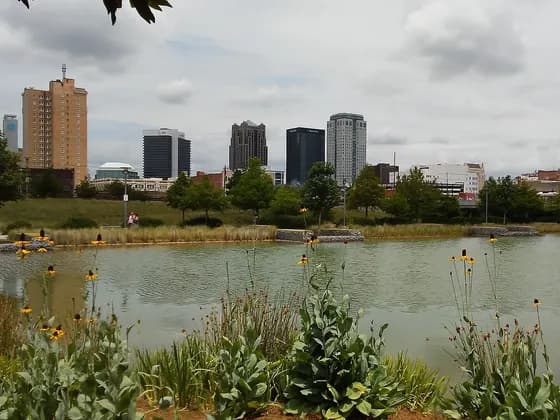
Photo: University of Alabama at Birmingham · Public domain · cropped
Photo: Mx. Granger · CC0 · Photo: Tepp01 · CC BY-SA 4.0 · Photo: Jrbawden · CC BY-SA 4.0
How to get into UAB Heersink School of Medicine (MD) medicine
Step-by-step: entry requirements, admission tests, personal statement, interview format and the key deadlines.
Open the guide →UAB Heersink School of Medicine (MD) entry requirements
Admission profile, interview format, decision dates and what makes UAB Heersink School of Medicine (MD) different.
See the profile →The UAB Heersink School of Medicine MD program
Integrated, 4 years, clinical rotations across Birmingham, Huntsville, Montgomery, Tuscaloosa and rural Alabama.
See the program →The UAB Heersink School of Medicine (MD) medicine interview
UAB Heersink School of Medicine uses a traditional one-on-one interview format. Applicants typically meet with one or two faculty members or community physicians in individual sessions of approximately 30–45 minutes. Interviewers read the full application in advance, so expect substantive questions drawn from your personal statement, research, and clinical experiences.
Hersink’s mission centers on serving Alabama’s diverse population — urban Birmingham and the rural Black Belt counties — so interviewers probe commitment to community health and an understanding of regional healthcare disparities. The school emphasizes holistic review and values first-generation college students, rural background, and socioeconomic diversity post-SCOTUS 2023.
As one of the Southeast’s premier NIH-funded research institutions, Heersink also strongly values research experience — applicants with lab or clinical research backgrounds should be prepared for detailed methodological questioning.
UAB Heersink School of Medicine (MD) interview at a glance (2027 entry)
| Annual MD class size | ~175–180 |
|---|---|
| Applications received | ~4,500–6,000 per cycle |
| Interview format | Traditional one-on-one — 1–2 interviewers, ~30–45 min each |
| In-state preference | Strong (~80% of seats to Alabama residents) |
| Curriculum | Integrated 4-year MD |
| Application system | AMCAS + secondary |
| Interview window | September–March (rolling) |
Interview format
- Traditional conversational interview — typically one or two separate one-on-one sessions with faculty physicians or community practitioners.
- Each session runs approximately 30–45 minutes; full interview day spans roughly 4–6 hours.
- Interviewers read your application in advance and frequently reference your personal statement and activity descriptions.
- Student-led campus tour and Q&A panel with current MD students included.
- Financial aid and curriculum overview sessions run in parallel with interview slots.
- No MMI or standardized stations — format is conversational and application-specific.
Working towards the MCAT score UAB Heersink School of Medicine (MD) expects? Build a week-by-week plan from your test date — free for the first two weeks.
Sample interview questions
Why UAB Heersink specifically — what draws you to training and potentially practicing medicine in Alabama?
Reference the NIH research enterprise, rural medicine pipeline, the Black Belt health disparities mission, and specific programs like the Rural Medical Scholars Program. Avoid generic prestige answers.
Tell me about a clinical or community experience that solidified your decision to pursue medicine.
Be specific and reflective. Heersink values applicants who have engaged with underserved populations. Show what you learned, not just what you observed.
A patient from rural Alabama refuses a recommended referral to a specialist because they cannot afford to travel to Birmingham. How do you approach this?
Address patient autonomy, resource navigation (telehealth, rural federally qualified health centers), advocacy at the systems level, and your role as a physician in bridging access gaps.
Alabama has among the highest rates of uninsured adults in the US because the state has not expanded Medicaid. How should physicians respond to this policy environment?
Show awareness of the Medicaid expansion debate without being overtly partisan. Discuss the physician's role in advocacy, safety-net hospitals, and addressing individual patients within system constraints.
Describe a time you had to work through a disagreement with a teammate or colleague. What was the outcome?
STAR structure. Emphasize listening, seeking common ground, and keeping shared goals in focus. Avoid making yourself the unambiguous hero of the story.
Walk me through a research project you contributed to. What was the central question, and what did you find?
Show intellectual ownership — know the methodology and findings in depth. Heersink faculty interviewers will probe beyond summary descriptions.
What do you see as the greatest health challenge facing Alabama in the next 20 years, and how do you want to contribute to solving it?
Demonstrate knowledge of Alabama-specific issues: cardiovascular disease burden, obesity rates, rural hospital closures, and infant mortality disparities. Connect to your career goals.
A colleague asks you to cover up a medication error that did not harm the patient but violated protocol. What do you do?
Address duty of disclosure, patient safety culture, just culture frameworks, and your responsibility to the team and institution. Do not hedge on the ethical obligation to report.
How would you explain Type 2 diabetes and its management to a newly diagnosed patient with limited health literacy?
Demonstrate plain language skills, teach-back method, cultural humility, and awareness of socioeconomic barriers to medication adherence and lifestyle change.
What would you be doing if medicine were not an option, and what does that tell you about who you are?
Authenticity matters. Heersink values self-aware applicants who have reflected on their motivations beyond status or financial security.
A patient from a rural Black Belt county has just learned she needs ongoing specialist care in Birmingham but tells you she cannot afford the gas or time off to get there. Talk with her about the plan.
Acknowledge the barrier honestly, avoid empty reassurance, and problem-solve practically — telehealth, rural FQHC linkages, transportation assistance, and coordinating follow-up. Heersink's rural mission rewards working within the safety net rather than defaulting to 'see social work.'
You are shown a county-level map of Alabama where cardiovascular mortality and rural hospital closures overlap most heavily in the Black Belt. What does this suggest, and what would you want to know before drawing conclusions?
Read the overlap as shared upstream drivers — poverty, access, workforce shortage, Medicaid non-expansion — not a single cause. Distinguish association from causation and name the further data (insurance, distance to care, screening rates) that would sharpen the picture.
A fellow student on your team admits they made a medication-dosing error during a simulation that no one else noticed. They want to quietly move on. Respond to them.
Model a just-culture, patient-safety mindset: errors caught early are learning opportunities, but they must be disclosed and addressed. Encourage reporting without blame, and be willing to escalate if they refuse. Honesty protects future patients.
As a major NIH-funded institution, Heersink expects research literacy. Pick a finding from a field you follow and explain what evidence would change your mind about it.
Show genuine scientific reasoning — evidence hierarchies, replication, falsifiability — and that you hold beliefs proportionate to the data. Even clinically focused applicants should demonstrate intellectual rigor.
Explain to a newly diagnosed patient with limited health literacy and limited income how to manage high blood pressure, knowing healthy food and pharmacy access are both hard in their community.
What they are listening for:
- Plain language and teach-back
- realistic and affordable options
- acknowledgment of the structural barriers to adherence
Show cultural humility and that you would adapt the plan to the patient's actual circumstances, not an idealized one.
Practise the UAB Heersink School of Medicine (MD) interview
Rehearse the real format before the day — on demand with our AI interviewers, or live with a tutor.
Sit a mock with photoreal AI interviewers — any time
A timed MMI or panel interview on video — American & international voices — with interviewers who listen, react and press with follow-ups. Rubric-scored feedback and a replay the moment you finish.






Live mocks with a tutor who’s been in the room
A full UAB Heersink School of Medicine (MD)-style mock with a medic or dentist tutor — honest scoring against real marking criteria, a station-by-station debrief and a written action plan.
Book a mock interviewHow to prepare for the UAB Heersink School of Medicine (MD) interview
Common pitfalls to avoid
UAB Heersink School of Medicine (MD) interview — frequently asked questions
Sources & official admissions information
Ready to nail your UAB Heersink School of Medicine (MD) interview?
Book a mock interview with a tutor who knows the US interview formats, orpractice unlimited stations from our interview question bank.