US Medicine · 2027 Entry

MSU College of Human Medicine (MD) Medical School2027 Entry Requirements & Interview Format

Location East Lansing, MI, United StatesEstablished 1964Interviews (2027 entry) October 2026–February 2027Decisions (2027 entry) March 30, 2027 (AAMC standard)

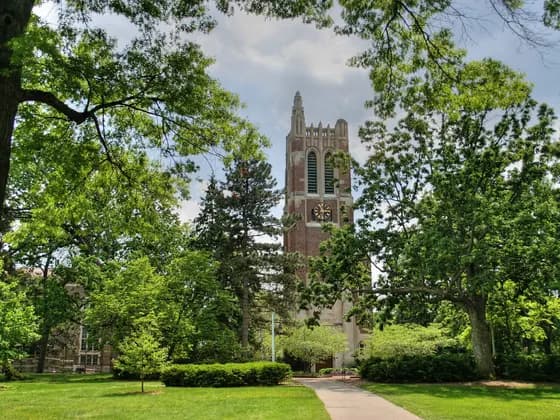
Photo: Scottb211 · CC BY 2.0 · cropped

Start here
Overview

About MSU College of Human Medicine (MD)

Michigan State University College of Human Medicine, founded in 1964, is one of the nation's largest and most innovative public medical schools. It pioneered the community-based distributed clinical campus model, now standard in many US programs. Students train at seven regional campuses across Michigan, gaining exposure to diverse patient populations from urban Detroit suburbs to rural Upper Peninsula communities.

MSU Human Medicine has a well-established reputation in primary care, health equity research, and service to underserved populations in Michigan.

What makes MSU College of Human Medicine (MD) different

One of the largest public MD programs in the US, with a distinctive distributed community-campus model across seven Michigan cities (Grand Rapids, East Lansing, Flint, Lansing, Saginaw, Traverse City, Upper Peninsula). Strong focus on community-based medicine and health equity.

MSU College of Human Medicine (MD) course & teaching

Integrated curriculum. 4-year MD. Year 1–2 at East Lansing or Grand Rapids use an integrated organ-system curriculum with early clinical skills. Years 3–4 at one of seven community campuses. Students rank campus preferences; a match process assigns clinical training sites.

MSU College of Human Medicine (MD) research strengths

MSU College of Human Medicine (MD) is strong in these research areas:

  • Health disparities and equity
  • Primary care outcomes
  • Rural health access
  • Addiction medicine
  • Cancer epidemiology

How the MSU College of Human Medicine (MD) interview runs

Format: MMI (multiple mini-interview, 8 stations)

MSU College of Human Medicine uses an 8-station MMI with station types including ethical dilemmas, communication role-play, critical thinking, and personal reflection prompts; each station is approximately 8 minutes. The interview day is held at the Grand Rapids campus (Secchia Center) or East Lansing and includes a student host experience and campus tour.

The MMI scoring is holistic and mission-weighted toward social determinants of health, community service, and interpersonal skills. Applicants should expect at least one station focused on health equity or access in Michigan.

MSU College of Human Medicine (MD) intake

Approximately 185–200 students per year across all campuses.

MSU College of Human Medicine (MD) at a glance

Founded in 1964. Based in East Lansing, MI.

Programmes offered:

  • Primary Care
  • Health Equity
  • Rural Medicine
  • Internal Medicine
  • Public Health
Entry requirements

What you need to apply to MSU College of Human Medicine (MD)

Admission overview
Bachelor's degree and MCAT required. Michigan residents strongly preferred; out-of-state applicants considered. Documented community service, research, and clinical experience valued. Application via AMCAS; secondary required. MSU-CHM requires one situational judgment test — either Casper or the AAMC PREview exam.
MCAT median
509 (range 507–518)
GPA median
3.76 overall / 3.70 science (BCPM)
Acceptance rate
3.5%
Class size
190
In-state preference
Strong — primarily in-state
In-state matriculants
86%
CASPer
Required
AAMC PREview
Required
Holistic review emphasis
Community service, health equity commitment, interpersonal skills, Michigan resident preference.
Notes
Estimates from public AAMC FACTS / AACOMAS / ADEA AADSAS / class-profile; verify current cycle.
Specialities offered
Primary Care, Health Equity, Rural Medicine, Internal Medicine, Public Health

MCAT, GPA, acceptance-rate and class-size figures are taken from Michigan State University College of Human Medicine's published admissions data. Class profiles are republished each year — confirm which entering class these numbers describe before you rely on them.

Working towards the MCAT score MSU College of Human Medicine (MD) expects? Build a week-by-week plan from your test date — free for the first two weeks.

Interview

How MSU College of Human Medicine (MD) interviews applicants

Format
MMI (multiple mini-interview, 8 stations)
Interview window (2027 entry)
October 2026–February 2027
Decision date (2027 entry)
March 30, 2027 (AAMC standard)
Post-interview chances
Estimated 20–30% of interviewees receive an offer; mission and community alignment heavily weighted.
Tutor insight
MSU's MMI probes health equity reasoning and community commitment — practice articulating a social determinants of health framework for ethical scenarios rather than purely clinical responses. The distributed campus model is central to the school's identity; prepare to discuss which Michigan clinical campus interests you most and why. Because the program is large and public, interviewers screen for genuine motivation to serve underserved Michigan communities, not just interest in medicine broadly. Know MSU's seven campus cities and the health challenges unique to each region.
Practice

Practise for your MSU College of Human Medicine (MD) interview

PrometheusQuestion Bank621 medicine questions inside

Interview questions matched to MSU College of Human Medicine (MD)

Two questions our tutors flagged as a strong fit for MSU College of Human Medicine (MD)’s interview style. Try answering them out loud, then open Prometheus for the model answers and follow-up tips.

MediumMMIQ1

US Healthcare Ethics: Cost Transparency in Prescribing

A patient with a new diagnosis of Type 2 diabetes asks which of two equally effective medications you recommend. One is a brand-name GLP-1 agonist costing $900 per month out of pocket; the other is an older generic that costs $12 per month with similar glycaemic outcomes. The patient is uninsured and working two jobs.

How do you approach this prescribing decision, and what are the ethical dimensions of cost transparency in clinical practice?

Likely follow-up · At what point, if any, does cost become a clinical factor rather than purely a patient preference?

3 expert tips in Prometheus
HardPanel · MMIQ2

Service Orientation: Gun Violence as a Public Health Crisis

Gun violence kills approximately 45,000 Americans per year and is the leading cause of death for children and adolescents in the United States. Some physicians argue that this is a public health crisis requiring physician engagement -- including universal screening and counselling. Others argue that physicians should stay out of a politically charged policy debate.

How do you think about the physician's role in addressing gun violence, and what specific actions are within the scope of medicine?

Likely follow-up · What is the Dickey Amendment, and how has it historically limited gun violence research funding at the NIH and CDC?

3 expert tips in Prometheus
Get support

Apply to MSU College of Human Medicine (MD) with confidence

We've helped students into MSU College of Human Medicine (MD) and other US medicine schools — get tailored support for each stage of the application.

Sources

Where MSU College of Human Medicine (MD)'s figures come from

Compiled from Michigan State University College of Human Medicine's published admissions material and checked for internal consistency. Not independently re-checked against the official course page for 2027 entry — confirm the figures with the school before you rely on them.

FAQ

MSU College of Human Medicine (MD) — frequently asked questions

MSU College of Human Medicine (MD) matriculants have a median MCAT of 509. The middle range of matriculants is 507–518. US schools publish medians rather than cut-offs, and committees review holistically — the MCAT is weighed alongside GPA, clinical and research experience, letters of recommendation and secondary essays.

Apply to MSU College of Human Medicine (MD) with confidence

We've helped students turn their MCAT, personal statement and interview prep into offers from MSU College of Human Medicine (MD) and other US medicine schools.