ETSU Quillen College of Medicine (MD) Medical School - 2027 Entry Requirements & Interview Format
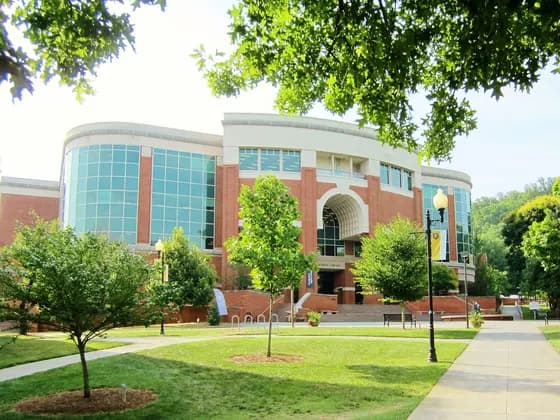
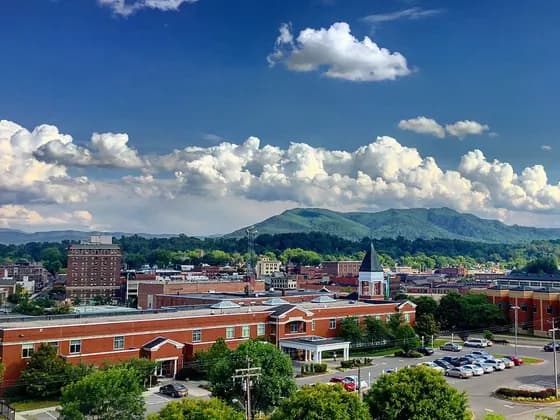
East Tennessee State University James H. Quillen College of Medicine, established in 1978 in Johnson City, is a public medical school with an explicit mission to improve health in Appalachian and rural communities across Tennessee and the broader region. The school is uniquely co-located with the James H. Quillen VA Medical Center, providing students with deep exposure to veteran health and complex chronic disease from early training. Quillen has built a national reputation in Appalachian health research and is a leader in studying and addressing the region's disproportionate burden of opioid use disorder, cancer, cardiovascular disease, and preventable mortality.
Entry Requirements
What you need to apply to ETSU Quillen College of Medicine (MD).
Admission overview
Bachelor's degree and MCAT required. Applications via AMCAS. Tennessee residents are strongly preferred; applicants from Appalachian states (VA, NC, KY, WV) are given secondary consideration. Community service and clinical experience in rural or underserved Appalachian settings is a significant differentiator. Secondary application required.
MCAT median
510 (range 505–516)
GPA median
3.70 overall / 3.66 science (BCPM)
Acceptance rate
3.0%
Class size
75
In-state preference
Strong — primarily in-state
In-state matriculants
85%
CASPer
Not required
Holistic review emphasis
Tennessee residency; Appalachian health commitment; rural medicine orientation; community service in underserved or rural settings; veteran health awareness.
Notes
Estimates from public AAMC FACTS / class-profile data; verify current cycle.
Specialities offered
Rural Medicine, Primary Care, Family Medicine, Appalachian Health, Veteran Health
Interview Format
How ETSU Quillen College of Medicine (MD) interviews applicants.
Format
Traditional individual or panel interviews with faculty and community physicians
Interview window
October–February
Decision date
March 30 (AAMC standard)
Post-interview chances
Estimated post-interview acceptance rate approximately 25–35%; TN residency and Appalachian health mission alignment are the primary selection factors.
What to expect at a ETSU Quillen College of Medicine (MD) interview
ETSU Quillen interview day is held in Johnson City on the ETSU campus and Mountain Home VA Medical Center complex. Applicants typically have one to two individual faculty or community physician interviews of 25–30 minutes each. Interviewers focus on motivation for Appalachian and rural health, personal ties to the region, community service orientation, and values around serving underserved populations in mountainous rural environments. The day includes a tour of the James H. Quillen VA Medical Center (a unique teaching partnership), an admissions information session, and student interaction. Applicants should be prepared to discuss specific knowledge of Appalachian health challenges including high rates of opioid use disorder, cancer, and cardiovascular disease.
What makes ETSU Quillen College of Medicine (MD) different
ETSU Quillen has one of the most distinctive clinical teaching environments in US medical education: its primary affiliated hospital is the James H. Quillen VA Medical Center on the same campus, supplemented by Ballad Health System's regional network across Northeast Tennessee. The school has a national reputation for Appalachian health research and education. A significant proportion of graduates remain in Tennessee and Appalachian states, serving communities with some of the highest rates of preventable chronic disease in the US.
Tutor insight
Quillen is the school for applicants who are genuinely committed to Appalachian and rural health — not just applicants looking for a state school with moderate competition. Its VA Medical Center partnership is truly distinctive and gives students clinical breadth that rivals much larger programmes. In your interview, demonstrate deep knowledge of Appalachian health realities: the opioid epidemic's devastation across the region, the cancer corridor in Northeast TN, tobacco-related disease, and social determinants like poverty and geographic isolation. The school values applicants who will stay in the region — if your long-term plan includes Appalachian practice, say so explicitly. Research experience in Appalachian health, addiction medicine, or veteran care is a genuine differentiator.
PrometheusQuestion Bank
595 medicine questions inside
Interview questions matched to ETSU Quillen College of Medicine (MD)
Two questions our tutors flagged as a strong fit for ETSU Quillen College of Medicine (MD)’s interview style. Try answering them out loud, then open Prometheus for the model answers and follow-up tips.
Medium·Panel · MMIQ1
Holistic Review: First-Generation College Student Experience
You are a first-generation college student. Neither of your parents attended university, and you funded your undergraduate education through Pell Grants, work-study, and part-time employment. You carried a 20-hour-per-week job alongside a full academic load and still maintained a 3.68 GPA. An interviewer asks: 'Your science GPA is slightly below the median for our entering class. How do you want us to contextualise your academic record?'
Likely follow-up · How does the AAMC's Experiences, Attributes, and Metrics framework (holistic review) allow schools to contextualise academic performance relative to life circumstances?
3 expert tips in Prometheus
Easy·PanelQ2
AAMC Core Competency: Commitment to a Physician's Lifelong Learning
Medical knowledge doubles approximately every 73 days by some estimates. A treatment standard you learn in your first year of medical school may be obsolete by your fifth year of practice. How do you think about lifelong learning as a professional commitment, and what habits and systems will you build to ensure your practice remains current over a 30-year career?
Likely follow-up · What is maintenance of certification (MOC), and how do you feel about the current debates over its requirements and burden?
Apply to ETSU Quillen College of Medicine (MD) with confidence
We've helped students get into ETSU Quillen College of Medicine (MD) and other US medicine schools. Get tailored support for each stage of the application.
ETSU Quillen College of Medicine (MD) - Frequently asked questions
Bachelor's degree and MCAT required. Applications via AMCAS. Tennessee residents are strongly preferred; applicants from Appalachian states (VA, NC, KY, WV) are given secondary consideration. Community service and clinical experience in rural or underserved Appalachian settings is a significant differentiator. Secondary application required.
Traditional individual or panel interviews with faculty and community physicians. ETSU Quillen interview day is held in Johnson City on the ETSU campus and Mountain Home VA Medical Center complex. Applicants typically have one to two individual faculty or community physician interviews of 25–30 minutes each. Interviewers focus on motivation for Appalachian and rural health, personal ties to the region, community service orientation, and values around serving underserved populations in mountainous rural environments. The day includes a tour of the James H. Quillen VA Medical Center (a unique teaching partnership), an admissions information session, and student interaction. Applicants should be prepared to discuss specific knowledge of Appalachian health challenges including high rates of opioid use disorder, cancer, and cardiovascular disease.
ETSU Quillen College of Medicine (MD) typically interviews in October–February.
Decisions are released March 30 (AAMC standard).
ETSU Quillen has one of the most distinctive clinical teaching environments in US medical education: its primary affiliated hospital is the James H. Quillen VA Medical Center on the same campus, supplemented by Ballad Health System's regional network across Northeast Tennessee. The school has a national reputation for Appalachian health research and education. A significant proportion of graduates remain in Tennessee and Appalachian states, serving communities with some of the highest rates of preventable chronic disease in the US.