US Medicine · 2027 Entry

LSU Health New Orleans School of Medicine (MD) Medical School2027 Entry Requirements & Interview Format

Location New Orleans, LA, United StatesEstablished 1931Interviews October–JanuaryDecisions March 30 (AAMC standard)

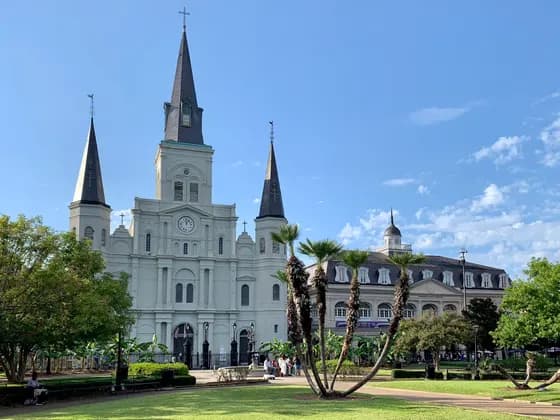
Photo: Infrogmation of New Orleans · CC BY-SA 3.0

Start here
Overview

About LSU Health New Orleans School of Medicine (MD)

LSU Health Sciences Center School of Medicine in New Orleans, founded in 1931, is one of the two LSU system medical schools and is the largest medical school in Louisiana by enrollment. Set in the New Orleans Medical District, the school benefits from close affiliation with University Medical Center New Orleans — the state-of-the-art safety-net hospital built to replace the legendary Charity Hospital after Hurricane Katrina. LSU Health New Orleans produces a high proportion of physicians who remain in Louisiana, particularly serving south Louisiana's diverse, often low-income urban and rural communities.

What makes it different

LSU Health New Orleans has one of the most distinctive training contexts in American medicine — it is the successor institution to the historic Charity Hospital, which for over two centuries was the primary public hospital for the poor in Louisiana and the main training ground for LSU and Tulane medical students. The post-Katrina reconstitution of the school's clinical training around the new University Medical Center New Orleans (UMC) preserves this safety-net training legacy. The school also offers MD training in a vibrant, culturally distinctive city known for complex community health challenges.

Course & teaching

Integrated curriculum. 4-year MD. Years 1–2 at the New Orleans campus with a curriculum combining basic science, early clinical immersion, and community health. Clinical Years 3–4 at University Medical Center New Orleans (UMC), Children's Hospital New Orleans, VA Medical Center New Orleans, and affiliated community hospitals and clinics.

Research strengths

LSU Health New Orleans School of Medicine (MD) has notable research strength in Infectious disease, Cardiovascular disease, Cancer, Public health and disaster medicine, Health disparities in Louisiana.

Interview

LSU Health New Orleans School of Medicine (MD) interviews via Traditional one-on-one and panel interviews with faculty and students in New Orleans. LSU Health New Orleans interview days are held on campus in the New Orleans Medical District. Applicants typically complete one or two traditional interviews with faculty or clinicians lasting approximately 30 minutes each, followed by a campus tour of the LSU Health Sciences Center complex and affiliated hospitals. Interviewers have reviewed the application beforehand and focus on motivation, clinical exposure, Louisiana healthcare context, and commitment to the school's public service mission. The day includes a financial aid overview and informal student interaction. The school's Charity Hospital legacy and the post-Katrina recovery narrative frequently inform interview conversations about resilience and community health.

Intake

Approximately 200 students per year.

At a glance

Founded in 1931, based in New Orleans, LA. Programmes offered: Internal Medicine, Trauma Surgery, Public Health, Infectious Disease, Primary Care.

Entry requirements

What you need to apply to LSU Health New Orleans School of Medicine (MD)

Admission overview
Bachelor's degree and MCAT required. Applications via AMCAS. Very strong preference for Louisiana residents; out-of-state applicants are rarely accepted. Standard pre-med science prerequisites expected.
MCAT median
510 (range 506–515)
GPA median
3.76 overall / 3.62 science (BCPM)
Acceptance rate
6.5%
Class size
200
In-state preference
Strong — primarily in-state
In-state matriculants
95%
CASPer
Not required
AAMC PREview
Not required
Holistic review emphasis
Louisiana residency; safety-net medicine commitment; clinical and community service; resilience.
Notes
Estimates from public AAMC FACTS / AACOMAS / ADEA AADSAS / class-profile; verify current cycle.
Specialities offered
Internal Medicine, Trauma Surgery, Public Health, Infectious Disease, Primary Care
Interview

How LSU Health New Orleans School of Medicine (MD) interviews applicants

Format
Traditional one-on-one and panel interviews with faculty and students in New Orleans
Interview window
October–January
Decision date
March 30 (AAMC standard)
Post-interview chances
Estimated post-interview acceptance rate approximately 30–40%; Louisiana residency is near-essential, and mission alignment for serving Louisiana communities is assessed at interview.
Tutor insight
LSU Health New Orleans offers an extraordinary clinical training environment — high-volume safety-net medicine in one of America's most culturally complex cities. If you plan to practice in Louisiana, this school provides outstanding clinical preparation at accessible in-state tuition. In your interview, demonstrate genuine knowledge of New Orleans public health history (Charity Hospital legacy, Hurricane Katrina health consequences, current health disparities) and the unique health challenges of south Louisiana (infectious disease burden, environmental health, coastal community medicine). Out-of-state applicants without Louisiana connections face very limited prospects.
Practice

Practise for your LSU Health New Orleans School of Medicine (MD) interview

PrometheusQuestion Bank621 medicine questions inside

Interview questions matched to LSU Health New Orleans School of Medicine (MD)

Two questions our tutors flagged as a strong fit for LSU Health New Orleans School of Medicine (MD)’s interview style. Try answering them out loud, then open Prometheus for the model answers and follow-up tips.

MediumPanel · MMIQ1

AAMC Core Competency: Service Orientation in Underserved Communities

The AAMC lists Service Orientation as a core competency, describing it as a desire to help others that extends beyond self-interest. You have spent two summers volunteering at a free clinic in a rural community where nearly 30% of residents are uninsured. A classmate argues that pre-medical volunteering is largely performative — a box to tick for applications — and does not reflect genuine service commitment. How do you respond to this critique, and how have your own experiences shaped your understanding of what service orientation actually means for a physician?

Likely follow-up · How do you distinguish genuine service orientation from voluntourism or resume-padding in your own reflection and in evaluating others?

3 expert tips in Prometheus
EasyPanelQ2

Holistic Review: Explaining a Gap Year to an Admissions Panel

You graduated with a biology degree, took one gap year to work as a medical scribe and prepare for the MCAT, and are now applying to medical school. Some of your peers went directly from undergraduate to application. How do you frame your gap year as an asset rather than a deficit, and what did you learn about medicine and yourself during that time?

Likely follow-up · How does the medical scribing experience — observing real patient encounters across specialties — compare to clinical volunteering in terms of preparation for medical school?

3 expert tips in Prometheus
Get support

Apply to LSU Health New Orleans School of Medicine (MD) with confidence

We've helped students into LSU Health New Orleans School of Medicine (MD) and other US medicine schools — get tailored support for each stage of the application.

FAQ

LSU Health New Orleans School of Medicine (MD) — frequently asked questions

Apply to LSU Health New Orleans School of Medicine (MD) with confidence

We've helped students turn their MCAT, personal statement and interview prep into offers from LSU Health New Orleans School of Medicine (MD) and other US medicine schools.