Lewis Katz School of Medicine at Temple University (MD)
Philadelphia, PA, US
Philadelphia, PA, US•Est. 1901
Lewis Katz School of Medicine at Temple University (MD) Medical School - 2027 Entry Requirements & Interview Format
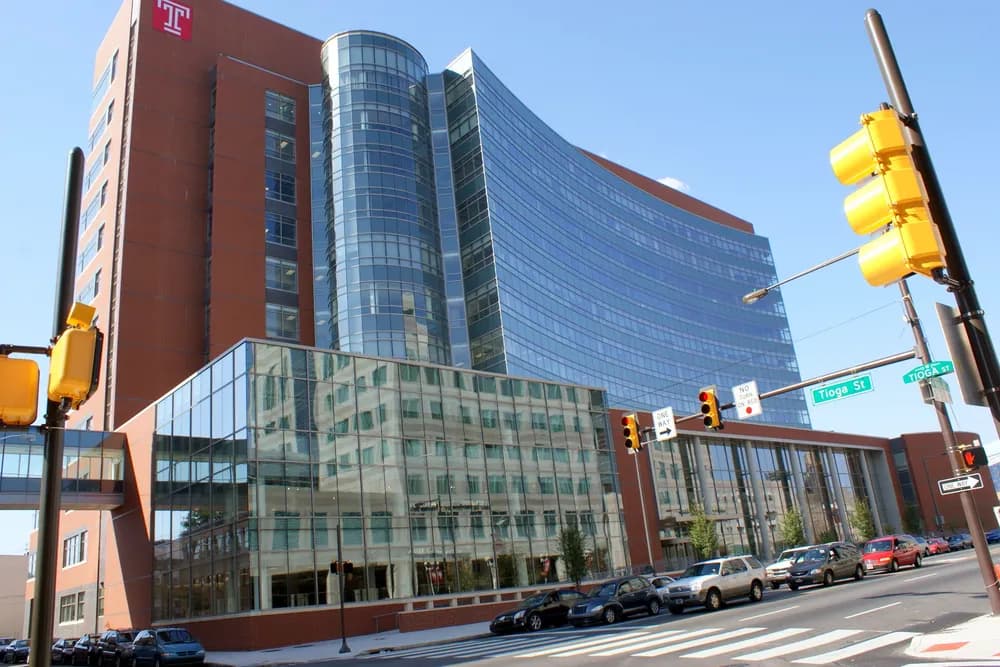
Lewis Katz School of Medicine at Temple University, founded in 1901, is a state-related (public) medical school embedded in North Philadelphia's Health Sciences Campus, serving one of the most underserved urban patient populations in the US through Temple University Hospital — a level I trauma centre and safety-net institution. The school has a strong mission of training physicians for urban underserved communities and has significant research programmes in cardiovascular disease and cancer. Temple graduates match broadly, with strong primary care and urban medicine representation.
Entry Requirements
What you need to apply to Lewis Katz School of Medicine at Temple University (MD).
Admission overview
Bachelor's degree and MCAT required. Applications via AMCAS. Temple is a state-related (public) school; it considers a national applicant pool and admits a majority of out-of-state students, with no strong residency preference. Secondary application required. Temple considers applicants with non-traditional backgrounds and values those with demonstrated commitment to urban underserved communities.
MCAT median
512 (range 506–518)
GPA median
3.61 overall / 3.56 science (BCPM)
Acceptance rate
2.5%
Class size
200
In-state preference
None
CASPer
Not required
Holistic review emphasis
Urban health mission, service to underserved communities, academic trajectory, and clinical experience quality.
Notes
Estimates from public AAMC FACTS / AACOMAS / ADEA AADSAS / class-profile; verify current cycle.
Specialities offered
Cardiovascular Medicine, Urban Health, Trauma Surgery, Primary Care, Pulmonology
Interview Format
How Lewis Katz School of Medicine at Temple University (MD) interviews applicants.
Format
Traditional one-on-one or panel interviews with faculty and students
Interview window
October–February
Decision date
March 30 (AAMC standard)
Post-interview chances
Estimated post-interview acceptance rate approximately 18–22%; large applicant pool but relatively high interview yield given class size.
What to expect at a Lewis Katz School of Medicine at Temple University (MD) interview
Lewis Katz School of Medicine interview day is held at the Health Sciences Campus in North Philadelphia. Candidates typically participate in two one-on-one sessions of 30–45 minutes each with a faculty physician and a current medical student. Interviewers have reviewed the full application beforehand and focus heavily on motivation for medicine in an urban underserved setting, awareness of North Philadelphia health challenges, and personal resilience. The day includes a tour of Temple University Hospital — a level I trauma centre and major North Philadelphia safety-net hospital — informal lunch with current students, and an admissions overview. Temple evaluates candidates using a structured AAMC competency-based rubric with particular emphasis on service orientation and community health commitment.
What makes Lewis Katz School of Medicine at Temple University (MD) different
Lewis Katz School of Medicine is one of the most research-intensive medical schools affiliated with a large urban public university, serving the North Philadelphia community — one of the most socioeconomically challenged urban communities in the United States. Temple University Hospital is a major level I trauma centre and safety-net hospital providing care to a predominantly uninsured and publicly insured patient population. The school has a notable strength in cardiovascular medicine and is the home of Dr. Lazar Greenfield-era vascular surgery innovations. The college recently renamed its school after philanthropist Lewis Katz following a major endowment gift.
Tutor insight
Temple's North Philadelphia setting is not incidental — the school genuinely trains physicians who will encounter high trauma volumes, complex social determinants of health, and high proportions of uninsured or publicly insured patients. If you interview without having engaged seriously with that reality, interviewers will notice. Prepare for the patient population of Temple University Hospital: the opioid crisis in Kensington (one of the worst open-air drug markets in the US), North Philadelphia poverty and housing insecurity, and the clinical volume that makes Temple a level I trauma training ground. Temple is considered a strong value for applicants who want hands-on clinical training in a high-acuity urban environment without the selectivity barriers of Penn or Jefferson.
PrometheusQuestion Bank
595 medicine questions inside
Interview questions matched to Lewis Katz School of Medicine at Temple University (MD)
Two questions our tutors flagged as a strong fit for Lewis Katz School of Medicine at Temple University (MD)’s interview style. Try answering them out loud, then open Prometheus for the model answers and follow-up tips.
Hard·Panel · MMIQ1
US Healthcare Ethics: End-of-Life Decision Making and POLST
An 82-year-old patient with advanced heart failure and moderate dementia is admitted in respiratory distress. A POLST form in her chart indicates she declined mechanical ventilation. Her daughter, who holds healthcare power of attorney, is insisting on intubation and says her mother 'would want to fight.' The intensivist is asking for your assessment of how to proceed. What ethical framework applies, and what do you recommend?
Likely follow-up · What is the difference between a POLST, an advance directive, and a DNR order, and which takes precedence?
3 expert tips in Prometheus
Hard·MMI · PanelQ2
Service Orientation: Rural and Underserved Commitment
The United States faces a severe primary care shortage, particularly in rural and medically underserved areas. More than 7,000 areas across the country are designated as Health Professional Shortage Areas. You grew up in a rural community and your family relied on a physician who drove 40 miles to reach patients. How has that experience shaped your interest in medicine, and what specific commitment, if any, are you prepared to make to address physician shortages in underserved areas?
Likely follow-up · What incentive programmes exist to encourage physicians to practise in underserved areas, and how familiar are you with them?
Apply to Lewis Katz School of Medicine at Temple University (MD) with confidence
We've helped students get into Lewis Katz School of Medicine at Temple University (MD) and other US medicine schools. Get tailored support for each stage of the application.
Lewis Katz School of Medicine at Temple University (MD) - Frequently asked questions
Bachelor's degree and MCAT required. Applications via AMCAS. Temple is a state-related (public) school; it considers a national applicant pool and admits a majority of out-of-state students, with no strong residency preference. Secondary application required. Temple considers applicants with non-traditional backgrounds and values those with demonstrated commitment to urban underserved communities.
Traditional one-on-one or panel interviews with faculty and students. Lewis Katz School of Medicine interview day is held at the Health Sciences Campus in North Philadelphia. Candidates typically participate in two one-on-one sessions of 30–45 minutes each with a faculty physician and a current medical student. Interviewers have reviewed the full application beforehand and focus heavily on motivation for medicine in an urban underserved setting, awareness of North Philadelphia health challenges, and personal resilience. The day includes a tour of Temple University Hospital — a level I trauma centre and major North Philadelphia safety-net hospital — informal lunch with current students, and an admissions overview. Temple evaluates candidates using a structured AAMC competency-based rubric with particular emphasis on service orientation and community health commitment.
Lewis Katz School of Medicine at Temple University (MD) typically interviews in October–February.
Decisions are released March 30 (AAMC standard).
Lewis Katz School of Medicine is one of the most research-intensive medical schools affiliated with a large urban public university, serving the North Philadelphia community — one of the most socioeconomically challenged urban communities in the United States. Temple University Hospital is a major level I trauma centre and safety-net hospital providing care to a predominantly uninsured and publicly insured patient population. The school has a notable strength in cardiovascular medicine and is the home of Dr. Lazar Greenfield-era vascular surgery innovations. The college recently renamed its school after philanthropist Lewis Katz following a major endowment gift.