
Pre-med in high school
What is worth doing now, and what can wait
Most medical schools do not ask for your high school record, though BS/MD programs do. AMCAS tells applicants not to send high school transcripts. What high school can do is get you ready: strong math and science, real reading and writing, and an honest look at the work. Pick a college you can afford and do well at. No paid summer program gets you in.
- High school transcripts
- Not sent to AMCAS
- The exception
- BS/MD programs read them
- College courses in high school
- Their grades count later
- Usual earliest application
- After junior year of college


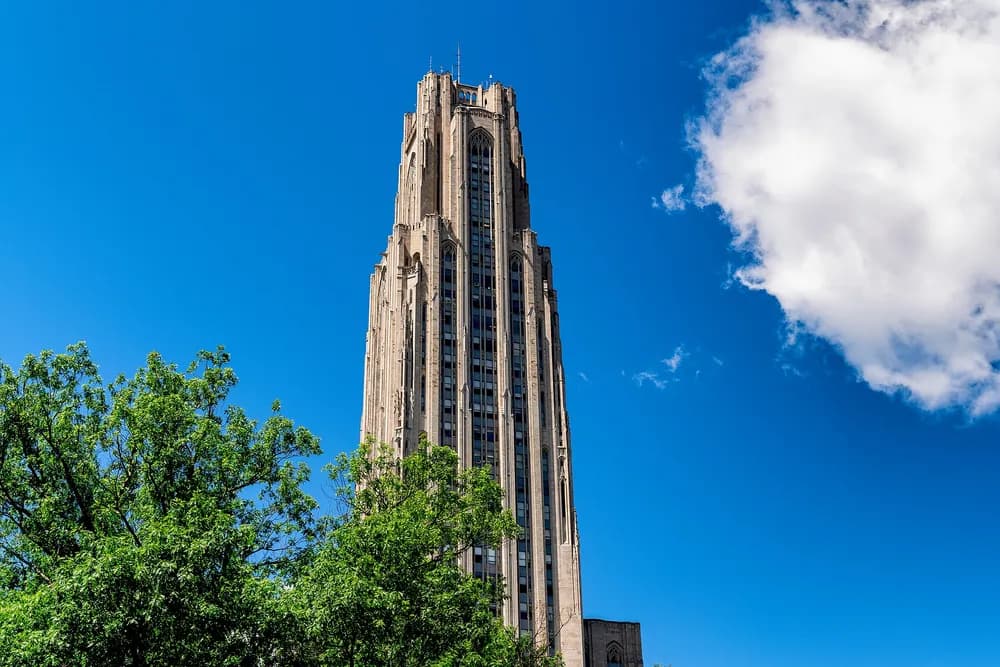
Photo: Jawed · CC BY-SA 4.0 · cropped
Photo: Paul Sableman from St. Louis, MO · CC BY 2.0 · Photo: Beyond My Ken · CC BY-SA 4.0 · Photo: Tony Webster · CC BY-SA 2.0
Pre-med in high school: the short answer
Most medical schools do not ask for your high school record, with one clear exception. AMCAS, the main MD application service, tells applicants not to send middle or high school transcripts. What schools read is your college record, your MCAT and what you have done since. The exception is BS/MD programs, which admit you from high school and read all of it.
One detail, so you are not surprised later. TMDSAS, the Texas application service, asks for your high school's name, graduation date, class size and rank if you have one, and any SAT or ACT scores. AACOMAS also asks which high schools you attended. None of the pages we read asks for a high school transcript.
So high school is about getting ready, not getting in. Build your math, science, reading and writing. Find out whether you like the work. Choose a college where you can do well. If you do those things, you are on track, even if nothing you did had a medical label on it.
What is worth doing in high school, and what can wait
The AAMC and AACOM both publish advice for high school students. It is mostly about foundations and exploring, not about building a resume.
Worth doing now
- Take the strongest math and science you can do well in, including advanced classes if your school offers them
- Keep up English and the humanities, which build the writing and thinking you will need
- Meet your counselor and make an academic plan
- Build study and time management habits before college science
- Try volunteering or shadowing for a semester or longer, if you can find it
- Learn what health careers exist, because medicine and dentistry are only two of them
It can wait
- MCAT or DAT preparation, because both test college science
- Collecting clinical hours for an application you will not write for years
- Choosing between MD, DO and dentistry
- Choosing a specialty
- Paying for programs that promise an admissions edge
- Writing a personal statement
Your high school grades still matter, though rarely to medical schools. They decide which colleges and scholarships are open to you, and the habits behind them carry over to college science.
It is also fine not to be sure yet. ADEA says some future dentists know as early as middle school, while others do not decide until their third year of college. Nothing in this guide locks you in.
AP, IB and dual enrollment for future pre-meds
Take advanced classes to learn the material and get ready for college science. Do not count on them to replace medical school requirements.
AACOM's timeline suggests AP math and science classes to prepare for harder college courses. The AAMC advises building a math and science foundation with advanced classes where they are offered, and it notes that psychology helps with the behavioral science on the MCAT. If your school offers few of these, do well in what it has. Nothing here is a requirement.
| AP course | College Board's equivalent | What medical schools do with it |
|---|---|---|
| AP Biology | A two-semester introductory biology course for biology majors | Harvard will not count it for biology, and Mercer wants a year of advanced biology with lab instead. |
| AP Chemistry | A one-year introductory general chemistry course | Case Western accepts AP for general chemistry. Utah accepts a 4 or 5 for one semester. |
| AP Physics 1 | A first-semester introductory course in algebra-based physics | Mercer lets AP replace one semester of physics. |
| AP Psychology | A one-semester introductory psychology course | The MCAT's Psych/Soc section draws about 65% on introductory psychology. |
| AP Statistics | A one-semester introductory, non-calculus-based statistics course | The TMDSAS plan for Texas asks for a statistics course. |
| AP Calculus AB | A first-semester college calculus course | Harvard encourages calculus but does not require it on its Pathways track. |
Medical school rules come from each school's own page, and they vary. Our prerequisites guide has more schools. These rules can change before you apply.
AP is good preparation, but it is not a way to skip the work. Harvard and Case Western do not accept AP for writing, and your college decides first what credit you get. College Board has a search tool for each college's AP credit policy.
IB works much the same way in the rules we read. Case Western, Penn Dental and Iowa's dental college treat IB alongside AP, Utah counts neither apart from AP Chemistry, and TMDSAS says some Texas schools do not accept AP or IB at all.
Dual enrollment: real courses, real grades
Dual enrollment means taking a college course while you are still in high school. It is different from AP, because you earn a college grade on a college transcript, and that grade stays with you.
AMCAS includes those letter grades and credit hours in your GPA, even if the credit never transfers anywhere. AACOMAS and ADEA AADSAS treat these courses as freshman courses. TMDSAS has you list the college and enter the letter grade as pre-freshman dual credit.
You take college biology at a community college in 11th grade and earn a C. It also counts toward your high school graduation.
That C goes into your science GPA on every application service, and you will report that college years from now. Weigh that before you sign up. If you take the course, treat it as your first college science class and get help early.
- It can also help: Utah accepts prerequisites from concurrent enrollment programs, so ask each school how it treats the credit
How to choose a college if you want to be a doctor or dentist
Choose a college you can afford and where you can do well. We know of no reliable ranking of pre-med colleges, so this guide will not give you one.
You do not need a special pre-med college. The AAMC says most US colleges offer the courses medical schools require and recommend. No major is required either, as our prerequisites guide shows.
We have found no data we trust showing that a college's name changes your chances, so we make no claim either way. What you control is what you do there. Colleges sometimes publish their own medical school acceptance rates, and those are hard to compare. Ask how many students started as pre-meds and how many of them applied.
Questions to ask on a college visit
- Is there a health professions advisor, and how many students does each advisor serve?
- What majors do pre-med students usually choose here?
- Is there a BS/MD, MS/MD or early assurance program?
- Are there pre-health clubs?
- Are the required courses, including labs and biochemistry, offered in person every year?
- How would my AP or IB scores be used, and can I choose not to use the credit?
- How close is a hospital, clinic or research lab for experience during term?
- What would four years cost me after aid?
The first four questions come from the AAMC's list for college visits. The rest are ours.
Two things that are easy to overlook
Cost
Medical and dental school are expensive, and college debt comes with you. A college you can finish without heavy loans leaves you more room later.
Your home state
Some public medical schools favor their own residents. Southern Illinois requires Illinois residency, except for its MD/JD program. Texas law caps non-residents at 10% of entering classes at its public medical and dental schools. TMDSAS says residency through a Texas high school means graduating there after 36 months of living in Texas, plus 12 continuous months ending by the application deadline. Check your state's rule before you leave it.
How to explore medicine or dentistry in high school
The goal is to find out whether you like the work, not to collect hours. You will have your college years to build clinical experience.
Volunteer
The AAMC suggests volunteering in a medical setting, and favors a semester or longer over a one-time event. AACOM lists hospitals, the American Red Cross, nursing homes and hospices. Ask each volunteer office what age it accepts.
Shadow someone
The AAMC suggests asking your pediatrician or another doctor if you can spend a day with them. AACOM adds your counselor and family members as ways in. Future dentists can ask their own dentist.
Try research
The AAMC lists working in medical research as another option. It also keeps a free database of university research opportunities and health care workshops for high school students.
Join something
AACOM suggests joining or starting a student group for health careers, such as a local HOSA chapter. HOSA is a student organization for future health professionals.
Work, once you are old enough
The AAMC notes that students 18 and older can train as a certified nursing assistant or an emergency medical technician. Rules vary by state, so check yours.
Ask good questions
ADEA suggests asking what someone likes most about the work, what is challenging, and whether they would choose it again. Those answers tell you more than a tour.
Keep it simple. AACOM suggests keeping a record of your experiences, and a short note after each one helps you remember what you saw and how you felt about it.
Treat what you see as private. ADEA points to HIPAA, the federal law that protects medical information, as a reason shadowing teaches you about confidentiality. Do not post about patients, and do not share details at home or online.
If you live far from a hospital, or nobody can drive you, that is fine. Medical schools read what you did in college and after, so you have not missed your chance.
BS/MD programs in brief
These are the exception. They admit you from high school to college and medical school together, so your high school record is exactly what they read.
The AAMC says these programs combine college and medical school and have varied requirements. On length, the US Bureau of Labor Statistics (BLS) says 6 to 8 years; the AAMC says six to nine. Benefits may include automatic acceptance to medical school, early clinical exposure and fewer years overall. An AAMC news article puts the share of 2022 medical school entrants who came through them at 3.3%, so most physicians take the usual route.
| Program | Length and size | What it reads or requires |
|---|---|---|
| Brown PLME | Eight years, about 50 students a year. Brown says it is not an accelerated program. | Apply through the Common App with extra essays. First-year applicants only, with no transfers in. |
| UMKC BA/MD | As little as six years, year-round. | Unweighted high school GPA in 17 core subjects, test scores, strength of curriculum, high school activities, references and an interview. |
UMKC says admitted students average a 3.9 unweighted GPA and a 32 ACT or 1420 SAT, with minimums of 24 ACT or 1160 SAT. Its page lists November 1 as the application deadline. Check the current dates.
It may suit you if
- You have looked closely at medicine and are already sure
- You want a set route and can commit to one college and medical school
- Your high school record and test scores are strong
Think twice if
- You are not sure yet, which is normal at 17
- You would rather keep your choice of medical schools open
- You would apply mainly to avoid the usual route
An AAMC article also notes that several programs have suspended their accelerated tracks, so confirm that a program is still running. Dentistry has a smaller version: ADEA says a few dental schools admit some students through early admissions programs after two to three years of college.
Summer programs for high school students: choose with care
A summer program can help you find out what you like. It will not get you into medical school, and paying more does not change that.
The AAMC tells students to be wary of any program that requires a high fee. Medical schools read your college record, so a certificate from a costly program at a well-known campus is not a route in.
Be careful with letters saying you were nominated or selected. Ask who chose you, on what evidence and what it costs. A summer job, steady volunteering or a good book may teach you as much, and you may be paid for one of them.
Before you pay for anything, ask
- Who runs it: a university department or hospital, or a company renting a campus?
- What will you actually do each day, and will you meet patients at all?
- What does it cost, and is there financial aid?
- Who gets in, and how? If anyone who pays can attend, it is not selective.
- Does it promise an admissions edge? Treat that as a warning sign.
- What else could you do with the same time and money?
Start with free or low-cost options
AACOM suggests researching summer health programs offered by colleges. The AAMC's free database lists research opportunities, workshops and summer academies for high school students.
Keep some options for later
The Summer Health Professions Education Program, which the AAMC describes as a free summer program, is for college students. Put it on your list for after high school.
A year-by-year list for high school
This is a guide, not a checklist you have to complete. Skip anything your school or town does not offer. It draws on AAMC and AACOM advice, plus our own judgment.
- 9th grade
Build habits
Meet your counselor and sketch a math and science path through high school. Work on study and time management habits.
- Read widely, and take English seriously
- Look through explorehealthcareers.org to see what jobs exist
- 10th grade
Try things
The AAMC's timeline suggests checking in with your counselor at the start, middle and end of this year. Try a club or some regular volunteering, and keep it if you like it.
- Keep a simple note of what you do and what you learned
- 11th grade
Go deeper and look at colleges
Take the advanced science and math you can do well in. Take the SAT or ACT if your colleges want it. Try shadowing, and visit colleges with the questions above.
- Thinking about BS/MD? Read each program's rules now. UMKC, for one, wants the application and three references by November 1 of 12th grade, and transcripts and test scores by November 15
- 12th grade
Apply to colleges that fit
Keep your grades up, compare costs after aid and look up how each college uses AP and IB credit. BS/MD deadlines can come early: UMKC's page lists November 1.
- Before you add a dual enrollment course, ask whether the grade is worth the risk
- Summer before college
Rest, then get ready
Read our prerequisites guide and draft a first-year plan. AACOM suggests meeting your college's health professions advisor in your first year.
For parents: how to help without pushing
The most useful things you can do are practical. Drive to a volunteer shift, help with a phone call to a family doctor, and plan college costs early. Be wary of anything sold as an edge, including high-fee programs, because the AAMC warns about them too.
Let your child change their mind. Many people decide later, and a teenager who tries the work and chooses something else has learned something valuable.
Common mistakes pre-meds make in high school
Pre-med in high school: your questions answered
Where this guide's facts come from
Checked against these sources on November 9, 2026. Rules change between cycles, so confirm anything that decides your application on the official page for your entry year.
Want help with AP Biology, Chemistry or Math?
We tutor AP and IB biology, chemistry and math one to one online. Your tutor is a current medical or dental student, and you can start with a single trial session.