
Graduate Entry Medicine4-Year GEM Programmes for Graduates
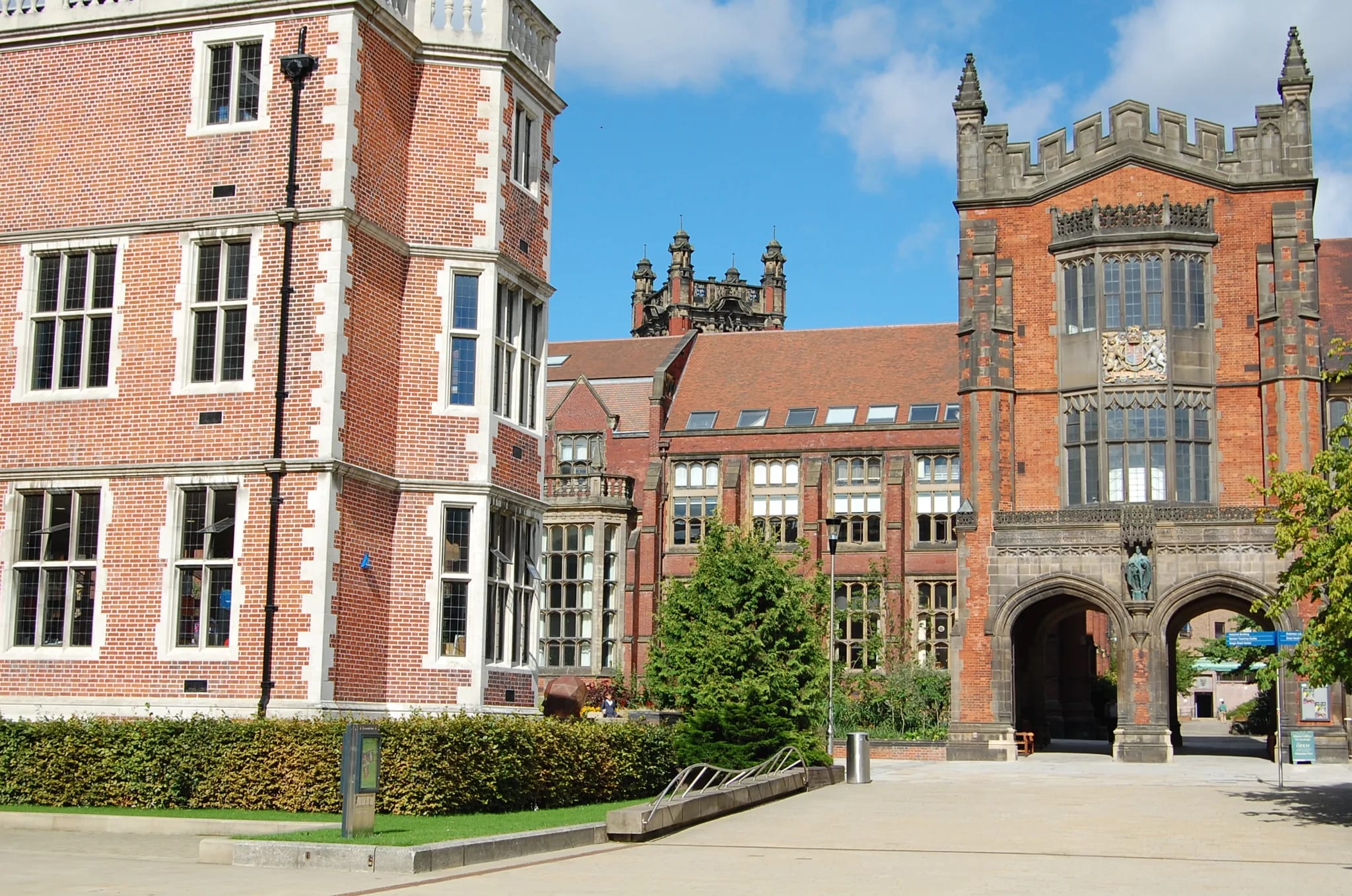
Photo: Sarah Cossom · CC BY-SA 3.0 · cropped
There are 21 four-year graduate-entry medicine courses in the UK for 2027 entry: 7 at schools that exist to run graduate entry and 14 accelerated routes at schools that also run a standard course. 17 accept UCAT and 9 accept GAMSAT, and every one wants an existing degree, usually a 2:1 or above. This page lists each route with its test, published graduate cut-off and interview, then covers NHS Bursary funding from year 2 and how to choose between GEM and a 5-year course.
GEM (also called "A101") covers the same GMC-approved content as a 5-year MBBS, by compressing pre-clinical material into year 1 and starting clinical placements earlier. Standard 5-year courses (A100) are open to school leavers and graduates alike — GEM specifically requires a prior degree.
The routes split into two kinds. 7 schools exist primarily to run graduate entry — Chester Medical School (GEM), Pears Cumbria (GEM), Surrey (GEM), Swansea (GEM), Ulster University Medical School, Warwick (GEM) and Worcester Medical School. Another 14 run an accelerated graduate route alongside their standard course — Barts and The London (Queen Mary), Cambridge, Cardiff, King's College London (KCL), Liverpool, Manchester, Newcastle, North Wales (Bangor), Nottingham, Oxford, Sheffield, Southampton, St Andrews and St George's.
Definition used. A UK graduate-entry medicine course here means a dedicated, accelerated four-year medical degree open only to applicants who already hold a degree — the courses UCAS lists under codes such as A101 or A102 and the Medical Schools Council labels "Graduate Entry". Five-year A100 courses that also accept graduates are not counted, and neither are six-year foundation or extended programmes. Membership was checked against the Medical Schools Council graduate-entry course listings on 14 September 2026.
The trade-off: 4-year GEM is faster and funded by the NHS Bursary from year 2; 5-year A100 is less competitive per place and available at far more schools. Many UK applicants apply to a mix of both to maximise their offer probability.
UK Graduate Entry Medicine at a glance
Every route wants a 2:1 or above, in almost any subject. Cut-offs are the published or best-estimated graduate-tier thresholds held in our UK medical school dataset — 7 of the 21 routes publish one, the lowest being 1800/2700 and the median 1960. Schools that select on GAMSAT alone have no UCAT figure.
All 21 UK graduate routes into medicine (2027 entry)
Every UK medical school that runs an accelerated graduate route, with the test it accepts, the degree it wants and the published graduate cut-off where there is one. Filter by route or test, sort by cut-off, or type your UCAT score to see which thresholds you already clear. Open any card for that school's full how-to-get-in guide.
Showing 21 of 21 programmes
 Barts and The London (Queen Mary) — how to get in
Barts and The London (Queen Mary)
2:1 or above · Panel interview
How to get in Cambridge — how to get in
Cambridge
2:1 or above plus A-level Chemistry; four colleges only
How to get in Cardiff — how to get in
Cardiff
1st or 2:1 from a named feeder degree only (e.g. Cardiff Biomedical Sciences)
How to get in Chester Medical School (GEM) — how to get in
Chester Medical School (GEM)
2:1 or higher in any honours degree from a UK or recognised international institution
How to get in King's College London (KCL) — how to get in
King's College London (KCL)
2:1 or above in a biosciences degree
How to get in Liverpool — how to get in
Liverpool
Home-fee graduates only; GAMSAT 50+ overall and in each section
How to get in- UCAT2080
 Manchester — how to get in
Manchester
A 2:1 honours degree or above, plus a minimum of BBB at A-level at the first sitting
How to get in  Newcastle — how to get in
Newcastle
A 2:1 honours degree at minimum
How to get in North Wales (Bangor) — how to get in
North Wales (Bangor)
2:1 or above in any honours degree (A101 graduate-entry route)
How to get in Nottingham — how to get in
Nottingham
Degree required — see the school guide
How to get in Oxford — how to get in
Oxford
2:1 or above in an applied or experimental science; about 30 places
How to get in- UCAT/GAMSAT1960
 Pears Cumbria (GEM) — how to get in
Pears Cumbria (GEM)
2:1 or above in a biosciences or allied healthcare degree — e.g
How to get in - UCAT1800
 Sheffield — how to get in
Sheffield
Degree required — see the school guide
How to get in  Southampton — how to get in
Southampton
2:1 or above · Selection day
How to get in St Andrews — how to get in
St Andrews
1st or 2:1 in any discipline; run with Dundee (ScotGEM)
How to get in- GAMSAT2100
 St George's — how to get in
St George's
2:1 or above in any discipline
How to get in  Surrey (GEM) — how to get in
Surrey (GEM)
Minimum 2:1 UK honours degree (or equivalent) in any subject
How to get in- UCAT/GAMSAT1900
 Swansea (GEM) — how to get in
Swansea (GEM)
Minimum 2:1 in any subject; OR a Merit in an integrated master's; OR a 2:2 combined with a Pass in a postgraduate higher degree
How to get in  Ulster University Medical School — how to get in
Ulster University Medical School
2:1 or above in any honours degree
How to get in- UCAT2080
 Warwick (GEM) — how to get in
Warwick (GEM)
2:1 or above in any honours degree
How to get in - UCAT/GAMSAT1900
 Worcester Medical School — how to get in
Worcester Medical School
1st or 2:1 undergraduate honours degree in any subject, held or predicted in the year of application
How to get in
Campus photo credits
Campus photographs are used under free Creative Commons or public-domain licences and have been resized and cropped for display.
- Barts and The London (Queen Mary): photograph by Paul the Archivist / Wikimedia Commons — CC BY-SA 4.0, via Wikimedia Commons
- Cambridge: photograph by Dmitry Tonkonog (User:Heuschrecke) — CC BY-SA 3.0, via Wikimedia Commons
- Cardiff: photograph by Jeremy Segrott (from Cardiff, Wales, UK) / Wikimedia Commons — CC BY 2.0, via Wikimedia Commons
- Chester Medical School (GEM): photograph by secretlondon123 — CC BY-SA 2.0, via Wikimedia Commons
- King's College London (KCL): photograph by K Ulysses-Ono — CC BY-SA 4.0, via Wikimedia Commons
- Liverpool: photograph by Rodhullandemu / Wikimedia Commons — CC BY-SA 4.0, via Wikimedia Commons
- Manchester: photograph by Happytree9527 / Wikimedia Commons — CC BY 4.0, via Wikimedia Commons
- Newcastle: photograph by Sarah Cossom — CC BY-SA 3.0, via Wikimedia Commons
- North Wales (Bangor): photograph by Tilman2007 — CC BY-SA 4.0, via Wikimedia Commons
- Nottingham: photograph by Clem Rutter, Rochester, Kent (www.clemrutter.net) — CC BY-SA 3.0, via Wikimedia Commons
- Oxford: photograph by Julian Herzog — CC BY 4.0, via Wikimedia Commons
- Pears Cumbria (GEM): photograph by Tom Edwards — Public domain, via Wikimedia Commons
- Sheffield: photograph by Chanpeter — CC BY-SA 4.0, via Wikimedia Commons
- Southampton: photograph by Roger Davies / Geograph Britain and Ireland — CC BY-SA 2.0, via Wikimedia Commons
- St Andrews: photograph by Daytrick / Wikimedia Commons — CC BY-SA 4.0, via Wikimedia Commons
- St George's: photograph by Peter Trimming / Geograph Britain and Ireland — CC BY-SA 2.0, via Wikimedia Commons
- Surrey (GEM): photograph by Geographer / Geograph Britain and Ireland — CC BY-SA 2.0, via Wikimedia Commons
- Swansea (GEM): photograph by Swanseauni — CC BY-SA 4.0, via Wikimedia Commons
- Ulster University Medical School: photograph by Conradder / Wikimedia Commons — CC BY-SA 4.0, via Wikimedia Commons
- Warwick (GEM): photograph by Mike1024 / Wikimedia Commons — Public domain, via Wikimedia Commons
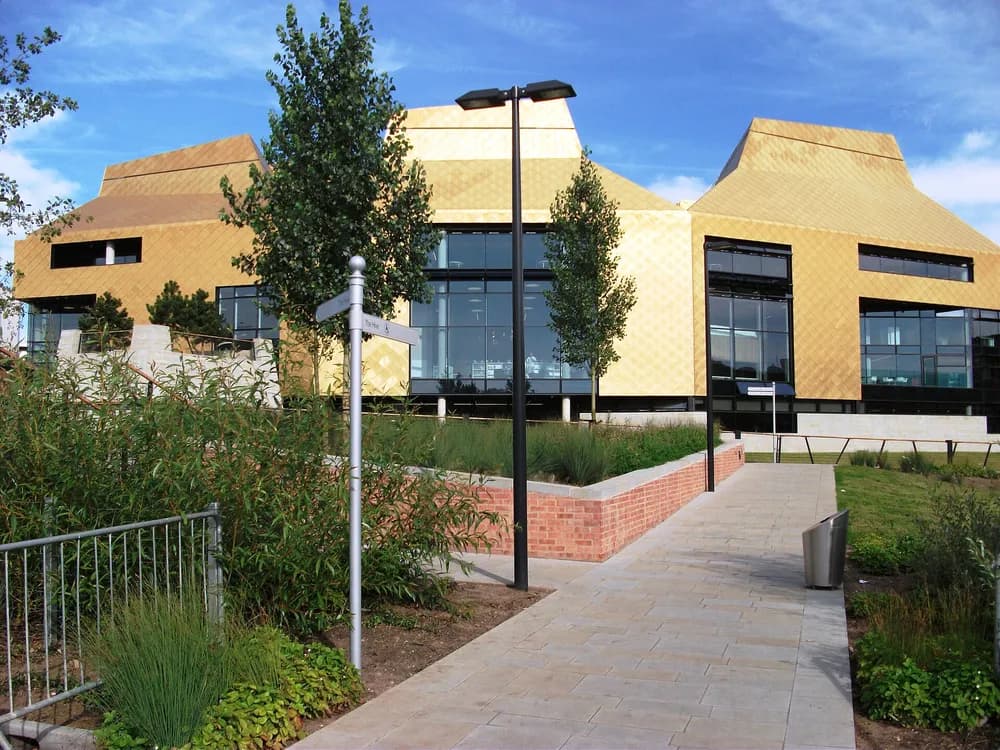
- Worcester Medical School: photograph by JanetMackinnon — CC BY-SA 3.0, via Wikimedia Commons
Every UK graduate-entry medicine route (2027 entry)
| School | Route | Admissions test | Graduate UCAT cut-off | Interview | Length |
|---|---|---|---|---|---|
| Barts and The London (Queen Mary) | A101 | UCAT | — | Panel | 4 years |
| Cambridge | A101 | UCAT | — | — | 4 years |
| Cardiff | A101 (C21) | UCAT | — | MMI | 4 years |
| Chester Medical School (GEM) | Dedicated GEM school (A101) | UCAT or GAMSAT | — | MMI | 4 years |
| King's College London (KCL) | A102 | UCAT | — | — | 4 years |
| Liverpool | A101 | GAMSAT | — | — | 4 years |
| Manchester | A101 | UCAT | 2080 | MMI | 4 years |
| Newcastle | A101 | UCAT | — | MMI | 4 years |
| North Wales (Bangor) | A101 | UCAT | — | MMI | 4 years |
| Nottingham | A101 | UCAT | — | MMI | 4 years |
| Oxford | A101 | UCAT | — | — | 4 years |
| Pears Cumbria (GEM) | Dedicated GEM school (A102) | UCAT or GAMSAT | 1960 | MMI | 4 years |
| Sheffield | A101 | UCAT | 1800 | MMI | 4 years |
| Southampton | BM4 | UCAT | — | Selection centre | 4 years |
| St Andrews | A101 (ScotGEM) | GAMSAT | — | — | 4 years |
| St George's | A101 | GAMSAT | 2100 | MMI | 4 years |
| Surrey (GEM) | Dedicated GEM school (A101) | UCAT or GAMSAT | — | MMI | 4 years |
| Swansea (GEM) | Dedicated GEM school (A101) | UCAT or GAMSAT | 1900 | Assessment day | 4 years |
| Ulster University Medical School | Dedicated GEM school (A101) | GAMSAT | — | MMI | 4 years |
| Warwick (GEM) | Dedicated GEM school (A101) | UCAT | 2080 | MMI | 4 years |
| Worcester Medical School | Dedicated GEM school (A101) | UCAT or GAMSAT | 1900 | Panel | 4 years |
Every one of these courses is also in a single sortable table with each school's graduate UCAT line, GAMSAT rule, degree requirement and TrueScore graduate-tier prediction: graduate entry medicine universities.
4-year GEM vs 5-year A100 — which should you apply to?
Both routes lead to the same GMC-registered degree. They differ in what they cost you, how many places exist, and what happens if the cycle goes badly. Pick a dimension to focus the comparison on the trade-off you actually care about.
The short version: most successful graduate applicants do not choose — they split their four UCAS choices across both, because the two routes fail in different ways.
Admissions tests for GEM
The single most expensive mistake in a graduate application is sitting the wrong test. Work out which of the 21 routes you actually want before you book anything.
UCAT — 17 of 21 routes
The default. Barts and The London (Queen Mary), Cambridge, Cardiff, King's College London (KCL), Manchester, Newcastle, North Wales (Bangor), Nottingham, Oxford, Sheffield, Southampton and Warwick (GEM) all use UCAT for graduate applicants — and Chester Medical School (GEM), Pears Cumbria (GEM), Surrey (GEM), Swansea (GEM) and Worcester Medical School accept it as one option. 7 routes publish a graduate cut-off in the NextGen MedPrep dataset, from 1800 to a median of 1960.
GAMSAT — 9 of 21 routes
A 5-hour written test in humanities, biological and physical sciences, and written communication. Liverpool, St Andrews, St George's and Ulster University Medical School select on GAMSAT; Chester Medical School (GEM), Pears Cumbria (GEM), Surrey (GEM), Swansea (GEM) and Worcester Medical School accept either test. Sat in March and September.
More than one test accepted
Chester Medical School (GEM), Pears Cumbria (GEM), Surrey (GEM), Swansea (GEM) and Worcester Medical School accept more than one test — Chester and Pears Cumbria will also take an MCAT, while Surrey takes UCAT only from bioscience or chemistry graduates. That flexibility is genuinely useful if one sitting went badly, and it is one reason these schools appear on a lot of graduate shortlists.
Which sitting to book
UCAT booking opens in May and the test runs July to late September. GAMSAT runs in March and September — take the March sitting if you can, because the September one leaves almost no margin before the 15 October UCAS deadline and no room at all to re-sit.
GAMSAT in the UK: which graduate-entry courses use it?
9 of the 21 UK graduate-entry routes accept GAMSAT for 2027 entry. Liverpool, St Andrews, St George's and Ulster University Medical School select on GAMSAT rather than UCAT; Chester Medical School (GEM), Pears Cumbria (GEM), Surrey (GEM), Swansea (GEM) and Worcester Medical School accept either test. The other 12 routes use UCAT only, so a UK graduate applicant needs GAMSAT only when one of these courses is on their shortlist.
- Chester Medical School (GEM) — A101, UCAT or GAMSAT
- Liverpool — A101, GAMSAT
- Pears Cumbria (GEM) — A102, UCAT or GAMSAT
- St Andrews — A101 (ScotGEM), GAMSAT
- St George's — A101, GAMSAT
- Surrey (GEM) — A101, UCAT or GAMSAT
- Swansea (GEM) — A101, UCAT or GAMSAT
- Ulster University Medical School — A101, GAMSAT
- Worcester Medical School — A101, UCAT or GAMSAT
Test dates, sections and how UK schools use the score are covered in the UK GAMSAT guide.
Funding for UK Graduate Entry Medicine
The funding model is the single biggest practical advantage of GEM over a standard 5-year course — three NHS-funded years instead of one. Here is the same degree, funded two ways.
Year 1
No NHS Bursary, and not a standard undergraduate year either: the Student Finance England tuition fee loan is capped at £6,125 for 2026/27 and you self-fund the first £3,665 of the fee. Maintenance support is means-tested as usual.
Years 2–4
The NHS Bursary kicks in, but it pays a capped tuition contribution — up to £3,930 for 2026/27 — and you borrow the remaining £5,860 as a fee loan. It also provides a non-means-tested grant and a means-tested bursary towards living costs, and you drop to a reduced-rate maintenance loan. It does not start automatically — register once you firm your offer.
vs the 5-year course
On a standard 5-year MBBS the NHS Bursary covers the final year only, and it pays the fee in full. On GEM it runs across years 2–4 — three years instead of one — at the lower graduate-entry contribution rate. GEM still comes out ahead on tuition, and a year less of foregone earnings usually matters more than either.
International students
International GEM students pay the same overseas fees as international 5-year students (£35,000–£62,000/year, school-specific). The NHS Bursary does not apply.
GEM application timeline
The cycle runs roughly from the January before you apply (start of test prep) through the 15 October UCAS deadline to offers the following spring. Here are the milestones you cannot miss.
Decide your test strategy
Work out whether your shortlist needs UCAT, GAMSAT or both. If any of Chester Medical School (GEM), Liverpool, Pears Cumbria (GEM), St Andrews, St George's, Surrey (GEM), Swansea (GEM), Ulster University Medical School and Worcester Medical School is on your list you may need GAMSAT — book the March sitting, not September, so the result lands well before the UCAS deadline.
Sit your admissions test
Take UCAT (book July for the widest choice of slots). Sit GAMSAT if your list needs it. Aim for a score matched to specific schools rather than a generic "good" score.
Finalise your four UCAS choices
Your UCAT score arrives before you have to commit. Check each school's GRADUATE cut-off, not its headline home figure — they are scored separately and can differ by hundreds of points.
UCAS deadline
Submit your UCAS application by the 15 October medicine deadline — the same cut-off as standard medicine, with no extension for graduate routes.
Interviews
Most graduate routes interview by MMI; Swansea runs an assessment day and Southampton a selection day. Prepare ethics frameworks, structured behavioural answers and live mocks.
Offers & NHS Bursary
Offers are released. Register for the NHS Bursary once you have accepted a firm offer — on a 4-year course it starts paying your tuition from year 2.
Six mistakes that cost GEM applicants offers
Graduate Entry Medicine — frequently asked questions
Official course pages
Entry requirements move every cycle. Confirm anything above against the school's own admissions page before you commit a UCAS choice.
Route membership: Medical Schools Council course listings, retrieved 14 September 2026 — Cambridge A101, Cardiff A101 (C21), King's College London (KCL) A102, Liverpool A101, Manchester A101, Nottingham A101, Oxford A101, Sheffield A101, Southampton BM4, St Andrews A101 (ScotGEM), Worcester Medical School A101. The other routes are sourced from the NextGen MedPrep UK school dataset; each school's official page is linked below, and the six routes added in September 2026 link to the university page their admissions test was checked against.
Build a competitive GEM application
UCAT or GAMSAT prep, personal-statement coaching and mock interviews — built specifically for graduate medicine applicants.
Free consultation
Map out your UCAT/GAMSAT, personal statement and interview plan with a tutor who got in.
Learn moreMMI interview prep
Practise the MMI format most graduate routes use, with ethics frameworks and live mocks.
Learn moreGraduate Entry Dentistry
Considering dentistry too? See the 4-year graduate dentistry routes and how to apply.
Learn moreBuild a competitive GEM application
We've helped graduates turn their UCAT, GAMSAT, personal statement and interview prep into offers from 4-year GEM and 5-year medicine programmes.