
How to get into dental school in the UK
Grades, the UCAT, work experience and interviews
You apply through UCAS by 15 October, to up to four dentistry courses. Most school leavers need AAA to A*AA at A-level, usually including Chemistry and Biology, and must sit the UCAT between July and September before applying. Interviews, mostly multiple mini-interviews, run from about November to March. The degree is a five-year BDS, and working in the NHS then takes one more year of foundation training.
- UCAS deadline, 2027 entry
- 15 October 2026, 18:00
- Dentistry choices allowed
- Up to 4 of your 5 choices
- Standard course length
- 5 years (BDS)
- UK dentistry universities
- 18 (GDC list, October 2026)
- Dental places in England
- 859 a year from 2027-28

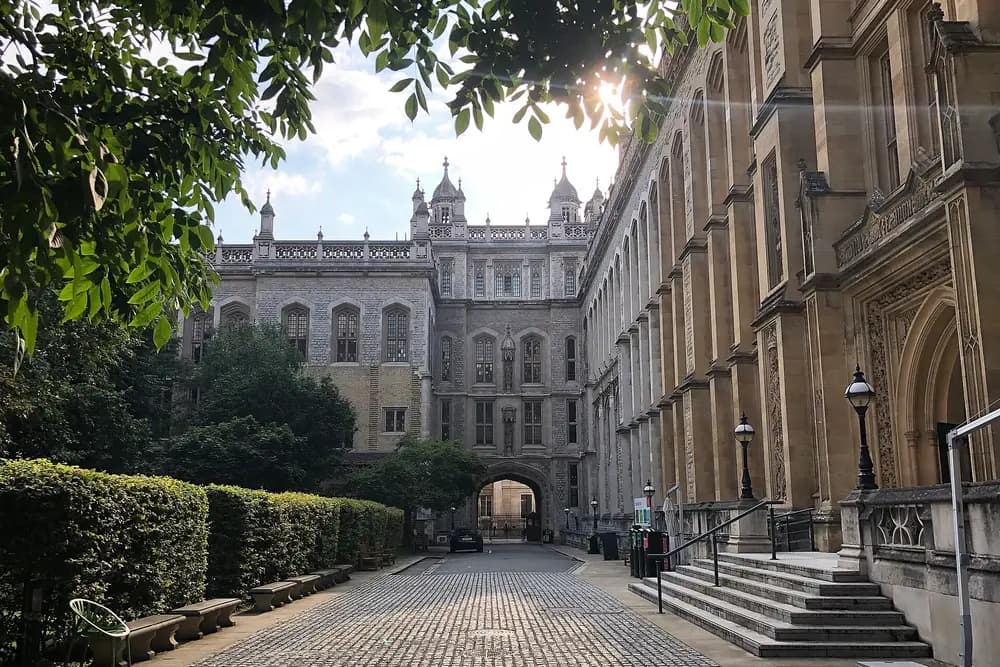

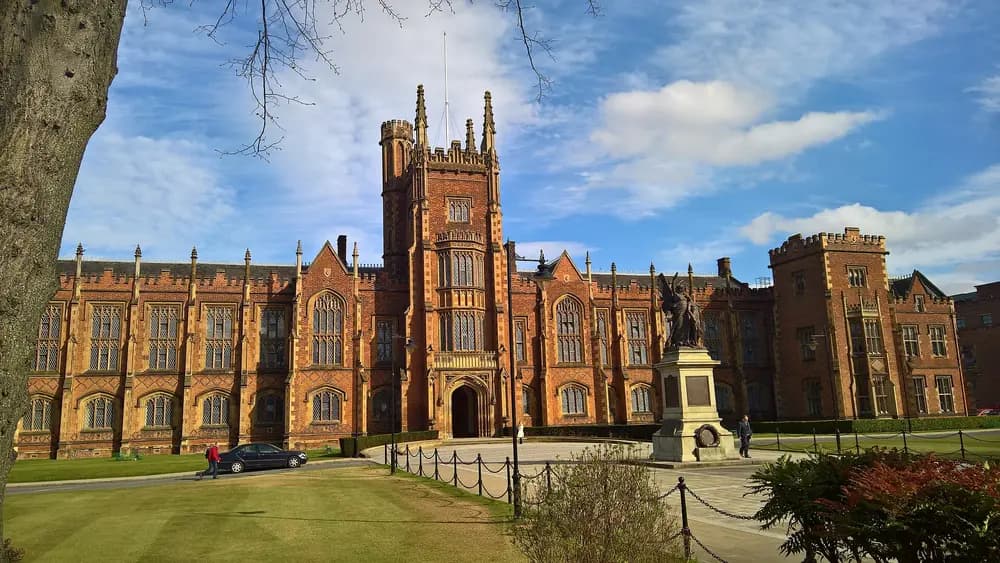
Photo: Clem_nat · CC BY-SA 4.0 · cropped
Photo: K Ulysses-Ono · CC BY-SA 4.0 · Photo: Jeremy Segrott (from Cardiff, Wales, UK) / Wikimedia Commons · CC BY 2.0 · Photo: Nick Birse · CC BY-SA 4.0
What is a BDS, and how long does it take to become a dentist?
Dentistry is a professional degree. It qualifies you to register with the General Dental Council (GDC), which regulates the whole UK dental team.
The standard UK dentistry degree is the five-year BDS (Bachelor of Dental Surgery). Leeds calls its degree the BChD, but the Dental Schools Council (DSC), which represents UK dental schools, says both lead to the same qualification. Graduates then apply to join the GDC register, because every dental professional must be registered to work legally in the UK.
You treat patients during the course. The DSC says students meet patient care early and carry out dental treatment as part of the degree, and that you must keep professional standards in your own time as well as at work.
To work in the NHS after graduating, new dentists complete one more year of Dental Foundation Training (Vocational Training in Scotland).
| Degree | BDS (Bachelor of Dental Surgery), or BChD at Leeds |
|---|---|
| Standard entry | Five years, for school leavers |
| Graduate entry | Usually four years, at Aberdeen, King's College London and the University of Lancashire |
| Gateway and foundation routes | Often six years, for UK applicants who meet widening participation criteria |
| Regulator | General Dental Council (GDC) |
Dentistry entry requirements: A-levels, GCSEs, Highers and the IB
Standard offers for 2027 entry, as UK dental schools reported them to the DSC or publish them on their own course pages. Many schools also make lower contextual offers.
For 2027 entry, standard A-level offers run from AAA to A*AA. Most schools want both Chemistry and Biology, and some accept one of them with another subject.
GCSE rules vary more. Newcastle asks only for a pass in Maths and English, while Birmingham wants 7s in Maths and English and 8s in Biology and Chemistry. Queen's University Belfast scores your best nine GCSEs.
In Scotland, offers usually combine Highers with Advanced Highers in S6: Glasgow, for example, asks for AAAAB at Higher and BB at Advanced Higher. International Baccalaureate offers vary widely: Portsmouth asks for 30 points with 666 at Higher Level, while King's College London asks for 38 points overall or 19 from three Higher Level subjects.
| Dental school | A-levels | Required subjects | Interview |
|---|---|---|---|
| Birmingham | AAA | Biology and Chemistry | MMI |
| Bristol | AAA | Chemistry, plus Biology, Physics, Maths or PE | Structured interview, online |
| Cardiff | AAA | Biology and Chemistry | MMI |
| Dundee | A*AA | Biology and Chemistry | MMI in person (online for international applicants) |
| Glasgow | AAA | Chemistry and Biology | MMI, online |
| King's College London | A*AA | Biology or Chemistry, plus one of Biology, Chemistry, Physics, Maths or Psychology | Panel of two, online |
| Leeds | AAA | Biology and Chemistry | MMI, online |
| Liverpool | AAA | Biology and Chemistry | MMI |
| Manchester | AAA | Chemistry and Biology | MMI |
| Newcastle | AAA | Biology and Chemistry | Panel, online |
| Plymouth | A*AA to AAA | Biology, plus Chemistry, Physics, Maths or Psychology | MMI, in person or online |
| Portsmouth (new) | AAA (144 UCAS points) | Biology, plus Chemistry, Physics, Maths or Psychology | Panel, online or on campus |
| Queen Mary | A*AA | Biology or Chemistry, plus a second science or Maths | Panel, online |
| Queen's University Belfast | AAA | Biology and Chemistry | MMI |
| Sheffield | AAA | Chemistry and Biology | Panel, plus an interpersonal skills test |
| UEA (new) | AAA | Biology or Chemistry | MMI, on campus |
From the DSC's 2027 entry guide (updated October 2026), except the UEA and Portsmouth rows and the King's College London and Leeds interview formats, which come from the schools' own 2027 entry pages. MMI means multiple mini-interviews.
Contextual offers and resits
Many schools make lower contextual offers to applicants whose background or school made top grades harder to reach. For 2027 entry, Leeds and Liverpool can go down to ABB, and Manchester's typical contextual offer is AAB. Each school sets its own eligibility rules, so check them first.
Resit rules differ too. Birmingham, Cardiff, Dundee and Glasgow do not accept A-level resits, Bristol accepts them in all circumstances, and Newcastle only considers them from applicants who have applied to Newcastle before.
The UCAT for dentistry: format, dates and how schools use it
The UCAT (University Clinical Aptitude Test) is a computer-based admissions test. All 16 UK dental schools that take school leavers ask for it for 2027 entry.
It has four timed sections and lasts just under two hours. Verbal Reasoning, Decision Making and Quantitative Reasoning are each scored from 300 to 900, giving a total of 900 to 2700. The Situational Judgement Test (SJT), about how you would act in real situations, is reported as a band from 1, the highest, to 4. There is no negative marking.
For 2027 entry, the test ran from 13 July to 24 September 2026, and results go to universities in early November 2026. Dates for the 2027 test are not yet published, but the usual pattern is a test in the summer before you apply. You can sit it only once in each cycle.
| Tests taken | 42,359 |
|---|---|
| Mean total score | 1,918 out of 2,700 |
| Score at the 50th percentile | 1,920 |
| Score at the 90th percentile | 2,250 |
| SJT bands | Band 1: 15%. Band 2: 40%. Band 3: 34%. Band 4: 11%. |
| Dental school | How the UCAT is used |
|---|---|
| Bristol | The total of the three scored sections, without the SJT, decides who is invited to interview. There is no cut-off score, and the interview threshold can change from year to year. |
| Manchester | Applicants with SJT Band 3 or 4 are not considered. |
| UEA | No cut-off. The total ranks applicants for interview, then counts again alongside the interview score for offers. |
| Newcastle | Applicants who meet its widening participation criteria get a slightly lower UCAT threshold for interview. |
Work experience for dentistry: what dental schools expect
Dental schools want proof that you understand the job. The DSC says how you discuss your experience matters more than where you got it.
The DSC's guidance for 2027 entry asks for an informed choice: knowledge of the dental profession, what attracts you to it, and how it compares with other healthcare careers. Ideally, you should also have worked, volunteered or observed in healthcare, particularly general dental practice.
It is not a checklist. If you are asked about working with other people, a part-time job can be as useful as shadowing a dentist.
| Dental school | Work experience policy |
|---|---|
| Birmingham | Normally requires at least 3 days in an NHS or mixed NHS and private practice, but applicants who cannot get a placement are not disadvantaged. |
| Bristol | Not required, but suggests at least two weeks. Customer service jobs and care volunteering are useful alternatives. |
| Cardiff | Not a specific requirement, as dental placements are hard to find, but you must show commitment and knowledge of dentistry. |
| Glasgow | Says dental shadowing is increasingly hard to get, so points to other shadowing or volunteering that involves caring for people, and offers an online course (MOOC). |
| Leeds | Clinical experience is not required. |
| Plymouth | Dental work experience is not required, but a work ethic is desirable at interview. |
Ways to build relevant experience
- Shadow in a general dental practice, ideally one that treats NHS patients, and watch how the team shares the work.
- Volunteer in a care home, hospice or hospital to show you can care for people.
- Count a customer-facing job: Bristol lists customer service roles as useful experience.
- After each placement, note what you saw and what it taught you about dentistry.
- Link each experience to a value the DSC lists, such as communication, teamwork or honesty.
Free PDF
Free PDF: the Ultimate Dentistry Interview Guide
Enter your email to download our free PDF guide to UK dental school interviews, with interview formats, ethics scenarios and practice questions to rehearse with.
- MMI stations and panel interview formats
- The nine principles in the GDC's Standards for the Dental Team
- Dental ethics scenarios and role-play stations
- NHS dentistry topics to read up on
- Practice questions to rehearse out loud

Get instant access to your free guide
Enter your email and your Ultimate Dentistry Interview Guide downloads straight away. We also email you a link so you can download it again on any device.
Applying through UCAS: four choices, 15 October and the personal statement
Dentistry has an earlier deadline and a tighter choice limit than most courses.
Start your application in the UCAS Hub
Applications for 2027 entry opened on 12 May 2026. You could send yours from 1 September, once your reference was added.
Meet the dentistry deadline
This is the equal consideration date for most dentistry courses. UCAS says these courses rarely consider late applications, and your school may set an earlier deadline.
Choose up to four dentistry courses
UCAS allows a maximum of four dentistry courses within your five choices.
Decide on your fifth choice
It can be a different subject, added now or later. You write only one personal statement, so pick a related course or ask that university first.
Pay and send
The application fee for 2027 entry is £34.50 for up to five choices.
Good uses of a fifth choice
- A related science degree, which could lead to graduate-entry dentistry later
- A back-up course, as Birmingham advises, once that course's admissions staff confirm they will consider you
- Universities cannot see your other choices, unless they are at the same university
Check before you mix courses
- Birmingham will not consider an application to both dentistry and another healthcare course, such as medicine
- Leeds will not consider a personal statement that is not relevant to dentistry
- UCAS says some courses accept a fifth-choice applicant with an unrelated statement, but advises asking them first
The three-question personal statement
Since 2026 entry, the personal statement has been three questions instead of one essay. They ask why you want to study the course, how your qualifications and studies have prepared you, and what else you have done to prepare outside education. Each answer needs at least 350 characters, within 4,000 characters in total, including spaces.
For dentistry, answer the first question with specific moments, not general praise for the profession. Use the third to show values such as communication, teamwork and honesty, each with an example.
| Dental school | Use of the personal statement |
|---|---|
| Birmingham | Assessed for motivation and commitment to study dentistry. |
| Bristol | Not weighted. May be used to separate applicants with identical UCAT scores. |
| Cardiff | Must be satisfactory for you to be considered for interview. |
| Liverpool | Not used to shortlist. Applicants who meet the academic criteria complete a non-academic questionnaire. |
| Plymouth | Not considered at any point. |
| Sheffield | Used to screen applicants for interview. |
Dental school interviews: MMIs, panels and manual dexterity tasks
Dental schools interview applicants before making offers, but formats differ. Check the table in the entry requirements section, then your school's own interview page.
In multiple mini-interviews (MMIs) you rotate through short stations, each with its own question, scenario or task and each scored separately. A panel is one longer conversation with two or more interviewers, typically 20 to 30 minutes.
Most dental schools use MMIs for 2027 entry, while King's College London, Newcastle, Portsmouth, Queen Mary and Sheffield use panels. Birmingham's MMI has four to ten stations of five to ten minutes each, held in person in the February half-term week. UEA interviews between November and March, and Bristol from late December to March.
Manual dexterity and practical tasks
Some schools look at practical skills. Birmingham says its MMI lets you show skills such as manual dexterity, alongside communication, empathy and ethical reasoning. For 2026 entry, Bristol set two tasks to prepare in advance: a model made from dried pasta and a five-minute presentation on a controversial topic in dentistry. The DSC advises checking your emails before the interview for task instructions.
Rules for online interviews
The DSC says AI tools, chatbots and help from another person are prohibited by all dental schools during interviews, and applicants proven to use them are disqualified. Bristol also bans notes. Never share the questions with other applicants afterwards.
Why dentistry, and not medicine or dental therapy?
The DSC expects you to know how dentistry compares with other healthcare careers. Use specific things you saw or did, and explain what draws you to the dentist's role, such as diagnosis, treatment planning and hands-on clinical work. Avoid reasons that would fit any well-paid job.
Who makes up the dental team, and how do they work together?
Name the roles the GDC regulates: dentists, dental nurses, hygienists, therapists, orthodontic therapists, dental technicians and clinical dental technicians. Then explain how work is shared. The 10 Year Health Plan suggests therapists could do check-ups, treatment and referrals, with dentists taking the work therapists cannot do.
Why do some people struggle to see an NHS dentist, and what is being done?
Give a balanced, factual answer. The 10 Year Health Plan for England (2025) reports satisfaction with NHS dentistry falling from 85% in 2019 to 69% in 2024, and promises a new dental contract. Weigh the plan to make new dentists work in the NHS for a minimum period (see Fees and funding) and the 50 extra funded places in England from 2027-28.
- Prevention matters: tooth extraction is the leading cause of hospital admission for children aged 5 to 9
Prepare a five-minute presentation on a controversial topic in dentistry. (Bristol, 2026 entry)
Pick a topic with two real sides, such as tie-ins for new NHS dentists or illegal tooth whitening. Explain the issue, give the strongest case on each side with a fact or two, then finish with your own view and why. Keep to time and to any slide limit you are given.
Tell us about a time you got something wrong. What did you learn?
The DSC looks for applicants who reflect honestly on their own performance, including weaknesses. Choose a real, modest example, own it without excuses, and say what you now do differently.
The GDC standards and dental ethics: what to know for interview
The DSC strongly advises reading the GDC's Standards for the Dental Team before you apply. You do not need to meet them yet, only to show the potential to.
The standards set out nine principles that every registered dental professional must follow at all times, all equally important. The DSC says memorising them is not enough: you need to show how you would act in scenarios that test them.
| GDC principle | What it means in an answer |
|---|---|
| 1. Put patients' interests first | Patients come before money, your own interests or loyalty to a colleague. |
| 2. Communicate effectively with patients | Listen, explain options and costs clearly, and give patients time to decide. |
| 3. Obtain valid consent | Explain options and possible costs before treatment, and keep consent valid at every stage. |
| 4. Maintain and protect patients' information | Keep information confidential, and never post about patients on social media. |
| 5. Have a clear and effective complaints procedure | Respond to complaints promptly and constructively, and learn from them. |
| 6. Work with colleagues in a way that is in patients' best interests | Work as a team, communicate clearly, and delegate or refer appropriately. |
| 7. Maintain, develop and work within your professional knowledge and skills | Know your limits, refer when needed and keep learning. |
| 8. Raise concerns if patients are at risk | Put patient safety first and act promptly if a patient or colleague is at risk. |
| 9. Make sure your personal behaviour maintains patients' confidence in you and the dental profession | Behave, at work and in your personal life, in a way that keeps the public's trust. |
At a practice offering NHS and private care, a patient asks whether a treatment is available on the NHS and seems to be steered towards paying. What should happen?
The GDC says dentists in mixed practices must make clear which treatments the NHS provides, must not suggest NHS treatments are private only, and must not pressure patients who would prefer the NHS. As a work experience student, raise it with your supervisor afterwards, not in front of the patient.
A friend has booked cheap tooth whitening with a beautician. What would you say?
Explain kindly. The GDC says whitening can permanently alter the structure of teeth and should only follow an assessment and prescription by a registered dentist. Anyone not on the GDC register who provides it is breaking the law, and the GDC can prosecute.
A fellow dental student posts a photo of a patient's X-ray on social media. What do you do?
The GDC standards ban posting information or comments about patients on social media, and anonymised cases must not let a patient be identified. Ask your classmate to take it down, and raise it with a tutor if they will not.
On work experience, you see a dentist keep the same gloves on between patients. What do you do?
Patient safety comes first, and patients must be treated in a hygienic and safe environment (GDC standards 8.1 and 1.5). Raise it promptly and politely with someone responsible, such as your supervisor or the practice manager, rather than ignore it.
In a supervised clinic, you realise you made a mistake in a patient's treatment. What do you do?
Tell your supervisor straight away and put the patient's safety first, so the patient can be told what happened and receive an apology. The DSC lists the duty of candour, being open and honest with patients, among the attributes dental schools look for.
Paying for dental school: student finance and the NHS Bursary
Students from England use student finance in the early years. The NHS Bursary takes over the tuition fee later in the course.
The NHS Bursary does not cover years one to four of a five-year course, so students from England use a tuition fee loan and a maintenance loan, as on other degrees. The tuition fee loan is up to £9,790 in 2026 to 2027. Student finance changes for courses starting on or after 1 January 2027, so check gov.uk for your start date.
From year five, the NHS Bursary pays the tuition fees of eligible students from England, up to £9,790 in 2026 to 2027, plus a grant and a means-tested bursary. Students from Scotland, Wales and Northern Ireland follow their own nation's rules, because each UK nation funds its own dental students wherever they study.
| Five-year course | Bursary from year five onwards. Tuition contribution up to £9,790 |
|---|---|
| Four-year graduate-entry course | Bursary in years two to four. Tuition contribution up to £3,930 |
| Non-means-tested grant | £1,081 a year |
| Means-tested bursary, basic rate | £2,855 outside London, £3,447 in London, £2,384 living at home |
Graduate-entry dentistry, gateway years and other routes in
If you already have a degree, or your circumstances held your grades back, there are other routes to a BDS, most of them for UK applicants only.
| Course | Length | Who it is for |
|---|---|---|
| Aberdeen, graduate-entry BDS (A201) | 4 years | UK applicants with a 2:1 or above in a bioscience or allied health degree. Selection uses the UCAT and MMIs. |
| King's College London, Graduate/Professional Entry Programme (A202) | 4 years | UK applicants with a 2:1 in a bioscience subject, or a 2:2 plus a postgraduate degree at Merit or above. |
| University of Lancashire, graduate-entry BDS (A202) | 4 years | UK and overseas graduates with a 2:1 in a biomedical subject. Selection uses the UCAT, MMIs and group tasks. |
| Standard BDS as a graduate | 5 years | Many schools take graduates onto the five-year course. Newcastle, for example, wants a 2:1 with significant Biology and Chemistry content. |
| Bristol, Gateway to Dentistry (A208) | 6 years | UK applicants who attended an aspiring state school, have spent time in care or have been eligible for free school meals. Typical offer BBC. |
| Plymouth, BDS with Integrated Foundation Year (A205) | 6 years | UK applicants who meet at least three contextual criteria. Typical offer BBB. |
| King's College London, Enhanced Support Dentistry Programme (A206) | 5 years | Applicants who have attended only non-selective state schools in a London borough since age 11. Typical offer AAB. |
| Liverpool, Foundation to Health and Veterinary Studies (Year 0) | 1 year, then the BDS | Mature students who have been out of education for some years without A-levels. School leavers are not considered. |
From the DSC's 2027 entry guide. Lancashire also asks graduates for three A-levels at grade C or above, at least two of them in Biology, Chemistry, Physics or Maths.
King's College London also runs a three-year BDS, with 10 places, for qualified doctors heading for oral and maxillofacial surgery or oral medicine. Graduates should check funding before applying, because NHS Bursary support on accelerated courses differs from the five-year course.
Moving between dental schools is hard too. The DSC says dental schools do not accept transfers from other dental schools except in unforeseen, exceptional circumstances, and even then most students restart from year one.
Dentistry application timeline: from Year 12 to your first term
These are the 2027 entry dates. If you are in Year 12 and applying for 2028 entry, expect the same pattern a year later, and check the official dates once they are published.
- Year 12, autumn to spring
Research schools and build experience
Check subject, GCSE and resit rules at each school, arrange work experience, and read about the dental team and the GDC standards.
- Visit open days: Birmingham, for example, holds them in June, October and November
- Year 12, summer
Sit the UCAT
For 2027 entry, registration opened on 20 May 2026, booking on 23 June, and testing ran from 13 July to 24 September.
- The 2026 booking deadline was 16 September, and the UCAT does not make exceptions to its deadlines
- The 2026 bursary deadline was 24 September
- Year 13, to 15 October
Send your UCAS application
For 2027 entry, applications could be sent from 1 September 2026. Use your UCAT result to settle your four dentistry choices before the 15 October deadline.
- Year 13, November to March
Interviews
UCAT results reach universities in early November, and interview invitations follow.
- Year 13, spring
Offers
Some schools make offers only after every interview is done. Bristol says applicants may be on hold for several months until all its interviews are complete.
- Summer after Year 13
Results and checks
Meet your offer conditions. Expect checks too: UEA makes offers subject to an occupational health check with immunisations, and also requires an enhanced DBS (criminal records) check.
- September
Start the course
The 2027 intake starts in September 2027, including the first students on the new BDS courses at UEA and Portsmouth.
Common mistakes dentistry applicants make
Before you press send
- You meet every subject, GCSE and resit rule at all four dental schools
- Your UCAT result fits how each of those schools uses the test
- Your fifth choice will accept a dentistry-focused personal statement
- Each of your three personal statement answers uses specific examples
- Your school's internal deadline is in your diary
- You can apply the nine GDC principles to scenarios out loud
How to get into dental school: your questions answered
Where this guide's facts come from
Checked against these sources on 19 October 2026. Rules change between cycles, so confirm anything that decides your application on the official page for your entry year.
Ready for your dental school interview?
Practise in a full-hour mock built around your school, or warm up first with our free six-station dental mock.