
Medical schools in Wales
Cardiff, Swansea and Bangor compared
Three universities train doctors in Wales: Cardiff (five-year MBBCh), Swansea (four-year graduate entry, plus a school-leaver route for south-west Wales) and Bangor's North Wales Medical School (five-year BMBS, its own degree since 2024). Every route accepts the UCAT, and 2027-entry applications closed on 15 October 2026. Welsh-domiciled students get NHS Wales funding from year 5 (year 2 on graduate entry), with no duty to work in Wales.
- Universities and routes
- 3 universities, 7 UCAS routes
- 2027 entry deadline
- 15 Oct 2026, 18:00 UK time
- Welsh fee loan 2026/27
- Up to £9,790 a year
- NHS Wales funding
- Year 5 on (year 2 graduate)
- Taught in Welsh at Cardiff
- Up to 73% of the MBBCh

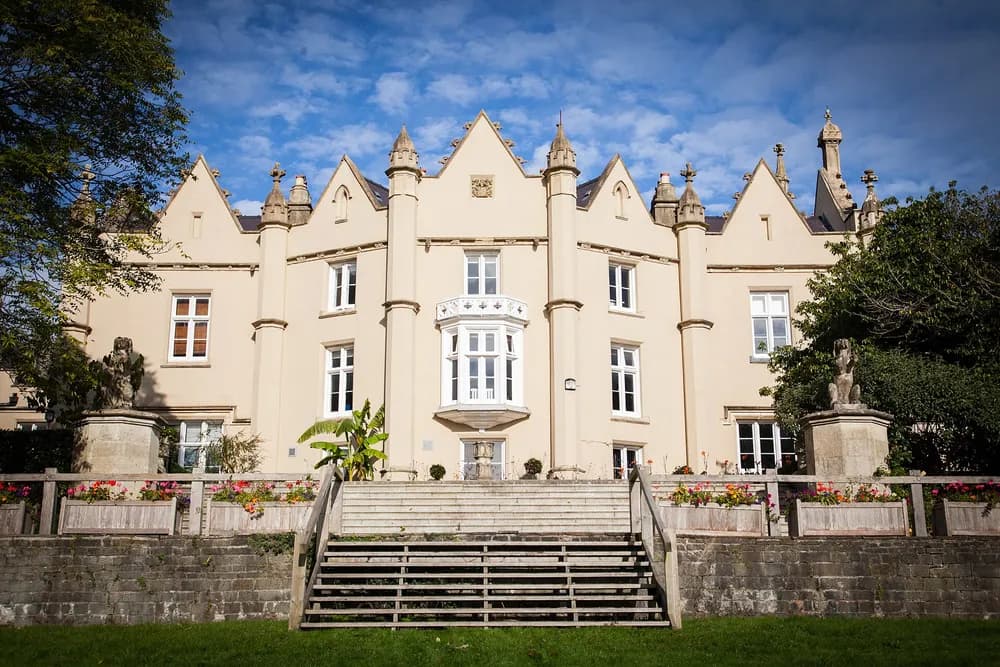


Photo: Jeremy Segrott (from Cardiff, Wales, UK) / Wikimedia Commons · CC BY 2.0 · cropped
Photo: Swanseauni · CC BY-SA 4.0 · Photo: Tilman2007 · CC BY-SA 4.0 · Photo: Colin Smith · CC BY-SA 2.0
Medical schools in Wales for 2027 entry: the short answer
Three universities train doctors in Wales. Cardiff University runs a five-year MBBCh called C21. Swansea University Medical School runs a four-year graduate-entry course, plus a route for school leavers from south-west Wales. Bangor University's North Wales Medical School took its first direct intake in 2024, on a start date agreed with the General Medical Council (GMC), the UK regulator for doctors.
Between them they offer seven UCAS courses for 2027 entry, from a six-year Gateway course to four-year graduate entry. Every route accepts the UCAT (University Clinical Aptitude Test), and all three schools interview before they make offers. The degree letters differ (MBBCh at Cardiff, MB BCh at Swansea, BMBS at Bangor), but all three lead to the UK Foundation Programme for new doctors.
Where you live matters a lot in Wales. Cardiff treats Welsh-domiciled applicants (those who normally live in Wales) as a contextual group, Bangor's Gateway course is only for Wales-domiciled students, and Swansea's school-leaver route is only for five south-west Wales local authority areas. NHS Wales funding for the later years of medicine is for Welsh-domiciled students.
| Universities | Cardiff University, Swansea University and Bangor University (North Wales Medical School) |
|---|---|
| UCAS routes | Seven: Cardiff A100 and A101; Swansea A101 and A110; Bangor A100, A101 and A103 |
| Course length | Four years (graduate entry), five years (standard) or six years (Bangor's Gateway course). Swansea's A110 adds a paid work year before the four-year degree |
| Admissions test | UCAT on every route. Swansea's graduate route also accepts GAMSAT (a graduate admissions test), and the American MCAT for international applicants |
| Interviews | Multiple mini interviews (MMIs) at Cardiff and Bangor; three face-to-face stations of 20 to 30 minutes at Swansea |
| UCAS deadline | 18:00 UK time on 15 October 2026 for 2027 entry |
| Home tuition fee | Swansea and Bangor list £9,790 for the first year of a 2027 start (Bangor's is provisional). Cardiff's 2027/28 medicine fee is not confirmed yet |
| International places | Cardiff caps overseas places at 7.5%, about 25 in Year 1. Swansea's graduate route takes international applicants. Bangor does not |
| Later-year funding | NHS Wales Bursary for Welsh-domiciled students from year 5, or year 2 of a four-year graduate course |
Cardiff, Swansea and North Wales: the three medical schools in Wales
Each card opens that school's full how-to-get-in guide. Below the cards: what sets each school apart, from its own 2027-entry pages.
Cardiff: the five-year C21 MBBCh
Cardiff has about 300 Year 1 places, including about 25 for overseas students. It receives around 3,000 applications a year, interviews about 1,000 applicants and made about 600 offers after interviews in its latest figures. Years 1 and 2 use case-centred team-based learning in small and medium-sized groups. Years 3 and 4 are placement blocks around Wales, and up to 73% of the course can be studied in Welsh.
Swansea: graduate entry, plus a local school-leaver route
Swansea's four-year A101 takes graduates of any subject who pass a GAMSAT or UCAT cut-off, then decides offers on the assessment day alone. Its A110 route is for A-level students from five south-west Wales local authority areas. They spend a paid year as a healthcare support worker, then four years on the MB BCh at Singleton Park alongside the graduate-entry students.
North Wales Medical School: Bangor's BMBS
Bangor delivered Cardiff's C21 North Wales programme from 2018. Its own first intake, school leavers and graduates, started in autumn 2024: 80 students, rising to 140 a year from 2029/30. While the degree goes through GMC approval, Cardiff is its contingency partner, so students could transfer and graduate from Cardiff if GMC standards were not met. Teaching is in Wrexham and Bangor, and only applicants with home fee status can apply.
Every medicine route in Wales compared (2027 entry)
Several routes are open only to particular groups of applicants, so check the who-can-apply column first.
| Route | Length | Who can apply | Typical academic entry | Admissions test |
|---|---|---|---|---|
| Cardiff MBBCh (A100) | 5 years | School leavers and graduates, home and overseas | AAA including Biology or Chemistry plus a second science. Graduates need a 2:1 plus BBB or ABC | UCAT, no minimum score |
| Cardiff graduate entry MBBCh (A101) | 4 years | Only students selected on four feeder degrees at Cardiff, Bangor and the University of South Wales, or dental graduates with further training | 2:1 in the feeder degree, plus BBB or ABC at A-level including Biology and Chemistry | UCAT |
| Swansea graduate entry MB BCh (A101) | 4 years | Graduates of any subject, home or international | 2:1, a Merit in an integrated master's, or a 2:2 plus a postgraduate degree; GCSE Maths and English or Welsh at grade C | GAMSAT or UCAT (international applicants may also use MCAT) |
| Swansea MB BCh (A110) | A paid work year, then 4 years | Applicants who live in, and went to secondary school in, Swansea, Neath Port Talbot, Carmarthenshire, Ceredigion or Pembrokeshire, with A-levels now or in the last two years | AAA including Biology or Chemistry; predicted grades must be backed by AAA at AS | UCAT, 1900 or above |
| Bangor BMBS (A100) | 5 years | Applicants with home fee status only, aged 18 or over when the course starts | AAA including Biology or Chemistry plus a second science; contextual offer AAB | UCAT, no minimum score |
| Bangor Gateway to Medicine (A103) | 6 years | Wales-domiciled applicants, with priority for those who meet Bangor's contextual criteria | BBB including two sciences; applicants with or predicted AAB or above may not be eligible and should consider A100 | UCAT, no minimum score |
| Bangor graduate entry BMBS (A101) | 4 years | Home fee status; four feeder degrees, or other relevant degrees after a prior-learning assessment and an entrance exam | 2:1 degree, plus BBB or ABC at A-level including the required sciences | UCAT, no minimum score |
From each university's 2027-entry course pages and the UCAT Consortium's course list. The accepted second sciences differ: Cardiff accepts Psychology, while Bangor accepts Economics. Cardiff accepts one Access course, the Agored Cymru Access to Higher Education Diploma (Medicine); Bangor accepts none.
How Cardiff, Swansea and Bangor choose who to interview
The three schools shortlist in very different ways: Cardiff scores achieved grades plus the UCAT, Swansea uses an admissions-test cut-off, and Bangor uses the UCAT in selection but publishes no minimum.
Cardiff (A100): points for GCSEs and the UCAT
Your best eight GCSEs earn points
Cardiff scores eight GCSEs, which must include Biology, Chemistry (or double science), English Language and Maths. A grade 9, 8 or A* earns 3 points, a 7 or A earns 2, and a 6 or B earns 1, so GCSEs can earn up to 24 points.
Your UCAT decile adds up to 3 points
Deciles split everyone's UCAT scores into tenths, using the UCAT Consortium's published tables. Scores in the 9th to 7th deciles earn 3 points, the 6th to 4th earn 2, and the 3rd to 1st earn 1.
One more point for further or higher education
Cardiff adds a point for academic achievement in further or higher education. A fourth A-level is not required and will not improve your application.
A UCAT cut-off only if there are too many top scores
Cardiff interviews about 1,000 applicants. If more than that reach the highest academic scores, it adds a UCAT cut-off. The cut-off is not set in advance, is unrelated to the previous year's and can differ between applicant groups.
Swansea: a test cut-off, then the interview decides
For graduate entry, Swansea accepts GAMSAT (the Graduate Medical School Admissions Test) or the UCAT, and MCAT for international applicants. It sets a cut-off for each test once it knows how many applied with it, and shares interview places in proportion. For 2026 entry the minimum scores it would consider were 50 overall and 50 in Paper 3 for GAMSAT, 1900 for UCAT and 500 for MCAT.
Swansea ignores the UCAT Situational Judgement Test band. Once you are invited to interview, your test score is not used again: offers depend only on the assessment day. The A110 school-leaver route accepts the UCAT only, with a minimum of 1900.
Bangor: UCAT with no minimum
Bangor requires a UCAT sat in the year you apply and says it uses the score in selection, but it sets no minimum. Your personal statement must show you understand the UK healthcare system and medical training, and there is no minimum amount of work experience. Anything that does not fit on the UCAS form must reach Bangor's admissions office by email by 20 October.
Medicine interviews in Wales: MMIs and Swansea's assessment day
A multiple mini interview (MMI) is a series of short, timed stations that you rotate around, each with its own theme or task. Swansea uses fewer, longer stations.
| School | Format | In person or online | Welsh option |
|---|---|---|---|
| Cardiff | MMI stations on themes including the Cardiff course, ethics, a career in medicine, the NHS, teamwork, self-directed learning, motivation, empathy, resilience and communication | In person for home applicants; online for overseas applicants | Any applicant can choose a Welsh or bilingual MMI from a set number of slots |
| Swansea (A101 and A110) | Three stations of 20 to 30 minutes: interviews, presentations or role play, which may touch on your personal statement | Face to face; graduate-entry assessment days are early in the New Year | Not stated on the course pages |
| Bangor (all routes) | MMI circuit; graduate applicants assessed through prior learning also sit an entrance exam after the MMI | Book your own slot from Bangor's email; the Gateway page says video interviews are only for exceptional circumstances | Not stated on the course pages |
Practice prompt: What attracts you to Cardiff's C21 course, and how would you cope with placements far from home in Years 3 and 4?
Cardiff lists the Cardiff course as an interview theme. Name real features, such as case-centred team-based learning, the spiral curriculum and all-Wales placement blocks, and link each to how you learn best. Then show you have thought about the practical side: travel, time away from friends, and the support Cardiff describes, such as a named academic mentor.
Practice prompt: A 20-minute role play with a relative who is upset that a test result has been delayed.
Swansea assesses qualities including communication, coping with pressure, insight and integrity, and ethics and values. In a long station, listen first, acknowledge the feeling, explain what you can and cannot do, and agree a clear next step. Do not promise things you cannot control.
Practice prompt: Why train in North Wales, where Year 3 is a whole year in one GP practice?
Bangor builds its course around primary care and communities, with a year-long placement in a North Wales GP practice and work alongside Betsi Cadwaladr University Health Board. Show you understand what following the same patients over a year involves, and why rural communities matter to you, without inventing ties you do not have.
Welsh applicants, contextual offers and widening-access schemes
Contextual admissions means a school weighs the circumstances you studied in, not just your grades. Each Welsh school does it differently.
Cardiff treats Welsh-domiciled applicants as one of its contextual groups, because Welsh students are under-represented at medical schools across the UK. It sorts applicants into Welsh-domiciled, rest of UK, contextual rest of UK, widening participation (WP) and overseas groups. Cut-offs can differ between the groups so that each one is represented.
For medicine, a contextual flag at Cardiff does not lower the offer. It gives you extra weight in the scoring used to choose who to interview. You count as contextual if your UCAS form shows, for example, care experience, free school meals, caring or parenting responsibilities, refugee status or estrangement from your parents. Postcode and school data can also qualify you, if they give a score of 100 or more on Cardiff's 0 to 330 scale.
Guaranteed interviews at Cardiff
WP applicants who took part in Cardiff's Step Up programme, Doctoriaid Yfory or the Sutton Trust programme get a guaranteed interview. For Sutton Trust applicants this is once, and only if they meet the minimum entry requirements. Cardiff says you can only reapply once from one of these programmes.
Bangor's AAB contextual offer
Bangor may offer AAB instead of AAA to applicants who meet its contextual criteria, and to first- or second-language Welsh speakers with Welsh at GCSE or A-level. Biology or Chemistry and the second science must still be at grade A.
Bangor's Gateway to Medicine (A103)
A six-year route for Wales-domiciled students whose circumstances have kept them from direct entry. The offer is BBB including two sciences. Passing the Gateway year leads automatically onto the five-year BMBS; if you do not pass, you can move to other degrees in the school if you meet their entry rules.
Swansea's Doctors for Wales measures
Swansea runs taster days and preparation workshops and has increased its number of interviews. Preference for the remaining interview places goes to applicants from Wales, judged on domicile, school attended and region of origin. At the interview itself, every applicant is treated the same.
Studying medicine in Welsh: what each school offers
None of the seven routes lists Welsh as an entry requirement. If you do speak Welsh, each school offers something different.
| School | Teaching in Welsh | Support and admissions |
|---|---|---|
| Cardiff | Up to 73% of the MBBCh can be studied through Welsh; the admissions tutor can give details | MMI in Welsh or bilingually, switching language whenever you like; no points gained or lost for using Welsh |
| Swansea | At least 40 credits a year through Welsh for fluent speakers, including Welsh-language versions of the professional practice modules, chosen to match Welsh-speaking placements | A Welsh-speaking personal tutor; scholarships and bursaries through Academi Hywel Teifi and the Coleg Cymraeg Cenedlaethol |
| Bangor | A Welsh-medium tutor if you study part of the course in Welsh, and the right to present work in Welsh | Welsh speakers may qualify for the AAB contextual offer; university support services are available in Welsh |
Learners are catered for too. Swansea strongly advises its Welsh for Medicine language course for students on its rural track, and Bangor offers support to learn or improve your Welsh through Canolfan Bedwyr, its Welsh language centre.
Fees and funding for medicine in Wales, by where you live
Who lends you the fee, and who pays in the later years, depends on where you normally live, not on where you study.
| You normally live in | Tuition fee | Support | Later years and notes |
|---|---|---|---|
| Wales | £9,790 for year 1 of a 2027 start at Swansea and Bangor (Bangor's is provisional) | Student Finance Wales: fee loan up to £9,790 in 2026/27, plus a grant and loan for living costs | NHS Wales Bursary from year 5, or year 2 of a four-year graduate course, even if you study elsewhere in the UK |
| England, Scotland or Northern Ireland | The same home fee | Your own funder: Student Finance England, the Student Awards Agency Scotland (SAAS) or Student Finance NI | Ask your funder how later years in Wales are paid. England's NHS Bursary only covers courses inside the Office for Students intake target |
| Outside the UK | Swansea graduate entry: £50,750 in year 1 for 2027 starts, rising 3% a year. Cardiff's 2027/28 fee is not confirmed yet | Cardiff caps overseas places at about 25 (7.5%) | Bangor's three routes need home fee status, and Swansea's A110 is only for residents of five south-west Wales areas |
Fees from the Swansea, Bangor and Cardiff course pages; loans from Student Finance Wales (2026/27); bursary rules from NHS Wales Student Awards Services. Bangor marks its fee as provisional.
For Welsh-domiciled students, NHS Wales takes over in the later years: from year 5 of a standard course, or year 2 of a four-year graduate course. The Welsh Government then pays a tuition fee contribution straight to your university, and you can apply for the NHS Wales Bursary towards living costs. An intercalated year at bachelor's or master's level counts towards the five years, but a repeated year does not.
On four-year graduate courses, the Welsh Government's contribution is £4,000 a year from 2025/26, less than the full fee, so ask Student Finance Wales how the rest is covered. Swansea's A110 fits neither pattern neatly, so A110 students should ask Student Awards Services which years NHS Wales funds.
You apply to NHS Wales Student Awards Services for the year your funding starts, not at the start of the course. Part of the bursary is means-tested, and it is paid in three instalments, in September, January and April. Students funded this way can also claim travel costs for clinical placements.
| Total support, away from home outside London | £12,590 a year in grant and loan combined |
|---|---|
| Away from home, household income £18,370 or less | £8,260 grant plus £4,330 loan |
| Away from home, household income £59,200 or more | £1,020 grant plus £11,570 loan |
| Cardiff estimate, university halls | £11,743 for a 40-week year, including rent and bills |
| Cardiff estimate, private shared house | £13,511 for a 52-week year |
| Swansea halls, 2026 average | £185 a week for a medium en-suite room (range £130 to £258) |
Clinical placements: which parts of Wales you train in
NHS Wales delivers care through seven local health boards, and Cardiff says its clinical placements are delivered by health boards across Wales. Expect to travel, and in some years to live away from your home campus.
Cardiff: south east Wales, then all of Wales
Years 1 and 2 bring patient contact in hospitals and community settings across south east Wales. Years 3 and 4 are seven- or eight-week placement blocks all around Wales, with bookend weeks at Heath Park or University Hospital Llandough. Cardiff uses hospitals and over 230 GP practices, and provides accommodation for placements far from south Wales.
Bangor: North Wales and Betsi Cadwaladr
Bangor works with Betsi Cadwaladr University Health Board and GP practices across North Wales. Year 3 is a longitudinal integrated clerkship: a whole year based in one GP practice, following patients into hospital and back. Year 4 includes an emergency department placement at one of the three district general hospitals in North Wales.
Swansea: south-west Wales and a rural track
A110 students spend their first year employed as healthcare support workers at Hywel Dda or Swansea Bay health board, within commuting distance of home. Medicine placements, which are unpaid, run at NHS hospitals, GP surgeries and community sites. A small number of graduate-entry students in each cohort can join the RRHIME rural track, which includes rural secondary care in Aberystwyth and Haverfordwest.
Cardiff also lets you apply, in Year 2, to spend Year 3 as part of a GP practice in rural or semi-rural Wales. You get four separate weeks of hospital teaching and the same learning outcomes as the main programme. At Bangor, your home campus may change from Year 3 to make travel to placements easier. In the final year at Cardiff and Bangor, you spend seven weeks working as part of a clinical team under supervision. This senior student assistantship takes place in the hospital where your first foundation job will be, if that job is in Wales.
- Aneurin Bevan University Health Board
- Betsi Cadwaladr University Health Board
- Cardiff and Vale University Health Board
- Cwm Taf Morgannwg University Health Board
- Hywel Dda University Health Board
- Powys Teaching Health Board
- Swansea Bay University Health Board
Applying for 2028 entry: a timeline for Year 12s
The dates below come from the 2027-entry cycle. UCAS and the UCAT Consortium publish 2028-entry dates later, so check them before you rely on any of these.
- Spring 2027 (Year 12)
Check which routes you can apply to
Several Welsh routes depend on where you live or your fee status. Swansea's A110 needs residence and schooling in one of five local authority areas, and Bangor needs home fee status on the day you apply and an age of 18 by the start. Cardiff scores achieved GCSEs, so look at your best eight grades now.
- Summer 2027
Sit the UCAT
All seven routes accept the UCAT, and Cardiff, Bangor and Swansea's A110 want a test sat in the year you apply. For 2027 entry, UCAT testing ran from 13 July to 24 September 2026; check the UCAT Consortium's 2027 dates when they are published.
- September 2027
Raise extenuating circumstances early
In the 2027-entry cycle Cardiff asked for extenuating circumstances by 20 September, and Bangor wanted third-party evidence before the UCAS deadline. Neither will adjust grades an exam board has awarded.
- Mid-October 2027
Submit your UCAS application
UCAS used 15 October, 18:00 UK time, as the medicine deadline for both 2026 and 2027 entry; confirm the 2028 date on UCAS. Bangor wants any extra information by email by 20 October.
- Winter 2027 to 2028
Interviews and offers
In the 2027-entry cycle Cardiff aims to tell applicants about interviews by mid-December, and Swansea holds its graduate-entry assessment day early in the New Year. Bangor sends a placeholder date through UCAS, then emails you to book a real slot.
Mistakes that cost applicants a place at Welsh medical schools
Medical schools in Wales: your questions answered
Where this guide's facts come from
Checked against these sources on 19 October 2026. Rules change between cycles, so confirm anything that decides your application on the official page for your entry year.
Applying to medicine in Wales?
Practise MMIs and longer assessment-day stations with a tutor, or check where your grades and UCAT fit with our free Where to Apply tool.