
How to get into University of Otago Dentistry
Your 2027 Entry step-by-step guide
University of Otago — Faculty of Dentistry in Dunedin runs a school-leaver and graduate-entry dentistry program for 2027 entry in New Zealand. University of Otago holds a panel interview: Late September 2026 or early October 2026. Decisions for 2027 entry: December 2026 (outcomes advised by 18 December 2026).
- Interviews (2027 entry)
- Late September 2026 or early October 2026
- Decisions (2027 entry)
- December 2026 (outcomes advised by 18 December 2026)

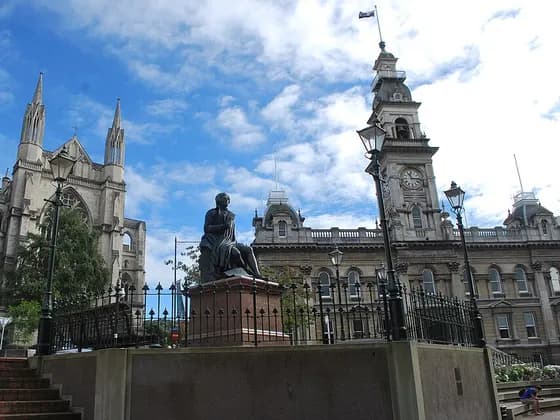
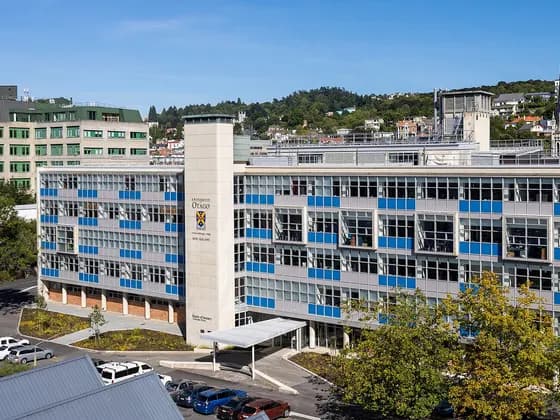
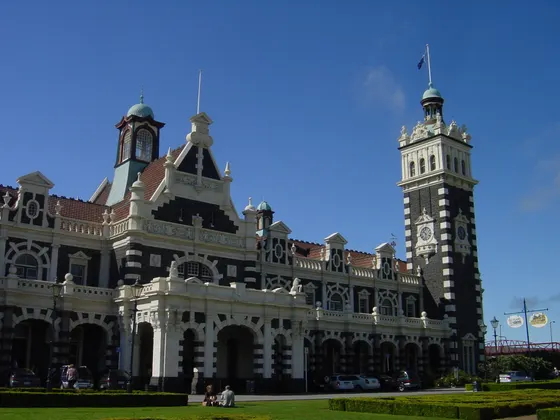
Photo: Bernard Spragg. NZ · CC0 · cropped
Photo: Mattinbgn · CC BY-SA 3.0 · Photo: Dave Bull · CC BY 4.0 · Photo: Robert Cutts from Bristol, England, UK · CC BY 2.0
Still deciding where to apply? Hear it from a student who's there
Honest student guides to dentistry universities
Current dental students at New Zealand universities are filming their guides right now: what the course and teaching are really like, the city they live in, the social side, and whether they'd pick it again.
Coming soonNot on sale yet — we'll open these up as soon as the first New Zealand videos land.
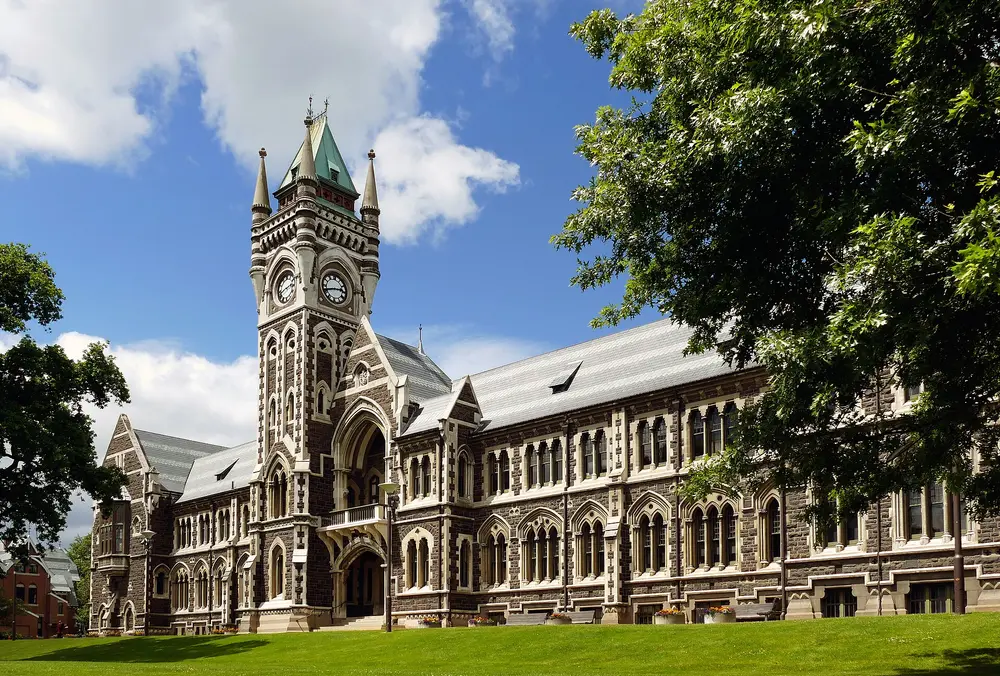
Filming now
University of Otago — Dentistry (BDS) expects either Year 12 ATAR or a bachelor GPA — HSFY category (the main route): take all seven prescribed first-year papers at Otago in the year of application, not having completed that set in an earlier single calendar year; pass them all with an average of at least 65% across your best seven marks (counting an optional eighth paper if taken) AND no mark below 60% in any prescribed paper.
That per-paper 60% floor is a Dentistry rule — Otago Medicine does not apply it. You must also pass the HSFY English Diagnostic or ENGL 128.
The Dental Admissions Committee sets a minimum academic requirement each year to reach the interview stage; roughly 350 applicants across all categories are interviewed by Zoom in late September or early October, and the final determining factor for applicants who meet all criteria is academic score. UCAT ANZ is not required (removed from the 2025 intake).
Graduate category: a bachelor's degree, bachelor's honours degree, or bachelor's degree followed without a break by a postgraduate diploma or honours year, awarded by a NZ university as your first degree within three years of applying, with the qualifying programme averaging at least a weighted GPA of 5.
From the 2027 intake the weighted GPA takes your best 300-level papers first (up to 120 points), then your best 100- and 200-level papers to 360 points total, weighted 100-level x0.5, 200-level x1.0, 300-level x1.5.
Graduate applicants must also have passed, or be enrolled in, the Otago HSFY papers or their recognised equivalents — including the equivalents taken within the BHSc or BSc (Biomedical Sciences) at the University of Auckland.
Alternative category: for applicants not eligible for any other category who hold a NZ degree but are outside the Graduate window, an overseas degree at NZQF Level 7 or above, a master's or doctorate, or relevant health-related professional experience (five years recommended, preferably two in NZ); the HSFY papers or equivalents are still required, and a weighted GPA of about 5 (Otago equivalent) normally applies.
Supporting documents must be in by 5pm on 20 August, and not all Alternative applicants are interviewed. No specific Year 13 subject prerequisites, but Biology, Chemistry and Physics at NCEA Level 3 are strongly recommended. Applications open 1 July and close 13 August.
Applicants applying for both Medicine and Dentistry must nominate a preferred programme. for Dentistry (BDS) and uses Structured Zoom panel interview (late September–early October) for interviews in the 2027 Entry cycle.
Entry is dual-pathway (undergraduate and graduate) and there is no admission test; you apply to the university directly against its own preference deadlines, and domestic and international places are both capped, so treat the standard above as a threshold to clear rather than a target to aim at.
This guide is written for 2027 Entry applicants and updated annually before each NZCAA / university admissions cycle. Sources include University of Otago — Faculty of Dentistry's official course page, the UCAT-ANZ Consortium, and direct conversations with current students. Read time: ~12 minutes.
Compiled from University of Otago — Faculty of Dentistry's published admissions material and checked for internal consistency. Not independently re-checked against the official course page for 2027 entry — confirm the figures with the school before you rely on them.
University of Otago — Dentistry (BDS) at a glance
| Interview format | Structured Zoom panel interview (late September–early October) |
|---|---|
| Interviews (2027 entry) | Late September 2026 or early October 2026 |
| Decisions (2027 entry) | December 2026 (outcomes advised by 18 December 2026) |
University of Otago — Dentistry (BDS) entry requirements
| Pathway | Undergraduate and graduate entry |
|---|---|
| Prerequisites | No specific Year 13 subject prerequisites are mandated. Biology, Chemistry and Physics at NCEA Level 3 (or the Cambridge International / IB equivalent) are strongly recommended. Otago's standard undergraduate entry requirements apply, and applicants must pass the HSFY English Diagnostic or ENGL 128. The Graduate and Alternative categories require a weighted GPA of at least 5 across the qualifying programme, and all categories require the HSFY papers or their recognised equivalents (including the Auckland BHSc / BSc Biomedical Sciences equivalents). |
| Interview | Structured Zoom panel interview (late September–early October) |
| Place types | Domestic places are determined by the University Council annually and are not published. Approximately 350 interview invitations are issued each year across all admission categories. |
| Indigenous pathway | BDS admits under the same Te Kauae Paraoa policy as MBChB — the Admissions Policy for Health Professional Programmes, which replaced Mirror on Society. The equity groups are Maori (verified ancestry plus a supporting statement), New Zealand Resident Indigenous Pacific Origins / NZRIPO (verified ancestry, a Pacific community-leader endorsement and a 500-word statement), Socioeconomic Equity (Years 11-13 within the last five years at a school in the top three NZ Equity Index bands, or decile 1-3 before 2023), Refugee Background, and New Zealand Rural Origins (four years of rural pre-tertiary education, four consecutive years of rural residence after school, or a combination, assessed against the Geographic Classification for Health). Each group is ranked in its own sub-pool within whichever admission category the applicant uses. Quotas are not publicly disclosed. |
HSFY category (the main route): take all seven prescribed first-year papers at Otago in the year of application, not having completed that set in an earlier single calendar year; pass them all with an average of at least 65% across your best seven marks (counting an optional eighth paper if taken) AND no mark below 60% in any prescribed paper.
That per-paper 60% floor is a Dentistry rule — Otago Medicine does not apply it. You must also pass the HSFY English Diagnostic or ENGL 128.
The Dental Admissions Committee sets a minimum academic requirement each year to reach the interview stage; roughly 350 applicants across all categories are interviewed by Zoom in late September or early October, and the final determining factor for applicants who meet all criteria is academic score. UCAT ANZ is not required (removed from the 2025 intake).
Graduate category: a bachelor's degree, bachelor's honours degree, or bachelor's degree followed without a break by a postgraduate diploma or honours year, awarded by a NZ university as your first degree within three years of applying, with the qualifying programme averaging at least a weighted GPA of 5.
From the 2027 intake the weighted GPA takes your best 300-level papers first (up to 120 points), then your best 100- and 200-level papers to 360 points total, weighted 100-level x0.5, 200-level x1.0, 300-level x1.5.
Graduate applicants must also have passed, or be enrolled in, the Otago HSFY papers or their recognised equivalents — including the equivalents taken within the BHSc or BSc (Biomedical Sciences) at the University of Auckland.
Alternative category: for applicants not eligible for any other category who hold a NZ degree but are outside the Graduate window, an overseas degree at NZQF Level 7 or above, a master's or doctorate, or relevant health-related professional experience (five years recommended, preferably two in NZ); the HSFY papers or equivalents are still required, and a weighted GPA of about 5 (Otago equivalent) normally applies.
Supporting documents must be in by 5pm on 20 August, and not all Alternative applicants are interviewed. No specific Year 13 subject prerequisites, but Biology, Chemistry and Physics at NCEA Level 3 are strongly recommended. Applications open 1 July and close 13 August. Applicants applying for both Medicine and Dentistry must nominate a preferred programme.
Year 12 ATAR (school leavers) or bachelor degree GPA (graduates) is the academic gateway, plus the admission test and interview.
Admission test
This school uses a course-specific admission test or a non-standard selection method. See the official course page and the admission profile above for the exact requirements.
Written submissions
New Zealand has no UCAS, no central application service and no personal statement. You apply directly to Otago, and for most domestic applicants there is no written document at all: Otago's Health Sciences First Year (HSFY) and Graduate categories rank on academic score with UCAT-ANZ used as a threshold gate, and Otago BDS selects on first-year academic performance plus a structured Zoom interview. Written material appears in only three pathways - the Auckland MAPAS MH04 form, the Otago Alternative Category (for experienced allied-health professionals) and Auckland Graduate Entry - and in the last two it is assessed by interview, not as a scored essay. Treat each of those as a specific, structured task rather than a narrative statement.
There is no national word or character limit, because there is no national document. The MAPAS MH04 form has its own question-specific fields; the Otago Alternative Category interview does not use a pre-submitted scored document; and Auckland Graduate Entry is assessed verbally at the MMI. Check your school's current admissions page for the exact form and deadline for your pathway - requirements are reviewed each cycle.
Five things that win
Four things that lose
Worked-example opener (do not copy — for shape only)
"During a week at a community dental clinic in South Auckland, I watched a therapist coach a nervous 14-year-old through her first extraction. The procedure took ten minutes; the trust-building took the other twenty. Watching how much of oral-health inequity is really about whether someone comes through the door is what made me commit to dentistry…"
Notice: a specific scene rather than a cliché, a precise detail (the nine-minute conversation), and a closing sentence that bridges to the next paragraph. We have a step-by-step NZ application strategy guide if you want a tutor to help shape yours.
The Panel interview at University of Otago — Dentistry (BDS)
University of Otago — Dentistry (BDS) uses Structured Zoom panel interview (late September–early October). For 2027 entry, interviews typically take place in Late September 2026 or early October 2026. Final decisions are released December 2026 (outcomes advised by 18 December 2026).
At University of Otago — Dentistry (BDS), expect the following from the panel interview. A structured panel interview held over Zoom, typically around 40 minutes with a small panel rather than a rotation of stations. Otago interviews its Alternative Category MBChB applicants and all BDS applicants this way, usually in late September to early October. Questions probe in depth; expect follow-ups that test how you reason rather than what you have memorised.
How the University of Otago — Dentistry (BDS) Panel actually runs
Approximately 350 applicants across all admission categories are invited to a Zoom videoconference interview in late September or early October, where the panel assesses motivation, decision-making and communication. The format is not described as an MMI in Otago's published materials, and the number of stations, interviewers and assessed domains is not published.
Reaching the interview stage is itself competitive: the Dental Admissions Committee sets a minimum academic requirement annually for HSFY, Graduate and Alternative applicants to proceed, and not all Alternative applicants are interviewed.
Otago states that the interview is a suitability threshold — once it is met, interview performance is given no further weight — and that final selection is on academic ranking. UCAT ANZ is no longer required for BDS admission — it was removed from the 2025 intake onwards for every category.
What they assess
What University of Otago — Dentistry (BDS) assessors are scoring: Panel interviewers want to understand how you think, not just what you say - intellectual humility, structured reasoning, reflection on real experience, and a realistic awareness of what dentistry in New Zealand demands. Cultural safety is a standard the Dental Council of New Zealand regulates, so a genuine understanding of Te Tiriti, hauora Māori and health equity is assessed rather than assumed.
Common station / question themes
- Motivation for Dentistry (with realistic awareness of the career in New Zealand)
- Professional and clinical experience in depth (Alternative Category applicants especially)
- Te Tiriti o Waitangi, cultural safety and hauora Māori
- Health equity for Māori, Pacific, rural and underserved communities
- Knowledge of the New Zealand health system (Te Whatu Ora, rural and community access)
- Ethical scenarios with multiple follow-ups
- Knowledge of the school, the programme and why you want to train here
- Oral-health inequity, prevention and manual-dexterity experience
Sample questions you might face at University of Otago — Dentistry (BDS)
Tell us about a moment in your work or clinical experience that changed how you think about dentistry.
What does cultural safety mean in practice, and how would it shape your consultations?
How is the New Zealand health system structured, and where do you see its biggest equity gaps?
Why do you want to train and practise in Aotearoa New Zealand?
A 16-year-old asks for confidential advice without involving a parent. How do you approach this?
Describe a setback you have had and what you learned.
Why dentistry rather than medicine, and what draws you to oral health specifically?
What would you bring to a cohort training for the New Zealand workforce?
Model-answer guidance: “Why dentistry?”
Our panel-interview prep covers ethics frameworks (SPIES, the four pillars), structured behavioural answers (STAR), and live mock interviews with admissions specialists.
Practise the University of Otago — Dentistry (BDS) interview
Rehearse the real format before the day — on demand with our AI interviewers, or live with a tutor.
Sit a mock with photoreal AI interviewers — any time
A timed MMI or panel interview on video — a range of international voices — with interviewers who listen, react and press with follow-ups. Rubric-scored feedback and a replay the moment you finish.



Live mocks with a tutor who’s been in the room
A full University of Otago — Dentistry (BDS)-style mock with a medic or dentist tutor — honest scoring against real marking criteria, a station-by-station debrief and a written action plan.
Book a mock interviewMonth-by-month timeline for 2027 Entry
The cycle runs roughly January 2025 (start of prep) through university preference deadlines in October 2026, MMIs in November-December 2026, to first-round offers in December 2026 and course start in late February 2027. Here are the milestones you cannot miss.
Decide and start work / clinical experience
Confirm medicine or dentistry as your career direction. Start banking clinical exposure (hospital volunteering, GP shadowing, aged-care or disability-support roles) and non-clinical experience (research, peer tutoring, leadership). NZ schools weight reflection over hours - track what each placement taught you.
Begin HSFY papers / enrol at Otago or Auckland
School-leaver applicants enrol full-time in Health Sciences First Year (Otago HSFY) or the BHSc/BSc Biomed gateway (Auckland) - the prescribed papers you sit this year set your academic rank score. Graduate applicants confirm eligibility (a completed NZ degree within the last 3 years) for the Graduate pathway.
Open UCAT-ANZ prep window
Begin Verbal Reasoning, Decision Making, Quantitative Reasoning and Situational Judgement practice. UCAT-ANZ acts as a threshold gate for Otago (Verbal Reasoning and SJT percentile minimums) and a ranked component at Auckland - check each school's current weighting before you sit it.
HSFY papers continue + UCAT-ANZ registration opens
Keep HSFY / gateway paper marks high through the year - Otago's HSFY and Graduate pathways select purely on academic rank score. UCAT-ANZ registration opens for the July sitting.
UCAT-ANZ booking
Book your UCAT-ANZ slot for July - popular slots fill quickly. Note BDS at Otago no longer requires UCAT ANZ (removed from the 2025 intake onwards); confirm current requirements for your target school and course.
UCAT-ANZ testing window
Take UCAT-ANZ. There is one sitting per cycle - no retake until the following year, so treat this as a single, high-stakes attempt.
Applications close
Direct-application deadlines fall across July-August depending on school and pathway (for example, Otago BDS applications close mid-August). Confirm your target school's exact deadline and submit HSFY / gateway paper results, referee details, and any required portfolio ahead of the cutoff.
Interview invitations issued
Shortlisted applicants receive interview invitations - Auckland MBChB uses a fully asynchronous Kira Talent MMI; Otago's Alternative Category and all Otago BDS applicants attend a structured Zoom interview. Otago's HSFY and Graduate MBChB pathways have no interview and are ranked on academic score alone.
Interviews run
Interviews run through October for schools/pathways that require one. Prepare for asynchronous video (Auckland Kira Talent) or live Zoom (Otago) formats based on your school's known approach.
Offers released
Offers are released from December, combining academic rank score, UCAT-ANZ (where applicable) and interview performance (where applicable). Reply by the stated acceptance deadline or forfeit the place.
Course start
Teaching begins late February / early March. Orientation, first lectures, and (for HSFY entrants who secure a place) the transition into the professional programme.
What makes University of Otago — Dentistry (BDS) different
Otago is the only dental school in New Zealand — there is no alternative BDS provider, and no NZ equivalent of choosing between schools. UCAT ANZ was removed from BDS admissions from the 2025 intake for every category. Unlike Otago MBChB, where the HSFY and Graduate categories have no interview at all, every BDS category goes through an interview. BDS is also the stricter of the two on HSFY marks: it applies a 60% minimum in each prescribed paper on top of the 65% average, which Medicine does not. Teaching for Years 2-5 takes place entirely at the Dunedin Faculty of Dentistry — there is no branch-campus clinical split as there is for MBChB. A separate Advanced Standing pathway exists for qualified overseas dental graduates seeking NZ registration.
Notable research areas
Curriculum (Integrated)
5-year BDS. Year 1 (HSFY): 7 compulsory papers at Dunedin — identical HSFY prescription as for MBChB. Years 2–5: BDS programme at the Faculty of Dentistry, Dunedin — no branch-campus clinical split. Interview required for all admission categories (unlike MBChB HSFY/Graduate, which have no interview). Advanced Standing pathway exists separately for qualified overseas dental graduates seeking NZ registration.
Location: Dunedin, New Zealand
Founded in 1907. Whether the city suits you matters - five or six years is a long commitment. Visit on an open day if you can; current students will be the most honest assessors of culture and clinical placement quality.
Read the full University of Otago course guide — integrated, 5 years (incl. health sciences first year), with placements in Dunedin and Manurewa, South Auckland.
Application statistics for University of Otago — Dentistry (BDS)
University of Otago — Dentistry (BDS) intake
Domestic places are determined by the University Council annually and are not published as a headline figure. Approximately 350 applicants across all categories are invited to interview each year. Domestic fee 2026: NZ$18,600; international fee 2027: NZ$117,915.
How University of Otago — Dentistry (BDS) selects, at a glance
Source: University of Otago — Faculty of Dentistry admissions data; UCAT-ANZ Consortium decile data; published university selection statistics.
Six mistakes that derail dentistry applications
University of Otago — Dentistry (BDS) — frequently asked questions
Sources for this University of Otago — Dentistry (BDS) guide
Apply to University of Otago — Dentistry (BDS) with confidence
We have helped hundreds of applicants turn their UCAT-ANZ, portfolio and MMI prep into offers from University of Otago — Dentistry (BDS) and other New Zealand dentistry schools.