
University of Otago Dentistry Interview
Format, Questions & Prep Tips
University of Otago dentistry interviews for 2027 entry are a panel interview. Published figures: Interview invitations per year ~350 (across all categories); UCAT ANZ Not required (removed from BDS from 2025 intake); minimum HSFY average for shortlisting 65% across best seven papers (no mark below 60% in prescribed papers).
- Institution
- University of Otago — Faculty of Dentistry
- Interview (2027 entry)
- Late September or early October, by Zoom (exact date confirmed each year)
- Decisions (2027 entry)
- Outcomes by 18 December

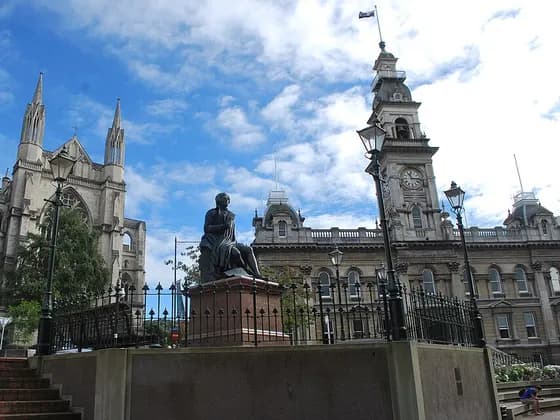
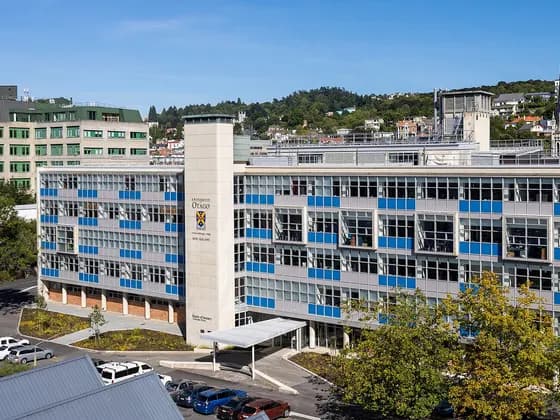
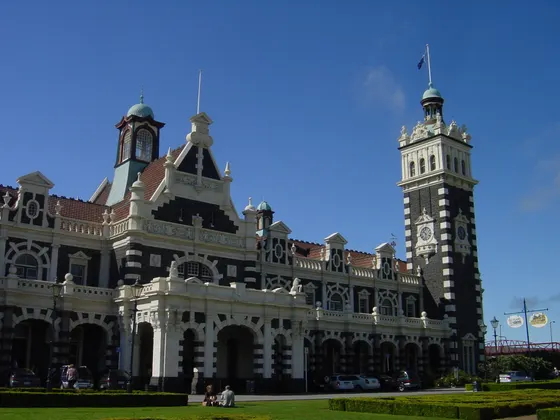
Photo: Bernard Spragg. NZ · CC0 · cropped
Photo: Mattinbgn · CC BY-SA 3.0 · Photo: Dave Bull · CC BY 4.0 · Photo: Robert Cutts from Bristol, England, UK · CC BY 2.0
How to get into University of Otago — Dentistry (BDS) dentistry
Step-by-step: entry requirements, admission tests, personal statement, interview format and the key deadlines.
Open the guide →University of Otago — Dentistry (BDS) entry requirements
Admission profile, interview format, decision dates and what makes University of Otago — Dentistry (BDS) different.
See the profile →The University of Otago dentistry course
Integrated, 5 years (incl. health sciences first year), placements across Dunedin and Manurewa, South Auckland.
See the course →The University of Otago — Dentistry (BDS) dentistry interview
Otago BDS is New Zealand's only dental degree and one of the oldest dental schools in the Southern Hemisphere. Unlike Otago MBChB (where the HSFY and Graduate pathways have no interview), all BDS pathways require an interview — approximately 350 applicants across all admission categories are invited to a structured Zoom videoconference interview held in late September or early October each year. The interview is a suitability threshold: applicants the panel judges suitable go forward, and final selection is by academic ranking.
The entry route mirrors MBChB: domestic school leavers complete Health Sciences First Year (HSFY) at Otago, with an average of at least 65% across the best seven papers and no mark below 60% in the prescribed papers. The Graduate Category accepts applicants who completed their first NZ degree within the past three years (any major), with a weighted GPA of at least 5, who have also passed the HSFY papers or recognised equivalents — including equivalents taken within Auckland's BHSc or BSc (Biomedical Sciences).
A significant admissions change took effect from the 2025 intake: **UCAT ANZ is no longer required for BDS**. This represents a meaningful divergence from the MBChB process at Otago (which retains UCAT ANZ as a threshold gate for HSFY and Graduate applicants) and from prior years of BDS admissions. No UCAT data is used in BDS selection from 2025 onwards.
The structured Zoom interview is the critical differentiator of BDS selection from MBChB at Otago. With ~350 interview invitations and a number of places set annually by Council, you must clear the interview, but academic ranking decides who is finally selected. Otago publishes what the panel assesses — motivation, decision-making and communication skills — but not the station count, interviewer composition or interview length.
University of Otago — Dentistry (BDS) interview at a glance (2027 entry)
| Dental school status | Only dental school in New Zealand |
|---|---|
| International places | A limited number each year (not specified) |
| Interview invitations per year | ~350 (across all categories) |
| Interview format | Structured Zoom videoconference — late September/early October |
| Role of the interview | Suitability threshold; final selection by academic ranking |
| UCAT ANZ | Not required (removed from BDS from 2025 intake) |
| Minimum HSFY average for shortlisting | 65% across best seven papers (no mark below 60% in prescribed papers) |
| Graduate Category min. GPA | 5.0 / 9.0 weighted across qualifying degree |
| International tuition (2027) | NZD 117,915 per year |
| Course duration | 5 years (Year 1 HSFY + Years 2–5 BDS) |
Interview format
- All shortlisted applicants attend a **structured Zoom videoconference interview** — approximately 350 invitations issued across all admission categories.
- Interview held in **late September or early October** each year.
- Otago publishes what the panel assesses — **motivation, decision-making and communication skills** — but not the number of stations, interviewers or the interview length. Some format details were withheld in OIA responses as of October 2024.
- The interview is a **compulsory suitability threshold**. Once an applicant is judged suitable, interview performance is given no further weight: final selection is on academic ranking.
- UCAT ANZ is **no longer required** for BDS from the 2025 intake (applications submitted in 2024 for 2025 second-year entry). This is a firm policy change confirmed by OIA-released information.
- Dental Admissions Committee **may set a minimum academic requirement** for HSFY applicants to proceed to interview (determined annually). Monitor the Faculty of Dentistry admissions page each cycle.
- Graduate and Alternative category applicants must also have passed the HSFY papers or their recognised equivalents — including equivalents completed within the University of Auckland's BHSc or BSc (Biomedical Sciences).
- Equity pathways for Rural Origins, Māori, and Pacific applicants operate under the same framework as MBChB — government-funded rural places are allocated in both programmes.
- Years 2–4 are taught at the Faculty of Dentistry in Dunedin. After fourth year the class is divided between Dunedin and Auckland for the final year, taking account of student preference (with a ballot if one centre is oversubscribed).
Sample interview questions
Why dentistry rather than medicine, given that you completed the same HSFY papers as MBChB applicants?
This question is common and important. Go beyond "I like working with my hands." Address the scope of oral health, the preventive dimension, the longitudinal patient relationships in general practice, and your specific clinical observations or experience.
Otago is the only dental school in New Zealand. What does that mean for the profession, and how does it influence what you expect from your training?
Acknowledge the weight of being the sole dental training institution — the profession's composition and values flow from Otago. Show you understand the responsibility this places on the school and on graduates.
A patient comes to your dental clinic in significant pain. They have no insurance and cannot pay for the treatment required. They ask you to "just do something quick and cheap." What are your obligations?
Clinical duty of care, informed consent for a modified treatment plan, the patient's autonomy, and access to the public dental health system (Community Dental Service or emergency dental services). Register them as an urgent patient if appropriate; document the conversation.
Explain what happens during a root canal treatment to a 10-year-old patient who is afraid.
What they are listening for:
- Plain language
- age-appropriate analogy
- address the fear directly before the information
Do not minimise the procedure but reframe it around the outcome (relief of pain). Involve the parent appropriately.
Te Tiriti o Waitangi creates obligations for health professionals. How do you understand those obligations specifically in the context of oral health for Māori communities?
Māori oral health inequity is well documented in New Zealand — higher rates of dental caries, lower access to regular dental care. Link Treaty obligations (equity under Article 3 / ōritetanga) to specific oral health disparities. Reference the role of Māori community health workers and kaupapa Māori dental services.
Describe an experience — clinical, volunteer, or personal — that confirmed dentistry was the right career for you.
What they are listening for:
- Concrete
- specific
- sensory
Examiners are assessing genuine commitment, not a curated narrative. One specific moment or observation is worth more than a list of generic reasons.
Practice scenario (the BDS interview format is not published — discuss it): a patient aged 16 presents alone requesting tooth whitening. The procedure is cosmetic, costs $400, and their parents are unaware. How do you manage this consultation?
Informed consent: under section 36 of the Care of Children Act 2004 a 16-year-old can consent to treatment as if they were an adult (for under-16s, consent turns on competence under the Code of Rights). Discuss the procedure, risks (sensitivity, re-whitening cycles), and cost. Encourage a discussion with their parents without making it a condition. Document.
You are in your third year of the BDS programme and you observe a fellow student performing a procedure with an incorrect technique that could harm the patient. The supervisor is not present. What do you do?
Immediate patient safety first — intervene if the harm is imminent (politely, directly). Then follow the escalation pathway: inform the clinical supervisor. Document. The Dental Council of New Zealand (analogous to MCNZ) expects students to report safety concerns.
New Zealand has significant shortages of dentists in rural communities. Would you be willing to practice rurally after graduation? Why or why not?
Honest answer. Government-funded rural places exist in BDS to address this shortage. Mention the rural equity pathway if relevant to you. If you are not certain about rural practice, you can acknowledge the problem and articulate what would make it feasible for you.
Your HSFY average was 67% — just above the 65% minimum. How do you persuade us that you can handle the rigour of a 5-year BDS programme, and why was your score at that level?
Do not be defensive. Honest explanation + specific remediation plan. Demonstrate that you understand the demands of the BDS curriculum and have strategies to meet them. An authentic answer about challenges you faced carries more weight than a polished deflection.
Describe a time you gave constructive feedback to a peer or colleague that was difficult to deliver. What approach did you use and what happened?
STAR format. Focus on the process and what you learned — outcome is secondary. Dental training involves regular peer feedback in clinical environments.
A patient wants you to extract a tooth that you believe should be restored. They are in good health, have insurance, and simply do not want to deal with ongoing dental work. What do you do?
Respect autonomy within clinical advice. You have an obligation to provide your best clinical recommendation (restoration) and explain it clearly. Ultimately if the patient has capacity and understands the consequences, their informed decision must be respected. Document the conversation.
Why did Otago remove UCAT ANZ from the BDS admissions process from the 2025 intake? What is your view on that decision?
Show that you know this change occurred. You may not know the exact rationale (not published officially), but you can reason about it: UCAT is an academic aptitude tool, and Otago may have found that HSFY academic performance was sufficiently predictive without it. Offer a balanced view — there are arguments both for and against standardised tests in clinical admissions.
Practice scenario: explain the importance of regular brushing and flossing to a 45-year-old patient with early-stage periodontal disease who says they "don't have time" and has never flossed consistently.
Motivational interviewing approach: explore the barrier (time), acknowledge it as real, provide targeted brief advice, agree on a realistic first step. Avoid lecturing. Offer a follow-up appointment to review.
Should the New Zealand government fund universal free dental care for adults, not just for children under 18? What would be the challenges?
Engage with the NZ child dental benefits scheme (up to age 18) and the gap for adults. Arguments for: oral health inequity, systemic links between oral and systemic disease, preventive cost savings. Arguments against: fiscal cost, workforce capacity, prioritisation trade-offs within health budgets.
Practise the University of Otago — Dentistry (BDS) interview
Rehearse the real format before the day — on demand with our AI interviewers, or live with a tutor.
Sit a mock with photoreal AI interviewers — any time
A timed MMI or panel interview on video — a range of international voices — with interviewers who listen, react and press with follow-ups. Rubric-scored feedback and a replay the moment you finish.


Live mocks with a tutor who’s been in the room
A full University of Otago — Dentistry (BDS)-style mock with a medic or dentist tutor — honest scoring against real marking criteria, a station-by-station debrief and a written action plan.
Book a mock interviewHow to prepare for the University of Otago — Dentistry (BDS) interview
Common pitfalls to avoid
University of Otago — Dentistry (BDS) interview — frequently asked questions
Sources & official admissions information
Ready to nail your University of Otago — Dentistry (BDS) interview?
Book a mock interview with a tutor who knows the New Zealand interview formats, orpractise unlimited stations from our interview question bank.