
The University of Otago Dentistry course
What you actually study, and where you will be
University of Otago's BDS is a 5-year (incl. Health Sciences First Year) course with an integrated curriculum, with patient treatment from Year 3 and placements in Dunedin and Manurewa, South Auckland (2027 entry). Otago's Bachelor of Dental Surgery starts with Health Sciences First Year, a shared science year, followed by four years at the Faculty of Dentistry. You train on manikin heads in a simulation clinic, then treat members of the public in the Faculty's Dunedin clinics from year 3. In final year, based in Dunedin or at the Auckland Dental Facility in Manurewa, you work as the sole operator on your own patients, under supervision.
- Degree
- BDS
- Length
- 5 years (incl. Health Sciences First Year)
- Teaching
- Integrated
- First patients
- Year 3

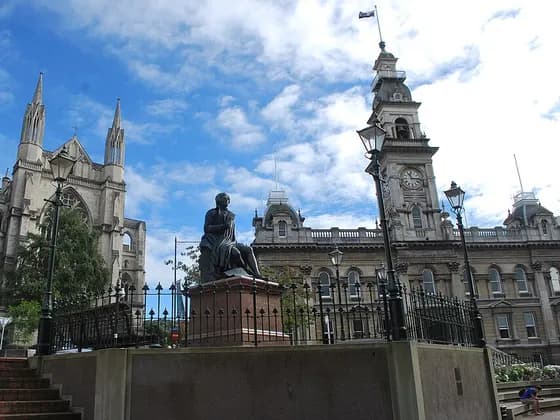
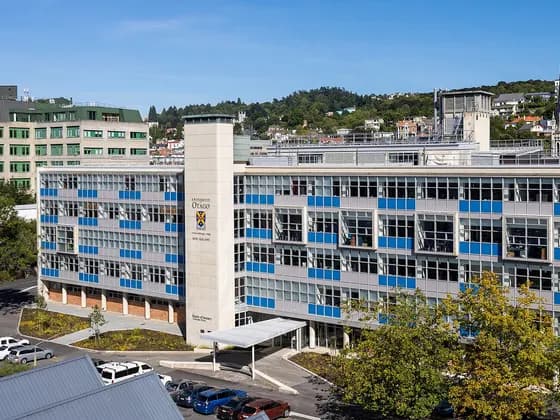

Photo: Bernard Spragg. NZ · CC0 · cropped
Photo: Mattinbgn · CC BY-SA 3.0 · Photo: Dave Bull · CC BY 4.0 · Photo: Robert Cutts from Bristol, England, UK · CC BY 2.0
The University of Otago dentistry course at a glance (2027 entry)
The Bachelor of Dental Surgery (BDS) is a five-year University of Otago degree, taught from year 2 by the Faculty of Dentistry, Te Kaupeka Pūniho, in Dunedin. The University describes the Faculty, founded in 1907, as New Zealand's only dental school. The Dental Council, which registers dentists and accredits their degrees, lists no other New Zealand degree that qualifies you as a dentist.
Year 1 is Health Sciences First Year (HSFY), a science year shared with Medicine and three other health programmes, during which you apply for Dentistry. Years 2 to 5 are made up of papers, Otago's word for subjects, in three themes: Biomedical Sciences, The Dentist and the Patient, and Dental Epidemiology and Public Health.
Clinical training starts in the simulation clinic, where you practise on phantom heads: manikin heads and torsos with removable jaws, set up at dental chairs. After passing practical tasks there, you begin treating members of the public under supervision in year 3.
For final year the class is divided between Dunedin and the Auckland Dental Facility in Manurewa, South Auckland. Every final-year student completes a research project, and students with top year-4 grades can take the final year as an Honours degree. Te Tiriti o Waitangi (the Treaty of Waitangi), hauora Māori (Māori health) and cultural safety are taught and assessed throughout.
| Degree | BDS (Bachelor of Dental Surgery); BDS(Hons) option in final year |
|---|---|
| Course length | 5 years including HSFY; graduate entrants start at year 2 |
| Class size | Year groups of 74–100 in 2024; up to 60 domestic places for 2027 |
| Main campus | Faculty of Dentistry, 310 Great King Street, Dunedin |
| Teaching style | Three themes taught side by side each year from year 2 |
| Simulation | 80-chair simulation suite in Dunedin; 16-station simulation clinic in Auckland |
| First patients treated | Year 3, after simulation training; sole operator by final year |
| Final year | Dunedin or Auckland Dental Facility, by preference or ballot |
| Research | Research project for every final-year student |
| Accreditation | Dental Council (NZ), 1 January 2025 to 31 December 2029 |
What makes University of Otago dentistry different
A final year in Dunedin or South Auckland
According to the Dental Council's 2024 report, about a third of final-years were based in Auckland. It likens the Auckland Dental Facility in Manurewa to a large supervised general practice, in an area with high Māori and Pacific populations and unmet oral health needs.
Simulation before each new clinical skill
You are rostered to the simulation clinic throughout the course and must pass practical tasks there before treating patients. Root canal training in years 3 and 4 uses 3D-printed molars and premolars with extra canals, mounted in a phantom head.
Three to five weeks at Te Kāika
The Dental Council's 2024 report describes a three-to-five-week community placement for Dunedin-based final-years at Te Kāika, a health hub offering kaupapa Māori services, meaning services designed and delivered by Māori on Māori principles. Its clinical lead is a Māori oral health practitioner.
A research project for every final-year student
DENT 552, known as the dental elective, is a 225-hour research project that every final-year student on the ordinary BDS sets up and runs with supervisors, then presents at a two-day mini-conference. Honours students do a larger 40-point project, DENT 572, instead.
Your own patients, followed over time
According to the Dental Council, final-year students in 2024 each managed 17 to 20 patients for integrated care, which brings the different branches of dentistry together for one patient. Treatment often carries over from earlier years, so you see how your own work holds up and how a patient's needs change over time.
Optional rural blocks in Tairāwhiti or on the West Coast
Final-year dental students can apply for five-week interprofessional blocks in Gisborne or Wairoa, or in Greymouth and Hokitika on the West Coast, living and learning alongside students from other health professions.
How University of Otago teaches dentistry
From year 2 the BDS is a fixed programme. Each year has three prescribed papers worth 120 points in all (points measure the size of a paper), and you need the Dean's approval to take any paper beyond them. You normally have to pass every paper in a year before you can enrol in the next year's papers.
The papers in each year are planned together, so science is timed to match the clinical work it supports. A Professional Development module, covering communication, consultation skills, ethics and professionalism, runs through the clinical papers of years 2 to 4.
The current curriculum started in 2024 after a review that began in 2021. According to the Dental Council, year 2 gained a physiology module built around dentistry and more clinical experience, and five final-year papers were replaced with four new ones. The aims included a focus on Te Tiriti o Waitangi, assessed cultural safety, Pacific health, care of older people, more oral surgery and more equal research and classroom learning for students based in Auckland.
Teaching mixes lectures, workshops, tutorials, group presentations, online e-cases and reflective case reports with simulation, hands-on digital dentistry and patient clinics. In year 2 you practise oral health promotion with students from the Faculty's other oral health programmes. Year 4 students have also been paired with dental technology students to design a dental appliance, though student experiences of this were mixed in 2024.
The ways you will learn
| Lectures, tutorials and workshops | Lectures carry each paper's core content, supported by tutorials, workshops and group presentations. Some modules add self-directed work: in year 3, Human Diseases sets online exercises, some of which count towards internal assessment. |
|---|---|
| Simulation clinic | Sessions on phantom heads at fully equipped dental chairs, with teaching demonstrations shown on screens. You are rostered here throughout the course to gain competence in a skill before you use it on a patient. |
| Supervised patient clinics | In Dunedin, student clinics run from February to November in two daily sessions, 9am to 12 noon and 2pm to 5pm. Most student appointments last 90 minutes, and in 2024 one supervisor oversaw six to eight students, or three to four in urgent care and oral surgery. |
| Clinical huddles | Each clinical session starts with a huddle, a short group briefing that goes over every student's planned procedures and flags any hazards, risks or cultural considerations for safe practice. |
| Interprofessional learning | The Dental Council's 2024 report lists assessed interprofessional activities for each year. They cover professional ethics in year 2, caring for someone with a long-term condition in year 3, and smoking cessation and chronic disease in year 4, with the Tairāwhiti programme named for final year. |
How anatomy is taught at University of Otago
Your grounding in the human body comes in HSFY, whose papers, including Human Body Systems 1 and 2, cover how the healthy body works from molecules and cells up to organ systems. Anatomy for dentistry starts in year 2 with DENT 262C Anatomy, part of Biomedical Sciences 1.
DENT 262C looks at the head and neck in five ways. Regional anatomy goes area by area, surface anatomy covers what you can see and feel, and radiological anatomy shows how structures appear on X-rays and scans. Developmental anatomy covers how the face and jaws form, and surgical anatomy what matters when you operate. It takes in the bones, muscles, nerves, blood vessels and lymphatics of the region, and why each matters in dentistry.
In the same year, DENT 261 teaches tooth morphology, the shape of every baby and adult tooth, until you can identify any human tooth. DENT 262A Oral Biology covers facial growth and how hard tissues such as enamel and dentine, and the lining of the mouth, develop. Growth and development return in years 3 and 4.
When you start treating patients at University of Otago
Before you treat anyone, you build skills in the simulation clinic and learn the basics of working in a dental clinic, from infection control to managing medical emergencies. Practical tasks in simulation, and other barrier assessments, must be passed before patient care begins. You also practise some techniques on classmates, which can involve partial undressing or body contact; everyone takes part, under close supervision.
Patients arrive in year 3. The Faculty describes years 3 and 4 as moving from simulation sessions into patient sessions. The Dental Council's 2024 review also recorded a suggestion for a simulation refresher at the start of year 3, before patient care starts. In clinics, students work in pairs or threes at first.
Responsibility grows each year. In final year you practise as the sole operator under supervision, often continuing treatment begun in earlier years. Across years 2 to 5 the Dental Council counted 1,675 hours of clinical experience: 978 hours treating patients as the operator, 270 hours operating in simulation and the rest assisting or observing.
Year by year at University of Otago
- Year 1
Health Sciences First Year
HSFY is a one-year programme offered only at Otago and the required first step into Dentistry, Medicine, Pharmacy, Physiotherapy and Medical Laboratory Science. Its compulsory papers are the same for all five, covering how the healthy body works and what affects health in populations. It is an intensive year, and you apply for Dentistry after semester 1.
- Seven compulsory 18-point papers, 126 points in all: Foundations of Biochemistry, Cell and Molecular Biology, and The Chemical Basis of Biology and Human Health. The others are Human Body Systems 1 and 2, Biological Physics, and Population Health.
- An optional eighth paper in semester 2, chosen from an approved list.
- Weekly lectures, laboratories, tutorials, assignments, tests and readings, taught by staff from departments across the University.
- Graduate and Alternative category entrants, who have passed the same papers or recognised University of Auckland equivalents, join at year 2 instead.
- Year 2
Foundations at the Faculty of Dentistry
Year 2 is your first year at the Faculty of Dentistry, opening with a mihi whakatau, a Māori welcome, and compulsory introductory classes. Biomedical Sciences is the largest part of the year (65 of its 120 points), laying foundations in anatomy, physiology and oral biology for introductory clinical work. In 2027 the three papers run from 22 February to 13 November.
- DENT 262 Biomedical Sciences 1 (65 points) has four parts: Oral Biology, Pharmacology, head and neck Anatomy, and Physiology.
- DENT 261 The Dentist and the Patient 1 (40 points) has four modules: Clinical Cariology and Periodontology (tooth decay and gum disease), Biomaterials and Tooth Morphology, Prosthodontics (replacing missing teeth) and Professional Development.
- In DENT 261 you learn sterilisation and cross-infection control, instruments, ergonomics and medical emergencies. You also learn to examine and record the mouth, take and read intra-oral X-rays, apply fluoride, place basic fillings and do laboratory work for dentures.
- DENT 263 Dental Epidemiology and Public Health 1 (15 points) covers ethics and communication, New Zealand's oral care system, the public health approach and preventing dental disease. It also covers why Te Tiriti o Waitangi matters for Māori oral health rights.
- Year 3
From simulation to your first patients
In year 3 The Dentist and the Patient becomes the biggest part of the course, and after simulation you begin treating patients in the Faculty's clinics. The focus is diagnosis, treatment planning and preventive and restorative care, including removable partial dentures. Science turns to disease, and the public health theme turns to older people and Māori oral health.
- DENT 361 The Dentist and the Patient 2 (72 points): periodontics, clinical cariology, prosthodontics, endodontics (root canal treatment) and oral surgery. You learn to compile a problem list, plan and sequence treatment, and design and provide removable partial dentures.
- Straightforward treatment for older adults and patients from diverse cultural backgrounds, sharing decisions with patients about their options, and the surgical principles behind local anaesthetic and tooth extraction.
- DENT 362 Biomedical Sciences 2 (36 points) has four modules: Cellular and Molecular Basis of Disease, Human Diseases, Growth, Development and Ageing, and Pathogenesis of Oral Diseases. In the last you combine clinical, X-ray, laboratory and tissue findings to reach a diagnosis.
- DENT 363 Dental Epidemiology and Public Health 2 (12 points, semester 2) covers how gum disease, enamel defects, mucosal conditions, dry mouth and tooth loss are measured in populations. It adds dental health services research, ageing, and Māori oral health and services.
- Year 3 can bring new classmates with advanced standing: dentists trained outside New Zealand and Australia, or New Zealand or Australian medical graduates.
- From semester 2, students from Malaysia's International Medical University join via DENT 364, starting with a four-week orientation in the mid-year break; the Dental Council counted five in 2024.
- Year 4
Patients of all ages
Year 4 widens your clinical work to patients of all ages and every main branch of general dentistry. The Dentist and the Patient 3 carries 90 of the year's 120 points and is built from six modules.
- Endodontics: you treat a patient after passing a simulated competency test. In 2024 students were expected to do at least two endodontic assessments and root canal treatment on one or two straightforward teeth. A further course covers rotary, engine-driven root canal instruments.
- Periodontics, with dedicated weekly gum clinics since 2023. Clinical Cariology, Prosthodontics and Special Needs completes the core teaching: crowns, bridges, partial and complete dentures, and care for people whose medical, physical, intellectual or psychological conditions affect their oral health.
- Paediatric Dentistry and Orthodontics: children and adolescents, including fillings in baby teeth and newly erupted adult teeth, and managing children who are anxious or have a disability. You learn to spot malocclusion, where teeth and jaws do not meet properly. In 2024, only year 4 students were allocated children.
- Oral Surgery, Oral Medicine and Therapeutics: extractions, principles of minor oral surgery and facial trauma, sedation and anaesthesia, diseases of the mouth and jaws, and drugs used in dentistry. Professional Development continues with consultation skills, bioethics and professionalism.
- DENT 462 Biomedical Sciences 3 (18 points, semester 1) has modules in biomaterials, oral pathology in clinical practice and applied growth and development. DENT 463 Dental Epidemiology and Public Health 3 (12 points, semester 2) covers health promotion, health systems, ethics in public health and research, and engaging Māori communities.
- Year 5
Comprehensive care in Dunedin or Auckland
You treat your own patients under supervision, in Dunedin or Auckland, and complete a research project. BDS(Hons) students take two different papers and start four weeks early.
- DENT 531 The Dentist and Patient Care (86 points) covers evidence-based, culturally safe general dental practice. Outcomes include applying Te Tiriti o Waitangi in clinical practice, the Māori world view of hauora (health), tikanga (customs) and kawa (protocols), reflecting on your own biases, and New Zealand dental law and ethics.
- A simulation refresher in engine-driven root canal techniques on extracted teeth, and 3 to 4 patients for endodontic assessment and instrumentation; in 2024 final-years filled around 6 to 10 root canals each.
- DENT 533 The Dentist in the Community (16 points): health promotion and collaboration in community health settings, Māori and Pacific contexts of health, and conveying health messages and judging whether they work.
- DENT 552 Biomedical Sciences 4 (18 points), the dental elective: a research project you run through the year and present at the Elective Colloquium.
- In 2026 the final-year calendar also held an employment fair and a Young Dentist Day in late August, with final-year clinics paused in both cities.
How you are assessed at University of Otago
Under the BDS regulations, every paper uses formative assessment (practice with feedback) and summative assessment (marks that count), through oral, practical, clinical and written examinations. In clinical papers you must pass the theory and clinical parts separately. Barrier assessments, such as pre-clinical tasks before patient treatment, must be passed before you move on.
According to the Dental Council's 2024 report, you are graded at every clinic appointment. Supervisors rate how independently you carried out the procedure, your knowledge, judgement and care of the patient, and your infection control, professionalism, communication and self-management. The ratings automatically produce a grade from A (outstanding) to E (very poor). The system was introduced in 2024 for all four clinical years, and the Faculty planned to review it at the end of 2024.
Exams fall at the end of each semester. In the 2026 calendar, semester 1 exams ended on 17 June and the end-of-year exam period runs from 19 October to 7 November. Fixed dates include the final-year research colloquium on 21 and 22 October and the final-year viva, an oral exam, on 3 November.
To finish the course you must pass every individual assessment in DENT 531, or DENT 570 for Honours. You also need at least 60% in clinical practice and in the final viva voce, which a pair of examiners conducts. Fail one of these and, after remediation, you sit a special examination early the next year; fail more than one and you usually repeat the final year.
If you fail any paper, you may be offered remedial work and a special examination, where the most you can score is the pass mark or your original mark, if higher. Failing it means repeating the whole paper, and you can normally repeat a year only once in the whole programme.
- An E grade in a paper, failing both its clinical and theory parts, or failing several papers in a year normally rules out a special examination. You then repeat the paper.
- Written exams are marked blind against a marking guide, and viva examiners hold calibration meetings before and after the vivas.
- External examiners review internal grades and a sample of clinical reflective portfolios, and take part in the final exams.
- Cultural safety is assessed through reflective journals or a portfolio of patient cases, and through ongoing clinical assessment.
- In 2024, with large classes, individual written feedback was prioritised for students at risk of not meeting requirements, and the whole class received general feedback.
- The degree can be awarded with distinction or with credit.
Where you will actually be at University of Otago
For years 2 to 4 your clinical work is in the Faculty's Dental Hospital and clinics in Dunedin's Clinical Services Building. Students treat members of the public from Dunedin and the surrounding area, who pay reduced fees because student appointments take longer.
After year 4 the class is divided between Dunedin and the Auckland Dental Facility in Manurewa for the final year. The Faculty follows each student's preference as far as possible, but holds a ballot if more students want a centre than it has places. International students are allocated too, and once the split is set you can swap only into a vacant place, with the Dean's approval.
In 2024 the Dental Council counted 90 final-year students on the ordinary BDS, 61 in Dunedin and 29 in Auckland, plus 10 in BDS(Hons). The Auckland facility is a teaching clinic for final-years, run as a general dental practice with no specialist treatment. Instead of rotating through specialist clinics, Auckland students join teledentistry clinics (remote consultations) for oral medicine and observe in specialist oral surgery clinics.
According to the Dental Council's 2024 report, Dunedin-based final-years spend three to five weeks at Te Kāika, a kaupapa Māori health hub. You see the whānau ora model, which builds care around the whole family, and work alongside health navigators, social services and nurses. The placement combines teaching, clinical practice and reflection on your own biases.
Otago lists dentistry among the final-year disciplines in two optional rural programmes run with Health New Zealand Te Whatu Ora, the public health service. The Tairāwhiti Interprofessional Education Programme, based in Gisborne and Wairoa, typically starts each block with a noho marae, a stay on a marae. The Te Tai o Poutini programme places up to 11 senior students in Greymouth and Hokitika on the West Coast. Both run five-week blocks: each week brings three days on placement in your own discipline, half a day shadowing or hosting another student, and shared learning and a community project.
In 2024 the Faculty was still improving after-hours pastoral support for Auckland-based students. A final-year clinical coordinator tracks students' clinical logbooks in real time to keep experience in the two cities comparable.
Base for years 2 to 4 and for final-years placed in Dunedin. The Dental Council's 2024 report says these final-years rotate through Te Kāika.
- Dental Hospital and clinics, Clinical Services Building, entered through the Walsh Building at 310 Great King Street
- Te Kāika, Caversham
Final year only. A general dental practice serving an area with high Māori and Pacific populations.
- Auckland Dental Facility, 5D Browns Road, Manurewa
Optional five-week interprofessional blocks. The programme pays one return trip and your accommodation, on the Te Whatu Ora Tairāwhiti hospital site in Gisborne or at the Francis Kimbell Hostel at Wairoa Hospital. The 2026 blocks are 1 March–2 April, 29 April–29 May, 28 June–31 July, 16 August–18 September and 4 October–6 November; 2027 dates are not yet published.
- Gisborne hospitals
- Wairoa
Optional five-week interprofessional blocks, running since 2021, placing students with Te Whatu Ora and private practices. The programme pays for one return trip and five weeks' shared accommodation. Its 2026 blocks share the Tairāwhiti dates.
- Greymouth
- Hokitika
Electives, selectives and options at University of Otago
On the ordinary BDS, the main piece of work you shape yourself is DENT 552 Biomedical Sciences 4, known as the dental elective. It is an 18-point, self-directed research paper with an expected workload of 225 hours, which you set up and run through final year with the support of research supervisors.
You review the published literature on an oral health topic, develop a research proposal, work through its ethical issues and present your plan to staff and classmates. Your findings go into a report written in the format of a scientific paper, which your supervisors assess along with your contribution. At the Elective Colloquium, a two-day mini-conference at the end of the year, you give a 10-minute talk marked by one internal and one external examiner.
All research in the BDS involves engagement with the Ngāi Tahu Research Committee, and BDS students attend the Sir John Walsh Research Institute's Clinical and Research Excellence Day.
The Faculty also runs an Immersion Programme overseas. From 13 to 18 July 2026, six Otago dental students attended lectures, observed clinical practice and took part in hands-on simulation, including virtual and augmented reality systems, at the West China School of Stomatology.
Intercalation and research degrees at University of Otago
BDS(Hons), the Bachelor of Dental Surgery with Honours, replaces the ordinary final year rather than adding one. To apply you must be in year 4 and pass it with a grade average of at least A-. Admission is approved by the Pro-Vice-Chancellor (Health Sciences) on the Faculty's advice. The Dental Council counted 10 BDS(Hons) students in 2024, around a tenth of the graduating year.
Honours students take DENT 570 Clinical Dental Practice for Honours (86 points), meeting the same clinical competencies as everyone else. They add DENT 572 Dental Research for Honours (40 points), an original research project written up as a dissertation that is examined externally. Both papers start four weeks before semester 1, on 25 January in 2027, and the year is full-time only.
Honours is awarded as first class, second class (division I or II) or third class, based on DENT 570 and DENT 572. If you are placed in Auckland, your project must be one that can be done outside Dunedin if necessary. A student whose progress is unsatisfactory can be required to withdraw from Honours and may then complete the ordinary BDS.
In 2025 the New Zealand Dental Research Foundation funded six BDS Honours research awards worth $12,000 in total. Projects ranged from the Deaf community's experience of dental care to how well general practitioners recognise oral cancer.
Facilities and support at University of Otago
Where you will learn
The Faculty's Dunedin home is two linked buildings on Great King Street, rebuilt in a $140 million project. The Clinical Services Building, opened in June 2019, holds the dental hospital. It has 215 dental chairs, operating theatres and surgical suites, digital patient records at the chairside and tutorial spaces linked to the treatment areas.
The refurbished Walsh Building holds teaching laboratories, student support spaces, flexible learning areas and the laboratories of the Sir John Walsh Research Institute, where all the Faculty's research is done. Its simulation suite has 80 dental chairs, each with a manikin torso with a removable jaw, dental equipment and a video screen for watching teaching demonstrations. An 1,800 square metre atrium links the two buildings.
The Dunedin clinics handle a large volume of public treatment: over 60,000 treatments a year according to the Faculty's patient pages, and about 76,000 according to the University's Campus Development page. The Dental Council's 2024 review noted that left-handed clinical chairs remain limited, so left-handed students get targeted teaching and workarounds from left-handed or ambidextrous staff.
The Auckland Dental Facility opened officially in February 2021. It has 32 treatment chairs, another chair for teledentistry, a 16-station simulation clinic with screens for watching demonstrations, and a seminar room for up to 50 people. Crowns, inlays, onlays and veneers can be made on site using CAD-CAM, computer-aided design and milling.
Support while you study
Each year starts with a three-day orientation for BDS students. Your first points of contact are year chairs, paper coordinators, programme convenors and the Associate Dean Undergraduate. A Deputy Convenor for Early Learning in Dentistry, a role described as new in 2024, monitors academic and clinical progress in years 2 and 3.
The Faculty's Student Support Officer, currently the Associate Dean International, offers confidential help with issues such as stress, illness, motivation, cultural adjustment and grievances, and links you to Student Health and Student Academic Skills. There is also a Disability and Impairments Contact, and you declare absences from clinic through an online form that goes to your year chair.
For Māori students, the Associate Dean Māori (Manupiki Māori) and a Dentistry liaison at Kōhatu, the University's Centre for Hauora Māori, offer support. Ngā Mōkai O Ngā Whetū, the Māori dental students' association, provides peer support, mentoring and events. Pacific students have the Associate Dean (Pacific) and the Pacific Island Health Professional Students' Association, whose executive includes a Dentistry representative.
Students sit on the Faculty's undergraduate and clinical governance committees and a Student Clinic Improvement Group. The senior team also meets the executives of the New Zealand Dental Students' Association and Ngā Mōkai O Ngā Whetū twice a semester.
Is the University of Otago course right for you?
This course may suit you if
- You enjoy precise hands-on work and want to practise each procedure on phantom heads before carrying it out on a patient.
- You would welcome a final year in South Auckland, working in a general-practice style clinic with patients who have high unmet oral health needs.
- You want Te Tiriti o Waitangi, hauora Māori and cultural safety built into your clinical training; the Dental Council's 2024 report describes time at a kaupapa Māori clinic for Dunedin-based final-years.
- You are curious about research: every final-year student does a project, either the 225-hour dental elective or, for Honours students, a 40-point dissertation.
- You like the idea of following your own patients' care over time, with treatment carried over between years.
Things to think about
- You may not get your first choice of city for final year: a ballot decides if Dunedin or Auckland is oversubscribed.
- It is a long, fixed route: HSFY first, then four years of prescribed papers on a teaching year that in 2027 runs from late February to mid-November.
- The 2024 Dental Council review found clinical supervision stretched and a weekly restorative clinic for years 3 and 4 cancelled that year. It set conditions on both and recommended more work with children beyond year 4; its March 2026 table lists the course as accredited.
University of Otago dentistry course — frequently asked questions
Applying to University of Otago?
How to get into University of Otago
Entry requirements, admission tests, written application and interview, step by step.
Open the guide →University of Otago entry requirements
UCAT ANZ, academic thresholds, interview format and equity pathways.
See the requirements →Prepare for the University of Otago interview
Format breakdown, school-specific sample questions and prep tips from tutors who interviewed here.
Read the guide →Where this University of Otago course guide came from
This guide was written from 54 official sources — University of Otago — Faculty of Dentistry's own course pages and programme documents, plus the Medical Council of New Zealand or Dental Council and the health services the school places students with where they publish detail — read on 2026-10-10, then checked claim by claim against those sources.
- University of Otago Faculty of Dentistry: Dentistry course details
- University of Otago Faculty of Dentistry: Study Dentistry
- University of Otago: Study Dentistry at Otago (subject page)
- University of Otago Faculty of Dentistry: Admission to Dentistry
- University of Otago: Regulations for the Degree of Bachelor of Dental Surgery (2026 Calendar)
- University of Otago: Bachelor of Dental Surgery programme structure
- University of Otago: BDS degree requirements and schedule of papers
- University of Otago: Regulations and structure for the Bachelor of Dental Surgery with Honours
- University of Otago: Health Sciences First Year (subject page)
- University of Otago Division of Health Sciences: What is Health Sciences First Year
- University of Otago Division of Health Sciences: Study Dentistry at Otago (guidelines for 2027 admission)
- University of Otago Faculty of Dentistry: Admission with advanced standing to year 3
- University of Otago: About the Faculty of Dentistry
- University of Otago Faculty of Dentistry: Patient services in Dunedin
- University of Otago Faculty of Dentistry: FAQs for patients in Dunedin
- University of Otago Faculty of Dentistry: Information for new patients in Dunedin
- University of Otago Faculty of Dentistry: Patient services in Auckland
- University of Otago Faculty of Dentistry: Dental services at the Auckland Dental Facility
- University of Otago Faculty of Dentistry: Contact the Auckland Dental Facility
- University of Otago Faculty of Dentistry: Key dates 2026 (BDS calendar)
- University of Otago Faculty of Dentistry: Student support
- University of Otago Faculty of Dentistry: Absences and special consideration
- University of Otago Faculty of Dentistry: Forms, policies and guidelines
- University of Otago Campus Development: Dental School redevelopment
- University of Otago news, 4 February 2021: Auckland Dental Facility official opening
- University of Otago news, 1 March 2018: Te Kāika health and wellbeing hub opens
- University of Otago: Tairāwhiti Interprofessional Education Programme
- University of Otago: Complex Rural Immersion interprofessional education
- University of Otago: Complex Rural Immersion IPE Programme 2026, Gisborne
- University of Otago: Tairāwhiti Interprofessional Education Programme, information for students
- University of Otago: Te Tai o Poutini (West Coast) Interprofessional Education Programme
- University of Otago: Te Tai o Poutini (West Coast) Interprofessional Education Programme, information for students
- University of Otago news, 27 August 2026: Faculty of Dentistry immersion programme at the West China School of Stomatology
- Sir John Walsh Research Institute and Faculty of Dentistry Research Report 2025 (BDS Honours research awards)
- University of Otago paper: DENT 261 The Dentist and the Patient 1
- University of Otago paper: DENT 262 Biomedical Sciences 1
- University of Otago paper: DENT 263 Dental Epidemiology and Public Health 1
- University of Otago paper: DENT 361 The Dentist and the Patient 2
- University of Otago paper: DENT 362 Biomedical Sciences 2
- University of Otago paper: DENT 363 Dental Epidemiology and Public Health 2
- University of Otago paper: DENT 364 Dentistry in the New Zealand Context
- University of Otago paper: DENT 461 The Dentist and the Patient 3
- University of Otago paper: DENT 462 Biomedical Sciences 3
- University of Otago paper: DENT 463 Dental Epidemiology and Public Health 3
- University of Otago paper: DENT 531 The Dentist and Patient Care
- University of Otago paper: DENT 533 The Dentist in the Community
- University of Otago paper: DENT 552 Biomedical Sciences 4 (the dental elective)
- University of Otago paper: DENT 570 Clinical Dental Practice for Honours
- University of Otago paper: DENT 572 Dental Research for Honours
- Dental Council: University of Otago undergraduate programmes accredited (12 December 2024)
- Dental Council: Accreditation status of New Zealand oral health programmes as at 2 March 2026
- Dental Council: Report of an evaluation of University of Otago undergraduate programmes, August 2024 site visit
- Dental Council: New graduates from Otago and AUT universities (registration)
- Medical Council of New Zealand: New Zealand and Australian graduates (provisional general scope for the intern year)
Courses are restructured between cycles. Anything here that decides your application — an anatomy offer, a placement city, a compulsory intercalated year — should be confirmed against the official page for your entry year.
Applying to University of Otago?
We have helped hundreds of applicants turn their UCAT ANZ, written application and interview prep into offers from University of Otago and other New Zealand dentistry schools.