
University of Kansas School of Medicine Interview
Format, Questions & Prep Tips
University of Kansas School of Medicine medicine interviews for 2027 entry are a traditional interview. Published figures: Annual MD class size ~210 across Kansas City, Wichita, Salina; Interview format Two traditional one-on-one interviews, 30 min each; In-state preference Strong — ~92% Kansas residents.
- Institution
- University of Kansas School of Medicine
- Interview (2027 entry)
- October through February; rolling invitations after secondary review
- Decisions (2027 entry)
- Rolling decisions from November through March 30; waitlist movement through summer


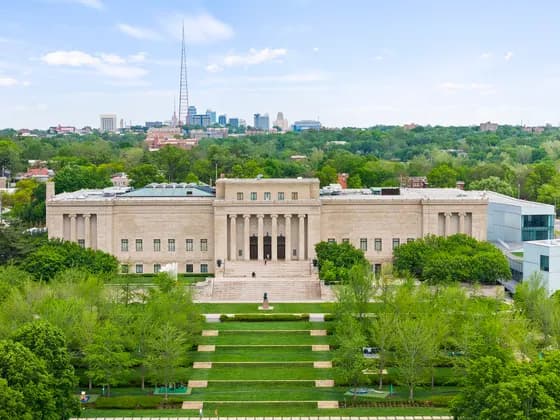

Photo: Goldranger2099 · CC0 · cropped
Photo: Country Club Plaza was created in 1922 by developer Jesse Clyde (J.C.) Nichols. · Public domain · Photo: Peterspexarth · CC BY 4.0 · Photo: Dean Hochman from Overland Park, Kansas, U.S. · CC BY 2.0
How to get into University of Kansas School of Medicine (MD) medicine
Step-by-step: entry requirements, admission tests, personal statement, interview format and the key deadlines.
Open the guide →University of Kansas School of Medicine (MD) entry requirements
Admission profile, interview format, decision dates and what makes University of Kansas School of Medicine (MD) different.
See the profile →The University of Kansas School of Medicine (MD) medicine interview
The University of Kansas School of Medicine uses a traditional interview format across all three campuses (Kansas City, Wichita, Salina). Applicants typically complete two one-on-one interviews — one faculty, one student — at their preferred campus.
KU Med’s three-campus model reflects an explicit state workforce mission: training physicians to serve Kansas communities from urban academic medicine in Kansas City to rural primary care in Salina. Interview content, campus tours, and student interactions all reflect the specific clinical culture of each campus.
The Salina campus is a distinctive small-cohort program focused entirely on rural Kansas medicine — interview questions there are particularly focused on rural health commitment. Expect questions that probe the AAMC Premed Competencies, with particular emphasis on community commitment and interpersonal skills at the regional campuses.
University of Kansas School of Medicine (MD) interview at a glance (2027 entry)
| Annual MD class size | ~210 across Kansas City, Wichita, Salina |
|---|---|
| Interview format | Two traditional one-on-one interviews, 30 min each |
| Campuses | Kansas City (main), Wichita, Salina |
| In-state preference | Strong — ~92% Kansas residents |
| Application system | AMCAS |
| Interview window | October–February |
| Tuition (in-state approx.) | ~USD 33,000–37,000/year |
Interview format
- Two traditional one-on-one interviews: one faculty, one current MD student; each ~30 minutes.
- Interviewers have reviewed the full AMCAS application beforehand.
- Interview held at the applicant's preferred campus (Kansas City, Wichita, or Salina).
- Financial aid and curriculum overview session.
- Campus tour adapted to local clinical environment.
- Informal lunch with current students.
- Full day approximately 4–6 hours.
Working towards the MCAT score University of Kansas School of Medicine (MD) expects? Build a week-by-week plan from your test date — free for the first two weeks.
Sample interview questions
Why do you want to train at the [Kansas City/Wichita/Salina] campus, and how does that environment align with your career goals?
Campus-specific preparation essential. Kansas City: academic medicine breadth. Wichita: community hospital diversity. Salina: rural primary care immersion. Show genuine engagement with the specific campus context.
Kansas has significant physician shortages in rural areas. Are you considering practicing in a rural Kansas community, and what shapes that answer for you?
KU Med exists partly to address the Kansas physician shortage. Be honest — if rural practice appeals to you, give specific reasons. If not, show awareness of the issue and what community you do want to serve.
A Kansas farmer presents with symptoms consistent with pesticide exposure but is reluctant to reduce his exposure due to financial pressure. How do you approach his care?
Rural occupational health context — specific to Kansas. Address: clinical management, safety counseling, financial reality of farming operations, resources for occupational health, and patient autonomy.
Tell me about a clinical or community experience that confirmed your decision to pursue medicine.
Specific, genuine story. KU Med values applicants with real-world clinical exposure. Focus on what you observed, how it shaped your thinking, and why it pointed toward medicine specifically.
Describe a time when you had to work with a team member who was difficult to communicate with. How did you handle it?
Interpersonal competency. Show constructive conflict navigation, emotional regulation, and focus on shared team goals over personal friction.
Should Kansas expand Medicaid fully? What are the arguments for and against, and where do you stand?
Kansas-specific policy context: Kansas was one of the last states to expand Medicaid. Show knowledge of the Kansas political and healthcare landscape. Argue a position while acknowledging complexity.
What academic experience from your undergraduate or post-graduate studies has best prepared you for the rigor of medical school?
Not just grades — show learning strategies, managing difficulty, and growth. Connect to the specific curriculum format at your chosen KU campus.
What is the greatest health challenge facing Kansas today, and how do you see physicians contributing to addressing it?
Know Kansas health data: cardiovascular disease, diabetes, rural access, mental health crisis, and opioid use. Pick one and demonstrate depth — generic "health disparities" framing is insufficient.
How would you approach a patient who comes in with a health belief or practice that differs significantly from evidence-based medicine?
What they are listening for:
- Cultural humility
- therapeutic alliance
- motivational interviewing principles
Avoid dismissiveness or lecturing the patient — show you can meet people where they are while still providing evidence-based care.
You discover that a physician mentor you admire has been accepting gifts from a pharmaceutical company. What do you do?
What they are listening for:
- Conflicts of interest
- professional accountability
- the difficulty of reporting a mentor
Explore the relevant ethical frameworks, professional codes, and institutional reporting channels without being preachy.
You are shown a county-level map of Kansas where roughly 90 of the state's 105 counties are federally designated primary care shortage areas, alongside a graph showing the physician workforce concentrated in Johnson and Sedgwick counties. How would you interpret this distribution, and what does it imply for where KU Med should direct its training pipeline?
Read the data before opining: name the urban-rural concentration, the maldistribution rather than absolute shortage, and the implication for the Salina and Wichita pipelines. Connect to KU's three-campus workforce strategy without overstating any single statistic.
Role play: you are a third-year student on a family medicine rotation in a small western Kansas town. A long-time patient who farms 1,500 acres tells you he is going to stop his blood pressure medication because he 'feels fine' and the drive to the pharmacy is two hours each way. Begin the conversation.
Demonstrate the skill, do not narrate it. Explore his reasoning first, validate the travel burden, then problem-solve concretely (90-day mail-order supply, once-daily generic, local pharmacy partnerships). Avoid lecturing a self-reliant rural patient about adherence.
KU Med's curriculum spreads core clinical training across three campuses with different patient populations. How do you learn a clinical skill well in one setting and then adapt it when the resources and case mix change?
Thinking & Reasoning plus adaptability. Show a transferable learning strategy (deliberate practice, seeking feedback, reflecting on context) rather than rote memorization, and tie it to the reality that a Salina rotation differs sharply from a Kansas City tertiary-center rotation.
Tell me about a time you had to explain something technical to someone outside your field who was skeptical of expert advice. How did you earn their trust?
Interpersonal competency relevant to rural Kansas, where institutional trust can be low. Focus on plain language, respecting the person's existing knowledge, and building credibility over time rather than asserting authority.
Many KU Med graduates ultimately practice within an hour or two of where they grew up. What ties — to a place, a community, or a population — would shape where you choose to work, and how honest are you being about that with yourself?
Self-awareness. KU values authentic place-based commitment over performance. A candid answer about genuine ties (or honest uncertainty) reads better than a rehearsed pledge to serve rural Kansas.
Practise the University of Kansas School of Medicine (MD) interview
Rehearse the real format before the day — on demand with our AI interviewers, or live with a tutor.
Sit a mock with photoreal AI interviewers — any time
A timed MMI or panel interview on video — American & international voices — with interviewers who listen, react and press with follow-ups. Rubric-scored feedback and a replay the moment you finish.






Live mocks with a tutor who’s been in the room
A full University of Kansas School of Medicine (MD)-style mock with a medic or dentist tutor — honest scoring against real marking criteria, a station-by-station debrief and a written action plan.
Book a mock interviewHow to prepare for the University of Kansas School of Medicine (MD) interview
Common pitfalls to avoid
University of Kansas School of Medicine (MD) interview — frequently asked questions
Sources & official admissions information
Ready to nail your University of Kansas School of Medicine (MD) interview?
Book a mock interview with a tutor who knows the US interview formats, orpractice unlimited stations from our interview question bank.