
University of North Dakota School of Medicine and Health Sciences Interview
Format, Questions & Prep Tips
University of North Dakota School of Medicine and Health Sciences medicine interviews for 2027 entry are a traditional interview. University of North Dakota School of Medicine and Health Sciences describes the format as: One virtual interview of about 45–60 minutes with a three-member team (a basic scientist, a clinician and a medical student). Published figures: Annual MD class size ~78; Applications received ~1,000–2,500 per cycle; Interview format Traditional — faculty + student, ~30–45 min each.
- Institution
- University of North Dakota School of Medicine and Health Sciences
- Interview (2027 entry)
- October through February; rolling invitations; ND residents and regional applicants typically prioritized
- Decisions (2027 entry)
- Rolling decisions from December; most offers by late March

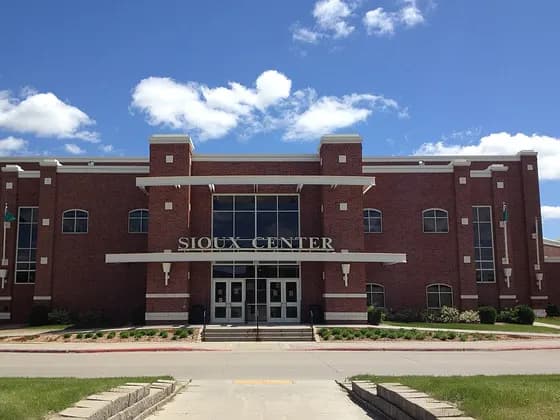
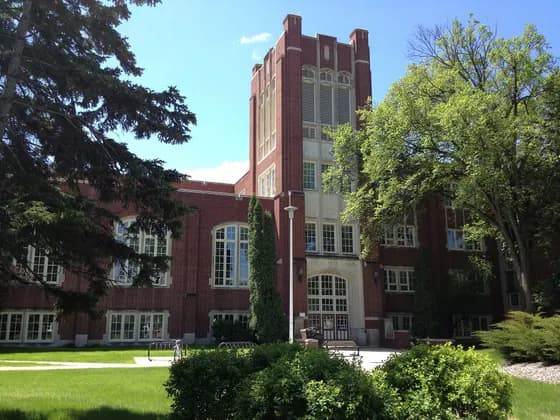
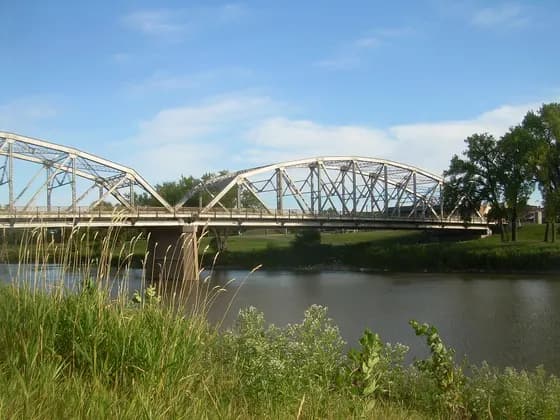
Photo: Zakary Lewis · CC BY-SA 4.0 · cropped
Photo: Jimmyjohnson90 · CC BY-SA 3.0 · Photo: Jimmyjohnson90 · CC BY-SA 3.0 · Photo: Ross Griff · CC BY 2.0
How to get into University of North Dakota School of Medicine and Health Sciences (MD) medicine
Step-by-step: entry requirements, admission tests, personal statement, interview format and the key deadlines.
Open the guide →University of North Dakota School of Medicine and Health Sciences (MD) entry requirements
Admission profile, interview format, decision dates and what makes University of North Dakota School of Medicine and Health Sciences (MD) different.
See the profile →The University of North Dakota School of Medicine and Health Sciences (MD) medicine interview
UND School of Medicine and Health Sciences uses a traditional panel interview format — separate one-on-one sessions with faculty clinicians and a current medical student. Interviewers read the full application in advance.
UND is the only medical school in North Dakota and has the most geographically specific rural and Indigenous health mission of any school in this slice. Interview questions consistently probe commitment to the Great Plains rural landscape, awareness of Native American health disparities, and intent to practice in underserved ND or upper Midwest communities.
Expect questions that probe the AAMC Premed Competencies, which fall into three categories: Professional, Science, and Thinking and Reasoning.
University of North Dakota School of Medicine and Health Sciences (MD) interview at a glance (2027 entry)
| Annual MD class size | ~78 |
|---|---|
| Applications received | ~1,000–2,500 per cycle |
| Interview format | Traditional — faculty + student, ~30–45 min each |
| Curriculum | Integrated; distributed clinical model across ND communities |
| Tuition (in-state, 2025–26) | ~USD 28,000–36,000/year |
| Application system | AMCAS |
| Interview window | October–February |
Interview format
- Traditional one-on-one sessions with one faculty member and one current student.
- Each session approximately 30–45 minutes; interviewers have read the full application.
- Open-ended behavioral, motivational, and ethics questions; rural and Indigenous health themes are central.
- Interview day includes admissions presentation, tour of the Grand Forks campus, and discussion of the distributed clerkship model.
- Small cohort means the admission decision is personal and relationship-based — every interview is closely evaluated.
Working towards the MCAT score University of North Dakota School of Medicine and Health Sciences (MD) expects? Build a week-by-week plan from your test date — free for the first two weeks.
Sample interview questions
Why UND School of Medicine — and why North Dakota? What connects you to this state and its healthcare challenges?
The defining UND question. Demonstrate knowledge of North Dakota: the sparsely populated Great Plains geography, the Standing Rock and Turtle Mountain tribal nations, agricultural occupational health, the oil boom health impacts in western ND, and the severe primary care shortage in rural counties.
What do you know about Native American health disparities, and why is this an area you are committed to addressing?
Be specific: higher rates of diabetes, cardiovascular disease, substance use disorder, and suicide among American Indian/Alaska Native populations; the underfunding of the Indian Health Service; historical trauma as a social determinant; and the importance of culturally safe care. Avoid appropriating Indigenous culture — show respect and knowledge, not saviorism.
You are the only physician in a small North Dakota town of 1,500 people. A patient presents with a condition you have never treated. What is your obligation?
Rural generalism ethics: acknowledge your limits, consult telemedicine and specialty referral pathways (telehealth is widely used in ND), stabilize and transport if needed, and continue learning. Show you can practice at the edge of your competence with appropriate guardrails.
You are a family physician on a reservation and a patient comes in reluctant to follow your recommended treatment because it conflicts with traditional healing practices they use. How do you approach this?
Cultural safety in Indigenous health: honor the traditional practice, explore whether it conflicts with or can complement the biomedical treatment, engage a tribal health liaison or community health representative, and never ask a patient to choose between their culture and their care.
UND uses a distributed clerkship model where students train in small communities across North Dakota. What are the educational advantages and disadvantages of this approach?
Advantages:
- breadth of clinical conditions
- community immersion
- mentorship from rural generalists
Disadvantages: fewer rare subspecialty cases, less peer learning, variable resource availability. Show you have researched the model and are genuinely comfortable with its trade-offs.
North Dakota has an opioid crisis driven partly by the oil patch workforce in the western part of the state. As a family physician in Williston, ND, how do you approach opioid prescribing and management?
Context-specific rural opioid ethics: PDMP, buprenorphine treatment in a rural setting with limited addiction specialists, naloxone co-prescription, harm reduction approach, and understanding the occupational injury pipeline that drives opioid demand in extractive industry communities.
A farmer in rural North Dakota presents with depression but refuses mental health referral because he believes "real men don't see shrinks." How do you approach the conversation?
Agricultural community mental health. Acknowledge the cultural norm without endorsing it. Use destigmatizing framing: farmers operate heavy machinery and need to be mentally sharp for safety reasons. Introduce farmer-specific mental health resources (Farm Aid, Farmer Stress Hotline) and frame treatment as a practical tool.
Should the federal government increase funding to the Indian Health Service to bring it to parity with Medicaid or Medicare reimbursement rates? Argue a position.
IHS is chronically underfunded at approximately 40–60% of comparable federal programs. Argue that treaty obligations, the trust responsibility, and documented health outcome disparities create a legal and ethical mandate for funding parity. Acknowledge fiscal constraints and legislative pathway challenges.
What specific type of rural medicine interests you most — family medicine, emergency medicine, obstetrics, or another field — and how does UND's training prepare you for it?
UND graduates are often rural generalists who need broad skills. Discuss the distributed clinical model's breadth, the IHS affiliate training sites, and how the specific specialty you mention fits rural practice patterns in ND.
In 20 years, describe a successful career built from your UND training.
Describe rootedness in a specific rural ND or upper Midwest community. A practice in Dickinson, ND; a tribal health center in Fort Yates; or a critical access hospital in Jamestown. Show commitment, not ambiguity about whether you will stay in the region.
Role-play: You are the only physician on call at a small North Dakota critical-access hospital and must tell a family (played by the interviewer) that their relative needs to be transferred by air to a tertiary center hours away, and they are frightened and reluctant to be separated. Begin.
Explain clearly why local care cannot meet the need, address the fear of distance and separation, and convey that transfer is in the patient's best interest while staying calm. This captures rural-generalist reality in ND — honesty, empathy, and decisiveness under resource limits.
You are told the Indian Health Service is funded at roughly 40 to 60 percent of comparable per-capita federal health spending, and shown corresponding disparities in chronic-disease outcomes for American Indian populations in North Dakota. How do you connect the funding figure to the outcomes, and what is the physician's role?
Link chronic underfunding to access, staffing, and infrastructure gaps that drive worse outcomes, while situating it within treaty obligations and the federal trust responsibility. Discuss culturally safe care and advocacy. Avoid framing disparities as cultural deficits.
A rural North Dakota patient on a buprenorphine program relapses and misses appointments. The nearest addiction specialist is hours away. Do you continue treating them yourself, and how do you decide?
Apply a harm-reduction, non-punitive frame: relapse is part of the disease, abandonment increases overdose risk, and rural scarcity means you may be the only realistic option. Discuss intensifying support and telehealth consultation rather than discharging the patient. Fits ND's oil-patch opioid context.
You are a family physician on a North Dakota reservation and a community health representative tells you, gently, that your clinic's approach is alienating elders. How do you receive and act on that feedback?
Listen without defensiveness, treat the CHR as an expert bridge to the community, and demonstrate willingness to change clinic practices. Shows cultural safety and humility — recognizing the community as partner, not recipient, which is central to UND's Indigenous-health mission.
UND's distributed model places students in small communities for extended clinical training rather than concentrating them at one academic center. Beyond exposure, how does that design shape the kind of physician it produces?
What they are listening for:
- Argue that longitudinal immersion in small communities builds breadth
- comfort with autonomy and uncertainty
- relationship-based care
- a realistic sense of rural practice — increasing the chance graduates stay
Acknowledge the trade-off of fewer rare subspecialty cases. Shows genuine engagement with the model.
Practise the University of North Dakota School of Medicine and Health Sciences (MD) interview
Rehearse the real format before the day — on demand with our AI interviewers, or live with a tutor.
Sit a mock with photoreal AI interviewers — any time
A timed MMI or panel interview on video — American & international voices — with interviewers who listen, react and press with follow-ups. Rubric-scored feedback and a replay the moment you finish.




Live mocks with a tutor who’s been in the room
A full University of North Dakota School of Medicine and Health Sciences (MD)-style mock with a medic or dentist tutor — honest scoring against real marking criteria, a station-by-station debrief and a written action plan.
Book a mock interviewHow to prepare for the University of North Dakota School of Medicine and Health Sciences (MD) interview
Common pitfalls to avoid
University of North Dakota School of Medicine and Health Sciences (MD) interview — frequently asked questions
Sources & official admissions information
Ready to nail your University of North Dakota School of Medicine and Health Sciences (MD) interview?
Book a mock interview with a tutor who knows the US interview formats, orpractice unlimited stations from our interview question bank.