
The Griffith Dental course
What you actually study, and where you will be
Griffith Dental's BDentHSc / MDent is a 5-year (undergraduate entry) course with an integrated curriculum, with patient treatment from Year 3 and placements in the Gold Coast, wider Queensland and northern New South Wales (2027 entry). Griffith trains dentists through two linked degrees on its Gold Coast campus: the three-year Bachelor of Dental Health Science (BDentHSc), then the two-year Master of Dentistry (MDent). The bachelor pairs biomedical science with simulation and laboratory training, and patient care starts in Year 3. The master is clinic-based, with courses that simulate private practice and placements in private dental practices.
- Degree
- BDentHSc / MDent
- Length
- 5 years (undergraduate entry)
- Teaching
- Integrated
- First patients
- Year 3
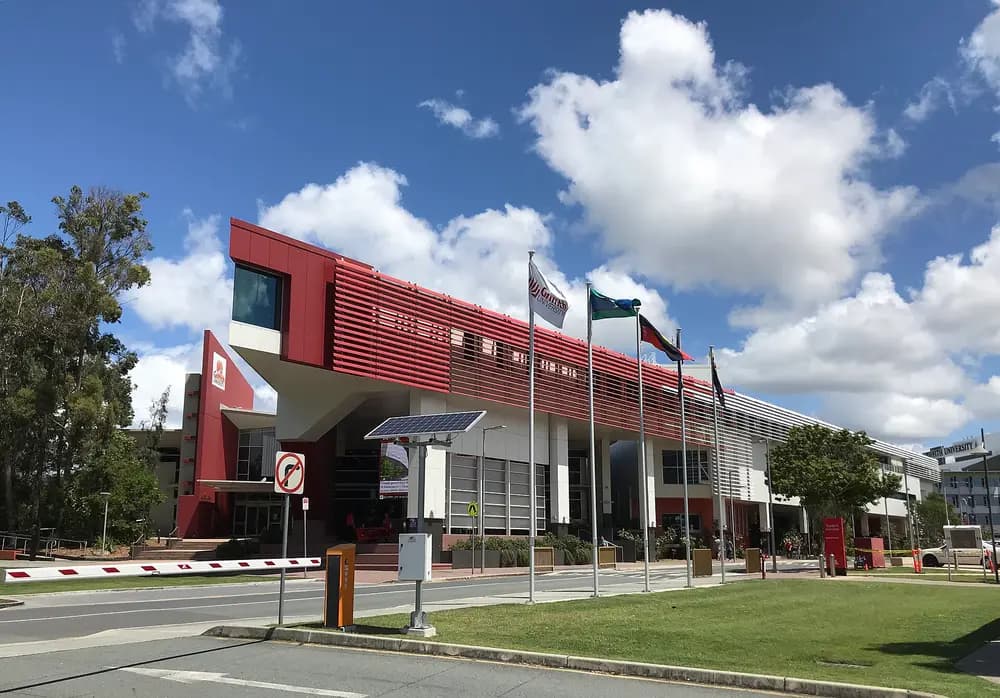
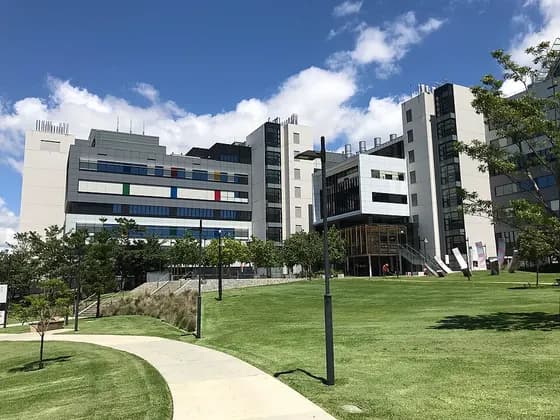
Photo: Chris Olszewski · CC BY-SA 4.0 · cropped
Photo: Kgbo · CC BY-SA 4.0 · Photo: Shiftchange · CC0 · Photo: Ena Music · CC BY-SA 4.0
The Griffith Dental course at a glance (2027 entry)
Griffith's route to becoming a dentist is two linked degrees, taught by the School of Medicine and Dentistry on the Gold Coast campus at Southport. You start with the three-year Bachelor of Dental Health Science (BDentHSc) and finish with the two-year Master of Dentistry (MDent). The Australian Dental Council (ADC), which accredits dental courses, accredits the two together as one five-year program, so registering as a dentist needs both.
Entry to the master is built in. The bachelor is a provisional entry pathway: if you complete it, you move into the master. You must meet extra requirements first and take no more than a year's break between the two. Griffith calls each subject a course and each degree a program; in this guide, the course means the whole five-year path.
Your dental teaching is based in the Griffith Health Centre, across the road from Gold Coast University Hospital. The building houses the Griffith University Dental Clinic, where supervised students treat members of the public. Years 1 and 2 are pre-clinical, pairing biomedical science with dental training in laboratories and simulation, including haptic simulators, machines that give touch feedback through the instrument in your hand. Patient care starts in Year 3.
The master is where you learn to work as a dentist, in clinic courses that simulate private practice and placements in private dental practices. Final year centres on a capstone, a final course that brings together everything you have learned, alongside a group research project. Graduates can then apply to the Dental Board of Australia, through the Australian Health Practitioner Regulation Agency (Ahpra), for registration as a dentist.
The bachelor's current structure is being introduced a year at a time. Its new Year 1 courses began in 2025 and its new Year 2 courses in 2026. The new Year 3 courses, including Professional Practice 1, run for the first time in 2027, so their timetables, learning outcomes and assessment are not yet published. If you start in 2027, you will be the third intake to take the new structure.
| Degrees | BDentHSc (program 1577), then MDent (program 5703) |
|---|---|
| Course length | 5 years full time: 3-year bachelor, then 2-year master |
| Main campus | Gold Coast campus, Southport: Griffith Health Centre (G40) |
| Teaching style | Science courses beside small-group, simulation and laboratory dental teaching |
| Anatomy | Year 1 labs with cadaveric, plastinated and plastic specimens |
| First patients treated | Year 3, in Professional Practice 1 |
| Curriculum | New bachelor structure phased in from 2025; Year 3 first runs in 2027 |
| Clinical hours | 270 in the bachelor; 900 in clinic plus 336 on placement in the master |
| Placement area | Private practices across Queensland and northern New South Wales |
| Honours | Optional research degree: an extra year, or part time alongside the master |
| Accreditation | ADC reaccreditation 1 January 2023 to 31 December 2029, no conditions |
What makes the Griffith Dental course different
Hand skills on haptic simulators from first trimester
Pre-clinical Dental Sciences 1, in your first trimester, trains your hand skills on 3D virtual reality haptic simulators, beside tooth anatomy and communication skills. In Year 2 you place fillings on model teeth in a simulated clinical environment, first simple ones and then compound fillings, which cover more than one surface of a tooth.
A public teaching clinic in your own building
The Griffith University Dental Clinic, on Level 3 of the building where you study, treats members of the public. Griffith's degree page puts it at 117 chairs and over 6,000 appointments a year. Your clinical hours in the bachelor and most of the master's clinical work happen here, with qualified general dentists and specialists supervising every session.
Patients from the clinic's own waiting list
From Year 3 you treat members of the public who join the student clinic's waiting list and pass an in-person screening. Under Griffith's agreement with Queensland Health, children aged 4 to 16 and Queensland residents with concession or pension cards pay nothing for common services there.
Final years modelled on private practice
Both of the master's clinical courses, Professional Practice 2 and 3, simulate private practice. The final-year capstone adds outplacements and a component on practice management and small business administration, and you spend placement hours in private practices.
A group research project aimed at publication
Year 4 research-methods courses prepare you for a final-year group project in which you run your own study, gather and analyse data, write a report and present the findings. The program's learning outcomes say the project should lead to a manuscript for submission to a peer-reviewed journal.
Communication and First Peoples health as threads
Communication Skills for Oral Health runs in Year 1 and again in Year 2, where in 2026 it carried 40% of one course's marks. In Year 3, two courses cover communication in dentistry, First Peoples health and practice, and oral health promotion for individuals and whole communities.
How Griffith Dental teaches dentistry
Years 1 and 2 of the bachelor mix two kinds of course. Science courses, such as Cells, Tissues, and Regulation or Biochemistry, are mostly taught by the School of Pharmacy and Medical Sciences, and several are shared with other health degrees. Dental courses, coded DOH, are run by the School of Medicine and Dentistry for dental students only.
Each dental course is built from components, each with its own teaching and marks. Pre-Clinical Dental Sciences 4, for example, combines cariology and preventive dentistry (tooth decay and how to stop it), communication skills, equity, diversity and sustainability, and dental hygiene.
The school says it makes extensive use of small-group and simulation-based learning. It also stresses interprofessional learning, where you learn with, from and about students in other health degrees, because dentists work in teams with other professionals.
The academic year is longer than a standard university year, and some evenings and Saturdays may be needed. From Year 1 Trimester 2, some dental courses start earlier and finish later than Griffith's standard trimester dates. The 2027 Dentistry calendar gives 25 weeks for Year 1, 29 for Year 2, 32 for Year 3, 33 for Year 4 and 34 for Year 5. In 2026, Year 1 began on 2 March and the master's clinical courses on 26 January.
The ways you will learn
| Lectures | Most dental lectures in the 2026 timetables were live-streamed online, some in the evening: Year 2 had lectures at 6pm and 8pm. Science courses add on-campus quizzes and exams. |
|---|---|
| Laboratories | In Year 1, oral biology laboratories teach you to identify and draw every baby and adult tooth, and science labs cover histology, physiology and microbiology. Later laboratories cover fillings and dental materials in Year 2, then root canal treatment and prosthodontics (crowns, bridges and dentures) in Year 3. |
| Haptic simulation | Pre-clinical Dental Sciences 1 includes virtual dental simulation on 3D virtual reality haptic simulators, where you first build the fine hand control that dentistry needs. |
| Simulated clinic and practicums | In the 2026 profiles, Year 2 operative dentistry and radiography are taught in a simulated clinical environment, through long laboratory sessions and practicum sessions in one of the building's clinics. You restore teeth on models, follow radiation safety protocols and complete a Radiation Licence assessment. |
| Workshops and tutorials | Small-group sessions, some online, for communication skills, public oral health and the master's specialty subjects. In 2026, Year 2 communication used e-tivities, structured online group tasks, alongside tutorials. |
| Supervised clinic sessions | From Year 3, supervised sessions treating patients in the Griffith University Dental Clinic, joined in the master by placements in private dental practices. |
A typical week on the Griffith Dental course
Griffith's general guide is that each course takes 10 to 12 hours a week on average, counting classes, study and assessment, and dental students take four courses a trimester in Years 1 to 4. The 2026 class timetables give a feel for how that time is spent, though they will change for 2027.
In Year 1 Trimester 1, Pre-clinical Dental Sciences 1 had live-streamed lectures, a two-hour laboratory every Thursday in the Griffith Health Centre and four two-hour tutorials across the trimester. In Year 2 Trimester 1, Pre-Clinical Dental Sciences 3 alone had two four-hour laboratory sessions a week, on Mondays and Fridays, plus practicum sessions in a clinic early in the trimester.
The master's weeks are built around the clinic. The 2026 Year 4 timetable lists Professional Practice 2 clinic sessions in the undergraduate clinic every weekday morning and afternoon, alongside live-streamed lectures and half-day workshops and tutorials. In final year, Professional Practice 3 sessions run in a postgraduate clinic through the week, with tutorials and a weekly research project seminar.
How anatomy is taught at Griffith Dental
Anatomy is taught in Year 1. Anatomy and Physiology Systems I covers the skeletal, muscular, nervous, endocrine and reproductive systems, including the 12 cranial nerves. Its practical laboratories include human cadaveric material, and you must show you can handle human tissue and identify structures on cadaveric or plastinated specimens, real tissue preserved with plastic. Anatomy and Physiology Systems II continues with the heart and blood vessels, lungs, kidneys, gut and immune system.
Head and neck anatomy for dentistry comes in Pre-clinical Dental Sciences 2, in Year 1 Trimester 2. In the 2026 profile you study the embryology of the head and neck, the tissues of the teeth and gums, and the bones and openings of the skull. You identify head and neck structures, including blood vessels, lymph nodes and nerves, on microscope slides, plastic models and real cadaver specimens. You also learn the muscles of chewing and facial expression and the jaw joint.
In 2026 that course was assessed by two laboratory exams, worth 25% each, and an end-of-trimester written exam worth 50%.
When you start treating patients at Griffith Dental
Years 1 and 2 are pre-clinical, as the dental course titles say, and skills build in stages. You start with hand skills in simulation in your first trimester, then place fillings on model teeth in Year 2. Year 2 also covers dental X-rays and radiation safety, instrument skills for cleaning teeth and gums, and safe work practices in preparation for patient care.
Before any placement you must meet Griffith Health's professional practice requirements, most of them by the end of your first trimester. They include vaccinations and health tests, a Blue Card (Queensland's working with children check), a national police check, first aid and CPR certificates, and online training. Some vaccination schedules take up to seven months, and the Hepatitis B course, with its follow-up blood test, can run until the end of your second trimester.
Dentistry involves exposure-prone procedures, where an injury to you could expose a patient's open tissues to your blood. So you also need a doctor-signed declaration that you have been tested for HIV and hepatitis C, with the tests repeated every three years. Griffith registers you as a student with the Dental Board of Australia through Ahpra, so you do not apply yourself, and you then have obligations to the Board as a registered student.
Patient care begins in Year 3 with Professional Practice 1, a year-long course that runs for the first time in 2027, so it has no published timetable or assessment yet. Its overview says you learn to collect and record patients' details, diagnose, manage and plan simple treatment, and assist more senior students. It also covers the principles behind local anaesthesia. The bachelor's 270 hours of clinical practice, over 30 weeks, take place in the Griffith University Dental Clinic, with general dentists and specialists supervising every session.
Patients come to the clinic from the public. Each new patient has an admission appointment, which may include X-rays, and an in-person screening, then is referred to the student best placed to meet their needs. Students work in teams and may refer patients to each other, and each patient signs a treatment plan before work starts. Under Griffith's agreement with Queensland Health, Queensland residents with concession or pension cards, and children aged 4 to 16, pay nothing for common services in the student clinic.
Responsibility grows in the master. Professional Practice 2 expects you to manage every patient and scenario in your allotted sessions, recognise when to refer to a specialist and log a set of minimum clinical requirements. In final year you provide comprehensive care, treat patients with more advanced needs and manage whole cases.
Year by year at Griffith Dental
- Year 1 (BDentHSc)
Body sciences, teeth and first hand skills
Year 1 lays the scientific groundwork and starts your dental skills straight away. Each trimester, three science courses run beside one Pre-clinical Dental Sciences course. You must pass every Year 1 course before taking any Year 2 course.
- Chemistry of Biological Systems I and II: the chemistry behind living things, then carbohydrates, lipids, proteins, enzymes and nucleic acids.
- Cells, Tissues, and Regulation, then Genes and Disease: cells, tissues, nerve signals, hormones and homeostasis, then cell division, inheritance, gene expression and evolution.
- Anatomy and Physiology Systems I and II, with laboratories and practical skills such as ECG recording, blood pressure and spirometry.
- Pre-clinical Dental Sciences 1 (Trimester 1): oral biology, Communication Skills for Oral Health 1, Transition Through University and virtual dental simulation on haptic simulators.
- In 2026 it was assessed by two oral biology laboratory exams (20% each), an end-of-trimester exam (40%) and communication tutorials (20%).
- Pre-clinical Dental Sciences 2 (Trimester 2): tooth development, oral histology, head and neck embryology and anatomy, and continued hand skills.
- Year 2 (BDentHSc)
Pathology, drugs and the simulated clinic
Year 2 adds the medical sciences a dentist needs and moves your practical work into a simulated clinical environment. You must pass all Trimester 1 courses before starting Trimester 2.
- Biochemistry and Microbiology for Oral Health in Trimester 1, then Pathology General for Dental Practitioners and Pharmacology for Oral Health, on the drugs met in dental practice, in Trimester 2.
- Pre-Clinical Dental Sciences 3: dental materials and simple fillings on models using minimal intervention dentistry (removing as little tooth as possible), plus radiography and radiation safety.
- In 2026 its operative dentistry practical exam carried 70% of the mark, with the cohort split between morning and afternoon sittings.
- Pre-Clinical Dental Sciences 4: tooth decay and its prevention, Communication Skills for Oral Health 2, equity, diversity and sustainability modules, and a dental hygiene practical on periodontal debridement (cleaning around the gums).
- Pre-Clinical Dental Sciences 5: compound fillings, and taking and interpreting dental X-ray images, with a Radiation Licence assessment.
- Pre-Clinical Dental Sciences 6: public oral health, clinical medicine for oral health, facial and skeletal growth from infancy to adulthood, and professionalism and ethics.
- Year 3 (BDentHSc)
First patients and the clinical dental sciences
Year 3 brings you to patients. Its courses are new in 2027, so this outline comes from their published course overviews. Professional Practice 1 runs across both trimesters beside three Clinical Dental Sciences courses each trimester, and all Trimester 1 courses must be passed before Trimester 2.
- Professional Practice 1 (both trimesters): your first supervised patient care in the clinic.
- Clinical Dental Sciences 1 and 4: endodontics (root canal treatment) and fixed and removable prosthodontics, with pre-clinical practice sessions.
- Clinical Dental Sciences 2: common oral diseases, with diagnostic laboratory sessions, and gum disease, including diagnosing, planning and treating gingivitis (inflamed gums).
- Clinical Dental Sciences 3 and 6: communication in dentistry, First Peoples health and practice, and oral health promotion. Orthodontics (straightening teeth and correcting the bite) comes in Trimester 1, and paediatric dentistry, with pre-clinical skills, in Trimester 2.
- Clinical Dental Sciences 5: oral surgery and periodontics, the care of the gums and supporting tissues.
- Year 4 (MDent)
The master: clinic and the dental specialties
The master is built around clinic sessions that simulate private practice. Lectures cover each dental discipline, and you learn research methods ready for final year. All Year 4 courses must be passed before Year 5.
- Professional Practice 2 (both trimesters): supervised clinic sessions across prosthodontics, endodontics, periodontics, oral surgery and paediatric dentistry, with a minimum clinical requirements logbook.
- Clinical Dental Sciences 7 and 9: prosthodontics, endodontics and periodontics.
- Clinical Dental Sciences 8: oral surgery, paediatric dentistry, orthodontics and special needs dentistry (care for patients with disabilities or complex medical conditions). Clinical Dental Sciences 10: the same first three, plus oral medicine (diagnosing and managing diseases of the mouth).
- In 2026 each Clinical Dental Sciences course was assessed by one end-of-trimester exam worth 100%.
- Foundations of Research Inquiry, taught online, then Quantitative Research or Qualitative Research in Trimester 2, the only choice in the course. In 2026 the first taught statistics using SPSS software and the second included Indigenous research approaches.
- Year 5 (MDent)
Capstone: practising as a dentist
Final year is one large capstone course, Professional Practice 3, beside the group research project. It is designed to help you make the move from university to independent practice.
- Professional Practice 3, Clinic (both trimesters): comprehensive care, advanced care patient treatment and comprehensive case management in the dental clinic.
- Outplacements (both trimesters): clinical sessions away from the university.
- Practice Management and Small Business Administration (Trimester 2): the business side of running a dental practice.
- Research Project (both trimesters): in a group, you run a study, gather and analyse data, write a final report and give an oral presentation.
- In 2026 the project was marked on supervisor assessment (30%), the final report (40%) and the oral presentation (30%).
How you are assessed at Griffith Dental
In Years 1 and 2 most marks come from written and practical exams, set course by course. Written exams in the 2026 profiles mix selected-response questions, where you choose from options, with constructed-response questions, where you write the answer. Practical exams test laboratory work and procedures on models.
You must pass every course in a year before moving on. In most of the bachelor's dental courses every assessment item is a mandatory pass, so a strong mark in one part cannot make up for failing another. The bachelor's dental courses are designated courses, as are the master's Professional Practice and Clinical Dental Sciences courses. Failing one can lead to exclusion, and in the master it brings a review by the Health Assessment Board.
Supplementary assessment, a second attempt at a failed task, was available in the bachelor's dental courses in 2026. It was not available in the second parts of Professional Practice 2, Professional Practice 3 and the Research Project. Electronic exams run on Examplify, so you need a laptop that meets its requirements.
In Year 4, Professional Practice 2 was assessed in 2026 by workplace-based clinical grading, where supervisors grade your clinical work, and a Virtual OSCE, each worth 50%, plus the clinical requirements logbook. An OSCE, or Objective Structured Clinical Examination, is usually a circuit of timed stations; Griffith lists its virtual version as a selected-response exam.
In final year, the 2026 Professional Practice 3 assessment table gives 50% to a case-based viva voce, an oral exam in which examiners question you on patient cases. Workplace-based clinical grading carries 30%, a clinical assessment from your placement 15% and a written exam on practice management and small business administration 5%. Oral surgery and oral radiology reports and the logbook carry no marks but must be submitted.
Graduates of programs accredited by the ADC and approved by the Dental Board of Australia can apply for registration up to three months before they finish, and must be registered before they start work. Unlike medicine, there is no internship, the supervised first year of work that medical graduates complete before full registration.
- Year 2 pathology (2026): three exams, a Foundational Mastery Exam (20%), a System Integration Exam (30%) and a final exam (50%).
- Year 3: in Clinical Dental Sciences 1 and 4, you can sit the theory exam only once your endodontics and prosthodontics laboratory logbooks are complete.
- In the 2026 Year 4 course profiles, practical sessions are compulsory. Being absent or late for more than one session a trimester, even with a good reason, may mean you do not meet the course requirements.
Where you will actually be at Griffith Dental
Your clinical base is the Griffith University Dental Clinic in the Griffith Health Centre at Southport, on the Gold Coast campus. All of the bachelor's clinical hours, and 900 hours of the master's clinical work, are spent there.
The master adds 336 hours on placement in private dental practices in metropolitan, regional and rural areas of Queensland and northern New South Wales. Griffith's dentistry study page also mentions its network of partner clinics in regional areas. Final year's Professional Practice 3 has an Outplacements component in both trimesters, which Griffith presents as a step towards independent practice and a link to future employers. Placement travel and accommodation are among the costs you meet yourself.
Placements are managed through Sonia, Griffith Health's online placement system, and your requirements must stay current throughout the course. A placement in a Queensland Health or NSW Health facility brings that service's own extra online training and forms. In the master you may need to show you meet Queensland Health's immunisation policy for health care workers.
Griffith's community outreach page also describes students' work in the community. It says Griffith partners with free State Government dental clinics in Warwick, Tweed Heads, Kingaroy, Stanthorpe, Woolloongabba and Southport, where students give a full range of treatment at no cost to patients. The page adds that Griffith's dental clinic runs services in Warwick, Stanthorpe and Kingaroy, and that dental students have visited Gold Coast preschools since 2013 to teach oral health.
The same outreach page describes a free Hope4Health dental clinic at Cherbourg, a largely Indigenous community west of Gympie, run entirely by students and volunteers in their final years of dentistry. Hope4Health is a charity founded by Griffith students in 2006. Griffith's rural priority page, which covers its medicine and dentistry degrees together, adds that students may have the option of rural placements in places including Toowoomba, Stanthorpe, Warwick, Dalby and Palm Island.
Base for laboratory, simulation and clinical training in all five years.
- Griffith University Dental Clinic, Level 3, Griffith Health Centre (G40), Southport
Placement hours in the master; final year's Professional Practice 3 includes Outplacements in both trimesters.
- Private dental practices in metropolitan, regional and rural areas
Partner clinics named on Griffith Health's community outreach page.
- Warwick
- Tweed Heads
- Kingaroy
- Stanthorpe
- Woolloongabba
- Southport
Run by students and volunteers, as described on Griffith's community outreach page.
- Hope4Health dental clinic
Listed on Griffith's rural priority page as places where students may have the option of a rural placement.
- Toowoomba
- Stanthorpe
- Warwick
- Dalby
- Palm Island
Intercalation and research degrees at Griffith Dental
Honours is optional: the Bachelor of Dental Health Science (Honours), BDentHSc(Hons), is an 80-credit-point research degree. It takes an extra year full time or two years part time, and you can take it alongside the Master of Dentistry, part time at 10 credit points a semester. The master's page says students who delay entry to the master, which they may do for up to a year, cannot be guaranteed a place. Their entry then depends on available dental chairs and on passing a clinical and written exam.
The Honours degree has 30 credit points of coursework and a 50-credit-point dissertation. You start with Dissertation Preparation in your first trimester, take Qualitative or Quantitative Research, and choose either Applied Research Statistics and Meta-Analysis or an Independent Practice Project. The dissertation is a supervised research project written up as a thesis and presented at a seminar. Honours is awarded in four classes, from Class I to Class III, based on your program GPA and a minimum dissertation mark.
You need to find a supervisor before you apply. The school's dentistry research teams work on regenerative dentistry and biomaterials, periodontal medicine, gum and implant disease, and laser dentistry and pulp biology. A public oral health team works with local communities and Queensland Health on oral health promotion, rural and remote needs, and barriers to care.
Facilities and support at Griffith Dental
Where you will learn
The Griffith Health Centre, also called the Ian O'Connor building (G40), is a purpose-built AUS$150 million building on the Gold Coast campus. It holds the dental clinic and the laboratories, tutorial rooms and undergraduate and postgraduate clinics named in the 2026 dental course timetables. The Gold Coast University Hospital G:Link light rail stop is a short walk away.
The Griffith University Dental Clinic is on Level 3. The degree page gives 117 dental chairs and over 6,000 patient appointments a year, while the clinic's own page describes over 110 chairs treating over 1,000 patients a week. It has a 150-seat patient lounge and an on-site radiology area run by an outside provider.
Alongside the clinic are Griffith's own commercial prosthetic dental and clinical skills laboratory and a dedicated area for dental researchers.
Support while you study
Support starts inside the course. Pre-clinical Dental Sciences 1 includes a Transition Through University component to help you settle into study. A first-year science course, Cells, Tissues, and Regulation, embeds a wellbeing module called You Matter: Prioritise Your Wellbeing, with optional training on respectful workplaces and being an active bystander.
Each degree has a Program Director who advises on your study program, enrolment, progress and credit. The Health Placement Support Hub helps you complete and keep up your placement requirements, and each program has its own Placement Officer.
Griffith's inherent requirements for its dental programs set out the abilities you need across eight areas, from ethical behaviour and communication to sensory ability, strength and mobility, and sustainable performance. If a disability or health condition may make these hard to meet, talk to the Program Director or a Disability Advisor. They can work with you on reasonable adjustments, such as assistive technology, extra exam time or notetaking support.
You can also join the Australian Dental Association as a student member at no cost, which lets you attend its meetings and receive its publications.
Is the Griffith Dental course right for you?
This course may suit you if
- You want dental hand skills training from your first trimester.
- You would like your dental laboratories, simulation and clinic in one building on the Gold Coast, opposite Gold Coast University Hospital.
- You are drawn to private practice, since the master's clinic courses simulate it, its placements are in private practices and final year adds practice management.
- You would enjoy a group research project aimed at a journal manuscript, with Honours available if you want more research.
Things to think about
- Patient care starts in Year 3, after two pre-clinical years of science, laboratories and simulation, and the Year 3 courses are new in 2027.
- Progression is strict: you must pass a whole year to move on, most bachelor dental assessment items are mandatory passes, and failing a designated dental course can lead to exclusion.
- Moving into the master comes with conditions: extra requirements to meet first and no more than a year's break between the degrees.
- Years run longer than a standard university year, the master began in late January in 2026, and the 2026 Year 4 profiles made practical sessions compulsory, with little room for absence.
- You may need to pay for dental kits and tools each year, uniforms, a laptop for electronic exams, and placement travel and accommodation. Your placement requirements, such as vaccinations, a first aid and CPR course and a police check, are also at your own cost.
Griffith Dental course — frequently asked questions
Applying to Griffith Dental?
How to get into Griffith Dental
Entry requirements, admission tests, written application and interview, step by step.
Open the guide →Griffith Dental entry requirements
ATAR or GPA, GAMSAT and UCAT ANZ thresholds, interview format and place types.
See the requirements →Compare Griffith Dental with other schools
Put the teaching style, anatomy teaching and placements next to another school.
Open the comparison →Prepare for the Griffith Dental interview
Format breakdown, school-specific sample questions and prep tips from tutors who interviewed here.
Read the guide →Where this Griffith Dental course guide came from
This guide was written from 47 official sources — Griffith University School of Medicine and Dentistry's own course pages and programme documents, plus the Australian Medical Council or Australian Dental Council and the health services the school places students with where they publish detail — read on 2026-10-10, then checked claim by claim against those sources.
- Griffith University: Bachelor of Dental Health Science (1577) degree page and 2027 degree structure
- Griffith University: Master of Dentistry (5703) degree page, domestic and international views, and 2027 degree structure
- Griffith University: Bachelor of Dental Health Science (Honours) (2126)
- myGriffith program profile: Bachelor of Dental Health Science (1577)
- myGriffith program profile: Master of Dentistry (5703)
- Master of Dentistry program learning outcomes (AQF Level 9)
- Inherent requirements for dental programs (2026)
- Course profile: Pre-clinical Dental Sciences 1 (1801DOH), 2026, with its previous course profiles list
- Course profile: Pre-clinical Dental Sciences 2 (1802DOH), 2026
- Course profile: Pre-Clinical Dental Sciences 3 (2801DOH), 2026
- Course profile: Pre-Clinical Dental Sciences 4 (2802DOH), 2026
- Course profile: Pre-Clinical Dental Sciences 5 (2803DOH), 2026
- Course profile: Pre-Clinical Dental Sciences 6 (2804DOH), 2026
- Course overview: Professional Practice 1 (3800DOH_Y1 and _Y2), first offered in 2027
- Course overview: Clinical Dental Sciences 1 (3801DOH)
- Course overview: Clinical Dental Sciences 2 (3802DOH)
- Course overview: Clinical Dental Sciences 3 (3803DOH)
- Course overview: Clinical Dental Sciences 4 (3804DOH)
- Course overview: Clinical Dental Sciences 5 (3805DOH)
- Course overview: Clinical Dental Sciences 6 (3806DOH)
- Course profile: General Dental Practice 1 (3060DOH_Y2), the previous Year 3 course, profiles 2023 to 2026
- Course profiles: Professional Practice 2 (7800DOH_Y1 and _Y2), 2026
- Course profile: Clinical Dental Sciences 7 (7801DOH), 2026
- Course profile: Clinical Dental Sciences 8 (7802DOH), 2026
- Course profile: Clinical Dental Sciences 9 (7803DOH), 2026
- Course profile: Clinical Dental Sciences 10 (7804DOH), 2026
- Course profiles: Professional Practice 3 (7900DOH_Y1 and _Y2), 2026
- Course profiles: Research Project (7901DOH_Y1 and _Y2), 2026
- Course profile: Cells, Tissues, and Regulation (1014MSC), 2026
- Course profile: Anatomy and Physiology Systems I (1016MSC), 2026
- Course profile: Anatomy and Physiology Systems II (1017MSC), 2026
- Course profiles: Year 1 chemistry and genetics courses (1001MSC, 1015MSC, 1005MSC), 2026
- Course profiles: Year 2 science courses (2005MSC, 2015MSC, 2007MED, 2020PHM), 2026
- Course profiles: Master of Dentistry research methods (7001HSV, 7011HLS, 7018NRS), 2026
- Academic Calendar 2027: Dentistry (version July 2026)
- Griffith School of Medicine and Dentistry
- School of Medicine and Dentistry: Learning and teaching
- Griffith Health Clinics: Dental Clinic, Gold Coast
- Griffith University: Dentistry study area
- Griffith University Rural Priority Access Scheme (medicine and dentistry)
- Griffith Health: Health Placement Support Hub
- Griffith Health: Bachelor Dental Health Science/Masters of Dentistry placement checklist
- School of Medicine and Dentistry: Dentistry and Oral Health research
- Griffith Health: Community outreach (dentistry and oral health)
- Australian Dental Council: Accredited Programs List
- Australian Dental Council: Accreditation Process
- Dental Board of Australia: Student registration and graduates
Courses are restructured between cycles. Anything here that decides your application — an anatomy offer, a placement city, a compulsory intercalated year — should be confirmed against the official page for your entry year.
Applying to Griffith Dental?
We have helped hundreds of applicants turn their GAMSAT / UCAT ANZ, written application and interview prep into offers from Griffith Dental and other Australian dentistry schools.