
The Melbourne Dental course
What you actually study, and where you will be
Melbourne Dental's DDS is a 4-year (graduate entry) course with an integrated curriculum, with patient treatment from Year 2 and placements in Melbourne and rural Victoria (2027 entry). Melbourne's Doctor of Dental Surgery is a four-year, full-time graduate course taught by the Melbourne Dental School on the Parkville campus. Year 1 pairs dental science with practice on manikins in a simulation lab; you begin treating patients under supervision in Year 2, when a two-year research project also starts. The final year is one clinical subject, spent on a year-long rotation of placements, including a rural placement and community dentistry.
- Degree
- DDS
- Length
- 4 years (graduate entry)
- Teaching
- Integrated
- First patients
- Year 2
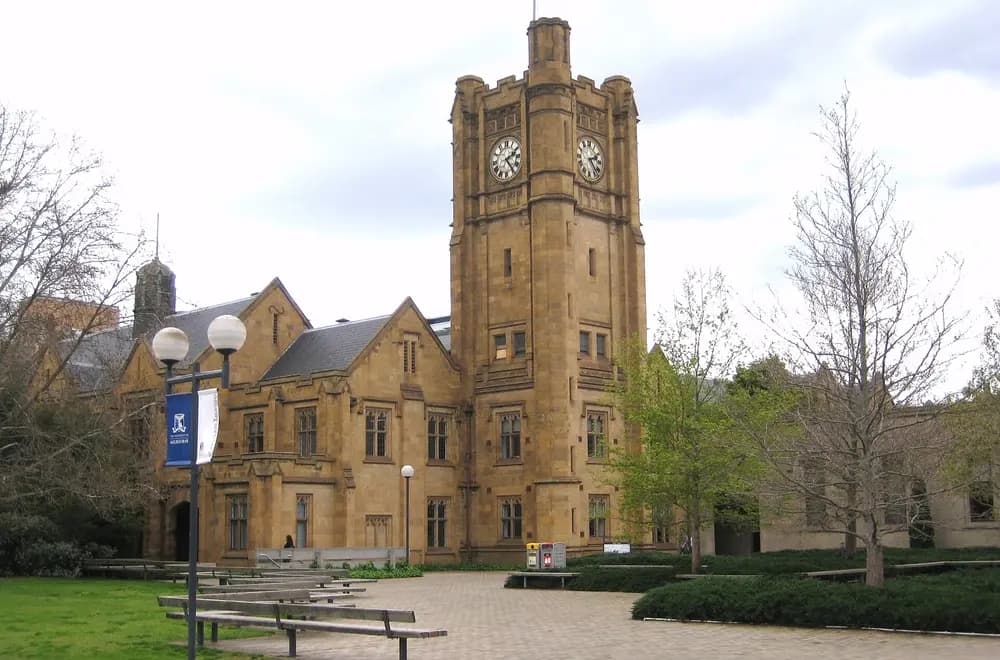

Photo: Polly clip · CC BY-SA 3.0 · cropped
Photo: -wuppertaler · CC BY 4.0 · Photo: Nick-D · CC BY-SA 4.0 · Photo: Dietmar Rabich · CC BY-SA 4.0
The Melbourne Dental course at a glance (2027 entry)
The Doctor of Dental Surgery (DDS) is the University of Melbourne's course for becoming a general dentist. It is graduate entry, meaning you start it after completing a bachelor's degree, and it runs for four years full time from January. Despite the word Doctor in its name, it is a masters-level degree, at level 9 of the Australian Qualifications Framework. It is taught by the Melbourne Dental School, part of the Faculty of Medicine, Dentistry and Health Sciences, on the Parkville campus.
Science and hands-on dental training run side by side from the start. Year 1 combines lectures, online modules and practical classes in the pre-clinical simulation lab, where you work on manikins. You begin treating patients under supervision in Year 2, take on more complex cases across the dental specialties in Year 3, and spend the final year mostly in clinics. A two-year research project, starting in Year 2, runs alongside.
Clinical training is close at hand. The school's main base is in the Royal Dental Hospital of Melbourne building at 720 Swanston Street, Carlton, and the hospital is one of its primary placement providers. In the final year you also treat patients at the Melbourne Dental Clinic, the University's own teaching practice at 723 Swanston Street, and spend time in community dentistry and rural community health clinics.
A new curriculum began in 2024 and has been introduced one year level at a time, and the intake grew in 2025. The faculty's 2027 admissions guide, written for international applicants but covering all places, expects 112 places in total, as a guide only. The Australian Dental Council (ADC), which accredits dental programs in Australia, accredits the DDS until 31 December 2030. A targeted ADC review in late 2025 kept that accreditation in place, with conditions the ADC has since recorded as met.
Graduates can apply for registration as a dentist with the Dental Board of Australia, through the Australian Health Practitioner Regulation Agency (AHPRA). Dentistry has no internship year (the supervised first year of work that many health graduates complete), so once you are registered you can start work.
| Degree | Doctor of Dental Surgery (DDS), a masters-level degree |
|---|---|
| Course length | 4 years full time, starting in late January |
| Entry | Graduate entry, after a bachelor's degree |
| Places (2027) | 112 expected, domestic and international combined (a guide only) |
| Main base | Melbourne Dental School, Swanston Street, Carlton (Parkville campus) |
| Teaching style | Integrated: dental science alongside simulation training from Year 1 |
| First patients treated | Year 2, under supervision |
| Final year | One year-long clinical subject, rotating through placements |
| Research | Two-year research project, starting in Year 2 |
| Accreditation | Australian Dental Council, to 31 December 2030 |
What makes the Melbourne Dental course different
Treating public patients at the Royal Dental Hospital
Students treat patients at the Royal Dental Hospital of Melbourne every week. Its teaching clinic gives free care to eligible public patients, such as concession card holders and children, so you meet people who struggle to afford regular dental care, and some very challenging cases. The school says training there also encourages students to consider a career in public dentistry.
Final-year clinics in the University's own dental practice
The Melbourne Dental Clinic is the University's teaching practice. Its student service is staffed by final-year students, and the same facility houses specialist training clinics and a general practice run by qualified dentists. The University says the final year gives you experience of a private practice setting, where you learn how a small dental clinic is run.
Professional practice taught throughout the course
Before 2024, professional practice was taught mainly in first year. The new curriculum gives it a subject that runs through the course, covering communication, leadership, ethics, sustainability and digital health. It also teaches cultural safety: care in which Aboriginal and Torres Strait Islander patients feel safe and respected.
A two-year research project for every student
The project starts in Year 2 with a proposal in dental, oral or craniofacial research. Internal grants from the school can help with project costs.
Rural and community clinics in the final year
The course page lists a rural placement and community dentistry among the experiences of the final year. In 2026, for students who began on the previous curriculum, the final-year subject takes them to rural community health clinics as well as urban community health centres. The placements section explains where rural rotations have taken students and what the ADC said about them in 2025.
How Melbourne Dental teaches dentistry
Each year is worth 100 credit points, the University's measure of study load, and is made up of a few large subjects, or a single one in the final year. Science, simulation and clinical work are taught side by side, sometimes within one subject, as the Year 2 section below shows. The school says the DDS also encourages self-directed learning.
The new curriculum began in 2024 after a review that started in 2020. It drew on staff, students, clinical teachers and patient-experience data reviewed with Dental Health Services Victoria. It builds in the ADC's competencies for newly qualified dental practitioners, adds sustainability, and puts more weight on digital health and case-based learning, where teaching is built around a patient's case. In special needs dentistry, for example, you learn how a patient's condition affects how you gain consent and communicate.
The ways you will learn
| Lectures, seminars and online modules | Subjects such as Preclinical Dental Practice, Diseases and Dentistry, and Professional Practice 2: Lifespan Care teach their theory through lectures and online learning modules. In Year 2, seminars are added in Professional Practice 2 and Specialty preclinical dental practice. |
|---|---|
| Simulation lab classes | Practical classes on manikins, often called phantom heads: model heads fitted with replaceable teeth, on which you practise procedures before treating patients. |
| Clinical case discussions | Diseases and Dentistry uses clinical case discussions to connect the science of decay, gum disease and oral pathology to diagnosis and treatment decisions. |
| Supervised clinics | From Year 2 you treat patients under the supervision of qualified dental practitioners, putting disease prevention and infection control first. |
| Interprofessional workshops | The Collaborative Practice Centre's workshops teach dentistry students teamwork alongside other health students, using plain language across disciplines and handover tools such as SBAR (Situation, Background, Assessment, Recommendation). |
| Placement rotations | At outside host clinics you work as part of the clinic's team, and the final year is a year-long rotation of placements. |
How anatomy is taught at Melbourne Dental
Anatomy has its own Year 1 subject, Structure and Function in Dentistry (18.75 points), which covers the head and neck. It follows how tissues and structures develop from the embryo until growth is complete, and covers functional anatomy such as occlusion, meaning how the upper and lower teeth meet. You also study the development and shape of baby and adult teeth, how their structure relates to their function, and the basic neuroscience a dentist needs.
The subject draws on medical imaging of several kinds, from microscope views to 3D technologies. The school's 2024 research report describes a foundational anatomy subject in which students complete a range of workshop activities and choose some of them for an assessed portfolio. By 2022 a school project had also scanned more than 70 skulls and teeth, including a thylacine skull, with CT and micro-CT. The scans became virtual 3D models and prints that students can handle without risk to rare specimens.
Anatomy then carries into the clinical subjects: Preclinical Dental Practice and Specialty preclinical dental practice both ask you to apply it as you learn procedures.
When you start treating patients at Melbourne Dental
You do not treat patients in Year 1. You learn the procedures for taking a patient's history, examining them and planning treatment. You also practise techniques on manikins, along with correct posture, safety and teamwork in the dental surgery as operator or assistant. Before any clinical work, the University registers you as a student with AHPRA, within 30 days of admission and at no cost to you.
You must also clear the faculty's pre-placement checks. They include immunisation checks such as hepatitis B, influenza and tuberculosis, a police check and a Working with Children Check. The faculty warns they can take three to eight months to complete. A first aid certificate is due within the first four weeks of Semester 1 of first year, and you must keep it valid for the whole course.
Patient care begins in Year 2. Under supervision you examine patients, draw up treatment plans and carry out procedures in general practice, periodontics (gum treatment) and removable prosthodontics (dentures). You also learn to recognise medical emergencies in the dental chair. The ADC records that the first group on the new curriculum entered the clinic as Year 2 students in 2025.
At the Royal Dental Hospital of Melbourne, the school says, its students treat patients every week. Patient information for the hospital's teaching clinic says appointments with students can last up to three hours, generally in 9am to 12pm or 2pm to 5pm sessions on weekdays.
Year by year at Melbourne Dental
- Year 1
Foundations and the simulation lab
Year 1 builds the knowledge and hand skills you need before you treat anyone. In 2026 the year opened with two orientation days on 21 and 22 January, followed by 33 teaching weeks running to late October.
- Preclinical Dental Practice (31.25 points): on manikins you take radiographs (X-rays), prepare and fill teeth, clean around the gums, make complete dentures and practise infection control. It draws on disease processes, anatomy, dental materials and instruments to manage decay, gum disease and tooth loss.
- Diseases and Dentistry (31.25 points): the causes, development, prevention and management of diseases of the teeth, gums and mouth, focusing on decay and periodontitis (gum disease) caused by plaque bacteria. It brings together microbiology, chemistry, biochemistry, immunology, pathology and therapeutics, and the links between oral and general health.
- Structure and Function in Dentistry (18.75 points): head and neck anatomy, tooth development and basic neuroscience, described in the anatomy section above.
- Professional Practice 1 (18.75 points): professionalism, communication, leadership, critical thinking, health promotion, ethics, person-centred care, digital health, sustainability and cultural safety for Aboriginal and Torres Strait Islander people.
- Year 2
First patients and specialty skills
Year 2 is when you start treating patients, under supervision, while simulation training moves on to more advanced procedures. Alongside, you study care across the lifespan and learn research methods.
- Dental Practice 2 (43.75 points), in three parts. In the simulation lab you refine fillings and dentures on baby and adult teeth, removing decay selectively and keeping as much tooth as possible. In clinics you treat patients in general practice, periodontics and removable prosthodontics.
- The theory part of Dental Practice 2 covers treatment planning, communication, consent, pain management, gum disease, managing decay, dentures and recognising medical emergencies in a dental setting.
- Specialty preclinical dental practice (25 points): simulation and theory in fixed prosthodontics (crowns and bridges) and oral surgery. It also covers problems in how the teeth and jaws meet, diseases of the tooth pulp, and diseases of the mouth, face and supporting structures.
- Professional Practice 2: Lifespan Care (18.75 points): how general health affects the mouth, the social factors that shape health, and care for children, older people, medically complex patients and people with special needs. It focuses on culturally safe care for Aboriginal and Torres Strait Islander people.
- Dental Research Project 1 (12.5 points): research principles and methods, ethics approval and basic data analysis, leading to your own research proposal.
- The 2026 calendar gave Year 2 an OSCE (Objective Structured Clinical Examination) in the week of 7 September, followed by a break week. An OSCE is a practical exam made up of short, timed stations, each testing one clinical task.
- Year 3
More complex patients across the specialties
Year 3 builds on your first year of patient care. You refine clinical and communication skills across the dental specialties, take on patients with more complex needs and develop your patient management skills. The year also includes placements at outside host clinics; the faculty's guidance for host clinics lists a Year 3 coordinator.
- In 2026 the year began with an orientation day on 19 January and runs for 34 numbered teaching weeks, with exam periods in June and November.
- Under the previous curriculum, the 2023 Year 3 orientation included placement briefings from cohealth Community Dental Clinic, Link Health, the Royal Dental Hospital's Dental Teaching Clinic and Alfred Health. They show the kinds of sites used then.
- Year 4
The clinical year: a rotation of placements
The course page describes the final year as one year-long subject that combines clinical placements, teaching and assessment. You spend it on a year-long rotation of placements, caring for a broad range of patients. The points below describe the final year as it runs in 2026, for students who began on the previous curriculum. Its subject, Comprehensive Dental Practice (100 points), comes from that curriculum, so the details may change by the time you reach Year 4.
- A capstone subject: you apply everything from earlier years to real patients in general dentistry, preparing to practise independently. Clinics are the Melbourne Dental Clinic, the Royal Dental Hospital of Melbourne, urban community health centres, specialist practice and hospital clinics, and rural community health clinics.
- In the Melbourne Dental Clinic's student service you treat members of the public under close supervision, with your work checked at various stages. Appointments run longer than usual to allow for supervision, and patients get a treatment plan and a cost estimate after the first visit.
- Community health centre sessions help you reflect on the emotional and practical side of moving from university to independent practice, and link you with possible future employers.
- In 2026 the year began with orientation on 15 and 16 January, then runs as eight numbered rotations, most four teaching weeks long. Back to Base weeks bring everyone back to the school for teaching in mid-March and late September.
- The 2026 calendar sets a viva (an oral exam with examiners) in June, an OSCE in September and exams in November, with results in early December.
How you are assessed at Melbourne Dental
You must pass every subject in a year before moving on to the next. In the 2026 calendar, there are two main exam periods, in June and November, each after a SWOTVAC week, a week without classes to revise. Supplementary exams, a further sitting, follow in July and December, and results come after a meeting of the board of examiners. Practical skills are tested in OSCEs.
Attendance is a hurdle in every subject: a requirement you must meet to pass, whatever your marks. You must report any absence. A planned absence of up to 10 days needs your Year Coordinator's approval. Longer absences, or any that clash with an assessment, go through special consideration, the University's process for circumstances that affect your study.
On placement, host clinics take part in assessing you. The school gives clinical supervisors specific assessment forms, and their written feedback, given at regular intervals, counts towards your assessment. Portfolios also feature: in 2023, under the previous curriculum, final-year orientation included a session on portfolio expectations using PebblePad, an online portfolio system.
- Fitness to practise: because the course includes placements, the University's Student Fitness to Practice Policy and the faculty's Fitness to Practice Rules apply. If concerns are raised, the faculty can offer extra support or intervene formally.
- Inherent requirements: the course has inherent requirements, the core abilities a student needs to complete it, set out in the University handbook.
Where you will actually be at Melbourne Dental
Supervised patient care starts in Year 2, and placements at outside host clinics follow in Years 3 and 4, taking up most of the final year. They are run through Sonia, the faculty's placement administration system, which also tracks your pre-placement checks. The faculty's guidance for host clinics says students attend several placements each year. Because students may feel anxious at the start, particularly early in the year, hosts are encouraged to give each one an orientation.
On an outside placement you are expected to work as part of the clinic's team, following its procedures and caring for its patients to the standard expected of its own staff. The work includes taking histories, treating patients, taking radiographs and teaching patients to care for their teeth, plus case discussions with your supervisor and oral health promotion or outreach programs. University insurance covers students on placement for personal accident, professional indemnity and public liability.
The school's student forms page, last updated in February 2025, lists rural placement rotations to Shepparton, Morwell and Moe. In 2022, final-year dental and oral health students did four-week rural placements at Latrobe Community Health Service in Gippsland or Goulburn Valley Health in Shepparton, and were encouraged to stay over weekends.
Travel to a rural placement, or to an urban clinic when you are on call, can be reimbursed, but travel to regular urban placements cannot. A trip home to Melbourne during a rural placement is at your own cost. Faculty-wide rules allocate placements as close as possible to your term address, usually within 90 minutes' travel each way. For advice on a rural placement, the faculty points students to the University's Going Rural Health team.
In its 2025 review the ADC reported that under the 2026 calendar one rural rotation would be cut to three weeks, interrupted by a four-week break. It also raised concerns that rural placements were inadequate, that a site had been lost and that links with local community clinics lacked coordination. It recommended a review of rural travel and accommodation, and required the calendar to meet placement-funding rules such as DTERP, the Dental Training Expanding Rural Placement Program. It later recorded that condition as met.
The school's partners page, last updated in May 2024, lists the affiliated health organisations in the areas below, which it says help students move into clinical work. The school's partners also include Northern Territory Aboriginal health organisations, and its 2025 research report describes Melbourne Dental School students contributing to care in North East Arnhem Land.
Home to the school and its simulation labs, the hospital's teaching clinic and the Melbourne Dental Clinic.
- Royal Dental Hospital of Melbourne, 720 Swanston Street, Carlton
- Melbourne Dental Clinic at MOHTEC (Melbourne Oral Health Training and Education Centre), 723 Swanston Street, Carlton
In 2023 (previous curriculum), Year 3 and final-year orientations included briefings from cohealth, Link Health, Alfred Health, Banyule Community Health, EACH Dental Clinic and Your Community Health.
- cohealth (Footscray and Niddrie)
- Banyule Community Health
- Link Health and Community
- Star Health (Prahran and South Melbourne)
- IPC Health St Albans
- North Richmond Community Health
- Your Community Health
- Carrington Health
- Eastern Access Community Health
- Alfred Health
- Royal Melbourne Hospital
- Royal Children's Hospital
- St Vincent's Hospital
- Peter MacCallum Cancer Centre (dental oncology)
Shepparton is listed on the school's 2025 forms page as a rural rotation town. In 2023 (previous curriculum), Cobram, Echuca, Goulburn Valley Health, Northeast Health Wangaratta and Rumbalara's oral health clinic briefed final-year students. In 2020 a Goulburn Valley Health supervisor said rural students live and work closely together.
- Goulburn Valley Health, Shepparton
- Rumbalara Aboriginal Health Service, Mooroopna
- Cobram District Health Service
- NHN Numurkah
- Echuca Regional Health
- Northeast Health, Wangaratta
Morwell and Moe are listed on the school's 2025 forms page as rural rotation towns. In 2020, six DDS and three oral health students began a three-week placement there, mainly at the Moe clinic.
- Latrobe Community Health Service, Morwell and Moe
Intercalation and research degrees at Melbourne Dental
Research is built into the DDS for every student through a two-year research project. It starts in Year 2 with Dental Research Project 1 (12.5 points), which introduces research principles and methods. You learn to plan a project, including ethics approval and basic data analysis, and develop a proposal in an area of dental, oral or craniofacial research that interests you. It builds on research skills from Professional Practice 1.
The school offers internal grants through its Research Committee to cover expenses for curriculum-related research projects, with your supervisor's support. External grants and a student travel award are open by application, and some DDS students have presented their projects at conferences.
After graduating, you can specialise through the Doctor of Clinical Dentistry, a three-year, full-time, hospital-based course in seven specialties: endodontics, oral medicine, orthodontics, paediatric dentistry, periodontics, prosthodontics and special needs dentistry. Research careers are open through a Master of Philosophy, a PhD or a research fellowship.
Facilities and support at Melbourne Dental
Where you will learn
The school works from three sites. Two are in Carlton: the Royal Dental Hospital of Melbourne building at 720 Swanston Street and MOHTEC at 723 Swanston Street. The third is the Bio21 Molecular Science and Biotechnology Institute at 30 Flemington Road, Parkville. The school itself is on the fourth floor of the hospital building, where you get a locker for things you cannot take into clinics and can book a ground-floor common room. Card access to each site is set according to your course.
MOHTEC opened in 2012. It houses a pre-clinical simulation laboratory, a haptic virtual reality simulation laboratory, where the simulators give feedback through touch, and the Melbourne Dental Clinic. The clinic has 12 general dental chairs alongside specialist chairs on Level 1, a sterilising facility on site and an imaging service on the ground floor.
At the dental hospital, upgrades announced in 2024 and due to finish in 2025 included new dental chairs and more cameras and instruments. New X-ray arms in the teaching clinics were to give one X-ray unit for every two chairs, up from two per 16.
In 2026 the ADC recorded that the school had met its condition on having enough reliable simulation chairs for the larger Year 1 and 2 classes. You also need your own laptop for all classes, meeting the school's minimum specifications, and you buy your own instrument kit.
Support while you study
Every year level starts with its own orientation. In your first semester, a student-led mentorship program pairs you with senior DDS students, and the Melbourne Dental Students' Society (MDSS) runs professional development, social events, and career and specialty nights. The faculty's MDHS Student Hub helps with pre-placement checks, wellbeing, mentoring programs and Indigenous student success.
In the final year you can join the faculty's mentoring program. A mentor profiled in 2024 advises final-year DDS students on job applications, choosing a practice that supports new graduates, and their health. One of his mentees met him every month or two. In 2022 the school also described a Dental Clinical Mentoring Program: six online case sessions in groups of eight to ten with two mentors. Three came in the final year and three six months after graduating.
The school's Lecturer in First Nations Health teaches cultural safety and provides pastoral care for First Nations students. Career counselling and alumni networking events are available, and the course page describes placement support before, during and after each placement. Dental Practitioner Support, a national health and wellbeing service, is available around the clock to dental students as well as practitioners.
Is the Melbourne Dental course right for you?
This course may suit you if
- You want a four-year graduate course that moves from manikins in Year 1 to treating patients under supervision in Year 2.
- You want to see public dentistry up close, treating eligible public patients in the Royal Dental Hospital's teaching clinic.
- You would like your final year to include a university-run practice that works like a private clinic, alongside community clinics.
- You are curious about research and would use a two-year project, internal grants and a path to the Doctor of Clinical Dentistry, a Master of Philosophy or a PhD.
- You are open to spending part of your final year at a rural community health clinic, away from Melbourne.
Things to think about
- You buy your own instruments, at an indicative $7,000 in Year 1 and a further $700 in Year 2.
- The year starts in January and can run to supplementary exams in December. You must pass every subject in a year to progress, and attendance is a hurdle in every subject.
- Expect time away from Melbourne in the final year. Travel to rural placements can be reimbursed, but trips home during a rural placement are at your own cost.
- The course is in a period of change: a new curriculum since 2024, a larger intake from 2025, and five ADC conditions in late 2025, all since recorded as met.
Melbourne Dental course — frequently asked questions
Applying to Melbourne Dental?
How to get into Melbourne Dental
Entry requirements, admission tests, written application and interview, step by step.
Open the guide →Melbourne Dental entry requirements
ATAR or GPA, GAMSAT and UCAT ANZ thresholds, interview format and place types.
See the requirements →Compare Melbourne Dental with other schools
Put the teaching style, anatomy teaching and placements next to another school.
Open the comparison →Prepare for the Melbourne Dental interview
Format breakdown, school-specific sample questions and prep tips from tutors who interviewed here.
Read the guide →Where this Melbourne Dental course guide came from
This guide was written from 55 official sources — University of Melbourne Dental School's own course pages and programme documents, plus the Australian Medical Council or Australian Dental Council and the health services the school places students with where they publish detail — read on 2026-10-10, then checked claim by claim against those sources.
- University of Melbourne: Doctor of Dental Surgery course overview
- Doctor of Dental Surgery: course structure
- Doctor of Dental Surgery: student experience
- Doctor of Dental Surgery: career outcomes
- Doctor of Dental Surgery: entry requirements (inherent requirements and placement checks)
- University of Melbourne: How to become a dentist
- Faculty of Medicine, Dentistry and Health Sciences: Admissions Guide for International Applicants, 2027 intake
- Melbourne Dental School: 2026 academic calendar for the BOH and DDS
- Melbourne Dental School: DDS Year 1 orientation program, January 2025
- Melbourne Dental School: DDS Year 3 orientation programme, 2023 (previous curriculum)
- Melbourne Dental School: DDS Year 4 orientation programme, 2023 (previous curriculum)
- Melbourne Dental School: Doctor of Dental Surgery instrument list
- Melbourne Dental School: New students
- Melbourne Dental School: Student resources and forms
- Melbourne Dental School: Locations
- Melbourne Dental School: History
- Melbourne Dental School: Study with us
- Melbourne Dental School: Partners and health network
- Dent-AL 2024: A curriculum redesign for today and tomorrow
- Dent-AL 2024: Revitalising the Royal Dental Hospital of Melbourne
- Dent-AL 2025: Building a culture of collaboration in oral healthcare
- Dent-AL 2025: Why cultural safety is core to dental care
- Dent-AL 2024: Delivering culturally safe dental care
- Dent-AL 2024: Mentoring the next generation
- Dent-AL 2022: Easing the way to clinical practice
- Dent-AL 2021: Clinical experiences at the Melbourne Dental Clinic
- Melbourne Dental School news: Virtual 3D models of skulls and teeth, October 2022
- Melbourne Dental School news: Students' experience of rural clinical placement, August 2022
- Melbourne Dental School news: Students resume rural clinical placements, July 2020
- Melbourne Dental School news: MDS rural program at Goulburn Valley Health, December 2020
- Melbourne Dental School 2024 Annual Research Report (dental education research)
- Melbourne Dental School Annual Research Report 2025 (rural, remote and Indigenous oral health)
- MDHS Student Placements: Information for students
- MDHS pre-placement requirements
- MDHS pre-placement requirements: other checks by course
- MDHS pre-placement requirements: AHPRA student registration
- MDHS Student Placements: Travel
- MDHS Student Placements: Getting help (insurance and rural placement support)
- MDHS Student Placements: Melbourne Dental School information for host organisations
- MDHS Student Placements: Melbourne Dental School host organisations, before placement
- MDHS Student Placements: Melbourne Dental School host organisations, during placement
- MDHS Student Hub
- MDHS: Student Fitness to Practice
- MDHS: Teaching clinics
- Melbourne Dental Clinic: Frequently asked questions
- Melbourne Dental Clinic: Services
- Melbourne Dental Clinic: About
- Oral Health Victoria: Dental teaching clinics
- The Royal Dental Hospital of Melbourne
- Australian Dental Council: evaluation report on the University of Melbourne DDS, November 2025 (updated July 2026)
- Australian Dental Council: Accredited programs list
- Australian Dental Council: Accreditation overview
- Dental Board of Australia: Student registration and graduates
- Dental Board of Australia: Graduates can apply for registration now (October 2026)
- AHPRA: Graduate registration
Courses are restructured between cycles. Anything here that decides your application — an anatomy offer, a placement city, a compulsory intercalated year — should be confirmed against the official page for your entry year.
Applying to Melbourne Dental?
We have helped hundreds of applicants turn their GAMSAT / UCAT ANZ, written application and interview prep into offers from Melbourne Dental and other Australian dentistry schools.