
How to get into Bond Medicine
Your 2027 Entry step-by-step guide
Bond University Medical Program in Gold Coast, QLD runs a school-leaver and graduate-entry medicine program for 2027 entry. Admission tests listed: Bond-Test. Published hurdles: ATAR — Undergraduate (Year 12): minimum competitive academic rank OP 1-3 / ATAR 96+ / IB Dip 38+. Bond holds an assessment day.
- Interviews (2027 entry)
- 2027 entry: online interviews 9-12 March 2027 (technical checks 4, 5 and 8 March); psychometric testing online 12-17 Feb 2027; psychometric invitations 9 Feb 2027; interview invitations 26 Feb 2027
- Decisions (2027 entry)
- 23 March 2027 (Round 1 / QTAC Round 650 offers, lapsing 30 March 2027; further direct offers from 5 April 2027); one annual selection round feeding two fixed intakes — classes commence 17 May or 13 September 2027 (no February intake)
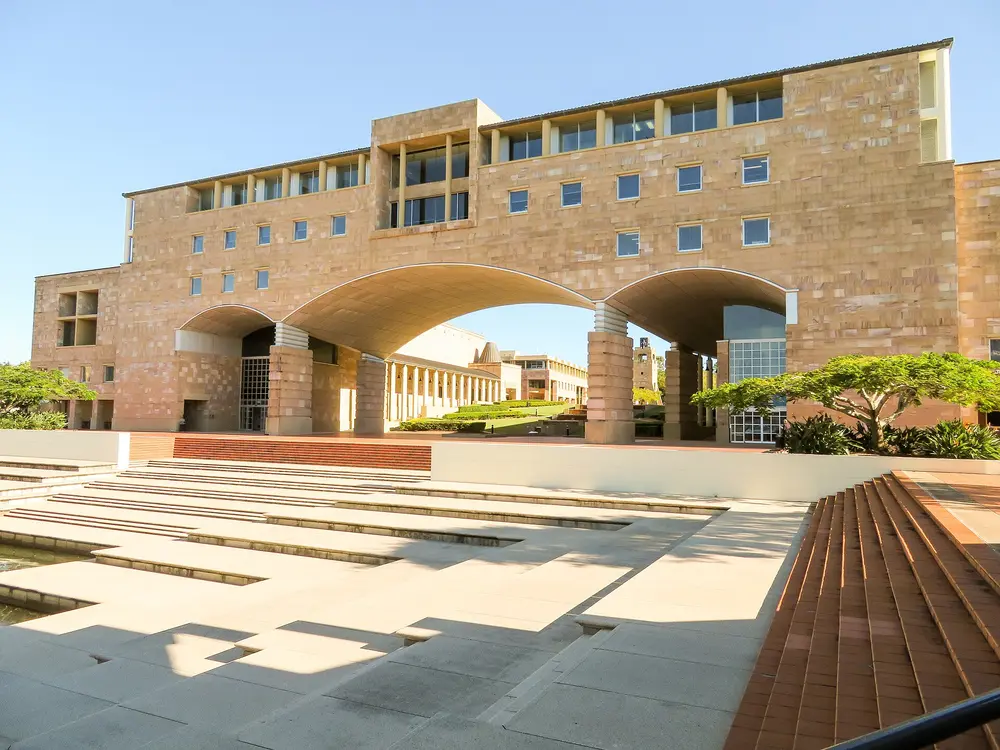
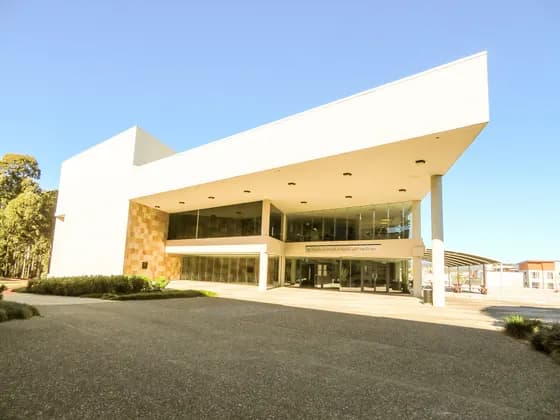


Photo: coastal.culture.vulture · CC BY-SA 3.0 · cropped
Photo: coastal.culture.vulture · CC BY-SA 3.0 · Photo: Kgbo · CC BY-SA 4.0 · Photo: Shane Smith · CC BY-SA 3.0
Still deciding where to apply? Hear it from a student who's there
Honest student guides to medicine universities
Current medical students at Australian universities are filming their guides right now: what the course and teaching are really like, the city they live in, the social side, and whether they'd pick it again.
Coming soonNot on sale yet — we'll open these up as soon as the first Australian videos land.
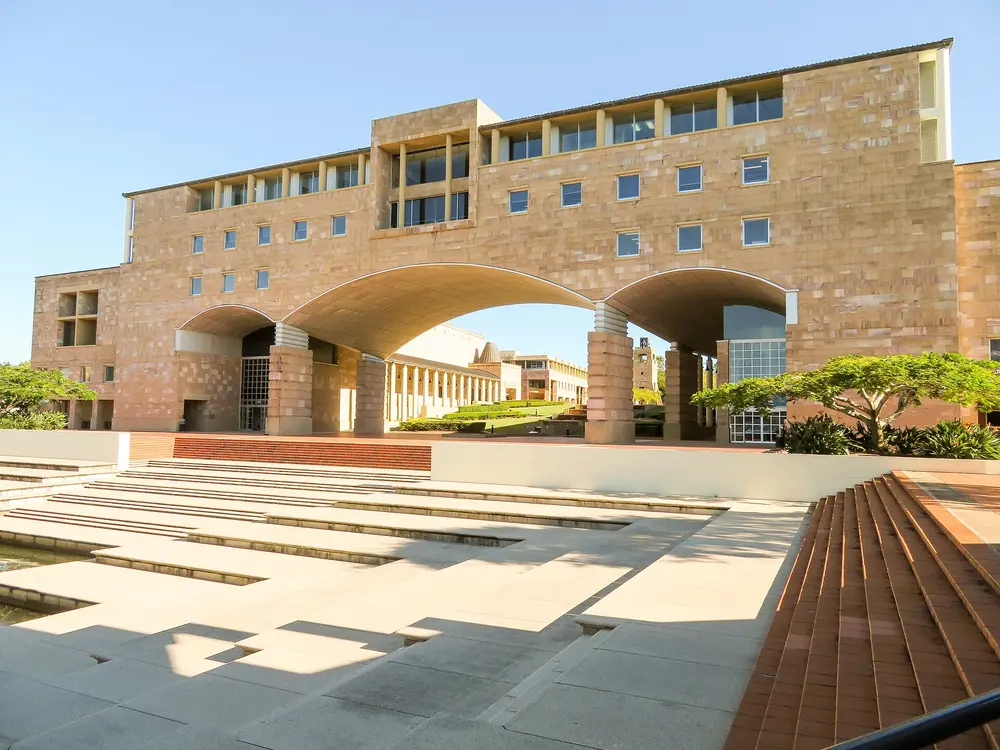
Filming now
Bond expects either Year 12 ATAR or a bachelor GPA — Undergraduate (Year 12) ATAR 96+ / IB 38+ / OP 1-3, OR Graduate cumulative GPA ≥ 6.0/7.0 from recognised tertiary program. English (Units 3/4, C) or equivalent prerequisite. Bond psychometric test (two assessments, ~90 min, online and webcam-proctored; $346.50 inc. GST in 2025) + an online selection interview.
Direct entry is open only to Australian citizens and permanent residents, Australian Humanitarian visa holders and New Zealand citizens (not NZ permanent residents).
Lateral entry into Year 2 BMedSt is available to graduates of Bond's BBiomedSci (Pre-Health Professional major), MOT, DPT or MNDP at GPA ≥ 3.00/4.00 (Bond scale) — and to Master of Healthcare Innovations graduates only if they completed a Bond BBiomedSci first, assessed case-by-case on transcripts.
Lateral entry is the only route open to international students. for Medicine (MBBS/MD) and uses Bond psychometric assessment + online selection interview (~90 min including registration and debriefing; Bond does not publish the interview structure) for interviews in the 2027 Entry cycle.
Entry is dual-pathway (undergraduate and graduate) and selection uses Bond-Test; applications close through GEMSAS or your state TAC (UAC, VTAC, QTAC, SATAC, TISC), and CSP, BMP and full-fee places are all capped, so treat the standard above as a threshold to clear rather than a target to aim at.
This guide is written for 2027 Entry applicants and updated annually before each GEMSAS / UAC cycle. Sources include Bond University Medical Program's official course page, GEMSAS, the UCAT-ANZ Consortium, ACER (GAMSAT), and direct conversations with current students. Read time: ~12 minutes.
Checked field-by-field against Bond University Medical Program's official course page on 11 September 2026.
Bond at a glance
| ATAR | Undergraduate (Year 12): minimum competitive academic rank OP 1-3 / ATAR 96+ / IB Dip 38+ |
|---|---|
| Interview format | Bond psychometric assessment + online selection interview (~90 min including registration and debriefing; Bond does not publish the interview structure) |
| Interviews (2027 entry) | 2027 entry: online interviews 9-12 March 2027 (technical checks 4, 5 and 8 March); psychometric testing online 12-17 Feb 2027; psychometric invitations 9 Feb 2027; interview invitations 26 Feb 2027 |
| Decisions (2027 entry) | 23 March 2027 (Round 1 / QTAC Round 650 offers, lapsing 30 March 2027; further direct offers from 5 April 2027); one annual selection round feeding two fixed intakes — classes commence 17 May or 13 September 2027 (no February intake) |
Bond entry requirements
| Pathway | Undergraduate and graduate entry |
|---|---|
| ATAR floor | Undergraduate (Year 12): minimum competitive academic rank OP 1-3 / ATAR 96+ / IB Dip 38+ — Bond frames this as the bar to be competitive for psychometric-test selection, not a guaranteed offer. Graduate: cumulative GPA greater than 6.0 on a 7-point scale, converted to an academic rank by QTAC. For the 2025 intake Bond published a cut-off academic rank of 96.75 (undergraduate) and 98.50 (graduate); Bond states the final cut-off depends on the strength of each applicant pool and does not say whether that rank is the threshold to progress or the final entry rank. |
| Contextual ATAR | None. Bond states "Adjustment factors cannot be used for the Bond Medical Program" — QTAC Educational Access Scheme points, elite-athlete adjustments and school bonus points do not lift your rank for medicine. |
| Prerequisites | Year 12 English, English as an Additional Language, Literature, or English & Literature Extension (QCAA General Subject, Units 3 and 4 at Grade C or equivalent). No Chemistry, Biology or Maths prerequisite. Applicants who do not meet the English prerequisite must complete an approved bridging course before their application can be considered. |
| Admission tests | Bond-Test |
| Interview | Bond psychometric assessment + online selection interview (~90 min including registration and debriefing; Bond does not publish the interview structure) |
| Place types | Bond quotes up to 180 domestic places a year across the May + September intakes on its entry-requirements page and up to 200 in its FAQ — treat 180-200 domestic places as the range. About 80% go to undergraduate applicants and 20% to graduate applicants. Full-fee only: as a private not-for-profit university Bond has no Commonwealth Supported Places and does not participate in the BMP; domestic students may use FEE-HELP, which Bond states does not cover the full tuition cost. |
| Indigenous pathway | Bond runs a First Nations Australian pathway into the Medical Program, initiated automatically when you identify as Aboriginal and/or Torres Strait Islander on the QTAC form. On top of academic rank, psychometric testing and the standard interview, it adds a First Nations Candidate Statement and a Community-Based Interview. Two Bond University First Nations Medical Partial Scholarships (including a $5,500 living allowance for the first semester if living away from home) are available in each of 2027, 2028 and 2029. Confirmation of Indigeneity is required. |
Undergraduate (Year 12) ATAR 96+ / IB 38+ / OP 1-3, OR Graduate cumulative GPA ≥ 6.0/7.0 from recognised tertiary program. English (Units 3/4, C) or equivalent prerequisite. Bond psychometric test (two assessments, ~90 min, online and webcam-proctored; $346.50 inc. GST in 2025) + an online selection interview.
Direct entry is open only to Australian citizens and permanent residents, Australian Humanitarian visa holders and New Zealand citizens (not NZ permanent residents).
Lateral entry into Year 2 BMedSt is available to graduates of Bond's BBiomedSci (Pre-Health Professional major), MOT, DPT or MNDP at GPA ≥ 3.00/4.00 (Bond scale) — and to Master of Healthcare Innovations graduates only if they completed a Bond BBiomedSci first, assessed case-by-case on transcripts. Lateral entry is the only route open to international students.
Year 12 ATAR (school leavers) or bachelor degree GPA (graduates) is the academic gateway, plus the admission test and interview.
Admission test
This school uses a course-specific admission test or a non-standard selection method. See the official course page and the admission profile above for the exact requirements.
Written submissions
Australia has no equivalent of the UK's single UCAS personal statement. GEMSAS graduate-entry applications use GAMSAT + GPA without a written component; most state-TAC undergraduate applications use ATAR + UCAT-ANZ without a written component. The schools that DO require written content (JCU portfolio, Notre Dame Sydney/Fremantle questionnaire, Wollongong short answers, Bond essays) each ask different, school-specific questions. Treat each school's prompt set as a discrete short-answer test - do not recycle a single document across multiple schools.
Limits are school-specific. JCU portfolio responses: typically 250-500 words per question. Notre Dame questionnaire: 250-400 words per response. Wollongong short answers: ~300 words each. Bond essays: 500 words. Read the current cycle's prompt brief for each school carefully - limits and prompts shift cycle-to-cycle.
Five things that win
Four things that lose
Worked-example opener (do not copy — for shape only)
"At 14, watching the geriatrician on my rural placement explain a Goals of Care decision to a frightened daughter, I realised that medicine is as much about clarity in language as it is about clinical knowledge. The conversation lasted nine minutes; the silence afterwards lasted longer. Since then I have spent…"
Notice: a specific scene rather than a cliché, a precise detail (the nine-minute conversation), and a closing sentence that bridges to the next paragraph. We have a step-by-step written-submissions service if you want a tutor to help shape yours.
The Assessment interview at Bond
Bond uses Bond psychometric assessment + online selection interview (~90 min including registration and debriefing; Bond does not publish the interview structure). For 2027 entry, interviews typically take place in 2027 entry: online interviews 9-12 March 2027 (technical checks 4, 5 and 8 March); psychometric testing online 12-17 Feb 2027; psychometric invitations 9 Feb 2027; interview invitations 26 Feb 2027. Final decisions are released 23 March 2027 (Round 1 / QTAC Round 650 offers, lapsing 30 March 2027; further direct offers from 5 April 2027); one annual selection round feeding two fixed intakes — classes commence 17 May or 13 September 2027 (no February intake).
At Bond, expect the following from the selection process. Assessment / recorded-interview format - some Australian schools (JCU's Kira Talent recording, Notre Dame Modern Hire) ask one-way recorded responses; others combine panel interviews with practical tasks (group work, written exercises, presentations). Allow 60-90 minutes for a recorded interview or 4-6 hours for a full in-person assessment day.
How the Bond interview actually runs
Bond's 3-stage selection: (1) academic screen via QTAC reviewing ATAR/GPA, (2) Bond psychometric test — Bond says "approximately 50% of applicants will be offered the opportunity to complete an online psychometric test based on their academic achievement", which its 2026 guide puts at about 900 applicants — two assessments in one sitting — an emotional intelligence test and a personality test — around 90 minutes of testing within a 2-hour cap, fully online and webcam-proctored by a live proctor; Bond warns to allow over 2 hours for the whole session because equipment, connection and identity checks come first.
Fee paid direct to the test provider ($346.50 inc. GST in 2025, the most recent figure Bond publishes), results valid 24 months.
Bond changed the test in October 2025 and voided every result obtained before then; it does not name the instruments, publish item counts, or release individual reports, (3) an online selection interview — Bond states "Interviews are conducted online only" and does not publish the station structure; approximately 90 minutes including registration and debriefing (the 2027 dates page allows up to ~2 hours), with compulsory technical checks in the days beforehand.
Interviewers do not see your ATAR/GPA or psychometric results. Stage (4) is the offer round. From 2025 Bond aims to allocate 40% of interview invitations to applicants from the Queensland and Richmond-Tweed community (an aim, not a reserved quota).
What they assess
What Bond assessors are scoring: Multi-station assessment lets the school triangulate - assessors compare notes from each station to spot consistent strengths (and red flags).
Common station / question themes
- Group task observation (how you contribute, listen, lead)
- Written ethics scenario
- Panel interview or recorded one-way response
- Portfolio / personal-statement deep dive
- Hot topics in Australian healthcare (Medicare, rural workforce, Indigenous health)
- Academic curiosity questions
Sample questions you might face at Bond
Why medicine?
Tell us about your work experience.
In a group task, what role did you take and why?
How would you handle disagreement with a senior colleague?
Describe a recent biomedical news story and your view on it.
Model-answer guidance: “Why medicine?”
Our panel-interview prep covers ethics frameworks (SPIES, the four pillars), structured behavioural answers (STAR), and live mock interviews with admissions specialists.
Practise the Bond interview
Rehearse the real format before the day — on demand with our AI interviewers, or live with a tutor.
Sit a mock with photoreal AI interviewers — any time
A timed MMI or panel interview on video — Australian & international voices — with interviewers who listen, react and press with follow-ups. Rubric-scored feedback and a replay the moment you finish.






Live mocks with a tutor who’s been in the room
A full Bond-style mock with a medic or dentist tutor — honest scoring against real marking criteria, a station-by-station debrief and a written action plan.
Book a mock interviewMonth-by-month timeline for 2027 Entry
The cycle runs roughly January 2025 (start of prep) through GEMSAS preference lock and state-TAC deadlines in September 2026, MMIs in October-December 2026, to first-round offers in December 2026 and course start in late January / early February 2027. Here are the milestones you cannot miss.
Decide and start work / clinical experience
Confirm medicine or dentistry as your career direction. Start banking clinical exposure (hospital volunteering, GP shadowing, aged-care or disability-support roles) and non-clinical experience (research assistant, peer tutoring, leadership). Australian schools weight reflection over hours - track what each placement taught you.
Begin UCAT-ANZ / GAMSAT prep
Open your prep window 6-9 months before the test sitting. UCAT-ANZ candidates focus on the 4 sub-tests (Verbal Reasoning, Decision Making, Quantitative Reasoning, Situational Judgement). GAMSAT candidates focus on Section I (Humanities), Section II (Written Communication) and Section III (Sciences) - the Section III sciences gap is the most common reason graduates under-perform.
GAMSAT March sitting
ACER GAMSAT March test date. Scores released early May. Most graduate-entry applicants sit GAMSAT in March of their apply year so results are available before GEMSAS preferences open.
UCAT-ANZ registration + GEMSAS portal info
UCAT-ANZ registration opens (test sat in July). GEMSAS portal information released for graduate-entry medicine. ATAR-tracking begins for current Year 12 applicants.
GEMSAS portal opens + UCAT-ANZ booking
GAMSAT March results released (late May). GEMSAS applications open 1 May and close 29 May across the ten consortium schools (ANU, Deakin, Griffith, Macquarie, Melbourne, Notre Dame Fremantle, Notre Dame Sydney, UQ, UWA, Wollongong). Sydney, Flinders and Monash are NOT in GEMSAS and need separate direct applications. UCAT-ANZ booking deadline is 15 May.
GEMSAS preference entry opens
Rank up to 6 preferences across the 8 GEMSAS schools. ACER GAMSAT September registration window opens (a second sitting option for applicants who under-performed in March).
UCAT-ANZ test window
Take UCAT-ANZ between early July and early August. There is one sitting per cycle - no retake until the following year. Results are released to state TACs (UAC, VTAC, QTAC, SATAC, TISC) in October. State TACs (UAC, VTAC, QTAC, SATAC, TISC) accept undergraduate medicine preferences from July onwards.
GEMSAS preferences lock + direct apps close
GEMSAS interview offers issued in early September; consortium interviews run September-October. ACER GAMSAT September sitting - too late for this cycle, results land mid-November. JCU QTAC + JCU-portal applications close 30 September. State-TAC medicine preferences close 25-30 September. (Bond's QTAC round does not open until January.)
MMI invitations issued
Most graduate-entry consortium schools issue MMI invitations through October. Bond runs its structured interview cycle. UCAT-ANZ results released to state TACs for undergraduate ranking. State TAC preference changes typically close late October.
MMIs run + ATAR results
MMIs run across consortium schools, Bond, JCU and Macquarie through October-December. ATAR results released to state TACs for school-leaver undergraduate applicants. GAMSAT September results released for applicants who sat the second window.
First-round offers
First-round offers released by GEMSAS, state TACs and direct-application schools. Acceptance deadlines are typically within 10 days of offer - reply on time or forfeit the place. Some schools release a second offer round in early January.
Late offers + course start
Late-round offers released through January. Deferral requests due. Orientation week is scheduled by most schools for late January or early February, with first-year teaching commencing late January / early February.
What makes Bond different
Bond is a private, not-for-profit university and its medical program is entirely full-fee — no Commonwealth Supported Places and no Bonded Medical Program participation (Macquarie's MD is the other Australian medicine program with no CSPs). It is unusual in running two intakes a year (May, September — NO February intake) on an accelerated calendar: 3 semesters per year, 14 semesters over 4 years 8 months. No UCAT-ANZ, GAMSAT or UMAT — Bond runs its own online psychometric sitting (a personality test and an emotional intelligence test; the instruments were changed in October 2025 and Bond does not name them). All places are full-fee (no CSP, FEE-HELP eligible for domestic students but capped well below the total cost; no BMP). At 2026 rates that is $33,610/semester × 14 ≈ $470,540 — Bond has not published 2027 rates and warns fees "are subject to change on an annual basis", so a 2027 starter should expect to pay more than that.
Notable research areas
Curriculum (PBL)
4-year-8-month accelerated Bachelor of Medical Studies (BMedSt, 8 semesters) + Doctor of Medicine (MD, 6 semesters, AQF extended Level 9) on a three-semester (Jan/May/Sep teaching) calendar — though direct-entry intake is only May and September. 14 semesters total, and students must complete both degrees to be eligible for medical registration in Australia or New Zealand. Pre-clinical years at the Robina campus, with Year 3 based at the Bond University Clinical Education and Research Centre inside Robina Hospital. The MD is 12 clinical placements of seven weeks each, typically across Brisbane, South-East Queensland and Northern New South Wales with some rural and overseas possibilities; Bond names Gold Coast Hospital & Health Service, Tweed Valley Hospital, The Wesley, John Flynn and Pindara private hospitals among its Phase 2 placement sites. At 2026 rates $33,610/semester × 14 ≈ $470,540; 2027 rates are not yet published.
Location: Gold Coast, Australia
Founded in 2005. Whether the city suits you matters - five or six years is a long commitment. Visit on an open day if you can; current students will be the most honest assessors of culture and clinical placement quality.
Read the full Bond course guide — problem-based learning + case-based learning, 4 years 8 months, with placements in Brisbane, South-East Queensland and Northern New South Wales.
Application statistics for Bond
Bond intake
Up to 180-200 domestic places a year across two intakes (May + September) — Bond's entry-requirements page says "up to 180 domestic places" while its FAQ says "up to 200". About 80% undergraduate / 20% graduate. Full-fee only, no CSP, does NOT participate in BMP. Bond's 2026 programme guide sets out the funnel: approximately 900 applicants invited to psychometric testing, of whom approximately 400 are shortlisted for interview.
How Bond selects, at a glance
Source: Bond University Medical Program admissions data; GEMSAS / state-TAC published statistics; ACER (GAMSAT) and UCAT-ANZ Consortium decile data; recent FOI responses.
Six mistakes that derail medicine applications
Bond — frequently asked questions
Sources for this Bond guide
Apply to Bond with confidence
We have helped hundreds of applicants turn their GAMSAT / UCAT-ANZ, portfolio and MMI prep into offers from Bond and other Australian medicine schools.