
The Curtin Medicine course
What you actually study, and where you will be
Curtin's MBBS is a 5-year (direct entry) course taught through problem-based learning in an integrated curriculum, with patient contact from Year 1 and placements in Perth, outer-metropolitan Perth and Mandurah, and rural Western Australia (2027 entry). A five-year course you can start straight from Year 12, with Years 1 to 3 taught at Curtin Perth in Bentley using a problem-based learning approach, alongside clinical skills classes and community fieldwork. Year 4 is a year of hospital and general practice placements across Perth and its outer-metropolitan areas, with some rural and regional placements. A quarter of the class instead spends the whole year in a country town with the Rural Clinical School of WA.
- Degree
- MBBS
- Length
- 5 years (direct entry)
- Teaching
- Problem-based learning + Integrated
- Clinical contact
- Year 1
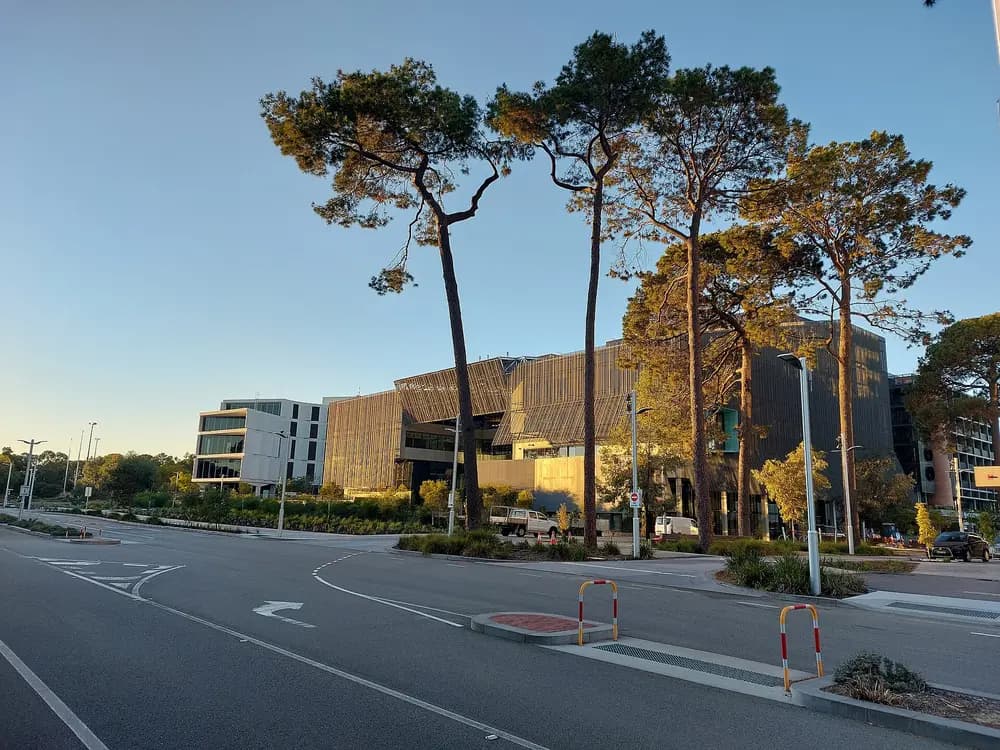
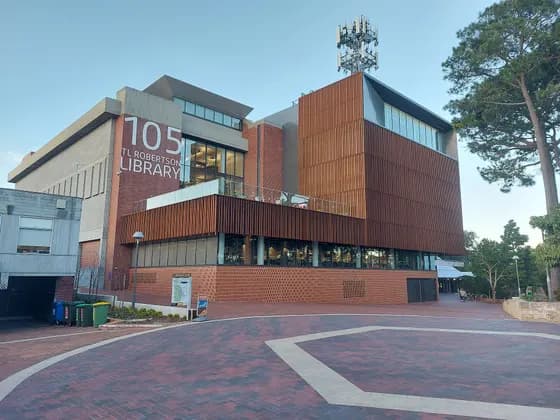
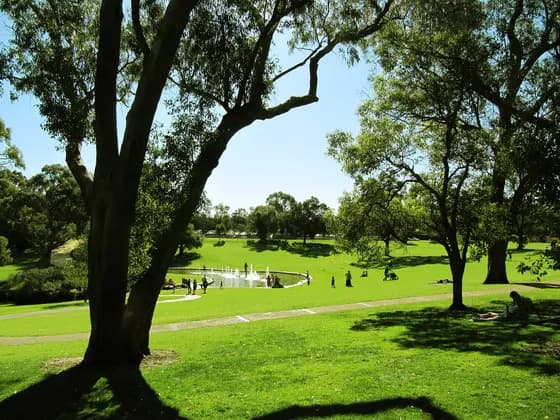
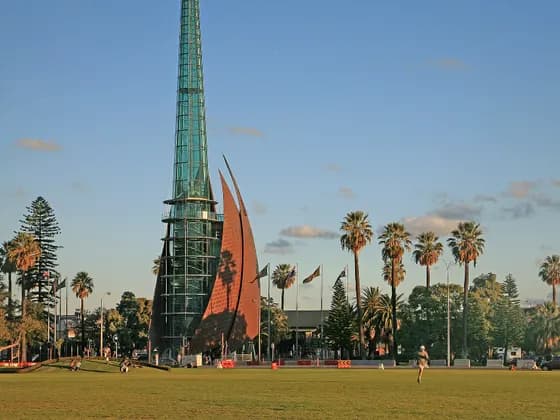
Photo: Orderinchaos · CC BY-SA 4.0 · cropped
Photo: Orderinchaos · CC BY 4.0 · Photo: Dinkum · CC0 · Photo: W. Bulach · CC BY-SA 4.0
The Curtin medicine course at a glance (2027 entry)
Curtin's Bachelor of Medicine, Bachelor of Surgery (MBBS) is a five-year, full-time course run by Curtin Medical School at Curtin Perth, the university's campus in Bentley, about 20 minutes' drive from the Perth CBD. It is a direct-entry course aimed mainly at Western Australian school leavers, with one intake a year, in February. For 2027 there are about 110 domestic and 10 to 15 international places.
Curtin says this is the only direct-entry medical degree in Western Australia. A 2022 WA Department of Health paper lists the state's other two medical courses, at the University of Western Australia (UWA) and the University of Notre Dame Australia, as four-year postgraduate degrees. The MBBS is a bachelor-level degree; some Australian medical schools award a Doctor of Medicine (MD) instead, an extended master's-level degree. Both are accredited by the Australian Medical Council (AMC), which checks that graduates are ready to work as supervised interns.
Curtin's accreditation runs to 31 March 2027, with reaccreditation due in 2026. After graduating you apply for provisional registration with the Medical Board of Australia through the Australian Health Practitioner Regulation Agency (Ahpra). You then complete a 12-month internship, your first supervised year as a doctor, also called postgraduate year 1 (PGY1), to gain general registration.
From 2026, Year 1 became a single 200-credit unit, Medicine 1, so every year is now one unit, Medicine 1 to Medicine 5. Each runs over 30 to 44 weeks of study plus breaks and exams. Until 2025, first-year medical students took eight smaller units, several shared with students from other Curtin health courses. Years 1 to 3 are taught on campus using a problem-based learning (PBL) approach, in which small groups work through patient cases, alongside lectures, workshops, laboratory and clinical skills classes, and community fieldwork.
Year 4 moves you into hospitals and general practice under supervision, covering medicine, surgery, paediatrics, obstetrics and gynaecology, general practice and psychiatry. A quarter of the class spends it in a country town with the Rural Clinical School of Western Australia (RCSWA), a network of rural teaching sites shared by three WA universities. In Year 5 you work in healthcare teams to prepare for internship. Curtin wants its graduates to be generalists in outlook, with a grounding in primary care (general practice and community health), and ready for rural and remote WA, where doctors are short.
| Degree | MBBS (Bachelor of Medicine, Bachelor of Surgery), a bachelor-level degree |
|---|---|
| Course length | 5 years full time; one intake a year, in February |
| Places (2027) | About 110 domestic and 10 to 15 international places |
| Campus | Curtin Perth, Bentley, for Years 1 to 3 |
| Teaching style | Problem-based learning in small groups through Years 1 to 3 |
| First patient contact | Year 1: compulsory fieldwork and structured community activities |
| Clinical years | Year 4 placements in six disciplines; Year 5 pre-intern placements |
| Rural year | Year 4 with the Rural Clinical School of WA for 25% of students |
| Honours | Optional one-year research Honours degree between Years 3 and 4 |
| Accreditation | AMC-accredited to 31 March 2027; reaccreditation due in 2026 |
What makes Curtin medicine different
A medicine-only first year, new from 2026
Year 1 is now one unit, Medicine 1, open only to MBBS students and framed by patient cases from the start. Until 2025, first-year medical students spent much of the year in units shared with other health courses.
Three years of small-group problem-based learning
PBL runs through Years 1 to 3, with more tutorial time each year. In 2018 the AMC reported that Curtin's PBL tutors were medically trained, that cases built in clinical reasoning, Indigenous health and professionalism, and that students moved on to chairing cases and running seminars themselves.
Rural training, from Wheatbelt stays to a country-town year
Rural experience starts early, with a short Wheatbelt stay with a host family: Curtin described it as a second-year experience in 2021, and the program still ran in 2025. In Year 4 a quarter of the class can spend the whole year with the Rural Clinical School of WA. You are attached to rural doctors in one of 15 towns, such as Broome, Geraldton, Kalgoorlie and Albany.
Clinical bases in Midland and Kalgoorlie
Curtin has two health teaching bases beyond Bentley. Curtin Midland, with simulation suites, stands beside St John of God Midland Public Hospital in Perth's east, an area the AMC noted in 2022 has a high Indigenous population. The Kalgoorlie Rural Health Campus, about 600 km east of Perth, has a simulated hospital ward and rooms for clinical exams.
How Curtin teaches medicine
Curtin calls the curriculum integrated: science and clinical skills are taught together. In Year 1, patient cases set the scene for learning how each body system works, while the same unit teaches you to take a history and examine a healthy person. Four curriculum domains run through all five years. Clinical Practitioner covers clinical, procedural and communication skills, and Professional and Leader covers ethics, law, teamwork and your own wellbeing. Health Advocate covers health systems and the social and environmental causes of illness, and Scientist and Scholar the sciences behind medicine and evidence-based practice.
Years 1 to 3 use a problem-based learning (PBL) approach. Your group meets a patient case, works out what it needs to learn, and members research the topics before meeting again to pull them together. In 2018 the AMC reported practice questions, tutor and peer feedback and wrap-up sessions supporting the cases, and an emphasis on becoming more independent and self-directed each year.
PBL tutorials fill about a fifth of the timetabled hours in each of Years 1 to 3, and the rest of the mix changes. Year 1 has 150 hours of clinical lectures; the Year 2 and 3 timetables list none, and their largest block is clinical intensive workshops, 377 and 322 hours. The second half of Year 3 is set aside for extension work and spaced revision, returning to earlier topics at intervals so they stick, before placements begin.
From Year 4 you learn mainly on placement. In Medicine 4 and Medicine 5 you return to campus for set teaching, which the handbook calls Back to campus (160 and 228 hours a year). Medicine 4 Rural instead lists 160 hours of learning sessions, seminars, workshops and tutorials during the rural year. In 2018 the AMC described back-to-campus weeks as a way to cover topics that not every placement site teaches, with sessions on spotting the gaps in your own knowledge.
The ways you will learn
| Problem-based learning tutorials | Small-group sessions built around a patient case, in each of Years 1 to 3, with more tutorial time each year. In Year 2 the cases teach the disease mechanisms behind clinical conditions. |
|---|---|
| Clinical skills classes | Practical classes in communication, history taking, examination and procedures. You practise on each other, which the handbook calls Peer Physical Examination, then on simulated and real patients. |
| Lectures, tutorials and seminars | Clinical lectures and tutorials are part of Year 1. In Year 3, interactive seminars support the cases, and experts guide self-directed and peer-led learning. |
| Research workshops | Workshops in Years 1 and 2. In Year 2 you use academic literacy and basic research skills to analyse and evaluate data, the groundwork for evidence-based practice. |
| Fieldwork | Compulsory time in community and health settings in Years 1 to 3, growing each year. In Year 3 it includes observational placements, where you watch and learn rather than give care, in allied health and clinical settings. |
| Clinical placements | Years 4 and 5 are mostly supervised placements on hospital wards and in outpatient clinics, community settings and general practices, where you take an increasing part in patient care. |
How anatomy is taught at Curtin
Anatomy is taught within each year's single unit rather than as a separate subject. Year 1 covers how the body's structure relates to its function in health, and Year 3 studies normal anatomy and physiology alongside disease. Laboratory classes run in each of Years 1 to 3, and Year 2's timetable lists time in the anatomy laboratory.
The Faculty of Health Sciences, which includes the Medical School, gives its students access to an anatomy suite. It has preserved human and bone specimens, anatomical models and six teaching laboratories holding more than 200 students at a time, plus a museum of preserved human dissections and diseased tissue. In 2018 the AMC also listed a Sectra table, an interactive screen for exploring anatomy images, among the course's learning resources.
When you first meet patients at Curtin
Curtin's 2027 admissions guide says every Medical School unit includes compulsory fieldwork and clinical placements, and that Year 1 takes you into the community through structured activities. The course page lists hospitals, primary care and aged care among the settings you study, and the first three years include occasional visits to clinical sites. Fieldwork time grows each year.
First you must meet the mandatory requirements. These include a National Police Certificate, a first aid certificate, Mental Health First Aid training (organised by the school in Semester 1), online hand hygiene training, health screening, immunisations and signed declarations. Some are due by the third week of Semester 1, and a Working with Children Check is needed from Year 2.
You pay the costs of these, including vaccinations and screening. WA Health also requires a national criminal history check before you work at its sites. The Faculty of Health Sciences registers you with Ahpra as a medical student for the whole course, at no cost.
Clinical skills start in a safe setting. In Year 1 you learn about the doctor–patient relationship, communication and history taking, and practise basic examination and procedures within a consultation with a healthy person, including your classmates. Year 2 moves to simulated patient encounters, practice consultations set up to mimic real ones.
Rural contact starts early too. Curtin said in 2021 that all second-years spend a week in the Wheatbelt, living with a local family. In March 2025 the Wheatbelt Rural Immersion Program took more than 200 Curtin and Notre Dame students to 14 towns for three days. They visited general practice clinics, aged care centres, hospitals and emergency services and stayed with host families. Rural Health West, which promotes rural health careers in WA, coordinates it with the universities and Wheatbelt local governments.
In 2022 Curtin also told the AMC that early-year students could join immersion programs in Kalgoorlie and the Goldfields. Then, in Year 4, you take part in patient care under supervision for the whole year.
Year by year at Curtin
- Year 1
Medicine 1: foundations through patient cases
Medicine 1 (GMED1002) is a single 200-credit unit, new from 2026. Patient cases and scenarios set the context as you learn how the body's systems work in health, begin consultation and history-taking skills, and study what shapes health in communities. It also helps you settle into university and start building your identity as a future doctor. Graduates and students switching from another Curtin course start here too, with no credit for earlier study.
- Body systems in health: how structure relates to function and how the body adapts to change, with sustainability and global health in view.
- Consultation skills: the doctor–patient relationship, communication and history taking, plus basic examination and procedures practised on healthy people.
- Health in society: advocacy, health behaviours and promotion, and the social determinants of health (the living conditions that shape health), equity and inclusion.
- Aboriginal culture and the continuing impact of colonisation on Aboriginal health, as a base for culturally safe practice.
- Handbook timetable: 150 hours of clinical lectures, 104 of PBL, 62 of tutorials, 50 of laboratory classes and demonstrations and 45 of clinical skills. It adds 30 hours of clinical intensive workshops, 26 of research workshops and 34 of fieldwork.
- A compulsory welcome program in orientation week, where the professional behaviour standards are explained and you sign a Code of Professional Conduct Agreement.
- Year 2
Medicine 2: body systems and clinical reasoning
Medicine 2 (GMED2008) uses problem-based learning to link the body systems and biomedical science to the mechanisms behind clinical conditions, building your clinical reasoning. Alongside this you develop clinical and research skills and study Aboriginal and Torres Strait Islander health and public health.
- Disease mechanisms through PBL, with planetary health, the links between environmental change and human health, built in.
- Structured history taking, systematic examination and basic procedures in simulated encounters, working towards a differential diagnosis (a list of possible causes).
- Research skills: academic literacy, and analysing and evaluating data to support evidence-based care.
- Aboriginal and Torres Strait Islander health in rural, remote and urban settings, and strengths-based, culturally safe care.
- Public health, sustainable healthcare and advocacy, plus ethics, law, professionalism and your own wellbeing.
- Handbook timetable: 124 hours of PBL, 377 of clinical intensive workshops, 45 of clinical skills, 30 of research workshops, 15 in the anatomy laboratory and 50 of fieldwork. A Working with Children Check is required from this year.
- Year 3
Medicine 3: systems in depth, then the bridge to clinical work
Medicine 3 (GMED3012) studies disease at the level of the individual, society and the world, through clinical cases and interactive seminars. The first half covers the gastrointestinal, musculoskeletal and neurological systems, including psychiatry, in detail. The second half is for integrated extension and spaced revision of everything so far, preparing you for the move to clinical practice.
- Normal anatomy and physiology, disease processes, psychosocial factors, public health, evidence-based practice, ethics and law, and rural Indigenous health, studied together through cases.
- Communication, examination and procedural skills taught alongside the science.
- Observational placements in allied health and clinical settings, and strategies for your own wellbeing as a future doctor.
- Handbook timetable: 164 hours of PBL, 322 of clinical intensive workshops, 93 of clinical skills, 34 of science laboratory work and 128 of fieldwork.
- Applying, around mid-year, for a Rural Clinical School place in Year 4; in 2026 applications closed on 3 July.
- Deciding whether to apply for the optional Honours research year, which sits between Years 3 and 4.
- Year 4
Medicine 4 or Medicine 4 Rural: into the clinical setting
Year 4 moves you from campus into hospital and community settings, working with patients of all ages under supervision. Most students take Medicine 4 (GMED4002), with placements from Perth hospitals to outer-metropolitan, rural and regional settings; a quarter take Medicine 4 Rural (GMED4004) with the Rural Clinical School of WA. Either way you learn to diagnose and manage common problems, examine patients and do procedures.
- Medicine 4: supervised placements in medicine, surgery, paediatrics, obstetrics and gynaecology, general practice and psychiatry, through ward attachments, outpatient clinics, community settings and general practices.
- Medicine 4 timetable: 1,440 hours of placements, 160 hours back on campus, 68 hours of embedded modules, a 7.5-hour Advanced Life Support (resuscitation) course and 6 hours labelled Integrated Doctor.
- Medicine 4 Rural: attachments to rural doctors across surgery, psychiatry, internal medicine, general practice, ophthalmology, paediatrics and child health, and women's and infants' health.
- Rural students join ward rounds, operating theatre, outpatient clinics, emergency department attachments and community practices, with 160 hours of small-group sessions, seminars, workshops and tutorials.
- The rural unit is organised around six themes: professional, leader, advocate, clinician, educator and scholar.
- Year 5
Medicine 5: the pre-intern year
Medicine 5 (GMED4003) is a series of work-based clinical placements focused on pre-intern training, so that you are ready for work when you graduate. You can enter it from either version of Year 4. Placements combine managing illness and injury with health promotion, disease prevention, patient safety and quality of care.
- Handbook timetable: 1,093 hours of clinical placement, 228 hours back on campus and 50 hours of collaboration sessions.
- Rural options: metropolitan students are offered a rural general practice placement, and students who spent Year 4 with the Rural Clinical School can apply to stay rural.
- Applying for internship, which is separate from the degree, through the Postgraduate Medical Council of Western Australia (PMCWA).
How you are assessed at Curtin
Each year is one 200-credit unit, and you must pass it before starting the next. If you fail and are allowed to repeat, you repeat the whole year, with no credit for tasks you passed the first time.
Moving up a year depends on your professional behaviour as well as your results. Poor behaviour can hold you back even with good marks, and enrolment can be ended if it is unsatisfactory. Curtin expects you to meet the standards of a medical student at first, rising towards those of a doctor as you go.
In its 2018 report the AMC described written exams using single best answer (SBA) questions, where you pick the one best option from a list. It also listed assessment of your work in PBL, an ePortfolio of reflective assignments and Objective Structured Clinical Examinations (OSCEs). An OSCE is a practical exam in which you rotate through timed stations, each testing a skill such as examining a patient.
For the clinical years the same report noted planned workplace-based assessments, where a supervisor watches and rates you with real patients. They included directly observed procedural skills (DOPS), mini clinical evaluation exercises (mini-CEX) and professionalism mini-evaluations (P-MEX). When Year 2 first ran in 2018, the AMC recorded monthly practice quizzes, a mid-year practice test, and an end-of-year written exam and OSCE.
The AMC's 2022 report adds that a Board of Examiners makes final progression decisions. Year 5 has written exams and OSCEs, which the school asked three outside experts to review. In a 2021 pilot, Years 4 and 5 sat the Prescribing Skills Assessment, a test of safe prescribing, for practice. The school also takes part in the Australasian Collaboration for Clinical Assessment in Medicine (ACCLAiM), through which medical schools in Australia and New Zealand compare OSCE results.
Rural Clinical School students are taught and assessed to the same standards as city-based students, RCSWA says. Those who stay rural for final year complete their university's curriculum and assessment requirements at their site, apart from the end-of-year exams.
- Leave during Semester 2 of Year 2 or Year 3, after satisfactory progress in that year's Semester 1 formative (practice) assessments, and you are credited with 100 credit points.
- Leave at any point in Year 4 or Year 5 and you are eligible for a Bachelor of Science (Health Studies), an exit-only award that cannot be used to return to the MBBS.
Where you will actually be at Curtin
For Years 1 to 3 you are based at Curtin Perth in Bentley. Year 4 is the move into clinical settings, and Curtin says it offers a variety of placements in outer-metropolitan, rural and regional locations, in both community and hospital settings. In Year 5 you train in a range of environments as part of the healthcare team. The course also uses general practices across the state.
Curtin's 2027 domestic admissions guide names 12 placement sites across Perth and Mandurah, listed below. Curtin Midland opened beside St John of God Midland Public Hospital in November 2019, and in 2021 Curtin said some medical students are based there for Years 4 and 5. Year 4 can also take you further: Curtin described a 2021 graduate whose Year 4 at Royal Perth Hospital included a week in Broome and five weeks each in Margaret River and Laverton.
A quarter of each Year 4 class can spend the year with RCSWA, a partnership of UWA, Notre Dame and Curtin that Curtin students joined in 2019. You apply in Year 3: after an information session you submit your details and preferred towns, then have an interview with a staff panel and hear the outcome within four weeks.
You can say which matters more to you, your first-choice town or being placed with one or two classmates. Offers name the other students at your site, and sites cannot be negotiated. Single students live free in furnished RCSWA houses with internet. Students bringing a partner or family find their own housing and can claim a bursary: $6,000 plus $1,000 from Geraldton south, or $7,000 plus $1,000 from Karratha north. RCSWA pays your trip out at the start of the year and home at the end.
You live in your town for the 12 months, and its medical coordinators, experienced local doctors, work with you on your learning goals. You may work in the local hospital, general practices, Aboriginal Community Controlled Health Organisations (health services run by local Aboriginal communities), the Royal Flying Doctor Service and population health units. In 2026, RCSWA had 117 penultimate-year and 21 final-year students across WA.
After a Rural Clinical School Year 4 you can apply to stay for Year 5 in Broome, Geraldton, Bunbury or Albany. RCSWA's own page says Curtin students are eligible, though a WA Health page last updated in July 2024 names only UWA and Notre Dame. The program is competitive and self-funded: RCSWA covers travel and relocation, but you pay living costs and rent. Metropolitan final-year students are offered a rural general practice placement organised by RCSWA.
WA Health listed these hospitals under this health service in 2022.
- St John of God Midland Public Hospital
- Royal Perth Hospital
- Armadale Hospital
The AMC's 2022 report records that Curtin had recently started placing students at Sir Charles Gairdner and had appointed a Clinical Dean there.
- Sir Charles Gairdner Hospital
- Joondalup Health Campus
Peel Health Campus is in Mandurah, about an hour south of Perth. A planned year-long placement there, combining hospital and general practice work, proved hard to run once COVID-19 arrived and was changed, the AMC reported in 2022.
- Fiona Stanley Hospital
- Rockingham General Hospital
- Peel Health Campus, Mandurah
Curtin had recently begun placements at King Edward Memorial and Perth Children's when the AMC reported in 2022. The domestic guide's list also includes Mount Lawley.
- King Edward Memorial Hospital
- Perth Children's Hospital
- Hollywood Private Hospital
RCSWA says it works in 15 towns; its site list names 16, but its Carnarvon page says that site is currently closed. The Warren Blackwood site was renamed Manjimup in 2026.
- Albany
- Broome
- Bunbury
- Busselton
- Collie
- Derby
- Esperance
- Geraldton
- Kalgoorlie
- Karratha
- Kununurra
- Manjimup
- Narrogin
- Northam
- Port Hedland
Curtin's rural teaching base, about 600 km east of Perth, used for short and longer rural training programs. RCSWA's headquarters is also in Kalgoorlie, at Kalgoorlie Regional Hospital.
- Curtin Kalgoorlie Rural Health Campus
Intercalation and research degrees at Curtin
Intercalating means pausing your medical degree for a year to complete a separate degree, usually in research, before returning. At Curtin it is optional: the Bachelor of Medical Sciences (Honours), BMedSc(Hons), is a one-year, full-time research degree that its course page and handbook place between Years 3 and 4. The MBBS course page also mentions applying after Year 4.
To be eligible you must have passed Years 1 to 3, with a course weighted average (your credit-weighted mean mark) of at least 65 in Years 2 and 3. You also need an academic who has agreed in principle to supervise you, and approval from the Head of School and the MBBS course coordinator for leave from the MBBS. Entry depends on a suitable supervisor and project, chosen from an advertised list.
The year is one 200-credit unit, Advanced Biomedical Science Honours (MEDI4011). You carry out original biomedical or clinical research with your supervisor, about 36.5 hours a week plus a weekly one-hour journal club, and are assessed on oral and written presentations. The handbook stresses research skills such as epidemiology, population studies and clinical data analysis, which also apply in general practice and rural settings.
Honours is an Australian Qualifications Framework level 8 award that makes you eligible to go on to a PhD, and Curtin presents it as a step towards a clinician-scientist career after internship. When Curtin described the plan to the AMC in 2022, it expected to open Honours to up to 10% of students at the end of Year 3.
Facilities and support at Curtin
Where you will learn
The Medical School has its own purpose-built building on the Bentley campus, close to the Faculty of Health Sciences' other schools. When the AMC assessed the course in 2016, the nearly finished building had five storeys, 6,250 square metres of floor space, open learning areas on every floor and 24 clinic rooms suitable for OSCEs. In 2018 the AMC commended its facilities and the video equipment used to give students feedback.
Curtin Midland is a three-storey building on Centennial Place in Midland, part of the state government's plan to turn Midland's historic Workshops Precinct into a medical and education hub. It has contemporary teaching spaces and simulation rooms, where you practise clinical scenarios in a realistic setting, and is used mainly by medicine and allied health students on placement at nearby health services.
The Kalgoorlie Rural Health Campus was built between December 2020 and mid-2021 with $1.3 million from the Commonwealth's Rural Health Multidisciplinary Training program, and opened in August 2021. It has a simulation lab, four OSCE rooms, two classrooms shared with School of Mines and other health students, and audio-visual links for remote teaching. Curtin's campus page adds a simulated hospital ward and clinical training rooms.
Support while you study
The Medicine leadership team includes a Director of Student Experience and Admissions and a Director of Aboriginal Health, and the MBBS has its own course coordinator. Curtin's inherent requirements set out abilities every student must show, such as hearing well enough to use a stethoscope and the stamina for long clinical tasks, with reasonable adjustments where possible. If you have a disability, Curtin invites you to ask the course coordinator for a confidential talk early.
The AMC's 2022 report records a medically trained Wellbeing Mentor, a part-time role filled in December 2021, who sees students struggling to meet course requirements and recommends support or referrals. It also describes StudyWell, a pilot offering triage and support pathways, used in Year 2 and planned for Year 1, and a planned MBBS wellbeing framework. Students sit on the school's governance and advisory groups.
Aboriginal and Torres Strait Islander students have the Medical School's Aboriginal Health Team. Students entering through the Aboriginal and Torres Strait Islander pathway attend a three-day pre-orientation program in February, Ngullar Moorditj Koorliny Keny. It covers how the course is taught and the support available, and family members can meet the team. The Faculty's Indigenous Engagement team adds help with the move to university, academic support and the Koorda Network of staff allies.
On placement, every metropolitan hospital, Midland included, has an Indigenous Liaison Unit whose liaison officer can support students, the AMC noted in 2022. Medical students get priority in Curtin's on-campus housing. The student-run Curtin Rural Outreach Health Club (CROHC) is one of WA's rural health clubs, which WA Health says offer rural experience weekends, career information sessions and professional development. In 2022 the AMC reported that the school was planning visits to secondary schools, to recruit more rural students, together with CROHC.
Is the Curtin course right for you?
This course may suit you if
- You want to start medicine straight after Year 12 in Western Australia rather than complete another degree first.
- You learn well by working through patient cases in a small group, since Years 1 to 3 use a problem-based learning approach.
- You would like the option of a whole year living and training in a country town, with free housing if you are single.
- Primary care, rural practice and Aboriginal health interest you, given the course's aims and its bases in Midland and Kalgoorlie.
- You want the option of a research Honours year without leaving Curtin.
Things to think about
- Each year is one unit: fail it and you repeat the whole year, with no credit for the parts you passed.
- Rural Clinical School places cover only a quarter of Year 4, offers follow an interview, and you cannot negotiate your town.
- Placement hospitals stretch from Joondalup to Peel Health Campus in Mandurah, so some placements may mean long trips across the Perth region.
- Year 1 is a new single unit, Medicine 1, first taught in 2026, so if you start in 2027 you will be in its second cohort.
- Your professional behaviour counts towards progression alongside your marks, from orientation week onwards.
Curtin medicine course — frequently asked questions
Applying to Curtin?
How to get into Curtin
Entry requirements, admission tests, written application and interview, step by step.
Open the guide →Curtin entry requirements
ATAR or GPA, GAMSAT and UCAT ANZ thresholds, interview format and place types.
See the requirements →Compare Curtin with other schools
Put the teaching style, anatomy teaching and placements next to another school.
Open the comparison →Prepare for the Curtin interview
Format breakdown, school-specific sample questions and prep tips from tutors who interviewed here.
Read the guide →Where this Curtin course guide came from
This guide was written from 47 official sources — Curtin University Medical School's own course pages and programme documents, plus the Australian Medical Council or Australian Dental Council and the health services the school places students with where they publish detail — read on 2026-10-08, then checked claim by claim against those sources.
- Curtin University: Bachelor of Medicine, Bachelor of Surgery course page
- Curtin Handbook: Bachelor of Medicine, Bachelor of Surgery (B-MBBS), version 4, from 2027
- Curtin Handbook: B-MBBS version 3, 2026
- Curtin Handbook: B-MBBS version 2, 2025 (former first year)
- Curtin Handbook: Medicine 1 (GMED1002)
- Curtin Handbook: Medicine 2 (GMED2008)
- Curtin Handbook: Medicine 3 (GMED3012)
- Curtin Handbook: Medicine 4 (GMED4002)
- Curtin Handbook: Medicine 4 Rural (GMED4004)
- Curtin Handbook: Medicine 5 (GMED4003)
- Curtin Medical School 2027 Domestic Admissions Guide (MBBS)
- Curtin Medical School 2027 International Admissions Guide (MBBS)
- Curtin Handbook archive 2021: B-MBBS version 1 (former first-year structure)
- Curtin University: Inherent requirements for the Bachelor of Medicine and Surgery
- Curtin University: Fieldwork statements
- Curtin Medical School: Requirement for Professional Behaviour by Medical Students
- Australian Medical Council: Accredited medical schools
- Australian Medical Council: Curtin Medical School accreditation extension report, 2022
- Australian Medical Council: Curtin Medical School follow-up assessment report, 2018
- Australian Medical Council: Curtin Medical School accreditation report, 2016
- Medical Board of Australia: Provisional registration
- Australasian Collaboration for Clinical Assessment in Medicine (ACCLAiM)
- Curtin Faculty of Health Sciences: Our facilities
- Curtin Medical School
- Curtin Medical School: Our people
- Curtin University: Curtin Midland campus
- Curtin University: Curtin Kalgoorlie campus and Rural Health Campus
- Curtin Properties: Medical School Rural Health Campus, Kalgoorlie
- Curtin University: Curtin celebrates first cohort of Medical School graduates (2021)
- Curtin Commons: New generation of medical graduates (2021)
- Curtin University: Bachelor of Medical Sciences (Honours) course page
- Curtin Handbook: Bachelor of Medical Sciences (Honours) (BH-MEDSCI)
- Curtin Handbook: Advanced Biomedical Science Honours (MEDI4011)
- Curtin Faculty of Health Sciences: Indigenous engagement
- Rural Clinical School of Western Australia: home
- Rural Clinical School of Western Australia: About us
- Rural Clinical School of Western Australia: Sites
- Rural Clinical School of Western Australia: Carnarvon site
- Rural Clinical School of Western Australia: Warren Blackwood (Manjimup) site
- Rural Clinical School of Western Australia: Medical students
- UWA news: RCSWA applications open (June 2026)
- WA Department of Health, Rural Generalist Pathway WA: Medical School
- WA Department of Health: Clinical Schools conceptual outline consultation paper (2022)
- Rural Health West: Rural immersion sparks passion for country health careers (May 2025)
- Rural Health West: Student programs
- Postgraduate Medical Council of Western Australia: Intern recruitment
- Postgraduate Medical Council of Western Australia: PGY1 requirements
Courses are restructured between cycles. Anything here that decides your application — an anatomy offer, a placement city, a compulsory intercalated year — should be confirmed against the official page for your entry year.
Applying to Curtin?
We have helped hundreds of applicants turn their GAMSAT / UCAT ANZ, written application and interview prep into offers from Curtin and other Australian medicine schools.