
The Rural Generalist Pathway
What is the Rural Generalist Pathway, and how does it differ from a standard FRACGP?
Likely follow-up · Which Advanced Skills does the pathway include?
3 expert tips in Prometheus
2027 Entry Requirements & Interview Format
Curtin University Medical School in Bentley, WA runs a school-leaver medicine program for 2027 entry. Admission tests listed: UCAT-ANZ and CASPer. Published hurdles: ATAR — minimum ATAR 95.00 for every school-leaver applicant, WA and interstate alike. Curtin holds multiple mini interviews (MMI). Decisions for 2027 entry: December 2026-January 2027.
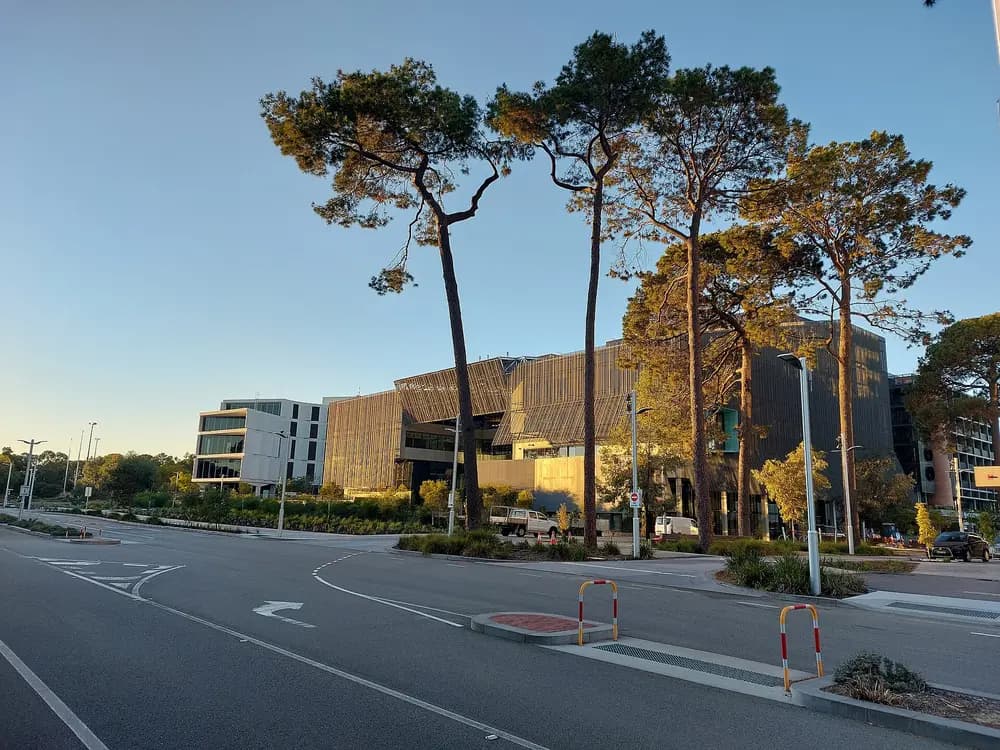
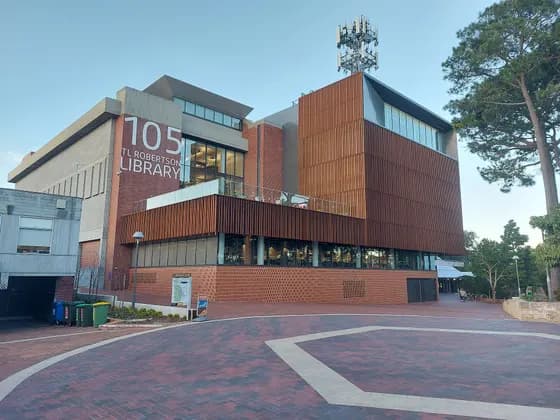
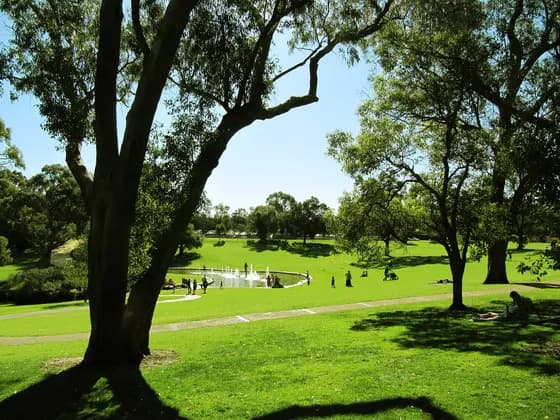
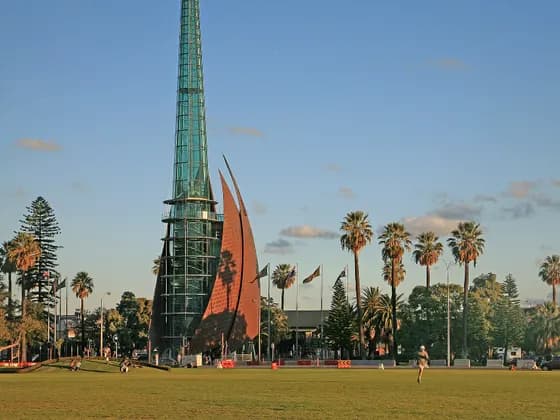
Photo: Orderinchaos · CC BY-SA 4.0 · cropped
Photo: Orderinchaos · CC BY 4.0 · Photo: Dinkum · CC0 · Photo: W. Bulach · CC BY-SA 4.0
Current medical students at Australian universities are filming their guides right now: what the course and teaching are really like, the city they live in, the social side, and whether they'd pick it again.
Coming soonNot on sale yet — we'll open these up as soon as the first Australian videos land.
Filming now
Step-by-step: entry requirements, admission-test prep, personal statement, interview format and the key deadlines.
Open the guide →Format breakdown, school-specific sample questions, FAQs and prep tips from tutors who interviewed here.
Read the guide →Problem-based learning + Integrated, 5 years (direct entry), placements in Perth, outer-metropolitan Perth and Mandurah, and rural Western Australia.
See the course →Curtin's 5-year undergraduate Bachelor of Medicine, Bachelor of Surgery (MBBS) trains doctors for outer-metropolitan Perth, rural Western Australia, and Indigenous communities, with placements across St John of God Midland Public, Royal Perth, Fiona Stanley, Sir Charles Gairdner, Joondalup, Peel Health Campus and Rockingham General, plus general practice and rural settings statewide via the UWA-administered Rural Clinical School of WA.
Pre-interview ratio 35:35:30 ATAR:CASPer:UCAT; final offer ranking 40:40:20 ATAR:Interview:UCAT.
Curtin is one of the newest Australian medical schools (first intake 2017) and runs a 5-year undergraduate MBBS for outer-metropolitan Perth, rural WA, and Indigenous workforce service. CASPer required alongside UCAT-ANZ and ATAR — Casper required alongside UCAT-ANZ and ATAR.
Curtin is not one of only two Australian Casper users — Casper is also required by the graduate-entry MD programmes at the University of Notre Dame Australia (Fremantle and Sydney) and the University of Wollongong, per those universities' own admission pages, and the list may not be exhaustive. Of the programmes confirmed, Curtin is the only direct-entry undergraduate course.
Pre-interview ratio 35 (ATAR) : 35 (Casper) : 30 (UCAT-ANZ), per Curtin's own 2027 Domestic Admissions Guide. Aboriginal and Torres Strait Islander applicants are exempt from BOTH the UCAT-ANZ and Casper and apply directly to Curtin Medical School rather than through TISC.
Aboriginal and Torres Strait Islander applicants are exempt from BOTH the Casper Test and the UCAT-ANZ, and apply directly to Curtin Medical School rather than through TISC.
Integrated curriculum. 5-year undergraduate Bachelor of Medicine, Bachelor of Surgery (MBBS). The first three years are delivered at Curtin Perth (Bentley) with occasional visits to clinical sites and structured community activities from Year 1; Year 4 is the transition to learning in the clinical setting and Year 5 is spent working in clinical teams.
Placement sites include St John of God Midland Public Hospital, Royal Perth, Fiona Stanley, Peel Health Campus, Sir Charles Gairdner, Joondalup Health Campus, Hollywood, Armadale, Mount Lawley, King Edward Memorial, Perth Children's and Rockingham General, plus general practice clinics across the state and rural medical settings.
Rural placements run through the UWA-administered Rural Clinical School of WA — a UWA, Notre Dame and Curtin partnership — which Curtin students apply to in third year for a 12-month placement in fourth year at one of 15 regional sites.
Curtin is strong in these research areas:
Format: Multiple Mini Interview (station count not published)
Curtin runs a Multiple Mini Interview but publishes no station count and no per-station timing — treat any specific figure with caution. Curtin describes the MMI as an opportunity to "demonstrate their communication skills, critical appraisal of information, ability to consider important issues and display personal attributes essential to the medical profession".
Interview short-listing: ATAR : Casper : UCAT-ANZ (out of 2700) in ratio 35 : 35 : 30. Final offer ranking: academic merit (actual ATAR or equivalent) : UCAT-ANZ : interview in ratio 40 : 20 : 40 — Casper is NOT used at the final offer stage, only at interview shortlist.
Interviews are primarily face to face at Curtin Perth, with limited online interviews where required; non-WA domestic applicants (interstate and overseas) are interviewed online in the late-January round. International full-fee applicants sit a separate online (Microsoft Teams) interview in July/August and are ranked 40 academic : 60 interview.
Attendance is mandatory to retain eligibility for an offer, and interviews cannot be rescheduled to unpublished dates.
2027 intake: approximately 110 domestic places (CSP, inclusive of Bonded Medical Places), plus 10-15 international full-fee places. Curtin 2027 Domestic and International Admissions Guides.
Curtin University Medical School was founded in 2017 and is based in Bentley.
Programmes offered:
These are real recordings of the interviewers you would meet, from a panel of 19 photoreal faces. Speak your answers out loud, get pressed with follow-ups, and receive rubric-scored feedback about two minutes after you finish, with a replay of your answers.
Try the AI interviewer| Entry pathway | Undergraduate (school-leaver) entry |
|---|---|
| ATAR | Minimum ATAR 95.00 for every school-leaver applicant, WA and interstate alike |
| UCAT-ANZ | Any figure in the 2900-3000 range comes from the retired /3600 scale and exceeds the current maximum, so it is neither achievable nor comparable |
| Interview format | Multiple mini interviews (MMI) |
| Intake | 2027 intake: approximately 110 domestic places (CSP, inclusive of Bonded Medical Places), plus 10-15 international full-fee places |
| Decisions (2027 entry) | December 2026-January 2027 |
| Admission overview | Minimum ATAR 95.00 for all school leavers, WA and interstate alike, plus an ESSENTIAL Chemistry prerequisite (approximately 220 hours), met by ONE of: Chemistry ATAR with a final scaled score of 50 or higher; IB Chemistry HL/SL grade 4 or higher; NCEA Level 3 Chemistry with 24 achieved credit points; or TWO first-year AQF Level 7 university Chemistry units at 60 or higher in both — bridging units are explicitly not equivalent (the international guide additionally accepts GCE A-Level Chemistry at grade E or above). STAT is not accepted except for English competency. UCAT-ANZ + Casper required for domestic applicants; 35:35:30 interview shortlist ratio (ATAR : Casper : UCAT-ANZ). Graduates enter on a minimum notional ATAR of 92, Curtin course switchers on a course weighted average of 80. |
|---|---|
| ATAR | Minimum ATAR 95.00 for every school-leaver applicant, WA and interstate alike — Curtin publishes one figure with no domicile split, and adjustment points are added on top of it rather than included in it. The 92.00 figure is the minimum notional ATAR for the non-school-leaver (graduate) pathway only; Curtin course switchers are assessed on a course weighted average of 80 instead. Rural or StepUp adjustment points (up to 5, from one scheme only) apply on top, capped at an adjusted 99.95. TISC 2026 Admission Ranks (Main Round, December 2025) for CUMBS: minimum rank for consideration n/a, lowest selection rank offered n/a — selection is NOT solely on ATAR. |
| Contextual ATAR | Three special entry pathways: Rural entry (up to 25% of places; WA, NT and SA applicants of rural background, MM 2-7), Equity entry (WA school leavers qualifying for Curtin's StepUp Bonus scheme), and the Aboriginal and Torres Strait Islander entry pathway. Rural applicants receive up to 5 adjustment points via CMS's Rural adjustment scheme OR Curtin's StepUp bonus scheme (StepUp within this route is WA school leavers only) — one scheme only, never both; StepUp alone adjusts by 5 points. All adjustments cap at an adjusted 99.95 and apply only to the Curtin MBBS. WA school leavers eligible for both rural and equity entry are considered under both. Aboriginal and Torres Strait Islander applicants are exempt from BOTH the UCAT-ANZ and the Casper Test, and apply directly to Curtin Medical School rather than through TISC. |
| UCAT-ANZ | No official Curtin-published cut-off. Curtin ranks total UCAT score, not a fixed threshold. Curtin publishes no UCAT-ANZ cut-off, minimum or competitive band in any year — the 2027 guide contains no quartile, decile or percentile figure. Note the scale change: UCAT-ANZ dropped Abstract Reasoning at the UCAT ANZ 2025 sitting (2026 entry), so the cognitive total is now out of 2700, not 3600, and Curtin's 2027 guide ranks on the "UCAT ANZ score (out of 2700)". Any figure in the 2900-3000 range comes from the retired /3600 scale and exceeds the current maximum, so it is neither achievable nor comparable. For orientation only, the official all-candidate UCAT ANZ 2026 statistics (the sitting that feeds 2027 entry) show a mean cognitive total of 1,964, a 3rd quartile of 2,170 and a 9th decile of 2,340 — national figures for every test-taker, not a Curtin applicant profile. Interview shortlist ratio 35 ATAR : 35 Casper : 30 UCAT-ANZ, per Curtin's own guide.. Interview shortlist ratio 35 ATAR : 35 CASPer : 30 UCAT (per MedEntry / Curtin official Q&A — Fraser's 35:35:40 reporting is an error). |
| CASPer | Required and ranked on actual score (only quartile band shown to applicant). Required and ranked on the Casper score in conjunction with ATAR and UCAT-ANZ; Curtin makes no adjustments or special consideration for Casper. Curtin publishes no Casper quartile threshold, minimum or competitive band in any year — the 2027 guide contains no quartile, decile or percentile figure at all — so no competitive band can be stated on the record, and the quartile guidance circulating on student forums is unconfirmable and should not be planned around. Aboriginal and Torres Strait Islander applicants are exempt from Casper.. ATSI applicants exempt. |
| Place types | 2027 intake: approximately 110 domestic places (CSP, inclusive of BMP), plus 10-15 international full-fee places. Curtin states approximately 28% of Commonwealth Supported Places in Australian medical programs are set aside for the Bonded Medical Program; the Commonwealth's current published rate is 28.5%. Bonded places are allocated by the university across all MBBS entry pathways and cannot be applied for directly. Curtin prioritises WA candidates from rural and regional areas, Aboriginal and Torres Strait Islander backgrounds, and students with long-term educational disadvantage — it does not publish a ranking between these groups. |
| Indigenous pathway | Aboriginal and Torres Strait Islander applicants apply DIRECTLY to Curtin Medical School — no TISC application, no UCAT-ANZ and no Casper Test — submitting the CMS Aboriginal and Torres Strait Islander Entry Application Form by the published deadline (13 October 2026, 5pm AWST for 2027 entry) with a letter confirming descent stamped with the common seal of an Indigenous community organisation. Selection runs through a Formal Yarning Session with the CMS Aboriginal Health Team, after which shortlisted candidates sit MMIs in the December or January round. The Indigenous Pre-Medicine and Health Sciences Enabling Course (EN-INPMHE), 1 year full-time and the only enabling course Curtin accepts for the MBBS, is one route in; applicants using it must pass all units. Curtin's Centre for Aboriginal Studies (Karda) provides on-campus support. Successful candidates attend the three-day "Ngullar Moorditj Koorliny Keny" Medicine Pre-Orientation Program in February. |
| Bonded / rural | Curtin offers "the only direct-entry Bachelor of Medicine, Bachelor of Surgery (MBBS) in Western Australia" (Curtin's own wording). The rural quota IS published: up to 25 per cent of places are allocated to the Rural entry pathway, open to Western Australian, Northern Territorian and South Australian applicants who, as of 31 December prior to the admission year, have spent at least 10 years cumulatively or any five years consecutively in a Modified Monash Model MM 2-7 area since Year 1. Rural applicants compete only against other rural applicants, must lodge a separate Rural entry application form with community-verified proof of origin by the published deadline (13 October 2026, 5.00pm AWST for 2027 entry), and receive up to 5 ATAR adjustment points. |
| Specialities offered | Rural Medicine, Indigenous Health, Outer-Metropolitan Health, General Practice, Health Equity |
Working towards the UCAT score Curtin expects? Build a week-by-week plan from your test date — free for the first two weeks.
| Format | Multiple Mini Interview (station count not published) |
|---|---|
| Interview window (2027 entry) | December 2026-January 2027 (domestic); July 2027-August 2026 (international full-fee) |
| Decision date (2027 entry) | December 2026-January 2027 |
| Post-interview chances | Not publicly disclosed. |
Curtin's pre-interview ratio is 35 (ATAR) : 35 (CASPer) : 30 (UCAT) — CASPer is genuinely material here. Curtin ranks on the Casper score and publishes no Casper threshold or competitive band in any year — plan for a strong Casper rather than a specific quartile. Curtin frames the MMI as testing communication, critical appraisal of information, consideration of important issues and personal attributes essential to the medical profession; it publishes no station content, so treat any claim about what examiners specifically probe as unverified. A genuine, specific interest in outer-metropolitan and rural WA practice fits the school's stated mission, but note that Northam and Esperance are Rural Clinical School of WA sites administered by UWA, not Curtin sites. ATSI applicants are exempt from CASPer.
Two questions our tutors flagged as a strong fit for Curtin’s interview style. Try answering them out loud, then open Prometheus for the model answers and follow-up tips.
What is the Rural Generalist Pathway, and how does it differ from a standard FRACGP?
Likely follow-up · Which Advanced Skills does the pathway include?
Suicide rates for Aboriginal and Torres Strait Islander people are approximately twice the non-Indigenous rate, and substantially higher among young people. What is your understanding of the drivers and what works?
Likely follow-up · What is the role of intergenerational trauma and dispossession?
We've helped students into Curtin and other Australian medicine schools — get tailored support for each stage of the application.
Hit the UCAT-ANZ cut-off for Curtin with one-to-one tutoring from top scorers.
Learn morePractise the Multiple Mini Interviews format with students who interviewed at Curtin.
Learn moreGet your personal statement reviewed by successful applicants.
Learn moreChecked field-by-field against Curtin University Medical School's official course page on 11 September 2026.
We've helped students turn their UCAT, personal statement and interview prep into offers from Curtin and other Australian medicine schools.
Necessary cookies keep the site working; analytics and marketing cookies run only if you allow them. Privacy