What Would Keep You Rural for Ten Years?
Many rural doctors leave within five years of arrival. What would have to be true for you to be in a rural community ten years from now?
Likely follow-up · What does community embedding mean to you?
2027 Entry Requirements & Interview Format
Charles Sturt University School of Rural Medicine in Orange, NSW runs a school-leaver medicine program for 2027 entry. Admission tests listed: UCAT-ANZ. Published hurdles: ATAR — ATAR hurdle (2027 entry, CSU standalone): 95.50 non-rural. Charles Sturt holds multiple mini interviews (MMI). Decisions for 2027 entry: January 2027.

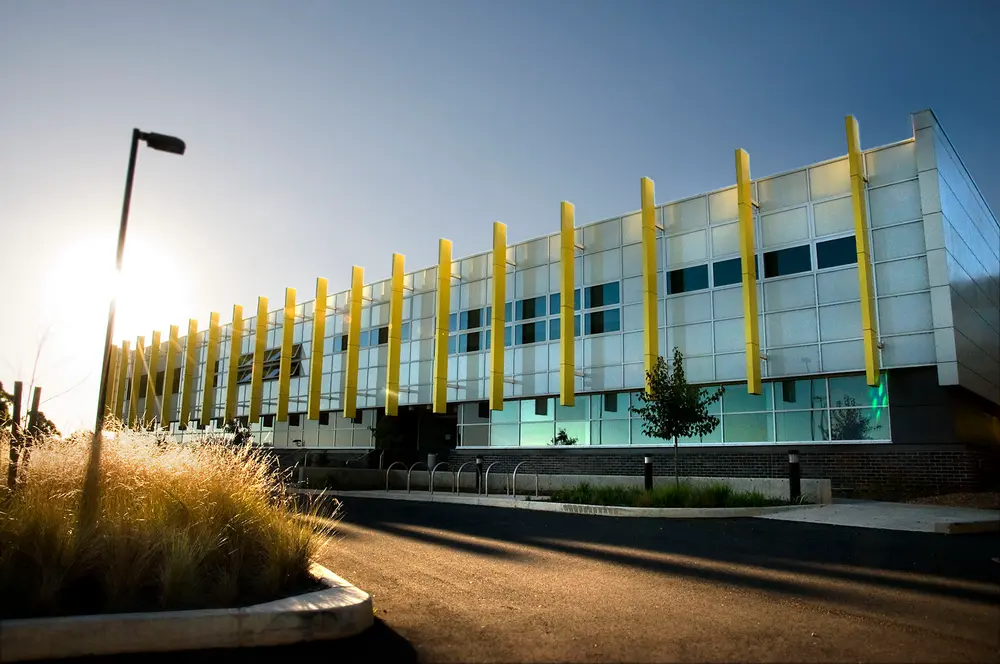
Photo: Content Charles Sturt · CC BY-SA 4.0 · cropped
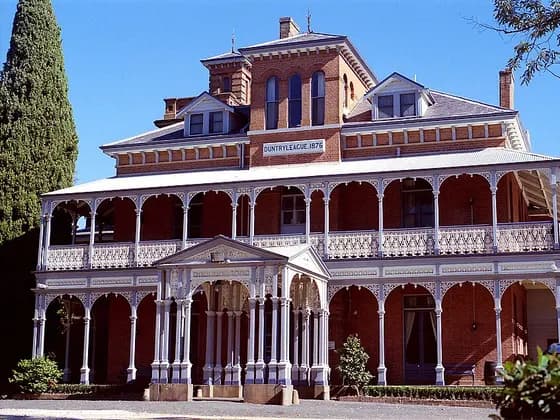
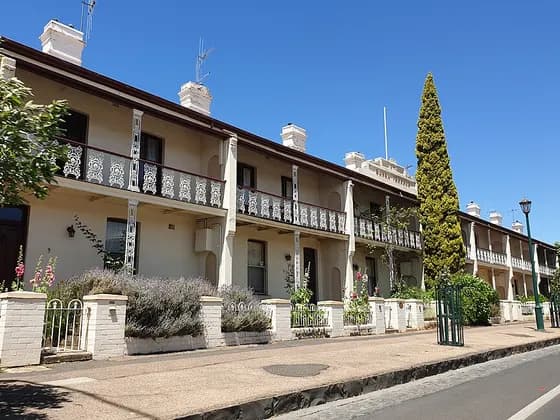
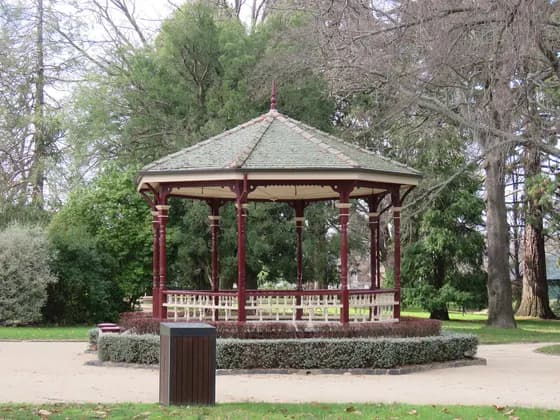
Photo: Tinny186 · CC BY-SA 4.0 · Photo: Floodstreet · CC BY-SA 4.0 · Photo: Calistemon · CC BY-SA 4.0
Current medical students at Australian universities are filming their guides right now: what the course and teaching are really like, the city they live in, the social side, and whether they'd pick it again.
Coming soonNot on sale yet — we'll open these up as soon as the first Australian videos land.
Filming now
Step-by-step: entry requirements, admission-test prep, personal statement, interview format and the key deadlines.
Open the guide →Format breakdown, school-specific sample questions, FAQs and prep tips from tutors who interviewed here.
Read the guide →Problem-based learning + Integrated, 5 years (undergraduate entry), placements in nine clinical schools in rural NSW and northern Victoria.
See the course →Charles Sturt's School of Rural Medicine delivers a five-year undergraduate-entry Bachelor of Clinical Science (Medicine) / Doctor of Medicine: two largely campus-based years at Orange (each including a short rural placement), then three years across a network of nine rural clinical schools in NSW and northern Victoria, built to send doctors into regional and rural practice.
A rurally-purposed medical school that now stands on its own: the AMC granted Charles Sturt standalone accreditation on 13 August 2025, to 31 March 2032 and commencing January 2026, ending the Joint Program in Medicine run with Western Sydney University since 2021.
CSU aims to select 'the majority of students who are of rural origin' and reserves a minimum of 80 per cent of interviews for rural applicants, but there is also a non-rural pathway, and places are not universally bonded — the Commonwealth sets the bonded/unbonded split, unbonded places go to the top-ranked applicants first and bonded places are then allocated automatically.
Years 3-5 run through a network of nine clinical schools across rural NSW and northern Victoria, with students allocated to a single clinical school and returning to the same community each year. On 'first': James Cook University's program commenced in 2000 as Australia's first medical school based outside a metropolitan area with an explicit rural, remote and Indigenous mission.
Integrated curriculum. 5-year undergraduate program: Bachelor of Clinical Science (Medicine) + Doctor of Medicine (admission at AQF 7, award at AQF 9; an exit-only Bachelor of Clinical Science (Medicine) is available after three years).
Years 1-2 foundations at the Orange campus; students are then allocated to one of nine clinical schools across rural NSW and northern Victoria (Central West, Central Tablelands, Hastings Macleay, Mallee, Murray, Murrumbidgee, Northern Rivers, Orange and Riverina) and study there full-time in years 3-5 under the Rural Generalist Placement Program, returning to the same community each year.
The AMC granted CSU standalone accreditation commencing January 2026, ending the Joint Program in Medicine with Western Sydney University; for 2027 entry UAC lists CSU's own course code 214478.
Charles Sturt (Rural) is strong in these research areas:
Format: Multi-Station Mini Interview, online via Zoom (6 stations, 8 min per station, scenario-based)
Charles Sturt runs a Multi-Station Mini Interview (MMI). CSU's 2026 student brochure describes six stations, each presenting a scenario, each with a different interviewer, eight minutes to respond at each station and a short break between stations.
Interviews run in November and CSU says they will be held virtually over Zoom with interviewers located at Orange ('where possible', per the brochure), so candidates are told to line up a quiet room and reliable internet rather than travel.
Rural origin is not a gate on the programme: there is a non-rural pathway at ATAR 95.50 alongside the Rural Entry Admissions Scheme at 91.50.
REAS rural origin means residency of at least 10 years cumulatively, or any 5 years consecutively, in an ASGS-RA 2-5 area (checked on DoctorConnect, plus a Rural Confirmation form lodged with the UAC application; CSU audits these forms at random) — not Modified Monash MM2-7.
On interview allocation CSU publishes two figures in different places: its 2026 brochure says 'a minimum of 80 per cent of interviews are for rural applicants', while its course page still carries the older line that 80% of interview places go to NSW applicants and 20% to interstate.
First Nations applicants follow a separate pathway with a PANEL interview in late November to early December, not the MMI.
47 Commonwealth Supported Places a year from 2026, after an extra 10 CSPs were allocated (implying about 37 previously, though CSU does not state that figure). For scale, the inaugural CSU cohort that started in 2021 was 38 students. CSU does not publish a rural/non-rural split of places — its published 80 per cent rural floor applies to interviews — and no CSU, UAC, AMC or Medical Deans source publishes a combined JPM intake figure.
Charles Sturt University School of Rural Medicine was founded in 2021 and is based in Orange.
Programmes offered:
These are real recordings of the interviewers you would meet, from a panel of 19 photoreal faces. Speak your answers out loud, get pressed with follow-ups, and receive rubric-scored feedback about two minutes after you finish, with a replay of your answers.
Try the AI interviewer| Entry pathway | Undergraduate (school-leaver) entry |
|---|---|
| ATAR | ATAR hurdle (2027 entry, CSU standalone): 95.50 non-rural |
| UCAT-ANZ | For scale, the UCAT ANZ 2026 sitting (2027 entry, 17,341 candidates) had a mean total cognitive score of 1,964/2700, an 8th decile of 2,220 and a 9th decile of 2,340 |
| Interview format | Multiple mini interviews (MMI) |
| Intake | 47 Commonwealth Supported Places a year from 2026, after an extra 10 CSPs were allocated (implying about 37 previously, though CSU does not state that figure) |
| Decisions (2027 entry) | January 2027 |
| Admission overview | ATAR 95.50 hurdle (non-rural) or 91.50 (Rural Entry Admissions Scheme), 2027 entry; UCAT-ANZ sat in the year of application, used to rank for interview and worth 25% of the published selection criteria; a six-station virtual MMI worth 75%; REAS applicants verify ASGS-RA 2-5 rural residency via DoctorConnect plus a Rural Confirmation form; open to Australian or New Zealand citizens and Australian permanent residents only. |
|---|---|
| ATAR | ATAR hurdle (2027 entry, CSU standalone): 95.50 non-rural; 91.50 via the Rural Entry Admissions Scheme. There is no Greater Western Sydney tier at Charles Sturt — the 93.50 Western Sydney resident hurdle belongs to Western Sydney University's own course (UAC 725505). The ATAR is a minimum to be met, not the ranking instrument; UCAT ANZ (25%) and the MMI (75%) do the ranking. Equivalents: IB 38 (non-rural) / 35 (rural); completed undergraduate degree GPA 5.5 (non-rural) / 4.9 (rural). |
| UCAT-ANZ | UCAT ANZ alone produces the ranked list that determines interview invitations, and it then carries 25 per cent of CSU's published final selection criteria against 75 per cent for the MMI. ATAR is a hurdle, not the ranking device. CSU states the required UCAT level 'will vary each year, determined by the performance of all applicants competing for a place in the... course and will not be disclosed', so no cut-off can be quoted. Sit UCAT ANZ in the same calendar year you apply; scores are valid for that year only. For scale, the UCAT ANZ 2026 sitting (2027 entry, 17,341 candidates) had a mean total cognitive score of 1,964/2700, an 8th decile of 2,220 and a 9th decile of 2,340. |
| Place types | 47 Commonwealth Supported Places from 2026, after a Commonwealth allocation of 10 extra CSPs a year. Open to Australian or New Zealand citizens and Australian permanent residents; no international or full-fee places. Bonded Medical Program places are allocated automatically after unbonded places are exhausted (nationally, providers must allocate 28.5% of commencing medicine CSPs to the BMP). CSU publishes a minimum of 80 per cent of INTERVIEWS for rural applicants, but no rural/non-rural split of the places themselves; its course page separately still carries an 80/20 NSW-versus-interstate interview split. |
| Indigenous pathway | First Nations applicants apply through UAC but follow a separate admissions process (the AMC calls it the Indigenous Entry Pathway) run by the School of Rural Medicine: complete the NSW HSC or tertiary equivalent, supply confirmation of First Nations identity (requested by the School in late September to October), and attend a PANEL interview in late November to early December covering motivation, educational experience and aspirations. CSU's published steps for this pathway do not include UCAT ANZ, but the University does not state that it is formally waived — contact medicine@csu.edu.au to confirm before relying on it, and to discuss identity documentation if a community-organisation confirmation is difficult to obtain. |
| Bonded / rural | CSU's rural pathway is the most rural-weighted in NSW: ~80% of places reserved for rural applicants in the 2027 standalone program. MMI delivered in person at the Orange campus. |
| Specialities offered | Rural Medicine, General Practice, Aboriginal Health, Generalist Practice |
Working towards the UCAT score Charles Sturt (Rural) expects? Build a week-by-week plan from your test date — free for the first two weeks.
| Format | Multi-Station Mini Interview, online via Zoom (6 stations, 8 min per station, scenario-based) |
|---|---|
| Interview window (2027 entry) | Late November 2026 per UAC (CSU's own key dates say November; First Nations panel interviews late November-early December) |
| Decision date (2027 entry) | January 2027 |
| Post-interview chances | Charles Sturt does not publish interview or offer numbers, so no interview-to-offer rate can be quoted. |
If you are going for the Rural Entry Admissions Scheme, verify your rural-origin status on DoctorConnect before you apply and get the Rural Confirmation form in with your UAC application — CSU audits them. There is also a genuine non-rural route at ATAR 95.50, but it is narrow: CSU reserves a minimum of 80 per cent of interviews for rural applicants, so a metro applicant needs a standout UCAT. The MMI is six stations on Zoom with eight minutes each, so rehearse to camera and book a quiet room. At MMI, examiners want to see depth of community connection (specific town, specific people, specific experiences) rather than generic "I love the country" narratives. Be ready to discuss the workforce pull factors that keep doctors in rural NSW.
Two questions our tutors flagged as a strong fit for Charles Sturt (Rural)’s interview style. Try answering them out loud, then open Prometheus for the model answers and follow-up tips.
Many rural doctors leave within five years of arrival. What would have to be true for you to be in a rural community ten years from now?
Likely follow-up · What does community embedding mean to you?
Aboriginal and Torres Strait Islander Australians make up around 3.8% of the population but only about 0.5% of registered medical practitioners. Why does that gap matter and what is being done?
Likely follow-up · What is AIDA, and what role does it play?
We've helped students into Charles Sturt (Rural) and other Australian medicine schools — get tailored support for each stage of the application.
Hit the UCAT-ANZ cut-off for Charles Sturt (Rural) with one-to-one tutoring from top scorers.
Learn morePractise the Multiple Mini Interviews format with students who interviewed at Charles Sturt (Rural).
Learn moreGet your personal statement reviewed by successful applicants.
Learn moreCompiled from Charles Sturt University School of Rural Medicine's published admissions material and checked for internal consistency. Not independently re-checked against the official course page for 2027 entry — confirm the figures with the school before you rely on them.
We've helped students turn their UCAT, personal statement and interview prep into offers from Charles Sturt (Rural) and other Australian medicine schools.
Necessary cookies keep the site working; analytics and marketing cookies run only if you allow them. Privacy