
University of Otago Medical School
2027 Entry Requirements & Interview Format
University of Otago in Dunedin runs a school-leaver and graduate-entry medicine program for 2027 entry in New Zealand. Admission tests listed: UCAT-ANZ. University of Otago lists no interview on its standard entry route.
- Location
- Dunedin, New Zealand
- Established
- 1875
- Interviews (2027 entry)
- Alternative category only: by Zoom, approximately eight weeks after the 1 May 2027 closing date (typically late June 2026 to July 2026)
- Decisions (2027 entry)
- Alternative category outcomes by 31 August 2026; HSFY and Graduate offers in December 2026

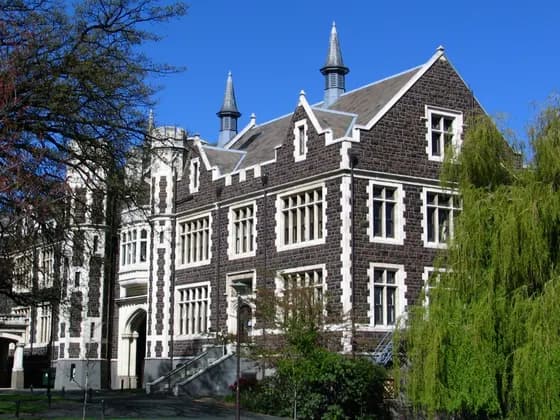
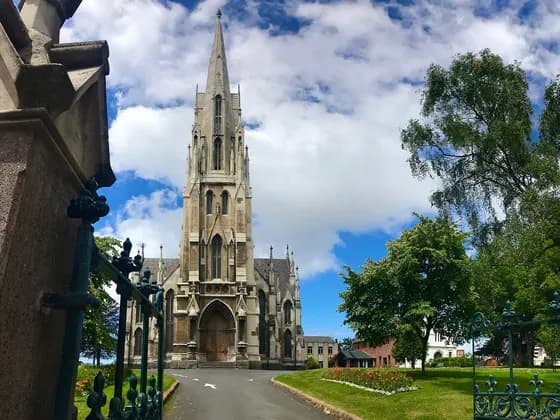
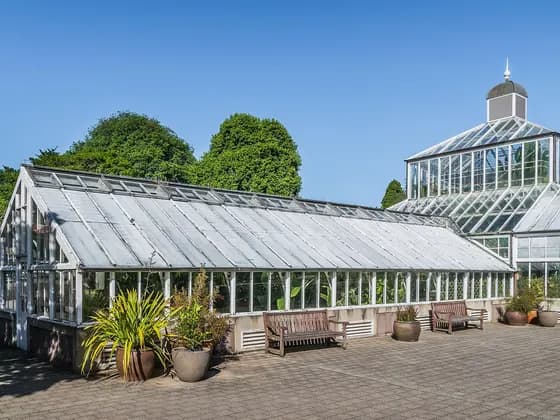
Photo: Bernard Spragg. NZ · CC0 · cropped
Photo: Benchill · CC BY-SA 3.0 · Photo: AnnWoolliams · CC BY-SA 4.0 · Photo: Krzysztof Golik · CC BY-SA 4.0
Still deciding where to apply? Hear it from a student who's there
Honest student guides to medicine universities
Current medical students at New Zealand universities are filming their guides right now: what the course and teaching are really like, the city they live in, the social side, and whether they'd pick it again.
Coming soonNot on sale yet — we'll open these up as soon as the first New Zealand videos land.
Filming now
How to get into University of Otago — Medicine (MBChB) medicine
Step-by-step: entry requirements, admission-test prep, personal statement, interview format and the key deadlines.
Open the guide →Prepare for the University of Otago — Medicine (MBChB) interview
Format breakdown, school-specific sample questions, FAQs and prep tips from tutors who interviewed here.
Read the guide →What the University of Otago medicine course is like
Integrated + Case-based learning, 6 years (incl. health sciences first year), placements in Dunedin, Christchurch, Wellington and regional and rural New Zealand.
See the course →About University of Otago — Medicine (MBChB)
The University of Otago MBChB is a 6-year degree based at the Otago Medical School in Dunedin. Year 1 is completed through Health Sciences First Year (HSFY); clinical years 4–6 are split across the Dunedin, Christchurch, and Wellington campuses. Selection for HSFY and Graduate applicants is academic ranking only — no interview.
The programme is the largest medical school in New Zealand by total domestic intake.
What makes University of Otago — Medicine (MBChB) different
Otago runs the most purely academic medical selection in New Zealand — the HSFY and Graduate categories have no interview at all, and offers are decided solely by academic rank. Branch campus split for clinical years 4-6: students are assigned (not self-selected) to Dunedin, Christchurch or Wellington.
UCAT ANZ is a threshold gate only — for 2027 entry, Verbal Reasoning at or above the 20th percentile AND Situational Judgement at or above the 10th percentile, with thresholds reset annually by the Medical Admissions Committee and a score required in all four sections. Once you clear it, UCAT plays no further part in ranking.
A significant change: from 2027 entry international applicants must also sit UCAT (previously exempt), and from 2028 entry every applicant to Medicine must sit it. The Alternative category runs on its own timetable (applications 1 April - 1 May, outcomes by 31 August) and is the only route with an interview.
Applicants who want both Medicine and Dentistry must nominate a preferred programme.
University of Otago — Medicine (MBChB) course & teaching
Integrated curriculum. 6-year MBChB. Year 1 (HSFY): 7 compulsory papers at Dunedin (BIOC 192, CELS 191, CHEM 191, HUBS 191, HUBS 192, PHSI 191, POPH 192). Years 2–3: pre-clinical at Dunedin. Years 4–6 (Advanced Learning in Medicine): class divided into thirds across Dunedin, Christchurch, and Wellington campuses — campus assignment is determined by the university.
HSFY application window: 1 July – 13 August; Alternative Category: 1 April – 1 May.
University of Otago — Medicine (MBChB) research strengths
University of Otago — Medicine (MBChB) is strong in these research areas:
- Rural health
- Public health
- Maori health
- Pacific health
- Primary care
How the University of Otago — Medicine (MBChB) interview runs
Format: No interview for the HSFY and Graduate categories; the Alternative category is the only route with an interview (structured, by Zoom)
Most Otago MBChB places are filled through the HSFY and Graduate categories, neither of which has an interview — selection is decided by academic ranking alone (HSFY: the average of your best seven first-year paper marks on a 0-100 scale; Graduate: a weighted GPA). The Alternative category is the only route that involves an interview.
It is a two-stage process: candidates are shortlisted on academic achievement, a one-page statement of reasons for wanting to enter Medicine, and a CV, and not all applicants are interviewed. Interviews are held by Zoom approximately eight weeks after the 1 May closing date, and the panel does not reschedule.
The published topics are academic achievement, other achievements, commitment to a career change, communication skills, knowledge of the New Zealand health system, and understanding of the profession. Three referees (professional and character) are contacted only if you are shortlisted. Otago does not publish a station count or interview length.
Outcomes for the Alternative category are confirmed by 11pm on 31 August — months before the HSFY and Graduate results. UCAT ANZ is a pass/fail threshold for the HSFY and Graduate categories and is not used at all in the Alternative category.
University of Otago — Medicine (MBChB) intake
Domestic places are capped by the New Zealand Government and international places by the University; Otago does not publish a single headline figure. The Ministry of Health put Otago's government-funded intake at 312 places within a national total of 614 (March 2025 factsheet), rising as the additional funded places phase in. For 2026 entry Otago accepted 254 HSFY offers (including 25 international), plus Graduate and Alternative category admissions — 347 admissions in total (Otago Admissions Statistics 2026). Domestic fee 2026: NZ$18,800-19,100; international fee 2027: NZ$102,690.
Where University of Otago — Medicine (MBChB) is
University of Otago was founded in 1875 and is based in Dunedin.
Programmes offered:
- Rural Medicine
- Public Health
- Maori Health
- Pacific Health
- General Practice
What you need to apply to University of Otago — Medicine (MBChB)
University of Otago — Medicine (MBChB) at a glance
| Entry pathway | Undergraduate and graduate entry |
|---|---|
| UCAT-ANZ | Not required and not considered for the Alternative category |
| Interview format | No interview on the standard entry route |
| Admission overview | HSFY category (the main route): enrol at Otago and take all seven prescribed first-year papers in the year of application, not having completed that set of seven in any earlier single calendar year; pass them all with an average of at least 65% across your best seven marks, counting an optional eighth paper if you take one. Unlike Dentistry, Medicine sets NO per-paper minimum — there is no "nothing below 60%" rule for MBChB. You must also pass the HSFY English Diagnostic or ENGL 128. Domestic applicants need a UCAT ANZ result from the year of application with a score in all four sections, meeting thresholds set annually by the Medical Admissions Committee — for 2027 entry, Verbal Reasoning at the 20th percentile or higher AND Situational Judgement at the 10th percentile or higher. There is no interview; offers are ranked purely on academic score. Graduate category: a bachelor's degree, bachelor's honours degree, or bachelor's degree followed without a break by a postgraduate diploma or honours year, from a NZ university, completed within three years of applying; no preference for subject or major; the qualifying programme must average at least a weighted GPA of 5. From the 2027 intake the weighted GPA takes your best 300-level papers first (up to 120 points), then your best 100- and 200-level papers up to 360 points total, weighted 100-level x0.5, 200-level x1.0, 300-level x1.5. Same UCAT thresholds; no interview. Alternative category (domestic only, and only if you are not eligible for any other category): hold a NZ degree; or an overseas degree at NZQF Level 7 or above completed at least three years before applying; or a master's or doctorate; or demonstrate health-related professional experience in a relevant HPCA-regulated profession (five years recommended, preferably two in NZ). No UCAT required and UCAT is not considered. Shortlisting is on academic record, CV and a one-page statement, followed by a 40-minute Zoom interview. Applications open 1 July and close 13 August for HSFY and Graduate; the Alternative category runs 1 April to 1 May. No specific Year 13 subject prerequisites, but Biology, Chemistry and Physics at NCEA Level 3 are strongly recommended. |
|---|---|
| UCAT-ANZ | Threshold (pass/fail) for HSFY and Graduate applicants, set annually. 2027 entry: Verbal Reasoning at the 20th percentile or higher AND Situational Judgement at the 10th percentile or higher, with a score required in all four sections. Not weighted in ranking once the threshold is met. Not required and not considered for the Alternative category. International applicants must sit UCAT from 2027 entry; from 2028 entry it applies to all applicants. |
| Prerequisites | No specific Year 13 subject prerequisites are mandated for HSFY admission — Otago's standard undergraduate entry requirements apply. Biology, Chemistry and Physics at NCEA Level 3 (or the Cambridge International / IB equivalent) are strongly recommended because HSFY assumes that background. Applicants must also pass the HSFY English Diagnostic or ENGL 128. |
| Place types | Domestic places are capped by the New Zealand Government (Otago's government-funded intake was 312 in the March 2025 Ministry of Health factsheet) and international places by the University Council. 2026 entry accepted 25 international students through the HSFY category. |
| Indigenous pathway | Otago admits under Te Kauae Paraoa, the Admissions Policy for Health Professional Programmes, which replaced the former Mirror on Society policy. Applicants may be considered in one or more equity groups, each ranked in its own sub-pool within whichever admission category they apply under: Maori (ancestry verified by the University, plus a supporting statement); New Zealand Resident Indigenous Pacific Origins / NZRIPO (verified ancestry from one of 21 listed Pacific nations, a community-leader endorsement and a 500-word statement); Socioeconomic Equity (Years 11-13 within the last five years at a school in the top three bands of the NZ Equity Index, or decile 1-3 before 2023); Refugee Background (refugee status held by the applicant or a parent/guardian); and New Zealand Rural Origins. Rural eligibility is at least four years of pre-tertiary education at a rural NZ school, OR at least four consecutive years of rural residence after secondary school, OR a combination of the two totalling four consecutive years, assessed against the Geographic Classification for Health. Quotas per group are not published, but the 2026 offer ranges show how much they matter: Rural offers opened at 86.43 against 93.14 for General. |
| Specialities offered | Rural Medicine, Public Health, Maori Health, Pacific Health, General Practice |
Working towards the UCAT score University of Otago — Medicine (MBChB) expects? Build a week-by-week plan from your test date — free for the first two weeks.
How University of Otago — Medicine (MBChB) interviews applicants
| Format | No interview for the HSFY and Graduate categories; the Alternative category is the only route with an interview (structured, by Zoom) |
|---|---|
| Interview window (2027 entry) | Alternative category only: by Zoom, approximately eight weeks after the 1 May 2027 closing date (typically late June 2026 to July 2026) |
| Decision date (2027 entry) | Alternative category outcomes by 31 August 2026; HSFY and Graduate offers in December 2026 |
| Post-interview chances | HSFY and Graduate categories: no interview — academic ranking alone determines offers. Alternative category: shortlisting then a Zoom interview, assessed holistically; success rate not published, but 105 General applications produced 16 acceptances for 2026 entry. |
Otago MBChB is one of the few medical schools anywhere whose main route is entirely non-interview — your HSFY marks are essentially the whole application. The General range for 2026 offers was 93.14-99.00 on a 0-100 scale, so plan for a mid-90s average rather than a pass. Two mechanics are worth exploiting: your score is the average of your BEST SEVEN paper marks, so an optional eighth paper gives you a discard, and unlike Dentistry there is no per-paper 60% floor for Medicine — one weaker paper will not disqualify you, it will just pull the average down. Treat UCAT ANZ as a hurdle, not a target: clear Verbal Reasoning at the 20th percentile or higher and SJT at the 10th percentile or higher, then put the time into your papers, because a higher UCAT adds nothing to your rank at Otago. Check the equity groups carefully — Maori, Indigenous Pacific (NZRIPO), Socioeconomic Equity, Refugee Background and NZ Rural Origins each have their own ranking pool and materially lower offer ranges, and eligibility is verifiable rather than a judgement call. Rural in particular is worth investigating early: the 2026 Rural range opened at 86.43. If you are applying from overseas, note that international applicants must now sit UCAT from 2027 entry. The branch campus split (Dunedin / Christchurch / Wellington) for Years 4-6 is assigned by the university, not chosen — treat all three as likely.
Apply to University of Otago — Medicine (MBChB) with confidence
We've helped students into University of Otago — Medicine (MBChB) and other New Zealand medicine schools — get tailored support for each stage of the application.
UCAT-ANZ Tutoring
Hit the UCAT-ANZ cut-off for University of Otago — Medicine (MBChB) with one-to-one tutoring from top scorers.
Learn moreAdmissions strategy call
University of Otago — Medicine (MBChB) selects without an interview, so your other choices decide your interviews. Plan them around your scores.
Learn morePersonal statement help
Get your personal statement reviewed by successful applicants.
Learn moreWhere University of Otago — Medicine (MBChB)'s figures come from
Compiled from University of Otago's published admissions material and checked for internal consistency. Not independently re-checked against the official course page for 2027 entry — confirm the figures with the school before you rely on them.
University of Otago — Medicine (MBChB) — frequently asked questions
Apply to University of Otago — Medicine (MBChB) with confidence
We've helped students turn their UCAT, personal statement and school choices into offers from University of Otago — Medicine (MBChB) and other New Zealand medicine schools.