
UNE COM Interview
Format, Questions & Prep Tips
UNE COM medicine interviews for 2027 entry are a traditional interview, held September 2026 through February 2027. Published figures: Annual DO class size ~172.
- Institution
- University of New England College of Osteopathic Medicine
- Interview (2027 entry)
- September through February
- Decisions (2027 entry)
- Rolling decisions after interview
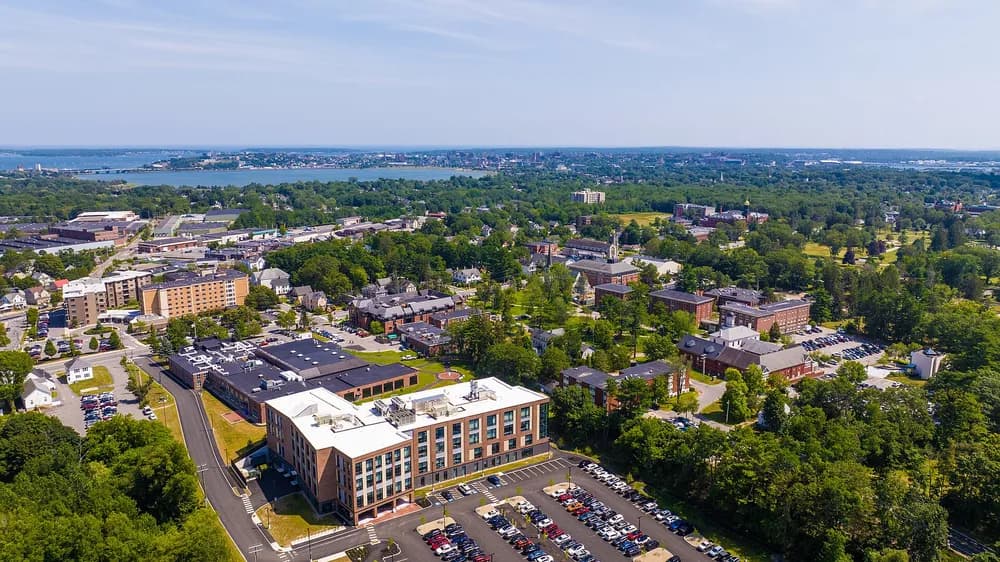
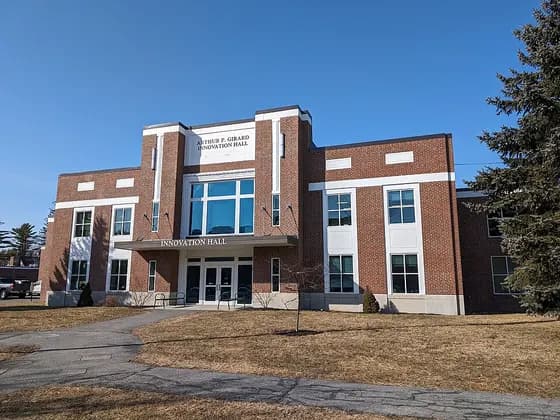
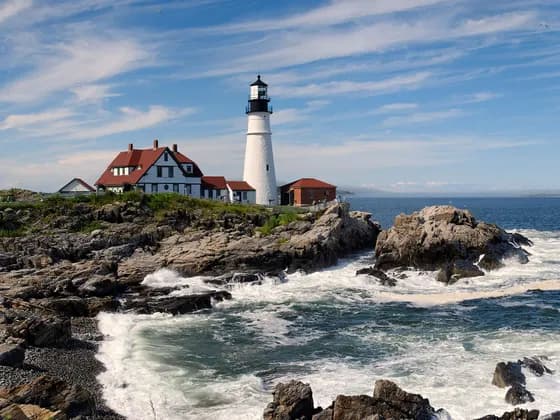
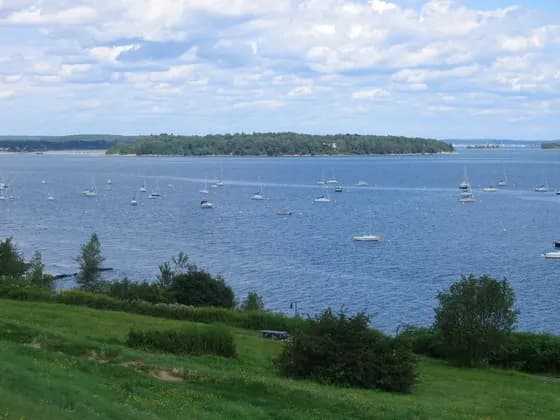
Photo: University of New England · CC BY 4.0 · cropped
Photo: Namiba · CC BY 4.0 · Photo: Rapidfire · CC BY-SA 3.0 · Photo: Photo by Aude . · CC BY-SA 2.5
How to get into UNE COM (DO) medicine
Step-by-step: entry requirements, admission tests, personal statement, interview format and the key deadlines.
Open the guide →UNE COM (DO) entry requirements
Admission profile, interview format, decision dates and what makes UNE COM (DO) different.
See the profile →The UNE COM (DO) medicine interview
UNE COM (UNECOM) uses a traditional two-session interview — faculty and student — at its Portland Campus for the Health Sciences in Maine (UNE COM relocated from Biddeford to Portland in 2025; Portland is Maine’s largest city). Founded in 1978, UNECOM is the only medical school in Maine and one of New England’s oldest osteopathic programs.
Casper is not currently required at UNE COM — verify on the official admissions page each cycle, as requirements change. Maine has a deeply aging rural population with significant physician access gaps, and interviewers genuinely probe whether applicants understand and are committed to that context.
UNECOM’s interprofessional health sciences university — nursing, dental, pharmacy, PA, and allied health across the interprofessional university — shapes the clinical training culture, and questions about teamwork and cross-disciplinary care are common.
UNE COM (DO) interview at a glance (2027 entry)
| Annual DO class size | ~172 |
|---|---|
| Interview format | Traditional — faculty + student sessions |
| CASPer required | No |
| Application system | AACOMAS primary + UNECOM secondary |
| Only medical school in | Maine |
| Interview window | September–February |
Interview format
- Two sessions: faculty interview and student interview; ~30–45 minutes each.
- Portland campus tour included on interview day.
- CASPer score reviewed as part of admissions process.
Working towards the MCAT score UNE COM (DO) expects? Build a week-by-week plan from your test date — free for the first two weeks.
Sample interview questions
UNECOM is the only medical school in Maine. What does that mean for your training, and what responsibilities do you feel that places on UNECOM graduates?
What they are listening for:
- Maine physician shortage
- rural aging population
- limited specialist access
Show awareness of the school's unique public health mandate.
Why osteopathic medicine, and why are you drawn to primary care or rural medicine?
Specific, personal. OMM philosophy plus primary care/rural framing. Interviewers at mission-driven schools expect depth.
UNE has nursing, dental, pharmacy, PA, and allied health students on campus. How do you envision working with these colleagues as a physician?
What they are listening for:
- Team-based care
- scope of practice clarity
- mutual respect
Give a real example of interprofessional work if possible.
A rural patient of yours has been traveling 90 minutes each way for specialist follow-up and tells you she is going to stop because it is not sustainable. What do you do?
What they are listening for:
- Telemedicine options
- care coordination
- health systems navigation
- patient advocacy
Rural-medicine practical thinking.
Maine has one of the oldest and most rural populations in the US. What are the two or three most pressing health needs of that population, in your view?
What they are listening for:
- Chronic disease in elderly
- opioid crisis
- mental health access
- limited transport
- primary care shortage
Specific knowledge about Maine counts.
How does an osteopathic approach specifically help a geriatric patient with complex, chronic, multi-system disease?
What they are listening for:
- OMM for musculoskeletal comorbidities
- whole-person care model
- co-ordination across providers
Maine has an especially aged population — make the connection.
Describe an experience serving a community with limited access to healthcare. What did you learn about structural barriers that clinical training alone does not teach?
Specificity. Social determinants, transport, insurance, literacy. Show you have reflected beyond the clinical encounter.
UNE COM recently relocated to Portland, the largest city in Maine. How do you think about the social and lifestyle aspects of living and training there?
Realistic self-awareness. Acknowledge the setting honestly and frame it as compatible with your needs and values.
A patient refuses pain management for a terminal illness citing religious objections to opioids. How do you approach this?
What they are listening for:
- Patient autonomy
- palliative alternatives (adjuvants, spiritual care)
- compassionate non-abandonment
If you match into a specialty that does not typically practice in rural settings, how will your UNECOM training have still prepared you to serve underserved populations?
Osteopathic whole-person skills, community health orientation, and leadership in advocacy are transferable regardless of specialty.
You are a student on a rural Maine rotation. An 82-year-old patient on eight medications tells you she has stopped taking three of them because she cannot keep them straight and cannot afford the co-pays. How do you respond in the room?
Reconcile the medication list, prioritize the essentials, address cost and literacy concretely (pharmacist, generics, simplified regimen), and avoid shaming. Show practical geriatric, whole-person problem-solving.
Maine has one of the highest median ages and most rural populations in the country. If you were given county-level data on opioid overdose deaths, what comparisons would you want to make before deciding where to target a prevention program?
What they are listening for:
- Population-adjusted rates
- trends over time
- access to treatment versus prescribing patterns
Demonstrate that you reason from data rather than anecdote, and tie it to Maine's real public-health picture.
On UNE's shared campus you will train beside pharmacy, dental, nursing, and PA students. Describe how you would lead a brief huddle on a complex elderly patient so every discipline is heard.
Structure, role clarity, inviting input, closed-loop communication. Show you see interprofessional teamwork as active leadership, not a slogan — give a real example if you have one.
A long-time rural patient asks you to keep prescribing an opioid for chronic pain that you believe is no longer appropriate. He says no one else will see him within 90 minutes. How do you weigh access against safety?
What they are listening for:
- Non-abandonment
- tapering with a plan
- addressing the access reality
- engaging addiction-medicine resources
Acknowledge the genuine tension rather than reflexively refusing or continuing.
The DO program is rigorous. What is your honest strategy for sustaining your own wellbeing across four years of medical school?
Self-awareness about isolation and burnout, concrete coping and support structures. UNECOM wants candidates who have realistically considered the lifestyle, not idealized it.
Practise the UNE COM (DO) interview
Rehearse the real format before the day — on demand with our AI interviewers, or live with a tutor.
Sit a mock with photoreal AI interviewers — any time
A timed MMI or panel interview on video — American & international voices — with interviewers who listen, react and press with follow-ups. Rubric-scored feedback and a replay the moment you finish.



Live mocks with a tutor who’s been in the room
A full UNE COM (DO)-style mock with a medic or dentist tutor — honest scoring against real marking criteria, a station-by-station debrief and a written action plan.
Book a mock interviewHow to prepare for the UNE COM (DO) interview
Common pitfalls to avoid
UNE COM (DO) interview — frequently asked questions
Sources & official admissions information
Ready to nail your UNE COM (DO) interview?
Book a mock interview with a tutor who knows the US interview formats, orpractice unlimited stations from our interview question bank.