
The Charles Sturt Dental course
What you actually study, and where you will be
Charles Sturt Dental's Bachelor of Dental Science is a 5-year (undergraduate entry) course with an integrated curriculum, with patient treatment from Year 2 and placements in Orange, Bathurst, Dubbo, Wagga Wagga, Albury and regional NSW (2027 entry). Charles Sturt's Bachelor of Dental Science is a five-year, full-time course taught at the Orange campus in regional New South Wales. Year 1 pairs science with simulation-clinic and laboratory training, and supervised patient care starts in Year 2 and grows from there. Final year is three 12-week placements, each at one of the university's regional dental clinics or an external site, with at least one meant to be external where available.
- Degree
- Bachelor of Dental Science
- Length
- 5 years (undergraduate entry)
- Teaching
- Integrated
- First patients
- Year 2
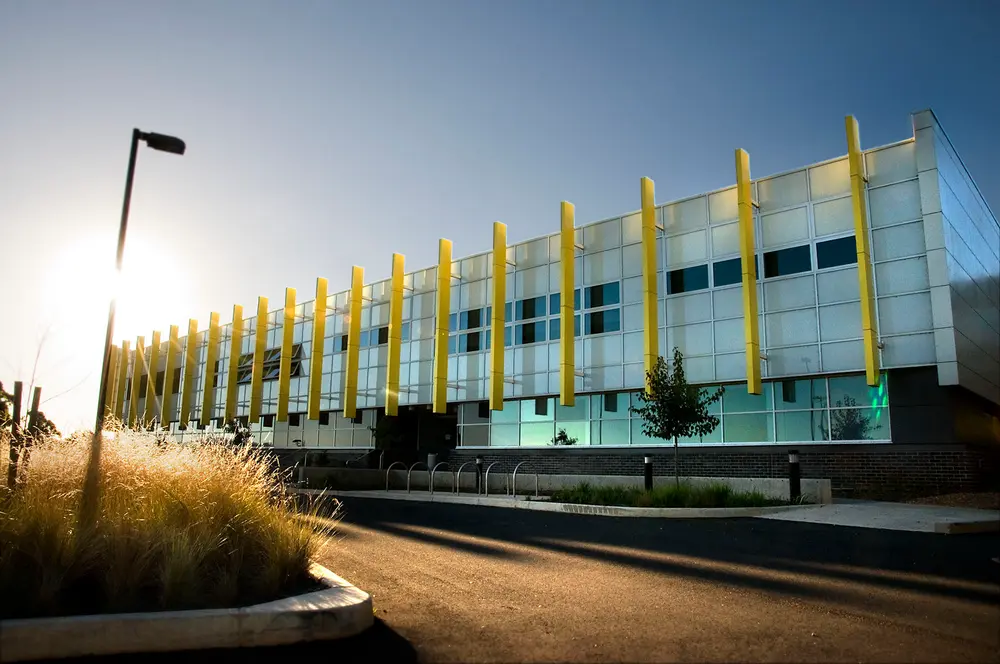
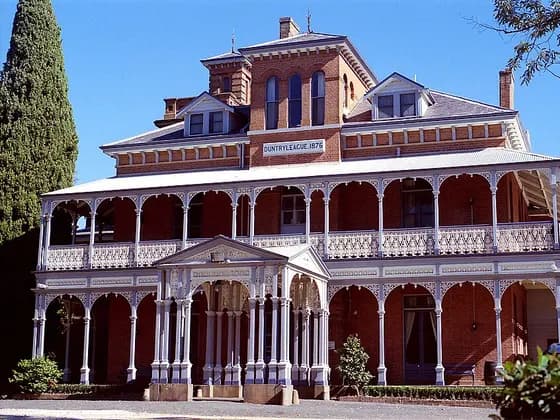
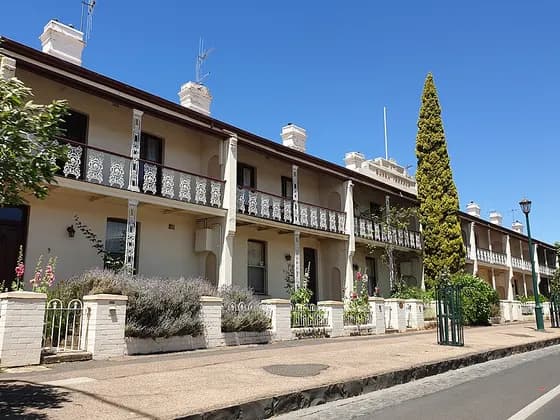
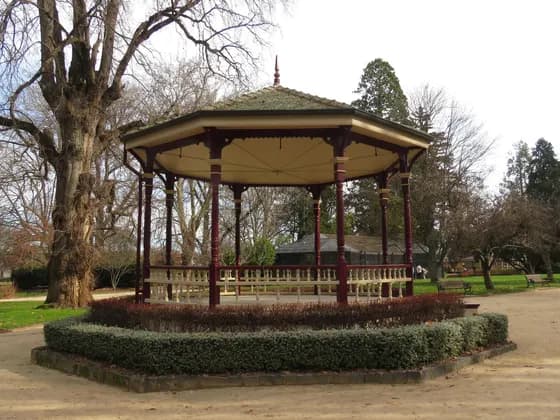
Photo: Content Charles Sturt · CC BY-SA 4.0 · cropped
Photo: Tinny186 · CC BY-SA 4.0 · Photo: Floodstreet · CC BY-SA 4.0 · Photo: Calistemon · CC BY-SA 4.0
The Charles Sturt Dental course at a glance (2027 entry)
Charles Sturt University's Bachelor of Dental Science is a five-year, full-time undergraduate course that qualifies you to apply for registration as a dentist in every Australian state and territory. It is taught at the Orange campus by the School of Dentistry and Medical Sciences, with the dental subjects run by its Centre for Rural Dentistry and Oral Health. The next intake starts on 1 March 2027.
The course was set up to train dentists for rural and regional Australia. One of its stated outcomes is being able to give effective oral health care to First Nations people and to rural and remote Australians.
The course moves steadily from the bench to the dental chair. Year 1 is science plus training in the simulation clinic, a teaching room where you practise procedures on models rather than people, and in the dental technology laboratory. From Year 2 you treat patients in the university's own Dental and Oral Health Clinics, under the direct supervision of registered dental practitioners. Clinic time grows to 12 hours a week at Orange in Year 3, and Year 4 brings complex care at Orange or Bathurst.
Final year is spent mostly on placement: three 12-week blocks, four days a week, at Charles Sturt clinics in Dubbo, Bathurst, Wagga Wagga or Albury. At least one block is meant to be at an outside clinic, depending on availability.
Every subject is assessed separately, and many include hurdles: tasks, mostly practical or clinical, that you must pass in their own right, whatever your overall mark. The course is accredited by the Australian Dental Council (ADC), the body that checks Australian dental courses against national standards, until 31 December 2028.
| Degree | Bachelor of Dental Science (the Australian Dental Council abbreviates it BDentSc) |
|---|---|
| Course length | 5 years full time, 320 credit points; next start 1 March 2027 |
| Main campus | Orange campus, New South Wales |
| Teaching style | Science subjects run alongside a year-long clinical practice subject each year |
| First patient contact | Year 2: 72 hours of supervised clinic sessions |
| Final year | Three 12-week placements, 7 hours a day, four days a week |
| Placement area | Charles Sturt clinics in Orange, Bathurst, Dubbo, Wagga Wagga and Albury, plus external sites |
| Students enrolled | 216 across all five years in 2023, 34 of them international |
| Honours or research | None built in; separate Bachelor of Science (Honours) after graduating |
| Accreditation | Australian Dental Council, 1 January 2022 to 31 December 2028 |
What makes the Charles Sturt Dental course different
A final year in regional dental clinics
Year 5 is 36 weeks of supervised clinical work, 1,008 hours in all, mostly away from Orange. You are placed at Charles Sturt clinics in Dubbo, Bathurst, Wagga Wagga or Albury, and at external sites such as Aboriginal Medical Services where available.
Supervised patient care from second year
After a year of simulation and laboratory work, you begin supervised clinic sessions in Year 2. By Year 3 you are giving local anaesthetic, relieving pain and providing simple dentures in the Orange campus clinics.
Five university-run community dental clinics
Charles Sturt runs Dental and Oral Health Clinics on its Albury, Bathurst, Dubbo, Orange and Wagga Wagga campuses. Local people book in for check-ups, fillings, root canals, dentures and extractions at lower cost than seeing a registered dentist, with a registered practitioner supervising every treatment. These clinics host your clinic hours in Years 3 and 4 and much of Year 5.
Indigenous and priority-population oral health in the course
In Year 1 you take Indigenous Australian Health, on how history and social factors shape the health of Indigenous Australians. In Year 5, Oral Health Challenges for Priority Populations focuses on the groups the NSW Oral Health Strategic Plan 2022-2032 identifies as disadvantaged, mainly Indigenous Australians and older people.
Making dentures, splints and mouthguards yourself
Laboratory work runs through the course. In Year 1 you make models, wire work and wax-carved teeth. In Year 3 you spend 3 hours a week for 24 weeks in the dental technology laboratory, building complete and partial dentures, mouthguards and occlusal splints (removable bite guards). Year 4 combines laboratory work with your own patient cases.
How Charles Sturt Dental teaches dentistry
Each subject has its own lectures, tutorials and practical classes, and its own assessment. Charles Sturt calls its semesters sessions, and many dental subjects run across the whole year. The university expects 10 to 12 hours of work a week for every 8-credit-point subject, so four subjects a session equals a full-time job. Some subjects may include an intensive school, a block of on-campus or online lectures and practicals.
Science and clinical work run in parallel. Year 1 pairs anatomy, physiology, chemistry and microbiology with tooth anatomy and a year-long subject in the simulation clinic and laboratory. In Year 2 you study biochemistry, pathology and head and neck anatomy while learning fillings in simulation and starting in the clinic. By Year 4 the science is applied directly, in subjects on medicine for dental patients and on oral surgery.
Practical skills are taught through what the 2027 endodontics (root canal treatment) subject calls a mastery learning approach. In the 2026 subject descriptions, staff demonstrate a procedure and show the standard expected, and you repeat it until your work reaches that standard, with feedback each time. Simulation and laboratory portfolios are marked satisfactory or unsatisfactory rather than given a grade.
Teaching becomes more independent towards the end. Year 4's medicine subject is mostly assessed through group case-based learning exercises, worth 60% of the mark. In Year 5, while on placement, you take Advanced Clinical Options, a largely self-directed subject in which you search and critically review the research literature on assigned topics.
The ways you will learn
| Lectures and tutorials | Each subject's core content comes through lectures, backed by tutorials and practical classes. Year 1's Indigenous Australian Health is taught online, and in 2027 its first task is a 12-minute guided case conversation with a marker over Zoom. |
|---|---|
| Simulation clinic | A teaching clinic where you practise on models instead of people: cavity preparations and fillings, root canal treatment and dental implant prosthodontic exercises. In Year 4, pre-clinical simulation tasks are a hurdle; in 2026 some had to be finished before patient care. |
| Dental technology laboratory | Where you make what patients wear or use: models, wire work, wax teeth, dentures, mouthguards and occlusal splints. In Year 3 you work through simple prosthodontic cases here under supervision. |
| Anatomy laboratory | Head and neck anatomy is taught through lectures, tutorials and practical classes, and examined in the Anatomy Laboratory using anatomical teaching materials and radiographs (X-ray images). |
| Patient clinics | Rostered sessions in the Dental and Oral Health Clinics, where you examine, diagnose, plan and treat patients under direct supervision. Hours rise from 72 in Year 2 to 1,008 in Year 5. |
| Case-based work | Patient scenarios used to practise clinical reasoning: a problem-based learning scenario task in Year 2 pathology, group case-based exercises in Year 4 medicine and clinical case discussions in orthodontics and paediatric dentistry. |
A typical week on the Charles Sturt Dental course
Each year of the course carries 60 to 68 credit points, so the load is full time throughout. Clinic and laboratory time is fixed in the timetable: in Year 2, clinic sessions run 6 hours a week for 12 weeks.
In Year 3 you spend 12 hours a week in the Orange clinics and 3 hours in the dental technology laboratory, each for 24 weeks, on top of lectures and simulation work. In Year 5 the week is mostly placement: 7-hour days, four days a week.
How anatomy is taught at Charles Sturt Dental
Anatomy runs through the first two years. In Year 1, Human Anatomy and Physiology 1 and 2 cover the whole body, from cells and tissues through the nervous, skeletal and muscular systems to the heart, lungs, kidneys, gut and reproductive system. These subjects are shared with other courses and taught at several Charles Sturt campuses; you take them at Orange.
Oral Anatomy and Histology, a year-long Year 1 subject, focuses on the mouth. It covers the shape of every tooth, the microscopic structure of dental tissues, how teeth form and erupt, the lining of the mouth, the salivary glands and the jaw joint. Its tooth anatomy portfolio is a hurdle, because it tests foundational skills that underpin patient safety.
Head and Neck Anatomy follows in Session 2 of Year 2. You study the skull, muscles, blood vessels and nerves of the head and neck, how they develop and how they look on X-rays. There is a special focus on the anatomy behind minor oral surgery and giving local anaesthetic injections.
Head and Neck Anatomy has two assessments, each a hurdle worth 50%. One is an OSPE (Objective Structured Practical Examination): you move between stations identifying structures and how they relate, using anatomical teaching materials in the Anatomy Laboratory and radiographs. The other is a written exam of short-answer questions.
When you start treating patients at Charles Sturt Dental
Before you treat anyone, Charles Sturt registers you as a student with the Dental Board of Australia, at no cost to you. By 30 April of first year you must also meet NSW Health and university requirements. They include a national police check, the NSW Health Code of Conduct and vaccinations, including a yearly flu shot. You also need first aid with CPR, a Working with Children Check, a uniform and a placement ID card.
Year 1 is all simulation and laboratory work. Foundations of Dental Clinical Practice 1 teaches infection control, dental materials, X-ray technique, record keeping and history taking, and tests your manual dexterity and spatial sense. Its laboratory portfolio, simulation practical exam and simulation portfolio are hurdles you must pass to start the clinical years in Year 2.
Year 2's Foundations of Dental Clinical Practice 2 adds 72 hours of clinic sessions. You learn to carry out a full oral examination, diagnose simple conditions and manage simple fillings and gum treatment. In 2026, students first had to pass checks on the periodontal (gum) probe, scalers and curettes in the simulation clinic, and a clinical dental examination assessment, before examining patients in Session 2.
Responsibility then builds year by year. In Year 3 you give local anaesthetic, relieve pain and provide simple gum, filling, root canal and denture treatment. In 2026, students first had to pass a local anaesthesia OSCE (Objective Structured Clinical Examination: short timed stations, each testing one skill) before injecting patients under supervision. Year 4 moves to complex care across several disciplines, and in Year 5 supervisors in 2026 judged progress against the ADC's competencies for a newly qualified dentist.
Clinical dentistry is physically demanding, and Charles Sturt sets out what it needs in the course's inherent requirements, approved in June 2025. They include fine hand control for precise instrument work, eyesight sharp enough for very fine detail, and the stamina to hold a working posture through long, back-to-back patient appointments with few breaks. Reasonable adjustments may be possible if they do not change the requirement.
Year by year at Charles Sturt Dental
- Year 1
Science, simulation and the laboratory
Year 1 lays the scientific groundwork and starts your hand skills. Session 1 brings human anatomy and physiology, chemistry and Indigenous Australian health; Session 2 adds more physiology and oral microbiology. Two year-long dental subjects run across both sessions, and their hurdles decide whether you can enter the clinic in Year 2.
- Human Anatomy and Physiology 1 and 2: body systems from cells upwards. In 2027, Session 2 is assessed by an early online test (10%) and invigilated mid-session and end-of-session exams worth 45% each.
- Chemistry for Dental and Veterinary Sciences, shared with veterinary and animal science students: bonding, thermodynamics, kinetics, acids and bases and organic chemistry, with laboratory work worth 30% and a final exam worth 40%.
- Indigenous Australian Health (online): history, how racial science shaped health institutions, social determinants of health and respectful partnerships. In 2027 it is assessed by a guided case conversation (30%), an 800-word reflection (20%) and a reflective portfolio (50%).
- Oral Microbiology: microbes, infection and immunity, infection control, normal mouth bacteria and competing theories of how plaque causes disease, with laboratory classes built around dental problems.
- Oral Anatomy and Histology (12 credit points): tooth form, dental tissues, development and eruption, plus an introduction to evidence-based practice and epidemiology. A Session 1 exam (40%), a final exam (60%) and a hurdle tooth anatomy portfolio.
- Foundations of Dental Clinical Practice 1 (12 credit points): ethics and the Australian health system, infection control, dental materials, radiography, tooth decay and gum disease, and cavity preparations in the simulation clinic.
- Year 2
Fillings in simulation and first patients
Year 2 joins more science to your first clinic sessions. Biochemistry fills Session 1, while pathology and head and neck anatomy fill Session 2. Two year-long subjects, together worth 40 credit points, teach fillings in simulation and take you into the clinic for supervised patient care.
- Dental Biochemistry: proteins, enzymes, metabolism and the calcium and phosphorus metabolism behind tooth and bone mineralisation. A mid-session exam (30%), a Methods used in Biochemistry task (20%) and a final exam (50%).
- Pathological Basis of Oral and Systemic Disease: how cells respond to injury, inflammation, immune disease, healing and cancer, then oral, hormonal and gut disorders. A problem-based scenario task (30%) and a written exam (60%) carry most of the mark.
- Head and Neck Anatomy (Session 2), described in the anatomy section, with an OSPE and a written exam that are both hurdles.
- Foundations of Restorative Dentistry (24 credit points, about 425 hours of work): cavity preparation and direct fillings in simulation, minimal intervention dentistry, caries management, and impressions and jaw records on models. A continuous practical assessment, an OSCE and a simulation exam are all hurdles.
- For that subject you buy your own restorative instruments, plastic models and teeth, and a dental articulator, a hinged device that holds models of the jaws in their bite.
- Foundations of Dental Clinical Practice 2 (16 credit points): full oral examination, gum disease, tooth decay, tooth loss not caused by decay and dental radiology, with 72 clinic hours. Periodontal technique, clinical examination and patient clinic are each marked satisfactory or unsatisfactory.
- Year 3
Regular clinics at Orange
Year 3 is when you become a regular in the Orange campus dental clinics. Around that clinic work you learn endodontics, oral surgery, removable prosthodontics and oral pathology. You must pass this year's clinical and laboratory hurdles before the Year 4 clinic.
- Foundations of Dental Clinical Practice 3 (24 credit points, 288 clinic hours): treatment planning, local anaesthetic, gum and simple filling work, pain relief, simple endodontic procedures, uncomplicated dentures and reading panoramic and intraoral X-rays.
- It is assessed by continuous clinical practice and a clinical case presentation and defence (30%), both hurdles, plus an OSCE (30%) and a written exam (40%).
- Prosthodontics 1 (12 credit points): simple complete and partial dentures, denture repairs, mouthguards, the jaw joint and bite, and occlusal splints, with 72 laboratory hours. The laboratory program is a hurdle for Year 4.
- Endodontics (16 credit points): every stage of root canal treatment on permanent teeth in simulation, from diagnosis and rubber dam to shaping, filling and review. A simulation portfolio hurdle and two written exams.
- Foundations of Oral Surgery: simple extractions, healing, local anaesthetic, pharmacology, medically compromised patients and medical emergencies. A local anaesthesia OSCE (15%), an extractions OSCE (20%) and written exams in pharmacology (35%) and oral surgery (30%).
- Oral-Maxillofacial Pathology (Session 2): diseases of the teeth, gums, mouth lining, jaws and salivary glands, including cysts and tumours. Quizzes, an OSCE (30%) and a written exam (60%).
- Year 4
Complex care at Orange or Bathurst
Year 4 aims to bring your clinical work up to general dental practitioner level. The main subject, Dental Clinical Practice 4, is worth 30 credit points, half a full-time year, and combines patient clinics with simulation and laboratory sessions. Around it sit orthodontics and paediatric dentistry, advanced prosthodontics, medicine for dentists and oral surgery.
- Dental Clinical Practice 4: complex fillings, gum treatment, root canal treatment, extractions, removable dentures, simple crowns and bridges, and when to refer. Its 288 clinic hours are timetabled weekly.
- Its hurdles are pre-clinical simulation tasks, continuous clinical assessment and a clinical case report with case defence (60%); a general dental practice OSCE adds 40%.
- Orthodontics and Paediatric Dentistry: child growth, examination and behaviour management, local anaesthetic for children, fillings and pulp treatment, dental trauma, children with special needs, and when to refer for orthodontic treatment. Case discussions (20%) and two written exams.
- Prosthodontics 2: advanced denture cases, simple bridges, restoring root-filled teeth and an introduction to dental implants, with hands-on implant exercises in the simulation clinic. The simulated exercises are a hurdle.
- Medicine and Therapeutics in Dental Practice (Session 1): how diseases of the major body systems, and the medicines used for them, affect the mouth and dental care.
- Clinical Concepts in Oral Surgery (Session 2): extractions, stitching and wound care, mouth and face infections, and an introduction to surgery for impacted teeth, implant placement and facial trauma. Its OSCE is a hurdle.
- Year 5
A year on regional placement
Final year is mostly clinical placement in regional NSW, with two smaller subjects alongside. Dental Clinical Practice 5 carries 48 of the year's 64 credit points. It focuses on comprehensive treatment planning, patients needing care across several disciplines, urgent care and oral health care for rural and remote communities. It also covers dental public health and the ethics and law of dental practice.
- Dental Clinical Practice 5: the three placements (1,008 hours), with case reviews by clinical staff. You are assessed by continuous clinical assessment (satisfactory or unsatisfactory), a case presentation (40%) and a reflective journal (40%), each of which you must pass, plus an online professional development log (20%).
- Oral Health Challenges for Priority Populations (Session 1): oral health of Indigenous Australians, older people, people with disability and disadvantaged groups such as refugees, including ageing, aged care settings and medications. A critical analysis (35%) and a group clinical scenario presentation (65%).
- Advanced Clinical Options (Session 2), taken while on placement: directed literature reviews on topics that change yearly. Examples include dental implants, the causes of gum disease, ethics and professionalism, and the challenges of rural general practice.
How you are assessed at Charles Sturt Dental
Each subject is graded on Charles Sturt's high distinction to fail scale, and you generally need an aggregate of at least 50% to pass. Many subjects also contain hurdles that must be passed in their own right. The handbook links most of them to patient safety and the ADC's accreditation standards, which require students to reach the relevant competencies before treating patients.
Written exams mix multiple-choice and short-answer questions; in 2026 some were built on X-rays, photographs and diagrams. Practical skills are tested in simulation exams and in OSCEs, which appear in restorative dentistry, oral surgery, oral pathology, prosthodontics and general dental practice.
Simulation, laboratory and clinical work is mostly judged satisfactory or unsatisfactory, through portfolios and continuous assessment by supervisors. From Year 3 you also present patients you have treated: a case presentation and defence in Year 3, a case report and defence in Year 4, and a case presentation in Year 5.
Completing the course is what makes you eligible to register. Graduates of ADC-accredited courses approved by the Dental Board of Australia can apply through the Australian Health Practitioner Regulation Agency (Ahpra), up to 90 days before they expect to finish. Unlike pharmacy and psychology graduates, dentists have no extra supervised-practice step listed before registration.
The 2027 handbook lists each subject's tasks and weights. The formats below come from the 2026 subject entries, the version current students follow, and may change.
- Year 3 OSCE (2026): 8 stations of 10 minutes, using clinical images, materials and scenarios.
- Year 3 case defence (2026): a recorded 12-minute presentation on one of your patients, then 15 minutes of questions from examiners.
- Year 4 case report (2026): up to 5,000 words on a patient needing care in two or more disciplines, followed by a 30-minute online defence that includes two unseen photographs or X-rays.
- Year 4 OSCE (2026): 5 stations of 7 minutes, with no going back to earlier stations.
- Year 4 clinic (2026): students had to reach a set minimum level of clinical experience. Anyone who fell short completed equivalent advanced case-based simulation tasks in the clinic, during appointments where patients did not turn up.
- Year 5 (2026): a recorded 12-minute case presentation with a 20-minute online defence, and a log of at least 20 hours of online continuing professional development.
Where you will actually be at Charles Sturt Dental
Work-integrated learning, Charles Sturt's term for supervised practice in real workplaces, is built into five subjects. The 2027 handbook gives 72 clinic hours in Year 2, then 72 laboratory hours and 288 clinic hours in Year 3. Year 4 has 288 clinic hours in the handbook (the faculty's work-integrated learning page lists 345 hours for this subject), and Year 5 has 1,008 hours.
Year 3 clinic hours are at the Orange campus clinics. Year 4 clinic is timetabled weekly at either the Orange or the Bathurst clinic, so you may need to travel to Bathurst. Placements are allocated through InPlace, the university's placement system, which also tells you of any extra requirements a site has.
In Year 5, each 12-week placement is at one of the Charles Sturt clinics in Dubbo, Bathurst, Wagga Wagga or Albury, or at an external site. At least one of the three is meant to be external, depending on availability. External sites may include Aboriginal Medical Services or dental clinics run by a local health district, one of the bodies that run NSW public health services.
You pay your own placement travel, accommodation and resources. Three Rivers Department of Rural Health (Three Rivers DRH), a Charles Sturt rural health program, supports eligible students in Commonwealth supported (government-subsidised) places who are Australian or New Zealand citizens or permanent residents. Its help covers placements with external providers only; time in Charles Sturt's own dental clinics is excluded.
For 2027 placements, its subsidised rooms cost $85 a week on campus or $50 a week off campus, for stays of at least two weeks. Its Placement Grant pays $200 a week for the first five weeks, then $100 a week up to $3,000, if you travel 80 km or more each way. You can receive one or the other for a placement, and both are reviewed each year.
Your base for teaching, and the clinic for Year 3. Year 4 clinic may be here or at Bathurst.
- Charles Sturt Dental and Oral Health Clinic, Leeds Parade, Orange campus
One of the two Year 4 clinics, and one of the Year 5 placement clinics.
- Charles Sturt Dental and Oral Health Clinic, Panorama Avenue, Bathurst campus
Year 5 placement clinic.
- Charles Sturt Dental and Oral Health Clinic, River Street, Dubbo campus
Year 5 placement clinic.
- Charles Sturt Dental and Oral Health Clinic, Boorooma Street, Wagga Wagga campus
Year 5 placement clinic.
- Charles Sturt Dental and Oral Health Clinic, Leahy Avenue, Thurgoona campus
At least one Year 5 placement is meant to be at an external site, depending on availability.
- Aboriginal Medical Services
- Local health district dental clinics
Electives, selectives and options at Charles Sturt Dental
There are no elective subjects. All 25 subjects in the 320-credit-point course are compulsory, and everyone follows the same study plan. The literature topics in Year 5's Advanced Clinical Options change from year to year, but they are assigned rather than chosen.
Towards the end of the course you can apply for a short study tour to Cambodia or another destination.
Intercalation and research degrees at Charles Sturt Dental
The five-year course has no Honours or research year built into it.
After graduating you can apply for Charles Sturt's Bachelor of Science (Honours), a separate add-on degree that the School of Dentistry and Medical Sciences lists as open to Bachelor of Dental Science graduates. It takes one year full time or two part time, carries 64 credit points and is studied online, built around a supervised research project written up as a dissertation or journal article. Dentistry is one of its specialisations, and entry is selective.
Facilities and support at Charles Sturt Dental
Where you will learn
Dental teaching at Orange is concentrated in Building 1006. The faculty's facility list places the simulation clinic, an open clinic and closed clinics (open-plan and enclosed treatment areas), the dental technology laboratory and the anatomy rooms there. The course page also lists a biodental science learning suite.
When the building opened in 2009, Charles Sturt described a 24-chair clinic on the ground floor, a 60-place simulation clinic and a 32-place dental technology laboratory, with anatomy teaching on the top floor.
The other four Dental and Oral Health Clinics are on the Albury (Thurgoona), Bathurst, Dubbo and Wagga Wagga campuses, open on weekdays from 9am to 4.30pm. The Wagga Wagga site also has open and closed clinics and a dental technology laboratory.
Orange is the university's health campus, shared with students in medicine, pharmacy and physiotherapy. It has on-campus residences, and the campus page lists a guaranteed room for first-year students.
Support while you study
The Faculty of Science and Health's Workplace Learning Team is the contact for placement questions. Three Rivers DRH, besides its accommodation and grants, runs online learning modules and the Charles Sturt Student Rural Health Club.
On campus, the Dental Students Association is one of the Orange clubs. The university's wider services include study support, counselling, accessibility services and First Nations Student Connect.
In 2021 the ADC found students well supported pastorally but raised staffing turnover and cancelled clinic sessions; the conditions it set were recorded as met by October 2022.
Is the Charles Sturt Dental course right for you?
This course may suit you if
- You want to study in a regional city and spend your final year treating patients in regional clinics such as Dubbo, Wagga Wagga and Albury.
- You want supervised patient care early, from Year 2, with clinic time rising through the course.
- You are drawn to rural practice, Indigenous health or caring for older people, which the course teaches directly in Years 1 and 5.
- You like practising a skill until it meets a set standard, since simulation and laboratory work are judged through repeated exercises and portfolios.
Things to think about
- You pay for placement travel and accommodation, and Three Rivers DRH help does not cover time in Charles Sturt's own clinics, where much of Year 5 is spent.
- Year 4 clinic may mean regular travel to Bathurst, and the Year 5 placement clinics the handbook names are all outside Orange.
- Hurdles are strict: failing a practical or clinical hurdle stops you progressing, even with good exam marks.
- Every subject is compulsory, and an Honours research degree means an extra year after graduating.
- You buy your own restorative instruments, plastic models and teeth, and an articulator in Year 2.
Charles Sturt Dental course — frequently asked questions
Applying to Charles Sturt Dental?
How to get into Charles Sturt Dental
Entry requirements, admission tests, written application and interview, step by step.
Open the guide →Charles Sturt Dental entry requirements
ATAR or GPA, GAMSAT and UCAT ANZ thresholds, interview format and place types.
See the requirements →Compare Charles Sturt Dental with other schools
Put the teaching style, anatomy teaching and placements next to another school.
Open the comparison →Prepare for the Charles Sturt Dental interview
Format breakdown, school-specific sample questions and prep tips from tutors who interviewed here.
Read the guide →Where this Charles Sturt Dental course guide came from
This guide was written from 49 official sources — Charles Sturt University School of Dentistry and Medical Sciences's own course pages and programme documents, plus the Australian Medical Council or Australian Dental Council and the health services the school places students with where they publish detail — read on 2026-10-10, then checked claim by claim against those sources.
- Charles Sturt University: Bachelor of Dental Science course page (2027 intake)
- Charles Sturt University Handbook 2027: 4409DS01 Bachelor of Dental Science (structure and study plan)
- Charles Sturt University Handbook 2026: 4409DS01 Bachelor of Dental Science
- Charles Sturt University: Inherent requirements, Bachelor of Dental Science (approved June 2025)
- Handbook 2027 (with 2026 entry): BMS181 Human Anatomy and Physiology 1
- Handbook 2027 (with 2026 entry): BMS182 Human Anatomy and Physiology 2
- Handbook 2027: CHM102 Chemistry for Dental and Veterinary Sciences
- Handbook 2027: IKC100 Indigenous Australian Health
- Handbook 2027 (with 2026 entry): DOH115 Oral Anatomy and Histology
- Handbook 2027 (with 2026 entry): DOH125 Foundations of Dental Clinical Practice 1
- Handbook 2027: DOH133 Oral Microbiology
- Handbook 2027 (with 2026 entry): DOH231 Dental Biochemistry
- Handbook 2027: DOH233 Pathological Basis of Oral and Systemic Disease
- Handbook 2027 (with 2026 entry): DOH244 Foundations of Restorative Dentistry
- Handbook 2027: DOH255 Head and Neck Anatomy
- Handbook 2027 (with 2026 entry): DOH256 Foundations of Dental Clinical Practice 2
- Handbook 2027 (with 2026 entry): DOH336 Prosthodontics 1
- Handbook 2027 (with 2026 entry): DOH337 Foundations of Dental Clinical Practice 3
- Handbook 2027: DOH345 Oral-Maxillofacial Pathology
- Handbook 2027: DOH346 Endodontics
- Handbook 2027 (with 2026 entry): DOH347 Foundations of Oral Surgery
- Handbook 2027 (with 2026 entry): DOH405 Dental Clinical Practice 4
- Handbook 2027: DOH418 Orthodontics and Paediatric Dentistry
- Handbook 2027: DOH419 Prosthodontics 2
- Handbook 2027: DOH420 Medicine and Therapeutics in Dental Practice
- Handbook 2027: DOH421 Clinical Concepts in Oral Surgery
- Handbook 2027 (with 2026 entry): DOH484 Dental Clinical Practice 5
- Handbook 2027: DOH491 Oral Health Challenges for Priority Populations
- Handbook 2027: DOH493 Advanced Clinical Options
- Faculty of Science and Health: Work-integrated learning, Dentistry (placement subjects and compliance)
- Charles Sturt Dental and Oral Health Clinics: home page
- Charles Sturt Dental and Oral Health Clinics: student clinics
- Charles Sturt Dental and Oral Health Clinics: locations and the five clinic pages
- Faculty of Science and Health: facility listings
- School of Dentistry and Medical Sciences: Honours program
- Charles Sturt University: Bachelor of Science (Honours) course page
- Charles Sturt University: Orange campus page
- CSU News, 6 July 2023: Assistant Minister visits Charles Sturt Orange (enrolments and patient numbers)
- CSU News, 8 December 2009: Dentistry official openings at CSU
- Three Rivers Department of Rural Health: placement accommodation
- Three Rivers Department of Rural Health: Placement Grant
- Three Rivers Department of Rural Health: courses we support
- Charles Sturt University: professional accreditation of courses
- Charles Sturt University: student support
- Australian Dental Council: accredited programs list
- Australian Dental Council: evaluation report on the Charles Sturt Bachelor of Dental Science, July 2021, updated October 2022
- Australian Dental Council: professional competencies of the newly qualified dental practitioner
- Dental Board of Australia: student registration and graduates
- Ahpra: graduate registration
Courses are restructured between cycles. Anything here that decides your application — an anatomy offer, a placement city, a compulsory intercalated year — should be confirmed against the official page for your entry year.
Applying to Charles Sturt Dental?
We have helped hundreds of applicants turn their GAMSAT / UCAT ANZ, written application and interview prep into offers from Charles Sturt Dental and other Australian dentistry schools.