
Dentistry in a Rural Town
What would attract you to rural dental practice, and what would worry you?
Likely follow-up · How does scope of practice differ in rural settings?
3 expert tips in Prometheus
2027 Entry Requirements & Interview Format
Charles Sturt University School of Dentistry and Medical Sciences in Orange, NSW runs a school-leaver dentistry program for 2027 entry. Admission tests listed: UCAT-ANZ. Charles Sturt Dental holds a panel interview: November 2026-December 2026.
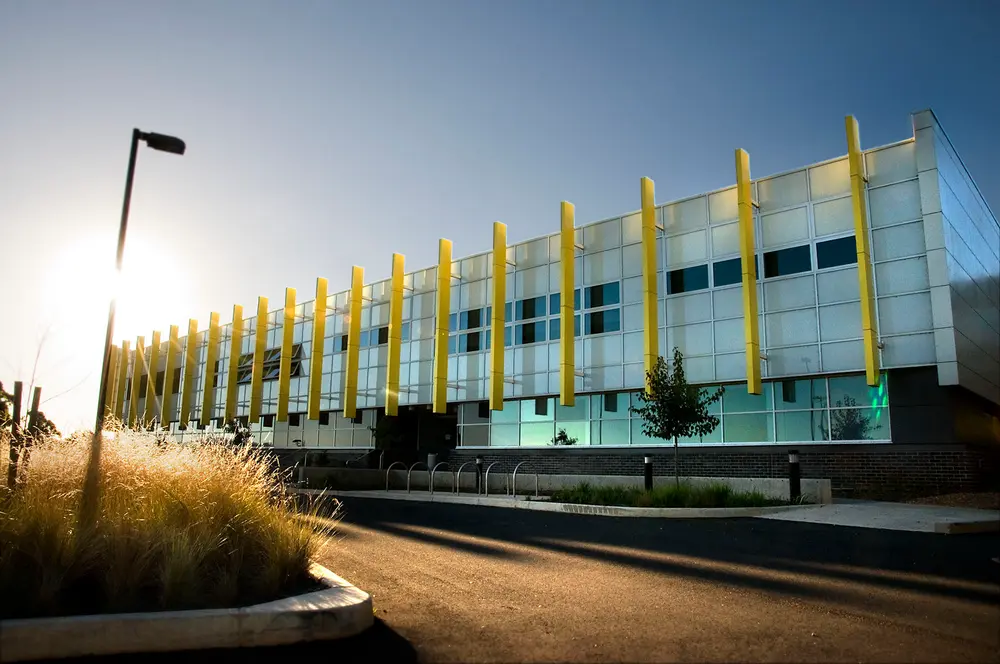
Photo: Content Charles Sturt · CC BY-SA 4.0 · cropped
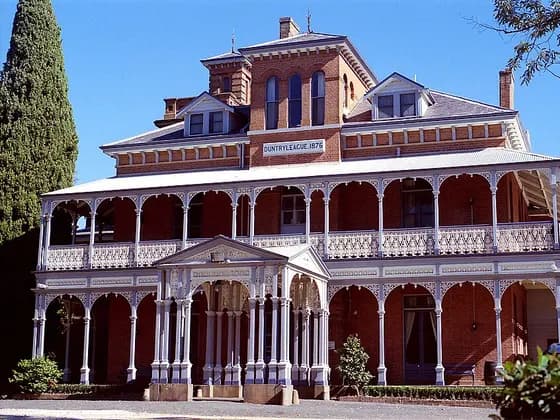
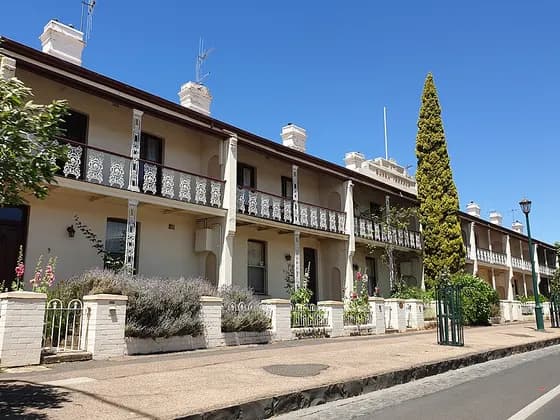
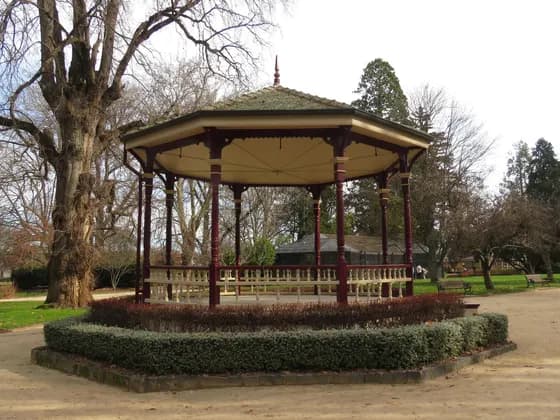
Photo: Tinny186 · CC BY-SA 4.0 · Photo: Floodstreet · CC BY-SA 4.0 · Photo: Calistemon · CC BY-SA 4.0
Current dental students at Australian universities are filming their guides right now: what the course and teaching are really like, the city they live in, the social side, and whether they'd pick it again.
Coming soonNot on sale yet — we'll open these up as soon as the first Australian videos land.
Filming now
Step-by-step: entry requirements, admission-test prep, personal statement, interview format and the key deadlines.
Open the guide →Format breakdown, school-specific sample questions, FAQs and prep tips from tutors who interviewed here.
Read the guide →Integrated, 5 years (undergraduate entry), placements in Orange, Bathurst, Dubbo, Wagga Wagga, Albury and regional NSW.
See the course →Charles Sturt's 5-year undergraduate Bachelor of Dental Science (BDS) trains dentists for rural and regional NSW, with clinical placements in the final two years across Charles Sturt's five dental and oral health clinics at Albury-Wodonga, Bathurst, Dubbo, Orange and Wagga Wagga, and at least half of each intake reserved for rural-background and First Nations applicants.
Charles Sturt was established with an explicit rural workforce mission — a dental program built around rural and regional practice, developed in cooperation with the Australian Dental Council, the Australian Dental Association, local dentists and oral health practitioners. Placements anchored at Orange and Wagga Wagga campus dental clinics with strong community engagement across Central West and Riverina NSW.
Charles Sturt publishes no bonded or return-of-service condition on its dental places - the Commonwealth's Bonded Medical Program covers medical courses only. What is real is the sub-quota: at least 50% of places each year are set aside for applicants with a significant rural background or First Nations applicants.
Integrated curriculum. 5-year undergraduate Bachelor of Dental Science (BDS) at the Orange campus with clinical placements at Albury-Wodonga, Bathurst, Dubbo, Orange, Wagga Wagga. Interview is an in-person panel at Orange in late November/early December, assessing communication, motivation for dentistry, commitment to rural and regional practice, problem solving, decision making and spatial awareness.
Clinical placements sit in the final two years of the course, at sites across the region including Albury-Wodonga, Bathurst, Dubbo, Orange and Wagga Wagga; UAC notes travel, accommodation and related placement expenses are the student's responsibility.
Charles Sturt Dental is strong in these research areas:
Format: In-person panel interview at the Orange campus (late November/early December). Charles Sturt publishes no number of interview days for the current cycle and no longer offers the online-interview fallback that appeared in its 2022 handbook.
Charles Sturt Dental runs an in-person panel interview at the Orange campus in late November/early December; applicants are notified in the last week of October and must attend in person. Charles Sturt states the panel assesses communication skills, motivation for a career in dentistry, commitment to rural and regional dental practice, problem solving, decision making and spatial awareness.
It publishes no number of interview days, and neither manual dexterity nor ethics stations appear among its published criteria.
The rural sub-quota is defined on ASGS remoteness areas, not Modified Monash: an applicant must have spent five or more years (consecutive or cumulative) with their primary residence in an ASGS RA2-RA5 area, declared on the Rural and First Nations Applicants Supplementary Form uploaded with the UAC application.
Where only part of a year was spent in an eligible area (e.g. schooling in a major city with holidays in a regional area), only the weeks actually spent in an RA2-RA5 area count towards the five years. Charles Sturt directs applicants to the DoctorConnect locator to check a specific location's classification.
Supporting documents are not lodged with the form but must be brought to interview.
Charles Sturt does not publish an annual number of places for the BDS - no figure appears on the course page or in handbook entry 4409DS01. UAC does publish a student profile: 45 students commenced the course in 2026, of whom 22 (48.89%) came from prior higher education study, 19 (42.22%) were international, and fewer than 5 were admitted solely on the basis of ATAR. That is commencing students, not places offered, so treat it as scale rather than an intake quota. Charles Sturt does publish the split: at least 50% of places each year are set aside for significant-rural-background or First Nations applicants, and a minimum of 30 interviews are reserved for current Charles Sturt students.
Charles Sturt University School of Dentistry and Medical Sciences was founded in 2009 and is based in Orange.
Programmes offered:
These are real recordings of the interviewers you would meet, from a panel of 17 photoreal faces. Speak your answers out loud, get pressed with follow-ups, and receive rubric-scored feedback about two minutes after you finish, with a replay of your answers.
Try the AI interviewer| Entry pathway | Undergraduate (school-leaver) entry |
|---|---|
| ATAR | UAC's ATAR profile for ATAR-based offers in semester 1, 2026 records a lowest ATAR of 97.70, a median of 98.20 and a highest of 99.70 (selection ranks identical) |
| UCAT-ANZ | Note the UCAT-ANZ cognitive total has been out of 2700 (Verbal Reasoning + Decision Making + Quantitative Reasoning) since the 2025 sitting, which fed 2026 entry |
| Interview format | Panel interview |
| Intake | Charles Sturt does not publish an annual number of places for the BDS - no figure appears on the course page or in handbook entry 4409DS01 |
| Admission overview | Charles Sturt publishes no ATAR requirement for the BDS (its entry score is listed as "TBA") and there is no portfolio. Selection for interview runs on UCAT-ANZ for the general pathway, on UCAT-ANZ plus the Rural and First Nations Applicants Supplementary Form for the rural pathway, and on GPA for current Charles Sturt students. UAC publishes an ATAR profile for ATAR-based offers in semester 1, 2026 (2026 entry): lowest ATAR 97.70, median 98.20, highest 99.70. Treat that as descriptive, not as a cut-off - UAC's student profile for the same cohort shows fewer than 5 of 45 commencing students were admitted solely on the basis of ATAR (22, or 48.89%, came from prior higher education study and 19, or 42.22%, were international), so the profile reflects a very small school-leaver subgroup rather than a selection threshold. The ~93-95 aggregator figure has no Tier-1 basis and should be dropped. UAC lists assumed knowledge of Chemistry, Mathematics Advanced and Physics, with English Standard recommended. Applications for the 2027 intake close through UAC at 11.59pm AEST on 13 September 2026; no late applications are accepted. |
|---|---|
| ATAR | Charles Sturt publishes no minimum ATAR for the BDS and lists the course entry score as "TBA"; its published selection criteria use UCAT-ANZ (or GPA for internal applicants) to select for interview, not ATAR. UAC's ATAR profile for ATAR-based offers in semester 1, 2026 records a lowest ATAR of 97.70, a median of 98.20 and a highest of 99.70 (selection ranks identical). Read that as a description of a very small group, not a bar: UAC's student profile for the same 2026 cohort shows fewer than 5 of 45 commencing students were admitted solely on the basis of ATAR, while 22 (48.89%) entered from prior higher education study and 19 (42.22%) were international. |
| Contextual ATAR | No course-specific ATAR adjustment applies - ATAR is not part of Charles Sturt's published selection criteria for the BDS, and the course entry score is listed as "TBA" (the university's general adjustment-factor scheme is linked from the page but does not attach to this course's published criteria). The rural/First Nations advantage is a place sub-quota - at least 50% of places each year - not an ATAR concession. |
| UCAT-ANZ | UCAT-ANZ is required on both the general and rural pathways; First Nations applicants are exempt, and UAC tells current Charles Sturt students on the internal GPA pathway that they do not need it. No numerical cut-off is published, and Charles Sturt does not publish how it uses the score beyond UAC's statement that applicants may be selected for interview "on the basis of their UCAT score". Note the UCAT-ANZ cognitive total has been out of 2700 (Verbal Reasoning + Decision Making + Quantitative Reasoning) since the 2025 sitting, which fed 2026 entry; the 2024 and earlier sittings included Abstract Reasoning and were scored on the retired /3600 scale. Situational Judgement is reported separately as a band, scaled 300-900. |
| Place types | Commonwealth Supported Places for domestic students (indicative $12,956 per year; Charles Sturt states CSP places in this course are limited), plus a separate international full-fee intake (CRICOS 074610F, indicative A$74,960 per year). Charles Sturt does not publish the annual number of places, though UAC's student profile records 45 students commencing in 2026, 19 of them international. At least 50% of places are reserved each year for the rural/First Nations sub-quota. There is no Bonded Medical Program allocation - that scheme is medicine-only. |
| Indigenous pathway | First Nations applicants do not sit UCAT. They must have completed the NSW HSC or a tertiary equivalent, apply through UAC, upload the rural/First Nations supplementary form, and provide confirmation of First Nations identity before interview (a certified confirmation of identity from a registered community organisation with a common seal, or failing that a self-declaration statutory declaration plus either a genealogy document or a letter of support on official letterhead from a recognised community member or organisation). The interview is a culturally appropriate panel with both First Nations and non-First Nations members, which Charles Sturt says will assess the applicant's academic abilities and motivation, the support necessary (if any) to ensure a successful learning experience, and the applicant's suitability to practise as a dentist. |
| Bonded / rural | ≥50% of places reserved for applicants with significant rural background or First Nation applicants — the most aggressive rural quota of any dental program in NSW. Rural applicants lodge the rural supplementary form with their UAC application. Note Charles Sturt uses two names for the same document: its pathway text calls it the "Rural and Indigenous Pathway form", while the download itself is titled "Rural and First Nations Applicants Supplementary Form". On it you declare five or more years (consecutive or cumulative) of primary residence in an ASGS RA2-RA5 area. Supporting documents are not submitted with the form but must be brought to interview if you are selected. Rural applicants still sit UCAT-ANZ - only First Nations applicants are exempt - and the form closes with the application on 13 September 2026 for the 2027 intake. No bonded return-of-service attaches to these places. |
| Specialities offered | Rural Dentistry, Community Oral Health, Indigenous Oral Health, General Dental Practice |
Working towards the UCAT score Charles Sturt Dental expects? Build a week-by-week plan from your test date — free for the first two weeks.
| Format | In-person panel interview at the Orange campus (late November/early December). Charles Sturt publishes no number of interview days for the current cycle and no longer offers the online-interview fallback that appeared in its 2022 handbook. |
|---|---|
| Interview window (2027 entry) | November 2026-December 2026 |
| Decision date (2027 entry) | Not published - Charles Sturt states only that interview invitations go out in the last week of October 2026 and interviews run late November 2026/early December 2026; offers are released afterwards through UAC's undergraduate offer rounds, whose dates applicants should check on the UAC site for their cycle. |
| Post-interview chances | Charles Sturt does not publish interview-to-offer conversion for the BDS - treat any percentage quoted elsewhere as guesswork, not data. |
Charles Sturt's rural mission means the panel interview is heavily oriented around community connection — examiners want specific towns, specific people, specific experiences rather than generic "I love the country" content. If you have rural origin, lean into it concretely with workforce understanding (why rural dental shortages exist, what continuity-of-care in a regional town looks like). Manual dexterity is worth being able to talk about, but it is not on Charles Sturt's published list - the panel assesses communication, motivation, commitment to rural and regional practice, problem solving, decision making and spatial awareness, so rehearse spatial and decision-making reasoning out loud alongside your community story.
Two questions our tutors flagged as a strong fit for Charles Sturt Dental’s interview style. Try answering them out loud, then open Prometheus for the model answers and follow-up tips.
What would attract you to rural dental practice, and what would worry you?
Likely follow-up · How does scope of practice differ in rural settings?
Adult dental care is largely excluded from Medicare in Australia. What does this mean for patients, and how do you weigh it as an ethical issue?
Likely follow-up · How do state public dental schemes and the Child Dental Benefits Schedule fill part of the gap, and who still misses out?
We've helped students into Charles Sturt Dental and other Australian dentistry schools — get tailored support for each stage of the application.
Hit the UCAT-ANZ cut-off for Charles Sturt Dental with one-to-one tutoring from top scorers.
Learn morePractise the Panel interview format with students who interviewed at Charles Sturt Dental.
Learn moreGet your personal statement reviewed by successful applicants.
Learn moreCompiled from Charles Sturt University School of Dentistry and Medical Sciences's published admissions material and checked for internal consistency. Not independently re-checked against the official course page for 2027 entry — confirm the figures with the school before you rely on them.
We've helped students turn their UCAT, personal statement and interview prep into offers from Charles Sturt Dental and other Australian dentistry schools.
Necessary cookies keep the site working; analytics and marketing cookies run only if you allow them. Privacy