
The University of Waikato Medicine course
What you actually study, and where you will be
University of Waikato's MD is a 4-year (graduate entry) course taught through case-based learning, with patient contact from Year 2 and placements in Waikato, Bay of Plenty, Taranaki/Whanganui, Hawke's Bay and Nelson/Marlborough (2028 entry). The University of Waikato's MD is a new four-year course for graduates, planned to start in 2028 and not yet accredited. You spend Year 1 on the Hamilton campus, studying the biomedical sciences and the social factors that influence health through patient cases in small groups. Years 2 to 4 are clinical placements based in one of five regions, in public hospitals, general practices, acute (urgent) care providers and other community health services.
- Degree
- MD
- Length
- 4 years (graduate entry)
- Teaching
- Case-based learning
- Clinical contact
- Year 2
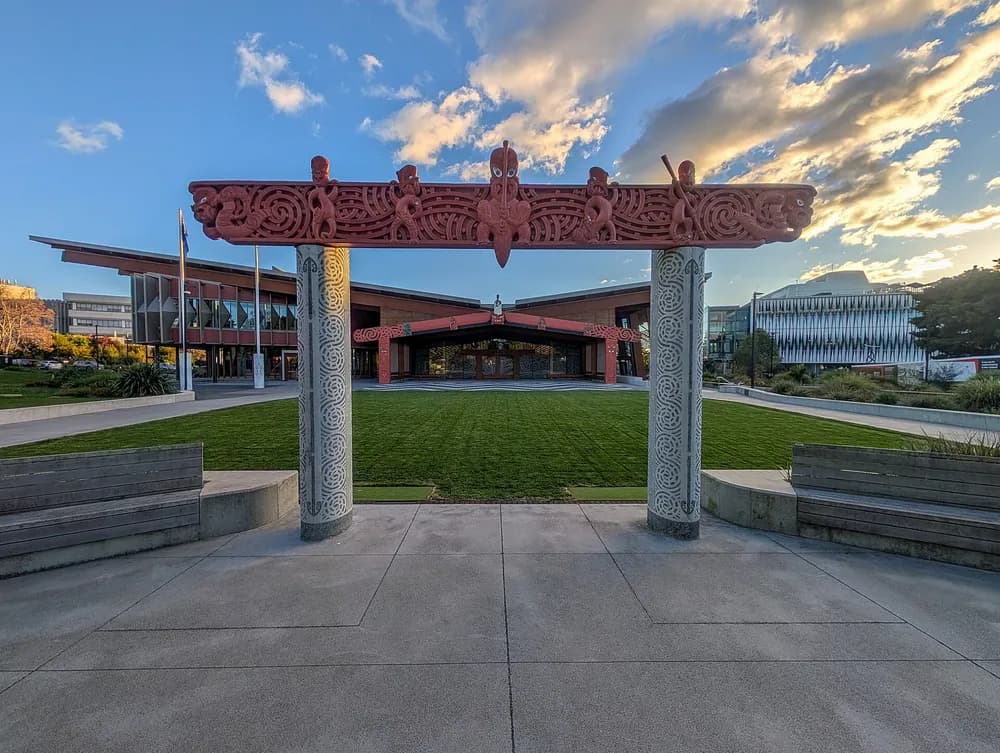
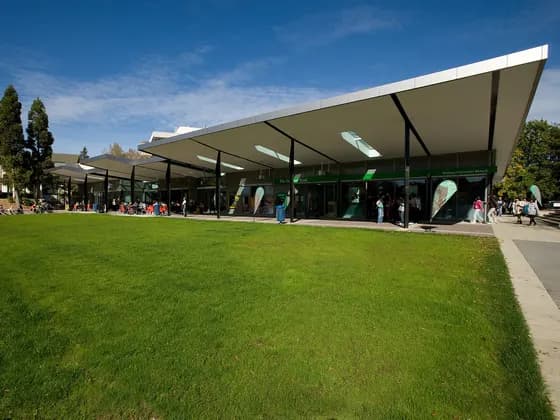

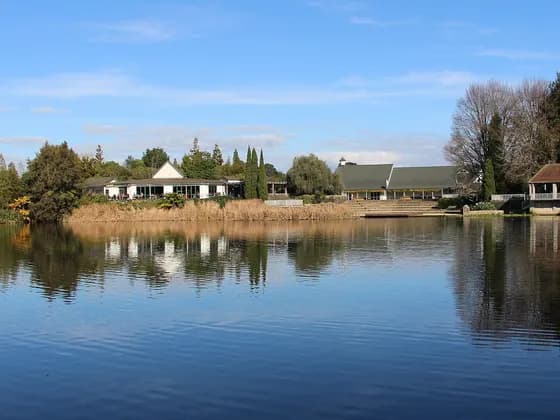
Photo: Nil NZ · CC BY-SA 4.0 · cropped
Photo: Waikato Wordwizard · CC BY-SA 3.0 · Photo: Pseudopanax at English Wikipedia · Public domain · Photo: Michal Klajban · CC BY-SA 4.0
The University of Waikato medicine course at a glance (2028 entry)
The New Zealand Graduate School of Medicine (NZGSM) is the University of Waikato's new medical school. Its course will be a four-year Doctor of Medicine (MD). It is graduate entry: you start it after finishing a bachelor's degree, not straight from school. When it opens, it will be New Zealand's third medical school, alongside the University of Auckland and the University of Otago.
The course has not started and is not yet accredited, so details may change. The university plans a 2028 start and expects its first cohort of 120 students that year, with the first clinical placements from 2029. It says it will publish the exact entry requirements and selection process once the programme has gained accreditation.
The school's stated aim is to train doctors for primary care and for regional and rural New Zealand. Primary care is the first point of contact with the health system. The university gives general practice, emergency medicine and psychiatry as examples of the primary care specialities it wants more graduates to choose. Its first dean and deputy dean are both general practitioners (GPs).
Year 1 is on the Hamilton campus, taught through case-based learning in small groups. The university calls its teaching digital first: digital tools such as digital anatomy and virtual reality (VR) are the default. Years 2 to 4 are clinical placements based in one of five regions, including a year-long placement in general practice. You also learn with acute (urgent) care providers, in other community services and in public hospitals run by Health New Zealand (Te Whatu Ora, or Health NZ).
Most of the year-by-year detail in this guide comes from the Ministry of Health's Detailed Business Case of July 2025. That is a planning document written for the Government's funding decision, and its description of the course is a proposal. The guide says each time a detail comes from it rather than from the university.
| Degree | Doctor of Medicine (MD) |
|---|---|
| Course length | 4 years, graduate entry after a bachelor's degree |
| Status | New and not yet accredited; details may change |
| First intake | 120 students expected in 2028 |
| Year 1 | Hamilton campus, mainly in the new Health Precinct building |
| Teaching style | Case-based learning in small groups, digital first |
| Anatomy | Digital anatomy tools in digital anatomy studios |
| First clinical placements | Year 2; from 2029 for the first cohort |
| Placement regions | Waikato, Bay of Plenty, Taranaki/Whanganui, Hawke's Bay, Nelson/Marlborough |
| General practice | A year-long placement in general practice |
What makes University of Waikato medicine different
All three clinical years based in one region
For Years 2 to 4 you are based in one region, learning in its hospitals, general practices and community services. The university says students who build professional connections and become part of a community are more likely to want to stay and work there. The July 2025 business case intended students to spend most of their training in the same place.
A year-long placement in general practice
The university says every student completes a year-long placement in general practice during Years 2 to 4. The July 2025 business case puts it in Year 3, based in one community. You would follow the same patients over many months, building continuity of care.
Learning alongside nursing, midwifery and pharmacy students
Interprofessional learning means training with students of the professions you will work alongside. The new Health Precinct will house medical students as well as the university's nursing, midwifery and pharmacy students. The university's learning centres in the regions are also planned as places where these students learn together.
A curriculum adapted from Wollongong's graduate MD
Rather than writing a curriculum from scratch, the July 2025 business case proposed adapting the University of Wollongong's Doctor of Medicine. Wollongong, in New South Wales, has a graduate medical school focused on regional and rural health. In October 2025 Waikato signed a memorandum of understanding (MOU), a formal agreement to cooperate, with Wollongong to develop the curriculum together.
A proposed final-year elective in remote or Pacific communities
The July 2025 business case proposed a final-year elective with three options. You could go to a remote rural community in New Zealand or a Pacific Island community overseas, or do a research project.
How University of Waikato teaches medicine
Year 1 uses case-based learning. You work in small, collaborative groups on scenarios designed to mirror real patients' experiences, using them to study the biomedical sciences and the social factors that influence health. The university says the new building is designed for group and self-directed learning rather than large lecture theatres. The July 2025 business case found that the campus's existing lecture theatres had room for the extra demand the school would create.
In the July 2025 business case, each Year 1 case comes with digital resources for self-directed study. Teaching would draw on virtual reality, artificial intelligence and diagnostic imaging. According to the business case, the university intends this digital approach to deliver teaching at the regional placement sites as well as in Hamilton.
Clinical simulation means practising clinical care in realistic, hospital-like settings. The business case proposed using manikins and actors playing patients, extensively in Year 1 and continuing through Years 2 to 4. In Year 1 it would be taught jointly with the university's nursing, midwifery and pharmacy programmes.
From Year 2 most learning happens on clinical placements in your region. There the business case proposed teaching from multidisciplinary teams: doctors, nurses and other health professionals working together. The school is recruiting practising clinicians from all specialties, regions and career stages as honorary clinical academics, who help with teaching, mentoring and curriculum development.
The ways you will learn
| Case-based learning groups | In Year 1, small groups work through patient scenarios and study the science and the social factors each one raises. |
|---|---|
| Digital anatomy | Anatomy studied with digital tools in purpose-built digital anatomy studios in the Health Precinct. |
| Clinical simulation | Practising clinical care in clinical skills areas and simulation wards built to hospital standard in the Health Precinct. |
| Hospital rotations | Blocks of weeks with hospital teams in the regional hospitals of your placement region during the clinical years. |
| General practice placement | A year-long placement in general practice, staying in one community long enough to follow patients over time. |
| Community Clinical Learning Centres (CCLCs) | University teaching sites in local communities across the five regions, used for teaching, pastoral support and learning with other health students. |
How anatomy is taught at University of Waikato
Anatomy follows the course's digital-first approach. The university says Year 1 students will have digital anatomy tools, and the new building includes digital anatomy studios. Digital anatomy means studying the body's structures as interactive 3D models that you can move and manipulate on a screen or in a headset.
The July 2025 business case proposed scheduled anatomy activities for each Year 1 case. These would use virtual reality, advanced imaging and augmented reality (AR), which overlays digital images on what you see. Digital anatomy tables were on its equipment list. The digital teaching would be reinforced with animal and plastic models in more traditional anatomy and physiology laboratories.
When you first meet patients at University of Waikato
Year 1 is spent on the Hamilton campus, where you practise clinical skills in simulation. The July 2025 business case says simulation would develop safe practice in preparation for the Year 2 placements.
Clinical placements begin in Year 2. The university expects the first cohort in 2028, so its first placements are due from 2029. The business case proposed starting with a year in a regional hospital, supported by a clinical tutor. A year centred on general practice in the community would follow.
Year by year at University of Waikato
- Year 1
Foundations on the Hamilton campus
You spend Year 1 at the Hamilton campus, mainly in the new Health Precinct building. The university describes intensive study of the biomedical sciences and the social factors that influence health. Teaching is through case-based learning, with digital anatomy tools and clinical simulation. The July 2025 business case proposed 40 weeks of study, with the content below.
- Cases covering the main body systems: heart and lungs, digestive system, reproductive and hormonal (endocrine) systems, nervous system, muscles and bones, and the immune system.
- The roles a doctor plays: practitioner, professional, health advocate, scholar and member of the community.
- The social and cultural factors that shape health, with an introduction to models of Hauora Māori (Māori health and wellbeing) and Pacific health.
- An emphasis on teamwork and interprofessional practice.
- Year 2
Hospital rotations in your region (proposed)
Year 2 begins your three clinical years in a region, with the first placements due in 2029. The university describes rotations through regional hospitals during Years 2 to 4. The July 2025 business case proposed a year based at a regional hospital, to give you the clinical, cultural and communication skills you need for Year 3 in the community. It proposed the following.
- A three-week clinical skills intensive first, consolidating Year 1 practical skills, clinical reasoning and communication.
- A working knowledge of radiology, so you can interpret X-rays and ultrasound scans.
- Seven five-week rotations: general medicine, geriatrics (care of older people), general surgery, orthopaedic (bone and joint) and specialty surgery, paediatrics (children's health), women's health, and mental health.
- Four days a week working clinically, and one day of structured tutorials and self-directed study.
- Assessing at least five patients a week and presenting your findings, supported by a clinical tutor and a case finder, who finds suitable patients for you.
- Year 3
A year in general practice and the community (proposed)
The university says that during Years 2 to 4 you complete a year-long placement in general practice. The July 2025 business case places it in Year 3, as a 40-week longitudinal placement in one community. Longitudinal means you stay long enough to follow patients over time. The business case says the year would focus on patient-centred care, relationships with patients and continuity of care, and proposed the following.
- Three days a week in general practice, seeing undifferentiated patients: people who arrive with symptoms but no diagnosis yet.
- One day a week in urgent care, either in a rural or provincial hospital's emergency department or at a local accident and medical centre.
- One day a week at a community learning centre: immunisation clinics, checks of people's risk of heart disease and stroke, and distance teaching from regional specialists.
- Supporting at least two families through pregnancy with a local midwife, and five patients with long-term conditions as part of a primary care team.
- Two community projects: a team project tackling a health equity issue the community has raised, and a health advocacy project with a community group.
- Year 4
Getting ready to work as a doctor
The July 2025 business case proposed a final year that prepares you for your first two years as a doctor. These are postgraduate years 1 and 2 (PGY1 and PGY2), when you work as a house officer employed by Health NZ. The year would broadly match the trainee intern (TI) year: the final, placement-based year of the six-year degrees at Auckland and Otago. It would have four 10-week blocks.
- Medicine: two four-week runs, each a block with one team, and a two-week medical elective in an area such as oncology (cancer care), geriatrics or dermatology (skin conditions).
- Surgery: two four-week runs and a two-week run in an emergency department.
- Selectives: two five-week runs of your choice. Examples include paediatrics, anaesthetics (anaesthesia and pain relief for operations), psychiatry, palliative care (care for people with incurable illness), rheumatology (joint and autoimmune conditions), and obstetrics and gynaecology (pregnancy, birth and women's reproductive health). One must have a significant community component.
- If you have an identified weakness in an area, you may be directed to a particular selective run.
- An elective block: a remote rural placement in New Zealand, a Pacific Island placement or a research project.
Where you will actually be at University of Waikato
After Year 1 in Hamilton, you are based in one of five regions for the three clinical years. You indicate your preferred region when you apply. On 11 June 2026 the university announced the five regions and their hospitals, and named the 12 areas where its learning centres are planned. The learning centre regions were identified through a national assessment of community need, clinical capability, supervision capacity and the ability to sustain medical training.
The university planned this placement network with Health NZ, the Ministry of Health and the Universities of Auckland and Otago. Each region has one or two Health NZ hospitals and two to four CCLCs. In June 2026 the university said the centres' final locations were still subject to due diligence and operational planning, and expected to confirm them in the coming months.
The July 2025 business case planned twelve community learning centres so that Year 3 students could be spread across them in groups of about ten. Bigger groups would need larger centres, it said, and smaller ones would risk isolating students from their peers. Its criteria also put each centre within a reasonable commute of a core hospital. It defined that as a 30-minute drive for daily travel and 90 minutes for weekly or monthly trips.
Waikato Hospital will be shared with the University of Auckland. Health NZ says the University of Auckland's Waikato Clinical Campus has 160 of its medical students for most of the academic year.
- Waikato Hospital
- North Waikato (learning centre)
- Hauraki/Thames-Coromandel (learning centre)
- South Waikato (learning centre)
- Waipa/King Country (learning centre)
Tauranga Hospital will also be shared with the University of Auckland.
- Tauranga Hospital
- Western Bay of Plenty (learning centre)
- Rotorua (learning centre)
An October 2025 agreement set out to explore training across Whanganui, Rangitīkei, Ruapehu and South Taranaki. It was signed with Whanganui District Council, Te Ranga Tupua Iwi Collective, Health NZ and Whanganui Regional Health Network.
- Taranaki Base Hospital
- Whanganui Hospital
- New Plymouth (learning centre)
- Whanganui (learning centre)
Health NZ describes the hospital as a teaching hospital for medical students from the University of Otago's Wellington Clinical School.
- Hawke's Bay Fallen Soldiers' Memorial Hospital, Hastings
- Hastings (learning centre)
- Wairoa (learning centre)
The only one of the five regions in the South Island.
- Nelson Hospital
- Wairau Hospital
- Richmond (learning centre)
- Blenheim (learning centre)
Electives, selectives and options at University of Waikato
Everything in this section is a proposal, from the July 2025 business case and the Cabinet paper that went with it. Year 4 would include a 10-week elective block with three options. You could take a remote rural or provincial placement in New Zealand, a placement in a Pacific Island community overseas, or a research project. The business case expected 80 of the 120 students in each year to choose one of the two placements.
The programme was designed to keep travel down. Even so, the business case expected some Year 4 students to need short placements of around 4 to 10 weeks away from their base. It assumed 62 beds would be needed for students on selectives and electives. The 2025 Cabinet paper lists selective and elective accommodation among the establishment costs that the university's contribution would fund.
Facilities and support at University of Waikato
Where you will learn
Year 1 is based in the Health Precinct, a new four-storey teaching and learning building at the centre of the Hamilton campus. It sits next to The Pā, one of the campus's main student and engagement spaces, and the HIKO hub co-working space. It is being built on the site of B Block, the university's original administration building, which was demolished because of earthquake risk.
Its spaces include digital anatomy studios, VR-enabled rooms for case-based learning and clinical skills practice areas. There are also simulation wards built to hospital standard and a multidisciplinary clinical simulation facility. The July 2025 business case planned the building for 120 students with room to expand to 160. Its equipment list included VR headsets, digital anatomy tables and ultrasound probes that connect to mobile devices.
The business case also proposed refurbishing two sets of existing laboratories on campus. Standard biomedical science laboratories would serve Year 1 teaching, and specialised ones the Year 4 research elective. The specialised laboratories would be needed from 2031, when the first cohort reaches Year 4.
Ground was broken on 5 December 2025, and Foster Construction was named main contractor on 8 December 2025. The ground-floor concrete slab was finished by July 2026, ahead of schedule. Construction is scheduled for completion in December 2027, before the first students arrive in 2028.
Support while you study
The university plans each CCLC to give pastoral support, meaning help with wellbeing and personal matters, to the students placed in its area. Each centre is also a teaching site and a link with the local community.
In Whanganui, the October 2025 agreement goes beyond placements. Its partners committed to look into accommodation, future jobs, community activities and ways for students to socialise. The university said the placement programme's success also depends on looking after students' hauora, their health and wellbeing.
Is the University of Waikato course right for you?
This course may suit you if
- You will hold a bachelor's degree by the time you start and want a four-year medical course designed for graduates.
- You want your clinical training in regional New Zealand, based in one region for all three clinical years.
- General practice and community medicine interest you, and a year-long general practice placement appeals.
- You learn well through patient cases in small groups, with digital tools and clinical simulation.
- You want to train alongside nursing, midwifery and pharmacy students.
Things to think about
- The course is new and not yet accredited. Its year-by-year shape comes from a 2025 business case, so details may change before you start.
- The first students start in 2028, so the first cohort will have no senior students to ask, and there will be no graduates of the course until that cohort finishes.
- After Year 1 you move to a region for three years, and the business case places Year 3 in one community, so be ready to relocate.
- The course is designed to steer graduates towards general practice and regional work, and a full year centres on general practice. If you are set on a hospital specialty, weigh that up.
University of Waikato medicine course — frequently asked questions
Applying to University of Waikato?
Where this University of Waikato course guide came from
This guide was written from 22 official sources — University of Waikato's own course pages and programme documents, plus the Medical Council of New Zealand or Dental Council and the health services the school places students with where they publish detail — read on 2026-10-10, then checked claim by claim against those sources.
- University of Waikato: New Zealand Graduate School of Medicine course page
- University of Waikato news, 11 June 2026: clinical placement regions, hospitals and Community Clinical Learning Centres confirmed
- University of Waikato news, 7 July 2026: Health Precinct foundation slab complete
- University of Waikato news, 8 December 2025: main contractor appointed and teaching spaces described
- University of Waikato news, 5 December 2025: groundbreaking for the medical school building
- University of Waikato news, 20 October 2025: curriculum MOU with the University of Wollongong
- University of Waikato news, 8 October 2025: Whanganui placement MOU and the shape of Years 2 to 4
- University of Waikato news, 21 July 2025: Government approval and expected first graduates
- University of Waikato news, 28 September 2024: step towards a third medical school
- University of Waikato news, 10 March 2026: inaugural Dean appointed
- University of Waikato news, 13 April 2026: Deputy Dean appointed
- University of Waikato Careers: Honorary Clinical Academic appointments, New Zealand Graduate School of Medicine
- The University of Waikato Annual Report 2025
- Ministry of Health: New Medical School Detailed Business Case, July 2025
- Cabinet minute CAB-25-MIN-0182.01: New Medical School Detailed Business Case, 21 July 2025
- Cabinet paper: New Medical School Detailed Business Case, 2025
- Ministry of Health factsheet: New medical school, July 2025
- Australian Medical Council: assessment and accreditation of primary medical programs
- Australian Medical Council: procedures for assessing and accrediting medical schools, 2024
- Medical Council of New Zealand: accredited New Zealand medical schools
- Health New Zealand: Waikato education centres (University of Auckland Waikato Clinical Campus)
- Health New Zealand: Hawke's Bay training (Hawke's Bay Fallen Soldiers' Memorial Hospital)
Courses are restructured between cycles. Anything here that decides your application — an anatomy offer, a placement city, a compulsory intercalated year — should be confirmed against the official page for your entry year.
Applying to University of Waikato?
We have helped hundreds of applicants turn their UCAT ANZ, written application and interview prep into offers from University of Waikato and other New Zealand medicine schools.