
The University of Otago Medicine course
What you actually study, and where you will be
University of Otago's MB ChB is a 6-year (incl. Health Sciences First Year) course taught through case-based learning in an integrated curriculum, with patient contact from Year 2 and placements in Dunedin, Christchurch, Wellington and regional and rural New Zealand (2027 entry). Otago's MB ChB takes six years. You start with Health Sciences First Year in Dunedin, then spend two years of Early Learning in Medicine on the Dunedin campus. The last three years, Advanced Learning in Medicine, are clinical and based in Dunedin, Christchurch or Wellington. Year 6 is a trainee intern year spent working in hospital and community teams.
- Degree
- MB ChB
- Length
- 6 years (incl. Health Sciences First Year)
- Teaching
- Integrated + Case-based learning
- Clinical contact
- Year 2

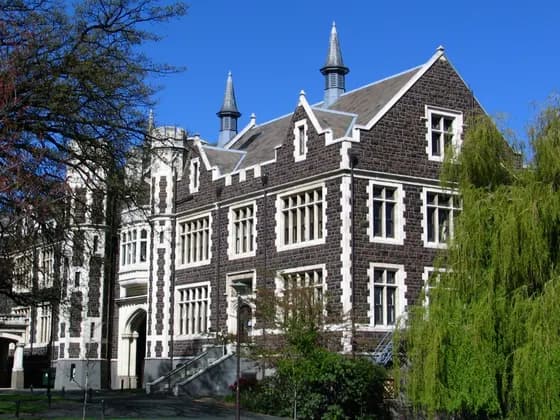
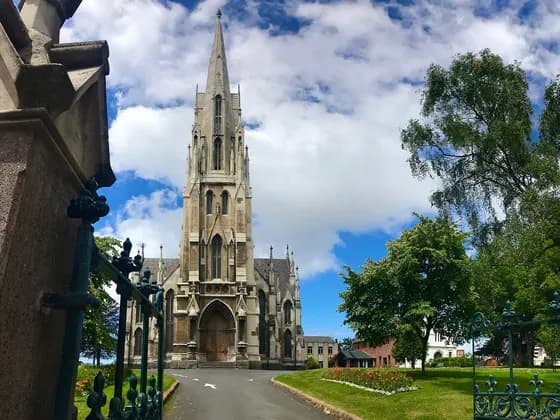
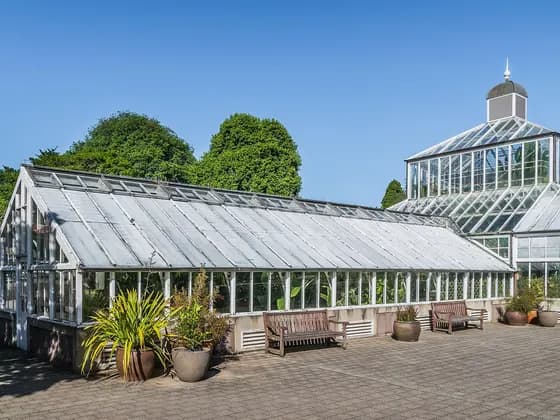
Photo: Bernard Spragg. NZ · CC0 · cropped
Photo: Benchill · CC BY-SA 3.0 · Photo: AnnWoolliams · CC BY-SA 4.0 · Photo: Krzysztof Golik · CC BY-SA 4.0
The University of Otago medicine course at a glance (2027 entry)
Otago's medical degree is the Bachelor of Medicine and Bachelor of Surgery, written MB ChB. It takes six years from the start of Health Sciences First Year (HSFY), a one-year set of seven science papers in Dunedin that school leavers complete before selection into year 2. Graduates can enter year 2 directly and finish in five years.
Years 2 and 3 are Early Learning in Medicine (ELM), taught on the Dunedin campus. The sciences come in blocks built around body systems, each timed to line up with case tutorials, clinical skills sessions and visits to health services. So in the weeks you study the heart in lectures and labs, your tutorial group works through a heart patient's case and you practise the examination on a volunteer.
During year 3 the class is divided between Dunedin, Christchurch and Wellington for Advanced Learning in Medicine (ALM), the clinical years 4 to 6. You rotate through hospital and community attachments, and a small group spend year 5 living in a rural town instead.
Year 6 is the trainee intern (TI) year. A trainee intern is a final-year student who works as the most junior member of a clinical team, with real responsibility under supervision. After graduating you spend postgraduate year 1 (PGY1), your first paid year as a doctor, as a house officer. You are registered by the Medical Council of New Zealand (MCNZ) in its provisional general scope while you do it.
The degree is accredited by the Australian Medical Council (AMC), which reviews New Zealand medical schools jointly with the MCNZ. Its current accreditation runs to 31 March 2029. Hauora Māori (Māori health) and Pacific health are both domains used to organise what you learn. Some details of how teaching is arranged come from the AMC's 2018 review, the last full visit to the school.
| Degree | MB ChB (Bachelor of Medicine and Bachelor of Surgery) |
|---|---|
| Course length | 6 years including HSFY; 5 years for graduate entry to year 2 |
| Domestic places (2027) | About 322 across all admission categories |
| Campuses | Dunedin for years 1–3; Dunedin, Christchurch or Wellington for years 4–6 |
| Teaching style | Body-system blocks with case tutorials and clinical skills in small groups |
| Time on placement | About 75 per cent of years 4–5; full-time clinical work in year 6 |
| First patient contact | Year 2, in clinical skills and Early Professional Experience |
| Rural year | Optional year 5 in RMIP; up to 35 places in the 2027 rural year |
| Final year | Trainee intern year of four 12-week quarters, one an elective |
| Research degree | Optional BMedSc(Hons) research year, usually after year 3 |
What makes University of Otago medicine different
Three clinical schools, one degree
For years 4 to 6 you become a student of the Dunedin School of Medicine, the University of Otago, Christchurch or the University of Otago, Wellington. The three share a curriculum and common assessments but fit their teaching to their own hospitals, and the school has been aligning learning outcomes across them since 2024, aiming to finish by 2026.
A whole year in a rural community
In the Rural Medical Immersion Programme (RMIP) you spend year 5 in a small group in a rural area. You follow patients between the general practice and the rural hospital and learn the year 5 curriculum from GPs, rural hospital generalists and visiting specialists.
A final year that works like a job
As a trainee intern you are attached to teams as the most junior member, admitting patients, keeping notes and starting tests and treatment under supervision. Most trainee interns receive a training grant, and most spend part of the year at a smaller hospital in their region.
Hauora Māori and Pacific health built in
Māori health and Pacific health are both domains used to organise the degree, and both are examined in year 5. Hauora Māori teaching is led by Māori staff, and Pacific communities help design and deliver the Pacific curriculum.
A 12-week elective of your choice
One quarter of the TI year is a free elective in medicine, an allied field or health-related social work, in New Zealand or overseas. It is usually taken somewhere new, and a satisfactory elective report is a condition of graduating.
How University of Otago teaches medicine
In ELM the Medical Sciences, meaning anatomy, physiology, pathology, microbiology, biochemistry, pharmacology and behavioural science, are taught through lectures, labs and small-group tutorials. They are arranged in block modules around body systems. The 11 blocks have been Cardiovascular, Endocrine, Gastrointestinal, Musculoskeletal, Psychological Medicine, Respiratory, Nervous System, Renal, Metabolism and Nutrition, Reproduction, Development and Ageing, and Regional Clinical Anatomy.
Three programme modules run beside the science, taught mainly in tutorial groups of about ten: Clinical Skills, Integrated Cases and Early Professional Experience (EPE). Your tutors are teaching fellows and part-time tutors from the Faculty of Biomedical Sciences and the Dunedin School of Medicine. Vertical modules, such as professional development, ethics and evidence-based medicine, run across both years instead of sitting in one block.
About 60 per cent of your time in years 2 and 3 is formal teaching: lectures, labs, tutorials, supervised patient contact and community placements. The other 40 per cent is set aside for independent and peer learning, and small-group tutorials take up about 15 per cent of the whole.
ALM turns this around. In years 4 and 5 about three-quarters of your time is clinical, and what you learn follows the attachment you are on. The other quarter is lectures and tutorials, including vertical modules such as ethics, Hauora Māori, Pacific health, pathology and microbiology. By the TI year, small-group tutorials are the main formal teaching and most of your week is spent working in the team.
The ways you will learn
| Lectures and laboratories | Carry the Medical Sciences in ELM, block by block, mostly in the Health Sciences precinct. Biochemistry, microbiology and immunology are taught by the Faculty of Biomedical Sciences a short walk north. |
|---|---|
| Integrated Cases tutorials | Your group works through a patient case tied to the current block, mixing tutor-led sessions, group work and private study. |
| Clinical Skills tutorials | Two two-hour sessions a week in ELM, taking histories and examining each other, actors and volunteer patients in the Hunter Centre. Consultations follow the Calgary-Cambridge model, a step-by-step way of structuring a consultation. |
| Early Professional Experience | Visits to health-care settings and Community Contact Week, with reflective writing about what you see. |
| Block modules on attachment | In years 4 and 5 you join a hospital or community team for a set number of weeks, such as eight weeks of Medicine in Dunedin. |
| Simulation | The Otago Clinical Skills Laboratories in Dunedin for years 4 to 6, the SECO clinic for simulated general practice consultations, and consultation practice with actors and tutors in Wellington. |
How anatomy is taught at University of Otago
Anatomy is taught in Dunedin during ELM through lectures, labs and small-group tutorials, as part of the body-system blocks, one of which has been a Regional Clinical Anatomy block.
The bodies used in teaching come from the Department of Anatomy's bequest programme, which now receives more than 60 donated bodies and more than 100 new registrations a year. The first official bequest was recorded in 1943, and donation has been the only source of bodies since the late 1950s. Medical, dental, physiotherapy and science students all learn from them.
The W.D. Trotter Anatomy Museum, in the Lindo Ferguson Building on Great King Street, holds a large collection of specimens and models. The department has a hands-on policy: medical and other students handle the specimens and models freely and use the room as a classroom, while fragile historic pieces stay in glass cases.
Some of the models are made using CT and MRI scans, so handling them helps you make sense of those images. Semester opening hours for students are posted on the teaching platforms, including MedMoodle.
When you first meet patients at University of Otago
HSFY is a science year shared with future dentists, pharmacists, physiotherapists and medical laboratory scientists, so patient contact starts when you enter medicine in year 2.
In clinical skills tutorials you take histories and do limited examinations on classmates, actors and volunteer patients from the community, recruited through the Friends of the Medical School. Early Professional Experience places you in health-care settings around Dunedin to meet patients and see what doctors do.
Community Contact Week sends every student, in a small group, to a small town or suburb for several days. You work out how that community sees its own health needs and which services exist. Each of the three regions hosts about 100 students; Wellington's areas include Porirua, the Kapiti Coast, Whanganui, Palmerston North and the Wairarapa.
Year 4 is the first full clinical year. You join teams as a junior member, for example an acute medicine team at Dunedin or Timaru Hospital for four weeks. By the TI year you are responsible for named patients under a registrar, a senior doctor in specialist training, and the aim is that you leave able to practise safely as a first-year doctor.
Year by year at University of Otago
- Year 1
Health Sciences First Year (HSFY)
HSFY is the shared first year for Otago's health professional programmes and the usual route for school leavers. You take seven set papers across two semesters in Dunedin, taught mainly through lectures, large tutorials and labs. Selection into year 2 medicine happens at the end of the year.
- Semester one: CELS 191 Cell and Molecular Biology, CHEM 191 The Chemical Basis of Biology and Human Health, HUBS 191 Human Body Systems 1 and PHSI 191 Biological Physics.
- Semester two: BIOC 192 Foundations of Biochemistry, HUBS 192 Human Body Systems 2 and POPH 192 Population Health, plus an optional eighth paper from an approved list that includes more than 20 humanities papers.
- Graduates and Alternative category entrants start in year 2. Anyone without equivalent first-year papers may be set a prescribed course of study first.
- Year 2
Early Learning in Medicine begins (MICN 201)
MICN 201 is your first year as a medical student, worth 120 points and running from 10 February to 5 November in 2027. It sets up the four ELM strands that run through both years: Medical Sciences blocks, Clinical Skills, Integrated Cases and Early Professional Experience.
- Vertical modules run across both ELM years. They have included Blood, Cancer, Evidence-Based Practice, Ethics, Genetics, Hauora Māori, Infection and Immunity, Pathology, Palliative Medicine and End of Life Care, Pharmacology, Professional Development, Psychological Medicine and Public Health.
- An OSCE, a circuit of timed stations that each test one clinical task, is held at the end of semester one for practice, and another at the end of the year counts towards progress.
- Year 3
Early Learning in Medicine completed (MICN 301)
MICN 301 continues the same structure from 15 February to 5 November in 2027, moving through the remaining body systems with harder cases and clinical skills. By the end you must show the knowledge, skills and attitudes needed for the clinical years. During the year you also learn which campus you will join.
- A six-week Humanities Selective, in which you take a humanities course alongside medicine. The 2016 options included Myth in French Film, Modern Irish Drama, the Graphic Narrative, Buddhist thought, and healing and death in the ancient world.
- You give your campus preferences for years 4 to 6 and learn your allocation by July or August.
- By the end of year 3 you are expected to know the components of the Meihana Model, a Māori model of clinical assessment used through the rest of the course.
- Year 4
Advanced Learning in Medicine: first clinical year (MICN 401)
MICN 401 is your first full clinical year, worth 120 points and running from 25 January to 22 October in 2027. Each campus splits its students into groups that rotate through block modules, covering the same content in its own arrangement. Year 4 is assessed within modules, with no common end-of-year exam, but its content can appear in the year 5 exam.
- Modules include medicine, older person's health, surgery, primary care (general practice) and public health, with vertical modules alongside.
- Dunedin's Medicine 4 is eight weeks: four with an acute medicine team at Dunedin or Timaru Hospital, and four with a geriatric medicine team at Dunedin Hospital or the ISIS unit at Wakari Hospital. Small groups also attend ophthalmology clinics.
- Dunedin's Surgery 4 is eight weeks of general, vascular, plastic and urological surgery; ear, nose and throat surgery comes through another module. Anaesthesia and intensive care are taught within the surgical attachments in years 4 to 6.
- Christchurch divides the class into eight equal groups that rotate through eight four-week block modules in years 4 and 5. Its vertical modules are taught on dedicated half days.
- Wellington runs a ten-week combined Primary Health Care and General Practice and Public Health module, five weeks each. You practise consultations with an actor and a tutor, interview a patient living with long-term conditions and attend an Alcoholics Anonymous or Narcotics Anonymous meeting.
- Wellington's 12-week medicine module includes four weeks on older persons' wards at Hutt, Kenepuru or Wellington Hospital, and four weeks of neurology, endocrinology, rheumatology and gastroenterology.
- Year 5
Consolidation, or a rural year (MICN 501)
MICN 501 builds on year 4 with more disciplines and more responsibility, from 1 February to 29 October in 2027. On campus you continue through block modules; a small group spend the year in RMIP instead. The year ends with the Whole Class Examination and the Prescribing Skills Assessment.
- Modules include medicine, surgery, paediatrics and psychological medicine (psychiatry) on every campus, plus clinical pharmacology in Christchurch.
- Dunedin's seven-week Medicine 5 has three two-week attachments: a medical specialty team (oncology, haematology, neurology, renal medicine or endocrinology), cardiology and respiratory medicine. Ophthalmology and ambulatory clinics run alongside.
- Dunedin also runs an eight-week Musculoskeletal and Emergency Medicine module that covers orthopaedics, and a six-week paediatrics attachment.
- Wellington's ten-week Child and Adolescent Health module splits into acute and community paediatrics. An eight-week medicine module covers renal, respiratory and sleep medicine, cardiology and oncology.
- Wellington's two-week general practice block covers travel medicine, dermatology, sexual assault care, prescribing, minor surgery and genital examination ahead of the TI year.
- Christchurch's six-week paediatrics attachment covers child development, newborn health, acute paediatric medicine and surgery, and long-term conditions such as developmental disorders and cancer.
- RMIP students cover the year 5 curriculum through general practice and rural hospital work in one of nine rural teaching centres, assessed as four RMIP quarters.
- Year 6
Trainee intern year (MICN 601)
The trainee intern year is an apprenticeship of four 12-week quarters: three clinical and one elective. It runs about 48 weeks and starts in November, a few weeks after year 5 finishes. You work as an increasingly responsible member of the team, aiming to give safe care with the support a first-year doctor has.
- Attachments cover medicine, surgery, general practice, paediatrics, psychological medicine, and obstetrics and gynaecology, arranged differently on each campus. Christchurch's 2021–22 TI handbook also listed critical care and a selective module.
- In Dunedin the ward management module is six weeks of surgery and six of medicine. Medicine runs, meaning attachments to one team, include internal medicine, gastroenterology, neurology, renal, cardiology, older person's health, oncology and haematology.
- On a medicine run you answer to the registrar and consultant for designated patients: admitting them, keeping the records, starting investigations and treatment under supervision, presenting cases and attending outpatient clinics.
- General practice: Dunedin organises three-month placements in rural and regional practices, while Wellington's six-week module places you in teaching practices in rural areas and provincial towns of the lower North Island.
- Paediatrics is a four-week attachment. Wellington students can take it at Wellington, Hutt, Palmerston North, Whanganui or Hawke's Bay Hospital; Christchurch's covers neonatal medicine, paediatrics and paediatric surgery.
- Your supervisor completes a Professional Attitudes and Summary of Achievement Form for each attachment. Dunedin medicine adds a formal long case, in which you assess one patient in full and present to examiners.
- You also complete at least seven Mini-CEX assessments, each a short observed check of you examining a patient.
- Some final-year students spend five weeks in an interprofessional programme in Tairāwhiti (Gisborne or Wairoa) or on the West Coast (Greymouth and Hokitika). You live in shared housing with students of nursing, midwifery, pharmacy, dentistry and other health professions.
How you are assessed at University of Otago
Under the programme's 2026 Assessment Policies you are judged against set standards rather than against your classmates, and every internal assessment is meant to feed back into your learning. Professional conduct counts as much as marks when progress is decided, under the Code of Professional Conduct for Medical Students shared by the Universities of Auckland and Otago.
From year 4 each module reports a Summary of Achievement within ten working days of you finishing it: Pass, Pass After Conditions Met or Fail, with comments on strengths and areas to improve. A Conditional Pass is an interim result naming what you still need to show, and it becomes Pass After Conditions Met once you do. Student Progress Committees review results, and a Board of Censors grants Terms, meaning you have met the year's requirements.
Year 5 ends with the Whole Class Examination: two three-hour papers of 120 multiple-choice questions each, with one best answer and no marks lost for wrong answers. Both are sat on computers through Pātai Moodle, a separate installation of the school's MedMoodle system, on the same days in all three centres. Adult medicine and surgery take 90 to 100 of the 240 questions, and paediatrics, obstetrics and gynaecology, psychological medicine, pathology and public health take 20 to 25 each.
The pass mark is not a fixed percentage. It is set each year from the score of the student at the 90th percentile, and some questions are shared with other medical schools in Australia and New Zealand for comparison. If you fail you may sit a special examination between November and January, which you must pass before year 6, and you can normally repeat only one year of the degree.
The Prescribing Skills Assessment (PSA) is also sat at the end of year 5. It has 60 items in two hours, is produced by the British Pharmacological Society and adapted for Australia and New Zealand, and the New Zealand Formulary is open during the test. It covers writing and reviewing prescriptions, calculations, adverse drug reactions, drug monitoring and interpreting data. You must pass it, or a later sitting or oral examination, to graduate.
The AMC's December 2024 report records that the end-of-year-5 OSCE for the whole class was dropped, so clinical skills are now judged through workplace-based assessment within modules. Written exam time was also cut from nine to six hours. The school plans to replace the Whole Class Examination with progress testing, regular tests sat through the course, once that is feasible, so you may sit a different format.
- Distinction grades are being phased out between 2026 and 2028, so they will not exist for students entering now.
- In year 6, Terms requires passing every module, uploading at least six reflections to the MCNZ ePort online portfolio a month before the end, passing the PSA and a satisfactory elective report.
- Trainee interns must also complete at least seven Mini-CEX assessments of a physical examination to an acceptable standard, a requirement in place since 2021.
- You can apply in the first three weeks of the year to complete assessments in te reo Māori. The school finds a suitably skilled assessor or a translator, though multiple-choice papers are not changed.
- Written exams use te reo Māori terms without translation, from a Hauora Māori glossary that grows each year. In OSCEs you are expected to use the te reo you hear back in the consultation, or ask what it means and then use it.
Where you will actually be at University of Otago
Years 1 to 3 are in Dunedin. For years 4 to 6 your base is the campus you are allocated in year 3. Slightly under a third of the class stay in Dunedin, and the rest are split between Christchurch and Wellington. Each campus sits beside its main public hospital: Dunedin Hospital, Christchurch Hospital or Wellington Regional Hospital.
Public hospitals are run by Te Whatu Ora – Health New Zealand, the national health service that replaced the district health boards in July 2022. Its districts, such as Te Whatu Ora Southern and Te Whatu Ora Tairāwhiti, run the hospitals you are placed in. In Dunedin the Otago Clinical Skills Laboratories are a joint venture between the Faculty of Medicine and Te Whatu Ora Southern.
Each campus also uses smaller regional hospitals and general practices. Otago's list for the TI year is Invercargill or Timaru, Nelson, and Palmerston North or Hawke's Bay, and some trainee interns spend the whole year there apart from the elective. Christchurch's 2021–22 handbook also sent some paediatric runs to Timaru or Blenheim, and general practice placements to rural Canterbury, the West Coast and the Chatham Islands.
RMIP is the biggest move. Selected fifth-year students live in small groups in one of nine rural areas for the whole academic year, and up to 35 places were offered for 2027. The AMC recorded more rural immersion places from 2024. Students who entered through the New Zealand Rural Origins equity group may be required to take part, but nobody is bonded afterwards and the degree does not get longer.
During ALM you can also arrange a placement with an iwi health provider, a health service run by a Māori tribal organisation, through your campus Hauora Māori department.
Home of HSFY and ELM for everyone, and of the Dunedin School of Medicine for the students who stay for years 4 to 6.
- Dunedin Hospital
- Wakari Hospital, including the ISIS unit
- Otago Clinical Skills Laboratories, Fraser Building
- Dunedin general practices and the SECO simulated clinic
Dunedin's year 4 acute medicine can be at Timaru, and Dunedin TI medicine runs go to Southland and occasionally Timaru.
- Southland Hospital, Invercargill
- Timaru Hospital
Years 4 and 5 run as eight four-week block modules, and TI attachments last 4 to 12 weeks.
- Christchurch Hospital
- Canterbury general practices
Nelson is on Otago's list of regional hospitals for the TI year, and Marlborough is also an RMIP centre.
- Nelson Hospital
- Wairau Hospital, Blenheim
Older persons' health attachments at Hutt, Kenepuru or Wellington Hospital start in year 4.
- Wellington Regional Hospital
- Hutt Hospital
- Kenepuru Hospital
- Wellington Accident and Urgent Medical Centre
- Local general practices, and teaching practices in lower North Island towns for the TI year
Wellington trainee interns can take paediatrics at Palmerston North, Whanganui or Hawke's Bay. Gisborne hosts the five-week Tairāwhiti interprofessional programme.
- Palmerston North Hospital
- Whanganui Hospital
- Hawke's Bay Fallen Soldiers' Memorial Hospital
- Tairāwhiti Hospital, Gisborne
Whole-year bases for RMIP students in year 5, spread across the South Island and the lower North Island.
- Alexandra
- Ashburton
- Clutha
- Golden Bay
- Marlborough
- Queenstown
- Wairarapa
- Wairoa
- West Coast
Electives, selectives and options at University of Otago
Most of the course is prescribed, with no free paper choices. Your main decisions are your campus preference, whether to apply for RMIP and where to take your TI elective. Smaller choices are the optional eighth HSFY paper, the year 3 Humanities Selective and an optional Summer School paper.
The TI elective is one 12-week quarter of year 6, outside the prescribed course. You choose any medical, paramedical or medico-social work, meaning health-related social services, in New Zealand or overseas. Your TI supervisor must approve and sign off the placement before you leave, and past students' elective essays are kept in the library to help you choose.
The elective is usually taken somewhere new, often overseas; in 2018 about 70 per cent of students went abroad. Your host supervisor completes an assessment form, and Dunedin asks for an essay of at least 15 pages. Māori students can apply for international indigenous exchange electives in places where indigenous health is strong.
Intercalation and research degrees at University of Otago
Intercalating at Otago means pausing the MB ChB after three or more completed years to take the Bachelor of Medical Science with Honours, BMedSc(Hons). It is a full-time year of research in a medical science field, written up as a thesis. Most students take it after year 3; a few take it after year 5, before the TI year.
In exceptional circumstances a BMedSc(Hons) student can upgrade to the intercalated MB ChB / PhD, taking further time out to complete a doctorate alongside the medical degree. Approval is case by case.
Shorter options are paid summer research studentships, including Health Research Council Pacific health scholarships for Pacific students, and double-degree combinations with a BA, BSc or BBiomedSc.
Facilities and support at University of Otago
Where you will learn
ELM is taught around the Health Sciences precinct at the south end of the Dunedin campus. The Hunter Centre on Great King Street is ELM's small-group base, shared with physiotherapy, dentistry and pharmacy students.
The Hunter Centre has small-group tutorial rooms set up for 12 and a clinical skills room fitted with examination beds and privacy screens for the ELM clinical skills programme. It also has two 30-seat seminar rooms that open into one, the Drennan Pathology Museum, study pods, a computer lab, students' association offices and an atrium with a café.
For years 4 to 6 in Dunedin, the Otago Clinical Skills Laboratories (OCSL) take up the second floor of the Fraser Building on Hanover Street. They host tutor-led clinical skills training for students and hospital staff, with room for 80 to 100 people across four areas. Dunedin's ambulatory medicine teaching uses a simulated outpatient clinic there.
Wellington's main medical school building closed because of earthquake risk, and reconfigured teaching spaces opened for the start of the 2024 academic year. Christchurch expects new research and teaching facilities by the end of 2026. On every campus the learning platform is MedMoodle, which holds module objectives and the Curriculum Map, the list of core conditions and presentations you are expected to know.
Support while you study
Associate Deans Academic Progress (ADAPs) keep an eye on your results. If a module gives you a Conditional Pass an ADAP may contact you, and after a second Conditional Pass or any Fail they meet you to go through it and offer support. Changes to assessment arrangements, such as extra time between OSCE stations, are approved through the ADAP and Disability Information and Support.
Māori students are supported by the Māori Health Workforce Development Unit and Kōhatu – Centre for Hauora Māori. Pacific students are supported by the POPO team and the Pacific Islands Research and Student Support Unit through Va'a o Tautai. Christchurch hosts the Māori/Indigenous Health Institute (MIHI) and Wellington the Eru Pōmare Māori Health Research Centre.
The AMC's 2024 report records a framework for student wellbeing, a leave policy for circumstances that affect your study, and a clear policy that bullying and discrimination are not tolerated. Each campus has a student care coordinator you can contact if you run into serious financial difficulty.
Is the University of Otago course right for you?
This course may suit you if
- You want two years in Dunedin of small tutorial groups, volunteer patients and body-system science before moving to a clinical school.
- You are happy to live in Dunedin, Christchurch or Wellington for years 4 to 6, knowing a ballot is used when not every preference can be met.
- A whole fifth year in a rural town appeals, following the same patients between the practice and the rural hospital.
- You want a final year that works like a job, with named patients, time at a regional hospital and a 12-week elective.
- You value Hauora Māori and Pacific health being examined and used in consultations rather than treated as an add-on.
Things to think about
- Year 1 is HSFY, a large lecture-based science year shared with other health programmes, with no patient contact until year 2.
- You may not get your first-choice clinical campus, and accepting your final allocation is a condition of your place. Years 4 to 6 can also mean moves for regional attachments.
- The curriculum is prescribed: apart from the Humanities Selective, RMIP and the TI elective, there are few free choices.
- Year 5 ends in a high-stakes written exam that you must pass to enter year 6, and the school plans to change its format to progress testing.
- The three clinical schools arrange modules differently, so a block your friend describes in Christchurch may run for a different length in Dunedin, though learning outcomes are being aligned across campuses.
University of Otago medicine course — frequently asked questions
Applying to University of Otago?
How to get into University of Otago
Entry requirements, admission tests, written application and interview, step by step.
Open the guide →University of Otago entry requirements
UCAT ANZ, academic thresholds, interview format and equity pathways.
See the requirements →Prepare for the University of Otago interview
Format breakdown, school-specific sample questions and prep tips from tutors who interviewed here.
Read the guide →Where this University of Otago course guide came from
This guide was written from 48 official sources — University of Otago's own course pages and programme documents, plus the Medical Council of New Zealand or Dental Council and the health services the school places students with where they publish detail — read on 2026-09-28, then checked claim by claim against those sources.
- MB ChB programme structure (HSFY, ELM, ALM, RMIP)
- Advanced Learning in Medicine, years 4 to 6
- Early Learning in Medicine, years 2 and 3 (Dunedin campus)
- About the Otago medical degree
- MB ChB: the University of Otago medical degree
- Study Medicine at Otago: guidelines for admission and programme overview
- Health Sciences First Year papers
- Medical programme options at Otago
- MB ChB class division after third year (ALM campus allocation)
- Bachelor of Medical Science with Honours and intercalated PhD
- Hauora Māori in the Otago medical degree programme
- Pacific health in the MB ChB
- Otago Clinical Skills Laboratories (Fraser Building, Dunedin)
- MB ChB external accountability: AMC accreditation and health providers
- MICN 601 Medicine Sixth Year (Trainee Intern Year), Dunedin
- MICN 401 Medicine Fourth Year, Department of Medicine, Dunedin
- MICN 501 Medicine Fifth Year, Department of Medicine, Dunedin
- Study with the Department of Surgery and Critical Care, Dunedin
- About the Department of Paediatrics and Child Health, Dunedin
- Advanced Learning in Medicine, Department of Primary Health Care, Dunedin (SECO clinic, TI placements)
- Undergraduate medicine at the University of Otago, Christchurch
- Student information, Department of Paediatrics, Christchurch
- University of Otago, Christchurch: Trainee Intern Handbook 2021–22
- University of Otago Medical Graduate Profile
- Undergraduate teaching, Department of Primary Health Care, Wellington
- Undergraduate teaching, Department of Medicine, Wellington
- Undergraduate study, Department of Paediatrics and Child Health, Wellington
- Tairāwhiti Interprofessional Education Programme
- Te Tai o Poutini (West Coast) Interprofessional Education Programme
- MICN401 Medicine Fourth Year, University of Otago paper catalogue (2026 and 2027)
- MICN501 Medicine Fifth Year, University of Otago paper catalogue (2027)
- MICN301 Medicine Third Year, University of Otago paper catalogue (2027)
- MICN201 Medicine Second Year, University of Otago paper catalogue (2027)
- History of the body bequest programme, Department of Anatomy
- W.D. Trotter Anatomy Museum, Department of Anatomy
- Hunter Centre facilities and room bookings
- The Hunter Centre, Health Sciences precinct
- Humanities in Health Sciences and Medicine at Otago (Humanities Selectives)
- Rural Medical Immersion Programme (RMIP), 2027 intake
- RMIP teaching centres
- RMIP application information
- Electives for final-year medical students from outside New Zealand (hospital sites)
- Financial aid for medical students (Trainee Intern training grant, student care)
- MBChB Assessment Policies and Procedures 2026
- Australian Medical Council: accreditation extension report on the Otago Medical School, December 2024 (published 2025)
- Australian Medical Council: accreditation of the University of Otago medical program, November 2018
- Medical Council of New Zealand: registration pathway for New Zealand and Australian graduates (PGY1)
- Medical Council of New Zealand: prevocational PGY1/PGY2 training requirements
Courses are restructured between cycles. Anything here that decides your application — an anatomy offer, a placement city, a compulsory intercalated year — should be confirmed against the official page for your entry year.
Applying to University of Otago?
We have helped hundreds of applicants turn their UCAT ANZ, written application and interview prep into offers from University of Otago and other New Zealand medicine schools.