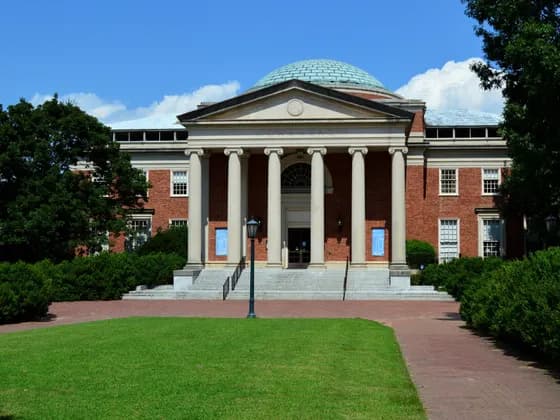
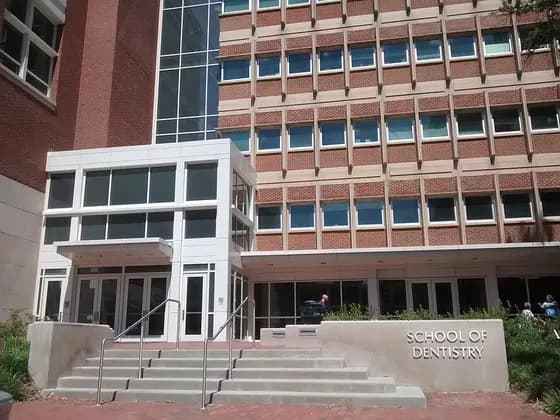
The UNC Adams School of Dentistry (formerly the UNC School of Dentistry), founded in 1950, is the dental school of the University of North Carolina at Chapel Hill — a flagship public research university. UNC Dentistry is consistently ranked among the top dental schools in the United States and is the only dental school in North Carolina.
It has a strong public health mission, serving rural and underserved communities across the state through its community dental programs.
What makes UNC Adams School of Dentistry (DDS) different
Applications via ADEA AADSAS. UNC Adams is the only dental school in North Carolina — NC residents benefit from strong in-state preference and public school tuition. The school's community dentistry focus and rural outreach clinics are nationally recognized.
UNC Adams School of Dentistry (DDS) course & teaching
Integrated curriculum. 4-year DDS curriculum integrating basic science and clinical skills early. UNC's clinic is one of the largest-volume dental clinics in the Southeast US, with a strong community dentistry presence. Clinical rotations at the main Chapel Hill clinic and affiliated rural NC community dental sites.
UNC Adams School of Dentistry (DDS) research strengths
UNC Adams School of Dentistry (DDS) is strong in these research areas:
- Oral epidemiology
- Community dental health
- Periodontal disease
- Orthodontic biology
- Craniofacial genetics
How the UNC Adams School of Dentistry (DDS) interview runs
Format: Traditional one-on-one faculty and/or student interview
UNC Adams School of Dentistry (DDS) intake
Approximately 82–90 students per year.
Where UNC Adams School of Dentistry (DDS) is
UNC Adams School of Dentistry was founded in 1950 and is based in Chapel Hill, NC.
Programmes offered:
- Community Dentistry
- Orthodontics
- Periodontics
- Oral and Maxillofacial Surgery
- Pediatric Dentistry