
Macquarie Medicine Interview
Format, Questions & Prep Tips
Macquarie medicine interviews for 2027 entry are multiple mini interviews (MMI). Published figures: Places (2027, GEMSAS) 60 domestic full-fee + 20 international (no CSP); Domestic interview date Saturday 26 September 2026, face-to-face MMI; Ranking for interview 50% weighted GPA + 50% GAMSAT (MCAT for offshore international applicants).
- Institution
- Macquarie University Medical School
- Interview (2027 entry)
- Saturday 26 September 2026 (domestic, face-to-face); June, August and October rounds by video conference (international)
- Decisions (2027 entry)
- End of October / early November 2026 (GEMSAS place offers); international applicants about two weeks after interview
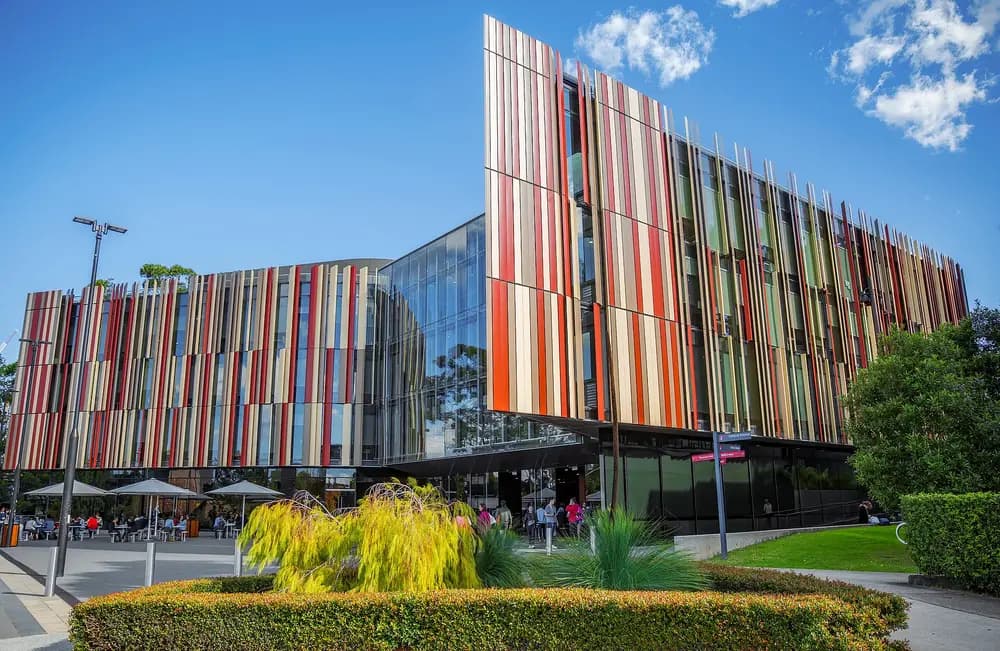

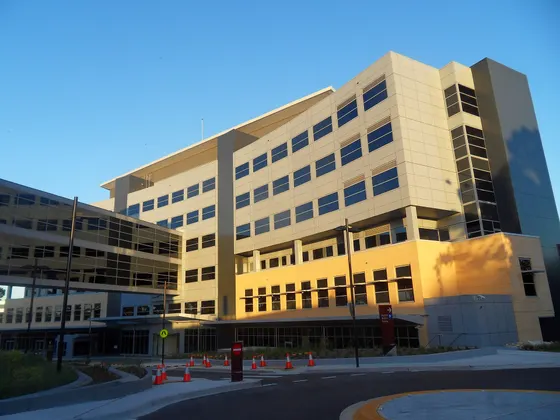
Photo: Macquarie University · CC BY 4.0 · cropped
Photo: The original uploader was Maebmij at English Wikipedia . · CC BY-SA 3.0 · Photo: Mw12310 at English Wikipedia · CC BY-SA 3.0 · Photo: Bernard Gagnon · CC BY-SA 3.0
How to get into Macquarie medicine
Step-by-step: entry requirements, admission tests, personal statement, interview format and the key deadlines.
Open the guide →Macquarie entry requirements
Admission profile, interview format, decision dates and what makes Macquarie different.
See the profile →The Macquarie medicine course
Integrated + Case-based learning, 4 years (graduate entry), placements across Sydney and Hyderabad, India.
See the course →The Macquarie medicine interview
Macquarie's four-year graduate-entry MD is a full-fee program — GEMSAS lists 60 domestic full-fee and 20 international places for 2027, with no Commonwealth Supported Places. Domestic applicants apply through GEMSAS and are ranked for interview on **50% weighted GPA and 50% GAMSAT**, with up to 30 interview places reserved for Macquarie Bachelor of Clinical Science graduates and final-year students.
The interview is an **MMI held face-to-face on Saturday 26 September 2026 for domestic applicants (2027 entry) — applicants rotate through a series of short stations; Macquarie does not publish the station count or timing. Offers are then ranked 50% GPA and 50% MMI**. International applicants sit a modified MMI by video conference in three rounds (June, August and October) and hear about two weeks after interview.
The school is co-located with Macquarie University Hospital and students train alongside private practice from year 1, so cost and the private-hospital model are unavoidable topics — examiners do not punish candidates for raising them, but expect a thoughtful answer about financial sustainability and the public system rather than defensiveness.
Macquarie interview at a glance (2027 entry)
| Places (2027, GEMSAS) | 60 domestic full-fee + 20 international (no CSP) |
|---|---|
| Domestic interview date | Saturday 26 September 2026, face-to-face MMI |
| Ranking for interview | 50% weighted GPA + 50% GAMSAT (MCAT for offshore international applicants) |
| Ranking for offer | 50% GPA + 50% MMI |
| Minimum GPA / WAM | 5.0 / 7 or WAM 65 (competitive scores are much higher) |
| Minimum GAMSAT | 50 overall and 50 in each section, within four years of enrolment |
| Reserved interview places | Up to 30 for Macquarie Bachelor of Clinical Science graduates |
| GPA bonuses | 3% for rural, Macquarie BClinSci and Aboriginal and Torres Strait Islander applicants (maximum 5%) |
Interview format
- Multiple Mini Interview: applicants rotate through a series of short interview stations. Macquarie does not publish the number of stations or the minutes per station.
- Domestic MMIs are face-to-face on Saturday 26 September 2026 (2027 entry); international applicants sit a modified MMI by video conference in three rounds (June, August and October).
- Ranking for interview: 50% weighted GPA and 50% GAMSAT, after meeting the minima (GPA 5.0 or WAM 65; GAMSAT 50 overall and 50 per section). Up to 30 interview places are reserved for Macquarie Bachelor of Clinical Science graduates and final-year students.
- Offers are ranked 50% GPA and 50% MMI; Aboriginal and Torres Strait Islander applicants may be selected case by case through the Indigenous Pathway, in which GAMSAT is optional.
- All places are full-fee, and the program requires clinical placements in both Australian and international settings.
- Domestic applications are through GEMSAS (1–29 May 2026); place offers follow the GEMSAS timetable at the end of October / early November 2026, conditional on completing your degree by 23 December 2026.
Sample interview questions
Why Macquarie specifically, given the full-fee structure?
Be honest about the financial trade-off. Articulate why the hospital-integrated, small-cohort, innovation-focused model is worth it to you.
What attracts you to training in a private-hospital environment from year 1?
What they are listening for:
- Continuity of care
- exposure to elective procedural medicine
- smaller team dynamics
- defined patient pathways
Demonstrate informed engagement.
A patient at Macquarie University Hospital asks why their procedure costs more than in a public hospital. How do you explain the private/public split?
Plain language. The Medicare rebate covers a portion; gap fees apply; private health insurance covers some. Don't moralise about private healthcare.
What healthcare innovation from the last 3 years do you think will most reshape clinical practice?
Be specific:
- AI-assisted radiology
- GLP-1 agonists
- remote monitoring
- surgical robotics
Engage with limitations as well as promise.
Role-play: a colleague consistently uses an AI scribe but doesn't check the output before signing off the note. Address it.
Curiosity first. Reference the clinician's legal accountability for the note. Offer to debrief together; escalate if behaviour persists.
Explain to a patient why their elective shoulder surgery might be safer at Macquarie University Hospital than at a higher-volume public hospital.
Honest engagement with the trade-offs — volume vs continuity, subspecialisation vs throughput. Don't over-claim.
Macquarie's full-fee model has been criticised for entrenching wealth advantage in medicine. How would you respond?
Engage with the equity critique honestly. Discuss FEE-HELP, MQ scholarships, and the broader workforce supply argument. Don't deflect.
Describe a time you used technology to solve a non-clinical problem in a healthcare or community setting.
Concrete example. Macquarie values demonstrated digital fluency.
Voluntary assisted dying is now legal in NSW. How does VAD interact with private hospital settings, given some operators may opt out?
Reference the NSW VAD Act's institutional objection provisions and the practitioner referral obligations. Engage with patient-access trade-offs.
How would you explain the difference between a Medicare rebate and a gap fee to a recently arrived migrant?
Use a concrete dollar example. Plain language. Check understanding.
Macquarie's cohort is ~60. Why does small cohort size matter to you?
What they are listening for:
- High-touch teaching
- dense peer relationships
- accessibility of senior clinicians
Honest engagement.
Role-play: explain to a patient that their elective procedure has been delayed because the surgeon is on leave.
Acknowledge inconvenience. Apologise for the delay, not for the clinical decision. Offer concrete next steps and timing.
Should AI-generated radiology reports be allowed without senior radiologist sign-off in low-acuity settings?
Engage with accuracy, accountability, regulatory framework (TGA), and workflow consequences. Balanced reasoning.
Tell us about a time you had to manage your finances carefully. How does that experience inform your decision to take on FEE-HELP for an MD?
Macquarie examiners value financial self-awareness. Don't be defensive.
Describe a time you received constructive criticism that genuinely changed your approach.
Authentic reflection. Avoid the polished humble brag.
A medical student at MQ is offered a paid endorsement deal by a digital health start-up. They use the product in clinical placements. What's your view?
What they are listening for:
- AHPRA advertising guidelines
- conflict-of-interest disclosure
- student-specific professional standards
Why MD rather than a clinical research PhD or another postgraduate clinical pathway?
Articulate the clinical-craft draw and how it complements (rather than excludes) research interests.
Practise the Macquarie interview
Rehearse the real format before the day — on demand with our AI interviewers, or live with a tutor.
Sit a mock with photoreal AI interviewers — any time
A timed MMI or panel interview on video — Australian & international voices — with interviewers who listen, react and press with follow-ups. Rubric-scored feedback and a replay the moment you finish.






Live mocks with a tutor who’s been in the room
A full Macquarie-style mock with a medic or dentist tutor — honest scoring against real marking criteria, a station-by-station debrief and a written action plan.
Book a mock interviewHow to prepare for the Macquarie interview
Common pitfalls to avoid
Macquarie interview — frequently asked questions
Sources & official admissions information
Ready to nail your Macquarie interview?
Book a mock interview with a tutor who knows the Australian interview formats, orpractise unlimited stations with Prometheus.