
ANU Medicine Interview
Format, Questions & Prep Tips
ANU medicine interviews for 2027 entry are a panel interview. Published figures: Interview dates (2027 entry) 4–11 September 2026, online, in two parts; Interview weighting 50% of the final offer score (the other 50% is the GPA/GAMSAT composite); Ranking for interview 50% weighted GPA + 50% overall GAMSAT (plus any HDR bonus).
- Institution
- Australian National University School of Medicine and Psychology
- Interview (2027 entry)
- 4–11 September 2026 (online, two parts) for domestic applicants; July for international and Indigenous applicants
- Decisions (2027 entry)
- End of October / early November 2026 (GEMSAS place offers), with additional offers November–January if vacancies arise



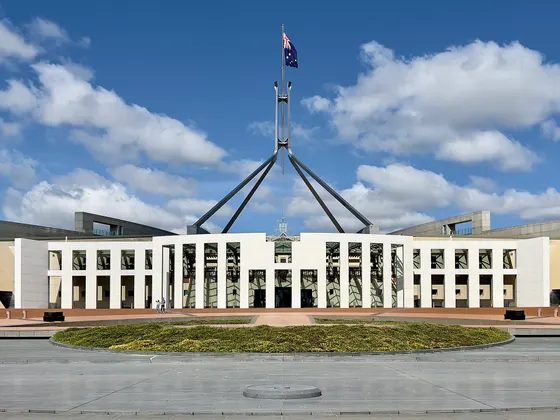
Photo: Thennicke · CC BY-SA 4.0 · cropped
Photo: Russell Thomas · CC BY-SA 3.0 · Photo: Thennicke · CC BY-SA 4.0 · Photo: Chris Olszewski · CC BY-SA 4.0
How to get into ANU medicine
Step-by-step: entry requirements, admission tests, personal statement, interview format and the key deadlines.
Open the guide →ANU entry requirements
Admission profile, interview format, decision dates and what makes ANU different.
See the profile →The ANU medicine course
Team-based learning + Case-based learning, 4 years (graduate entry), placements across Canberra, Sydney, south-east New South Wales and Central Australia.
See the course →The ANU medicine interview
ANU confirms an online interview for domestic applicants — for 2027 entry held in two parts from Friday 4 to Friday 11 September 2026, with no requirement to be in Canberra — worth 50% of the final offer score, alongside the 50/50 GPA–GAMSAT composite used to rank for interview. ANU says the interview covers 'a range of topics and scenarios' but does not publish whether it runs as an MMI or a panel, so prepare for both structured-scenario and conversational questioning.
To be considered for interview you need a weighted GPA of at least 5.0 and a GAMSAT overall score of at least 50 with 50 in each section; entry is far more competitive than the minima. GEMSAS lists 63 Commonwealth Supported and 26 Bonded places for 2027, with approximately 40 of the domestic places reserved for students who came through an ANU undergraduate pathway program, plus up to 30 international places; 29% of domestic places go to applicants of rural background under the Modified Monash Model.
ANU's rural clinical footprint and research culture shape the scenarios: expect questions on rural and remote health, research and evidence, and professionalism. Interviews for international and Indigenous applicants are held in July.
ANU interview at a glance (2027 entry)
| Interview dates (2027 entry) | 4–11 September 2026, online, in two parts |
|---|---|
| Interview weighting | 50% of the final offer score (the other 50% is the GPA/GAMSAT composite) |
| Ranking for interview | 50% weighted GPA + 50% overall GAMSAT (plus any HDR bonus) |
| Minimum GAMSAT | 50 overall and 50 in each section |
| Minimum weighted GPA | 5.0 / 7 |
| Places (2027) | 63 CSP + 26 BMP (~40 reserved for ANU pathway students); up to 30 international |
| Rural sub-quota | 29% of domestic places |
| Interview format | Not published — topics and scenarios; MMI vs panel unconfirmed |
Interview format
- Online interview for domestic applicants in two parts, Friday 4 to Friday 11 September 2026 (2027 entry); allocated dates and times are sent in late August or early September, and there is no need to travel to Canberra.
- Covers 'a range of topics and scenarios' per ANU's admission guidelines; ANU does not publish the number of stations, timings, or whether it is an MMI or a panel.
- Ranking for interview is a 50:50 composite of standardised weighted GPA and standardised overall GAMSAT, plus a 2% (standalone Honours or Masters by Research) or 4% (PhD) bonus where applicable.
- Offers are ranked 50% interview score and 50% the same GPA/GAMSAT composite; domestic offers are Commonwealth Supported or Bonded Medical Program places, and ANU does not allow deferral.
- International and Indigenous applicants interview in July; Indigenous places are uncapped and may be offered in addition to the CSP/BMP cap.
- Applications are through GEMSAS (open 1 May, close 29 May 2026); interview offers are released in early September and place offers at the end of October / early November 2026.
Sample interview questions
Why ANU specifically? What draws you to a research-intensive MD?
Engage with ANU's broader research culture (the John Curtin School, the National Centre for Epidemiology and Population Health), the mandatory research project, and the small cohort. Generic "I like science" scores poorly.
The mandatory research project runs through all four years. What research question would you want to investigate?
Authentic and defensible. Tie to clinical observation, prior research, or lived experience. Avoid buzzwords.
A patient in Goulburn needs urgent neurosurgical care available only in Canberra. The retrieval will take 90 minutes. How do you communicate?
Plain language. Time-critical without panic. Engage the patient. Reference NETS/NSW Ambulance retrieval.
Voluntary assisted dying is legal in the ACT (since 2025). How does the ACT framework differ from Victoria's?
Engage with the ACT VAD Act's distinctive features (e.g., territory-specific eligibility, healthcare practitioner role). Show informed engagement.
Role-play: a fellow MD student tells you they're struggling with the workload and considering leaving. Begin the conversation.
Listen first. Validate. Open conversation about ANU's wellbeing supports. Don't armchair counsel.
What does the ANU Rural Clinical School footprint (Goulburn, Cooma, Bega, Eurobodalla) mean to you?
Engage with rural workforce, RACGP rural training, the geographic spread, and the population health profile of the South Coast/Snowy regions.
Explain Medicare and the role of bulk-billing to a Canberra-based recent migrant.
Plain language. Concrete dollar example. Cultural context.
Closing the Gap targets continue to lag for Aboriginal communities in regional NSW and the ACT. What role can an ANU graduate play?
What they are listening for:
- ACCHO partnerships (Winnunga Nimmityjah)
- cultural safety
- racism in clinical encounters
Don't centre yourself.
Describe a time you delivered difficult news.
STAR with reflection.
Should clinical research be more deeply embedded in undergraduate and graduate medical curricula?
Engage with translational medicine, evidence-based practice, the limits of biomedicine, and workforce realities.
Tell us about a time you led a research project or scientific inquiry, even informally.
Authentic. ANU values demonstrated research curiosity.
A research participant in a clinical trial asks about preliminary results that haven't been published. What do you do?
Engage with research ethics, blinding, equipoise, the patient-research relationship. Reference NHMRC guidelines.
Why ANU rather than Sydney MD or Melbourne MD — both also research-intensive?
Engage with ANU's scale (smaller cohort), the specific Rural Clinical School footprint, the John Curtin School integration. Authentic specifics.
Describe a time you worked in a team where progress was blocked. How did you contribute?
Process focus. ANU values constructive problem-solving.
Should genetic testing for hereditary cancer risk be Medicare-funded for all Australians, regardless of family history?
Engage with screening ethics, predictive value, equity of access, psychological burden, PBS economics.
What does it mean to be a doctor working at the intersection of research and clinical practice?
What they are listening for:
- Translational research
- evidence-based practice
- the time and pull of dual roles
Practise the ANU interview
Rehearse the real format before the day — on demand with our AI interviewers, or live with a tutor.
Sit a mock with photoreal AI interviewers — any time
A timed MMI or panel interview on video — Australian & international voices — with interviewers who listen, react and press with follow-ups. Rubric-scored feedback and a replay the moment you finish.






Live mocks with a tutor who’s been in the room
A full ANU-style mock with a medic or dentist tutor — honest scoring against real marking criteria, a station-by-station debrief and a written action plan.
Book a mock interviewHow to prepare for the ANU interview
Common pitfalls to avoid
ANU interview — frequently asked questions
Sources & official admissions information
Ready to nail your ANU interview?
Book a mock interview with a tutor who knows the Australian interview formats, orpractise unlimited stations with Prometheus.