
Flinders Medicine Interview
Format, Questions & Prep Tips
Flinders medicine interviews for 2027 entry are a panel interview. Flinders describes the format as: Semi-structured panel interview, normally approximately 45-50 minutes (NOT MMI). Published figures: Interview format Semi-structured panel interview, ~45–50 min (NOT MMI); NTMP places Up to 24 (NT Government funded); SARM rural SA places Up to 60 (30 Mount Gambier + 30 Riverland).
- Institution
- Flinders University College of Medicine and Public Health
- Interview (2027 entry)
- 21 September – 2 October 2026 (SA); 21–24 September 2026 (NT)
- Decisions (2027 entry)
- From late October 2026; offers may continue until the MD starts in February 2027
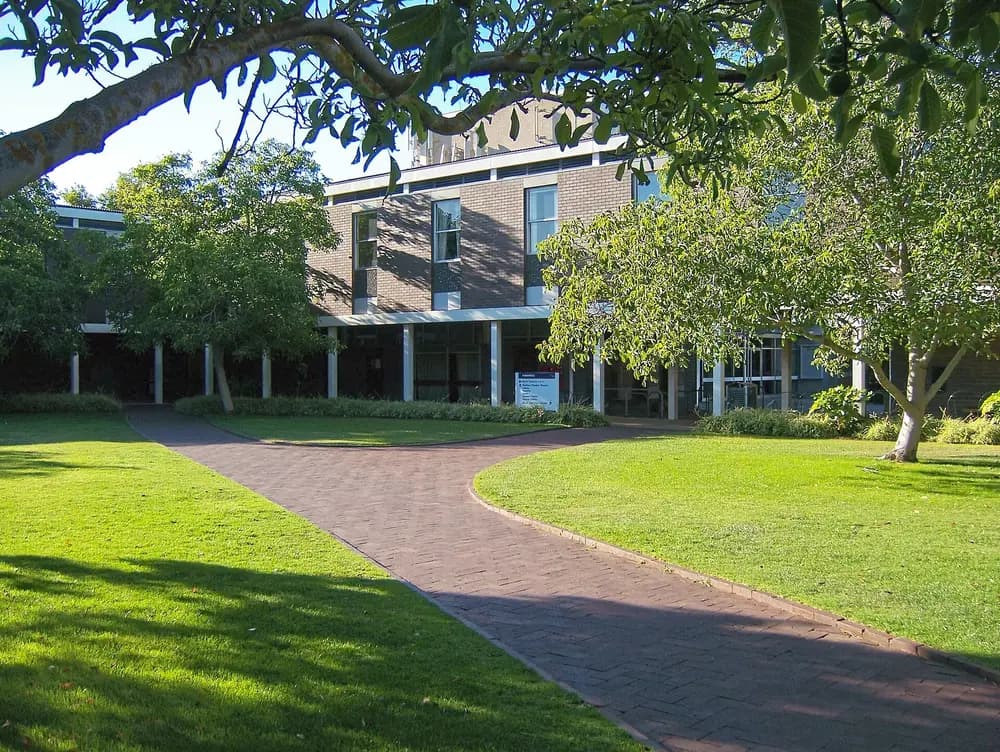
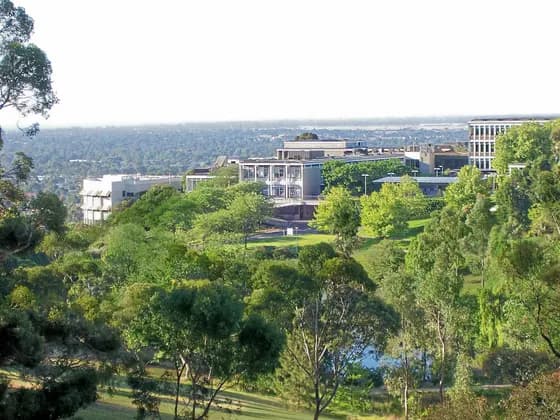
Photo: Cyberjunkie · CC BY 2.5 · cropped
Photo: Cyberjunkie · CC BY 2.5 · Photo: Amanda Slater · CC BY-SA 2.0 · Photo: Yu Chu Chin · CC BY-SA 4.0
How to get into Flinders medicine
Step-by-step: entry requirements, admission tests, personal statement, interview format and the key deadlines.
Open the guide →Flinders entry requirements
Admission profile, interview format, decision dates and what makes Flinders different.
See the profile →The Flinders medicine course
Team-based learning + Integrated, 4 years (graduate entry), placements across Adelaide, rural South Australia, western Victoria and the Northern Territory.
See the course →The Flinders medicine interview
Flinders runs one of Australia's oldest graduate-entry MDs (est. 1974) with a distinctive Problem-Based Learning (PBL) curriculum and a flagship Northern Territory Medical Program (NTMP) — students complete years 2–4 in Darwin and across the Top End. Strong Indigenous health and rural workforce mission throughout.
**Flinders uses a semi-structured panel interview of about 45–50 minutes, NOT an MMI** — a deliberate point of difference from most AU graduate-entry MDs. A small panel uses a common set of scenarios and questions to assess quality of motivation, learning style, communication skills, pro-social attitude and approach to decision-making. Applicants living in metropolitan Adelaide or Darwin interview in person; interstate applicants and those more than 60 km away may interview online via Microsoft Teams.
Shortlisting is on overall GAMSAT score (minimum 50 in each section, GPA 5.00+); offers then rank interview score, weighted GPA and GAMSAT equally, and the interview must be passed. The Indigenous Entry Stream (IES) lets Aboriginal and/or Torres Strait Islander graduates without a GAMSAT result enter via a preparation programme, and up to 5 Bedford Park places are reserved for Aboriginal and/or Torres Strait Islander applicants. The NTMP offers up to 24 NT Government-funded places, prioritising Aboriginal and Torres Strait Islander and NT-resident applicants. Flinders is supported by the Poche Centre for Indigenous Health (Flinders' Indigenous health centre — not to be confused with Sydney's Indigenous Admissions Advisory Group). The SARM (South Australian Rural Medical) programme provides up to 60 rural SA places (30 in Mount Gambier, 30 in the Riverland). NTMP places carry an expectation of NT service; BMP places carry rural-bonded service obligations.
Flinders interview at a glance (2027 entry)
| Interview format | Semi-structured panel interview, ~45–50 min (NOT MMI) |
|---|---|
| Interviewers | Small panel (size not published) |
| Programs | Adelaide MD + Northern Territory Medical Program (NTMP) |
| NTMP places | Up to 24 (NT Government funded) |
| SARM rural SA places | Up to 60 (30 Mount Gambier + 30 Riverland) |
| Indigenous Entry Stream | For Indigenous graduates without GAMSAT (preparation programme) |
| GAMSAT interview cut-off (2027 entry) | 76 non-Flinders graduates; 64 Flinders graduates; 61 rural |
Interview format
- **Semi-structured panel interview, normally about 45–50 minutes** — Flinders does not use an MMI. All applicants get a common set of scenarios and questions.
- Conducted by a small panel who are given only your name — no other information about you.
- In person if you live in metropolitan Adelaide or Darwin; interstate applicants or those more than 60 km away may be interviewed online via Microsoft Teams.
- Qualities assessed: quality of motivation, learning style, communication skills, pro-social attitude, approach to decision-making.
- Offers rank interview score, weighted GPA and GAMSAT equally; you must pass the interview.
- PBL curriculum throughout — small-group, problem-driven learning.
- NTMP students complete years 2–4 in Darwin and across the Top End.
- SARM programme: up to 60 rural SA places. Indigenous Entry Stream for Aboriginal and/or Torres Strait Islander graduates without a GAMSAT result.
- Supported by the Flinders Poche Centre for Indigenous Health (not Sydney's Indigenous Admissions Advisory Group — these are distinct).
Sample interview questions
Why Flinders specifically? What attracts you to the PBL curriculum?
Engage with small-group learning, self-directed inquiry, and the integration of clinical relevance into early years. Authentic reflection on your learning style.
If you applied to NTMP, what draws you to training in Darwin and the Top End?
What they are listening for:
- Concrete engagement with the geography
- the Indigenous health context
- the tropical disease epidemiology
- the lifestyle reality
A patient in a remote Top End community asks you to make a clinical decision without the involvement of their family. The family is traditionally the decision-maker. What do you do?
Engage with patient autonomy AND cultural context. Don't default to either Western individualism or assumed group decision-making. Ask the patient.
Closing the Gap targets continue to lag dramatically in the Northern Territory. What role can a Flinders/NTMP graduate play?
What they are listening for:
- ACCHO partnerships (Danila Dilba, Wurli-Wurlinjang)
- cultural safety
- recognising racism
- workforce closing the gap
Don't centre yourself.
Role-play: explain to a family in a remote NT community why their relative needs aeromedical retrieval to Darwin.
Plain language. Cultural safety. Time-critical without panic. Family-centred communication.
What does PBL learning mean for how you'd engage with the curriculum?
Engage with the small-group format, the self-directed inquiry expectations, the peer accountability. Authentic.
Explain Medicare and the role of Aboriginal Medical Services to a patient new to the system.
Plain language. Cultural context. The role of ACCHOs alongside mainstream services.
Voluntary assisted dying is legal in South Australia (and the NT VAD framework is being developed). How should training prepare practitioners for jurisdictional differences?
Engage with SA VAD provisions, NT context, and the importance of jurisdiction-specific practice.
What does it mean to be a doctor practising in a community where you're a long-term embedded resident?
Engage with the depth of relationships, the responsibilities, dual relationships in small communities. Self-aware.
A junior doctor in a remote NT placement confides they feel out of their depth and are considering leaving. What do you do?
Listen first. Don't fix. Encourage formal supports (NTMP wellbeing, supervisor). Validate.
Describe a time you connected with someone whose lived experience was very different from your own.
Authentic. Cross-cultural competence matters for NT placements especially.
Why graduate medicine at Flinders rather than the Adelaide undergraduate MBBS?
What they are listening for:
- Maturity
- prior degree benefit
- PBL appeal
- NTMP option
Authentic reasoning.
A patient in a remote town asks for opioid medication. You have minimal records and SafeScript SA shows some flags. What do you do?
What they are listening for:
- Real-time monitoring
- addiction pathways
- therapeutic relationship
- contacting previous prescribers
What does cultural safety mean in practice in an NT clinical setting?
Engage beyond awareness — structural safety, recognising racism in clinical environments, the role of Aboriginal Health Workers.
Describe a time you worked in a team where there was disagreement.
Process focus. Constructive engagement.
Should NTMP graduates be required to spend a defined service period in the NT after graduation?
What they are listening for:
- Workforce intent
- individual autonomy
- program mission
Balanced reasoning.
Tell us about a non-academic interest you'd want to continue during medical school.
Authentic. Sustainable lives.
Practise the Flinders interview
Rehearse the real format before the day — on demand with our AI interviewers, or live with a tutor.
Sit a mock with photoreal AI interviewers — any time
A timed MMI or panel interview on video — Australian & international voices — with interviewers who listen, react and press with follow-ups. Rubric-scored feedback and a replay the moment you finish.





Live mocks with a tutor who’s been in the room
A full Flinders-style mock with a medic or dentist tutor — honest scoring against real marking criteria, a station-by-station debrief and a written action plan.
Book a mock interviewHow to prepare for the Flinders interview
Common pitfalls to avoid
Flinders interview — frequently asked questions
Sources & official admissions information
Ready to nail your Flinders interview?
Book a mock interview with a tutor who knows the Australian interview formats, orpractise unlimited stations with Prometheus.