
Newcastle / JMP Medicine Interview
Format, Questions & Prep Tips
Newcastle / JMP medicine interviews for 2027 entry are multiple mini interviews (MMI). Published figures: Applicants interviewed Approximately 600 per year, across two campuses; minimum ATAR 94.30; 85.00 from a rural or remote high school; Direct JMP application deadline (2027 entry) 30 September 2026.
- Institution
- University of Newcastle / Joint Medical Program
- Interview (2027 entry)
- 30 November – 11 December 2026 (NSW, ACT, QLD and rural applicants; Miroma Bunbilla 30 November – 4 December); mid-January 2027 (interstate non-rural)
- Decisions (2027 entry)
- UAC January Round 1 (January 2027); December Round 2 for Miroma Bunbilla Program applicants
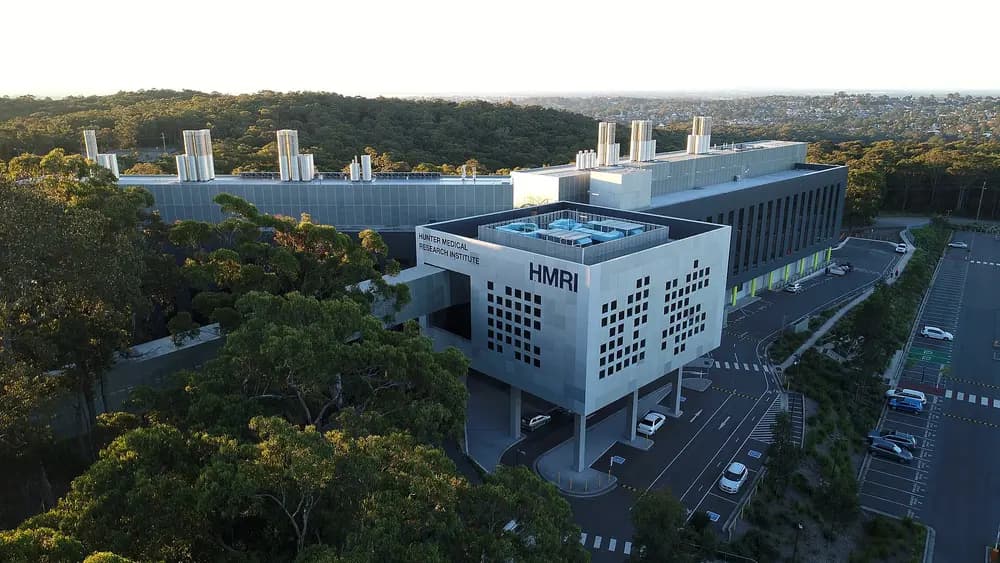
Photo: HMRIAustralia · CC BY-SA 4.0 · cropped
Photo: Janet AG51 · CC BY-SA 4.0 · Photo: Michelle Corcoran · CC BY-SA 4.0 · Photo: JohnArmagh · CC BY-SA 3.0
How to get into Newcastle / JMP medicine
Step-by-step: entry requirements, admission tests, personal statement, interview format and the key deadlines.
Open the guide →Newcastle / JMP entry requirements
Admission profile, interview format, decision dates and what makes Newcastle / JMP different.
See the profile →The Newcastle / JMP medicine course
Problem-based learning + Case-based learning, 5 years (undergraduate entry), placements across the Hunter, New England, Manning and Central Coast regions.
See the course →The Newcastle / JMP medicine interview
The Joint Medical Program (JMP) is delivered jointly by the University of Newcastle and the University of New England: you make one direct JMP application (by 30 September 2026 for 2027 entry) plus a UAC preference, and nominate the university you would prefer. UCAT ANZ performance decides who is invited to the JMP Assessment — a Multiple Skills Assessment (MSA) of rotating stations, with a Personal Qualities Assessment completed during the MSA.
For 2027 entry the MSA runs 30 November – 11 December 2026 for NSW, ACT, Queensland and all rural applicants (30 November – 4 December for Miroma Bunbilla Program applicants) and mid-January 2027 for interstate non-rural applicants; invitations go out in early–mid November. Around 600 applicants are interviewed across two campuses each year. Academic eligibility is a minimum ATAR of 94.30, or 85.00 for students from a rural or remote high school, or tertiary results averaging close to credit level.
JMP has one of Australia's broadest sets of rural and equity entry pathways — Rural Bonus Scheme, Rural and Remote Admissions Scheme, Regional Excellence and Regional Health Professionals pathways, Communities Entry List, Excellence Through Equity, the Biomedical Science Pathway and the Miroma Bunbilla Program — and the MSA is calibrated around that mission. Examiners want authentic rural or regional engagement: if you have rural origin, lean into it; if you don't, show genuine exposure.
Newcastle / JMP interview at a glance (2027 entry)
| Assessment format | Multiple Skills Assessment (rotating stations) + Personal Qualities Assessment during the MSA |
|---|---|
| Applicants interviewed | Approximately 600 per year, across two campuses |
| Minimum ATAR | 94.30; 85.00 from a rural or remote high school |
| UCAT ANZ | Required; performance determines invitation (cut-off set after applications close) |
| Direct JMP application deadline (2027 entry) | 30 September 2026 |
| Invitations | Early–mid November 2026 |
| Offers | UAC January Round 1 (December Round 2 for Miroma Bunbilla applicants) |
| Station count / length | Not published by JMP |
Interview format
- The JMP Assessment combines a Multiple Skills Assessment — a rotation through several stations — with a Personal Qualities Assessment conducted during the MSA. JMP does not publish the number of stations or their length.
- 2027-entry MSA dates: 30 November – 11 December 2026 for NSW, ACT, Queensland and all rural applicants; 30 November – 4 December 2026 for Miroma Bunbilla Program applicants; mid-January 2027 for interstate non-rural applicants.
- Invitations to the MSA are based on UCAT ANZ performance and are sent in early–mid November; the UCAT cut-off is set only after direct applications close.
- Approximately 600 applicants are interviewed each year across two campuses; you can request a preferred location but allocation is not guaranteed.
- Academic eligibility: a minimum ATAR of 94.30, or 85.00 for students from a rural or remote high school, or tertiary results averaging close to credit level.
- Entry pathways include the Rural Bonus Scheme, Regional Excellence Pathway, Regional Health Professionals Pathway, Rural and Remote Admissions Scheme, Communities Entry List, Excellence Through Equity Pathway, Biomedical Science Pathway and the Miroma Bunbilla Program for Aboriginal and Torres Strait Islander applicants.
Working towards the UCAT score Newcastle / JMP expects? Build a week-by-week plan from your test date — free for the first two weeks.
Sample interview questions
Why the JMP specifically rather than another NSW medical school?
Engage with the Hunter / New England / Central Coast LHD placement network, the rural mission, and the joint curriculum. Authentic specifics over branding.
What's your connection to rural or regional NSW?
If genuine — concrete town, family, lived experience. If absent — demonstrate exposure through placements, volunteering, RFDS engagement.
A patient at Tamworth Hospital needs urgent cardiac care that's only available in Newcastle. The retrieval will take 3 hours by road. How do you communicate this to the patient?
Plain language. Explain the time-critical nature without panic. Engage the patient in the decision. Reference the local retrieval network.
Closing the Gap targets for Indigenous cardiovascular mortality lag particularly in regional NSW. What's your view on what needs to change?
Structural reasoning:
- workforce
- ACCHO funding
- racism in clinical encounters
- social determinants
Don't centre yourself.
Role-play: a teammate on your medical placement has been making racist comments about Aboriginal patients. Address it.
Specific behaviour, not character. Private conversation first if safe; supervisor escalation if it recurs.
What does it mean to be a "generalist" doctor in rural NSW?
Engage with the broad scope of practice, rural generalism, RACGP rural training pathway, and the community embedding.
Explain to a worried parent in Inverell why their child's viral infection doesn't need antibiotics.
Validate worry. Plain language. Antibiotic stewardship without lecturing. Concrete safety-netting (return if X).
Voluntary assisted dying is legal in NSW. A patient in a remote town wants VAD but no local practitioner participates. What do you do?
Reference the NSW VAD Act's referral obligations even for non-participants. Identify the VAD Navigator Service. Don't obstruct.
Why might a JMP graduate choose to work in the Hunter or New England rather than move to Sydney?
Engage with workforce pull factors — community connection, broad scope, mentorship pipelines, lifestyle, RACGP rural training.
A patient in Armidale ED is acutely intoxicated and wants to leave against medical advice. They have a head injury. What do you do?
What they are listening for:
- Capacity assessment
- duty of care
- legal hold provisions under NSW Mental Health Act
Don't assume incapacity from intoxication alone.
Describe a time you connected with someone from a different cultural background.
Authentic. JMP's catchment is diverse — Aboriginal communities, migrant farmers, ageing populations. Show cross-cultural competence.
Should rural-bonded medical graduates be able to "buy out" their service obligation?
Engage with workforce maldistribution, individual autonomy, and the policy intent of BMP. Balanced reasoning.
What concerns you most about training rurally?
Honest. Workforce isolation, limited subspecialty exposure, social transitions. Show self-aware sustainability.
Describe a time you worked in a team where there was conflict. How did you contribute?
Process focus. JMP places value on teamwork in diverse, sometimes isolated settings.
A patient at a rural clinic asks you to prescribe medication they've been told to stop by another doctor. They show you no records. What do you do?
Engage with continuity of care, real-time prescription monitoring (SafeScript NSW), contacting the previous prescriber. Don't accommodate without rationale.
What does the Miroma Bunbilla pathway represent, and why does the JMP prioritise Indigenous workforce development?
Engage with cultural safety, community ownership, workforce closing the gap. Don't centre yourself.
Describe a time you reflected on feedback and changed your approach.
Authentic reflection. JMP examiners value evidence of growth.
Practise the Newcastle / JMP interview
Rehearse the real format before the day — on demand with our AI interviewers, or live with a tutor.
Sit a mock with photoreal AI interviewers — any time
A timed MMI or panel interview on video — Australian & international voices — with interviewers who listen, react and press with follow-ups. Rubric-scored feedback and a replay the moment you finish.






Live mocks with a tutor who’s been in the room
A full Newcastle / JMP-style mock with a medic or dentist tutor — honest scoring against real marking criteria, a station-by-station debrief and a written action plan.
Book a mock interviewHow to prepare for the Newcastle / JMP interview
Common pitfalls to avoid
Newcastle / JMP interview — frequently asked questions
Sources & official admissions information
Ready to nail your Newcastle / JMP interview?
Book a mock interview with a tutor who knows the Australian interview formats, orpractise unlimited stations with Prometheus.