
Sydney Medicine Interview
Format, Questions & Prep Tips
Sydney lists no interview on its standard medicine entry route for 2027 entry. Published figures: Standard-pathway interview None — ranked on GAMSAT section scores (2027 guide); GAMSAT minimum (standard applicants) 50 in each section; section scores, not the overall, are used to rank; GPA minimum 5 / 7 (standard), 4.5 / 7 (rural); calculated by UAC QAS.
- Institution
- University of Sydney
- Interview (2027 entry)
- No standard interview. Dubbo stream and Indigenous Facilitated Entry interviews (where required) follow the 4 June 2026 application close — dates are not published
- Decisions (2027 entry)
- First-round domestic offers 3 September 2026; further offers may continue until January 2027 (international first round 1 October 2026)
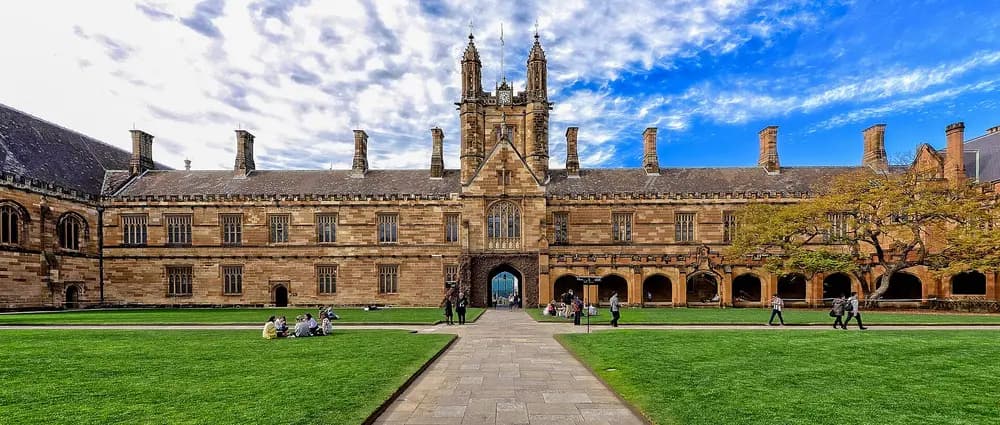
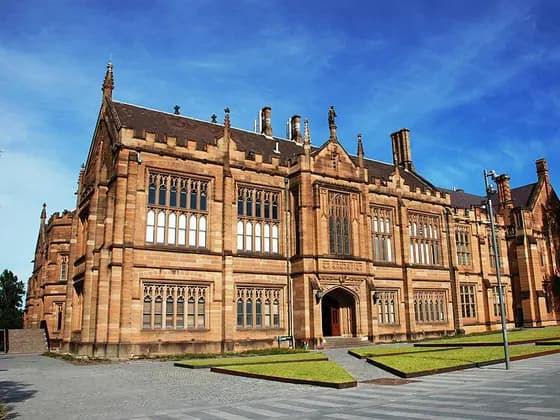
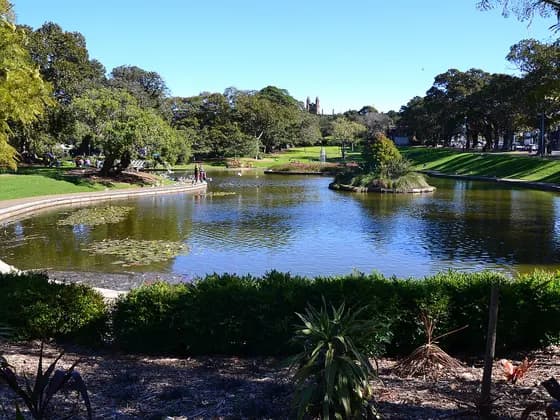

Photo: Jason Tong · CC BY 2.0 · cropped
Photo: Sumple · CC BY-SA 3.0 · Photo: Sardaka ( talk ) 07:55, 9 July 2014 (UTC) · CC BY 3.0 · Photo: J Bar · CC BY 3.0
How to get into Sydney medicine
Step-by-step: entry requirements, admission tests, personal statement, interview format and the key deadlines.
Open the guide →Sydney entry requirements
Admission profile, interview format, decision dates and what makes Sydney different.
See the profile →The Sydney medicine course
Integrated + Team-based learning, 4 years (graduate entry), placements across Sydney teaching hospitals, Dubbo, Orange, Lismore and Broken Hill.
See the course →The Sydney medicine interview
The Sydney Doctor of Medicine's standard Metropolitan (Sydney) stream **ranks applicants on GAMSAT section scores with no interview** (Doctor of Medicine Domestic Admissions Guide 2027). The Dubbo stream adds a compulsory personal statement and a possible interview; Indigenous Facilitated Entry Scheme applicants may be interviewed; and if applicants tie on rank, Sydney reserves the right to use an interview or Situational Judgement Test to separate them.
For most applicants preparation therefore centres on GAMSAT and protecting your GPA. The sections below cover the exceptions, the tie-break scenario, and the transferable interview practice you will need for the graduate-entry schools that do interview.
Sydney interview at a glance (2027 entry)
| Standard-pathway interview | None — ranked on GAMSAT section scores (2027 guide) |
|---|---|
| GAMSAT minimum (standard applicants) | 50 in each section; section scores, not the overall, are used to rank |
| GPA minimum | 5 / 7 (standard), 4.5 / 7 (rural); calculated by UAC QAS |
| Dubbo stream | Compulsory personal statement + possible interview; separate ranking list |
| Indigenous Facilitated Entry Scheme | GAMSAT waived from 2027 entry; interview may be required (IAAG) |
| Domestic applications (2027 entry) | Open 21 April 2026; close 10am, 4 June 2026 |
| Applicant / offer figures | Not published |
Interview format
- Standard Metropolitan (Sydney) stream: no interview. Applicants are ranked on their GAMSAT section scores — Sydney states that overall and average GAMSAT scores are not used — with separate ranking lists for Commonwealth Supported, Bonded Medical and Dubbo places.
- Dubbo stream: a personal statement in Sydney's template is compulsory, and applicants may be required to attend an interview assessing their interest, intention and aptitude for rural and regional practice; the interview contributes to the final Dubbo ranking.
- Indigenous Facilitated Entry Scheme: eligible applicants may be required to attend an interview; from 2027 entry the GAMSAT requirement is waived for this scheme.
- Tie-break: where applicants are ranked equally, Sydney reserves the right to use an additional selection tool such as an interview or a Situational Judgement Test, with due notice.
- You may apply to both the Dubbo and Metropolitan streams but can receive only one MD offer, and transfer between streams is not permitted.
Sample interview questions
(Indigenous Facilitated Entry interview) Tell us about your community and the role you want to play in Aboriginal or Torres Strait Islander health.
What they are listening for:
- Concrete community
- concrete people
- concrete role
Interviewers want depth of connection over generic Indigenous-health framing.
(Indigenous Facilitated Entry interview) Why Sydney MD specifically, and how do you see yourself contributing to the cohort?
Engage with the Sydney clinical-school footprint (RPA, Westmead, Concord, Nepean), the IAAG support network, and your own cohort role.
(Transferable graduate-entry prep) A 32-year-old patient declines a life-saving blood transfusion on religious grounds. As an intern, walk us through your response.
Engage with capacity, autonomy, and the limits of clinical persuasion. Reference NSW Health's consent framework. Document, escalate, respect the refusal once capacity is confirmed.
Voluntary assisted dying has been legal in NSW since 2023. How should medical training prepare students for end-of-life conversations? (Useful prep for any graduate-entry MD MMI you do interview at.)
Discuss the VAD Act criteria (decision-making capacity, 12-month prognosis, voluntariness), the role of conscientious objection, and how communication training scales for these conversations.
Closing the Gap remains a national priority. As a future doctor, how would you contribute to Aboriginal and Torres Strait Islander health outcomes?
Move beyond cultural awareness platitudes. Discuss specific structural issues (workforce, ACCHOs, racism in clinical encounters, social determinants) and your concrete role. Core to Sydney's Indigenous Facilitated Entry interview and to most AU MD MMIs.
(Transferable graduate-entry MMI prep) Role-play: a fellow MD student has been arriving late and missing handover for three weeks. You are asked by the team lead to talk to them. Demonstrate the conversation.
Open with curiosity not accusation. Use specific behaviours (not character judgements). Listen for underlying issues. Offer support before escalation.
Explain what the Pharmaceutical Benefits Scheme is to a recently arrived migrant patient with no English-language health literacy.
Lay terms only. Use analogy (government-subsidised pharmacy list). Check understanding. Offer translation/interpreter resource.
Sydney's MD includes a mandatory Independent Research Project. What research question would you want to investigate, and why?
Be concrete and authentic. Don't pick something that sounds impressive but you can't defend. Link to a clinical observation or lived experience.
A friend confides they used an unprescribed stimulant before a high-stakes exam. They're also a healthcare student. What do you do?
Weigh confidentiality, friendship, and the AHPRA fitness-to-practise framework. Open the conversation with them first; don't catastrophise but don't dismiss either.
Describe a time you had to deliver difficult news in a personal or professional setting. What did you learn?
STAR with reflection. Standard graduate-entry MMI staple. Depth of reflection over polished delivery; be honest about what went wrong.
A patient asks you for your opinion on homeopathy, which they believe is curing their chronic fatigue. They have capacity and feel better. How do you respond?
What they are listening for:
- Respect autonomy
- share evidence base honestly
- screen for missed diagnoses
- document
Don't be dismissive — the therapeutic relationship matters.
Tell us about a non-academic interest you'd like to continue developing during medical school. Why does it matter to you?
Authentic answer. Examiners across most AU MD MMIs want candidates with sustainable lives, not single-track strivers.
Bulk-billing rates for Sydney GPs have fallen below 70%. How should the medical profession respond?
Engage with the MBS rebate freeze, GP practice viability, and patient-access trade-offs. Avoid framing this as doctors vs patients.
Role-play: explain to a worried parent why their child's viral upper-respiratory infection does not need antibiotics.
Validate the worry. Use plain language. Discuss antibiotic stewardship without lecturing. Offer red-flag safety-netting.
Tell us about a time you failed at something significant. What did you learn?
Pick a real failure, not a humble brag. AU MD MMI examiners across the board downgrade obvious deflections.
You're shadowing a senior consultant who makes a dismissive comment about a patient experiencing homelessness. What do you do?
Weigh the hierarchy, your role as a student, and your duty to advocate. Discuss safe ways to raise concerns (debrief, supervisor, anonymous incident report).
Describe a time you worked in a team where someone wasn't pulling their weight. How did you handle it?
Avoid blame; focus on the process you used. Most AU MMIs score the reflective frame more than the outcome.
How would you describe the role of a doctor in 2035? What's changing?
What they are listening for:
- AI-augmented diagnostics
- primary care reform
- climate-driven health risks
- telehealth equity
Show curiosity, not buzzwords.
Should Australia introduce mandatory rural service for new graduates as a condition of CSP funding?
Engage with workforce maldistribution, autonomy, and the existing BMP framework. Argue both sides before landing.
How do you manage stress in high-pressure environments? Give a specific example.
Concrete strategies — not platitudes. Sleep, exercise, peer support, formal help-seeking. Self-aware sustainability.
What current ethical debate in Australian healthcare matters most to you, and why?
Pick something you can actually defend in depth: VAD, Indigenous health, climate and health, private/public split, aged-care reforms.
Practise the Sydney interview
Rehearse the real format before the day — on demand with our AI interviewers, or live with a tutor.
Sit a mock with photoreal AI interviewers — any time
A timed MMI or panel interview on video — Australian & international voices — with interviewers who listen, react and press with follow-ups. Rubric-scored feedback and a replay the moment you finish.





Live mocks with a tutor who’s been in the room
A full Sydney-style mock with a medic or dentist tutor — honest scoring against real marking criteria, a station-by-station debrief and a written action plan.
Book a mock interviewHow to prepare for the Sydney interview
Common pitfalls to avoid
Sydney interview — frequently asked questions
Sources & official admissions information
Ready to nail your Sydney interview?
Book a mock interview with a tutor who knows the Australian interview formats, orpractise unlimited stations with Prometheus.