
Monash Medicine Interview
Format, Questions & Prep Tips
Monash medicine interviews for 2027 entry are multiple mini interviews (MMI). Published figures: Direct Entry domestic places ~234 (incl. 30 ERC and ~67 BMP); Graduate Entry places ~72 (35 End-to-End Rural: 30 North West + 5 Gippsland); MMI stations 6 (both streams, online via Zoom).
- Institution
- Monash Medical School, Monash University
- Interview (2027 entry)
- Direct Entry: December 2026 – January 2027; Graduate Entry: 8–10 September 2026 (all on Zoom, 2027 entry)
- Decisions (2027 entry)
- Direct Entry: VTAC offers mid–late January 2027; Graduate Entry: first-round offers 4 December 2026
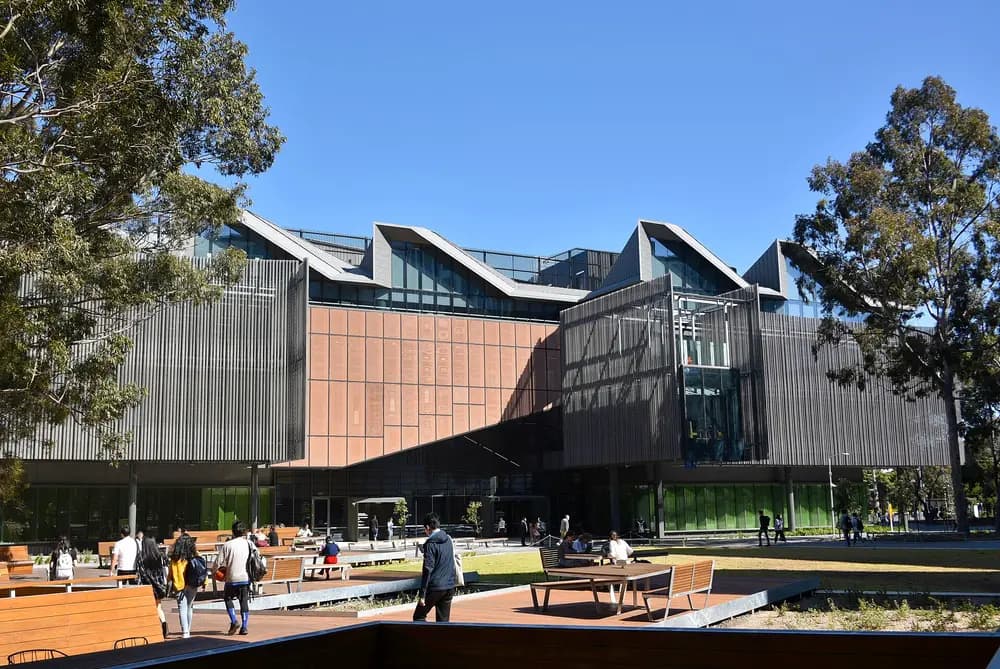
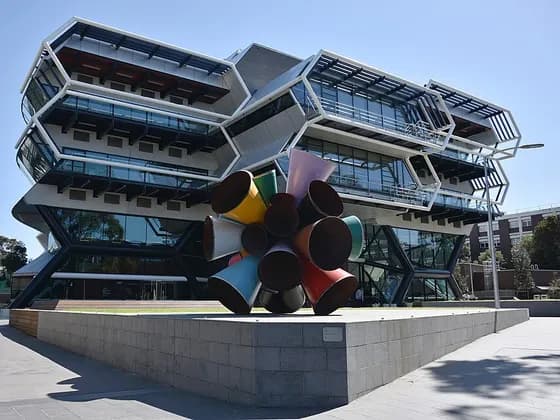
Photo: Rob Deutscher from Melbourne, Australia · CC BY 2.0 · cropped
Photo: Rob Deutscher from Melbourne, Australia · CC BY 2.0 · Photo: -jkb- · CC BY-SA 3.0 · Photo: Gary Houston · CC0
How to get into Monash medicine
Step-by-step: entry requirements, admission tests, personal statement, interview format and the key deadlines.
Open the guide →Monash entry requirements
Admission profile, interview format, decision dates and what makes Monash different.
See the profile →The Monash medicine course
Integrated + Problem-based learning, 5 years (direct entry), placements across metropolitan Melbourne, Gippsland and north-west Victoria.
See the course →The Monash medicine interview
Monash runs a dual-pathway MD: Direct Entry (5-year BMedSc + MD at Clayton, UCAT-ANZ + ATAR ≥ 90) and Graduate Entry (4-year MD at the Gippsland / Churchill campus, restricted to graduates of eligible Monash degrees — Biomedical Science, Pharmacy Hons, Physiotherapy Hons or Science with designated units — with a WAM of at least 70; no GAMSAT). Both pathways use the same MMI format: 6 stations, each with 2 minutes' reading and 8 minutes of interview, held online via Zoom.
Monash Direct Entry does NOT use CASPer — Monash's FAQ states that only your ATAR aggregate, UCAT ANZ total score and interview performance are considered, each weighted equally. Prepare instead for UCAT-ANZ cognitive plus the December/January round mechanics (December round = UCAT-only ranking before ATAR is released; January round = combined UCAT + ATAR). Graduate Entry ranks on undergraduate WAM (40%) and the MMI (60%); for 2027 entry there were 216 interview places, with interviews on Zoom on 8–10 September 2026.
Monash has a strong rural pipeline: Extended Rural Cohort (30 Direct Entry places, with most clinical training in rural and regional Victoria) and the End-to-End Rural Cohorts (35 of ~72 graduate-entry places: 30 North West, 5 Gippsland from 2027). About 67 of the ~234 Direct Entry domestic places are Bonded Medical Program places. Under the Monash Indigenous Entry Scheme, Aboriginal and Torres Strait Islander applicants are exempt from competitive ranking and attend a panel interview with an all-Indigenous panel, which replaces the MMI and UCAT ANZ.
Monash interview at a glance (2027 entry)
| Applicants per year | Not publicly disclosed |
|---|---|
| Direct Entry domestic places | ~234 (incl. 30 ERC and ~67 BMP) |
| Graduate Entry places | ~72 (35 End-to-End Rural: 30 North West + 5 Gippsland) |
| MMI stations | 6 (both streams, online via Zoom) |
| Station length | 2 min reading + 8 min interview; circuit 70–80 min |
| Streams | Direct Entry 5yr + Graduate Entry 4yr (Monash undergrads only) |
Interview format
- Multiple Mini Interview with 6 stations for both streams: 2 minutes reading + 8 minutes interview per station; a circuit takes 70–80 minutes including briefings.
- Held online via Zoom only. For 2027 entry: Direct Entry rounds on 1–2 and 8–9 December 2026 (UCAT-only shortlisting) and 5–6 and 18–19 January 2027 (UCAT + ATAR); Graduate Entry on 8–10 September 2026.
- Stations assess advocacy, collaboration, critical thinking, empathy, ethical reasoning, motivation, resilience.
- Examiners include Monash Health clinicians and MD academics.
- CASPer is NOT used. Direct Entry offers rank ATAR aggregate, UCAT ANZ total score and MMI equally (UCAT SJT is only a tie-breaker on equal UCAT totals).
- Graduate Entry is restricted to graduates of eligible Monash degrees (WAM ≥ 70; no GAMSAT) and ranks WAM 40% / MMI 60%.
Working towards the UCAT score Monash expects? Build a week-by-week plan from your test date — free for the first two weeks.
Sample interview questions
Why Monash specifically — what attracted you to the Clayton precinct and the Monash Health network?
Engage with the integrated teaching footprint (Clayton, Dandenong, Casey, Peninsula, Mildura, Bendigo). Authentic specifics over branding.
Why did you choose the undergraduate (or graduate) stream you applied to?
What they are listening for:
- Defensible reasoning tied to your maturity
- prior degree benefit (or readiness from school)
- how the stream fits your trajectory
A patient at Dandenong Hospital declines treatment because they don't trust the medical system. Walk us through your response.
Engage with the historical reasons for distrust (particularly relevant to migrant and Aboriginal communities), capacity, autonomy, and the relational work to rebuild trust.
Voluntary assisted dying has been legal in Victoria since 2019. As an intern, what would you do if a patient asked you for a VAD referral but you held a conscientious objection?
Reference the Vic VAD Act's referral obligations — you can object personally but must not obstruct access. Refer to a participating practitioner.
Role-play: a patient at Casey Hospital is upset they've been waiting 5 hours in ED. Demonstrate the conversation.
Acknowledge the wait. Apologise for the inconvenience, not for triage. Explain briefly. Concrete next steps.
What does the Mildura or Bendigo clinical school footprint mean to you?
Engage with rural workforce, RACGP rural training, and the year-long rural placement option for the Extended Rural Cohort.
Explain Medicare and the gap fee to a young patient who has never paid for healthcare before.
Plain language. Concrete dollar example. Avoid jargon.
Closing the Gap targets for Aboriginal and Torres Strait Islander cardiovascular mortality continue to lag in Victoria. What role can a Monash graduate play?
Concrete actions:
- VACCHO partnerships
- cultural safety
- racism in clinical encounters
Don't centre yourself.
Describe a time you connected with someone whose background was very different from your own.
Authentic. Monash's catchment includes migrant communities in south-east Melbourne; cross-cultural competence matters.
Should admissions tests like UCAT-ANZ continue to drive medical entry given their cost to applicants?
Engage with the assessment's purpose, the cost-equity critique, and alternatives. Balanced reasoning.
Tell us about a non-academic interest you'd want to continue developing during medical school.
Authentic. Monash values sustainable lives, not single-track strivers.
A patient asks you to prescribe a medication they've seen advertised. They don't need it clinically. What do you do?
Engage with patient autonomy, the limits of beneficence, evidence-based prescribing, and AHPRA advertising standards.
What does it mean to be a doctor in 2035? How is the role changing?
What they are listening for:
- AI diagnostics
- primary care reform
- climate-driven health
- telehealth equity
Curiosity, not buzzwords.
Role-play: explain to a worried parent why their child's viral fever does not need antibiotics.
Validate worry. Plain language. Antibiotic stewardship. Safety-netting.
A teammate at Monash has been making inappropriate comments about patients. Address it.
Specific behaviour. Private conversation first. Supervisor escalation if recurring.
Why Monash rather than Melbourne MD?
Engage with the dual-pathway option, the Clayton-Dandenong-Casey footprint, the Mildura/Bendigo rural pipeline, and Monash Health's breadth.
Describe a time you reflected on critical feedback and changed your approach.
Authentic, not a humble brag.
Practise the Monash interview
Rehearse the real format before the day — on demand with our AI interviewers, or live with a tutor.
Sit a mock with photoreal AI interviewers — any time
A timed MMI or panel interview on video — Australian & international voices — with interviewers who listen, react and press with follow-ups. Rubric-scored feedback and a replay the moment you finish.





Live mocks with a tutor who’s been in the room
A full Monash-style mock with a medic or dentist tutor — honest scoring against real marking criteria, a station-by-station debrief and a written action plan.
Book a mock interviewHow to prepare for the Monash interview
Common pitfalls to avoid
Monash interview — frequently asked questions
Sources & official admissions information
Ready to nail your Monash interview?
Book a mock interview with a tutor who knows the Australian interview formats, orpractise unlimited stations with Prometheus.