
Melbourne Medicine Interview
Format, Questions & Prep Tips
Melbourne medicine interviews for 2027 entry are multiple mini interviews (MMI). Published figures: Rural Pathway 30 Commonwealth-supported (bonded) places; MMI stations 8 (Recorded Online MMI, 2027 entry); Composite weighting MMI 50% / GPA 25% / GAMSAT 25%.
- Institution
- University of Melbourne Medical School
- Interview (2027 entry)
- September 2026 (2027 entry: rural pathway week of 7 September; main online MMI week of 14 September)
- Decisions (2027 entry)
- Late October 2026 (domestic offers, 2027 entry); international offers week of 5 October
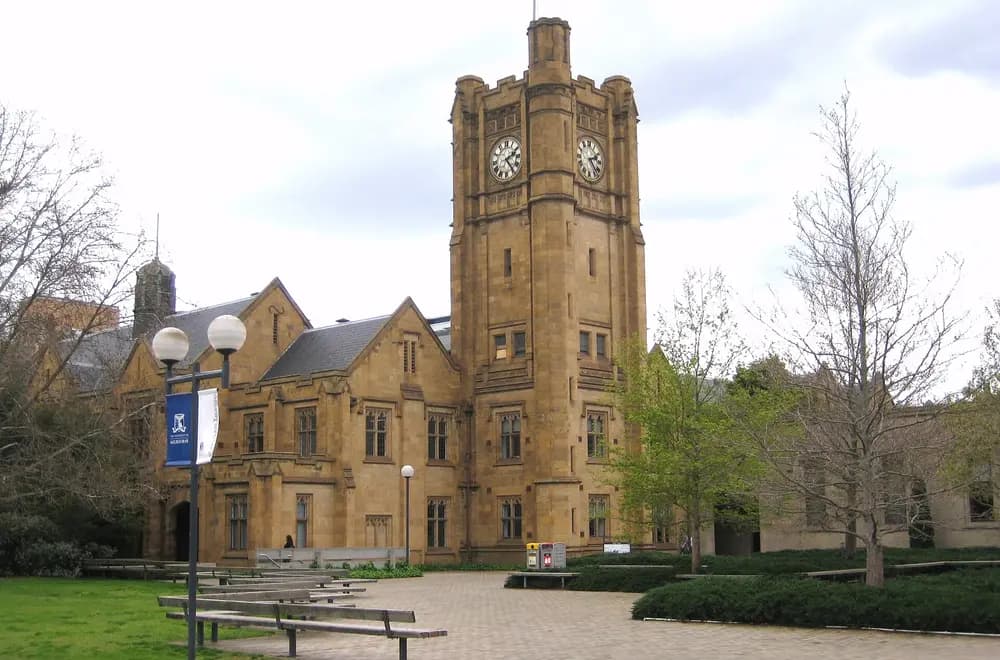
Photo: Polly clip · CC BY-SA 3.0 · cropped
Photo: Canley · CC BY-SA 4.0 · Photo: Nick-D · CC BY-SA 4.0 · Photo: Sgroey · CC BY-SA 4.0
How to get into Melbourne medicine
Step-by-step: entry requirements, admission tests, personal statement, interview format and the key deadlines.
Open the guide →Melbourne entry requirements
Admission profile, interview format, decision dates and what makes Melbourne different.
See the profile →The Melbourne medicine course
Integrated + Case-based learning, 4 years (graduate entry), placements across Melbourne hospitals, Shepparton, Ballarat, Echuca and Wangaratta.
See the course →The Melbourne medicine interview
Melbourne's 4-year graduate-entry MD is Australia's flagship research-rich graduate medical programme. Its Rural Pathway offers 30 Commonwealth-supported (bonded) places for students who complete their whole degree in rural Victoria.
For 2027 entry, every shortlisted applicant sits an eight-station Recorded Online Multi Mini-Interview (ROMMI); Rural and North Western Pathway applicants also complete a three-station live online MMI on a separate day. Melbourne does not publish station timings, and to be eligible for an offer you must clear the cut-score in at least 5 of the 8 stations.
The final composite is weighted **MMI 50% / GPA 25% / GAMSAT 25%**. Melbourne examiners reward structured reasoning over polished delivery — showing your working, naming competing principles, weighing them, and articulating the trade-off rather than jumping to a tidy answer.
GAMSAT (minimum 50 in each section) and GPA are used to shortlist for interview. The Parkville biomedical precinct (Royal Melbourne, Royal Children's, Peter MacCallum) plus Austin, Western, St Vincent's, and regional clinical schools (Shepparton, Ballarat, Bendigo) give Melbourne Australia's broadest hospital network. Murrup Barak supports Aboriginal and Torres Strait Islander applicants through the Indigenous pathway, where applicants must pass the interview to receive an offer.
Melbourne interview at a glance (2027 entry)
| Rural Pathway | 30 Commonwealth-supported (bonded) places |
|---|---|
| MMI stations | 8 (Recorded Online MMI, 2027 entry) |
| Composite weighting | MMI 50% / GPA 25% / GAMSAT 25% |
| Indigenous pathway | Murrup Barak |
Interview format
- Multiple Mini Interview with 8 stations, delivered as a **Recorded Online MMI (ROMMI)** for all pathways. Melbourne does not publish station timings. You must clear the cut-score in at least 5 of 8 stations to be eligible for an offer.
- Held online for 2027 entry: the main MMI runs the week of 14 September 2026; Rural and North Western Pathway applicants also sit a three-station live online MMI (rural: week of 7 September).
- Stations cover ethical reasoning, communication and role-play, motivation, teamwork, reflective practice.
- Examiners are clinicians and senior MD academics from across the Parkville precinct.
- Composite weighting: MMI 50% / GPA 25% / GAMSAT 25%.
- Rural Pathway: 30 Commonwealth-supported (bonded) places; Rural and North Western Pathway offers are ranked GPA 30% / interview 70%.
- Mandatory Discovery research project woven through the four years.
- Indigenous pathway applicants must pass the interview to receive an offer; eligibility is confirmed through Murrup Barak.
Sample interview questions
Why Melbourne MD specifically — what draws you to the Parkville precinct?
Reference the integrated biomedical research footprint (Doherty, Peter Mac, Florey, WEHI), the Discovery project, and the breadth of clinical schools. Generic prestige answers score poorly.
A 19-year-old presents with a treatable cancer but refuses chemotherapy on personal grounds. They have capacity. Walk us through your response.
Name the competing principles (autonomy, beneficence, family dynamics). Weigh them. Don't rush to a conclusion. Melbourne scores the structured reasoning.
Voluntary assisted dying has been legal in Victoria since 2019. What has the rollout taught the rest of Australia?
Engage with the implementation review findings — practitioner uptake, eligibility friction, conscientious objection, the role of the VAD Care Navigator. Show informed engagement.
The Discovery research project is mandatory in the Melbourne MD. What question would you want to investigate, and why?
Authentic and defensible. Tie to a clinical observation, prior research, or lived experience. Avoid buzzwords.
Role-play: a fellow MD student tells you they've been struggling with the workload and considering leaving the program. Begin the conversation.
Listen first. Don't fix. Validate. Open conversation about formal supports (MIH, faculty wellbeing services). Avoid armchair counselling.
Explain the Pharmaceutical Benefits Scheme to a recently arrived migrant patient who has no health-system literacy.
Use a concrete analogy (government-subsidised pharmacy list). Plain language. Check understanding.
Closing the Gap cardiovascular targets continue to lag. What's the role of a Melbourne MD graduate in shifting them?
Structural reasoning:
- workforce
- ACCHO partnerships (VACCHO)
- racism in clinical encounters
- social determinants
Don't centre yourself.
Describe a time you delivered difficult news to someone in your personal or professional life.
STAR with reflection. Melbourne scores depth of reflection.
A 45-year-old patient asks you for a chronic opioid prescription. Their previous GP refused. SafeScript shows a pattern of concern. What do you do?
What they are listening for:
- Real-time prescription monitoring (SafeScript Victoria)
- addiction medicine pathways
- therapeutic relationship
- alternatives
Don't default to refusal without context.
Why graduate medicine at Melbourne rather than the 6-year Monash undergraduate stream?
Engage with maturity, prior degree benefit, the Parkville research culture, and the Discovery project specifically.
Tell us about a time you worked in a team where you disagreed with a decision.
Process focus, not outcome focus. Melbourne values constructive dissent.
Should Australia expand subsidised access to weight-loss drugs like semaglutide on the PBS?
What they are listening for:
- PBS economics
- obesity as chronic disease
- equity of access
- alternative public-health investments
Balanced reasoning.
What does it mean to be a "scientist-clinician" in 2026?
Engage with translational research, evidence-based practice, the limits of biomedicine. Avoid jargon.
Role-play: explain to a parent why their child's tonsillitis doesn't need antibiotics this time.
Validate worry. Plain language. Antibiotic stewardship without lecturing. Concrete safety-netting.
A patient refuses a life-saving blood transfusion on religious grounds. They are competent and adult. What do you do?
What they are listening for:
- Capacity
- autonomy
- NSW/VIC consent framework
- palliative escalation
Document. Respect the decision.
Tell us about a non-academic interest that you'd want to continue developing during medical school.
Authentic. Melbourne wants candidates with sustainable lives, not single-track strivers.
Should medical schools cap full-fee international student intake given workforce pressures?
What they are listening for:
- CSP funding model
- international revenue
- workforce projections
Balanced reasoning.
Practise the Melbourne interview
Rehearse the real format before the day — on demand with our AI interviewers, or live with a tutor.
Sit a mock with photoreal AI interviewers — any time
A timed MMI or panel interview on video — Australian & international voices — with interviewers who listen, react and press with follow-ups. Rubric-scored feedback and a replay the moment you finish.






Live mocks with a tutor who’s been in the room
A full Melbourne-style mock with a medic or dentist tutor — honest scoring against real marking criteria, a station-by-station debrief and a written action plan.
Book a mock interviewHow to prepare for the Melbourne interview
Common pitfalls to avoid
Melbourne interview — frequently asked questions
Sources & official admissions information
Ready to nail your Melbourne interview?
Book a mock interview with a tutor who knows the Australian interview formats, orpractise unlimited stations with Prometheus.