
Tasmania Medical School
2027 Entry Requirements & Interview Format
University of Tasmania School of Medicine in Hobart, TAS runs a school-leaver and graduate-entry medicine program for 2027 entry. Admission tests listed: UCAT-ANZ, GAMSAT, ISAT and MCAT. Published hurdles: ATAR — Domestic: minimum adjusted ATAR 95; GPA — Previous-higher-education entry: minimum unweighted GPA 5.25.
- Location
- Hobart, Australia
- Established
- 1965
- Interviews (2027 entry)
- No interview (standard entry). Aboriginal Entry Pathway applicants are interviewed by representatives of the Medicine Admissions Committee; UTAS does not publish an interview window.
- Decisions (2027 entry)
- Mid-December 2026 (first-round offers to Tasmanian Year 12 applicants on ATAR); January 2027 (interstate Year 12 and IB applicants) — the pattern UTAS publishes on its application-dates table each cycle. International applicants are handled in four offer rounds across the preceding year (rounds closing 30 May 2027, 31 July 2027, 30 September 2026 and 30 November 2026), with offers made within two weeks of each round closing.
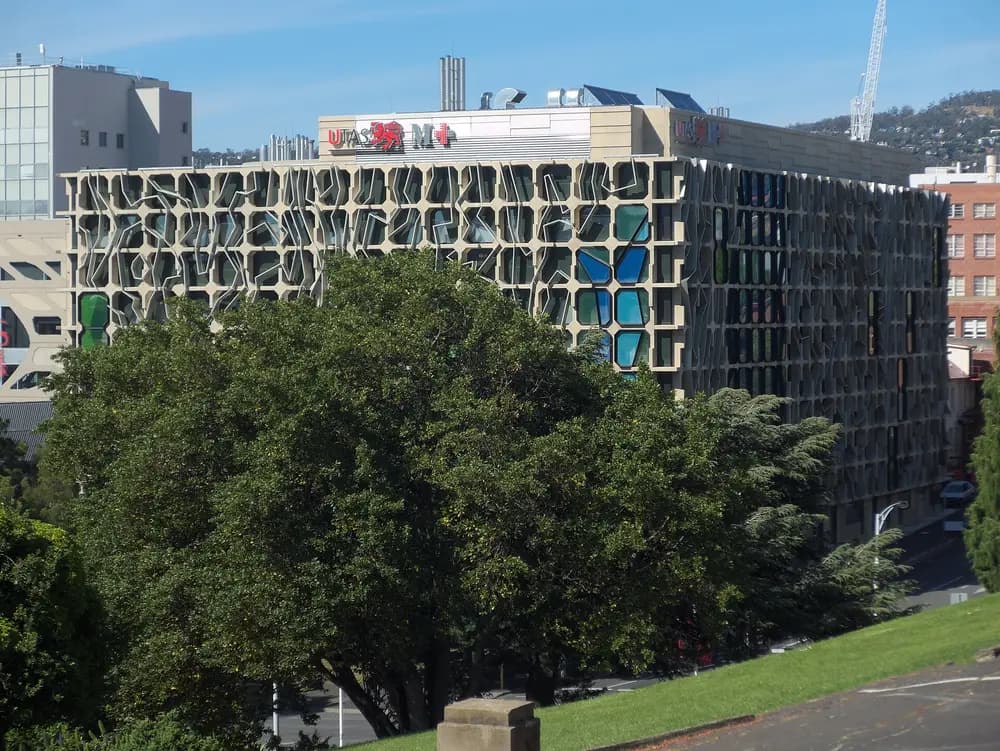
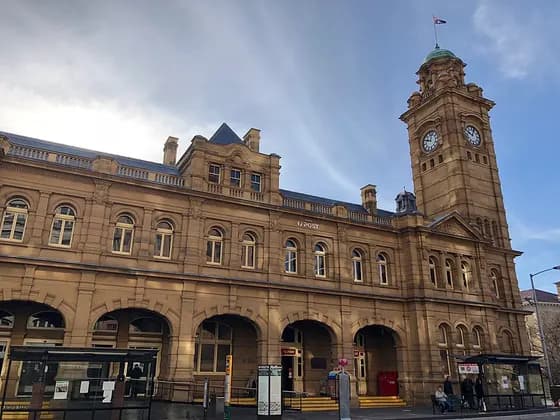
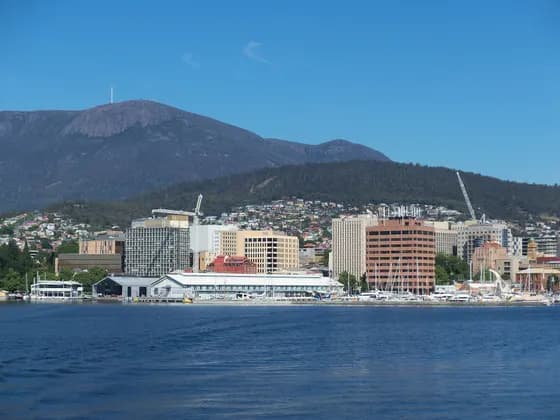

Photo: Gary Houston (User:Ghouston) · CC0 · cropped
Photo: Canley · CC BY-SA 4.0 · Photo: Gary Houston · CC0 · Photo: Cheng Fei · CC BY-SA 2.0
Still deciding where to apply? Hear it from a student who's there
Honest student guides to medicine universities
Current medical students at Australian universities are filming their guides right now: what the course and teaching are really like, the city they live in, the social side, and whether they'd pick it again.
Coming soonNot on sale yet — we'll open these up as soon as the first Australian videos land.
Filming now
How to get into Tasmania medicine
Step-by-step: entry requirements, admission-test prep, personal statement, interview format and the key deadlines.
Open the guide →Prepare for the Tasmania interview
Format breakdown, school-specific sample questions, FAQs and prep tips from tutors who interviewed here.
Read the guide →What the Tasmania medicine course is like
Case-based learning + Integrated, 5 years (undergraduate entry), placements in Hobart, Launceston, Burnie and rural Tasmania, including King Island.
See the course →About Tasmania
Tasmania runs the only medical program in the state. It is a 5-year undergraduate Bachelor of Medical Science and Doctor of Medicine (BMedScMD), based at the Sandy Bay campus in Hobart. Placements run across Royal Hobart Hospital, Launceston General Hospital, and the North West Regional Hospital in Burnie. Two things set it apart.
It is Tasmania's sole medical pipeline, and it ranks applicants on ATAR first, with the UCAT-ANZ used only as a tiebreaker. There is no interview.
What makes Tasmania different
Tasmania is the only medical school in the state, and from 2026 it runs at all three campuses — Hobart, Launceston and Cradle Coast (Burnie) — with applicants ranked and offers made separately against each campus.
Residency, not a stratospheric ATAR, is the dominant lever: at least 75% of domestic places go to Tasmanians, 50% to rural MM2-7 applicants including 25% from MM3-7, and the Rural Application Process adds 4 ATAR points for MM2 and 5 for MM3-7 Year 12 leavers. The minimum adjusted ATAR is 95 and UTAS publishes no cut-off or student profile.
Twenty places sit in the Tasmanian Rural Training Stream at Cradle Coast. The Aboriginal Entry Pathway waives the clinical aptitude test (UCAT or GAMSAT) but adds a personal supporting statement and an interview with representatives of the Medicine Admissions Committee.
Tasmania course & teaching
Integrated curriculum. 5-year undergraduate Bachelor of Medical Science and Doctor of Medicine (course code H3X; minimum 5 years, maximum 7; AQF level 7; 500 credit points — 300 from the BMedSc, 200 from the MD — awarded on a single testamur).
It replaced the M3N Bachelor of Medicine and Bachelor of Surgery (MBBS), in teach-out since the BMedScMD launched in Semester 1 2023. Offered from 2026 at Hobart, Launceston and Cradle Coast, with offers made separately against each campus.
Years 1-2 are on campus with patient contact across health-care settings and an emphasis on community and rural learning; Years 3-5 are based at the Hobart or Launceston Clinical School or the Rural Clinical School in Burnie, with extensive placements and electives.
Case-based learning, with outcomes grouped under the four AMC-derived domains (Science and Scholarship, Clinical Practice, Health and Society, Professionalism and Leadership). AMC accredited. Direct application to UTAS (NOT GEMSAS, NOT VTAC), opening 1 August and closing 30 September the year before entry.
Tasmania research strengths
Tasmania is strong in these research areas:
- Rural workforce
- Aged care
- Regional health systems
- Indigenous health
How the Tasmania interview runs
Format: No interview in standard selection — ATAR-first ranking with UCAT-ANZ tiebreaker (Aboriginal Entry Pathway applicants are interviewed; UTAS publishes no format)
UTAS is one of very few Australian medical schools that does not interview: "The University of Tasmania does not conduct interviews during selection for the Medicine Program." There is no CASPer and no personal-statement scoring in standard selection.
School leavers are ranked on ATAR or ATAR-equivalent, with UCAT-ANZ used only as a secondary ranking between applicants on the same ATAR; applicants with previous higher education are ranked on GPA + GAMSAT. UTAS uses the combined scores of the 3 cognitive subtests of the UCAT-ANZ (Verbal Reasoning, Decision Making, Quantitative Reasoning), excluding Situational Judgement.
The one exception is the Aboriginal Entry Pathway, which does require a personal supporting statement and an interview with representatives of the Medicine Admissions Committee.
Tasmania intake
UTAS does not publish a total intake for the BMedScMD, and no ATAR/selection-rank or student profile is published for the course on CourseSeeker. What is published: 20 Tasmanian Rural Training Stream places at Cradle Coast, 29 first-year students announced for Launceston from February 2026, at least 75% of domestic places reserved for Tasmanians, 50% for MM2-7 rural applicants (25% from MM3-7), and approximately 30% of domestic students enrolled into the Bonded Medical Program.
Where Tasmania is
University of Tasmania School of Medicine was founded in 1965 and is based in Hobart.
Programmes offered:
- Rural Medicine
- Regional Health
- General Practice
- Aged Care
- Indigenous Health
What you need to apply to Tasmania
Tasmania at a glance
| Entry pathway | Undergraduate and graduate entry |
|---|---|
| ATAR | Domestic: minimum adjusted ATAR 95 |
| GPA | Previous-higher-education entry: minimum unweighted GPA 5.25 |
| GAMSAT | Previous-higher-education route: minimum score of 50 in all three sections of GAMSAT |
| UCAT-ANZ | International applicants must reach the 50th percentile or above: on the official UCAT ANZ 2026 distribution |
| Admission overview | School-leaver: minimum adjusted ATAR 95 (the bar to be considered — UTAS publishes no competitive cut-off or ATAR profile) + a valid UCAT-ANZ score, used only to separate applicants sitting on the same ATAR. International school leavers need an ATAR-equivalent of 90 plus one of UCAT-ANZ at or above the 50th percentile, ISAT 170 overall (165 in each section), or MCAT 491 from the last five years; ISAT and MCAT are not accepted from domestic applicants. Applicants with previous higher education: minimum unweighted GPA 5.25 + GAMSAT minimum 50 in all three sections. Year 12 English and Chemistry (within the last 5 years) are prerequisites. No interview in standard selection — the Aboriginal Entry Pathway is the one exception. |
|---|---|
| ATAR | Domestic: minimum adjusted ATAR 95 — explicitly the minimum needed for an application to be considered, not a guarantee of an offer (UTAS: "achieving the minimum entry requirements does not guarantee an offer of a place"). International: minimum ATAR or equivalent rank 90. UTAS publishes no competitive cut-off, median or lowest-offer ATAR for this course, and no ATAR/selection-rank or student profile is published for it on CourseSeeker. |
| Contextual ATAR | The Rural Application Process (RAP) is the only ATAR adjustment UTAS makes for any course: 4 additional ATAR points for Year 12 applicants from MM2 areas and 5 for MM3-7, for applicants who have lived in an MM2-7 area for 5 consecutive or 10 cumulative years (maximum RAP adjustment five points). Non-school-leaver rural applicants should still apply via RAP for quota and funding eligibility but receive no ATAR adjustment. Special consideration is assessed separately and cannot waive the subject prerequisites. |
| GAMSAT | Previous-higher-education route: minimum score of 50 in all three sections of GAMSAT. Accepted sittings are the same as those used by GEMSAS, although the application itself goes direct to UTAS, not through GEMSAS. From 2027 the UTAS Bachelor of Biomedicine (M3X) quota also requires GAMSAT 50 in all three sections; the retiring BMedRes (53E) pathway required no admission test. UTAS publishes no offer-holder GAMSAT score. |
| UCAT-ANZ | No published domestic cut-off — UCAT-ANZ only separates applicants who share an ATAR, so there is no threshold to quote. UTAS sums the three cognitive subtests only (Verbal Reasoning, Decision Making, Quantitative Reasoning); Situational Judgement is excluded. International applicants must reach the 50th percentile or above: on the official UCAT ANZ 2026 distribution — the sitting used for 2027 entry — the 5th decile (median) total was 1,950/2700 (mean 1,964; 9th decile 2,340; 17,341 candidates). |
| GPA | Previous-higher-education entry: minimum unweighted GPA 5.25 — the bar for an application to be considered, not a competitive GPA. Calculated across all tertiary study at AQF 7 and above (the first Bachelor degree is calculated at its completion). A completed Masters by Research adds 0.2 points; a completed PhD adds 0.4 points. UTAS publishes no offer-holder GPA. |
| Place types | UTAS does not publish a total number of places. Published figures only: at least 75% of domestic places to Tasmanians; a 50% rural quota (MM2-7) including 25% from MM3-7; 20 Tasmanian Rural Training Stream places at Cradle Coast; approximately 30% of domestic students enrolled into the Bonded Medical Program each year; Aboriginal Entry Pathway uncapped. UTAS announced 29 first-year students commencing at Launceston in February 2026, that campus's first first-year intake. |
| Indigenous pathway | Aboriginal Entry Pathway (AEP), open to Aboriginal and/or Torres Strait Islander applicants and run on a separate application form alongside the standard UTAS application. No clinical aptitude test is required — neither UCAT-ANZ nor GAMSAT. In exchange the pathway adds requirements: a Confirmation of Eligibility, a personal supporting statement, Year 12 English and Chemistry or equivalent (within the last 5 years; the KRA161 foundation unit accepted for chemistry), a competitive ATAR for school leavers, or health-field qualifications and experience plus a referee report for non-school leavers — and, for both, an interview with representatives of the Medicine Admissions Committee. No cap published. |
| Bonded / rural | Two separate things. Bonded Medical Program: UTAS is required by the Commonwealth to enrol approximately 30% of domestic BMedScMD students each year into the BMP, which carries a 156-week (3-year) return-of-service obligation in eligible regional, rural and remote areas; bonded offers go to both school leavers and previous-higher-education applicants, and the BMP is not a scholarship. Tasmanian Rural Training Stream: 20 domestic places at Cradle Coast only, assessed on the same ATAR/UCAT (or GPA/GAMSAT) criteria and prioritised over four tiers — Tier 1 Tasmanian MM3-7 plus Tasmanian postcodes beginning 72xx/73xx; Tier 2 other Tasmanian MM2; Tier 3 interstate MM3-7; Tier 4 interstate MM1-2. TRTS is not itself a Bonded Medical Program place, but accepting one requires a written commitment to complete all five years at the Cradle Coast campus (Burnie) and its associated training sites. Separately, a 50% rural quota (MM2-7, including 25% from MM3-7) applies across the whole domestic intake. |
| Specialities offered | Rural Medicine, Regional Health, General Practice, Aged Care, Indigenous Health |
How Tasmania interviews applicants
| Format | No interview in standard selection — ATAR-first ranking with UCAT-ANZ tiebreaker (Aboriginal Entry Pathway applicants are interviewed; UTAS publishes no format) |
|---|---|
| Interview window (2027 entry) | No interview (standard entry). Aboriginal Entry Pathway applicants are interviewed by representatives of the Medicine Admissions Committee; UTAS does not publish an interview window. |
| Decision date (2027 entry) | Mid-December 2026 (first-round offers to Tasmanian Year 12 applicants on ATAR); January 2027 (interstate Year 12 and IB applicants) — the pattern UTAS publishes on its application-dates table each cycle. International applicants are handled in four offer rounds across the preceding year (rounds closing 30 May 2027, 31 July 2027, 30 September 2026 and 30 November 2026), with offers made within two weeks of each round closing. |
| Post-interview chances | N/A — no interview. |
UTAS is unusual: no interview, no CASPer, no personal statement scoring. Your ATAR (or graduate GAMSAT/GPA) is the primary lever and UCAT serves as a tiebreaker. Tasmanian residency or rural origin materially lowers the competitive ATAR from 99.95 to 99.45 via the Tasmanian Rural Training Stream. If you're applying as a graduate, the Medical Research Stream reserves ~50% of the 25 grad places — invest in articulating a credible research trajectory.
Apply to Tasmania with confidence
We've helped students into Tasmania and other Australian medicine schools — get tailored support for each stage of the application.
UCAT-ANZ Tutoring
Hit the UCAT-ANZ cut-off for Tasmania with one-to-one tutoring from top scorers.
Learn moreWhere to apply
Tasmania selects without an interview, so your other choices decide your interviews. Plan them around your scores.
Learn morePersonal statement help
Get your personal statement reviewed by successful applicants.
Learn moreWhere Tasmania's figures come from
Compiled from University of Tasmania School of Medicine's published admissions material and checked for internal consistency. Not independently re-checked against the official course page for 2027 entry — confirm the figures with the school before you rely on them.
Tasmania — frequently asked questions
Apply to Tasmania with confidence
We've helped students turn their UCAT, personal statement and school choices into offers from Tasmania and other Australian medicine schools.