
Tasmania Medicine Interview
Format, Questions & Prep Tips
This guide covers the Tasmania medicine interview for 2027 entry. Published figures: minimum ATAR 95 (adjusted, incl. any rural adjustment); Quotas 50% domestic rural; at least 75% of domestic places to Tasmanians; TRTS rural quota 20 places (Cradle Coast campus).
- Institution
- University of Tasmania School of Medicine
- Interview (2027 entry)
- Not applicable — no interview
- Decisions (2027 entry)
- Applications close 30 September 2026 (apply direct to UTAS); offer dates not published on the course page

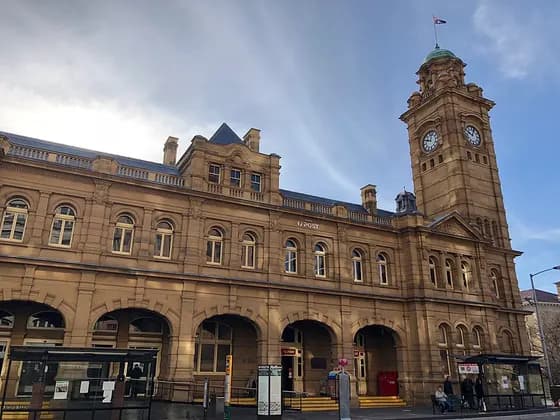
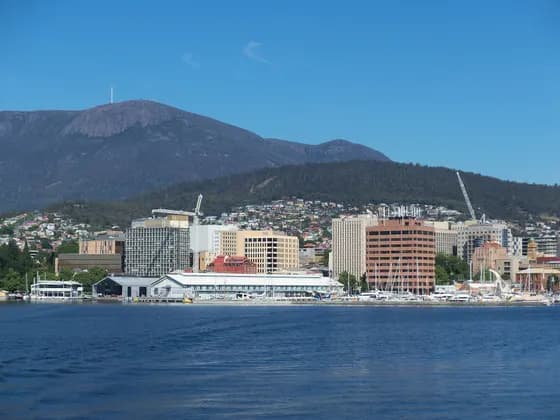

Photo: Gary Houston (User:Ghouston) · CC0 · cropped
Photo: Canley · CC BY-SA 4.0 · Photo: Gary Houston · CC0 · Photo: Cheng Fei · CC BY-SA 2.0
How to get into Tasmania medicine
Step-by-step: entry requirements, admission tests, personal statement, interview format and the key deadlines.
Open the guide →Tasmania entry requirements
Admission profile, interview format, decision dates and what makes Tasmania different.
See the profile →The Tasmania medicine course
Case-based learning + Integrated, 5 years (undergraduate entry), placements across Hobart, Launceston, Burnie and rural Tasmania, including King Island.
See the course →The Tasmania medicine interview
UTAS is the only medical school in Tasmania and one of the only Australian medical programmes that does not interview applicants. There is no MMI, no panel, no portfolio scoring, no CASPer, and no personal-statement assessment — school leavers are ranked on ATAR, with UCAT ANZ (the three cognitive subtests) used only to rank applicants tied on ATAR, while applicants with previous tertiary study are assessed on GPA and GAMSAT.
The minimum adjusted ATAR is 95, including any rural adjustment (up to 5 points via the Rural Application Process). Meeting the minimum does not guarantee an offer — UTAS describes admission as highly competitive — and at least 75% of domestic places are offered to Tasmanians, with a 50% domestic rural quota.
The Tasmanian Rural Training Stream (TRTS) holds 20 domestic places at the Cradle Coast campus, with offers prioritised by rural residency tier. The lutruwita (palawa Aboriginal Tasmania) Aboriginal Entry Pathway uses bespoke selection with academic and cultural support. About 30% of domestic students each year are enrolled in the Bonded Medical Program, which carries a regional, rural and remote return-of-service obligation. Because there is no interview to prepare for, this guide focuses on ATAR / UCAT-ANZ preparation strategy.
Tasmania interview at a glance (2027 entry)
| Interview | NONE — UTAS does not interview for any stream |
|---|---|
| CASPer / SJT / portfolio | Not used |
| Selection model | School leavers: ATAR, UCAT ANZ as tiebreaker; graduates: GPA + GAMSAT |
| Minimum ATAR | 95 (adjusted, incl. any rural adjustment) |
| Quotas | 50% domestic rural; at least 75% of domestic places to Tasmanians |
| TRTS rural quota | 20 places (Cradle Coast campus) |
Interview format
- UTAS runs an ATAR-first selection model. There is **no MMI, no panel interview, no CASPer**, and no portfolio assessment for any stream.
- UCAT-ANZ is required and used only as a tiebreaker between applicants tied on ATAR — UCAT is not part of the primary ranking.
- The Tasmanian Rural Training Stream (TRTS) holds 20 domestic places at the Cradle Coast campus. It is open to all domestic applicants, with offers prioritised from Tier 1 (Tasmanian MM3–7 residents) down to Tier 4 (interstate MM1–2), and requires a commitment to study all years at Cradle Coast.
- Aboriginal Entry Pathway (lutruwita / palawa Tasmanian Aboriginal) uses bespoke selection with academic and cultural support — verify the current criteria with UTAS Aboriginal Student Pathways.
- About 30% of domestic students are enrolled in the Bonded Medical Program, with a return-of-service obligation in regional, rural or remote areas.
- Because there is no interview, prep effort should concentrate on protecting your Year 12 ATAR and preparing for UCAT-ANZ as a tiebreaker, not on rehearsing scenarios.
Sample interview questions
Why UTAS, knowing there is no interview? What attracts you to a 5-year direct-from-school Tasmanian programme?
UTAS does not interview, so this question is one for self-clarification (and for any subsequent interviewing school you backup-apply to). Concrete: Tasmanian connection, rural / aged-care interest, BMBS structure, the Royal Hobart / Launceston / NW Regional network.
(For backup schools that do interview) What does it mean to be a doctor in Tasmania specifically?
Engage with the ageing population, the rural-regional workforce challenge, the aged-care priorities, and the small-state networks. Useful if you also interview at Wollongong, ANU or another interviewing school.
A patient at Royal Hobart Hospital needs urgent specialist care available only in Melbourne. The retrieval will take 90 minutes. How would you communicate the plan to the patient?
Plain language. Time-critical without panic. Engage the patient. Reference Tasmanian retrieval pathways. Transfers well to other AU MD MMIs.
Voluntary assisted dying has been legal in Tasmania since 2022. Walk through the framework.
Engage with the Tas End-of-Life Choices (VAD) Act's eligibility criteria, practitioner roles, and the Tasmanian context. Useful for any AU MMI given VAD is now legal in all states.
(For other-school MMI prep) Role-play: explain to a patient at Launceston General why their planned procedure has been postponed.
Acknowledge. Apologise for inconvenience. Concrete next steps.
Tasmania has Australia's oldest median age and acute aged-care workforce challenges. How does that shape your interest?
Engage with aged-care, palliative medicine, dementia care, and the GP-led role.
Explain Medicare and the role of bulk-billing to a young patient.
Plain language. Concrete dollar example. Standard MMI staple.
Closing the Gap targets for the palawa community remain a priority. What role can a UTAS graduate play?
Concrete:
- engagement with palawa / lutruwita community
- cultural safety
- recognising racism
- AHPRA cultural responsibilities
Engage with the Aboriginal Entry Pathway.
Describe a time you delivered difficult news.
STAR with reflection. Useful self-reflection even though UTAS does not interview.
A patient at North West Regional (Burnie) asks for a prescription their previous GP refused. They show no records. What would you do?
What they are listening for:
- Real-time monitoring
- continuity of care
- contacting previous prescribers
- therapeutic relationship
What concerns you most about practising in Tasmania long-term?
Honest. Isolation, specialty access, workforce thinness, professional networks. Self-aware sustainability.
Should new graduates be required to spend their first year working in a Tasmanian regional hospital?
What they are listening for:
- Workforce maldistribution
- autonomy
- training quality
Balanced reasoning.
Why direct-from-school undergraduate medicine rather than completing a bachelor first?
Honest. Articulate readiness and clarity about the medical role at 18.
Describe a time you connected with someone from a different cultural background.
Authentic.
Role-play: explain to a worried parent why their child's viral fever doesn't need antibiotics.
Validate. Plain language. Antibiotic stewardship. Safety-netting.
What does aged-care practice mean to you?
Engage with the demographic reality, the GP-led aged-care model, RACFs, and post-Royal Commission reforms.
A teammate has been making concerning comments about elderly patients. Address it.
Specific behaviour. Private conversation first. Escalation if needed.
Planning around Tasmania
Tasmania selects without an interview in its standard entry routes, so there is no interview here to rehearse. Put the effort into where else you apply.
Build the rest of your list
Tasmania ranks applicants without an interview, so your other choices carry the interview practice. Get a shortlist matched to your scores.
Plan where to applyTalk your choices through with an adviser
A 1-to-1 call on where Tasmania fits in your application and which schools to pair it with.
Book a strategy callHow to prepare for the Tasmania interview
Common pitfalls to avoid
Tasmania interview — frequently asked questions
Sources & official admissions information
Ready to nail your Tasmania interview?
Book a mock interview with a tutor who knows the Australian interview formats, orpractise unlimited stations with Prometheus.