
The Tasmania Medicine course
What you actually study, and where you will be
Tasmania's BMedScMD is a 5-year (undergraduate entry) course taught through case-based learning in an integrated curriculum, with patient contact from Year 1 and placements in Hobart, Launceston, Burnie and rural Tasmania, including King Island (2027 entry). A combined degree: three years of the Bachelor of Medical Science, then two of the Doctor of Medicine. You start in Hobart, Launceston or on the Cradle Coast, learning through online modules, practicals and case-based tutorials, with early visits to a family and a rural community. Years 3 to 5 are spent at a clinical school in Hobart, Launceston or Burnie, and the MD includes a 45-day professional project.
- Degree
- BMedScMD
- Length
- 5 years (undergraduate entry)
- Teaching
- Case-based learning + Integrated
- Clinical contact
- Year 1
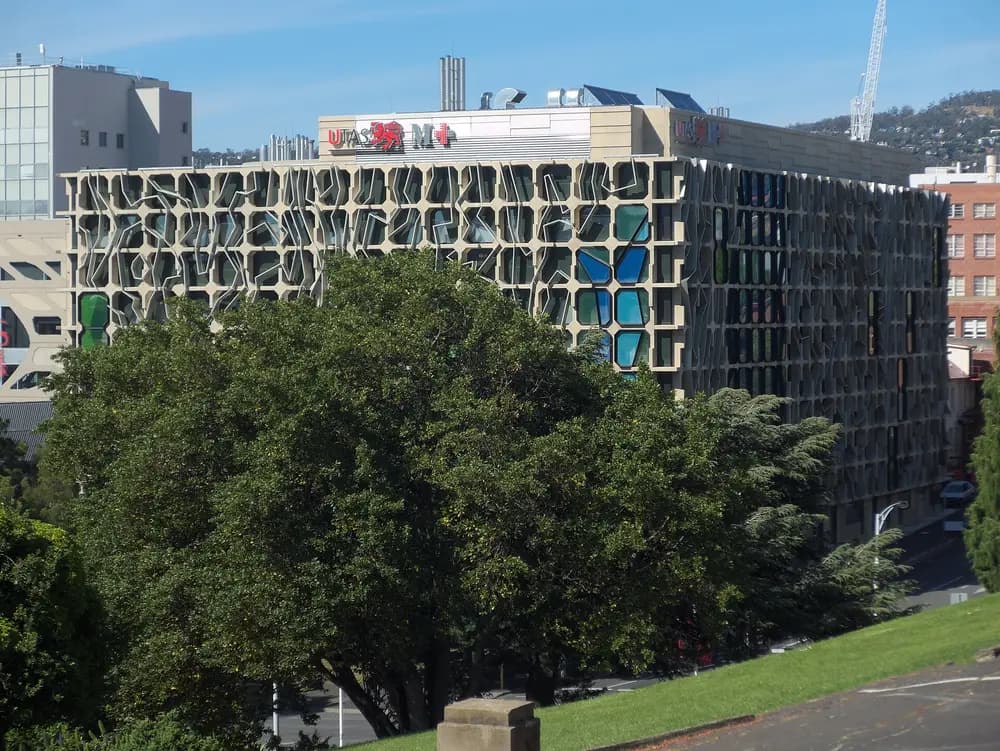
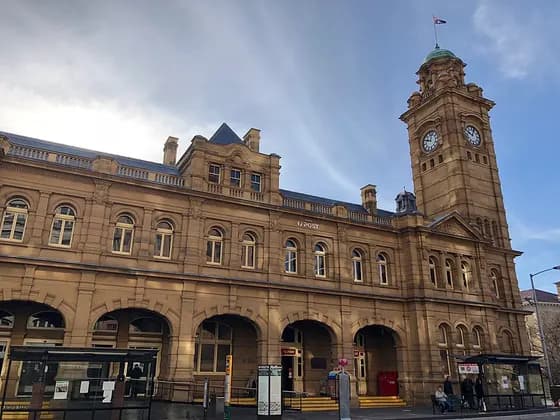


Photo: Gary Houston (User:Ghouston) · CC0 · cropped
Photo: Canley · CC BY-SA 4.0 · Photo: Gary Houston · CC0 · Photo: Cheng Fei · CC BY-SA 2.0
The Tasmania medicine course at a glance (2027 entry)
The University of Tasmania (UTAS) teaches medicine through its Tasmanian School of Medicine. Its medical course is the Bachelor of Medical Science and Doctor of Medicine (BMedScMD): five years, full time only. In its 2022 report, the Australian Medical Council (AMC), which accredits medical courses, noted that this is the only medical degree offered in Tasmania. School leavers and applicants with previous university study join the same course.
It is a combined degree. Years 1 to 3 make up the Bachelor of Medical Science and Years 4 and 5 the Doctor of Medicine (MD), 500 credit points in all. You graduate with a single testamur, the certificate for the whole degree. In Australia the MD is usually classed as an extended masters degree, not a research doctorate.
The course is new. It replaced the older undergraduate degree, the Bachelor of Medicine and Bachelor of Surgery (MBBS), with a first Year 1 intake in 2023, so 2027 is the first year it runs Year 5. Its main addition is a Professional Practice Project in Years 4 and 5. Since 2025 you can take the whole course on the Cradle Coast, through the Tasmanian Rural Training Stream, and since 2026 first-years can also start in Launceston.
Years 1 and 2 are campus-based. You learn the body system by system and meet people in community and rural settings from Year 1. From Year 3 you are based at a clinical school, the hospital-based centre for your clinical training. There is one in Hobart, one in Launceston and the Rural Clinical School in Burnie, which trains students in a regional area. Year 3 mixes classes with your first clinical attachments, and Years 4 and 5 are mostly placements.
When you graduate, you apply to the Medical Board of Australia, through Ahpra (the Australian Health Practitioner Regulation Agency), for provisional registration. You then complete an internship, also called PGY1 (postgraduate year 1): 47 weeks, full-time equivalent, of supervised work in accredited positions, after which you can apply for general registration. UTAS says the course prepares you to begin work as an intern in Australia or New Zealand. The AMC accredits the course until 31 March 2028, with a reaccreditation assessment due in 2027.
| Degree | BMedScMD: Bachelor of Medical Science and Doctor of Medicine, one testamur |
|---|---|
| Course length | 5 years full time, up to 7 years maximum |
| Year 1 campuses | Hobart, Launceston or Cradle Coast (Burnie), with separate offers for each |
| Clinical schools (Years 3 to 5) | Hobart, Launceston or the Rural Clinical School in Burnie, allocated by the Dean |
| Rural Training Stream | 20 places a year; all five years on the Cradle Coast |
| Teaching style | Case-based learning with online modules, practicals and tutorials |
| First patient contact | Year 1: family visits and Rural Week; clinical attachments from Year 3 |
| MD project | Professional Practice Project: 45 days across Years 4 and 5 |
| Honours | Optional research year (M4N) after three years, with approved leave |
| Accreditation | AMC accredited until 31 March 2028; reaccreditation due in 2027 |
What makes Tasmania medicine different
Three campuses to start from
You can start in Hobart, Launceston or on the Cradle Coast, listing the campuses in order of preference when you apply, with separate offers for each. Launceston's first 29 first-years began in February 2026 at the Inveresk campus precinct. Cradle Coast students start at the West Park campus in Burnie, near the Rural Clinical School.
The whole degree on the North West Coast
The Tasmanian Rural Training Stream has 20 domestic places a year. You take all five years at the Cradle Coast campus and the Rural Clinical School in Burnie, and commit in writing to staying there. The stream offers mentoring from local clinicians and academics, and if you are from the north or North West, UTAS notes you may be able to live at home.
Following one family for 18 months
In the Kids and Families Program, groups of four first-year students are introduced to a family expecting a baby or with a newborn. Over 18 months you follow the child's progress through visits, tutorials and online modules. The focus is normal childhood and family life rather than disease, and it is the first long-term professional relationship of the course.
A professional project of your own
The Professional Practice Project is the main addition the BMedScMD made to the old MBBS. It is a capstone, a final project that draws your learning together. You plan it in Year 3, spend the equivalent of 45 days on it in Years 4 and 5, and present and write it up in Year 5. UTAS says it can explore research, leadership, innovation or health system improvement.
Aged care in Year 5, and earlier for some
Aged care is one of the six Year 5 placement areas. Some students meet it earlier: in 2025, eight Year 3 students at the Rural Clinical School spent five weeks at Umina Park, a residential aged care home in Shorewell Park. Its staff, local general practitioners (GPs) and specialists taught them, and nursing students joined them for two of the weeks.
How Tasmania teaches medicine
Everything you learn is grouped under four domains adapted from the AMC's outcomes for medical graduates: Clinical Practice, Professionalism and Leadership, Health and Society, and Science and Scholarship. Learning outcomes are written and assessed against these domains, so ethics, public health and research skills sit beside science and clinical skills in every year.
UTAS calls the curriculum learner-centred and built on situated learning: learning things in the setting where you will use them, which it says helps you engage and remember. Regular case-based learning (CBL) ties it together. In a CBL tutorial you work through a patient case, reason about what is happening and connect material from across the course.
In Years 1 and 2, much of the teaching comes as online modules you work through in your own time, and on campus you attend practicals, tutorials, workshops and keynotes. The AMC's 2022 report, from the MBBS years, records that UTAS introduced this blend of online lecture material, keynotes and small-group teaching on campus in 2022. Basic science is taught in parallel with clinical material, so the body system you are studying shapes the skills you practise.
From Year 3 the learning moves into clinical settings, where you work alongside other health professionals. Years 4 and 5 are run as integrated clinical placement years, with CBL sessions on core clinical problems that rely on your own self-directed study.
The ways you will learn
| Case-based learning (CBL) | Tutorials built around patient cases, held regularly through the course. In Year 2 they are where you build clinical reasoning and pull together material from the whole curriculum. |
|---|---|
| Online modules | Self-paced online modules, about 10 hours a week in Years 1 and 2. In 2022, under the MBBS, the AMC described the school's modules as mostly short videos with questions or activities. |
| Practicals, tutorials, workshops and keynotes | On-campus sessions where you apply what the modules cover. Clinical skills start here: in Year 1 you learn to take a simple history using the Calgary-Cambridge framework, a standard model for structuring a consultation, and to examine the limbs. |
| Simulated patients | Members of the public coached to play a patient, with a matching history, body language and personality, so you can practise consultations safely. Some also take part in student examinations. |
| Patient Partners (Launceston) | At the Launceston Clinical School, volunteers with long-term illness talk with small groups of students about their condition and let them examine them, guided by a tutor who is usually a GP. |
| Simulation | Practice on manikins and in mock clinical settings. Each clinical school has simulation space. At Hobart, UTAS says students in Years 3 to 5 use the refurbished simulation lab to practise procedures, decisions and teamwork before placements. |
A typical week on the Tasmania course
Each unit page sets out a weekly pattern of hours. In Years 1 and 2 a teaching week has about 10 hours of online modules, 10 hours of face-to-face practicals, tutorials, workshops and keynotes, and 18 hours of independent study. That is close to a full-time working week. In 2027, Semester 1 runs from 22 February to 13 June, after an orientation week from 15 February, and Semester 2 from 5 July to 24 October.
Years 3 to 5 run on a longer calendar of two half-year periods: in 2027, 25 January to 20 June and 21 June to 7 November. UTAS's 2022 course FAQ says this longer year is what lets a five-year course include a masters-level MD. A Year 3 teaching week has about 10 hours of classes, 15 hours of practicals, tutorials, workshops and keynotes, 5 hours of online modules and 8 of independent study. On a five-week clinical attachment, you spend 32 to 38 hours a week on placement.
In Years 4 and 5, a placement week is 32 to 38 hours. Year 4 also has group learning weeks, at the same hours and shared with project work. In Year 5 a two-hour CBL tutorial runs every week, and every six weeks there is a full week of block teaching made up of lectures, workshops and tutorials. Your project days are timetabled individually.
How anatomy is taught at Tasmania
There is no stand-alone anatomy unit: anatomy is taught inside the body-system units. Year 1 covers how cells and tissues build the body, then the bones, joints, muscles, nerves and blood supply of the arms and legs. Year 3's first unit, CAM304, lists anatomy alongside neuroscience, endocrinology and pathology.
UTAS's Body Bequest Program provides donated bodies, used mainly to teach human anatomy to UTAS medical and allied health students. Donors' families are invited to a Ceremony of Appreciation, held every two years, where staff and students thank them. The AMC's 2022 report, written about the MBBS before the BMedScMD began, noted that the school had made its own audio-visual resources for the dissection sessions then taught and for online dissection lectures.
When you first meet patients at Tasmania
Clinical experience starts in Year 1 through professional experience placements, UTAS's term for learning in real workplaces. In Years 1 and 2 these are short placements and community visits, including rural health and family-focused programs.
In the Kids and Families Program you make four visits of about an hour each, at the family's home or by video call. You ask about the child's development, feeding and growth, family relationships, parenting, accidents, changes in behaviour, childcare and emotional support. Two of the visits fall in Semester 1 of Year 2.
Rural Week is part of Year 1's first unit, CAM101: its teaching includes rural week activities, and one of its assessments is the Rural Week Program. As recently as 2025, Year 2 also had a rural week of its own, a placement in a rural district during CAM202. In 2024 UTAS described more than 120 second-year students spending that week living and working in rural communities, with placements in general practices, regional hospitals, aged care homes, health hubs and pharmacies.
Your first full clinical attachments come in Year 3: three five-week placements in medicine and primary care, in hospitals and the community. You practise history taking, examination, diagnostic reasoning and basic procedures, and learn how investigations and simple management plans work. In 2025 the head of school said the new course places most of the first clinical year in the community, so that future doctors can manage complex patients outside hospital.
Year by year at Tasmania
- Year 1
Foundations of medicine
Two 50-credit-point units, one per semester, lay the scientific and professional groundwork while you learn to talk with and examine patients. Population health, Aboriginal health, ethics and self-care run alongside.
- CAM101 Foundations of Medicine 1 (Semester 1): cells and tissues, the skin and immune system, and an introduction to microbiology and pathology, including how cells respond to injury, inflammation, ageing and cancer.
- Also in CAM101: how different cultures, including Tasmanian Aboriginal peoples, understand health and illness, with an Aboriginal Cultural Awareness Workshop. You are also introduced to public health research methods, the Australian health system and the doctor's role in advocating for social justice.
- CAM102 Foundations of Medicine 2 (Semester 2): bones, joints, muscles and nerves, common musculoskeletal and rheumatological diseases, antimicrobial and antiviral drugs, and laboratory diagnosis of infection.
- Also in CAM102: nutrition across life, medical research methods, epidemiology (the study of disease in populations), health equity, and birth and early infancy in a family context.
- Clinical skills: a simple medical history, vital signs and examination of the limbs.
- Community learning: Rural Week in Semester 1, and the start of the Kids and Families Program.
- Year 2
Body systems and clinical reasoning
Year 2 works through the major organ systems, with basic science taught in parallel with clinical material and case-based learning to sharpen your clinical reasoning. You also learn the statistics needed to read medical research.
- CAM201 Fundamentals of Clinical Science 1 (Semester 1): the cardiovascular and respiratory systems, with population health, health systems, ethics and professionalism.
- CAM202 Fundamentals of Clinical Science 2 (Semester 2): the gastrointestinal, renal and reproductive systems and their common conditions, with introductory clinical sessions on the reproductive system.
- By the end of the year you should be able to take a full history, examine the cardiovascular, respiratory, gastrointestinal and genitourinary systems, and reach a differential diagnosis, a list of likely causes.
- You practise explaining test results and lifestyle advice to patients, and study how to detect, prevent and control communicable and non-communicable diseases in diverse communities.
- Kids and Families Program visits continue.
- Year 3
Into the clinical schools
Year 3 is the last year of the Bachelor of Medical Science and your first at a clinical school. It runs on two half-year periods from late January, combining teaching weeks with your first clinical attachments. If you leave the course after Year 3, you can graduate with the Bachelor of Medical Science.
- CAM304 Fundamentals of Clinical Science 3 (first half): neuroscience, anatomy, endocrinology and pathology, taught system by system, plus health and society, ethics, professionalism and leadership.
- CAM305 Functional Clinical Practice (second half): a clinical lecture series on multisystem problems such as metabolic and immune disorders and cancer, and the law, ethics and regulation of medical practice.
- Three five-week clinical attachments in medicine and primary care.
- Performing basic procedures safely in clinical and simulated settings.
- Planning your Professional Practice Project: you analyse the published literature, justify a research design and write an MD Project Plan.
- Year 4
MD: specialty placements
Year 4 begins the Doctor of Medicine. Its two units form one integrated clinical placement year, with outcomes set to match the AMC's outcomes for medical graduates. Placements cover surgery, paediatrics, obstetrics and gynaecology, and psychiatry.
- CAM741 Medicine Year 4A (first half): 12 weeks of clinical placement and seven weeks of group learning and project work.
- CAM742 Medicine Year 4B (second half): 15 weeks of clinical placement, including your elective, and four weeks of group learning and project work.
- Skills you build: shared decision making with patients, common procedures under supervision, and evidence-based management plans that involve the wider healthcare team.
- Health and society: local and planetary health challenges, meaning how environmental change affects health, and safe care for First Nations peoples and other diverse communities.
- Year 5
MD: getting ready for internship
Year 5 prepares you to work as an intern. Placements cover general practice, emergency, acute care, medicine, surgery and aged care.
- Six five-week clinical blocks across the year, one in each of the six areas (CAM752). The first-half unit, CAM751, covers 15 weeks of this placement time, at 32 to 38 hours a week.
- Teaching continues through the weekly CBL tutorial and regular block teaching weeks.
- Outcomes include safe prescribing, clinical handover, clinical documentation, and assessing and managing deteriorating and critically unwell patients.
- You also work on communication in complex encounters, handling clinical uncertainty, and recognising the limits of your expertise.
- You finish your project and present and report what you found.
How you are assessed at Tasmania
Each unit uses a mix of assessments, and a Professional Portfolio runs through every unit from Year 1 to Year 5. Each year's two units are assessed as a pair, with the weighting split across the year. The first unit carries 40% in Year 1, 48% in Year 2 and 30% in Year 3. In Years 3 to 5 the first-half unit gets an interim result until the year is complete.
In Year 1 you sit quizzes of multiple-choice and extended matching questions, which ask you to match cases to answers from a long list, plus two exam papers in each unit. Years 2 and 3 add in-semester tests and written papers, and Year 4 has a multiple-choice exam. Assignments cover the other strands, such as reflective writing on ethics, professionalism and leadership, health and society, evidence-based medicine and public health.
Clinical skills are assessed from Year 1. From Year 2 you sit OSCEs, Objective Structured Clinical Examinations, in which you rotate through timed stations that each test one task, such as taking a history or examining a patient. Each Year 2 unit has an OSCE, as do the second halves of Years 3, 4 and 5. Year 2 also includes oral presentations of CBL cases and an interview based on a pharmacology logbook.
Your project is assessed at each stage: the MD Project Plan in Year 3, a professional project assessment in Year 4, and an oral presentation and written report in Year 5. When the AMC reported in 2022, the plan was a progress report and reflective interview in Year 4 and a final report of 3,000 to 5,000 words. The second half of Year 5 also includes a portfolio interview.
Under the MBBS in 2022, the AMC reported that students in Years 4 and 5 used PebblePad, an online portfolio system, to collect clinical case logs and evidence of their clinical competencies.
Where you will actually be at Tasmania
Years 3 to 5 are based at one of three clinical schools. Each is linked to hospitals of the Tasmanian Health Service, the state's public health service, which UTAS names as its main teaching hospitals. Hobart uses the Royal Hobart Hospital and Launceston the Launceston General Hospital. The Rural Clinical School uses the North West Regional Hospital in Burnie and the Mersey Community Hospital in Latrobe. Each school also works with general practices and other local services.
The Dean of the Tasmanian School of Medicine allocates students to clinical schools under a Clinical School Allocation Procedure, and UTAS says you may be allocated to any of the three. Rural Training Stream students commit, when they accept their place, to all five years at the Cradle Coast campus and its training sites.
A Rural Clinical School is a clinical school supported by the Australian Government's Rural Health Multidisciplinary Training Program, which trains health professionals in rural and remote areas. UTAS's Rural Clinical School has taught students in the final years of the degree since 2002 and has campuses in Burnie and Latrobe. Its students also work in private general practices and aged care homes, and in their final years take rural placements in Smithton, Queenstown and on King Island, with accommodation at those sites.
A rural generalist is a doctor trained to provide primary care, emergency care and at least one area of specialist care in rural communities. Tasmanian students who register interest in the Tasmanian Department of Health's Rural Generalist Pathway can spend their final year at the Rural Clinical School or the Launceston Clinical School. They should do at least one final-year rotation in a rural general practice rated MM4 to MM7 on the Modified Monash Model, the national remoteness scale from MM1 (cities) to MM7 (very remote).
On placement you must be available five days and 40 hours a week, may be rostered on evening, night or weekend shifts, and may need to travel or relocate. Before your first placement you need a national police check, Working with Vulnerable People registration, proof of immunisation, a first aid certificate, a blood-borne virus declaration and a P2/N95 mask fit test. UTAS also registers you as a student with Ahpra.
For rural placements, UTAS's College of Health and Medicine provides free shared accommodation, subject to availability, in towns including Smithton, Queenstown, Scottsdale, St Helens and Huonville, and on King and Flinders Islands. You get your own bedroom and Wi-Fi, and one return airfare per placement to King or Flinders Island. Rural Clinical School students on Mersey Community Hospital rotations can use nearby furnished houses at no extra rent.
The clinical school sits inside the Royal Hobart Hospital, and junior doctors there regularly help with teaching.
- Royal Hobart Hospital
- Calvary Hospital and St John's Hospital
- The Hobart Clinic
- Queen Victoria Care
- Urban and rural general practices
Formed in 2004; it works closely with the Clifford Craig Medical Research Foundation.
- Launceston General Hospital and other Tasmanian Health Service facilities
- Calvary St Luke's and St Vincent's campuses
- General practices in northern Tasmania
Placements focus on rural medicine, emergency care and integrated primary care.
- North West Regional Hospital, Burnie
- Mersey Community Hospital, Latrobe
- Private general practices
- Aged care homes, including Umina Park (2025)
Rural placements for Rural Clinical School students in their final years, with accommodation at rural health teaching sites.
- Smithton
- Queenstown
- King Island
Electives, selectives and options at Tasmania
Elective placements, where you choose a clinical area that interests you, are part of the clinical years. In the 2027 unit pages, the elective sits inside the 15 weeks of clinical placement in the second half of Year 4 (CAM742).
The AMC's 2022 report, written while the MBBS was still running, gives examples of what was then on offer. A three-week public health elective, run with the Tasmanian Department of Health's Public Health Unit, took up to six senior students, who moved each week through four areas of public health practice. Year 4 students could also take mental health placements in private hospitals, clinics and psychiatrists' rooms, such as The Hobart Clinic.
Intercalation and research degrees at Tasmania
Research is built into the MD through the Professional Practice Project. When the AMC reported in 2022, the school planned the time as half a day to a day a week, used flexibly over about 60 teaching weeks: nine weeks in all. Projects were to be grouped into streams, each overseen by a stream manager, and cancer centres near the Medical Science Precinct and at the North West Regional Hospital had offered to collaborate.
An Honours year is optional. After at least three years of full-time study, UTAS medical students can apply for the Bachelor of Medical Science with Honours (M4N). To take it, you need the Director of Medicine's approval for a formal leave of absence from the medical course.
M4N takes a minimum of one year, full or part time. Its four units, Medical Research 1 to 4, are built around a major project in a laboratory, community or clinical setting. You also analyse and present other current biomedical research. Before applying you agree a project with a supervisor and submit a Project Application Confirmation Form.
You can also do research alongside the course. A 2025 UTAS story describes a final-year MBBS student in Launceston who held a Clifford Craig Medical Student Research Scholarship. She studied how probiotics might affect social cognition in people with multiple sclerosis and presented the work at a neurology conference.
Facilities and support at Tasmania
Where you will learn
In Hobart the school is based at the Medical Science Precinct at 17 Liverpool Street in the city centre, rather than on the Sandy Bay campus. The precinct also houses the Menzies Institute for Medical Research and the Wicking Dementia Research and Education Centre. The AMC's 2022 report, written under the MBBS, placed most teaching for Years 1 to 3 there.
The Hobart Clinical School is on Level 3 of F block inside the Royal Hobart Hospital, where it has been since 1960. It has teaching rooms, a student common room and study spaces, and the Albert G Baikie Clinical Library is on the ground floor.
Its simulation lab, refurbished with the hospital's advice and announced in May 2026, serves Years 3 to 5. It has a three-bed simulated ward and an ATLAS manikin that mimics airway, breathing and heart responses and gives real-time feedback on CPR. Staff run scenarios from behind a one-way mirror.
The Launceston Clinical School has been in the Launceston General Hospital's Northern Integrated Care Service building on Frankland Street since 2011, with space for CBL, simulation, small-group tutorials and online learning. Launceston's first-years study at the Inveresk campus precinct, about a 10-minute walk from the city centre.
The Cradle Coast campus at West Park in Burnie opened on the waterfront in 2021, with student accommodation on site. The Rural Clinical School's Burnie campus has lecture and tutorial rooms, consult rooms and a clinical skills area. Both its Burnie and Mersey campuses have Simulated Learning Environments with human patient simulators and part-task trainers.
The RA Rodda Museum of Pathology, at the clinical school site on Collins Street in Hobart, holds about 2,300 specimens of diseased organs and tissues. Around 1,200 are on display, each with a card giving the clinical details and the pathology. You learn general disease processes such as injury, inflammation and cancer, then how they affect each body system. It is a teaching collection, not open to the public.
Support while you study
Looking after yourself is part of the curriculum. Year 1 teaches self-care and reflective practice. The course's inherent requirements, the abilities every student must be able to show, include monitoring your own physical and mental health and seeking help when you need it.
As a UTAS student you can also use the university's general services. Counselling is confidential and available in person or online. Accessibility Advisers give guidance and support if you have a disability or a health condition, including a mental health condition. Study support includes Student Advisers, Peer Assisted Study Sessions and learning workshops, and the Riawunna Centre gives Aboriginal and Torres Strait Islander students academic and cultural support.
In 2022, under the MBBS, the AMC recorded two medicine-specific supports. A blended Mental Health First Aid course, training in how to help someone with a mental health problem, was compulsory for Year 1 students. A part-time academic with strong links to the local Aboriginal community had also joined, to develop Aboriginal health teaching and support Aboriginal and Torres Strait Islander students.
Students can join Rustica, Tasmania's club in the National Rural Health Student Network. The Tasmanian University Medical Students' Society (TUMSS) is the students' own society, and the AMC's 2022 report names it as one route for student feedback to the school.
Is the Tasmania course right for you?
This course may suit you if
- You want to train as a doctor without leaving Tasmania, starting in Hobart, Launceston or Burnie.
- You are drawn to rural medicine and would commit to all five years on the North West Coast through the Rural Training Stream.
- You want community contact from Year 1, through the Kids and Families Program and Rural Week, before hospital attachments start in Year 3.
- You learn well from case discussions and online modules you work through at your own pace, backed by on-campus practicals and tutorials.
- You would like a substantial project of your own in research, leadership or health system improvement during the MD.
Things to think about
- The Dean allocates your clinical school for Years 3 to 5, and it could be any of the three.
- Much early study is self-directed: about 10 hours of online modules and 18 hours of independent study a week in Years 1 and 2.
- The course is still bedding in: 2027 is its first Year 5, and Launceston first-years began only in 2026.
- Placements can involve evening, night and weekend shifts, travel or relocation, and the clinical years run from late January to early November.
Tasmania medicine course — frequently asked questions
Applying to Tasmania?
How to get into Tasmania
Entry requirements, admission tests, written application and interview, step by step.
Open the guide →Tasmania entry requirements
ATAR or GPA, GAMSAT and UCAT ANZ thresholds, interview format and place types.
See the requirements →Compare Tasmania with other schools
Put the teaching style, anatomy teaching and placements next to another school.
Open the comparison →Prepare for the Tasmania interview
Format breakdown, school-specific sample questions and prep tips from tutors who interviewed here.
Read the guide →Where this Tasmania course guide came from
This guide was written from 49 official sources — University of Tasmania School of Medicine's own course pages and programme documents, plus the Australian Medical Council or Australian Dental Council and the health services the school places students with where they publish detail — read on 2026-10-08, then checked claim by claim against those sources.
- UTAS: H3X Bachelor of Medical Science and Doctor of Medicine course page (2027)
- UTAS: Course rules for H3X Bachelor of Medical Science and Doctor of Medicine (2027)
- UTAS: Study Medicine courses
- UTAS unit page 2027: CAM101 Foundations of Medicine 1
- UTAS unit page 2027: CAM102 Foundations of Medicine 2
- UTAS unit page 2027: CAM201 Fundamentals of Clinical Science 1
- UTAS unit page 2027: CAM202 Fundamentals of Clinical Science 2
- UTAS unit page 2027: CAM304 Fundamentals of Clinical Science 3
- UTAS unit page 2027: CAM305 Functional Clinical Practice
- UTAS unit page 2027: CAM741 Medicine Year 4A
- UTAS unit page 2027: CAM742 Medicine Year 4B
- UTAS unit page 2027: CAM751 Medicine Year 5A
- UTAS unit page 2027: CAM752 Medicine Year 5B
- Australian Medical Council: Accreditation of University of Tasmania School of Medicine, August 2022 (published May 2023)
- Australian Medical Council: Accredited medical schools
- UTAS: Tasmanian School of Medicine
- UTAS: Hobart Clinical School
- UTAS: Launceston Clinical School
- UTAS: Rural Clinical School
- UTAS: Tasmanian Rural Training Stream
- UTAS: Inbound Medical Elective Program (teaching hospitals of each clinical school)
- UTAS news, February 2026: Training of future doctors begins in the north
- UTAS news, May 2026: Refurbished sim lab at the Hobart Clinical School
- UTAS news, July 2025: Student placements in aged care
- UTAS news, September 2024: Rural Week
- UTAS news, August 2025: A medical student's journey in Launceston
- UTAS: Kids and Families Program
- UTAS: Simulated Patient Program
- UTAS: Patient Partners, Launceston Clinical School
- UTAS: Body Bequest Program
- UTAS: RA Rodda Museum of Pathology
- UTAS College of Health and Medicine: Safety in Practice compliance for placements
- UTAS College of Health and Medicine: Rural placement accommodation FAQ
- UTAS College of Health and Medicine: Rural and regional placement
- UTAS: M4N Bachelor of Medical Science with Honours (2027)
- UTAS: Medical Research with Honours projects and application guide
- UTAS handbook archive: H7X course page (2025), AQF level statement
- UTAS: Courses approved by Academic Senate to be offered (as of 4 September 2026)
- UTAS: Study period key dates for 2027
- UTAS: Rural Training Stream Scholarships (course code H7X)
- UTAS: Hobart campuses
- UTAS: Launceston campuses
- UTAS: Cradle Coast campuses
- UTAS: Bachelor of Medical Science and Doctor of Medicine inherent requirements (effective 2027)
- Tasmanian Department of Health: Tasmanian Rural Generalist Pathway for medical students
- UTAS: Change to Bachelor of Medical Science and Doctor of Medicine in 2023, course FAQ, May 2022
- UTAS handbook archive: CAM202 Fundamentals of Clinical Science 2 unit page (2025), Year 2 rural week
- UTAS: Support and wellbeing
- Medical Board of Australia: Interns (provisional and general registration)
Courses are restructured between cycles. Anything here that decides your application — an anatomy offer, a placement city, a compulsory intercalated year — should be confirmed against the official page for your entry year.
Applying to Tasmania?
We have helped hundreds of applicants turn their GAMSAT / UCAT ANZ, written application and interview prep into offers from Tasmania and other Australian medicine schools.