
High ATAR Biology and Chemistry
How each state assesses them and how to prepare
Year 12 Biology and Chemistry are assessed differently in each state. School assessment and the external exam count equally in the VCE, HSC and WACE and in QCE Biology, while SACE gives school assessment 70%. Your result is then scaled and feeds the ATAR. Examiners say the same things everywhere: answer the question asked, use the stimulus, show working and use precise terms.
- VCE and HSC sciences
- School 50%, external exam 50%
- SACE Stage 2 sciences
- School 70%, external exam 30%
- HSC exam
- 100 marks, 3 hours plus reading
- HSC 2027 written exams
- From 13 October 2027
- VCE 2027 written exams
- From 26 October 2027
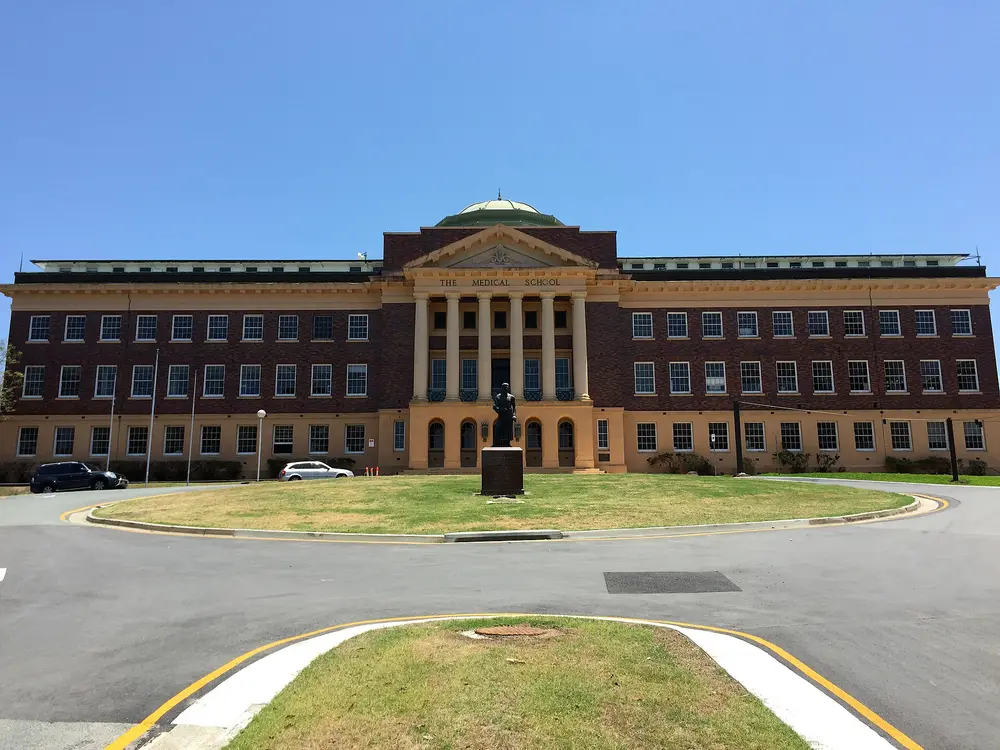
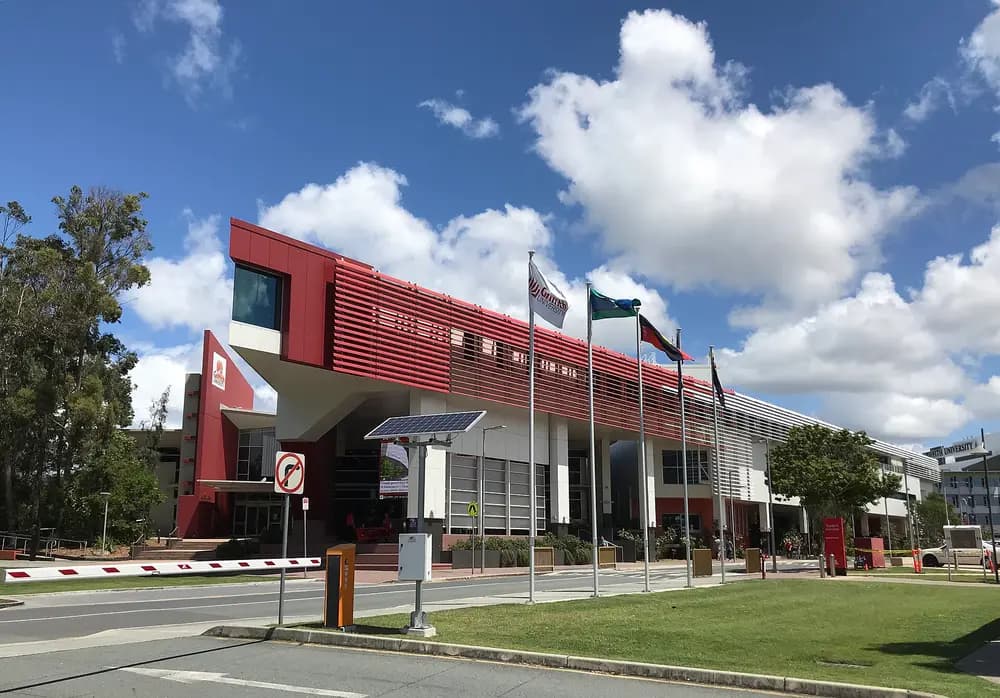
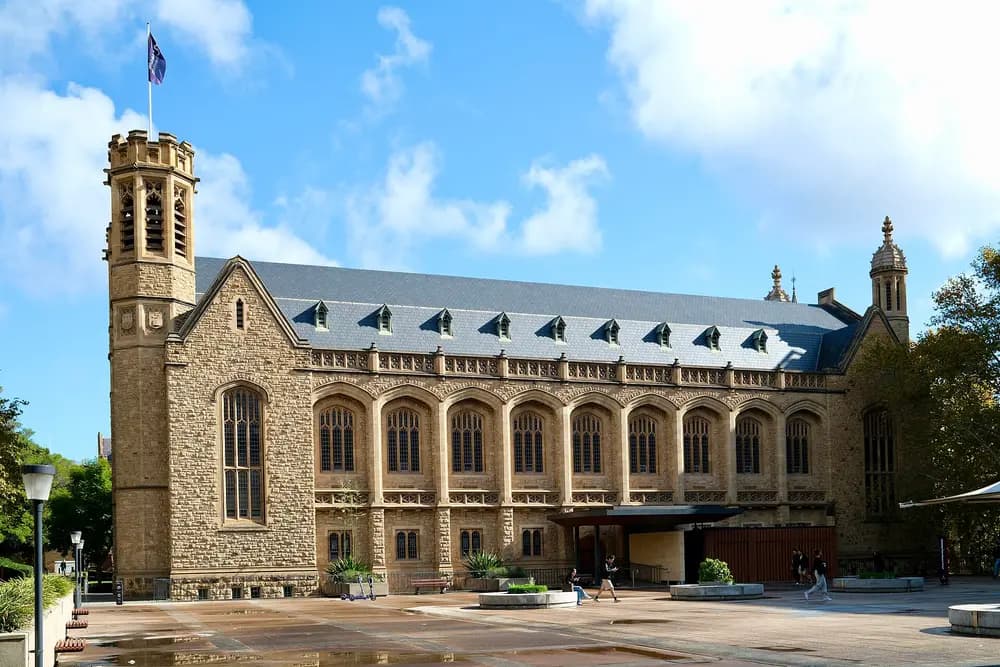
Photo: Kgbo · CC BY-SA 4.0 · cropped
Photo: Chris Olszewski · CC BY-SA 4.0 · Photo: Sciencefreak109 · CC BY-SA 3.0 · Photo: Yu Chu Chin · CC BY-SA 4.0
High ATAR Biology and Chemistry: the short answer
Year 12 Biology and Chemistry are assessed differently in each state. In Victoria and NSW, school assessment and the external exam each count for half of your result. WA averages the two marks, and QCE Biology has the same split. South Australia gives school assessment 70% and the exam 30%.
School marks are checked, not taken on trust. Victoria, NSW and WA adjust them using external exam results. Queensland's QCAA confirms them, and the SACE Board confirms how schools have applied its standards. So neither half can carry you alone.
Your subject result then feeds your ATAR through scaling. Medical and dental schools look at your ATAR rather than one science mark, so these subjects matter because of what they add to your total. A few schools also set a minimum in Chemistry, covered at the end of this guide.
We will not tell you what score to expect, because nobody can. Results depend on your work and on each year's students. What we can do is set out the published rules and what examiners say.
Treat school tasks as half the job
In most states school assessment is about half your result, spread across the year. In NSW your rank in your school group is what moderation carries through, so every task counts.
Practise the exam you will sit
VCE exams run for 2 hours 30 minutes, HSC exams for 3 hours and SACE exams for 130 minutes. Use your own state's papers and marking documents.
Fix what examiners keep flagging
Reports across states repeat the same points: read the whole question, use the stimulus, show working and use precise terms. These are habits you can train.
Plan the UCAT-ANZ from the start
The test falls in the middle of Year 12 and has no Biology or Chemistry subtest, so it needs its own time. Plan both together from Term 1.
How Year 12 Biology and Chemistry are assessed in each state
These are the published weights for 2026. Your school's assessment outline gives your own tasks and dates.
| Certificate | School assessment | External exam | What to know |
|---|---|---|---|
| VCE (Victoria) | 50%: Unit 3 tasks 20%, Unit 4 tasks 30% | 50% | School-assessed Coursework is moderated against exam scores. In Chemistry, each of the five tasks is worth 10%. |
| HSC (NSW) | 50%, moderated by NESA | 50% | School assessment is fixed at 60% skills in working scientifically and 40% knowledge. Schools set the tasks, with one take-home task at most, worth up to 15%. |
| QCE (Queensland) | Biology 50%: data test 10%, student experiment 20%, research investigation 20% | Biology 50% | QCAA confirms school results. We could confirm Biology's weights only, so check Chemistry's in its own syllabus. |
| SACE (South Australia) | 70%: Investigations Folio 30%, Skills and Applications Tasks 40% | 30% | This applies to both subjects at Stage 2. The SACE Board moderates school assessment against its performance standards. |
| WACE (Western Australia) | Moderated school mark, averaged with your exam mark | Exam mark, averaged with your moderated school mark | You must sit the ATAR course exam to get a scaled score. |
| TCE (Tasmania) | A range of tasks across the year | An external exam at the end | This is TASC's description of Biology Level 3. We did not find published percentage weights. |
| ACT | School-based course scores | None set by a central authority | The ACT Scaling Test is used to scale course scores. |
IB Biology and Chemistry are not covered here. Ask your IB coordinator for the current assessment outline.
The exam papers
| Exam | Time | Structure |
|---|---|---|
| VCE Biology | 15 minutes reading, 2 hours 30 minutes writing | 120 marks: 40 multiple-choice marks, 80 short-answer and extended-answer marks |
| VCE Chemistry | 15 minutes reading, 2 hours 30 minutes writing | 120 marks: 30 multiple-choice marks, 90 short-answer and extended-answer marks, with a data book |
| HSC Biology and Chemistry | 3 hours plus 5 minutes reading | 100 marks: 20 objective marks, then 80 marks across 20 to 25 items, with at least two worth 7 to 9 marks. Chemistry supplies a data sheet, formulae sheet and Periodic Table. |
| SACE Biology | 130 minutes | An e-exam. From 2026 it has 10 multiple-choice questions, down from 15. |
| SACE Chemistry | 130 minutes | Assessed externally. The 2025 advice to students refers to handwritten answers in question booklets. |
QCAA and SCSA publish their own exam specifications. Check these with your teacher, and read the course versions section below, because some formats are changing.
How raw marks become study scores, HSC bands and scaled scores
Every state turns your marks into a subject result, then scales that result for the ATAR. The two steps are separate.
VCE: coursework to study score
The VCAA totals your coursework and statistically moderates it against exam scores. You get three graded assessments and a study score out of 50, which shows your position among everyone in the study. In large studies, VCAA says about 26% of students reach 35 or above, 9% reach 40 or above and 2% reach 45 or above. VTAC then scales the score.
HSC: raw marks to a band
NESA moderates school marks using your group's exam marks, keeping your rank and the gaps between students. Judges align raw exam marks to the standards, and NESA does not publish the cut-offs. Your HSC mark is half exam and half moderated assessment. Band 6 is 90 to 100. UAC scales marks separately for the ATAR.
QCE: confirmed results to scaled results
Your school marks internal assessments, and QCAA confirms them before combining them with your external result. QCAA then gives QTAC your Units 3 and 4 results. QTAC scales them and adds your best five.
SACE: grades to a scaled score
Your subject grade runs from A+ to E-. For scaling, SATAC uses a raw score out of 15. In a 70/30 subject, school assessment contributes up to 10.5 and the exam up to 4.5. Each grade covers a range of scaled scores, so two students with the same grade can have different scaled scores.
WACE: two marks to a scaled score
SCSA moderates your school mark using exam results, then combines it with your raw exam mark. Combined marks are standardised so that each course averages around 60%. TISC then applies its Average Marks Scaling to give your scaled score.
TCE: awards to a Tertiary Entrance Score
You receive an award from Exceptional Achievement down to Limited Achievement. Level 3 and 4 courses are scaled each year, based on how hard each award was to reach, which sets a score range for each award. Your best course scores form your Tertiary Entrance Score, which converts to an ATAR.
ACT: school scores to scaled scores
Your school sets and marks assessment. You must sit the ACT Scaling Test, a general test that does not depend on subject knowledge. It is used to scale course scores. Your ATAR uses your best three major scaled scores plus 0.6 of the next.
How Biology and Chemistry feed your ATAR
A subject adds to your ATAR only if it counts, and what it adds depends on your state's rules.
| VCE | It can sit in your main four studies, with English. As a fifth or sixth study it adds 10% of its scaled score. |
|---|---|
| HSC | Each is a 2-unit course, so it can fill 2 of the 10 units that count, after your 2 units of English. |
| QCE | It counts if it is one of your best five scaled results. |
| SACE | Each is a 20-credit subject, so it can be one of your three counted subjects or fall in the 30 flexible credits. |
| WACE | It counts if it is one of your best four scaled scores. |
| TCE | It counts if it is among the course scores that give your highest Tertiary Entrance Score. |
| ACT | It counts if it is one of your best three majors, or at 0.6 as the next score. |
What scaling does to these two subjects
Published figures show Chemistry scaling above Biology recently, but the size of the gap depends on your result. In VTAC's 2025 report, a study score of 35 became 39 in Chemistry and 36 in Biology, and a 45 became 47 in Chemistry and 46 in Biology. A Biology 45 at 46 still beat a Chemistry 40 at 44.
UAC's report on the 2025 HSC gives scaled means of 32.0 for Chemistry and 26.2 for Biology, on a 50-point scale. UAC says courses taken by high-achieving students tend to have a higher scaled mean. It also warns that scaling can change from year to year, and that you need high marks to gain any benefit.
So aim for the highest position you can reach in each subject. Your position in the subject drives the number far more than the name of the subject.
How to handle school assessment in Biology and Chemistry
School assessment starts early in Year 12, and each state treats it differently.
NSW: your rank carries through
NESA adjusts your group's marks so the average, top and bottom match its exam marks, keeping rank order and the gaps between students. NESA says it does not matter if your school sets harder tasks. You see your rank on Students Online on the last day of written exams.
Victoria: a SAC score can change
Teachers give you initial School-assessed Coursework scores, but they must tell you these may change after statistical moderation. Treat a SAC score as a progress signal, not a final result.
Queensland: three internal results first
Schools develop three assessments in Units 3 and 4 using QCAA's specifications. QCAA confirms them, then combines them with your external result. In Biology, the student experiment and research investigation carry 40% between them.
South Australia: mind the limits
Investigations Folio reports are limited to 1,500 words, or 9 minutes if oral. SACE's 2025 Biology advice asks teachers to guide students not to exceed the word count. The school part is 70% of your result, so it deserves exam-level care.
WA: the exam checks the school mark
SCSA moderates school marks by looking at how groups of students perform in the exam. TISC says this stops students being advantaged or disadvantaged if they were marked favourably at school.
Use of AI
The VCAA says unattributed or disallowed use of generative AI in assessment may be a breach of academic integrity. Check your school's and your authority's rules before you use it for any assessed task.
Inquiry skills carry real weight. NSW gives 60% of school assessment to skills in working scientifically, SACE gives 30% of your result to the Investigations Folio, and VCAA says the key science skills are examinable. Practice in designing experiments and handling data pays off in tasks and exams.
What examiners' reports say about common errors in Biology and Chemistry
We read the 2025 reports from VCAA, NESA and the SACE Board directly. The QCAA and SCSA points come from excerpts of their 2025 reports. They return to the same themes.
Biology: where marks went in 2025
| Report | Topic | What it says |
|---|---|---|
| VCAA | Immunity | Many students did not understand how the adaptive immune response differs for extracellular and intracellular pathogens. Some also believed antibodies kill pathogens. |
| VCAA | Pathways | Low-scoring answers named a biochemical pathway or listed its steps without linking it to the scenario. |
| VCAA | Evolution | Many answers did not refer to genetic change when the question required it, and some did not link a small population to its gene pool or allele frequencies. |
| NESA | Immunity | Students needed to show how different cells interact, from antigen presentation through to antibody production. |
| NESA | Judgement questions | Better answers made a clear, evidence-based judgement using the information provided. |
| SACE | Genetics | Less successful answers used the codon table wrongly. Many students converted mRNA back to the template strand before reading codons. |
| SACE | Experiments | Many students found a question hard that needed data interpretation, variables and enzyme function together. |
Chemistry: where marks went in 2025
| Report | Topic | What it says |
|---|---|---|
| VCAA | Equilibrium | A significant number of students did not see that a question needed both an ICE table and an equilibrium expression. |
| VCAA | Measurement | Students struggled with the term resolution, both as a value and as a property of an instrument. |
| VCAA | Energy | A common error was giving bond enthalpies as the reason for a difference in energy content, without the full calculations. |
| NESA | Equations and calculations | Areas to improve included balanced equations, correct significant figures, the definition of yield and log scales. |
| NESA | Practical skills | Students should read a given procedure carefully, avoid suggesting unnecessary changes and review skills such as drying to constant mass. |
| SACE | Concepts | Less successful answers showed students were unaware that particles do not overcome activation energy, and confused ions with polar or nonpolar species. |
| SCSA | Intermolecular forces | Candidates were advised to name the specific forces involved and to understand concepts, not memorised answers. |
A study system for Year 12 Biology and Chemistry
Well-tested habits are simple, but they feel harder than rereading.
A well-known 2013 review by Dunlosky and colleagues rated 10 common study techniques. Practice tests and spreading study out over time were rated high utility. Underlining, rereading and mnemonic devices were rated low utility. Treat that as sound general advice, not a promise about any one result.
The weekly loop
Turn your course document into a checklist
Use your study design, syllabus or subject outline. The VCAA says all key knowledge and key science skills are examinable, so that list is your map. Rate each point honestly.
Test yourself soon after each lesson
Close the book and write what you remember on a blank page, then check it and correct it in another colour.
Come back to each topic later
Spread your revision over weeks, not one long block. Anything you got wrong comes back sooner, and anything easy can wait longer.
Mix your questions
Once the basics hold, mix topics so that you practise spotting what a question needs. NESA says exam questions may require you to integrate knowledge across the course.
Do the maths by hand
Set out every step of a calculation with units and significant figures, as you would in the exam. Practise with the data book or data sheet you will be given.
Learn the command words
Use the VCAA glossary of command terms or QCAA's cognitive verbs, and ask your teacher for your state's list. Mark each command word in a question before you answer.
Keep an error log
For every lost mark, write down why: a knowledge gap, a missed command word, ignored stimulus or a maths slip. Add the fix, and reread the log before each task.
How to use past papers, marking guidelines and examiners' reports
Past papers show you the questions. Marking documents and reports show you where the marks were won and lost.
Use your own state's papers
Structure, question styles and marking differ between states, even where the science is the same.
Sit them under exam conditions
Time yourself, close your books and use only what you will have in the exam room.
Mark strictly against the official guide
Give a mark only where your answer clearly meets the criteria. NESA says its sample answers are not intended to be exemplary or complete, and VCAA says the same of its report samples.
Read the report for that paper
NESA says to use its feedback to guide preparation for future exams, and that it shows the qualities of better responses.
Redo what you dropped a week later
Answer those questions again from memory, then add the lesson to your error log.
| Authority | What it publishes | A caution |
|---|---|---|
| VCAA | Past exams, exam specifications and external assessment reports | Check the exam was written for your study design. |
| NESA | HSC exam packs with the paper, marking guidelines and marking feedback | Feedback may not be provided for every question. |
| QCAA | External assessment papers, marking guides and subject reports | Check the paper matches your syllabus version. |
| SACE Board | Past exams and Subject Assessment Advice | The Board says content in past exams may not reflect future exams. |
| SCSA | Past ATAR course exams, marking keys and exam reports | Check which syllabus the paper was written for. |
A Year 12 timeline for Biology, Chemistry and the UCAT-ANZ
UCAT-ANZ 2027 dates were not published when we checked on 7 November 2026. We use 2026 as a pattern for the test, and published 2027 dates for exams.
- Summer before Year 12
Set up your system
Get your course document and assessment outline, then put every school task on one calendar. Revise weak Year 11 topics: NESA says the Year 11 course is assumed knowledge for Year 12.
- Term 1
Start the weekly loop and watch for UCAT-ANZ bookings
School tasks begin early, so get your habits in place. In 2026, UCAT-ANZ bookings opened on 3 March and closed on 15 May. Decide which courses you may apply for, because some need a separate application.
- Term 2
Balance school tasks with test practice
Keep science revision running while you build UCAT-ANZ practice. In 2026, the late booking deadline was 29 May and the final deadline was 5 June. In Victoria, the General Achievement Test is on Thursday 17 June 2027.
- July to early August
Sit the UCAT-ANZ
In 2026 the test ran from 1 July to 5 August. Choose a date that avoids your school tasks. Its subtests are Verbal Reasoning, Decision Making, Quantitative Reasoning and Situational Judgement, so keep up with class work as you prepare.
- Term 3
Applications and full papers
Move to full timed papers and read the reports. Several medicine and dentistry applications closed on 30 September 2026, so expect a similar deadline and check each course.
- October and November
External exams
HSC written exams start on Wednesday 13 October 2027 and finish by Friday 5 November. VCE written exams run from Tuesday 26 October to Wednesday 17 November 2027. Check your own timetable in other states.
- December
Results and the ATAR
VCE results are due on Thursday 9 December 2027, and HSC results on Wednesday 15 December 2027. Some interviews and offers fall around this time, so keep your dates free.
No official source publishes a right split of hours between Year 12 and the UCAT-ANZ, so we will not invent one. The useful rule is to stop either from falling to zero. Short, regular test practice through Terms 1 and 2 is easier to protect than a late rush around school tasks.
Check which version of Biology and Chemistry you are doing
Several courses are changing. Old papers and study guides can point you at the wrong content, so check yours.
| Course | What is changing | What to do |
|---|---|---|
| HSC Biology | A new Biology 11–12 Syllabus (2025) starts in Year 11 in 2027 and in Year 12 from Term 4, 2027. Its first HSC exam is in 2028. | Year 12 students in 2027 stay on the 2017 syllabus. Later students should check which past papers still fit. |
| HSC Chemistry | A new Chemistry 11–12 Syllabus (2025) starts in Year 11 in 2028 and in Year 12 from Term 4, 2028. Its first HSC exam is in 2029. | Year 12 students in 2027 and 2028 stay on the 2017 syllabus. |
| VCE Biology | A 2024 VCAA notice said the accreditation period would expire on 31 December 2026. On 7 November 2026 VCAA's page still showed the study design from 2022, and we found no later notice. | Ask your teacher which study design applies in 2027, and recheck the weights. |
| VCE Chemistry | The study design runs to 2027 for Units 3 and 4. | Year 12 students in 2028 should check for a new design. |
| QCE Biology and Chemistry | QCAA's 2025 syllabuses are at version 1.3, dated January 2026. | Use the current version, and check for updates before external assessment. |
| SACE Biology | Multiple-choice questions fell from 15 to 10 from 2026. | Allow for this when you time older papers. |
| WACE sciences | SCSA lists a Year 11 Chemistry ATAR syllabus for teaching from 2026, and a Year 12 Biology syllabus for teaching from 2027. | Ask your teacher which syllabus your year uses. |
What Biology or Chemistry results do medical and dental schools ask for?
Very few set a mark in one science. Selection usually rests on your ATAR, an admissions test and often an interview.
| School | Published minimum in Chemistry |
|---|---|
| Monash (medicine) | VCE study score of at least 30, or an equivalent |
| Curtin (medicine) | Chemistry ATAR with a final scaled score of 50 or higher, or a listed equivalent |
No school in our checks publishes a required Biology mark. Other schools set a pass-level subject rule, and our subject guide has each school's full rule.
Treat these as floors. Meeting one makes you eligible to be considered, and it says nothing about your chances. We do not give target bands or study scores, because schools do not publish them and results differ each year.
Published ATAR requirements and how they work are in our ATAR guide. The practical goal is simple: the best result you can reach in both subjects, because each may count towards your ATAR.
High ATAR Biology and Chemistry: your questions answered
Where this guide's facts come from
Checked against these sources on 7 November 2026. Rules change between cycles, so confirm anything that decides your application on the official page for your entry year.
Want help with Year 12 Biology or Chemistry?
We tutor Biology and Chemistry one to one, matched to your state's course, for students applying to medicine or dentistry. You can start with a trial session.