
Year 11 and 12 subjects for medicine
What each Australian school asks for, and how to choose
Most undergraduate medicine routes in Australia do not demand Biology, and many set no subject prerequisite at all. The hard rules are narrower: Chemistry at Monash, JCU, Curtin and Tasmania, Maths at JCU and on some routes into UQ, and English at several schools. Dentistry asks for more science. Meet every rule on your list first, then choose subjects you will do well in, because scaling only rewards high marks.
- Chemistry required (medicine)
- Monash, JCU, Curtin, Tasmania
- Maths required (medicine)
- JCU and some UQ routes
- Biology compulsory
- At none of the routes listed
- UCAT-ANZ eligibility
- Year 12 onwards, not Year 11
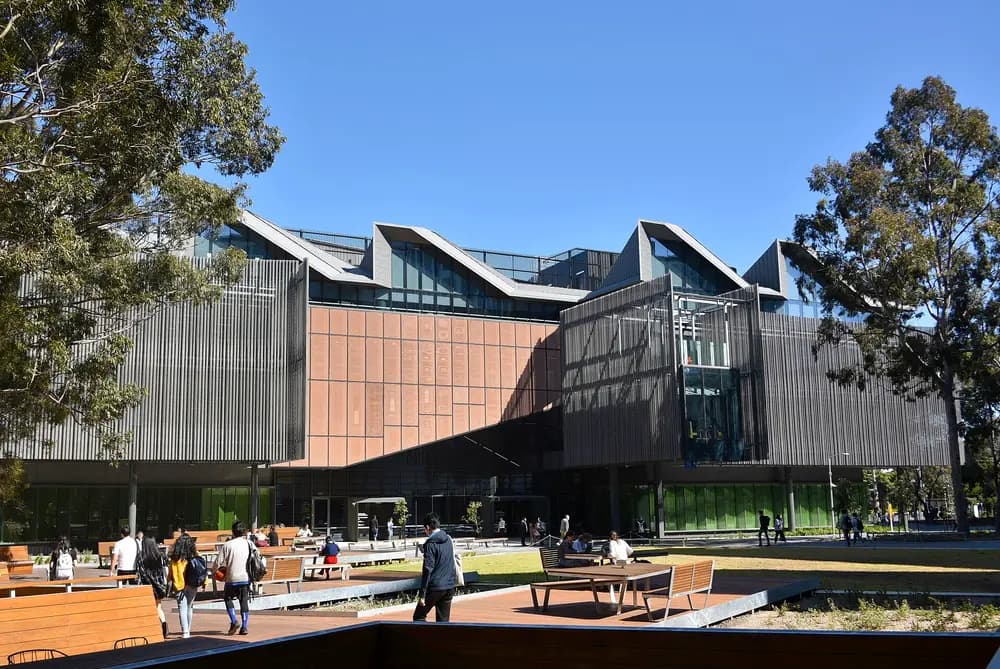


Photo: Rob Deutscher from Melbourne, Australia · CC BY 2.0 · cropped
Photo: Nielg · Public domain · Photo: Orderinchaos · CC BY-SA 4.0 · Photo: Gary Houston (User:Ghouston) · CC0
Year 11 and 12 subjects for medicine and dentistry: the short answer
Australian medical and dental schools do not share one subject rule. Many undergraduate medicine routes set no subject prerequisite at all. A smaller group sets hard rules, and those are the rules that can shut you out, so find them first.
Medicine's hard rules are narrower than most students expect. Chemistry is compulsory at Monash, James Cook University (JCU), Curtin and the University of Tasmania. Maths is compulsory at JCU and on CQUniversity's pathway to the University of Queensland (UQ). English is compulsory at several schools, and Victoria, NSW and Queensland all build English into ATAR eligibility.
Biology surprises many families. It is not the single compulsory subject on any route in our tables, although it is one of three options at Adelaide University and many schools recommend it. Dentistry leans harder on science: JCU, UQ and Adelaide University all set science or maths prerequisites, and Charles Sturt assumes Chemistry, Mathematics Advanced and Physics.
Once the hard rules on your list are met, choose subjects you will do well in. Every admissions centre gives that advice, and the published numbers later in this guide show why.
Chemistry keeps the most doors open
It is a must-have at four medical schools and at JCU and UQ dentistry, and it is assumed or recommended at many others. If you can take it and do well, you remove the barrier that appears most often in our tables.
Biology is useful, not essential
Monash says Biology is not required and points students without it to a free online bridging course. Flinders lists no prerequisites and no assumed knowledge. Take Biology if you enjoy it and expect to do well.
Methods-level maths is worth keeping
Mathematical Methods is compulsory at JCU, for medicine and dentistry, and assumed at Griffith's provisional route. Charles Sturt dentistry assumes Mathematics Advanced, which is the NSW course at a similar level. Dropping maths early closes those routes.
Your own list sets the rule
Rules are set course by course. VTAC warns that courses with exactly the same name at different universities can have different requirements. Write your list first, then check each rule for your entry year.
Prerequisites, assumed knowledge and recommended studies: what they mean
Admissions centres use three different terms. Only one of them can stop you being considered.
| Term | What it means | If you did not take it |
|---|---|---|
| Prerequisite | A subject you must have completed, or an equivalent, to be offered a place. | You will not be selected. VTAC suggests asking the university about a pathway, a bridging course or an equivalent tertiary subject. |
| Assumed knowledge | The university starts teaching on the basis that you know this subject. | You can still be selected, but UAC warns you may have difficulty coping. It says bridging courses are not equivalent to the two-year HSC course. |
| Recommended studies | Helpful for the degree, but the university will not assume you studied it. | You can still be selected, and the course does not assume you took it. |
Prerequisites come first. QTAC says the first step in selection is to check them, and that applicants who have not met them are not considered.
Minimum scores in a prerequisite use your raw result, not a scaled one. VTAC says minimum study scores refer to the VCE study score you receive from the VCAA, and that scaled scores are only used for the ATAR calculation.
Subject requirements for undergraduate medicine in Australia
These are the direct and provisional routes from Year 12 that we could check. Each row shows the published subject rule and the entry year of the document we read.
| Route | Must have | Recommended or assumed | Checked against |
|---|---|---|---|
| Monash (School Leaver Entry) | Units 3 and 4 English and Chemistry. For 2027 entry, a study score of at least 30 in Chemistry and in English, or 35 in English as an Additional Language. | Biology is not required. Monash points students without it to a free online bridging course. | Monash, 2027 entry; VTAC list, 2029 entry |
| UNSW | No prerequisites | English Standard is assumed knowledge. Chemistry and Biology are recommended. | UNSW, 2027 intake; UAC booklet, 2029 entry |
| Western Sydney | None listed | Chemistry recommended | UAC booklet, 2029 entry |
| Newcastle and UNE (Joint Medical Program) | None listed | English recommended: English Standard or Advanced in Newcastle's entry, any 2 units of English in UNE's | UAC booklet, 2029 entry |
| Charles Sturt | None listed | Biology, Chemistry and Physics recommended | UAC booklet, 2029 entry |
| Sydney (Double Degree Medicine) | None specific to medicine | Assumed knowledge depends on your Arts or Science degree. All students must take some biology, chemistry and medical science during that degree. | UAC booklet, 2029 entry |
| UQ (provisional entry) | Queensland Year 12 English or equivalent | Your first degree can set its own entry requirements | UQ page as at 7 November 2026; no year stated |
| CQUniversity pathway to UQ (Bonded Medical Program) | English, Mathematical Methods and one of Chemistry, Biology or Physics, each Units 3 and 4 at C | None listed | QTAC, 2027 entry |
| Griffith (Bachelor of Medical Science, provisional entry) | No subject prerequisite | Assumed knowledge: English, Mathematical Methods and one of Biology, Chemistry or Physics, each Units 3 and 4 at C | QTAC, 2027 entry |
| UniSC (provisional entry to the Griffith MD) | No subject prerequisite | General English recommended | QTAC, 2027 entry |
| JCU | English, Mathematical Methods and Chemistry, each Units 3 and 4 at C | None listed | QTAC, 2027 entry |
| Bond | English, Units 3 and 4 at C | Science subjects recommended | QTAC, 2027 entry; Bond |
| Adelaide University | Any one of SACE Stage 2 Biology, Chemistry or Mathematical Methods, or an equivalent | High proficiency in written and spoken English is assumed knowledge | Adelaide University, 2027 entry |
| Flinders (Clinical Sciences and Medicine) | None | None | Flinders, 2027 entry |
| UWA (Assured Pathway to the MD) | No hard barrier: Chemistry ATAR and Mathematics Applications ATAR, or first-year university units in their place | UWA's course page calls both subjects recommended | UWA, 2027 entry; TISC booklet, 2029 entry |
| Curtin | Chemistry ATAR with a final scaled score of 50 or higher, or a listed equivalent such as IB Chemistry at grade 4. Bridging units do not count. | Desirable: one of Mathematics Applications, Methods or Specialist, Human Biology or Biology ATAR | Curtin, 2027 entry; TISC booklet, 2029 entry |
| University of Tasmania | Chemistry and English, both within the last five years. English as an Additional Language is not accepted. A university foundation unit can replace Chemistry. | None found | University of Tasmania, 2027 entry |
| Charles Darwin University | None published on the course page | Year 11 reports and the first-semester Year 12 report are used for shortlisting | Charles Darwin University, 2027 entry |
The 2029 rows come from booklets written for today's Year 10 students. Notre Dame's assured pathways and the University of Southern Queensland pathway to UQ are not in this table, so check those courses directly. Always read the current course page before you apply.
What the table tells you
Nine of these 18 routes list no subject you must have, or none specific to medicine. So a student without Chemistry still has real options, including UNSW, Flinders and Newcastle and UNE. A student with English, Chemistry and Mathematical Methods covers every subject named in the table.
Standards differ as well as subjects. JCU asks for a C in Units 3 and 4, Monash set a study score of 30 for 2027 entry, and Curtin set a final scaled score of 50.
Not every route uses the same test either. JCU and Bond are not on the UCAT-ANZ consortium list for 2027 entry, and Griffith's Medical Science entry lists the test as optional. Check the admissions test for each course as well as its subjects.
Subject requirements for undergraduate dentistry in Australia
There are fewer school-leaver routes into dentistry, and science features more often in their rules.
| Route | Must have | Recommended or assumed | Checked against |
|---|---|---|---|
| Adelaide University (Dental Surgery) | One of SACE Stage 2 Chemistry, Mathematical Methods, Specialist Mathematics or Physics, plus one of Biology, Earth and Environmental Science, Chemistry or Physics, or equivalents | High proficiency in written and spoken English is assumed knowledge | Adelaide University, 2027 entry |
| Charles Sturt (Dental Science) | None listed | Chemistry, Mathematics Advanced and Physics are assumed knowledge. English Standard is recommended. | UAC booklet, 2029 entry |
| Griffith (Dental Health Science) | No subject prerequisite | Assumed knowledge: English plus one of Biology, Chemistry, Physics or Mathematical Methods, each Units 3 and 4 at C | QTAC, 2027 entry |
| JCU (Dental Surgery) | English, Mathematical Methods and Chemistry, each Units 3 and 4 at C | Biology recommended | QTAC, 2027 entry |
| La Trobe (Dental Science Honours) | Units 3 and 4 in any English | None in the VTAC prerequisites list | VTAC list, 2029 entry |
| Melbourne (Biomedicine and Dental Surgery package) | Units 3 and 4 in any English, Chemistry, and Mathematical Methods or Specialist Mathematics | The Science and Dental Surgery package sets different subject combinations | VTAC list, 2029 entry |
| UQ (Dental Science Honours) | English and Chemistry, each Units 3 and 4 at C | Biology recommended | QTAC, 2027 entry |
| UWA (Assured Pathway to the Doctor of Dental Medicine) | No hard barrier: Chemistry ATAR and Mathematics Applications ATAR, or first-year university units in their place | None listed | TISC booklet, 2029 entry |
Oral health is a separate degree and profession. Adelaide University asks for any 20-credit Stage 2 Tertiary Admission Subject from mathematics or science. Sydney recommends Biology and/or Chemistry. Curtin requires no prior subject and recommends Human Biology or Biology ATAR.
If dentistry is a serious option, Chemistry plus Mathematical Methods (Mathematics Advanced in NSW) meets the most rules above. La Trobe is the main exception among the routes we checked, with English as its only listed prerequisite for 2029.
Griffith is worth reading closely. Its prerequisites cover only age and an interview, yet its assumed knowledge names English and a science or maths subject, so the teaching assumes you have them.
Do you need Chemistry, Biology or Maths for medicine in Australia?
Here is what the published rules mean for each subject that students ask about most.
Chemistry
Take Chemistry if you can do it well. It is compulsory for medicine at Monash, JCU, Curtin and Tasmania, and for dentistry at JCU and UQ. Western Sydney, Charles Sturt and UNSW recommend it, and Griffith and Adelaide University list it among several options.
If Chemistry is a weak subject for you, you can still build a list. UNSW, Western Sydney, Newcastle and UNE, Charles Sturt, Flinders, Bond and UQ's provisional route do not list it as a prerequisite. The cost is that first-year teaching may be harder, and your list will be shorter.
Biology
No route in our tables makes Biology the one subject you must have. Adelaide University counts it as one of three options for medicine, and as a second subject for dentistry. JCU and UQ recommend it for dentistry, and UNSW and Charles Sturt recommend it for medicine.
So Biology is a sensible choice if you enjoy it and do well in it, not a requirement to worry about. In WA, Curtin treats Human Biology ATAR and Biology ATAR alike as desirable subjects.
Maths, including Specialist
Mathematical Methods is compulsory for medicine and dentistry at JCU and on CQUniversity's pathway. It is one of the options at Adelaide University and assumed knowledge at Griffith. In NSW the equivalent level to look for is Mathematics Advanced, which Charles Sturt assumes for dentistry.
No medicine route in our table requires Specialist Mathematics. Melbourne's dental packages accept Methods or Specialist, and Adelaide University lists Specialist as a dentistry option. It has scaling effects in some states, covered below, but take it because you can do well in it.
English
Check the wording, not just the subject. Tasmania does not accept English as an Additional Language for this requirement. Monash asked for a higher study score in it for 2027 entry: 35, against 30 for other English studies. QTAC's rule for JCU, UQ and Bond lists English, Literature, English and Literature Extension and English as an Additional Language.
Physics, Psychology and other subjects
Physics is recommended at Charles Sturt medicine and assumed for Charles Sturt dentistry, and it counts as an option at Griffith and Adelaide University. Psychology and health subjects do not appear in any rule in our tables, so choose them for interest and for your likely result.
How VCE, HSC, QCE, SACE, WACE, TCE, ACT and the IB treat your subject choices
Each state builds the ATAR differently, so the same subject can count differently. Universities accept ATARs from other states: VTAC says each state recognises the others as equivalent.
| Certificate | How the ATAR is built | A rule to know | Where to check your subjects |
|---|---|---|---|
| VCE (Victoria) | Your scaled score in one English study, plus your next three, plus 10% of a fifth and sixth study. | You need at least four Unit 3 and 4 study scores, including one from English. At most two results from one study area count in your main four. | VTAC prerequisites list for 2029 and ATAR and Scaling Guide |
| HSC (NSW) | Your best 2 units of English plus your best 8 other units. | English always counts, even if it is your lowest mark. You need at least four subject areas to be eligible. | UAC Steps to Uni for Year 10 Students |
| QCE (Queensland) | Your best five scaled results: five General subjects, or four General plus one Applied subject or a Certificate III or higher. | You need a C or better in an English subject, but it counts in the ATAR only if it is in your best five. | QTAC course listings and Year 10 Guide |
| SACE (South Australia) | Your best 90 credits: three 20-credit Tertiary Admissions Subjects plus 30 flexible credits. | At least 60 of the 90 credits must come from 20-credit subjects or valid pairs. | SATAC Tertiary Entrance booklet for 2027 to 2029 |
| NTCET (Northern Territory) | SATAC handles it with the SACE: a university aggregate converted to an ATAR. | SATAC publishes one SACE and NTCET aggregate to ATAR table. | SATAC Tertiary Entrance booklet |
| WACE (Western Australia) | Your best four scaled ATAR course scores, plus 10% of any language, Mathematics Methods and Mathematics Specialist scaled score. | You must sit the external ATAR exam to get a scaled score. TISC has postponed a proposed change to this calculation until further notice. | TISC University Admission 2029 booklet |
| TCE (Tasmania) | A Tertiary Entrance Score from your best Level 3 or 4 course scores across two senior years, usually four to five courses. | You need the TCE and at least Satisfactory Achievement in four Level 3 or 4 courses. Year 10 studies do not count. | TASC and the University of Tasmania |
| ACT | The Board of Senior Secondary Studies calculates it with UAC: your best three major course scores plus 0.6 of the next, scaled using the ACT Scaling Test. | Subjects are not assessed by a central exam. You must sit the ACT Scaling Test, which shapes scaling but is not added to your aggregate. | BSSS, and UAC's list of ACT courses that match NSW HSC courses |
| IB Diploma | Your Diploma score becomes an IB Admissions Score, then a notional ATAR or combined rank that is the same across Australia. | Each centre lists which IB subjects meet its rules. Curtin accepts IB Chemistry at HL or SL with grade 4 or higher. | VTAC, SATAC and TISC IB pages |
The tables in this guide use each state's own names. Mathematical Methods is the Victorian, Queensland and SACE name, Mathematics Advanced is the NSW course, and WA has Mathematics Methods ATAR. If you study outside the state of a university, ask for its equivalent: VTAC has an online tool for interstate and IB subjects that meet Victorian prerequisites, and TISC publishes a comparison for each state.
Rules about what counts also shape your subject mix. In Victoria a fifth and sixth study add only 10% each, and the HSC counts 10 units however many you take. UAC says you cannot assume more units will raise your ATAR.
How ATAR scaling works, in plain words
Scaling is how an admissions centre compares marks from different subjects. It is one of the most misunderstood parts of the ATAR.
A high mark can be harder to reach in one subject than another. VTAC says this is not because some subjects are harder in themselves, but because some attract a more competitive group of students.
So each centre looks at how a subject's students perform in their other subjects. If that group is stronger than average, its scores are adjusted up. If it is weaker, they are adjusted down. VTAC, UAC and SATAC all give the same aim: you should be neither advantaged nor disadvantaged by what you choose.
Scaling is worked out after results, from that year's students. UAC says a course's scaling can change from year to year, and TISC says it is not pre-determined. It does not change your subject result: SATAC says your grade stays the same.
| VCE study | Study score 30 | Study score 35 | Study score 40 | Study score 45 |
|---|---|---|---|---|
| Specialist Mathematics | 43 | 48 | 51 | 54 |
| Mathematical Methods | 35 | 41 | 46 | 49 |
| Chemistry | 34 | 39 | 44 | 47 |
| Physics | 32 | 37 | 42 | 47 |
| Biology | 31 | 36 | 41 | 46 |
| English | 28 | 33 | 39 | 45 |
| Psychology | 28 | 34 | 39 | 45 |
| Health and Human Development | 26 | 31 | 37 | 43 |
These are 2025 figures for the VCE only, and they change each year. Do not treat them as a forecast. Other states report scaling differently.
How to read those numbers
Read across the rows as well as down. In 2025 a 40 in Chemistry became 44, and a 40 in Biology became 41, so Chemistry was worth more at the same study score. But a 45 in Biology became 46, which beats a 40 in Chemistry at 44 and a 35 in Chemistry at 39. Between those two sciences, your result moves the number far more than the subject does.
The gap also narrows near the top: a 45 in Biology and a 45 in Physics sit one point apart. Specialist Mathematics looks striking, but VTAC calls it the most difficult maths study, so read that row with care. VTAC's own summary is that students should choose studies they like or are good at without worrying about their ATAR.
What the other centres publish
UAC (NSW and ACT)
For most courses, your scaled mark will be lower than your HSC mark. Mathematics Extension 2 and Physics traditionally scale well, but UAC says you need high marks to gain any benefit.
QTAC (Queensland)
QTAC scales subject results before adding your best five, and explains scaling in the same terms as VTAC: some subjects attract a more competitive group of students.
SATAC (SA and NT)
There is no direct conversion from a grade to a scaled score, because scaling uses raw scores. SATAC warns that past conversion tables cannot predict a future ATAR, and does not recommend online ATAR prediction tools.
TISC (WA)
TISC's Average Marks Scaling accounts for the difficulty of a course. It cautions against choosing courses on the basis of how you think scaling will treat them. The 10% Methods and Specialist bonus applies even if those courses are not in your best four.
Should you choose subjects for scaling or for your marks?
Choose for your marks first, and use scaling only as a tie-breaker.
What scaling does
- Gives a stronger scaled score to the same result in some subjects, as VTAC's 2025 table shows
- Rewards a high result in a subject taken by a strong group of students
- Can help when you would get the same mark in either of two subjects
What scaling does not do
- Rescue a low mark: UAC says that if you do not get good marks, scaling will not make much difference
- Stay fixed: a subject's scaling can change from year to year
- Meet a prerequisite: minimum scores use your unscaled result
- Tell you what you will score in two years' time
The centres are blunt about this. VTAC calls choosing a study you are not good at, simply because it may scale up, a mistake. It says a scaled-down score in a study you did well in is most likely higher than a scaled-up score in one you did not. UAC tells Year 10 students to avoid choosing a course simply because it scales well, and UWA tells future school-leaver applicants to prioritise their highest possible marks.
That advice has one honest limit, and we should name it. The centres are talking about students in general. If two subjects suit you equally and both keep your list open, taking the one that has tended to scale higher is not a mistake. The risk is overconfidence: nobody knows their Year 12 mark in Year 10, so use your results and your teachers' views rather than hope.
The reverse trap is real too. UAC warns against dropping to a lower maths or English course to chase a result, because you will not necessarily get a higher ATAR by studying a lower-level course. Choose the level that suits your ability and your plans.
A fair way to decide
List the hard rules
Write down every prerequisite for every course you might apply to, for your entry year.
Fill those slots honestly
If a required subject is a real weakness, you may do better dropping that school from your list than risking your ATAR.
Choose the rest on your record
For the remaining subjects, pick those where you have strong marks and real interest.
Use scaling only as a tie-breaker
If two subjects look equal on marks and interest, past scaling reports can settle it.
Check the counting rules
Make sure your mix works for your certificate: an English study in Victoria, 2 units of English in NSW, a C in English in Queensland, and ATAR exams sat in WA.
What should Year 9 and 10 students do for medicine or dentistry?
Less than you may fear. None of the admissions pages we read sets a Year 9 or Year 10 result as an entry requirement.
Australia has no national end-of-Year 10 exam that medical schools ask for. Selection starts with your senior certificate. In Tasmania, for example, TASC says studies done in Year 10 cannot count towards your ATAR.
So the honest job in Years 9 and 10 is to keep doors open, not to collect results. These years matter mainly because they can close a door by accident. If maths or science slips, starting Year 11 Chemistry or Mathematical Methods may get harder.
Keep maths and science strong
Chemistry and Methods-level maths appear often in the tables above. Ask your school what it expects before it places students in those Year 11 classes.
Read the rules for your own entry year
VTAC publishes prerequisites two years ahead. UAC's Steps to Uni lists courses for 2029, TISC has a University Admission 2029 booklet, SATAC has a Tertiary Entrance booklet for 2027 to 2029, and QTAC has a Year 10 Guide.
Learn what suits you
UAC's advice to Year 10s is that courses you enjoy and perform well in give you the best chance of a high ATAR. Use these years to find out which subjects those are.
Let the UCAT-ANZ wait
Students in Year 11 or below cannot sit it, and a result counts only for the following year's entry. Year 12 is when it matters.
Read widely and write often
UNSW assumes English knowledge, and Adelaide University assumes high proficiency. The UCAT-ANZ's Verbal Reasoning subtest also tests careful reading. Reading widely is free and helps with all of this.
Test the career, not just the subjects
UAC suggests work experience and talking to people to see whether a career fits.
When Year 11 starts to count
Parents should note that Year 11 is different. Charles Darwin University asks current Year 12 applicants for their Year 11 reports and first-semester Year 12 report. Curtin obtains a predicted ATAR from TISC, where Year 11 results are provided. UAC says early offer schemes often assess Year 11 results too.
Other results count over more than one year. In WA, scaled scores can accumulate over five consecutive years. In Tasmania, your score can draw on two senior years. In Queensland, QTAC uses Units 3 and 4 only.
What if you did not take Chemistry or the right maths?
A missing subject is not always the end of a plan, but read the fine print before you rely on a fix.
| University | What they say |
|---|---|
| Curtin | Two first-year university chemistry units, each at 60 or higher, can meet the rule. Bridging units are not equivalent. Recent school leavers must not have started post-secondary study, so read who this applies to. |
| UWA | Students without Chemistry or the mathematics level can take bridging units or first-year units within their bachelor's degree. |
| University of Tasmania | Applicants without Chemistry can complete a university foundation unit before admission. |
| Monash | Biology can be covered by a free online bridging course. This does not apply to Chemistry, which is a prerequisite. |
Elsewhere, ask the university before you commit. VTAC tells students who miss a prerequisite to ask about pathways, bridging courses or an equivalent tertiary subject. UAC warns that bridging courses are not equivalent to the two-year HSC course and may add a lot to your workload.
Changing subject early in Year 11 is usually easier than fixing a gap later, so raise it with your school soon. If Year 12 does not lead to medicine, graduate entry is a separate route with its own rules.
Common mistakes when choosing subjects for medicine
Year 11 and 12 subjects: your questions answered
Where this guide's facts come from
Checked against these sources on 7 November 2026. Rules change between cycles, so confirm anything that decides your application on the official page for your entry year.
Want help with Year 11 or 12 Biology, Chemistry or Maths?
We tutor Biology, Chemistry and Maths one to one, matched to your state's course, for students applying to medicine or dentistry. You can start with a trial session.