
How to get into dental school in Australia
School-leaver and graduate routes, tests and costs
Nine Australian universities train dentists. School leavers enter degrees of about five years through a state admissions centre, usually with a very high ATAR and, at most schools, the UCAT-ANZ. Graduates enter a DMD or DDS of about four years at Sydney, Melbourne, UQ or UWA, using the GAMSAT. Several schools do not interview. Graduates then register with the Dental Board of Australia through Ahpra, with no compulsory intern year.
- Universities training dentists
- 9 (Curtin is oral health only)
- School-leaver degree length
- 5 years (Griffith: 3 + 2)
- Graduate-entry length
- 4 years (UQ DMD: 3.5)
- CSP maximum per year, 2027
- $14,046
- Compulsory intern year
- None for new dentists
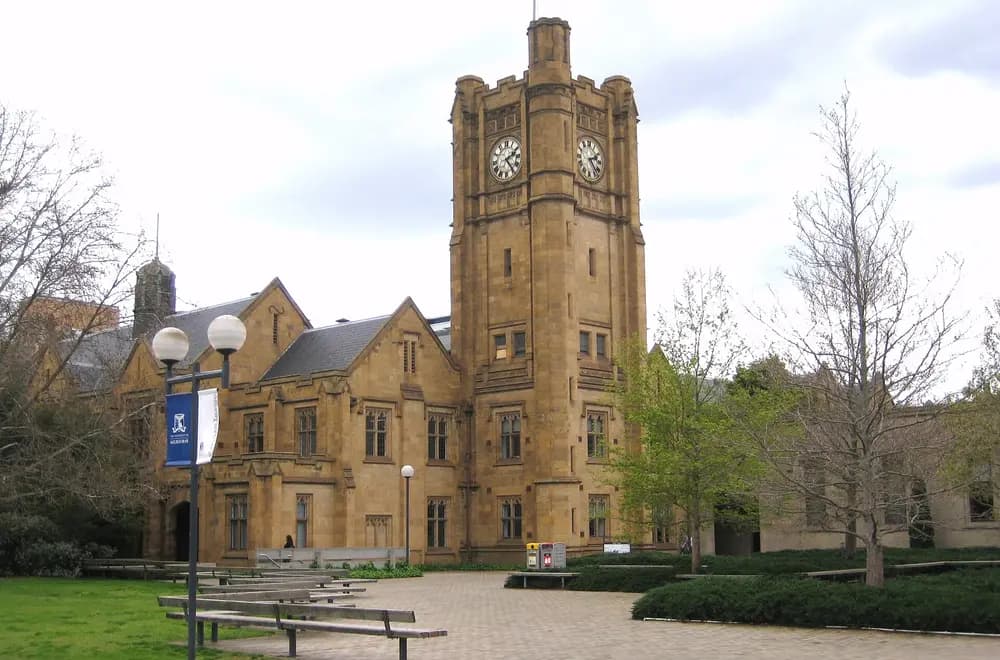

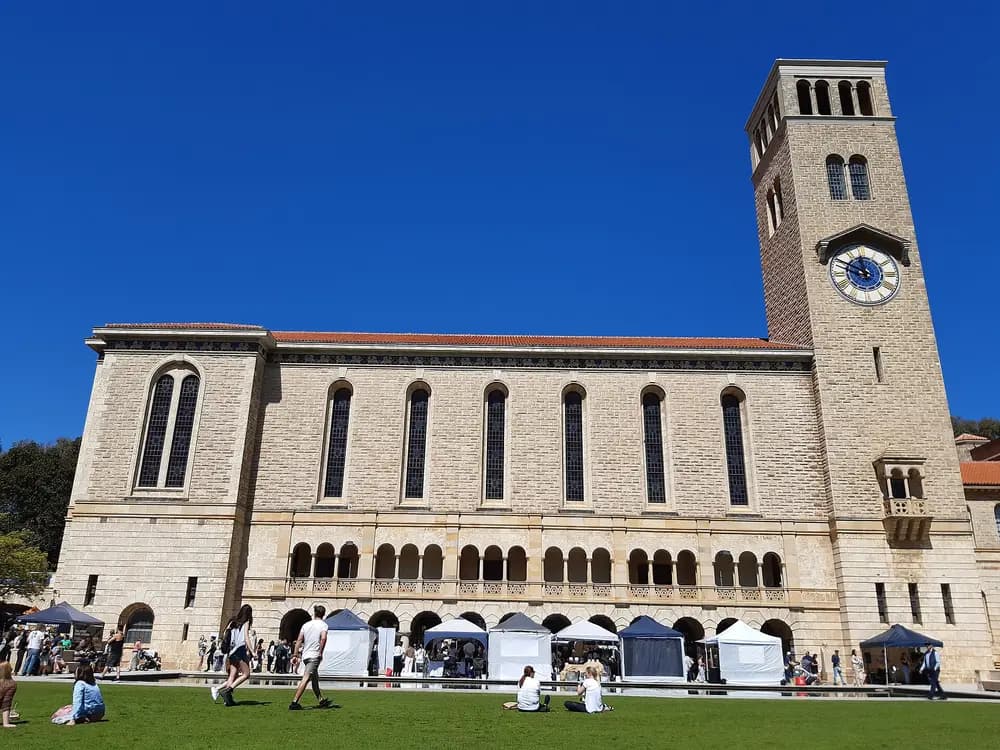
Photo: Polly clip · CC BY-SA 3.0 · cropped
Photo: User:DXR · CC BY-SA 4.0 · Photo: Calistemon · CC BY-SA 4.0 · Photo: Chris Olszewski · CC BY-SA 4.0
How dentistry training works in Australia
Dentistry is a regulated profession. Every route ends in the same place: an accredited program, then registration with the Dental Board of Australia.
To work as a dentist in Australia you complete a program accredited by the Australian Dental Council (ADC) and approved by the Dental Board of Australia, then register with the Board. Ahpra, the Australian Health Practitioner Regulation Agency, runs registration with the Board. At June 2026 the Board listed 29,351 dental practitioners, 21,840 of them in the dentist division alone.
There are two main doors. School leavers enter an undergraduate degree of about five years through their state's tertiary admissions centre. Graduates enter a Doctor of Dental Medicine (DMD) or Doctor of Dental Surgery (DDS) of about four years, applying directly to each university. GEMSAS, the system many applicants know from medicine, does not handle dentistry.
Degree titles differ, but each route in the table below leads to registration as a dentist. Griffith splits training into two stages, a three-year Bachelor of Dental Health Science and a two-year Master of Dentistry, and you need both to register.
Dentist or oral health therapist?
Read the course title before you apply. Curtin's three-year Bachelor of Science (Oral Health Therapy) trains oral health therapists. They are registered dental practitioners, but this is not a dentistry degree. The Dental Board says a practitioner's division can narrow their scope, and that oral health therapists cannot become dentists simply by completing professional development courses. In Western Australia, the route to registering as a dentist is the University of Western Australia's DMD. Oral health degrees elsewhere, such as Adelaide University's Bachelor of Oral Health, are also separate from dentistry.
Australian dental schools: routes, tests and interviews for 2027 entry
This is the whole map. Six universities take school leavers directly, four take graduates and the University of Western Australia also runs a school-leaver pathway into its graduate degree.
| School and degree | Entry | Length | Apply through | Test | Interview |
|---|---|---|---|---|---|
| Adelaide University, Bachelor of Dental Surgery (BDS) | Undergraduate | 5 years | SATAC | UCAT-ANZ | Online MMI, at least 6 stations |
| Charles Sturt, Bachelor of Dental Science | Undergraduate | 5 years | UAC | UCAT-ANZ | Panel, at the Orange campus |
| Griffith, Bachelor of Dental Health Science, then Master of Dentistry | Undergraduate | 3 + 2 years | QTAC | UCAT-ANZ | Recorded online (GUDAP) |
| James Cook University (JCU), BDS | Undergraduate | 5 years | QTAC and the JCU portal | None | Check with the school |
| La Trobe, Bachelor of Dental Science (Honours) | Undergraduate | 5 years | VTAC | Not on the UCAT-ANZ or GAMSAT lists | Not confirmed: check La Trobe's VTAC entry |
| University of Queensland (UQ), Bachelor of Dental Science (Honours) | Undergraduate | 5 years | QTAC | UCAT-ANZ | None |
| UQ, DMD | Graduate | 3.5 years | UQ directly | GAMSAT and Casper | None |
| Melbourne, DDS | Graduate | 4 years | Melbourne directly | GAMSAT | Check with the school |
| Sydney, DMD | Graduate | 4 years | Sydney directly | GAMSAT | None for standard domestic applicants |
| University of Western Australia (UWA), DMD | Graduate | 4 years | UWA directly | GAMSAT | MMI, 8 stations |
| UWA, Assured Pathway to the DMD | School leaver | Bachelor's degree, then the DMD | TISC | UCAT-ANZ | MMI, 8 stations |
For domestic applicants. MMI means multiple mini-interviews, a circuit of short stations. Casper is an online situational judgement test. First Nations and international routes can differ.
| School | How applicants are ranked |
|---|---|
| Adelaide University | UCAT-ANZ alone decides interview invitations, and about 300 applicants are invited. Offers use interview 40%, academic score 40% and UCAT-ANZ 20%. |
| Charles Sturt | Applicants may be selected for interview on their UCAT-ANZ score. |
| Griffith | UCAT-ANZ Total Score decides interview invitations, and QTAC lists the interview as a requirement. |
| JCU | JCU's own application asks for written statements and letters of support. Check with JCU how it weighs them. |
| La Trobe | ATAR-based, with a separate regional entry option. Check La Trobe's VTAC entry for the current rank and rules. |
| UQ, Bachelor | A minimum adjusted ATAR of 99.0, then selection on UCAT-ANZ scores. |
| UQ, DMD | 70% average GAMSAT and 30% Casper, after a GPA of 5.0 and at least 50 in each GAMSAT section. |
| Melbourne | One ranked list giving equal weight to your rank by weighted average mark (WAM) and your rank by GAMSAT. |
| Sydney | GAMSAT section scores, after a GPA of 5.0 and at least 50 in each section. Overall and average scores are not used. |
| UWA, graduates | Interview 50%, GPA 30%, GAMSAT 20%. |
| UWA, Assured Pathway | Interview 50%, ATAR 30%, UCAT-ANZ 20%. |
UWA rural applicants carry a 25% rurality rating, with the other weightings scaled down. Schools review their rules each year, so read the current page for your entry year.
ATAR and subject requirements for undergraduate dentistry
A published minimum and the rank that earns an offer are different things. These figures describe the 2026 intake. They are not promises for 2027.
Your ATAR is your national rank. Your selection rank is your ATAR plus any adjustment factors, such as points for equity schemes or particular subjects. Offer figures are often quoted both ways, so two numbers can describe one offer. At UQ in semester 1, 2026, the lowest offer was 95.70 before adjustments and 99.00 after them.
| School | ATAR and selection rank | Year 12 subjects |
|---|---|---|
| Adelaide University | Minimum selection rank 90.00, with the rank needed typically much higher. Past cut-offs are not disclosed. | Any one of SACE Stage 2 Chemistry, Mathematical Methods, Specialist Mathematics or Physics, plus any one of Biology, Earth and Environmental Science, Chemistry or Physics. |
| Charles Sturt | Check UAC's entry for the course for current ATAR information. | Assumed knowledge: Chemistry, Mathematics Advanced and Physics. English Standard is recommended. |
| Griffith | QTAC's listing shows no ATAR figures. | Assumed knowledge: English, plus one of Biology, Chemistry, Physics or Mathematical Methods (Units 3 and 4, grade C). |
| JCU | Semester 1, 2026 offers: lowest 86.95, median 97.05, highest 99.90, the same with and without adjustment factors. | English, Mathematical Methods and Chemistry (Units 3 and 4, grade C). Biology is recommended. |
| La Trobe | Check La Trobe's VTAC entry for the current rank. | VCE English: study score of at least 25, or 30 for English as an Additional Language. |
| UQ | Minimum adjusted ATAR 99.0. Semester 1, 2026 median: 99.30 unadjusted, 99.95 adjusted. | English and Chemistry (Units 3 and 4, grade C). Biology is recommended. |
| UWA, Assured Pathway | Minimum ATAR 98, or 90 on the Indigenous school-leaver pathway. | Chemistry and Maths Applications or higher are recommended, and can be taken as first-year university units. |
Units 3 and 4 is QTAC's wording for Queensland subjects, so check your own state's equivalent.
Ways to secure a graduate dental place from Year 12
UWA Assured Pathway
School leavers can secure a place on this route. You complete UWA's Bachelor of Biomedicine (Specialised) with the Integrated Dental Sciences major before starting the DMD.
Melbourne Graduate Degree Package
These packages let high achievers secure a later place. You take a Melbourne Bachelor of Biomedicine or Science, keep a weighted average mark of at least 80% and pass the prerequisites first time. These students do not need the GAMSAT.
Sydney's double degree
Sydney's 2027 documents mention an undergraduate Double Degree Dentistry program and reserve some Commonwealth supported DMD places for those students. We could not confirm current school-leaver entry rules, so ask Sydney directly.
The UCAT-ANZ for dentistry: format, scores and how schools use it
Five dental courses use the UCAT-ANZ for 2027 entry: Adelaide University, Charles Sturt, Griffith, UQ's Bachelor of Dental Science and UWA's Assured Pathway. There are no general exemptions, although some pathways do not require it.
The UCAT-ANZ (University Clinical Aptitude Test) is a computer-based test lasting just under two hours, with no negative marking. Three cognitive subtests are each scored from 300 to 900, giving a total from 900 to 2700. The Situational Judgement Test (SJT) gets its own separate score from 300 to 900.
Abstract Reasoning has gone from the test. Older scores out of 3600 came from a different test and cannot be converted to the current scale.
| Subtest | Questions | Test time | Score |
|---|---|---|---|
| Verbal Reasoning | 44 | 22 minutes | 300 to 900 |
| Decision Making | 35 | 37 minutes | 300 to 900 |
| Quantitative Reasoning | 36 | 26 minutes | 300 to 900 |
| Situational Judgement | 69 | 26 minutes | 300 to 900, reported separately |
| Candidates | 17,341 |
|---|---|
| Mean total score | 1,964 out of 2700 |
| Median total score | 1,950 |
| 9th decile (90th percentile) | 2,340. Nothing higher is published. |
| Situational Judgement | Mean 580, median 589, out of 900 |
Schools use the result differently. Adelaide counts sections 1 to 3 equally and uses the SJT only to split ties. Griffith's interview invitations rest on the Total Score. UWA sets no minimum: its threshold comes from ranking within each quota each year.
UCAT-ANZ 2027 dates are not published yet. For the 2026 test, bookings opened on 3 March and closed at the standard fee on 15 May, testing ran from 1 July to 5 August, and results reached universities in early September. The standard fee was $335, or $240 for concession holders. Your own score report arrives soon after you sit.
Graduate-entry dentistry: the GAMSAT, GPA and prerequisites
Four universities run graduate-entry dentistry. All four take applications directly, and each treats the same GAMSAT result differently.
The GAMSAT, run by the Australian Council for Educational Research (ACER), has two testing cycles a year, in March and September. Its three sections are Written Communication (two essays), Humanities and Social Sciences (62 questions) and Biological and Physical Sciences (75 questions). Total test time is 5.25 hours over two sittings.
Scores run from 0 to 100. The overall score counts Biological and Physical Sciences twice, but Sydney ignores the overall score and ranks on individual sections. ACER says results can be used for up to four consecutive years for Australian programs, and universities add rules of their own.
| School | Minimum scores | Degree and prerequisites | Applications |
|---|---|---|---|
| Sydney, DMD | GPA 5.0, calculated by UAC. At least 50 in each GAMSAT section. | An eligible bachelor's degree in any discipline. | 21 April to 4 June 2026 |
| Melbourne, DDS | Selection is by ranking. Check Melbourne's page for any minimum. | A bachelor's degree, plus prerequisite subjects. Check Melbourne's page for the current list. | Check Melbourne's page |
| UQ, DMD | GPA 5.0. At least 50 in each GAMSAT section, sat within four years. Casper in the year of application. | A bachelor's degree in health, allied health, physical or biological sciences, plus human anatomy and physiology within 10 years. | Closes 30 September 2027 for the January 2028 start |
| UWA, DMD | Selection GPA 5.5. GAMSAT overall 55, with no section under 50. | A recognised bachelor's degree. | 1 to 31 May 2026 |
Sydney's degree assessment goes through UAC's Qualifications Assessment Service, which charges $155. Its window for 2027 entry ran from 13 April to 28 May 2026. Meeting a minimum does not guarantee a place.
Applying through the tertiary admissions centres: who handles what
Undergraduate dentistry runs through tertiary admissions centres, one for each state or region. Dental closing dates are often much earlier than a centre's headline dates.
| Centre | Dental courses | Closing date | Offers |
|---|---|---|---|
| UAC (NSW and ACT) | Charles Sturt | 13 September 2026 | Main round 23 December 2026 |
| VTAC (Victoria) | La Trobe | Timely applications closed 28 September 2026 | 23 December 2026, then 12 January 2027 |
| QTAC (Queensland) | Griffith, JCU, UQ | 30 September 2026 for Griffith and JCU | QTAC lists 14 January 2027 for all three |
| SATAC (South Australia) | Adelaide University | 30 September 2026, no late applications | From January 2027 |
| TISC (Western Australia) | UWA Assured Pathway | Late September 2026 | Check TISC |
UAC took general applications until 5 February 2027, nearly five months after Charles Sturt's course closed. QTAC's listing gives no closing date for UQ dentistry, and UQ sends applicants to QTAC's site for it.
Apply and list your preferences
You rank courses with each centre, and SATAC allows up to six. If you want courses in more than one state, apply through each state's centre.
Lodge the extra forms
JCU needs a second application in its own portal. Rural and First Nations routes have their own forms: JCU's Rural Access applications for 2027 closed on 29 September 2026.
Watch for interview invitations
Adelaide opened booking on 22 October 2026. Check your email often from late October.
Do you need a personal statement for dentistry?
Usually not. Adelaide University says personal statements and references are not considered, and Sydney ranks standard domestic applicants on admissions test results. JCU is the main exception. It needs its own online application by the QTAC closing date, including letters of support, so read JCU's page early for the current requirements.
Rural and First Nations entry to dentistry
Most dental schools have a route for rural applicants and for Aboriginal and Torres Strait Islander applicants, but the rules differ a great deal.
Rural background usually means five consecutive years, or 10 cumulative years, in a rural area. Schools measure rural differently. Some use the Modified Monash Model, which rates places from MM 1 (metropolitan) to MM 7 (very remote). Others use remoteness areas from the Australian Statistical Geography Standard (ASGS). A town can count under one and not the other, so check each school's definition.
| School | Rural route | First Nations route |
|---|---|---|
| Adelaide University | About four places reserved, for MM 2 to 7. You still sit the UCAT-ANZ. | Places reserved. No UCAT-ANZ. Every eligible applicant is interviewed by a panel of three to four. |
| Charles Sturt | A rural pathway with an extra form. Check with Charles Sturt how many places are set aside. | Applicants lodge the same supplementary form through UAC. |
| Griffith | Its Rural Priority Access Scheme. Evidence was due by 30 September 2026. | First Peoples Health Pathway. Identify on your QTAC application and preference the course by 30 September. |
| JCU | Places reserved through QTAC's Rural Access Scheme, for five consecutive or 10 cumulative years in a designated rural or remote area. | Check JCU's page. |
| La Trobe | A separate Regional Entry option. Check La Trobe's VTAC entry for the current rules. | Check La Trobe's VTAC entry. |
| Sydney | A rural scheme with a minimum GPA of 4.5. | Indigenous Facilitated Entry Schemes, including routes for Bachelor of Oral Health and postgraduate degree holders. |
| UQ | Adjustments count towards the Bachelor's 99.0 adjusted minimum. | Bachelor: the Admissions Scheme does not require UCAT-ANZ. DMD: applicants who meet the minimum requirements are offered a place, subject to evidence of identity. |
| UWA | MM 2 to 7. Rurality counts for 25% of the final rank. | Graduates are ranked on GPA and interview through Boola Boola Djinda. |
Melbourne is not listed because we could not confirm its routes on its own pages. Each route has its own evidence rules and closing dates, so check before you rely on it.
Work experience for dentistry: what Australian schools ask for
In everything we could read, no Australian dental school publishes a minimum number of days. Work experience matters most where a school interviews you.
Adelaide University's course page lists no work experience requirement, and UQ's Bachelor and Sydney's DMD rank on academic and test measures alone. JCU asks for letters of support in its own application. Interview schools look for what you learned: Adelaide assesses preparedness for the program, and Charles Sturt explores your motivation for dentistry.
You are not a registered student until you enrol. Ahpra's student register covers people enrolled in approved programs, so anything you do at school is observation only.
Ways to build relevant experience
- Ask a general dental practice whether you can observe, and notice how the dental team shares the work.
- Spend time in a community or rural health setting if you can, because several schools train for rural and regional practice.
- Count a customer-facing job or volunteering: dentistry depends on calming, informing and listening to people.
- Check what the practice needs first, such as a confidentiality agreement or a working with children check.
- Keep short notes after each visit, leaving out anything that could identify a patient.
Dental school interviews: who interviews, and what to expect
Four universities are confirmed as interviewing standard domestic applicants: Adelaide University, Charles Sturt, Griffith and UWA. The formats differ enough that practice for one can mislead you for another.
| School | Format | What it says it looks for | Dates |
|---|---|---|---|
| Adelaide University | MMI over Zoom, at least six stations of 10 minutes | Problem solving, communication, teamwork, empathy, integrity, preparedness for the program, cultural awareness and motivation | Late November to December 2026 |
| Charles Sturt | Panel, at the Orange campus | Communication, motivation for dentistry and commitment to rural and regional practice | Late November |
| Griffith | GUDAP: recorded scenarios on the SAMMI system, with no live interviewer | Communication, an empathetic and ethical approach, a reflective manner, problem solving, teamwork and decision making | 23 to 27 November 2026 |
| UWA | MMI, eight stations of seven minutes: two to consider, five to respond | UWA says questions need no specific health or scientific knowledge | Graduates: late September to early October. Assured Pathway: 30 November to 11 December 2026 (planned) |
GUDAP is the name of Griffith's dental interview. Adelaide says its format is reviewed each cycle.
Griffith's interview is recorded, so rehearse to a camera. It bans AI tools, notes, phones and support people, and checks your photo ID against the recording. Adelaide's interview criteria do not list manual dexterity. It treats fine motor skills as an inherent requirement of the degree, so tell the university early if an impairment affects your hands or arms.
What to read before any dental interview
The Code of conduct, dated 29 June 2022, is shared by 12 National Boards, including the Dental Board. Its 11 principles run from putting patients first through cultural safety, respectful practice and using the health system wisely to professional behaviour. Your answers should fit them.
| Medicare | Does not cover most dental examinations and treatment, though it covers some surgical procedures by approved dentists |
|---|---|
| Who pays (2023 to 2024) | About $13.2 billion was spent on dental services, 61% paid directly by patients and 20% by private health insurers |
| Cost as a barrier | Cost keeps some adults from seeing a dentist. Check the Australian Institute of Health and Welfare for current figures |
| First Nations dental workforce | 160 Aboriginal and/or Torres Strait Islander dental practitioners at June 2026, 0.5% of the total |
Why dentistry, and not medicine or oral health therapy?
Show you know the differences, including that a dentist's scope is wider than an oral health therapist's. Use something you saw or did, then explain what draws you to that work. Avoid reasons that would fit any well-paid job.
Why would you work as a dentist in a country town? (Charles Sturt explores commitment to rural and regional practice.)
Be specific. Name a place you know or have looked into, and explain what access to dental care looks like there. If you have no rural background, say so, then show what you have done to understand rural life.
Why do some Australians put off seeing a dentist, and what could be done?
Build a balanced answer on facts. Medicare does not cover most dental care, patients pay most of the bill directly, and cost keeps some adults away. Weigh options such as public dental services, the Child Dental Benefits Schedule and prevention, and accept that funding has limits.
An Aboriginal patient seems uneasy and says very little during a check-up. How should the dentist respond?
Do not assume why. The Code says cultural safety is determined by Aboriginal and Torres Strait Islander people themselves. A strong answer slows down, asks what would make the visit more comfortable, offers to include family or an Aboriginal health worker if the patient wishes, and explains each step.
A patient with healthy teeth asks for expensive veneers after seeing them on social media. What should the dentist do?
Start by finding out what the patient wants and why. Then explain benefits, risks and costs, including the effect on a healthy tooth. The Code says practitioners weigh benefit against harm and should not let financial incentives shape treatment options, so the dentist can decline work that is not in the patient's interest.
Paying for dentistry: CSP, full-fee places and extra costs
What you pay depends on your place type. Undergraduate domestic places are usually Commonwealth supported, while graduate programs mix place types.
In a Commonwealth supported place (CSP), the government pays part of the cost and you pay a student contribution. For medicine, dentistry and veterinary science, the maximum is $14,046 for a full-time year in 2027, up from $13,558 in 2026. If you are eligible, you can defer it through a HECS-HELP loan.
A full-fee place costs far more, and you may be able to defer it through FEE-HELP. The HELP loan limit for dentistry courses leading to initial registration is $193,259 in 2027, against $134,558 for most students.
Sydney anticipates 76 domestic DMD offers for 2027 entry: 30 Commonwealth supported, including places reserved for double degree students, and 46 fee-paying, all marked to be confirmed. Melbourne says applicants may be considered for Commonwealth supported places where available.
| Course | Place type | Published figure |
|---|---|---|
| Griffith, Bachelor of Dental Health Science | CSP | $11,000 first-year contribution, March 2027 start (QTAC) |
| JCU, BDS | CSP | $11,200 first-year contribution, February 2027 start (QTAC) |
| UQ, Bachelor of Dental Science | CSP | $12,090 a year for 2027 (UQ). QTAC lists $11,670 for the first year. |
| UQ, DMD | Full fee | $82,464 a year for 2027 |
Adelaide University and UWA list no dollar figure on their course pages.
Budget beyond tuition. Adelaide University warns that textbooks, equipment, immunisations and clearances cost extra. Sydney asks domestic fee-paying students for a $3,000 non-refundable deposit to accept a place, and a student who starts in a fee-paying place cannot later move to a CSP in that course. Sydney says it is sensible to apply for both place types.
After dental school: Ahpra registration, no intern year and specialist training
Graduating is not the last step. You must be registered before you work as a dentist, but no intern year stands between you and your first job.
You apply to the Dental Board through Ahpra's online portal, up to about three months before you finish your course. You must meet the Board's standards on English language skills and professional indemnity insurance, and declare any criminal history or health impairment that could affect your practice. Your university sends your results directly.
The Board aims to finalise complete applications within two weeks of receiving graduate results. You can start work once your name appears on the Register of practitioners, which is recognised in every state and territory.
The Board's guidance for new graduates lists no intern or supervised year. Medicine works differently: new doctors complete 47 weeks of accredited first-year training on provisional registration before general registration.
| During your degree | Your university registers you as a student. You do not apply and there is no fee. |
|---|---|
| Keeping registration | Renew each year and complete 60 hours of continuing professional development over a three-year cycle. |
| Specialist registration | 13 specialties, including orthodontics, endodontics and paediatric dentistry. You need a specialty qualification and at least two years of general dental practice. |
| Oral and maxillofacial surgery | Requires qualifications in both medicine and dentistry. |
Dentistry application timeline: from Year 11 to your first semester
These are the 2027 entry dates. If you are in Year 11 now and applying for 2028 entry, expect a similar pattern a year later, and check official dates when they appear.
- Year 10 and Year 11
Choose subjects and research schools
Chemistry is required at UQ and JCU, and JCU also requires Mathematical Methods. Adelaide needs two subjects from its science and maths lists.
- Year 12, March to August
Book and sit the UCAT-ANZ
UCAT-ANZ 2027 dates are not published. In 2026, final late bookings ended on 5 June and testing ran from 1 July to 5 August.
- Year 12, August to September
Apply
Dental closing dates for 2027 entry fell between 13 and 30 September 2026. Lodge any extra forms at the same time.
- Year 12, November to December
Interviews
Griffith, Adelaide, Charles Sturt and UWA's Assured Pathway all interview from late November to mid-December 2026.
- December to January
ATARs and offers
VCE results and ATARs arrive on 10 December 2026, and NSW and ACT ATARs on 16 December. Main offers start on 23 December, and QTAC's dental round is 14 January 2027.
- February to March
Start the course
UQ starts on 22 February 2027, and Griffith and Charles Sturt start in March. Expect checks before placements: Adelaide University, for example, lists immunisations and clearances.
- Graduates
Apply a year ahead
For 2027 entry, UWA took domestic applications from 1 to 31 May 2026 and Sydney closed on 4 June. UQ's DMD closes on 30 September for a January start, and its final accepted Casper sitting is 20 October.
Common mistakes Australian dentistry applicants make
Before you lock in your preferences
- You meet every Year 12 prerequisite at each school on your list
- Your UCAT-ANZ or GAMSAT result is valid for that school and entry year
- Every course on your list leads to registration as a dentist
- Rural, First Nations and JCU portal forms are lodged by their own deadlines
- You know which schools interview, and in what format
- You have costed equipment, checks and any move for placements
Getting into dental school in Australia: your questions answered
Where this guide's facts come from
Checked against these sources on 7 November 2026. Rules change between cycles, so confirm anything that decides your application on the official page for your entry year.
Invited to a dental school interview?
Practise in your school's format with a current Australian student and get structured feedback, or warm up first with the free timed dental mock.