
Australian healthcare values explained
The codes, the system and cultural safety
Australian schools publish their own selection criteria, not one shared list of values. Behind those criteria sit the codes of conduct for doctors and dental practitioners, the National Law behind Ahpra and the Australian Charter of Healthcare Rights. You also need to know how Medicare and the PBS work, and what cultural safety means for Aboriginal and Torres Strait Islander people. Interviews test these ideas through scenarios, not recitation.
- Good medical practice
- In force since 1 October 2020
- Dental Code of conduct
- Dated 29 June 2022
- Charter of Healthcare Rights
- Seven rights, second edition
- PBS co-payment in 2026
- Up to $25 ($7.70 concession)
- Closing the Gap, July 2026
- 19 targets, 4 worsening

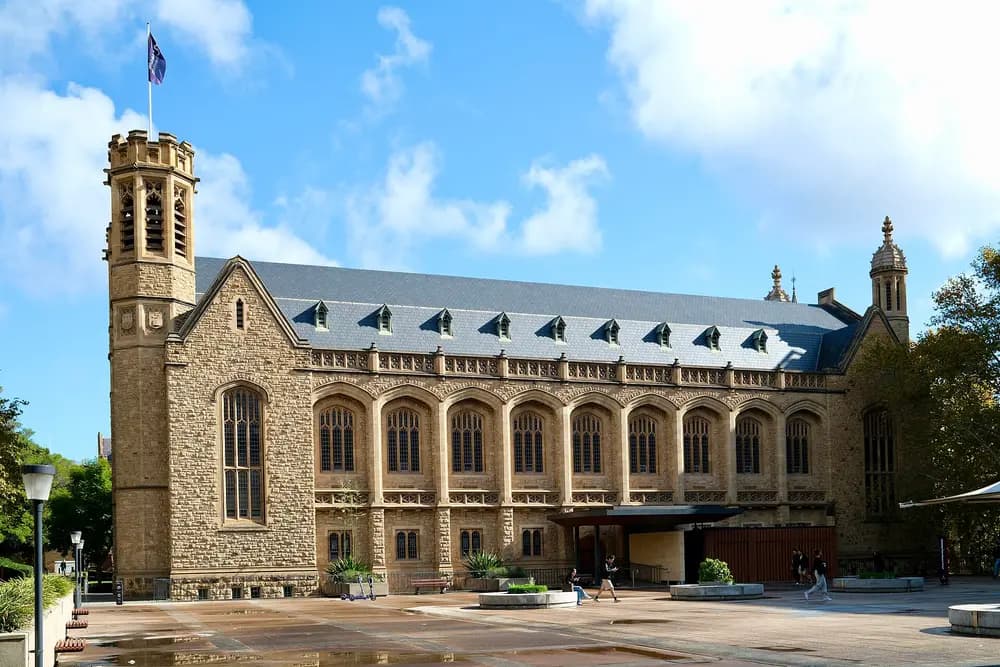


Photo: Kgbo · CC BY-SA 4.0 · cropped
Photo: Yu Chu Chin · CC BY-SA 4.0 · Photo: JVPurvis · CC BY-SA 3.0 · Photo: J Bar · CC BY-SA 3.0
What Australian medical and dental schools expect you to understand
We found no Australian document that sets one shared list of values for every medical and dental school. Each school publishes its own criteria, and the wording differs.
UQ says its medical interviews assess personal qualities and values, including kindness and compassion, integrity and adaptability. Adelaide University lists empathy, integrity and cultural awareness among its criteria. Wollongong says rural health and Aboriginal and Torres Strait Islander health will be assessed.
The common ground is the profession itself. Every registered doctor and dentist in Australia works under a code of conduct, a national law and a health system with its own structure. Understand these, and you can answer most values questions in whatever words a school uses.
The codes of conduct
What the profession expects of doctors and dental practitioners, written down by their National Boards.
Ahpra and the National Law
Who regulates practitioners, and why protecting the public comes first.
Patients' rights
The seven rights in the Australian Charter of Healthcare Rights.
How the system works
Medicare, the PBS, public and private care, and what the states do.
Rural and remote health
Why access falls away with distance, and how the workforce is being shaped to respond.
Cultural safety
What the term means, who defines it, and what Closing the Gap asks of the health system.
Good medical practice and the dental Code of conduct
Doctors and dental practitioners follow different documents, and the ideas overlap heavily. Use the right name for the career you are applying to.
| Feature | Doctors | Dental practitioners |
|---|---|---|
| Document | Good medical practice: a code of conduct for doctors in Australia | Code of conduct |
| Issued by | Medical Board of Australia | 12 National Boards, including the Dental Board |
| Date | Approved 27 May 2020, in force 1 October 2020 | 29 June 2022 |
| Structure | 13 numbered sections | 11 principles |
| Review | Generally every five years | Generally at least every five years |
The Medical Board's list of consultations for 2024 to 2026 shows none on this code, so the 2020 version stands. The shared Code does not cover medicine, midwifery, nursing or psychology.
Good medical practice says it does not set new standards. It describes what is already expected of every registered doctor, and it can guide the Medical Board when it protects the public. Serious or repeated failure to meet these standards can put a doctor's registration at risk. If the code and the law conflict, the law wins.
| Idea | Good medical practice | Dental Code of conduct |
|---|---|---|
| Patients first | 2.1: make the care of patients your first concern, and be honest, ethical and trustworthy. | Principle 1: put patients first through safe, effective and collaborative practice. |
| Informed consent | 4.5: a person's voluntary decision about care, made knowing the benefits and risks. | 4.2: the same idea, for all healthcare. |
| Confidentiality | 4.4: patients can expect information about them to be held in confidence. | 3.3: the same expectation. |
| When things go wrong | 4.11: be open and honest with the patient, and explain what happened and its consequences promptly. | 4.5: when care causes harm, practitioners must be open and honest. |
| Colleagues | 5.4: no place for discrimination, including racism, and zero tolerance for bullying and sexual harassment. | Principle 5: good working relationships, free from discrimination, bullying and harassment. |
| Using resources | 7.2: use healthcare resources wisely, and offer services that are necessary and likely to help. | 6.1: the same duty, and a reminder that your use of resources affects other patients. |
| Conflicts of interest | 10.12: identify, manage and disclose them. | 8.10: act in patients' best interests and tell them about interests that could affect their care. |
| Your own health | 11.2: have your own GP and seek help for stress, burnout, anxiety or depression. | Principle 9: look after your health and keep a sustainable work-life balance. |
Ahpra and the National Law: who regulates doctors and dentists
The National Law is why these codes carry weight. Its central idea is that the system exists to protect the public, not the profession.
Ahpra, the Australian Health Practitioner Regulation Agency, works with 15 National Boards to regulate 16 health professions. The Boards set the standards and policies that practitioners must meet. The legal basis is the Health Practitioner Regulation National Law, a nationally consistent law passed by each state and territory parliament.
Since October 2022, the law has made two things paramount: protection of the public, and public confidence in the safety of services provided by registered practitioners and students. The law also says the scheme must develop a culturally safe and respectful health workforce, responsive to Aboriginal and Torres Strait Islander Peoples, that contributes to eliminating racism in health services.
| Student registration | Your university reports you to Ahpra once you enrol in an approved program. You do not apply, and there is no fee. |
|---|---|
| Before you work | Graduates must register with their National Board before they start practising. |
| Public register | Anyone can look up a practitioner to check their registration and status. |
| Mandatory notifications | Practitioners and employers must report in limited cases: impairment, intoxication while practising, a significant departure from professional standards, and sexual misconduct. |
| Notifications about students | One concern triggers a mandatory notification: impairment that places the public at substantial risk of harm. |
| Public warnings | Since 15 May 2023, Ahpra and the Boards can warn the public about a serious risk from an individual, in exceptional circumstances. |
The Australian Charter of Healthcare Rights
The Charter says what every person can expect from care in Australia. It is published by the Australian Commission on Safety and Quality in Health Care, and its second edition lists seven rights.
| Right | What it means | Where it comes up |
|---|---|---|
| Access | Care that meets your needs. | Rural access, cost and waiting times. |
| Safety | Safe, high-quality care. | Raising a concern about unsafe practice. |
| Respect | Being treated as an individual, with your culture and beliefs respected. | A patient's choice you disagree with. |
| Partnership | Asking questions and making decisions with your provider. | Shared decisions and family involvement. |
| Information | Clear information about your care, access to your records, and being told when something has gone wrong. | Informed consent and open disclosure. |
| Privacy | Your personal information kept secure and confidential. | Gossip, social media and curious relatives. |
| Give feedback | Being able to give feedback or complain, and have concerns addressed. | An unhappy patient or relative. |
The Commission says these rights apply to all people in all places where health care is provided in Australia. Services may adapt the Charter, but must keep all seven rights.
Notice how the Charter and the codes fit together. A code says what a practitioner must do. The Charter says what a patient can expect. A strong interview answer often uses both: the patient has a right to clear information, so the practitioner explains the risks and checks they have been understood.
How Australia's health system works: Medicare, the PBS, public and private
You do not need to be a policy expert. You do need to know who pays for what, because many interview questions turn on cost, access and fairness.
Australia mixes public and private care. In 2023 to 2024 the country spent about $270.5 billion on health, around 10% of GDP. Governments funded 69.6% of it: $106.2 billion from the Australian Government and $82.0 billion from states and territories. Non-government sources, such as individuals and private health insurers, spent an estimated $82.3 billion.
| Part | What it does | Worth knowing |
|---|---|---|
| Medicare | Free treatment as a public patient in a public hospital, and subsidies for doctors outside hospital: 100% of the schedule fee for a GP and 85% for a specialist. | Doctors can choose to charge more than the set fee. Medicare does not cover ambulances. |
| Bulk billing | The doctor bills Medicare directly, so the patient pays nothing at the visit. | Since 1 November 2025, bulk billing incentives have covered all Medicare-eligible patients, not only under-16s and concession card holders. |
| Pharmaceutical Benefits Scheme (PBS) | Subsidises prescription medicines. It began as a limited scheme in 1948. | From 1 January 2026, patients pay at most $25 a script, down from $31.60. Concession card holders pay at most $7.70. |
| Public hospitals | Run by state and territory health systems, such as NSW's local health districts. | In 2023 to 2024, states and territories paid 58.0% of public hospital spending, the Australian Government 36.5% and non-government sources 5.5%. |
| Private care and insurance | Private patients can choose a doctor, and may be treated in a public or private hospital. Extras cover can pay towards services Medicare leaves out. | For private patients in hospital, Medicare covers 75% of the schedule fee. |
| Dental care | Medicare does not cover most dental examinations and treatment. | In 2023 to 2024, patients paid 61% of dental spending directly. The Child Dental Benefits Schedule helps eligible children. |
Figures come from the Australian Institute of Health and Welfare, the Department of Health, the PBS and privatehealth.gov.au, with the dates shown.
Strengths you can point to
- Public patients in public hospitals are treated free
- Medicines are subsidised, with a lower cap for concession card holders
- The government says it wants nine in 10 GP visits bulk billed by 2030
Tensions you can discuss
- Dental care sits largely outside Medicare, so cost shapes who is treated
- Two levels of government fund public hospitals
- Access falls with distance from major cities
Rural and remote health: why schools care so much
Rural workforce is one of the clearest places where selection and national policy meet. Several schools build it into their mission or their interview.
The Modified Monash Model rates places from MM 1 (metropolitan) to MM 7 (very remote). The Australian Institute of Health and Welfare says people in remote and very remote areas generally have poorer access to health services. In 2024, very remote areas had 2.7 full-time-equivalent medical practitioners per 1,000 people, against 4.8 in major cities. In 2023 to 2024, people in very remote communities had 3.3 GP attendances each, against 6.0 in regional centres.
The pattern is not a simple line from city to bush. GP rates are highest in medium rural towns and in remote and very remote communities, and lowest in small rural towns. A good answer shows you know that rural health is not one problem.
| Bonded Medical Program | Universities allocate 28.5% of commencing Commonwealth supported places in medicine to it. It covers medicine, not dentistry. |
|---|---|
| Return of service | 156 weeks in a regional, rural or remote area or area of workforce shortage, within 18 years of finishing the course. It need not be continuous. |
| Rural entry routes | Many schools reserve places or set separate ranking rules for rural applicants. |
Schools say this directly. Wollongong says the delivery of health care to rural, regional and remote communities will be assessed in its interview. Charles Sturt's dental panel explores your commitment to rural and regional practice. If you apply to a school with a rural mission, expect to be asked what you know and why it matters to you.
Cultural safety and Aboriginal and Torres Strait Islander health
Cultural safety has a defined meaning in Australian regulation. It appears in the National Law and in both codes of conduct, so treat it as a core professional idea.
The National Scheme's definition, used in both codes, says cultural safety is determined by Aboriginal and Torres Strait Islander individuals, families and communities. Culturally safe practice means the practitioner keeps reflecting critically on their own knowledge, skills, attitudes, behaviours and power differentials, so that care is safe, accessible, responsive and free of racism.
The key point is who decides. Cultural safety is not a certificate a practitioner awards themselves. It is judged by the person receiving care.
Both codes also use a wider idea of health. Aboriginal and Torres Strait Islander health means not just the physical wellbeing of an individual, but the social, emotional and cultural wellbeing of the whole community. The dental Code says colonisation and the inequity that followed shape health outcomes.
What the codes ask of practitioners
- Acknowledge colonisation, systemic racism and the social, cultural, behavioural and economic factors that affect health
- Recognise and address your own racism, biases, assumptions and prejudices
- Respect self-determined decision-making, partnership and collaboration led by the individual, family and community
- Help build a safe workplace for Aboriginal and Torres Strait Islander people and colleagues
| National Agreement | 19 socio-economic targets across 17 outcome areas, developed by Australian governments with the Coalition of Aboriginal and Torres Strait Islander Peak Organisations |
|---|---|
| Four Priority Reforms | Formal partnerships and shared decision-making; a stronger community-controlled sector; transforming government organisations; shared access to data and information |
| Health targets | Target 1: close the gap in life expectancy within a generation, by 2031. Target 2: 91% of babies at a healthy birthweight by 2031. Target 14: reduce suicide towards zero. |
| Progress, July 2026 | 1 target met, 3 on track, 5 improving but not on track, 2 unchanged, 4 worsening, 4 not assessable |
| Where health targets sit | Target 1 is improving but not on track. Target 2 shows no change. Target 14 is worsening. |
| Life expectancy, 2020 to 2022 | 71.9 years for males and 75.6 for females: 8.8 and 8.1 years less than non-Indigenous Australians |
| Community-controlled care | NACCHO represents 149 Aboriginal Community Controlled Health Organisations, working from more than 550 locations |
| Workforce, June 2026 | 974 Aboriginal and/or Torres Strait Islander doctors (0.6%) and 160 dental practitioners (0.5%) |
How interviews and admissions tests look for values
This table sticks to what schools publish on their own pages. Many give only a general description, and some dental courses do not interview at all.
| School | Course | What it says |
|---|---|---|
| UQ | Medicine | Interviews assess personal qualities and values: kindness and compassion, integrity, adaptability and verbal communication skills. |
| Adelaide University | Dentistry and medicine | Problem solving, communication, teamwork, empathy, integrity, preparedness for the program, cultural awareness and motivation. |
| Wollongong | Medicine | Communication, an empathetic and ethical approach, a reflective manner, teamwork and decision making. Rural health and Aboriginal and Torres Strait Islander health will also be assessed. |
| Griffith | Dentistry | Communication, an empathetic and ethical approach, a reflective manner, problem solving, teamwork and decision making. |
| Charles Sturt | Dentistry | Communication, motivation for dentistry and commitment to rural and regional practice. |
| Curtin | Medicine | Applicants must show communication and critical appraisal skills, and reflect on issues relevant to the medical profession. |
| UNSW | Medicine | A structured interview with two interviewers: academic staff, medical practitioners or community representatives. It publishes no list of criteria on its main page. |
Formats and wording change between cycles. Read the current page for each school you apply to.
UCAT-ANZ Situational Judgement Test
- Measures how you understand real-world situations and identify appropriate behaviour
- Assesses integrity, perspective taking, team involvement, resilience and adaptability
- 69 questions in 26 minutes, with no medical knowledge needed
- A separate score from 300 to 900: in 2026 the mean was 580 and the median 589
Casper
- An open-response situational judgement test, with video and typed answers
- Its owner says it assesses social intelligence and professionalism
- Skills named include collaboration, empathy, ethics, fairness and self-awareness
- Curtin medicine and UQ's Doctor of Dental Medicine are two courses that use it
Neither test asks you to name a code or a law. They look at how you think through people, duty and consequences. The ideas in this guide help most when an answer is hard: a dishonest option, a breach of privacy or a dismissive response to a patient rarely fits any of the documents above.
Worked interview examples: values, the system and cultural safety
These mix MMI, panel and dentistry formats. The guidance describes what a strong answer does. It is not a script to learn.
You are a medical student on placement. A patient says the doctor explained her operation quickly, she does not understand the risks and she is due to sign the consent form tomorrow. What do you do?
A strong answer takes her concern seriously and acts today. Listen, then tell the doctor or nurse in charge so someone qualified can explain the risks. Do not fill the gap with your own guesses, and do not dismiss it as nerves.
- Shows: consent is a voluntary, informed decision, and you know your limits as a student
- Links to Good medical practice 4.5 and the Charter's rights to information and partnership
While observing at a dental practice, you recognise your friend's mother as a patient. Later your friend asks why she was there. What do you say?
Decline kindly and clearly: you cannot discuss anyone you saw at the practice, and you would say the same about anyone. Do not hint or confirm details. If your friend presses, suggest they ask their mother.
- Shows: confidentiality holds even when it is awkward
- Links to dental Code 3.3 and the Charter's right to privacy
A patient received the wrong dose of a medicine. A pharmacist caught it, and no harm was done. Should the patient be told?
A strong answer says yes. Good medical practice expects openness when things go wrong, and the Charter gives people the right to be told. Explain what happened in plain words, say what is being done to prevent it happening again, and report it through the proper system. No harm does not mean no duty.
- Shows: honesty protects trust, and errors are a chance to fix the system
- Avoids: arguing that telling the patient would only worry them
An older Aboriginal man from a remote community keeps missing appointments at a city hospital clinic. A staff member calls him non-compliant. What do you think, and what would you do?
Question the label before you accept it. Ask what is getting in the way: distance, travel costs, family duties, past experiences of care or how welcome the clinic feels. Ask him, and involve an Aboriginal health worker or his local community-controlled service if he wishes. Raise the language respectfully with the colleague.
- Shows: cultural safety is decided by the patient, not the clinic
- Links to Good medical practice 4.7 and dental Code section 2
- Avoids: assumptions about what Aboriginal patients want
Should Medicare cover all dental care?
Weigh both sides with facts. For: patients pay most dental costs directly, cost keeps some people away, and oral health affects overall health. Against: public money is limited, so more dental cover means less elsewhere. Mention the Child Dental Benefits Schedule, then reach a reasoned view while accepting that others could disagree.
- Shows: you can use facts, see trade-offs and take a position
- Links to using healthcare resources wisely: Good medical practice 7.2, dental Code 6.1
A rural town has lost its only GP. Should every new doctor have to work in a rural area for some years?
A strong answer sees both sides. Communities need doctors, and the town's right to access care matters. Yet compulsion raises fairness questions, and a doctor forced to go may not stay. Mention the Bonded Medical Program, which asks for 156 weeks from those who join it, and rural training and recruitment as other tools.
- Shows: you know current policy and can argue past a slogan
- Avoids: treating rural health as one problem with one fix
A new medicine helps a small number of patients with a rare disease but costs a very large amount. Should the PBS subsidise it?
Start with the people affected, then weigh fairness and opportunity cost. Public money spent here is not spent elsewhere, and both codes ask practitioners to use resources wisely. Yet people with rare diseases also deserve care. Say what evidence you would want, such as how much benefit the medicine gives, and reach a balanced view.
- Shows: fair-minded thinking about limited resources
- Avoids: pretending there is an answer with no cost
How to prepare for values questions for 2027 and 2028 entry
What to do now depends on where you are. Interview dates vary by school, so check each page.
- Year 12, November to January
You are applying for 2027 entry
Many interviews run now. Griffith's dental window is 23 to 27 November 2026, and UWA's school-leaver window is planned for 30 November to 11 December. Read your school's criteria, then practise out loud.
- Learn one fact each for Medicare, the PBS, rural access and Closing the Gap
- Prepare an honest example of a mistake you made and what you changed
- Year 11, now
You are applying for 2028 entry
Read Good medical practice or the dental Code of conduct once, slowly, and follow health news. Look for steady, people-facing roles, and keep short notes on what you notice. UCAT-ANZ 2027 dates are not published yet.
- Graduates
You are applying to graduate programs
Interview timing differs from school leavers: Wollongong ran its interviews in September 2026, and UWA's graduate dental interviews run in late September to early October. Check your schools early in the year.
Your values checklist before any interview
- I can name the code that applies to my career, and what it is for
- I can say what Ahpra does and why public protection comes first
- I can list the seven Charter rights and use one in an answer
- I can explain who pays for a GP visit, a public hospital stay, a prescription and a filling
- I can define cultural safety and say who determines it
- I can give one fact about rural access and one about Closing the Gap
- I have read my school's own criteria for this cycle
- I have done at least one timed mock interview with feedback
Common mistakes applicants make with values questions
Australian healthcare values: your questions answered
Where this guide's facts come from
Checked against these sources on 7 November 2026. Rules change between cycles, so confirm anything that decides your application on the official page for your entry year.
Practise saying it out loud
Knowing the codes is the easy part. A live mock shows whether your answers hold up under time pressure, with feedback on what to change.