
The Western Sydney Medicine course
What you actually study, and where you will be
Western Sydney's MD is a 5-year (undergraduate entry) course taught through problem-based learning in an integrated curriculum, with patient contact from Year 1 and placements in Greater Western Sydney, Bathurst, Lismore and rural NSW (2027 entry). Western Sydney University's Bachelor of Clinical Science (Medicine)/Doctor of Medicine is a five-year, undergraduate-entry course based at the Campbelltown campus in Sydney's south-west. Years 1 and 2 work through the body system by system in small problem-based learning groups, with patient contact from the first weeks. Years 3 to 5 are full-time placements across Greater Western Sydney and rural NSW. Students who volunteer, or who are allocated if too few do, spend at least 12 months at a rural clinical school in Bathurst or Lismore.
- Degree
- MD
- Length
- 5 years (undergraduate entry)
- Teaching
- Problem-based learning + Integrated
- Clinical contact
- Year 1
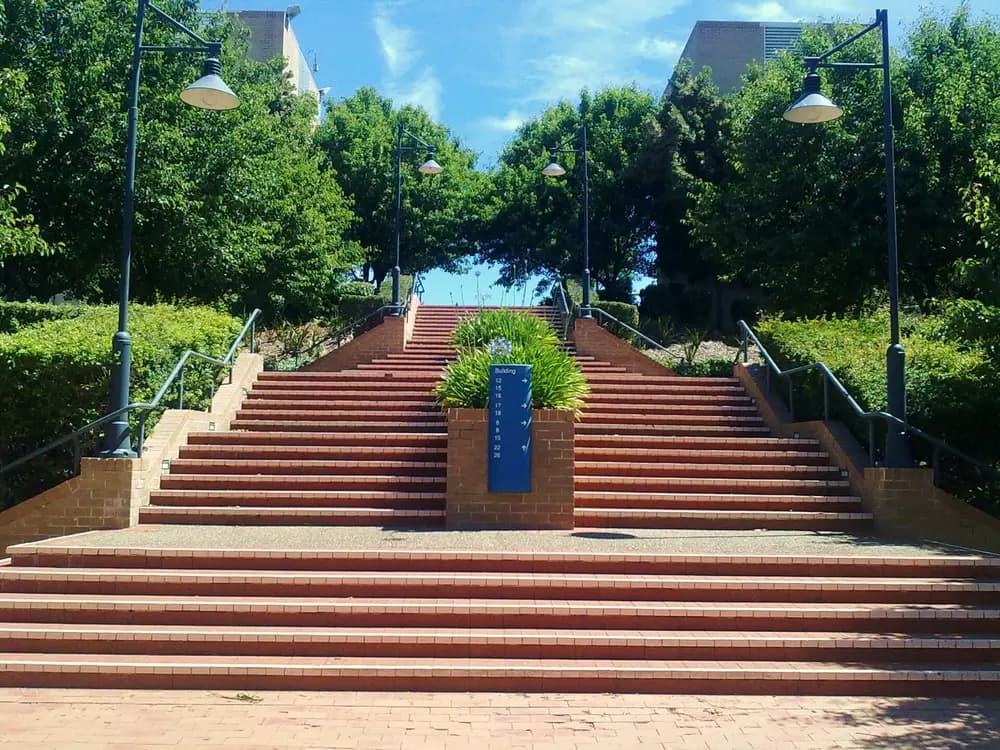
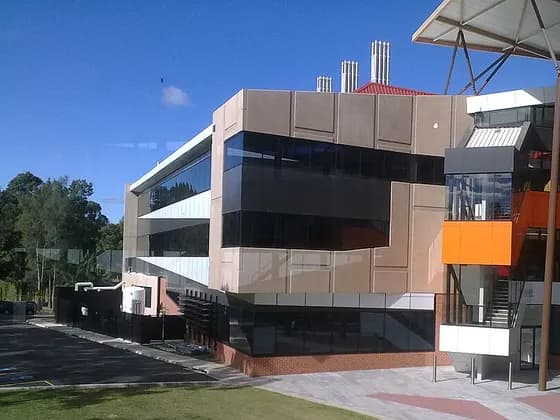
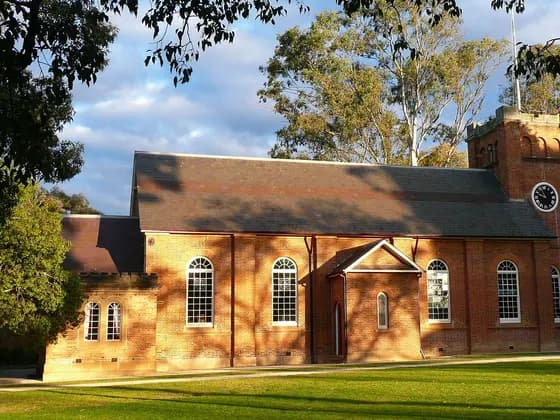
Photo: Sciencefreak109 · CC BY-SA 3.0 · cropped
Photo: Sciencefreak109 · CC BY-SA 3.0 · Photo: Sardaka ( talk ) 07:32, 30 May 2012 (UTC) · CC BY 3.0 · Photo: AlexBatura · CC BY-SA 4.0
The Western Sydney medicine course at a glance (2027 entry)
Western Sydney University (WSU) offers a five-year, full-time Bachelor of Clinical Science (Medicine)/Doctor of Medicine, run by its School of Medicine at the Campbelltown campus in Sydney's south-west. It is an undergraduate-entry course, so you do not need a degree before you start. The next intake begins on 8 February 2027.
In Australia, a Doctor of Medicine (MD) like this one is an extended masters-level degree that trains you to practise medicine; it is not a research doctorate. At WSU the first three years are undergraduate-level subjects and Years 4 and 5 are postgraduate level. If you leave after completing the first three years (240 credit points), you can exit with a Bachelor of Clinical Science (Medicine).
Each year is one large subject (final year is split into two halves), and you must pass each one before moving on. Years 1 and 2 work through the body one system at a time using problem-based learning (PBL). In a small group you work through a patient's case, decide what you need to learn, then go away and learn it. Lectures, tutorials and practicals back the cases up, and you meet patients from your first weeks.
From Year 3 you are on full-time placements, mostly in the hospitals and community services of Greater Western Sydney. Part of each year group spends at least 12 months of Years 4 and 5 at a rural clinical school in Bathurst or Lismore. Every Year 5 student also spends five weeks in an Aboriginal community controlled health service, one run by its local Aboriginal community. The school describes its purpose as training doctors for the hospitals, health services and general practices of a fast-growing Greater Western Sydney.
The Australian Medical Council (AMC), which accredits medical courses, lists the course as accredited to 31 March 2027, with an accreditation extension submission due in 2026. The MD replaced WSU's earlier MBBS (Bachelor of Medicine, Bachelor of Surgery), which the AMC lists as being taught out. In 2021 the AMC reported that the school had 100 Commonwealth supported (government-subsidised) places a year, a rough guide to the size of each year group.
Graduates apply to the Medical Board of Australia, through the Australian Health Practitioner Regulation Agency (AHPRA), for provisional registration to work as an intern. The internship is your first supervised year as a doctor, also called PGY1 (postgraduate year one). General registration follows once you complete it satisfactorily. WSU says the degree also qualifies you to work as an intern in New Zealand.
| Degree | Bachelor of Clinical Science (Medicine)/Doctor of Medicine (MD) |
|---|---|
| Course length | 5 years full time, 400 credit points |
| Main campus | School of Medicine, Building 30, Campbelltown campus |
| Teaching style | Small-group problem-based learning in Years 1 and 2 |
| First patient contact | Year 1, from the first weeks of the course |
| Clinical years | Years 3 to 5, full-time hospital and community placements |
| Rural clinical school | From Year 4: at least 12 months in Bathurst or Lismore; volunteers, then allocation |
| Aboriginal health | Five weeks in an Aboriginal community controlled health service, Year 5 |
| Research | MD Project: a 9-week supervised project in Year 4, planned in Year 3 |
| Intercalation | Optional Bachelor of Medical Research year after Year 2 |
What makes Western Sydney medicine different
A year of rural medicine in Bathurst or Lismore
Students on the rural placement spend at least 12 continuous months of Years 4 and 5 at one of WSU's two rural clinical schools, teaching bases in country hospitals. The curriculum is the same as in Sydney. You apply for a place, subsidised housing is provided, and the school fills any gaps by allocation. Staying a whole year lets you follow patients from the community into hospital and back again.
Five weeks inside an Aboriginal community health service
Aboriginal and Torres Strait Islander health is taught through all five years. In Year 5 every student, domestic or international, spends five weeks in an Aboriginal Community Controlled Health Organisation (ACCHO). Most of these placements are outside Sydney.
Training in the hospitals of Sydney's west and south-west
Year 3 rotates you through Campbelltown, Blacktown/Mt Druitt, Bankstown, Fairfield and Liverpool hospitals, plus community organisations across the region. Two of these hospitals house WSU clinical schools, hospital-based teaching centres with their own skills labs and tutorial rooms. One of the four learning outcomes in each year, Health in the Community, focuses on Greater Western Sydney, rural and regional, and Aboriginal and Torres Strait Islander communities.
A professional portfolio from your first year
From Year 1 you build a Professional Portfolio of evidence of your learning, such as clinical assessments, case studies and project outcomes. With help from Professional Advisors you use it to spot what you still need to work on. It is assessed every year, including interviews in Year 2 and a Portfolio Interview in final year.
Ungraded years where every task is a hurdle
Each year's subject is ungraded: you pass or fail it rather than earning a mark. Every task the 2027 handbook lists, from written papers and clinical skills exams to professionalism and attendance, is a hurdle, so you have to meet the standard on each one to move on.
How Western Sydney teaches medicine
Years 1 and 2 each run as a single 80-credit-point subject over two terms, called Clinical Sciences 1 and Clinical Sciences 2. Both are built on authentic clinical scenarios that tie the biomedical sciences to real patients. The main vehicle is small-group problem-based learning, supported by lectures, tutorials and practicals, and the teaching covers each body system in turn.
Alongside the systems you study the human context of health and disease, medical professionalism, the quality and safety of healthcare, evidence-based practice and research. These are taught through community visits, hospital-based sessions and workshops. Four themes run through all five years, and every subject's learning outcomes map to them: Patient Care, Health in the Community, Personal and Professional Development, and Scientific Basis of Medicine.
From Year 3 the balance flips. You learn mainly on clinical and community placements, backed by theory modules such as Evidence-based Medicine and Research Skills, Professional and Personal Development, and Scientific Streams. Conference weeks are teaching weeks set within the placement years: there are three in Year 3, and Year 5 has one 40-hour week of lectures.
The AMC's 2021 accreditation report, written when WSU planned to run the course jointly with Charles Sturt University, described how your responsibility grows. In Year 3 students joined the team on medicine and surgery rotations, helping with patient care and writing admission notes in the patient record. Year 5 was treated as a pre-internship year, and the current handbook still ends the course with a Pre-Internship learning program.
Research training leads to the MD Project, a supervised project of your own. It can be a research study, an education project, or a service-learning project, where you work with a health or community service on the needs of the service or its clients. The school expects work of the standard of a professional masters degree. The research skills behind it are first taught in the Population Health strand of Years 1 and 2, and you are trained in writing reports, giving talks and making conference posters.
Since 2025 the project has had its own 9-week attachment in Year 4, and you plan it in Year 3. In April and May you approach supervisors in your area of interest, and your proposal is due by the end of June. Students without their own project are allocated one that a supervisor has offered, by October. Classmates can share a larger project, but each needs their own question. If you are on the rural placement in Bathurst or Lismore, your project must be based there.
The ways you will learn
| Problem-based learning groups | In Years 1 and 2 a small group works through a clinical scenario, works out what it needs to learn, then researches and discusses it. In Year 2 your PBL tutor assesses how you take part in each half of the year. |
|---|---|
| Lectures, tutorials and practicals | These support the PBL cases rather than replace them, covering the science of each body system. Anatomy is examined in Year 2 through an Anatomy Practical Exam. |
| Bedside and clinical skills teaching | Bedside teaching with patients starts in Year 1. In 2021 the AMC described weekly clinical tutorials from week 1, run by clinicians in small groups and moving from role-play with classmates to real patients. Examination skills were matched to the body system being studied. |
| Procedural skills sessions | Year 2 adds hands-on procedures. The 2021 AMC report described clinician-led Clinical Procedure Sessions in the clinical schools using simulation and part-task trainers, which are models of one part of the body for practising a single procedure. |
| Community visits and general practice | Community visits start in Year 1. Year 2 has an assessed general practice placement and an assessed Medicine in Context (MiC) placement, and Year 3's Medicine in Context rotation covers community services and general practice. |
| Clinical attachments | From Year 3 you join hospital and community teams for blocks of weeks at a time. In Year 5 each attachment lasts five weeks at 35 hours a week. |
When you first meet patients at Western Sydney
WSU says clinical learning begins in your first weeks, working with and learning from real patients. In Year 1 this means bedside teaching with patients, community visits and hospital-based sessions alongside your PBL group. In 2021 the AMC described Years 1 and 2 as campus learning plus one day a week of clinical tutorials at a clinical school. Two Year 1 assessment tasks assess how you perform on placement, so this contact is a formal part of the year.
The 2021 AMC report listed the settings WSU used for teaching: Aboriginal Medical Services, general practices, hospitals, community agencies and schools. It also noted that in Years 1 and 2, PBL, personal and professional development and procedural skills sessions were led by professionals from several health disciplines.
Year 2 adds procedural skills and two assessed placements, one of them in general practice. You also sit your first OSCE, an Objective Structured Clinical Examination, where you rotate round timed stations that each test one clinical task, such as examining a patient or explaining a diagnosis.
Year 3 is the first full-time clinical year, with a minimum of 1,050 hours of clinical practice. You rotate through medical and surgical teams, the emergency, intensive care and anaesthetics departments, and community services, applying what you learned in the first two years.
Year by year at Western Sydney
- Year 1
Clinical Sciences 1: the body, system by system
Year 1 is Clinical Sciences 1 (MEDI1004), an 80-credit-point subject taken over two terms. You work through the body systems one at a time, learning the science through clinical scenarios in small PBL groups and meeting patients at the bedside. You also start the Professional Portfolio you keep for the whole course.
- Small-group PBL on clinical scenarios, supported by lectures, tutorials and practicals for each body system.
- Bedside teaching with patients, community visits, hospital-based sessions and workshops.
- Teaching on the human context of health and disease, medical professionalism, healthcare quality and safety, evidence-based practice, research and clinical skills.
- The Professional Portfolio, where you collect and review evidence of your learning with support from Professional Advisors.
- Assessment tasks include written papers in each half of the year, two practical exams, a quiz, an essay, a reflection, an applied project, two placement assessments and your portfolio.
- Year 2
Clinical Sciences 2: procedures and first placements
Year 2 is Clinical Sciences 2 (MEDI2003), again 80 credit points over two terms. The body-systems PBL continues, procedural skills teaching is added, and your placements in general practice and the community are formally assessed. It completes the foundation years, after which you can take a research year or go straight into the clinical years.
- PBL, bedside teaching and procedural skills sessions, supported by lectures, tutorials and practicals.
- Two assessed placements: one in general practice and one listed as the MiC placement, the handbook's abbreviation for Medicine in Context, its community-based strand.
- Population health and Indigenous health assessments in each half of the year, through a literature review and quizzes.
- An Anatomy Practical Exam and your first OSCE.
- Written papers A to D, a PBL tutor assessment, assignments in Personal and Professional Development (PPD) and a professionalism learning contract.
- Portfolio compilation, with interviews on your portfolio.
- Year 3
Applied Clinical Sciences 1: the first clinical year
Year 3, Applied Clinical Sciences 1 (MEDI3006), is the first major clinical year. You rotate through hospital and community placements in Greater Western Sydney, and you plan the MD Project you carry out in Year 4. The handbook sets a minimum of 1,050 clinical practice hours and three conference weeks. It also lists a 175-hour project rotation, although the school's MD Project pages now place the project work in Year 4.
- Surgery 1 and General Medicine 1, each covering two placement rotations.
- Critical Care 1, with time in the emergency, intensive care and anaesthetics departments.
- Medicine in Context 1, on the community side of healthcare, including community services and general practice.
- Choosing an MD Project in one of eight streams: Biomedical Sciences, Clinical Medicine, Community Health, General Practice and Primary Care, Health Innovations, Indigenous Health, Medical Education and Rural Health.
- Theory modules: Evidence-based Medicine and Research Skills 1, Professional and Personal Development 1 and Scientific Streams 1.
- Assessments include a long case, a clinical skills examination, a final exam, your portfolio and placement assessments in medicine, surgery, critical care, oncology and Medicine in Context.
- Year 4
Applied Clinical Sciences 2: women, children and mental health
Year 4, Applied Clinical Sciences 2 (MEDI7063), is the second clinical year and the first at postgraduate level. You complete the compulsory attachments that match your allocated placement sites, either in Greater Western Sydney or at the start of a 12-month rural placement in Bathurst or Lismore. The handbook sets a minimum of 1,225 hours of professional practice.
- Attachments in mental health, paediatrics, and obstetrics and gynaecology, each assessed on your performance.
- The MD Project: a Research Skills Week in your first campus week of Year 4, then a 9-week project attachment that ends with a Presentation Day.
- Scientific Streams, assessed through a log or workbook, and a PPD essay.
- Your MD Portfolio, a professionalism task and attendance, all of them hurdles.
- Year 5, first half
Applied Clinical Sciences 3
The first half of final year, Applied Clinical Sciences 3 (MEDI7064), is worth 40 credit points. You complete four five-week attachments drawn from a pool of rotations: two in general medicine, two in surgery, and one each in general practice, Aboriginal health and critical care. Placements can be in Greater Western Sydney, Bathurst, Lismore or elsewhere in rural and remote NSW.
- Four clinical attachments at 35 hours a week, a minimum of 700 hours of professional practice.
- One Conference Week of lectures, 40 hours in total.
- Theory modules: Professional and Personal Development 3, Professional Portfolio 3 and Scientific Streams 3.
- Two clinical exams, both oral: a case-based discussion (CBD), where you talk an assessor through a patient you have seen, and a summative long case.
- Assessed attachments, professionalism and attendance.
- Each rotation has the same learning and assessment requirements at every site.
- Year 5, second half
Medicine in Practice: the capstone
Medicine in Practice (MEDI7065), also 40 credit points, is the capstone of the course. You complete three more five-week attachments from the same pool, sit your final written exams and finish your portfolio. A Pre-Internship learning program of campus, clinical school and online activities gets you ready to start work as a doctor.
- Three five-week attachments at 35 hours a week, a minimum of 525 hours of professional practice.
- An exam part-way through the subject (listed in the handbook as the PSA), then separate short-answer (SAQ) and multiple-choice (MCQ) written exams.
- A PPD Forum Assignment and a Scientific Streams interview.
- A Portfolio Interview on the portfolio you have built since Year 1.
- Clinical examinations, listed in the handbook as a hurdle task.
How you are assessed at Western Sydney
Each year's subject is ungraded, so your result is satisfactory or unsatisfactory rather than a mark, and every task listed in the 2027 handbook is a hurdle. A hurdle is a task you must pass to pass the subject, however well you do on the others. Some tasks, such as those in the MD Project, are rated on a four-level scale from above satisfactory to not yet satisfactory, where the top three levels are passes.
Written exams run through the course. Years 1 and 2 each have written papers A to D, Year 3 has a final exam, and final year has separate short-answer and multiple-choice exams. The 2021 AMC report listed the written formats as multiple-choice questions (MCQs), short-answer questions (SAQs) and modified essay questions (MEQs), where a case unfolds over a series of questions.
Clinical skills are tested in several formats. Year 1 has practical exams, Year 2 has its OSCE, and Year 3 has a clinical skills examination and a long case. In a long case you spend time with one patient, taking a full history and examining them, then present your findings to examiners. Year 5 adds a case-based discussion and a summative long case, both oral exams, and the final subject lists further clinical examinations.
On placement, your performance on each attachment is assessed, and professionalism and attendance are assessed every year. Attendance is compulsory, and failing to attend results in a Compulsory Fail (CF) for the subject. Because each year is a single subject and the prerequisite for the next, you have to meet the standard on every task to move up a year. You also cannot attend hospital teaching or placements until your documents have been verified through NSW ClinConnect, as NSW Health requires.
Your portfolio is assessed every year, with interviews in Year 2 and a Portfolio Interview in final year. In 2021 the AMC also noted formal 360-degree feedback during the five-week Indigenous health rotation, meaning feedback gathered from many of the people you work with, used as a summative assessment in Year 5.
The MD Project has four tasks of its own in Year 4. First comes a learning plan with a 750-word literature review, due at the end of Research Skills Week. Your supervisor then assesses how you worked during the attachment. In week 9 you give a six-slide talk, 4 minutes plus 3 minutes of questions, at a compulsory in-person Presentation Day, and hand in a 300-word abstract and a 700-word discussion.
Where you will actually be at Western Sydney
All your placements are compulsory and unpaid, and the AMC's accreditation standards require a minimum number of clinical placement hours. The handbook sets minimum hours for each clinical year: 1,050 hours of clinical practice in Year 3, then 1,225 hours of professional practice in Year 4. The two halves of Year 5 add 700 and 525 hours. That comes to about 3,500 hours in all, depending on placement availability.
Your main teaching hospitals are Campbelltown, Blacktown and Mount Druitt, but you may be sent to other Sydney hospitals from Year 1. Macarthur Clinical School at Campbelltown Hospital was WSU's first clinical school, and Blacktown/Mt Druitt Clinical School its second. Year 3 rotations also use Bankstown, Fairfield and Liverpool hospitals and community organisations. Bankstown-Lidcombe and Liverpool take students in medicine and surgery, and Fairfield hosts obstetrics and gynaecology attachments.
A shuttle bus links the Campbelltown campus with the hospitals in Campbelltown. For other sites you need a car, public transport or car-pooling, and the handbook says you pay your own travel, accommodation and living costs on placement in Years 3 to 5. The school allocates students to hospitals for each rotation. It takes special circumstances into account, but it may not give you your first preference.
WSU's rural clinical schools are in Bathurst, about 200 km inland from Sydney, and Lismore, in the Northern Rivers region. The rural placement starts in Year 4 and runs continuously for at least 12 months, and you follow the same curriculum as your classmates in Sydney. You apply for a place, and subsidised accommodation is available. If too few students volunteer, the school allocates students until the rural places are filled.
At Bathurst, every student does a term in rural general practice at one of nine local practices in Bathurst, Oberon and Blayney, and a term in Indigenous health at the Orange Aboriginal Health Service. Hospital rotations may include surgery, medicine, paediatrics, oncology, mental health and critical care, depending on what you completed before your rural term. At Lismore, the 12 months are based at Lismore Hospital, with time in general practices, community health services and Aboriginal Medical Services across the Northern Rivers.
Rural time is not limited to the rural clinical schools. The school warns that some students may do several rotations at other rural hospitals in NSW, and final-year attachments can be anywhere in rural and remote NSW. The Year 5 Aboriginal health placement usually takes you away too. There are only two Aboriginal Medical Services in Greater Western Sydney, so the school has placements across NSW, one in Sydney and most in rural and remote areas.
Macarthur Clinical School, WSU's first clinical school, is based at Campbelltown and Camden Hospital.
- Campbelltown Hospital
- Camden Hospital
- Macarthur Clinical School
WSU's second clinical school. The hospital has two emergency departments and a surgical service with eight operating rooms.
- Blacktown/Mt Druitt Hospital
- Blacktown/Mt Druitt Clinical School and Research Centre
Year 3 rotations, and obstetrics and gynaecology at Fairfield. Several WSU academic teams work at Liverpool Hospital.
- Liverpool Hospital
- Bankstown-Lidcombe Hospital
- Fairfield Hospital
Rural clinical school for a continuous 12-month placement in Years 4 and 5, based at a 101-bed hospital in the Western NSW Local Health District.
- Bathurst Health Service
- Nine general practices in Bathurst, Oberon and Blayney
- Orange Aboriginal Health Service
Rural clinical school for a 12-month placement. WSU works here with the University of Sydney and the University of Wollongong in the North Coast Medical Education Collaboration, managed by the University Centre for Rural Health.
- Lismore Hospital
- General practices, community health services and Aboriginal Medical Services across the Northern Rivers
Year 5 Aboriginal health placements and some final-year attachments. The school warns that some students may do several rotations at other rural hospitals.
- Aboriginal community controlled health services across NSW
- Other rural hospitals in NSW
Intercalation and research degrees at Western Sydney
Intercalating means pausing your medical degree to complete a separate research degree, then returning. At WSU the option is the Bachelor of Medical Research, and it is optional. You take a leave of absence from the MD after passing Years 1 and 2, spend 12 months full time or 24 months part time on research, then return to Year 3.
Years 1 and 2 of the Bachelor of Medical Research are identical to Years 1 and 2 of the MD, so the research year completes the degree. WSU's Bachelor of Medical Research page asks for at least 160 credit points of the MD, the first two years, with a grade point average (GPA) of 5, a credit average. The part-time option is not open to international students on a student visa.
The school expects you to return to medicine afterwards, but the Bachelor of Medical Research can also be an exit point if you decide not to continue with the MD. It has its own compliance requirements, including a Working with Children Check and a first aid certificate with CPR, updated each year.
Facilities and support at Western Sydney
Where you will learn
The School of Medicine is in Building 30 on the Campbelltown campus, the home base for WSU's medical students and the school's staff and researchers. The four-storey facility has an anatomy laboratory, a computer laboratory, a clinical skills laboratory, a large multi-purpose practical space, problem-based learning tutorial rooms and eight research laboratories. Its four buildings are linked by a central hub with a covered outdoor space.
The course page also lists simulation laboratories and a neuroscience behavioural investigation laboratory among the facilities medical students can use.
Macarthur Clinical School, next to Campbelltown Hospital, has a simulation laboratory for practical skills, eight tutorial rooms, a seminar room and a library. The Blacktown/Mt Druitt Clinical School and Research Centre has a clinical skills lab where you practise resuscitation, venepuncture (taking blood) and cannulation on simulation manikins before doing them on the ward. It also has tutorial rooms, an auditorium and the hospital library.
At Bathurst, rural students live in the Ben and Elizabeth Chifley cottages in Howick Street, two furnished six-bedroom houses opposite the hospital, at a subsidised rate. Lismore has newly built student accommodation near Lismore Hospital.
Support while you study
The school's Medical Education Unit coordinates and teaches parts of the course, and also provides student support and pastoral care in all five years. Through the portfolio, Professional Advisors help you identify your learning and professional development needs and plan how to meet them.
In 2021 the AMC described a student support flowchart showing who to contact for counselling, health and academic advice. Year Academic Coordinators ran orientation sessions at the start of each semester or clinical year. It also described an online curriculum roadmap, built for WSU, that links each learning objective to the activity where it is taught.
Aboriginal and Torres Strait Islander students can use the Badanami Centre for Indigenous Education, which has seven centres across WSU campuses. The Bathurst rural clinical school has its own student coordinator and a rural student support officer.
You can also join the Rural Undergraduate Pathway (RuralUP), a School of Medicine program for rural experience. Its main feature is a series of interprofessional simulation workshops in a rural setting, where you work through realistic patient scenarios with students from other health professions. The school also supports rural electives and extra rural work experience outside the course, for example with contacts, proof of insurance and travel advice.
Student groups include the Rural Health Union of Western Sydney (RHUWS), a multidisciplinary student group for rural health. The 2021 AMC report also described the Western Sydney Medical Society, the medical student society, with surgical, physician and global health groups.
Is the Western Sydney course right for you?
This course may suit you if
- You want to start medicine straight after school and meet patients from your first weeks.
- You like learning through group cases, working out what you need to know and then finding it out, one body system at a time.
- You would welcome at least 12 months of rural training in Bathurst or Lismore, with subsidised housing near the hospital.
- You are interested in Aboriginal health, which runs through all five years and includes five weeks in an Aboriginal community controlled health service.
- You want to train mainly in the hospitals of Sydney's west and south-west, at Campbelltown, Blacktown/Mt Druitt, Liverpool, Bankstown and Fairfield.
Things to think about
- In Years 3 to 5 you move between hospitals across Greater Western Sydney and pay for your own travel, accommodation and living costs on placement.
- Outside Campbelltown's hospitals you get yourself to placements, so from Year 1 you may need a car or long public transport trips.
- You could be placed in Bathurst or Lismore for 12 months even if you do not volunteer, and other rotations can take you elsewhere in rural NSW.
- The Year 5 Aboriginal health placement is likely to take you away from Sydney for five weeks.
- PBL relies on you studying independently, with lectures supporting the cases rather than leading them.
- Every task is a hurdle and attendance is compulsory, so one missed standard, or missing placements, can stop you passing the year.
Western Sydney medicine course — frequently asked questions
Applying to Western Sydney?
How to get into Western Sydney
Entry requirements, admission tests, written application and interview, step by step.
Open the guide →Western Sydney entry requirements
ATAR or GPA, GAMSAT and UCAT ANZ thresholds, interview format and place types.
See the requirements →Compare Western Sydney with other schools
Put the teaching style, anatomy teaching and placements next to another school.
Open the comparison →Prepare for the Western Sydney interview
Format breakdown, school-specific sample questions and prep tips from tutors who interviewed here.
Read the guide →Where this Western Sydney course guide came from
This guide was written from 28 official sources — Western Sydney University School of Medicine's own course pages and programme documents, plus the Australian Medical Council or Australian Dental Council and the health services the school places students with where they publish detail — read on 2026-09-28, then checked claim by claim against those sources.
- Western Sydney University: Bachelor of Clinical Science (Medicine)/Doctor of Medicine course page
- WSU Student Handbook 2027: program 4758, Bachelor of Clinical Science (Medicine)/Doctor of Medicine
- WSU Student Handbook 2027: MEDI1004 Clinical Sciences 1
- WSU Student Handbook 2027: MEDI2003 Clinical Sciences 2
- WSU Student Handbook 2027: MEDI3006 Applied Clinical Sciences 1
- WSU Student Handbook 2027: MEDI7063 Applied Clinical Sciences 2
- WSU Student Handbook 2027: MEDI7064 Applied Clinical Sciences 3
- WSU Student Handbook 2027: MEDI7065 Medicine in Practice
- Australian Medical Council: accredited medical schools
- Australian Medical Council: accreditation report on the CSU and WSU Joint Program in Medicine, 2021
- WSU School of Medicine: location and facilities
- WSU School of Medicine: hospital partnerships
- WSU School of Medicine: rural clinical schools
- WSU School of Medicine: Bathurst Clinical School
- WSU School of Medicine: Lismore Clinical School
- WSU School of Medicine: Blacktown/Mt Druitt Clinical School
- WSU School of Medicine: Macarthur Clinical School
- WSU School of Medicine: Aboriginal and Torres Strait Islander education
- WSU School of Medicine: Medical Education Unit
- Western Sydney University: Bachelor of Medical Research course page
- Western Sydney University: Medicine applicants (teaching hospitals, travel and transfers)
- Western Sydney University: Special requirements for the MD
- WSU School of Medicine: MD Project
- WSU School of Medicine: MD Project information for researchers and supervisors
- WSU School of Medicine: MD Project FAQs
- WSU School of Medicine: 2026 MD Project Student and Supervisor Guide (Year 4)
- WSU School of Medicine: rural opportunities for current medical students
- Medical Board of Australia: registration for interns
Courses are restructured between cycles. Anything here that decides your application — an anatomy offer, a placement city, a compulsory intercalated year — should be confirmed against the official page for your entry year.
Applying to Western Sydney?
We have helped hundreds of applicants turn their GAMSAT / UCAT ANZ, written application and interview prep into offers from Western Sydney and other Australian medicine schools.