
The Wollongong Medicine course
What you actually study, and where you will be
Wollongong's MD is a 4-year (graduate entry) course taught through case-based learning in an integrated curriculum, with patient contact from Year 1 and placements in Illawarra, Shoalhaven, Southern Highlands and rural NSW (2027 entry). Wollongong's MD is a four-year graduate-entry course taught from campuses in Wollongong, Nowra (Shoalhaven) and Moss Vale (Southern Highlands). The first 18 months cover the medical sciences block by block through clinical cases, with GP and community placements from year 1. Then come a year of hospital rotations, a year-long placement in a regional or rural NSW community, and six months of elective, selective and pre-internship terms.
- Degree
- MD
- Length
- 4 years (graduate entry)
- Teaching
- Case-based learning + Integrated
- Clinical contact
- Year 1
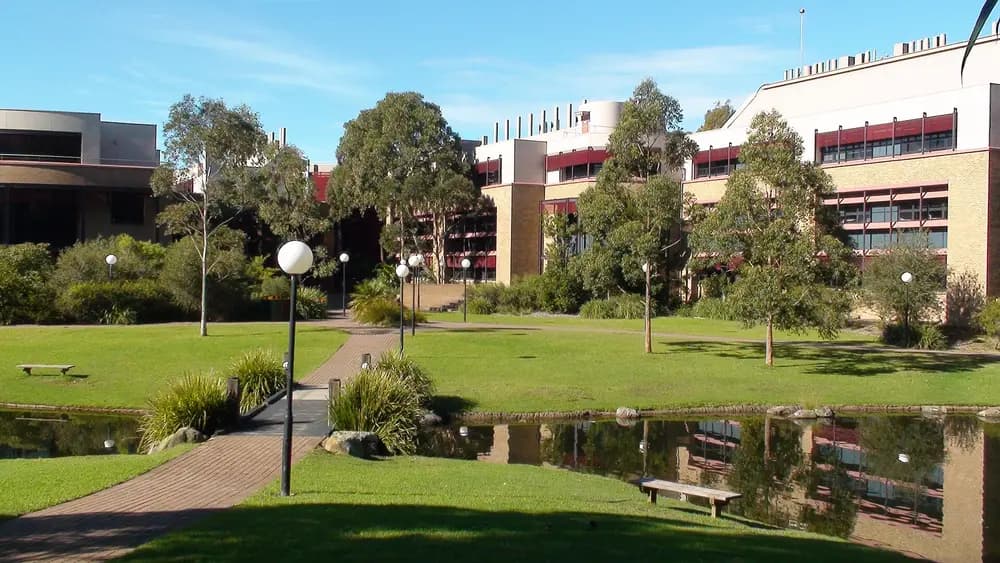
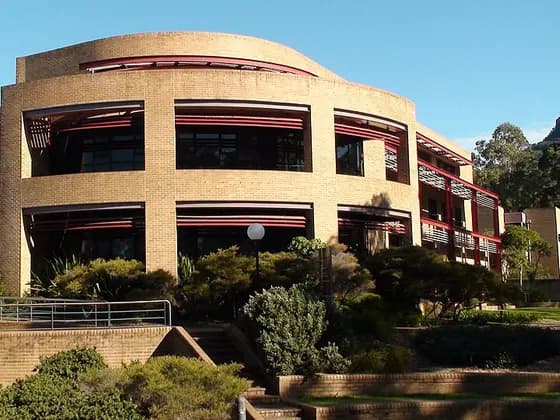

Photo: JVPurvis · CC BY-SA 3.0 · cropped
Photo: JVPurvis · CC BY-SA 3.0 · Photo: Coekon · CC BY-SA 4.0 · Photo: Maksym Kozlenko · CC BY-SA 3.0
The Wollongong medicine course at a glance (2027 entry)
The Doctor of Medicine (MD) at the University of Wollongong (UOW) is a four-year, full-time course for people who already hold a bachelor's degree. In Australia the MD is an extended masters-level degree, not a research doctorate, and it prepares you for internship, your first supervised year of work as a doctor. It is run by UOW's Graduate School of Medicine and accredited by the Australian Medical Council (AMC), the body that accredits Australian medical courses.
Since it opened in 2007, the school's stated mission has been to train doctors who will improve health care in regional, rural and remote communities, and the course is shaped around that aim. You are based at one of three campuses: Wollongong, Shoalhaven in Nowra, or Southern Highlands in Moss Vale. The university says almost half of the four-year program is delivered in rural places, and every domestic student spends the third phase in a regional or rural NSW community.
The course runs in four phases rather than neat years, and each academic year is about 42 weeks long. Phase 1 (18 months) teaches the medical sciences and clinical skills on campus. Phase 2 (12 months) is hospital rotations. Phase 3 (12 months) is a longitudinal integrated clerkship: a year in one community, following patients through general practice (GP) and the local hospital, rather than moving between short hospital blocks. Phase 4 (6 months) prepares you to work as an intern.
Teaching is case-based: a patient case sets what you study, and lectures, anatomy classes and clinical skills sessions are tied to it. Patients appear early: from year 1 you go out to a local general practice and to community health services, and on campus you practise with trained volunteer patients.
After graduating you complete your internship, also called postgraduate year 1 (PGY1). In NSW internships are overseen by the Health Education and Training Institute (HETI). Completing it makes you eligible for general registration as a medical practitioner, which is granted by the Medical Board of Australia through the Australian Health Practitioner Regulation Agency (AHPRA).
| Degree | Doctor of Medicine (MD), an extended masters-level degree |
|---|---|
| Course length | 4 years full time, about 42 weeks a year, 192 credit points |
| Campuses | Wollongong, Shoalhaven (Nowra) and Southern Highlands (Moss Vale) |
| Teaching style | Case-based learning, with lectures, anatomy and clinical skills tied to each clinical case |
| Anatomy | Staff-prepared prosections, imaging and models |
| First patient contact | Year 1: general practice and community health placements |
| Rural or regional year | Phase 3: 12 months in one regional or rural NSW community |
| Placement time | About 2,760 hours of placements across 115 weeks |
| Research | Supervised Phase 3 research project and a Phase 4 capstone case report |
| Final six months | Six-week elective, selective and pre-internship (PRINT) terms |
What makes Wollongong medicine different
A whole year in one regional or rural community
In Phase 3 you stay in one regional or rural hub for the year, working with a GP supervisor while also taking regular shifts in the local hospital's emergency department. Staying put lets you follow patients' care over months. The university says about 70% of students spend this year in a rural location.
A rural track that lasts all four years
Students on the Rural End-to-End track live and study in rural NSW for the whole course, starting at the Shoalhaven or Southern Highlands campus. They get priority for school accommodation in year 1 and, where possible, stay at their base campus for Phase 3. The alternative, the Rural-Regional Combined track, mixes campus study with placements across NSW.
Aboriginal health and cultural safety from Phase 1
Phase 1 includes an Indigenous Community Immersion placement, designed with local Aboriginal communities in the Illawarra and Shoalhaven, where you learn directly from Aboriginal people. Yarn sessions and on-Country days appear in the early phases, and culturally safe care is one of the course's graduate outcomes.
A final term that rehearses the intern job
In the six-week pre-internship (PRINT) term you work on a medical or surgical ward as a student intern and join the junior doctors' teaching sessions. Supervisors watch you run the intern's part of a ward round, fill in practice medication and fluid charts, and prepare a patient's discharge papers.
Regional hospital rotations as well as Wollongong
In Phase 2 everyone does at least one five-week rotation at a regional hospital, in Nowra, Bowral or Grafton, alongside rotations at The Wollongong Hospital. The school requires this so you see how medicine works both in a large teaching hospital and in smaller regional ones.
How Wollongong teaches medicine
The school's main teaching method is case-based learning (CBL). You learn around a clinical problem, such as a patient with chest pain or painful joints, and use it to drive what you study in the underlying science. The learning objectives for each case are worked out at an introduction session, and a facilitator guides your tutorial group through them.
Science is not taught as separate subjects first. Anatomy, physiology, pharmacology, pathology and the other medical sciences are linked to the case you are working on and to the body system of the block. Most of the science comes in Phase 1; later phases concentrate on applying it with patients.
Five themes run through all four years: Clinical Practice, Sciences for Medicine, Health and Society, Professionalism and Leadership, and Research and Scholarship. The subject outlines set separate assessments for clinical practice, the medical sciences, research and scholarship, and professionalism and leadership, so you are examined on professional behaviour and research skills as well as medical knowledge.
Local doctors teach throughout, from lectures by Illawarra and Shoalhaven specialists to supervision on placement. Phase 1 was reorganised from the 2025 intake, and the school's latest published subject outlines, for 2024-25, describe Phase 1 as it was before that change.
The ways you will learn
| The case cycle | Between a case's introduction session and its tutorial you study the objectives through lectures, anatomy, clinical skills and online modules, and a wrap-up session closes the case. In the 2024-25 outline, each case ran for a fortnight, with a two-hour tutorial early in week 2. Many groups also meet outside class. |
|---|---|
| Lectures and symposia | Lectures are given in person and linked by videoconference between campuses, with readings before and after on the online learning site. Symposia are large-group sessions on history taking, communication, clinical signs or research, often built around a patient or case presentation. |
| Clinical skills sessions | One small-group session a week in Phase 1, covering interviewing, physical examination, basic procedures, resuscitation and communication. Community volunteers trained as simulated patients act out cases and let you examine them, never intimately. You can return to the Clinical Skills Centre to practise between sessions. |
| Guided online learning (GOALs) | GOALs, short for Guided Online Assessable Learning, are online modules written for this course. They are core material rather than optional extras, and anything in them can be examined. |
| Yarn sessions and on-Country days | Listed in the handbook for Phases 1 and 2. Yarning is a conversational, story-sharing way of talking used in Aboriginal and Torres Strait Islander cultures. On-Country days take learning out onto Country, the traditional lands of Aboriginal peoples. |
| Hospital and hub teaching | From Phase 2 formal teaching moves to where you are placed: hospital tutorials, simulation sessions and student grand rounds, where students present a patient's case. In Phase 3 it happens on a weekly academic day in your hub. |
A typical week on the Wollongong course
The current year planners lay out year 1 in four-week cycles. In the 2024-25 outline, the timetable ran in two-week cycles around each case, with days from about 8.30am into the late afternoon. A fortnight mixed the CBL introduction, tutorial and wrap-up with teaching sessions, symposia, one clinical skills session a week, anatomy practicals and set times for online modules.
Most sessions are at your base campus, but everyone travels: to Wollongong for anatomy about once a week, and to Shoalhaven for whole-cohort teaching about once a fortnight. In the 2024-25 outline one slot each fortnight was a clinical placement, and other gaps were guided independent learning time for your own study. The university suggests planning on around 48 hours of study a week, including independent study.
The week changes shape in the clinical phases. In Phase 2 your preceptors, the clinicians who supervise you, organise your days, and you are expected to spend 24 to 32 hours a week in clinical work. In Phase 3 you spend up to four days a week in general practice and the hospital, plus the weekly academic day. In Phase 4 the expectation is 32 hours a week of clinical work.
How anatomy is taught at Wollongong
Anatomy classes are held in the university's Anatomy Facility in Building 41 on the Wollongong campus. Students from all three campuses travel there for anatomy classes during Phase 1.
Classes use prosections: parts of donated bodies that the lab's technical staff have dissected in advance to show key structures clearly. The bodies come from local people who registered with UOW's Body Donation Program, which began in 2005. The 2024-25 Phase 1 outline adds computer imaging and anatomical models, and the 2026 handbook's list of teaching methods also mentions dissection classes.
Before you can enter the laboratory you complete an authorisation process under the Anatomy Act 1977, explained at a compulsory Introduction to Anatomy session in week 1. The laboratory has an open-plan area for 60 students and a tutorial room for 20. You can book private study time during scheduled medical school anatomy classes, at least two working days ahead. The 2024-25 outline also sets a practice anatomy quiz in the second half of year 1, to help you find gaps before the end-of-year exam.
When you first meet patients at Wollongong
Your first patient contact comes in year 1, in the community rather than on hospital wards. In general practice you go alone or in a pair and sit in on consultations. You may take a history, examine a patient or give a vaccination under close supervision, then talk through the diagnosis and plan with your GP preceptor. In the 2024-25 outline these placements took one session a fortnight.
Community health placements take you to organisations working in Aboriginal health, ageing and allied or community health, so you see what other health workers do. The Indigenous Community Immersion placement lets you learn from local Aboriginal people about the social factors that shape their health. It also builds your understanding of cultural safety and the health care challenges Aboriginal people face.
In Phase 1, hospital time is mostly observation. In the 2024-25 outline, placements at Wollongong or Shoalhaven hospital in the last part of Phase 1, early in year 2, introduced hospital work to prepare you for Phase 2. From Phase 2 most of your learning happens with patients: on the wards in Phase 2, in general practice and the emergency department in Phase 3, and as a student intern in Phase 4.
Year by year at Wollongong
- Phase 1
Foundations on campus, block by block
Phase 1 lasts 18 months, from the start of year 1 to the middle of year 2. UOW calls its teaching periods sessions, each roughly half a year, and Phase 1 covers Sessions 1 and 2 of year 1 plus Session 3 at the start of year 2. Teaching is in blocks, mostly by body system, through clinical cases. The block list below applies from the 2025 intake; the skills checks and written tasks are from the 2024-25 outline.
- Session 1: Basis of Medicine, then the Cardiovascular System, Respiratory System, Gastrointestinal System, and Hepatobiliary and Renal Systems.
- Session 2: Nervous System, Musculoskeletal System, Endocrine and Reproductive Systems, and Urological and Immune Systems, followed by end-of-year exams.
- Session 3, early in year 2: four Chronic and Complex Care blocks, on Metabolic and Movement, Mental Health, Chronic Cardiorespiratory Burden, and Neoplasia and Congenital Disease, then an end-of-phase test. These blocks reflect the phase's growing focus on more complex health care.
- Clinical skills evaluations through the phase, starting with basic life support and moving on to communication and vital signs, heart and lung examination, and history taking.
- Research tasks: a literature review on the social determinants of health and a journal club presentation critiquing a paper. There is also a POEM (Patient-Oriented Evidence that Matters), where you turn research findings into information that matters to patients.
- Three reflective reports of 1,000 to 1,500 words on your development as a doctor in training, the first for feedback only.
- Phase 2
Hospital rotations
Phase 2 runs for 12 months from the middle of year 2. It opens with a four-week transition block on campus, now called the Clinical Skills Intensive, and then you rotate through seven five-week hospital attachments. The aim is to connect the science you learned to how diseases actually present, and to learn how history, examination and tests lead to a diagnosis and a plan.
- The transition block: in the 2024-25 outline, three days a week in the clinical skills labs learning higher-level procedures and specialised communication, plus sessions on Indigenous health and professionalism.
- Rotations: two in medicine and two in surgery (at least one of each at The Wollongong Hospital), and one each in child and adolescent health, maternal and women's health, and mental health.
- Anaesthetics and intensive care are taught within surgery rotations, and some emergency medicine within medicine and child and adolescent health.
- One on-campus Friday per rotation for professionalism tutorials and emergency and critical care simulation, including an introduction to advanced life support.
- Two full shifts shadowing a ward nurse and half a day with a hospital pharmacist, unless you are already a registered nurse or pharmacist.
- A long-case presentation at student grand rounds during medicine and surgery at The Wollongong Hospital, and an online research ethics course you must pass before the Phase 3 project.
- Phase 3
A year in a regional or rural community
Phase 3 is a 12-month longitudinal integrated clerkship, from the middle of year 3 to the middle of year 4. You are placed in a regional or rural hub and learn in general practice and the local hospital at the same time. The school's 2026-27 guide for GP supervisors describes a 38-week placement with a weekly academic program, and you take on more responsibility as your supervisors gain confidence in you.
- Parallel consulting, at least two half-days a week, usually from your first fortnight: you see patients alone in a separate room while your GP sees others, then present the case and agree a plan. You may write notes under supervision but cannot sign prescriptions, test requests or referrals.
- Up to two more GP or community sessions a week, such as home visits, residential aged care or time with other members of the primary care team.
- At least two half-day emergency department shifts a week, including some out-of-hours and weekend shifts, plus ward rounds and sessions with specialists.
- A Regional Academic Day each week, usually Wednesday: CBL on undifferentiated problems (patients whose diagnosis is not yet clear), case presentations, clinical skills and simulation. Hubs sometimes link up by video.
- A research project from a list of topics and supervisors: a proposal, a 1,500-word literature review, a 3,500-word final report and a poster presented at the end-of-phase wrap-up.
- Orientation at the Wollongong campus in July, online link-ups between all hubs during the year, and a wrap-up at the end of Phase 3.
- Phase 4
Getting ready to be an intern
Phase 4 is the last six months, running from July to late November of year 4 in the 2024 outline. It contains 18 weeks of clinical placement in three six-week terms, followed by a closing conference day. Your last written exams and OSCE (Objective Structured Clinical Examination, a practical exam at timed clinical stations) are behind you by now, and the focus is on working like a junior doctor.
- PRINT: six weeks on a medical or surgical ward as a student intern. The school runs PRINT at The Wollongong Hospital, Shoalhaven District Memorial Hospital and Lismore Base Hospital, or you can apply for another accredited NSW hospital.
- An elective and a selective, six weeks each, in disciplines you choose.
- Six self-paced online CBL modules aimed at junior doctors: death and dying, fluid management, aggression on the wards, ward pharmacy, resuscitation, and management of acute pain.
- Compulsory internship-preparation workshops, mostly held at The Wollongong Hospital, which students placed elsewhere join remotely.
- A capstone case report of up to 1,500 words on a patient from your Phase 4 terms, which you may submit for publication, presented to a small peer group at the closing conference.
How you are assessed at Wollongong
The MD is graded Excellent, Satisfactory or Unsatisfactory rather than with marks such as High Distinction or Credit. Each phase counts as one subject, and to move on you need at least Satisfactory in every summative task, meaning every assessment that counts. Formative tasks give feedback only, but you are still expected to complete them. In the 2024-25 outlines resits are by invitation and the best resit grade is Satisfactory. A resit period follows each exam period.
Exam periods fall at the end of year 1 and at the end of Phases 2 and 3, with a test at the end of Phase 1. In the 2024-25 outlines, the written papers use best-of-five multiple-choice questions and extended matching questions, where you pick answers from a list of about ten options. From Phase 2 they add modified essay questions, a series of questions about one patient's presentation, and the Phase 2 exam is two three-hour papers.
Pass marks are set by standard-setting methods such as the Angoff method, in which examiners judge how a borderline student would perform, rather than by a fixed percentage. In the 2024-25 outlines, weekly online quizzes and end-of-block tests in Phase 1, and ten online quizzes in Phase 3, let you practise the exam style without it counting.
OSCEs test practical skills: you move round timed stations, each with its own examiner, taking a history, examining, explaining or doing a procedure with a real or simulated patient. In the 2024-25 outline the Phase 1 OSCE, in April or May of year 2, had 15 stations, and you had to pass at least 60% of them as well as the overall mark. Phases 2 and 3 each have an OSCE too.
On placement, from Phase 2, your supervisors record Supervised Learning Events in an online ePortfolio. Mini-CEX (mini clinical evaluation exercises) are observed consultations: a doctor watches you with a patient and gives feedback. Case-based discussions test your reasoning about a patient you have looked after, and DOPS (direct observation of procedural skills) check procedures such as cannulation or recording an ECG.
The school's 2026-27 supervisor guides give rough targets. Phase 2 has about three mini-CEX and three case-based discussions per placement; Phase 3 has about two mini-CEX and one case-based discussion a month. Each of these years needs at least six DOPS and two professional behaviour evaluations, and the events are judged together at the end of the phase, not one at a time. In the 2024 outlines, PRINT needed 12 mini-CEX, and examiners with concerns could send you to a six-week supervised Directive term instead of an elective or selective.
Where you will actually be at Wollongong
Where you study depends on your track, which you choose when you apply and cannot change later. On the Rural End-to-End track you live and study in rural NSW for all four years, starting at the Shoalhaven or Southern Highlands campus. On the Rural-Regional Combined track you spend Phase 1 at a campus and are then placed across regional, rural and remote NSW. Its Health Access Stream focuses on general practice and community health in the Illawarra, Shellharbour, Kiama and Shoalhaven areas.
The school allocates every clinical placement; you do not choose. It asks all students to be ready to move to any of its rural NSW teaching sites, for up to a full year, and to expect rural placements in every phase. You arrange your own travel, and the school warns that public transport often will not fit the timetable. Your campus is also allocated, with your home address taken into account, and transfers are not allowed.
The school's clinical training sites are in eight regions of NSW: the Illawarra, Shoalhaven, Southern Highlands, Murrumbidgee, Clarence Valley, Northern Rivers, Central West and Outback. The course page describes teaching across three campuses and eight rural hubs. Each Phase 3 hub is led by a Regional Academic Leader, a doctor who oversees your learning and progress, with a placement facilitator who organises your sessions.
End-to-End students get priority for school accommodation in year 1, and students at the rural campuses may get help with Phase 1 travel between campuses. Before Phase 3 the school tells you where it recommends you live. Hubs outside the Illawarra rated Modified Monash 2 or above, on the national scale of how rural a place is, qualify for a travel allowance. You can claim it per kilometre for placement trips of at least 60 km return, if you live in approved accommodation and car-pool where possible.
The larger teaching hospital in Phase 2: at least one medicine and one surgery rotation are here, and mental health is at Wollongong or Shellharbour. Also a Phase 3 hub and a PRINT site.
- UOW Wollongong campus
- The Wollongong Hospital
- Shellharbour Hospital
A Phase 1 campus and a Phase 2 regional rotation site. Also a Phase 3 hub, where placements may be rostered in blocks, and a PRINT site.
- UOW Shoalhaven campus
- Shoalhaven District Memorial Hospital
A Phase 3 hub, where placements may also be rostered in blocks rather than spread across the year.
The newest campus, teaching medicine since 2025. Bowral hosts Phase 2 regional rotations, with a school training room in the student accommodation opposite the hospital. Also a Phase 3 hub.
- UOW Southern Highlands campus
- Bowral and District Hospital
Phase 2 regional rotations and a Phase 3 hub, part of the North Coast Medical Education Collaboration, with the Clarence Valley Regional Training Hub.
- Grafton Base Hospital
A Phase 3 hub in the North Coast Medical Education Collaboration, and one of the school's PRINT sites in Phase 4.
- Lismore Base Hospital
Two separate Phase 3 hubs in inland NSW.
A Phase 3 hub.
A Phase 3 hub in far western NSW, run through the Broken Hill Extended Clinical Placement Program.
Electives, selectives and options at Wollongong
Phase 4 gives you two terms of your own choosing. The elective is a six-week structured placement in a discipline you pick, anywhere in the world, subject to government travel safety advice and the university's indemnity (insurance) rules. The selective is also six weeks in a discipline you choose, but it must be in Australia. A hospital-based term is preferred for both; other clinical settings can be approved if you will do 32 hours a week of clinical work.
You can make one of the two, but not both, a research term, in the community or at a specialist site. You then write it up in the format of a medical journal article within two weeks of finishing.
Since 2020 NSW Health has employed final-year medical students in paid Assistant in Medicine (AiM) posts, working under supervision as part of a clinical team. In the 2024 Phase 4 outline, if the school nominates you, an AiM post can replace your PRINT, elective or selective term, or all of Phase 4, and you still complete the usual assessments. Posts depend on NSW Health funding and can be withdrawn at short notice, so you must also arrange a back-up term.
Facilities and support at Wollongong
Where you will learn
Each campus has a Clinical Skills Centre with purpose-built facilities, where the simulated patient sessions are held. In Wollongong the school's Learning Centre is on the ground floor of Building 28, with textbooks, computers and swipe-card access until midnight. Shoalhaven students also have a Learning Centre in the school's Building 304, and study rooms in the Ray Cleary Building.
The hospitals have their own student spaces. The Wollongong Hospital has a student study area on level 8 with a tutorial and clinical skills room, and the hospital library on level 9. Shoalhaven District Memorial Hospital has a student study space with video-conferencing for tutorials, and the school's offices at Wollongong, Shoalhaven and Bowral hospitals lend out doctor's bags, anatomical models and textbooks.
Grafton Base Hospital has a UOW student area with a simulated GP examination room and an eight-person study room with video-conferencing. On the hospital grounds, a simulation suite and clinical skills lab hosts teaching every Wednesday from UOW and the Australasian College for Emergency Medicine (ACEM), covering simulations, clinical skills, tutorials and grand rounds.
Support while you study
The school's Head of Students monitors every student's progress, runs a counselling system for students who are struggling, and advises on course rules and procedures. You make appointments by email or phone. The Head of Students is also the person to tell if an emergency stops you sitting an exam, or if there is a safety incident on placement.
In Phase 3 you can take academic or personal concerns to your hub's Regional Academic Leader or placement facilitator, and the Head of Students stays available for wellbeing and academic progress. The weekly academic day also gives students in each hub a chance to support each other. The Dean's welcome to Phase 3 says feeling alone after moving is normal, and urges you to raise concerns early.
The school publishes guidance on pregnancy, childbirth and adoption during the MD. Because the academic year is long, it says breaks matter, and it does not expect or encourage extra clinical work in the holidays. If the science is a struggle in Phase 1, the Medical Sciences team asks you to contact them early.
Is the Wollongong course right for you?
This course may suit you if
- You want to spend a year in a regional or rural NSW community, learning in general practice and a local hospital at the same time.
- You are open to rural medicine as a career, or want to live and study in rural NSW for all four years on the End-to-End track.
- You learn well from clinical cases, with lectures, anatomy and skills sessions organised around each case.
- You want to meet patients in general practice and community settings from year 1.
- You like the idea of finishing with a term spent working as a student intern on a hospital ward.
Things to think about
- The school allocates your campus and placements, and you must be ready to move to any of its rural NSW sites for up to a year.
- Travel is built in: regular trips to Wollongong and Shoalhaven in Phase 1, and your own transport to placements.
- Your track is fixed when you accept a place; you cannot switch between the End-to-End and Combined tracks later.
- Every summative task must reach Satisfactory for you to progress, and the outlines make resits by invitation only.
Wollongong medicine course — frequently asked questions
Applying to Wollongong?
How to get into Wollongong
Entry requirements, admission tests, written application and interview, step by step.
Open the guide →Wollongong entry requirements
ATAR or GPA, GAMSAT and UCAT ANZ thresholds, interview format and place types.
See the requirements →Compare Wollongong with other schools
Put the teaching style, anatomy teaching and placements next to another school.
Open the comparison →Prepare for the Wollongong interview
Format breakdown, school-specific sample questions and prep tips from tutors who interviewed here.
Read the guide →Where this Wollongong course guide came from
This guide was written from 25 official sources — University of Wollongong Graduate School of Medicine's own course pages and programme documents, plus the Australian Medical Council or Australian Dental Council and the health services the school places students with where they publish detail — read on 2026-09-28, then checked claim by claim against those sources.
- University of Wollongong: Doctor of Medicine course page
- University of Wollongong: Doctor of Medicine course details (placements, workload, accreditation)
- UOW Course Handbook 2026: 1646 Doctor of Medicine
- UOW Handbook 2026: MEDI991 Medicine 1 (Phase 1)
- UOW Handbook 2026: MEDI992 Medicine 2 (Phase 2)
- UOW Handbook 2026: MEDI993 Medicine 3 (Phase 3)
- UOW Handbook 2026: MEDI994 Medicine 4 (Phase 4)
- Graduate School of Medicine: Phase 1 (MEDI991) Subject Outline 2024-2025
- Graduate School of Medicine: Phase 2 (MEDI992) Subject Outline 2024-2025
- Graduate School of Medicine: Phase 3 (MEDI993) Subject Outline 2024-2025
- Graduate School of Medicine: Phase 4 (MEDI994) Subject Outline 2024
- University of Wollongong: Rural Entry Pathway, medical education tracks and campus allocation
- Graduate School of Medicine: Simulated Patient Program
- University of Wollongong: Anatomy Laboratory
- University of Wollongong: Graduate School of Medicine home page
- Graduate School of Medicine: MD program information and resources
- UOW Media Centre: UOW launches Doctor of Medicine at Southern Highlands Campus (July 2025)
- Australian Medical Council: Accreditation of the University of Wollongong Graduate School of Medicine medical program (2022)
- Graduate School of Medicine: MD 2027 Year Planner (endorsed December 2025)
- Graduate School of Medicine: MD 2028 Year Planner (endorsed December 2025)
- Graduate School of Medicine: MD 2025 Year Planner
- Graduate School of Medicine: Clinical Supervisor Guide, General Practice, 2026-2027
- Graduate School of Medicine: Clinical Supervisor Guide, Hospital, 2026-2027
- UOW The Stand: The donations helping to train the next generation of healthcare professionals (December 2025)
- NSW Health: Assistant in Medicine (AiM) frequently asked questions
Courses are restructured between cycles. Anything here that decides your application — an anatomy offer, a placement city, a compulsory intercalated year — should be confirmed against the official page for your entry year.
Applying to Wollongong?
We have helped hundreds of applicants turn their GAMSAT / UCAT ANZ, written application and interview prep into offers from Wollongong and other Australian medicine schools.