
The Sydney Medicine course
What you actually study, and where you will be
Sydney's MD is a 4-year (graduate entry) course taught through team-based learning in an integrated curriculum, with patient contact from Year 1 and placements in Sydney teaching hospitals, Dubbo, Orange, Lismore and Broken Hill (2027 entry). Sydney's Doctor of Medicine is a four-year graduate-entry course taught in two streams. Most students study at Camperdown and one of five Sydney clinical schools, while 24 a year complete the whole course in Dubbo. Year 1 covers the body system by system through team-based learning, with a day a week at your clinical school. The later years move onto the wards, with a 14-week research project in Year 3 and a pre-internship final year.
- Degree
- MD
- Length
- 4 years (graduate entry)
- Teaching
- Integrated + Team-based learning
- Clinical contact
- Year 1
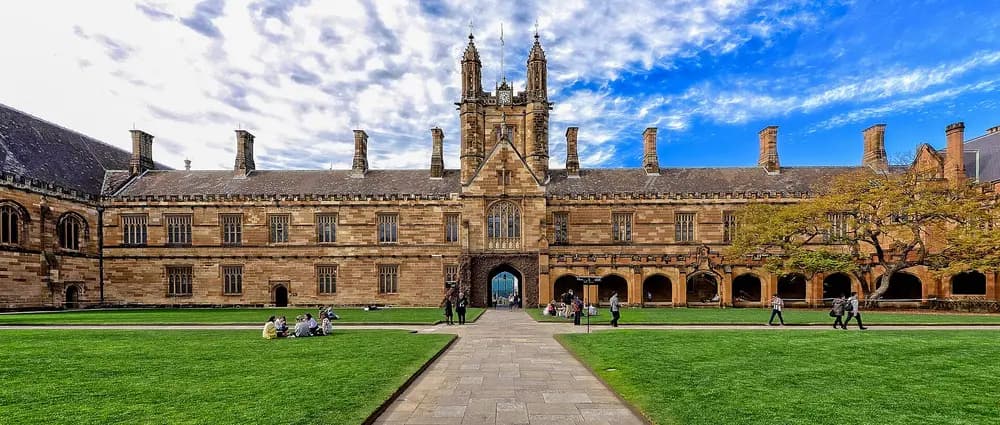
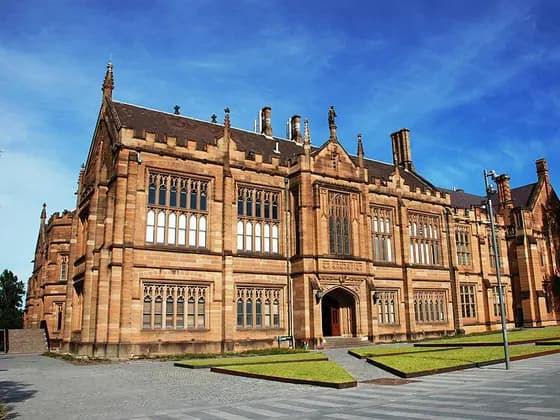
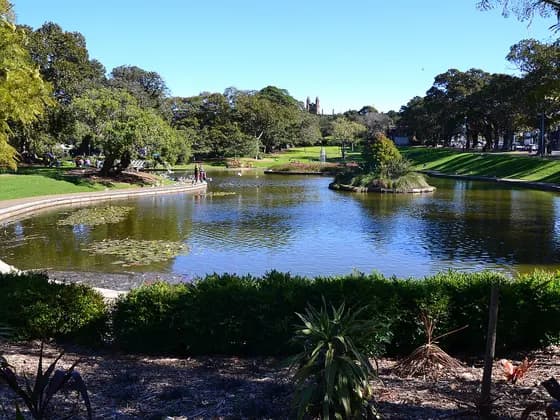
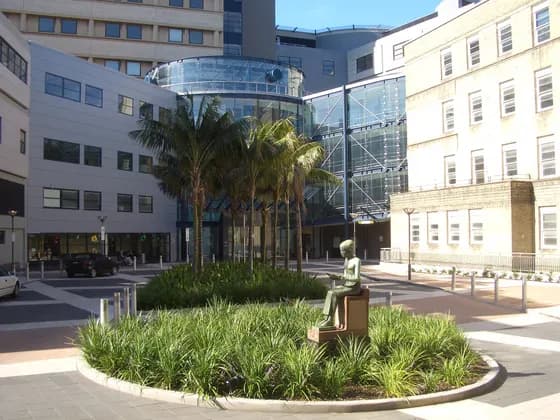
Photo: Jason Tong · CC BY 2.0 · cropped
Photo: Sumple · CC BY-SA 3.0 · Photo: Sardaka ( talk ) 07:55, 9 July 2014 (UTC) · CC BY 3.0 · Photo: J Bar · CC BY 3.0
The Sydney medicine course at a glance (2027 entry)
The University of Sydney's Doctor of Medicine (MD) is a four-year, full-time course run by Sydney Medical School. Despite its name, an Australian MD like this one is a masters-level degree that trains you to practise, not a research doctorate. It is a graduate-entry course, so you start it after finishing a bachelor's degree, which can be in any subject. If you are in Year 12, the school-leaver route is a seven-year double degree combining a Bachelor of Arts or Bachelor of Science with the MD.
About 300 students start each year, in one of two streams. The Metropolitan stream is based at the Camperdown campus in inner Sydney and at a clinical school, the hospital-based teaching campus you are attached to for all four years. The Dubbo stream takes 24 students a year, who complete the whole course at the university's School of Rural Health in Dubbo, in western New South Wales. Transfers between the streams are not permitted, apart from rare exceptions for students in Commonwealth Supported Places (CSP), the government-subsidised places.
The course is built around eight themes that run through every year, from basic and clinical sciences to Indigenous health and teamwork. Year 1 works through the body one system at a time using team-based learning. You spend a day a week at your clinical school from the start, with hands-on clinical experience from as early as week 2. From Year 2 most of your week is in hospitals and the community, and by graduation you will have done at least 2,310 hours of placements.
Year 3 brings specialty blocks such as psychiatry and child and adolescent health, plus the MD Research project, a 14-week individual research project. Year 4 is run as a pre-internship year in medicine, surgery and general practice. It prepares you for internship, your first supervised year of work as a doctor (also called PGY1). Rather than a few big end-of-year exams, you are judged on a portfolio of assessments collected across each year.
The Australian Medical Council (AMC), which accredits medical courses, has accredited the course to 31 March 2029. Graduates can apply for provisional registration with the Medical Board of Australia, through the Australian Health Practitioner Regulation Agency (AHPRA), and need a year of internship before full registration. Today's curriculum, which the school calls MD2020, began in 2020 and replaced an earlier version of the MD.
| Degree | Doctor of Medicine (MD), a masters-level degree |
|---|---|
| Course length | 4 years full time; 192 credit points |
| Intake | About 300 a year, including 24 in the Dubbo stream |
| Streams | Metropolitan (Sydney) or Dubbo; transfers not permitted except in rare cases |
| Teaching style | Integrated, with team-based learning and a flipped classroom in Year 1 |
| First clinical experience | Hands-on clinical experience from as early as week 2 |
| Clinical schools | Central, Concord, Nepean, Northern or Westmead, fixed for four years |
| Research | 14-week MD Research project in Year 3, compulsory for everyone |
| Rural time | Year-long rural placement for at least a quarter of domestic students |
| Final year | Pre-internship year with an eight-week and a four-week elective |
What makes Sydney medicine different
All four years in Dubbo, if you choose it
The Dubbo stream's 24 students a year complete the whole course in Dubbo rather than moving to Sydney. They learn in a teaching building opened in 2022 and train at the redeveloped Dubbo Hospital. Rural and remote placements take them across western and far west NSW, including training with the Royal Flying Doctor Service.
One clinical school for all four years
Metropolitan students are allocated to one of five hospital-based clinical schools and stay with it for all four years. You are there one day a week in Year 1 and three days a week in Year 2. By the time you are full time on the wards in Years 3 and 4, the hospital and its teachers are familiar.
A 14-week research project for every student
Research, evidence and informatics is one of the course's eight themes. After research methods teaching in Year 2, you spend 14 weeks in the middle of Year 3 on an approved, supervised, individual project. It moves through milestone tasks and ends in a written scientific report that is examined and graded.
A final year run as a pre-internship
All of Year 4 is full-time clinical work in medicine, surgery and an eight-week general practice term, with teaching and assessment focused on what a new graduate must be able to do. The year also holds an eight-week elective, a four-week vocational elective and a conference week of career sessions.
A portfolio instead of end-of-year barrier exams
Each year you build a portfolio of exams, clinical skills assessments, group work and submitted work. At the end of the year a Portfolio Advisory Group looks at your whole record rather than any single result. It decides whether you have met the expected standard, need further assessment or must repeat the year.
A rural year for at least a quarter of students
Under a federal rural training program, at least a quarter of each domestic cohort spends all of Year 3 or Year 4 living and training in Orange, Lismore or Broken Hill.
How Sydney teaches medicine
The course is organised around eight vertical themes, areas of capability that run through all four years rather than being taught once. They are basic and clinical sciences, clinical skills, diagnostics and therapy, and research, evidence and informatics. The others are population health, Indigenous health, ethics, law and professionalism, and interprofessional teamwork. Each year's learning and assessment draw on all eight together.
Year 1 uses team-based learning (TBL). You prepare before class, then work in teams on problems built around real clinical scenarios, with anatomy, biochemistry, immunology, microbiology, pathology, pharmacology and physiology folded into each case. The school describes this as a flipped classroom: much of the content is online for you to review on your own, and one day a week is kept free for this flexible learning.
Learning then spirals, meaning topics you met in Year 1 come back in Year 2 in more depth, now in hospital and community settings. The school calls Year 2 guided experiential learning: you learn mainly by doing, under supervision, with some classroom teaching for the whole year group. In Years 3 and 4 most learning happens in wards, outpatient clinics and community clinics.
You also take part in an interprofessional learning activity alongside nursing, dentistry, allied health and pharmacy students, to prepare for team-based healthcare.
The ways you will learn
| Team-based learning | The main Year 1 format. Teams work through authentic clinical scenarios, using the core sciences to explain what is happening to the patient, how it would be investigated and how it would be treated. |
|---|---|
| Online and flexible learning | Much of the content is online for you to review in your own time. In Years 1 and 2, one day a week is reserved for this flexible learning. |
| Clinical school skills days | In Year 1, one day a week at your clinical school covers history-taking, examination and procedural skills. Teaching mixes supervised clinical experience, simulation and near-peer teaching, where students a little further through the course help teach you. |
| Hospital and community days | In Year 2 you spend three days a week at your clinical school and one in the community, learning with patients under supervision. |
| SLICE | Situated Learning in Community Environments is the Year 2 general practice teaching, delivered in two eight-week blocks by the General Practice Clinical School. |
| Clinical rotations | In Years 3 and 4 you join teams on specialty and senior rotations, working in hospital wards, outpatient clinics and community-based clinics. |
A typical week on the Sydney course
The unit descriptions set out how a week is divided. In Year 1, one day a week is at your clinical school learning clinical skills, and one day is kept for flexible learning, mainly reviewing online material. The rest of your study follows the current body-system block through team-based learning. Each block lasts three to six weeks, so the topic changes roughly once a month.
Year 2 opens with three weeks on core concepts in primary care and acute medicine. Throughout the year a typical week is three days at your clinical school, one day in the community and one day of flexible learning, with occasional classroom sessions for the whole year group.
In Years 3 and 4 the week follows your rotation, in hospital wards, outpatient clinics and community clinics. Across the course the placement requirement averages 16.5 hours a week over 140 weeks. Each year starts with a compulsory Orientation Week.
How anatomy is taught at Sydney
Anatomy is not taught as a separate subject. In Year 1 it is one of the sciences folded into each body-system block, alongside physiology, biochemistry and pathology. So you learn the anatomy of the heart and lungs in the cardiovascular and respiratory blocks. Basic anatomy is assumed knowledge on entry. From Year 2 the focus shifts to clinical anatomy, applied in simulated and real clinical settings.
On the Camperdown campus, anatomy is based in the Anderson Stuart Building, home of the Discipline of Anatomy and Histology and the university's Body Donor Program. Bodies donated through the program are used to teach anatomy to the university's medical, dental and allied health students. The building also houses the J.T. Wilson Museum, which holds more than 660 prosections, specimens already dissected by experts to show structures clearly, from every region of the body.
Dubbo stream students have an anatomy teaching laboratory in their own building, opened in 2022, and their teaching also uses 3D modelling and virtual and augmented reality. In Sydney, the Sydney Biomedical Accelerator, due to open in 2028 across the Camperdown campus and the Royal Prince Alfred Hospital site, will include a new anatomy teaching and mortuary facility.
When you first meet patients at Sydney
Clinical learning starts early: the school says you gain hands-on clinical experience from as early as your second week, through its clinical schools. Before you start you need a current first aid certificate and must meet NSW Health clinical compliance checks, including a Working with Children Check. As a student you are also registered with the Medical Board of Australia.
In Year 1 your clinical school day teaches you to take a structured medical history and examine people in simulated or clinical settings. You practise on healthy adults, models and simulated patients, and on real patients where appropriate. The basic procedures you learn are linked to the body system you are studying in class.
Year 2 puts you with patients most days. Across three clinical-school days and a community day each week you take histories from patients, families and carers, examine patients, build lists of likely diagnoses and choose tests to narrow them down. You also learn basic life support and the basics of safe prescribing.
By Years 3 and 4 you are full time in clinical settings, first in the specialty blocks and then in the medicine, surgery and general practice teams of the pre-internship year.
Year by year at Sydney
- Year 1
Foundations and the body systems
Year 1 is two 24-credit-point units that take you through the healthy and diseased body one system at a time. For each system you learn normal structure and function, how common diseases arise and progress, which tests help with diagnosis, and how diseases are treated and prevented. Team-based learning drives the classroom work, and one day a week is spent at your clinical school.
- Once you enrol, you get access to an online Foundation Knowledge course covering the assumed knowledge in anatomy, physiology and molecular and cell biology. Every student must complete it, followed by an integrated self-assessment, whatever their first degree.
- Semester 1, MDMP5511 Medical General Foundation Knowledge 1: three weeks of foundations, then musculoskeletal, respiratory and cardiovascular blocks of four weeks each.
- Semester 2, MDMP5512 Medical General Foundation Knowledge 2: renal and gastroenterology blocks of four weeks each, endocrine and nutrition over five weeks, and neurosciences over six.
- Population health, Indigenous health, and ethics, law and professionalism run through both units, from epidemiology and judging whether health programs are cost-effective to the health needs and strengths of Indigenous communities.
- Year 2
Clinical and Research Practice
Year 2 revisits the Year 1 systems in hospital and community settings through two units, MDMP6511 and MDMP6512. It opens with three weeks on core concepts in primary care and acute medicine, and throughout the year most of your week is spent at your clinical school and in the community. Many separate assessments across the year feed your portfolio.
- Semester 1, Clinical and Research Practice 1, across two blocks of eight to nine weeks: general surgery, respiratory, cardiology, endocrinology, neurology and core concepts of general practice. It also covers community and adolescent health, aged care, ENT, public health, Indigenous health, ethics and research methods.
- Semester 2, Clinical and Research Practice 2: haematology, oncology, musculoskeletal, renal and gastrointestinal medicine, drug, alcohol and sexual health, and palliative care, including managing symptoms at the end of life.
- SLICE, Situated Learning in Community Environments: general practice teaching in two eight-week blocks, run by the General Practice Clinical School.
- Research methods: designing a research question, choosing a method, extracting data and appraising evidence, in preparation for the Year 3 MD Research project.
- Year 3
Specialty blocks and the MD Research project
Year 3, taught through Specialty Clinical 1 and 2 (MDMP7511 and MDMP7512), moves you through four specialty blocks in hospital wards, outpatient clinics and community-based clinics. In the middle of the year you work on your MD Research project. From 2027, students at two sites can apply to take the year part time.
- Four specialty blocks: Psychiatry and Addiction Medicine; Child and Adolescent Health; Perinatal and Women's Health; and Critical Care, which covers emergency medicine, anaesthesia and intensive care medicine.
- Child and adolescent health is delivered by the Children's Hospital at Westmead Clinical School, and Metropolitan students do all or part of that rotation at the Children's Hospital at Westmead.
- MD Research project: 14 weeks on an approved, supervised, individual project. You frame a question, weigh its ethical issues, review what is already known, collect and analyse data, and write a scientific report that is examined and graded.
- Part-time option: from 2027, Year 3 students at Westmead Clinical School and the School of Rural Health in Dubbo can apply to spread the year over two academic years. They follow the same curriculum and assessments.
- Year 4
Preparation for Practice: the pre-internship year
The whole of Year 4, taught through Preparation for Practice 1 and 2 (MDMP8511 and MDMP8512), is a pre-internship year of full clinical immersion. You rotate through general practice, medicine and surgery in wards, outpatient clinics and community clinics. Teaching and assessment focus on applying the skills, behaviour and knowledge expected of a new graduate.
- Medicine and surgery blocks, working with hospital teams on the wards and in outpatient clinics.
- General Practice Term: eight weeks in general practice, run by the General Practice Clinical School. You can apply to do some or all of it at a rural site in Dubbo, Orange, Lismore or Broken Hill.
- An eight-week elective study period within Preparation for Practice 1, in an area of medicine you choose.
- A four-week vocational elective within Preparation for Practice 2, again in an area of personal interest.
- Conference week: education and career development sessions at your clinical school and on the Camperdown campus.
How you are assessed at Sydney
Sydney uses programmatic assessment. Instead of resting everything on a few end-of-year barrier exams, it collects many smaller assessments across each year into a portfolio. The course rules list four formats: exams and in-class assessments, skills-based and clinical assessments, group assessments, and submitted work. Assessments combine the eight themes and the year's units rather than testing them separately.
Each assessment, or data point, is graded Met Expected Standard, Borderline or Below Expected Standard. At the end of the year the Sydney Medical Program Portfolio Advisory Group looks at your performance across all of them. No single grade decides your progress; what counts is the overall pattern.
If your portfolio meets the standard, you progress. If it is borderline, you are offered further assessment, which is not a resit, and the new results are judged together with everything else. If it is below the standard, you repeat the year, retaking all of its units.
Some clinical skills are assessed in the workplace, where clinicians observe you with real patients, and you upload evidence to an ePortfolio. Learning Advisors follow your progress through a portfolio dashboard. The 2026 unit descriptions still describe assessment as data points that feed your portfolio. In December 2024 the AMC noted the school's plan to judge portfolios against broad areas of capability instead, so check the current unit outlines for the model your year will use.
The course rules also set firm limits. You may repeat only one of the four years; failing a second means you must show cause, formally arguing why you should be allowed to continue. You must complete every unit in a calendar year to move on, attendance rules apply, and serious or repeated unprofessional behaviour can lead to exclusion. The MD is awarded at a single pass grade.
If you leave after completing Years 1 and 2, you may, with permission, graduate with a Master of Health Studies, an exit award built into the course.
Where you will actually be at Sydney
Metropolitan students rank all five metropolitan clinical schools: Central, Concord, Nepean, Northern and Westmead. The school allocates places using your preferences, the places available and any documented extenuating circumstances, and emails your result before Orientation Week. A top preference is not guaranteed, and each year Central Clinical School receives over 60% of first preferences. Your Year 1 allocation is final and lasts all four years.
Extenuating circumstances the school will consider include a serious health condition needing treatment available only in certain places, being a parent or carer, and elite sport or performance commitments. It will not consider your home address, travel, not having a car, accommodation, paid work or friendship groups. If new circumstances arise later, you can ask the Director of the Sydney Medical Program for a change.
You will not do every rotation at your own clinical school. Metropolitan students must do some rotations at other clinical schools or placement sites. These include all or part of child and adolescent health at the Children's Hospital at Westmead, which is not open for general allocation. Dubbo stream students are all allocated to the School of Rural Health in Dubbo, with clinical teaching centred on Dubbo Hospital.
Rural time follows the Commonwealth's Rural Health Multidisciplinary Training program. It requires at least 25% of each graduating domestic cohort to spend a whole academic year rurally. So a quarter or more of domestic students do an extended rural placement in Year 3 or Year 4 at Orange, Lismore or Broken Hill. There are priority categories if demand is high, and if too few apply, some domestic students may be required to go.
Extended rural placements are open only to students in Commonwealth Supported Places, and the requirement does not apply to international students. Half of domestic students must also spend at least four weeks rurally, usually in rural general practice during the General Practice term.
Within the university's Rural Health Precinct, its three rural clinical schools, you can get subsidised accommodation and wellbeing, cultural and social programs. Broken Hill provides free accommodation with private bedrooms. For rural placements with other partner organisations you usually arrange your own housing, and the faculty helps you look for financial support.
Based at Royal Prince Alfred Hospital in Camperdown, next to the main campus. Between a quarter and a third of its students spend some time at Canterbury Hospital, a district hospital of about 200 beds.
- Royal Prince Alfred Hospital
- Chris O'Brien Lifehouse
- Sydney Eye Hospital
- Canterbury Hospital
- Strathfield Private Hospital
A University of Sydney teaching hospital since 1963. Concord Hospital is known for its part in the state-wide burns service and for colorectal surgery, and its mental health centre includes the Walker Unit for child and adolescent mental health.
- Concord Repatriation General Hospital
- Concord Centre for Mental Health
- Canterbury Hospital
Established in 1978 and teaching mainly at Westmead Hospital, which has about 925 beds. The clinical school serves a patient population of about 1.5 million in western Sydney, and community rotations use local primary care and community health services.
- Westmead Hospital
- Westmead Private Hospital
- Cancer Centre Westmead
- Western Sydney Sexual Health Centre
Delivers the child and adolescent health parts of the course, in a hospital of about 340 beds. Metropolitan students rotate here.
- The Children's Hospital at Westmead
Established in 1990 at the base of the Blue Mountains near Penrith. Nepean Hospital has about 530 beds and is being expanded through a $1 billion redevelopment.
- Nepean Hospital
- Nepean Private Hospital
- Blue Mountains District ANZAC Memorial Hospital
Established in 1947 and headquartered at Royal North Shore Hospital in St Leonards, which has about 750 beds.
- Royal North Shore Hospital
- Hornsby Ku-ring-gai Hospital
- North Shore Private Hospital
- Ryde Hospital
- Greenwich Hospital
- Mater Hospital
Base for the whole Dubbo stream. Dubbo Hospital is a major rural referral centre serving about 15% of NSW and a population of about 160,000.
- Dubbo Hospital
- Dubbo Private Hospital
- Western Cancer Centre
A one-year placement in Year 3 or Year 4 for students in Commonwealth Supported Places. Bloomfield Hospital is a major mental health and drug and alcohol treatment centre.
- Orange Health Service
- Bloomfield Hospital
- Dudley Private Hospital
- Central West Cancer Care Centre
Campuses in Lismore and Grafton, with teaching and accommodation hubs in Ballina, Maclean, Kyogle and Casino. A site for extended rural placements.
- Lismore Base Hospital
- Grafton Base Hospital
- Ballina District Hospital
- Byron Central Hospital
- Casino and District Memorial Hospital
- Kyogle Memorial Hospital
Campuses in Broken Hill, Bourke and Wentworth place students in small towns across the Far West, including work with Aboriginal Medical Services. Some towns need a car because public transport is limited.
- Broken Hill
- Wilcannia
- Menindee
- Balranald
- Dareton
- Wentworth
- Bourke
- Brewarrina
- Cobar
- Lightning Ridge
- Walgett
Electives, selectives and options at Sydney
Year 4 contains two elective periods: an eight-week elective within Preparation for Practice 1 and a four-week vocational elective within Preparation for Practice 2. In both, you study an area of medicine of your own choosing.
You can spend four to eight weeks of your elective term on a clinical or research placement overseas, applying through the Student Placements team. Countries listed include Canada, China, Denmark, France, India, Japan, Sweden, the United Kingdom and the United States. International students in the MD can apply for placements in their home country, or in Canada or the USA for North American students.
For extra rural experience there is a Medicine GP Rural Placement Elective. What the course does not offer is a semester abroad: its rules exclude international exchange and cross-institutional study, so all your units are taken at Sydney.
Intercalation and research degrees at Sydney
Intercalating means pausing a medical degree to complete an extra degree, usually a research Honours year. Sydney's MD has no built-in intercalated or Honours year. Research is part of the course instead, through the 14-week MD Research project that every student completes in Year 3.
If you want more research training, you can apply to take a higher degree by research at the same time as the MD. The school's Concurrent Enrolment Provisions, in force since October 2024, define this as a Master of Philosophy (MPhil) or a Doctor of Philosophy (PhD). You enrol in the MPhil first, and can apply to upgrade to a PhD after at least two semesters if you are doing well in both.
The bar is high. You can apply only after finishing Year 1, having met the expected standard across your whole portfolio and placed in the top third of your year for theoretical and applied knowledge. Research study can start in Year 2 at the earliest. It is part time only, so you cannot hold a research scholarship, and your research cannot replace the MD Research project.
You are expected to do the research at your own clinical school, and a research project is not a reason to change clinical school. Before applying you discuss your plans with the Sydney Medical Program, and you need approval from its Director and your clinical school. The same rules allow a part-time postgraduate coursework degree from Year 2 if you are in the top half of your year.
Facilities and support at Sydney
Where you will learn
The Susan Wakil Health Building on the Camperdown campus, opened in 2021 next to Royal Prince Alfred Hospital, brings several health disciplines together and houses the Central Clinical School. Its eight levels hold 11 simulation rooms, a 350-seat lecture theatre and a multi-level library with group study rooms. There is also the CreateSpace, with virtual reality software, 3D printing and a podcast studio, and Yooroang Garang, a space for Aboriginal and Torres Strait Islander students.
Each clinical school has its own teaching base. Westmead has a Skills Lab for procedural skills and SiLECT, the Simulated Learning Environment for Clinical Training, with three large simulation rooms. Northern teaches from the Kolling Building at Royal North Shore Hospital, with a 200-seat auditorium, the Douglas Piper Library and the Sydney Clinical Skills and Simulation Centre.
Concord's Medical Education Centre has a 140-seat auditorium and a simulation centre, and Nepean's Clinical School Building has a 90-seat auditorium, 10 tutorial rooms and a clinical skills space. The clinical school at Royal Prince Alfred has clinical skills laboratories, and the Children's Hospital at Westmead has the Kim Oates Australian Paediatric Simulation Centre for emergency care of sick children.
In Dubbo, the 2022 teaching building has two learning studios for teamwork and the six-room Lonergan Foundation Simulation Suite, alongside tutorial rooms, clinical skills areas and a lecture theatre. The Dabaamalang Ngurang student centre adds kitchen, study and recreation space, and the site has an outdoor gym, pool and tennis court. First-year Dubbo students can live in purpose-built four- and five-bedroom share houses with furnished, lockable bedrooms.
Support while you study
Each clinical school has an education support team, and Central Clinical School names three doctors in student support roles. Learning Advisors, who follow your assessment portfolio, are also expected to spot students who need academic or pastoral support, or who have professional behaviour concerns, and help them.
In the regions, the Western NSW Regional Training Hub, based at the School of Rural Health, offers career and peer mentoring, career counselling and help with job applications and CVs. It also runs extra skills and simulation workshops and gives scholarships for workshops and conferences. In the Northern Rivers, the University Centre for Rural Health runs the Northern NSW Regional Training Hub with the local health district.
A pre-medical course runs in December, before Year 1, for incoming students without a health sciences background, and the school strongly recommends it for Aboriginal and Torres Strait Islander students. The part-time Year 3 option was designed with parents, carers and students with a disability or health condition in mind. Clubs include the Sydney University Medical Society (SUMS) and MIRAGE, a society for students interested in rural and general health.
Is the Sydney course right for you?
This course may suit you if
- You already have a degree in any field, including a non-science one, and want a four-year graduate route into medicine.
- You like working through clinical cases in a team after preparing online in your own time, as Year 1 is built on team-based learning.
- You want a home hospital: Metropolitan students keep the same clinical school for all four years, starting with one day a week in Year 1.
- You are drawn to rural medicine and would take the whole course in Dubbo, or a year in Orange, Lismore or Broken Hill.
- You want real research experience, since every student completes a 14-week supervised MD Research project.
Things to think about
- Your clinical school may not be your first choice. Central receives over 60% of first preferences, the Year 1 allocation is final, and travel time or not having a car are not grounds for a change.
- Streams are fixed. Moving between the Metropolitan and Dubbo streams is not permitted, apart from rare exceptions for students in Commonwealth Supported Places, so choose carefully.
- There is no built-in intercalated or Honours year. Extra research means applying for a part-time research degree on top of the full-time MD, which is open only to students near the top of their year.
- If too few domestic students apply for a rural year, some may be required to spend Year 3 or Year 4 in Orange, Lismore or Broken Hill.
Sydney medicine course — frequently asked questions
Applying to Sydney?
How to get into Sydney
Entry requirements, admission tests, written application and interview, step by step.
Open the guide →Sydney entry requirements
ATAR or GPA, GAMSAT and UCAT ANZ thresholds, interview format and place types.
See the requirements →Compare Sydney with other schools
Put the teaching style, anatomy teaching and placements next to another school.
Open the comparison →Prepare for the Sydney interview
Format breakdown, school-specific sample questions and prep tips from tutors who interviewed here.
Read the guide →Where this Sydney course guide came from
This guide was written from 42 official sources — University of Sydney's own course pages and programme documents, plus the Australian Medical Council or Australian Dental Council and the health services the school places students with where they publish detail — read on 2026-09-28, then checked claim by claim against those sources.
- University of Sydney: Doctor of Medicine course page
- Sydney Medical School: Doctor of Medicine program overview
- Doctor of Medicine: Dubbo Stream
- 2026 Handbook: Medicine (Doctor of Medicine) overview
- Handbook: Doctor of Medicine course resolutions
- Handbook: Doctor of Medicine unit of study table
- MDMP5511 Medical General Foundation Knowledge 1 (2026)
- MDMP5512 Medical General Foundation Knowledge 2 (2026)
- MDMP6511 Clinical and Research Practice 1 (2026)
- MDMP6512 Clinical and Research Practice 2 (2026)
- MDMP7511 Specialty Clinical 1 (2026)
- MDMP7512 Specialty Clinical 2 (2026)
- MDMP8511 Preparation for Practice 1 (2026)
- MDMP8512 Preparation for Practice 2 (2026)
- Sydney Medical Program Clinical School Allocation Provisions 2025
- Sydney Medical School: Doctor of Medicine Domestic Admissions Guide 2027
- University of Sydney: Concurrent enrolment
- Sydney Medical Program Concurrent Enrolment Provisions 2024
- Australian Medical Council: Accreditation Report, University of Sydney, Sydney Medical School (December 2024)
- Australian Medical Council: 2021 assessment of the Sydney MD in Dubbo
- Sydney Medical School: Clinical schools
- Central Clinical School
- Concord Clinical School
- Westmead Clinical School
- Children's Hospital Westmead Clinical School
- Nepean Clinical School
- Northern Clinical School
- General Practice Clinical School
- School of Rural Health (Dubbo/Orange)
- The University Centre for Rural Health (Lismore)
- The Broken Hill University Department of Rural Health
- Faculty of Medicine and Health: Rural placements
- Faculty of Medicine and Health: International opportunities
- Susan Wakil Health Building
- Sydney Biomedical Accelerator
- J.T. Wilson Museum
- Body Donor Program
- Faculty of Medicine and Health: Student experience
- School of Rural Health welcomes new medical students (February 2025)
- Dubbo's first rural MD graduates (December 2025)
- New student centre for Dubbo medical students (March 2026)
- Part-time option for the Doctor of Medicine (May 2026)
Courses are restructured between cycles. Anything here that decides your application — an anatomy offer, a placement city, a compulsory intercalated year — should be confirmed against the official page for your entry year.
Applying to Sydney?
We have helped hundreds of applicants turn their GAMSAT / UCAT ANZ, written application and interview prep into offers from Sydney and other Australian medicine schools.