
The Macquarie Medicine course
What you actually study, and where you will be
Macquarie's MD is a 4-year (graduate entry) course taught through case-based learning in an integrated curriculum, with patient contact from Year 1 and placements in Sydney and Hyderabad, India (2027 entry). Macquarie's MD is a four-year graduate-entry course taught on the North Ryde campus in Sydney and in Macquarie University Health (MQ Health), the university's own hospital and clinics. Years 1 and 2 teach science and clinical skills together around body systems, with regular clinical sessions from Year 2. Years 3 and 4 are clinical placements in Sydney plus, for most students, a 13-week trimester at Apollo Hospital in Hyderabad, India, alongside an 18-month research project.
- Degree
- MD
- Length
- 4 years (graduate entry)
- Teaching
- Integrated + Case-based learning
- Clinical contact
- Year 1
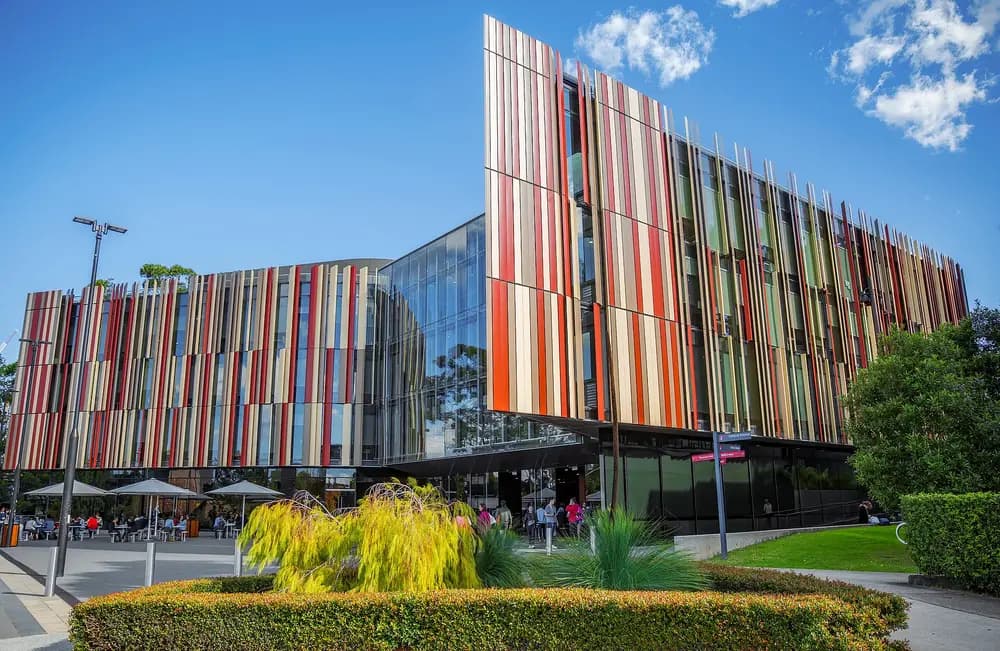
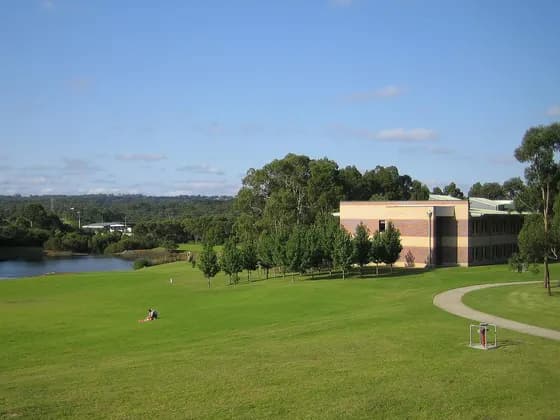
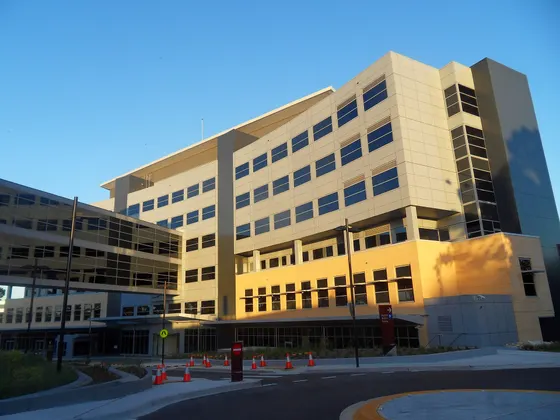
Photo: Macquarie University · CC BY 4.0 · cropped
Photo: The original uploader was Maebmij at English Wikipedia . · CC BY-SA 3.0 · Photo: Mw12310 at English Wikipedia · CC BY-SA 3.0 · Photo: Bernard Gagnon · CC BY-SA 3.0
The Macquarie medicine course at a glance (2027 entry)
Macquarie's Doctor of Medicine (MD), which the university calls the Macquarie MD, is a four-year, full-time course for people who already hold a bachelor's degree. It is run by Macquarie Medical School in the Faculty of Medicine, Health and Human Sciences, on the North Ryde campus in Sydney. In Australia an MD like this is an extended masters-level degree (Australian Qualifications Framework Level 9), not a research doctorate. The 2027 intake starts on 22 February 2027.
The course is built around Macquarie University Health (MQ Health), the university's academic health centre. It brings together Macquarie University Hospital, a not-for-profit private teaching hospital on campus, with primary care and 30 specialist clinics. The Australian Medical Council (AMC), which accredits medical courses, noted in 2024 that a significant part of your learning happens in this university-run hospital and its clinics, and described that as distinctive in Australia.
The course runs in two stages. Stage 1 (Years 1 and 2) is based on campus and at MQ Health. Science, clinical skills, professionalism and research are taught side by side, organised around body systems with a weekly case for context. You practise on simulated patients from Year 1, and Year 2 puts you in clinical settings at MQ Health and in general practices every week.
Stage 2 (Years 3 and 4) is almost entirely clinical. Year 3 has three 13-week trimesters: one in medicine and surgery, one in paediatrics with obstetrics and gynaecology, and one at Apollo Hospital in Hyderabad, India. A small group swaps India for the GP Intensive Stream. Year 4 covers critical and acute care (emergency medicine), mental health, selectives (placements you pick from options the school arranges) and an eight-week elective (a placement with a freer choice of specialty and setting). An 18-month research project runs across both years.
The course is accredited by the AMC and approved by the Medical Board of Australia. Graduates can then apply to AHPRA, the Australian Health Practitioner Regulation Agency, for provisional registration so they can start internship. Internship is your first supervised year of work as a doctor, also called PGY1 (postgraduate year one), and you need to complete it to gain general registration.
| Degree | Doctor of Medicine (MD), an Extended Masters at AQF Level 9 |
|---|---|
| Course length | 4 years full time, 320 credit points, starting in February |
| Main base | North Ryde campus and Macquarie University Health, Sydney |
| Class size | About 70 a year in 2023, with plans for 75 to 80 |
| Teaching style | Integrated by body system, with case-based learning |
| Anatomy | Wet-lab practicals; one-to-one viva on prosected specimens and pathology pots (2026 units) |
| First patient contact | Year 1 masterclasses; regular clinical sessions from Year 2 |
| Overseas placement | 13 weeks at Apollo Hospital, Hyderabad, in Year 3 |
| Research | 18-month project across Years 3 and 4, written as a journal manuscript |
| Elective | 8 weeks in Year 4, in a setting you choose |
What makes Macquarie medicine different
A 13-week trimester at Apollo Hospital, Hyderabad
Unless you join the GP Intensive Stream, one of your three Year 3 trimesters is at Apollo Hospital in India. You rotate through medicine, surgery, paediatrics, obstetrics and gynaecology and the emergency department in a very different health system. An online community of practice lets you compare experiences with classmates placed in Sydney at the same time.
Learning inside the university's own hospital and clinics
Macquarie University Health is on the campus where you spend Stage 1. In Year 2 your clinical experience is organised around its clinical programs, through bedside tutorials and placements, alongside general practices. It stays one of the main placement sites in Years 3 and 4, together with Royal North Shore and Northern Beaches hospitals.
An 18-month research project written for a journal
You plan a project at the end of Year 2, then carry it out through Year 3 and into Year 4 alongside your placements. Topics centre on how health systems deliver and improve care, from patient safety to medical education. You write it up in the format of a named journal and present it at a research symposium, with the chance to submit it for publication.
The GP Intensive Stream for students drawn to general practice
A small number of Year 3 students are chosen through an expression of interest. They replace the India trimester with 13 weeks in general practice and community placements, and do their research project in a GP setting. Macquarie says the stream was created to address workforce shortages and to prepare students to become specialist GPs.
Assessment built on a portfolio and entrustment
Every result is recorded in the Macquarie Assessment Portfolio against eight capability aspects and a set of Entrustable Professional Activities, clinical tasks where an assessor judges how closely you still need supervising. You reflect on this record with a mentor, and each two-year stage ends with a portfolio examination.
How Macquarie teaches medicine
The MD is an integrated course. Disciplines are combined within each unit rather than taught one at a time, and core concepts come back in more depth as you progress. In Years 1 and 2 teaching is organised around body systems and real contexts of practice, with a weekly case giving each week its focus. Patient safety and quality run through the whole course, a strand Macquarie built with its Australian Institute of Health Innovation (AIHI), which researches how to improve health services.
In the 2026 units, much of the Year 1 content comes before class. Lectures are pre-recorded and sit alongside the Connected Curriculum for Health Professionals, an online library of curated resources with practice quizzes that give automatic feedback. Class time is then spent applying that content in small groups, labs and clinical skills sessions. Two Year 1 units are taken with Doctor of Physiotherapy students, covering the social side of health, Indigenous health, evidence-based practice and professionalism.
Year 2 shifts towards patients. Each unit follows a weekly theme shared across the session, combining lectures or seminars with case-based tutorials, bedside teaching, procedural skills sessions, clinical and cultural workshops and time on placement. Research methods and patient safety come at the end of the year, to prepare you for your project.
Years 3 and 4 are work-integrated placements: you are attached to a healthcare team and learn by taking part in the care of its patients. The AMC's 2024 report found students on these placements were treated as team members. Teaching sessions continue around placements, and you are expected to direct more of your own learning, using your portfolio to find the gaps.
The ways you will learn
| Clinical colloquia and team-based learning | Small-group sessions built around clinical cases in the 2026 Year 1 units. In team-based learning (TBL) you prepare beforehand, are tested on it alone and then as a team, and apply it to problems with immediate feedback. You also work through case studies alone and in groups to decide what you need to learn. |
|---|---|
| Practicals and anatomy wet labs | Interactive biomedical laboratory sessions in Year 1, including anatomy sessions in the wet laboratory, where you study real preserved human specimens. Year 2 adds anatomy and pathology practical workshops. |
| Clinical masterclasses and skills tutorials | Masterclasses bring real patients into small-group teaching in Year 1. Separate clinical skills and core skills tutorials teach history taking, communication, physical examination and basic procedures, which you practise on classmates and simulated patients first. |
| Simulation | Scenario teaching in the Clinical Simulation Lab, using manikins from newborn to adult in a mock operating theatre and ward. Sessions can be recorded and streamed so the group can replay them in the debrief. |
| Case-based and bedside tutorials | In Year 2, case-based learning (CBL) tutorials are small-group sessions built around a patient case, part of the weekly cases and scenarios that give the year its structure. Bedside tutorials take small groups to real patients to practise history taking and examination. |
| Placements in clinical teams | In Years 3 and 4 you join hospital and general practice teams on placement, with discipline teaching sessions, simulation and supervisor feedback built around each rotation. |
A typical week on the Macquarie course
Macquarie's handbook gives an average study load of about 35 hours a week. How those hours are spent changes a great deal from year to year, and across the four years you complete about 84 weeks of clinical training.
Going by the 2026 unit guides, your in-person week in Year 1 mixes clinical colloquia, lab practicals and a clinical masterclass. It also has clinical and core skills tutorials, simulation and tutorials for the two units shared with physiotherapy students. Around these you work through pre-recorded lectures, set reading and online modules, and visit your community placement.
In Year 2, clinical experience takes about a day and a half a week over 36 weeks. The rest of the week is case-based and expert-led tutorials, workshops and a weekly lecture series that runs through the whole year. In Year 3 you are on placement about four days a week, and in Year 4 about five.
How anatomy is taught at Macquarie
Anatomy is part of Year 1's applied medical science teaching rather than a separate subject. In the 2026 handbook it is taught through interactive practical sessions, including sessions in a wet anatomy laboratory, alongside physiology, biochemistry, cell biology, pathology, microbiology, immunology and pharmacology.
You are examined in a one-to-one anatomy and pathology viva, an oral exam held in the wet lab. It uses prosected specimens (real human specimens already dissected by trained staff), pathology pots (preserved diseased tissue in sealed jars) and still images. You identify structures and answer clinical questions linking structure, function, drugs and disease. In 2026 each of the two Year 1 science units had one, worth 30% of the unit.
Anatomy carries on into Year 2 through anatomy and pathology practical workshops in the year-long Reflective Medical Practice 1 unit. The online Connected Curriculum also links to virtual anatomy resources. Macquarie expects you to arrive with assumed knowledge of human anatomy and physiology, although these are no longer admission prerequisites.
When you first meet patients at Macquarie
Your first clinical contact is in controlled settings. In Year 1 you practise history taking and examination on classmates, simulated patients and manikins. Simulated patients come from the MQ Health Volunteer program, and the Health and Wellbeing Collaboration (HAWC), an interprofessional program, also brings community members into teaching.
Real patients appear in Year 1 too, in clinical masterclasses and through HAWC. The two units shared with physiotherapy students include a community clinical placement, where you observe and monitor a volunteer from the community. You keep a logbook of this work, and completing it is a condition of passing.
Year 2 brings regular clinical experience, organised around MQ Health's clinical programs and other primary care providers. You take histories from and examine real patients with common conditions, and practise basic procedures. In each of the three main Year 2 units you write up one patient you assessed in full as a clinical case report, then discuss it in a viva.
From Year 3 you are part of the team: you take histories, examine patients, present them and perform procedures under supervision. The AMC's 2024 report found procedural skills were taught and practised with less confidence at Apollo, because Indian medical students generally perform fewer and less complex procedures.
Year by year at Macquarie
- Year 1
Foundations of medical practice
Year 1 is taught on campus and builds the science, clinical skills and professional grounding for the rest of the course. For 2027 entry it is four units, two of which you take with Doctor of Physiotherapy students. The two Foundations units are new for 2027, so the notes below on their content describe the 2026 units they replace.
- Foundations of Clinical Medicine 1 and 2 (30 credit points each), which replace the 2026 handbook's separate Applied Medical Science and Clinical Practice units.
- The science in the 2026 units covers anatomy, physiology, biochemistry, cell biology, pathology, microbiology, immunology and pharmacology, in the healthy body and in common diseases.
- Clinical skills in the 2026 units start with the heart, lungs, gut, kidneys and urinary system, then move to the endocrine, reproductive, nervous and musculoskeletal systems, metabolism and cancer.
- Evidence-Based Healthcare (10 credit points): asking a clinical question about diagnosis, prognosis or treatment, finding the research and judging its quality.
- Interprofessional Healthcare (10 credit points): person-centred care, how Australian healthcare is organised, the roles of different health professions, ethics, cultural competency and clinical record-keeping.
- Year 2
Integrated clinical learning
Year 2 moves you into real clinical settings at MQ Health and in general practices. Three 10-week units each take a group of clinical disciplines, followed by an 8-week unit on critical care, patient safety and research. A reflective unit runs all year and closes Stage 1.
- Primary Care, Wellbeing and Cancer (20 credit points): primary care, wellbeing, mental health, diagnostics and cancer, with a MindSpot online wellbeing course.
- Musculoskeletal, Neurosciences and Ageing (20 credit points).
- Cardiovascular, Respiratory, Gastroenterology, Surgery and Metabolism (20 credit points).
- Critical Care, Patient Safety and Quality, and Research (10 credit points): anaesthetics and critical care, medical error, open disclosure (being honest with patients when care goes wrong), digital technology in healthcare and research methods. You submit a draft plan for your research project.
- Reflective Medical Practice 1 (10 credit points): a weekly lecture series, anatomy and pathology workshops, academic mentoring, and the end-of-Stage 1 written and portfolio exams.
- Year 3
Core clinical placements
Year 3 is full-time placement in three 13-week trimesters, embedded in healthcare teams in medicine, surgery, paediatrics, obstetrics and gynaecology (O&G) and primary and community care. Two trimesters are in Sydney and one is in Hyderabad, unless you are in the GP Intensive Stream. The research project runs alongside all year.
- Sydney trimesters: one in medicine and surgery, one in paediatrics and O&G.
- India trimester at Apollo Hospital: a mix of medicine, surgery, paediatrics, O&G and the emergency department.
- A longitudinal general practice placement through your Sydney trimesters, meaning you return to it across the months rather than in one block. In 2024 it totalled 24 days.
- Core Clinical Placements A, B and C (15 credit points each), plus Assessment of Clinical Capability and Entrustment Development (15 credit points), a year-long assessment unit.
- Online comparative sessions such as Global Ground Rounds, where you discuss cultures, diseases and health systems with classmates in Australia and India.
- Research Project (20 credit points): literature review, research plan, an oral presentation of your methods to supervisors and draft manuscript sections in a named journal's format.
- Year 4
Advanced clinical placements
Year 4 is 32 weeks of placements in four- or eight-week blocks, with core rotations in critical and acute care (emergency medicine) and mental health, then selectives and an elective. The research project finishes in the middle of the year. The year is designed to consolidate your learning and get you ready for internship.
- Advanced Clinical Placements A and B (30 credit points each).
- Research Project and Presentation (10 credit points): a final manuscript in a named journal's format and a talk at a Macquarie MD research symposium.
- A three-day Intern Readiness Bootcamp, run since 2021.
- In 2024 Macquarie planned that, from 2025, students would take either a four-week Pre-Internship rotation or a NSW Health Assistant in Medicine rotation, a paid, part-time, supervised role for final-year students.
- Reflective Medical Practice 2 (10 credit points): mentor meetings, online career and professional development seminars, a First Nations Health portfolio and the final exams.
How you are assessed at Macquarie
Assessment is built around four graduate capabilities: Scientist and Scholar, Clinical Practitioner, Engaged Global Citizen and Professional. Each has two aspects, making eight capability aspects, and every task is mapped to one or more of them. Results go into the Macquarie Assessment Portfolio, a running record you review and reflect on with a mentor.
Alongside the capabilities are Entrustable Professional Activities (EPAs): core clinical tasks where an assessor judges how much supervision you would need to do them. There are five EPAs in Stage 1 and nine Graduate EPAs in Stage 2. Each stage ends with a portfolio examination that reviews your whole record, your reflections and your EPA supervision levels.
Written exams use multiple choice and short answer questions, with extended matching questions in the end-of-Stage 1 exam. Clinical skills are tested in OSCEs (Objective Structured Clinical Examinations), where you rotate through timed stations that each test one task. Year 2 ends with an OSCE covering all of Stage 1, and it is a hurdle: you must pass it whatever your other marks. Anyone who misses a hurdle standard gets remediation and another attempt.
Two kinds of observed assessment start in Year 1. In a Mini-Clinical Evaluation Exercise (Mini-CEX) an assessor watches you with a patient, and in Direct Observation of Procedural Skills (DOPS) they watch you perform a procedure. Both are for feedback only in Years 1 and 2. From Year 3 a Team Clinical Evaluation Exercise (T-MEX) is added, where an assessor judges how you work in a team, and in Year 3 you must pass at least five of each.
Year 3's main exams are a multi-station clinical viva and a multi-station Clinical Performance Examination, and both are hurdles. A practice written exam covers the core disciplines plus ethics, public health, patient safety and Aboriginal and Torres Strait Islander health. Supervisors complete an In-Training Assessment at the end of each rotation, and each placement unit sets two clinical discipline or ethics projects.
Year 4 ends with a hurdle written exam covering all Stage 2 disciplines except mental health and critical and acute care, which have their own rotation assessments with clinical and written parts. The final hurdle is a portfolio examination and interview, which grades all eight capability aspects and sets your supervision level for each of the nine Graduate EPAs.
- Year 1 science units (2026): a mid-session written exam, end-of-session written papers and the one-to-one anatomy and pathology viva.
- Year 1 clinical practice units (2026): end-of-session written papers and an OSCE, each worth half the unit.
- Year 1 shared units: a logbook you must complete, a video explaining a treatment as a clinician would, a reflective report and a clinical handover report. There are also group case and ethics presentations and a patient decision aid.
- Each 10-week Year 2 unit: a written exam (40%), a clinical case report on a patient you assessed (20%) and a viva on that case (40%).
- Year 4 capability tasks can include a prescribing assessment and a viva focused on patient management.
Where you will actually be at Macquarie
Stage 1 is spent on the North Ryde campus and at MQ Health, with Year 2 clinical sessions there and in general practices. In Stage 2 you are placed at MQ Health, Royal North Shore Hospital and other Northern Sydney Local Health District (NSLHD) services, Northern Beaches Hospital, the MindSpot Clinic and Sydney general practices. Macquarie's clinical schools are the hospital-based teaching campuses you are attached to, such as the Northern Beaches Clinical School. Clinical school officers organise students on site there, at MQ Health and at Royal North Shore.
The India trimester is at the Apollo Clinical School, based at the private Apollo Hospital in Hyderabad. To go, you must be eligible for an Indian visa and have the vaccinations and clearances Macquarie's partners require. Macquarie plans the accommodation and other logistics with its Regional Director for South Asia. The AMC's 2024 team found students rated the accommodation highly and valued the student-led system for allocating rooms.
A faculty member travels to India with the students, and there is a pre-departure program and health assessment before you leave. Macquarie also has a repatriation plan, which it used in early 2020 when COVID-19 struck. Apollo Hospital had a new student learning hub in 2024. Students have access to simulation facilities there, but some reported difficulty using them outside scheduled sessions.
Placements with Aboriginal and Torres Strait Islander patients run mainly through two sites. At Kildare Road Medical Centre in Blacktown, Year 3 students spend about three days. One is with a GP, one with an allied health professional and one with the Western Sydney University Integrated Team Care program. At the Bungee Bidgel Clinic in Hornsby, run by NSLHD, Year 2 students are placed with GPs and Year 4 students can attend a paediatric clinic. The AMC called these placements short and asked Macquarie to expand them.
Medical Deans Australia and New Zealand, which represents the medical schools, published a 2024 case study of Macquarie's Primary Care Intensive. It describes six students spending 12 weeks across general practice, a women's health clinic, a private skin cancer clinic and palliative care, on top of the compulsory general practice placements. Places were filled by expression of interest, with 16 applications for six places, and the group met weekly for teaching with two GP mentors.
The hospitals named for core placements are all in Sydney or Hyderabad. The AMC's 2024 report encouraged Macquarie to find more learning in regional and rural settings, noting that students can choose electives Macquarie arranges or source their own.
Your base for Stage 1, the centre of Year 2 clinical learning and a placement site in Years 3 and 4. The MindSpot Clinic, a mental health service, is also one of the course's named clinical learning environments.
- Macquarie University Hospital
- MQ Health primary care and specialist clinics
- MindSpot Clinic
Public health service placements. At Royal North Shore the AMC's 2024 team met Macquarie's Year 3 leads for paediatrics and O&G, and its discipline leads for mental health and for critical and acute care.
- Royal North Shore Hospital
- Bungee Bidgel Clinic, Hornsby
Home of Macquarie's Northern Beaches Clinical School, headed by the course's Year 4 lead. In 2024 the AMC met clinical leads here in medicine, surgery, paediatrics, O&G, mental health, and critical and acute care.
- Northern Beaches Hospital
Kildare Road hosts Aboriginal health placements; the other practices' GPs met the AMC in 2024 as Macquarie clinical supervisors. General practice runs through Year 2 and the Year 3 longitudinal placement.
- Kildare Road Medical Centre, Blacktown
- Hunters Hill Medical Practice
- Cottage Surgery
- MyHealth Auburn
The Year 3 international trimester. The AMC's 2024 visit toured the Apollo Cradle maternity hospital with Apollo's O&G and paediatrics leads, and Apollo has clinical specialty leads for Macquarie students.
- Apollo Hospital (Apollo Clinical School)
- Apollo Cradle maternity hospital
Electives, selectives and options at Macquarie
Year 4 is where choice comes in. Besides the core blocks in critical and acute care and in mental health, the year is made up of selectives and an elective. You submit preferences for these based on your interests and learning needs.
The elective lasts eight weeks. In 2024 the AMC reported that you can choose from options Macquarie arranges or source your own, and that selectives were offered with several international clinical partners. The handbook also allows for selectives and electives away from Macquarie's usual sites.
If you take the GP Intensive Stream instead of the India trimester, you can still request an elective in India in Year 4. For each selective or elective you write a reflective report of about 500 words, and your supervisor completes an In-Training Assessment. Together these make up a quarter of the unit mark.
Facilities and support at Macquarie
Where you will learn
The Clinical Simulation Lab, shared with the Doctor of Physiotherapy, holds a mock operating theatre and a two-bed hospital ward in one space, each controlled separately. Its manikins range from newborn and baby to child and adult, including three Laerdal SimMan Essentials, plus resuscitation manikins, ultrasound training models and emergency equipment. Two lower-fidelity rooms sit outside the main lab.
Part-task trainers let you practise single procedures such as inserting a urinary catheter, taking blood and placing a cannula, as well as rectal, gynaecological and abdominal examination. Wall-mounted patient monitors, large touchscreens and a recording and streaming system support teaching and debriefs.
Anatomy is taught in a wet anatomy laboratory on campus. Macquarie University Health's hospital and 30 specialist clinics are the main clinical teaching base. You also have access to three robotic surgical systems and a Gamma Knife, a machine that treats brain conditions with focused radiation.
Away from campus, Macquarie has developed the Northern Beaches Clinical School at Northern Beaches Hospital and a student learning hub at Apollo Hospital. Course materials sit on iLearn, the university's learning system, and in the Connected Curriculum online library.
Support while you study
Mentoring is built into the course. Your reflective units include academic mentoring, and in Stage 2 you meet a portfolio mentor who helps you read your assessment record and plan what to work on. The AMC's 2024 report found students and staff especially valued the Stage 2 mentor as an ongoing contact across rotations. Student leaders also told the AMC they valued the chance to mentor and assess junior students.
During the AMC's 2024 visit Macquarie appointed an MD Student Counsellor, a half-time psychologist role filled through the School of Psychological Sciences so that it sits apart from the MD course. The appointment followed discussions about student support between the faculty and student leaders in the Macquarie Uni Medicine Society (MUMS). Year 3 students are offered mental health first aid training, and education support, work-integrated learning and clinical school officer teams help with placements and wellbeing.
Is the Macquarie course right for you?
This course may suit you if
- You want a trimester of clinical training in another country's health system, at Apollo Hospital in Hyderabad, as part of the core course.
- You like the idea of learning inside a university-run hospital and clinics, with weekly clinical sessions at MQ Health from Year 2.
- You are interested in health systems, patient safety or quality improvement, the main themes of the 18-month research project.
- You are drawn to general practice and would apply for the GP Intensive Stream's 13 weeks in primary care.
- You respond well to frequent feedback and reflection, through a portfolio, mentors and workplace-based assessments in every year.
Things to think about
- Unless you are selected for the GP Intensive Stream, 13 weeks in India is compulsory, and you must be eligible for an Indian visa.
- The hospitals named for core placements are in Sydney and Hyderabad. The AMC has encouraged more regional and rural settings, so rural experience would mainly come through an elective.
- Year 1 is restructured for 2027 and its new unit guides were not published when checked, so details of the first year may change.
- The AMC's 2024 review set conditions for Macquarie to strengthen Aboriginal and Torres Strait Islander health teaching and placements, with deadlines running to 2026.
- Several exams are hurdles you must pass regardless of other marks, including the end-of-Stage 1 OSCE and both portfolio examinations.
Macquarie medicine course — frequently asked questions
Applying to Macquarie?
How to get into Macquarie
Entry requirements, admission tests, written application and interview, step by step.
Open the guide →Macquarie entry requirements
ATAR or GPA, GAMSAT and UCAT ANZ thresholds, interview format and place types.
See the requirements →Compare Macquarie with other schools
Put the teaching style, anatomy teaching and placements next to another school.
Open the comparison →Prepare for the Macquarie interview
Format breakdown, school-specific sample questions and prep tips from tutors who interviewed here.
Read the guide →Where this Macquarie course guide came from
This guide was written from 14 official sources — Macquarie University Medical School's own course pages and programme documents, plus the Australian Medical Council or Australian Dental Council and the health services the school places students with where they publish detail — read on 2026-09-28, then checked claim by claim against those sources.
- Macquarie University: Doctor of Medicine course page (2027 entry)
- Macquarie MD: course overview by year and GP Intensive Stream
- About the Macquarie MD
- Macquarie MD: Clinical training placements
- Macquarie MD: Admission, key dates, policies and compliance (assumed knowledge)
- Macquarie University Course Handbook 2026: Doctor of Medicine (C000076)
- Macquarie University Course Handbook 2026: MD unit guides MEDI8100 to MEDI8403
- Macquarie Medical School: Clinical Simulation Lab
- Australian Medical Council: Macquarie University accreditation report, 2024 follow-up assessment
- Australian Medical Council: Macquarie University accreditation report, 2020 (2019 visit)
- Medical Deans Australia and New Zealand: Macquarie University Primary Care Intensive case study, 2024
- Medical Deans Australia and New Zealand: Macquarie MD Research Program case study
- NSW Health: Assistant in Medicine frequently asked questions
- Medical Board of Australia: Interns (provisional registration and PGY1 training)
Courses are restructured between cycles. Anything here that decides your application — an anatomy offer, a placement city, a compulsory intercalated year — should be confirmed against the official page for your entry year.
Applying to Macquarie?
We have helped hundreds of applicants turn their GAMSAT / UCAT ANZ, written application and interview prep into offers from Macquarie and other Australian medicine schools.